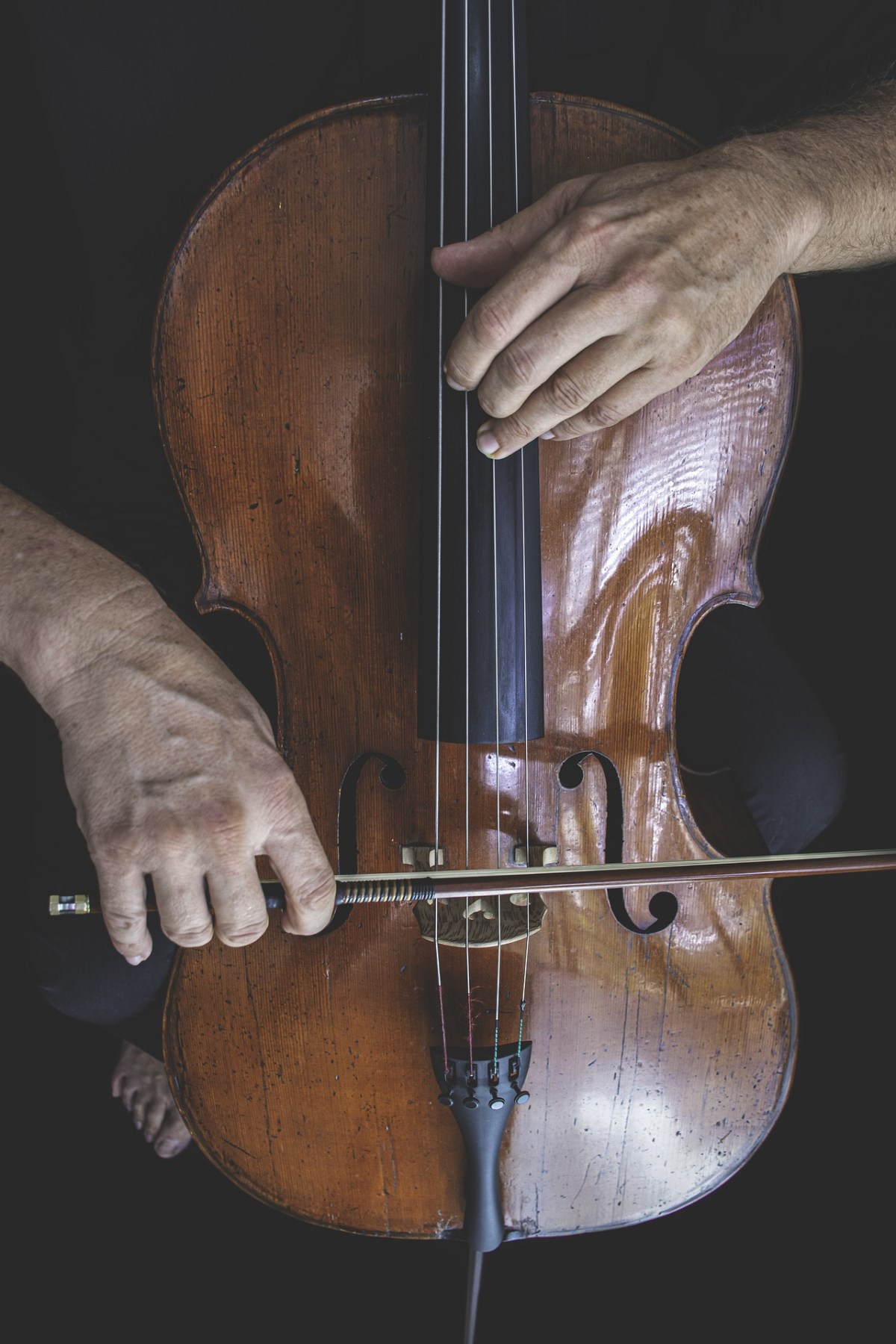
This article was written on August 2, 2022.
Hello? This is Jooyoung Kim, a mixing engineer and singer-songwriter.
In the last article, we covered understanding basic string instruments. Today, we will continue with this and cover techniques mainly used in string instruments.
Shall we get started right away?
- Vibrato

Vibrato can be used in 3 ways:
1) Finger Vibrato (using fingers)
2) Wirst Vibrato (using wrist)
3) Arm Vibrato (using the entire arm)
Depending on the player, it is used because it is easy to play and effective, but as far as I know, there is no virtual instrument that has been selected for this yet.
I think you just need to know that something like this exists.
- Double Stop
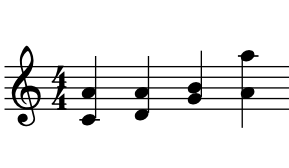
Double Stop refers to playing intervals and chords. It simply means producing two notes at the same time. A triple stop means playing three notes, and a quadruple stop means playing four notes at the same time. When playing multiple notes at the same time, you need to think about their positions.
In the last article, I said there was a formula for double stop, right?
When the upper note is played down a perfect 5th, it is possible as long as the difference from the lower note does not exceed an augmented 4th. For the viola, it is possible as long as it does not exceed a perfect 4th, and for the cello, it is a major 3rd.
In addition, simple features include
1) It is difficult to establish a major 3rd degree relationship, and a perfect 5th degree or more is desirable.
2) Since double stopping with distant strings is impossible, it is composed of adjacent strings.
3) Good effects are also observed for intervals between the 3rd and 6th (perfect 4th) or intervals between the 5th and 8th (perfect 4th).
4) In the case of Triple Stop or Quadruple Stop, Secco (sound made all at once at the same time) is not possible due to the curvature of the fingerboard.
Depending on the virtual instrument or the playing method of the instrument, Double Stop may or may not be possible. This is a playing method that you must carefully read the manual of the virtual instrument you plan to use.
- Division
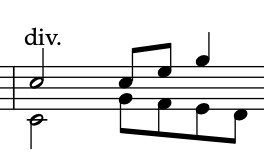
Division is a technique that can be used because it is an orchestra. In Double Stop, each person plays all the notes, while in Division, the notes are played separately by each person.
A double stop would be two groups, a triple stop would be three groups, and a quadruple stop would be four groups, right?
Abbreviated as Div. Alternatively, it is written in the score as Division. Some of these playing techniques are performed automatically depending on the virtual instrument.
A representative example is LASS (LA Scoring Strings).
- Unision & Doubling
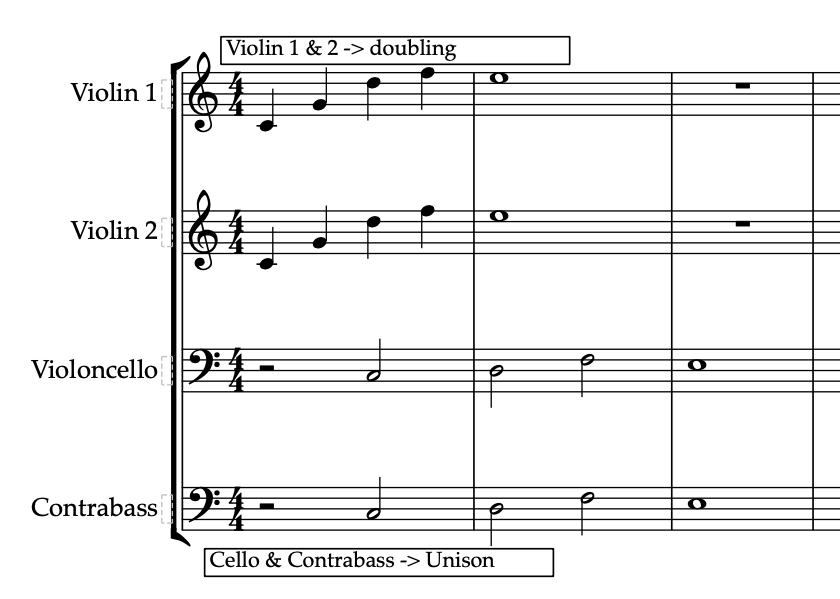
In classical music, unification refers to a technique in which different instruments produce exactly the same sound, and doubling refers to a technique in which sounds are produced in an octave relationship. This should not be confused with what we say about recording doubling in pop.
Violoncello and Contrabass often form a doubling relationship, and in many cases, doubling is done by placing an additional high string on top of Violin 1. When playing loudly and strongly, Violin 1 and Violin 2 sometimes unify.
- Scordatura
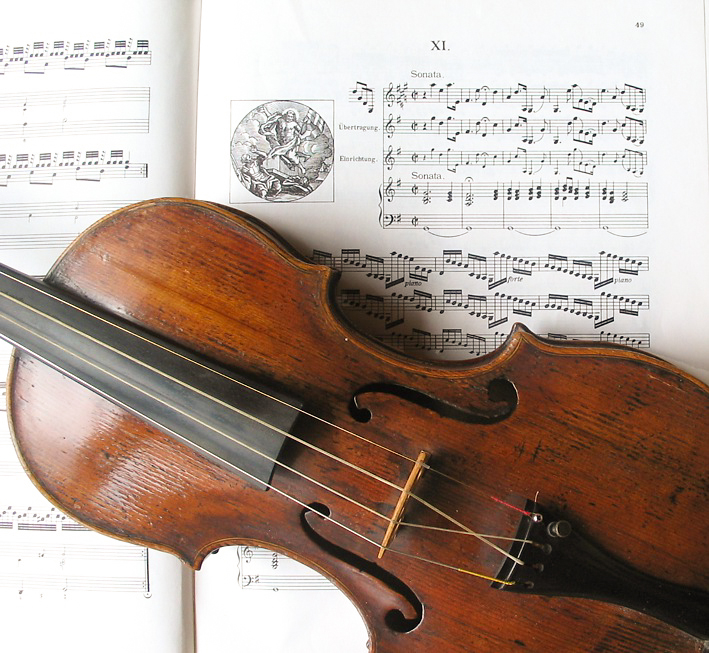
Scordatura means anomalous coordination.
If you play guitar, you may have done this often, but string instruments often use irregular tuning depending on the song.
However, virtual instruments often do not support irregular tuning, so unless it is particularly necessary, it is more convenient to just use the original tuning and write the song.
In this way, we learned about external(?) techniques rather than how to play with a bow. In the next article, we will look at bowing, which is determined by how you play the bow.

 Jooyoung's Music Blog