Today, continuing from last time, we will look at the remaining playing techniques and arrangements for string instruments.
– Con Sordino (Mute), Pizzicato, Bartok Pizzicato, Harmonics
– Glissando, Sul Ponticello, Sul Tasto, Col Legno (Tratto & Battuto)
This is the state law that was not covered last time.
- Con Sordino(Mute)
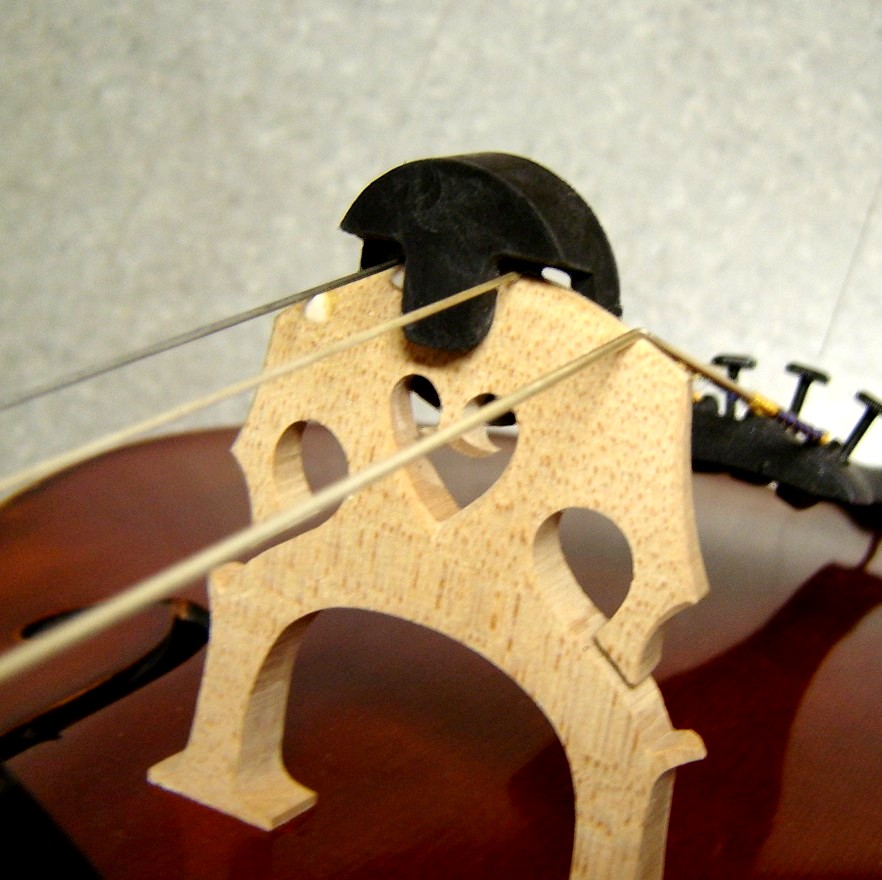
Sordino means to play with a muted instrument, and Con Sordino means to play with a muted instrument. It is made of various materials such as wood, metal, and rubber, and its function is to reduce the volume and change the tone.
It is sometimes written as Muted, and when it returns to its original state, it is written as Senza Sordino, Without Mute, etc.
When working on a song, in order to achieve a richer sound, additional recordings are made with a muted sound on top of the basic recorded sound. These techniques can also work effectively with virtual instruments. If you feel like the sound is lacking for something, it might be a good idea to give it a try.
- Pizzicato, Bartok Pizzicato
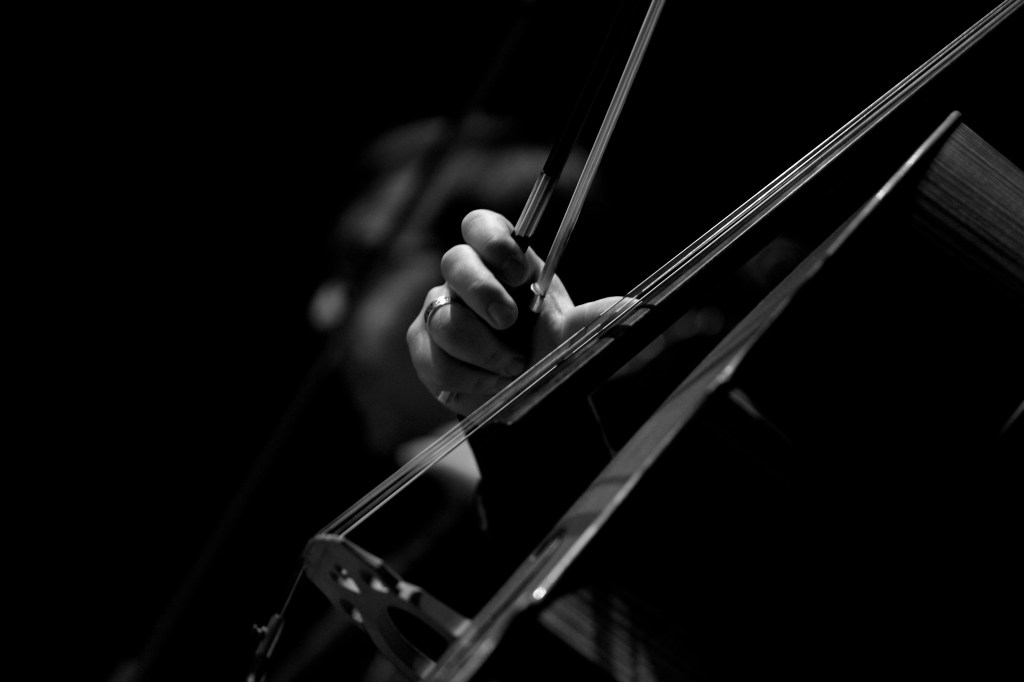
Pizzicato refers to a playing method where you pluck the strings with your hands to make a sound, like a guitar. It can be used with both the left and right hands, and a cross is placed on the note only when playing Pizzicato with the left hand.
It is usually written as Pizz.
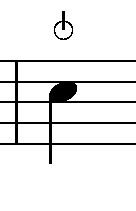
Bartok Pizzicato is a playing technique that involves plucking the string very hard and hitting the fingerboard to make a sound.
It was invented by a composer named Bartok and given this name, and a symbol that looks like a power button is used as shown in the picture above, or a symbol such as ◎ is used. It is very effective because it can give a percussion-like effect even though it is not a percussion instrument.
Both Bartok Pizzicato and Pizzicato are playing techniques found on most virtual instruments, so if you use them when writing songs, you can create very effective sounds.
- Harmonics

Harmonics means overtones. However, the playing technique refers to playing the overtones of the strings.
There are two types of Harmonics: Natural Harmonics and Artificial Harmonics.
Natural Harmonics is a playing technique in which you play by gently placing your fingers on integer multiples, such as 1/2, 1/3, and 1/4 of the open strings, without touching the fingerboard. The notation is done by placing a circle on top of the note, and sometimes drawing a diamond below along with the circle.
Sometimes it just displays a diamond.
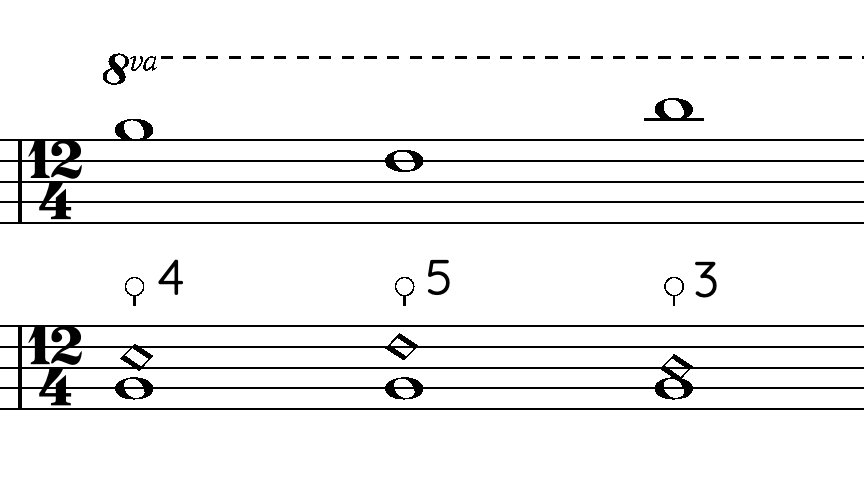
Artificial Harmonics is a playing method that produces overtones while holding the fingerboard. Due to the nature of the string, 4th harmonics are used most often, and in notation, the point above the desired frequency is indicated with a diamond on the regular note.
In order from left to right, they are 4th, 5th, and 3rd harmonics.
- Glissando


Glissando is a technique of skimming through the middle notes by sliding slowly or quickly between two notes. In some cases, all middle notes are written down. A straight line notation, as shown in the photo above, is also often used. It is also indicated as Sweep or Run.
It is a very effective playing technique for string instruments, and it would be a shame if it did not appear in pop that uses strings. It is also my favorite playing method among string instruments..^^
You can create great effects with virtual instruments as well, so I think it would be a good idea to use them.
- Sul Ponticello, Sul Tasto

Sul Ponticello means play on the bridge side, and Sul Tasto means play on the fingerboard side.
Anyone who has played the guitar will understand that, just as playing close to the bridge of a guitar produces a hard and solid sound, playing with Sul Ponticello produces a loud, rough, and metallic sound. Conversely, playing with Sul Tasto produces a soft and delicate sound.
The notation is Sul Ponticello, Sul Tasto, and to return to the legato, it is written as arco.
- Col Legno

Col Legno, which is disliked by players, is a playing technique where the bow is turned upside down. It is divided into Tratto and Battuto. Tratto is a playing method where you simply play the string with a bow, and Battuto is a playing method where you hit the string with a bow.
As shown above, the notation is col legno, col legno tratto, col legno battuto, etc. If you want to return to the basic performance, write mode natural or arco.
- Conclusion
Musicians who compose popular music should look at the virtual instrument manual to see how the staff is organized. Whether it has a rough chamber feel or a full orchestra feel, and if it is a chamber, whether it is a large or small chamber, you should listen to the demo sample and think carefully about when to use it.
This is how I learned about string instruments. I don’t know if it was helpful…^^
In fact, the requirements are completely basic, the theory of Voicing, its use as a pad, Run and the use of the 6th High String, etc. are very diverse.
However, this is a large amount, so I will deal with it later when I have time.
Have a good day!

 Jooyoung's Music Blog