This article was written on December 18, 2022.
As discussed in string instruments, old classical instruments are based on the roles of the four voices: soprano, alto, tenor, and bass.
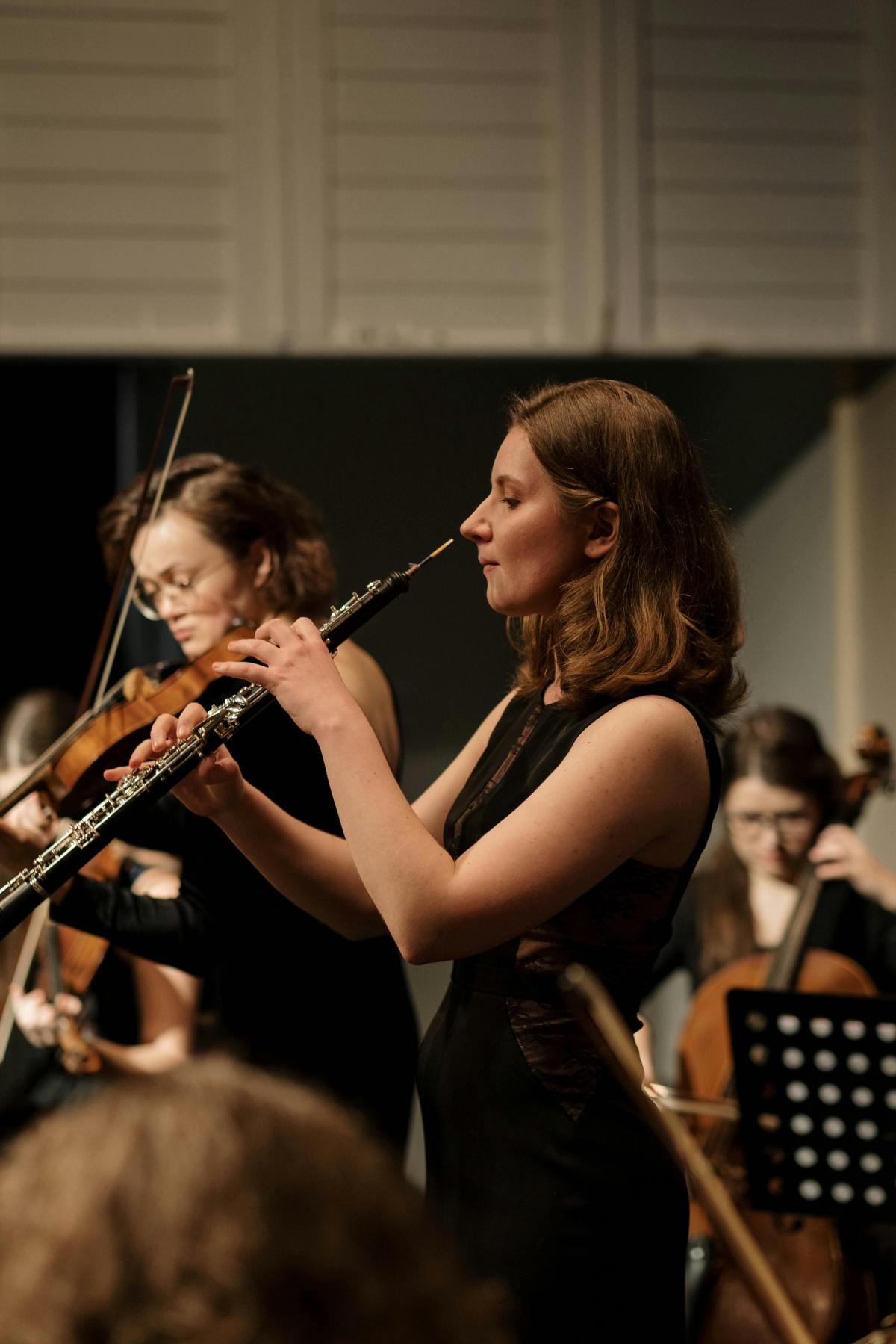
The same is true for woodwind instruments, and each instrument can be paired with the roles below.
1) Soprano – Flute
2) Alto – Clarinet
3) Tenor – Oboe
4) Bass – Bassoon
If it is difficult to determine the role of an instrument, it is a good idea to infer it from the length of the instrument. In general, the longer the tube, the lower the pitch, so it is responsible for the lower register, and the shorter the tube, the higher the pitch, so it is responsible for the high register.
As a side note, in woodwind quintets, horns, a brass instrument, are used, and they say they are included because they fill out the sound by gently enveloping the sound of the woodwind instruments.
The saxophone is also classified as a woodwind instrument, but it is often used like brass instruments, such as in big band brass, and is used more in jazz than classical music, so we will not cover it here.
- Transposing Instrument
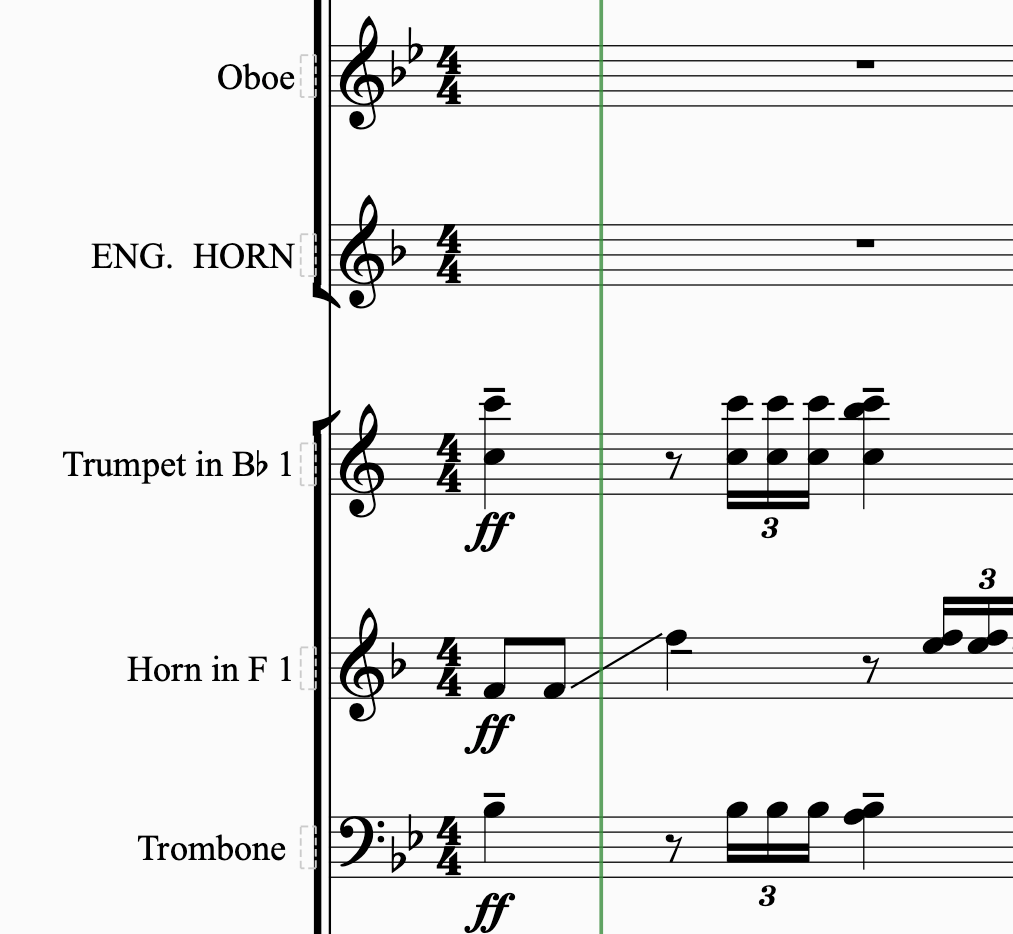
Among wind instruments, there are particularly many transposed instruments. The reason why so many transposed instruments were created was to avoid frequent temporary accidental by using instruments that match the key.
Transposing the score to fit the instrument and changing the transposed score back to its original key are very important when learning orchestral music. However, personally, I think there is no need to do it because all programs these days have a transpose function.
Still, there are some things I feel when I write them down on staff paper.
If you practice arranging in a classical style without many instruments, it might be a good idea to give it a try.


The photo above is pages 1 and 2 of an arrangement I wrote as a midterm assignment during my school orchestration class. Looking at it like this, I don’t want to write it again…
Oh, and when studying old scores, they are all written in transposed instruments, so you need to learn the notation method for transposed instruments to read them easily. When you transpose, the key signature also changes. If you think of the circle of 5th in the name of the transposed instrument, you can easily change the key signature.
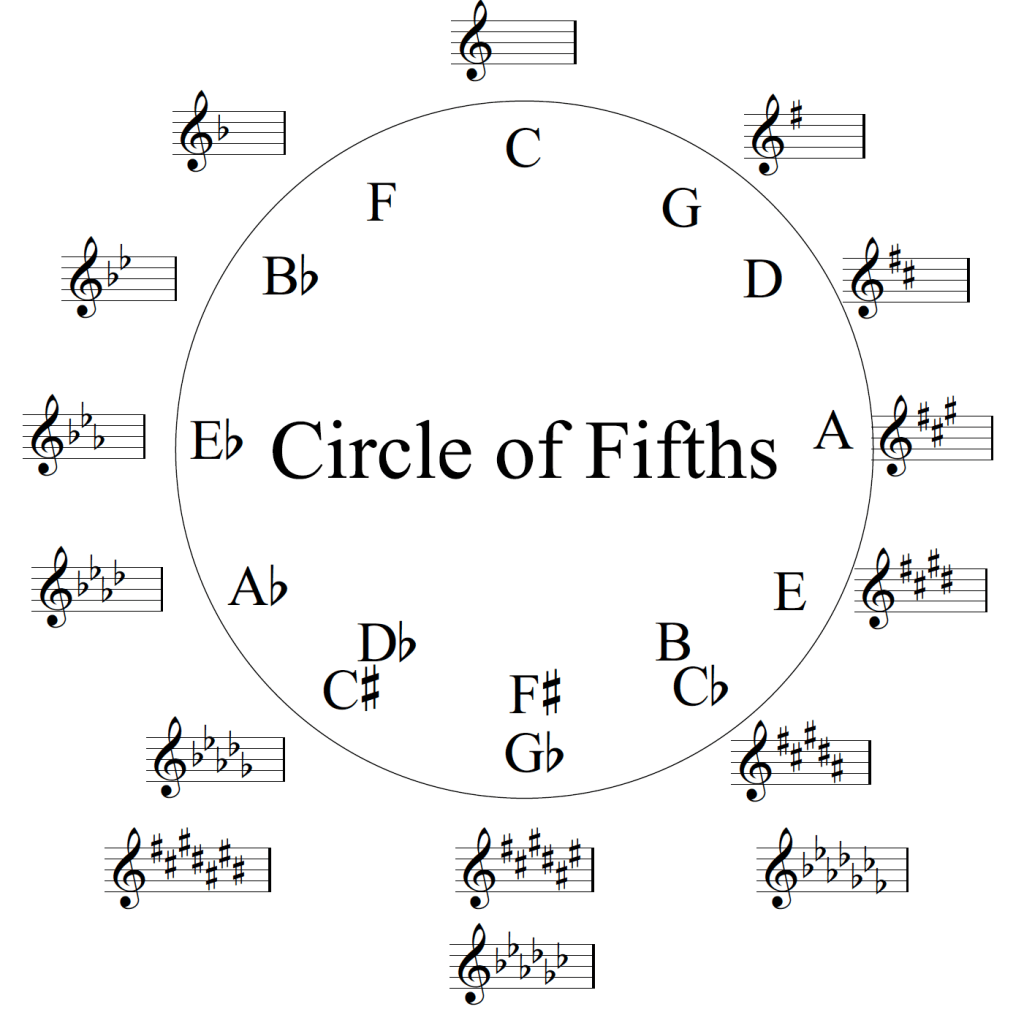
First, find the note behind the transposed instrument.
If we take Clarinet in Bb in C Major as an example, it would be Bb, right?
Find how far this note is from C, the very center of the circle of 5th. In the picture above, Bb is 2 spaces to the left of C, right?
Then, just write the opposite key in C of circle of 5th on the score.
So Clarinet in Bb goes from the key of C Major to the key signature of D Major. It’s confusing at first. But if you try a few things, you’ll get used to it.
- Reed
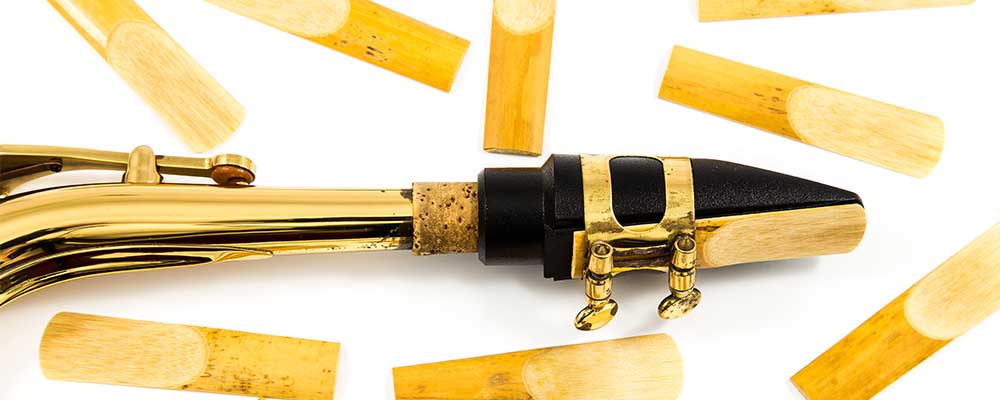
Reed originally means ‘reed(plant)’, and since it is made by processing the stem of a reed, this piece of wood is also called a reed. The reed vibrates through interaction with the lips, causing the instrument to produce sound.
This method of playing with the lips is called embouchure.
Flute and recorder groups have no reeds, saxophones and clarinets have single reeds, and oboes and bassoons have double reeds with overlapping top and bottom reeds.
- Common Basics of Woodwinds

First, let’s look at the common characteristics of woodwind instruments.
Woodwind instruments were originally made of wood, but due to their vulnerability to temperature and humidity, they are now made using metal and synthetic materials as well.
All woodwind instruments have holes that can be closed or opened to create a column of air of a certain length. Depending on the length of this air column, the resonance frequency changes, creating different sounds.
At first, it was difficult to finger because it had only holes, but as a technician named Theobald Bohm developed a ‘Key’ that fits the hole, fingering became easier and the range of sounds became wider.
Also, woodwind instruments are divided into three parts, Mouth Piece, Body, and Tail, like the head, chest, and abdomen of an insect. Manage and store these parts separately.
Among woodwind instruments, there are commonly used playing techniques called Overblowing and Tonguing. Overblowing is a playing technique in which the wind is blown very strongly to produce a sound one octave higher than the original sound. The clarinet has the unique characteristic of producing a sound that is 12 degrees higher than the original sound.
Tonguing refers to the technique of blocking the wind and playing again using the tongue, such as tu, tuku, tukutu. Tonguing is decided through Slur.
I don’t know if you enjoyed it… 🙂
I will stop here and write explanations for each instrument in the next article.

 Jooyoung's Music Blog