Hello, I’m Jooyoung Kim, an audio engineer and music producer. I’ve been quite busy lately, and my blog posts have been delayed…^^;;
Today, I want to talk about the saturation effects of transistors and vacuum tubes.
Shall we get started?
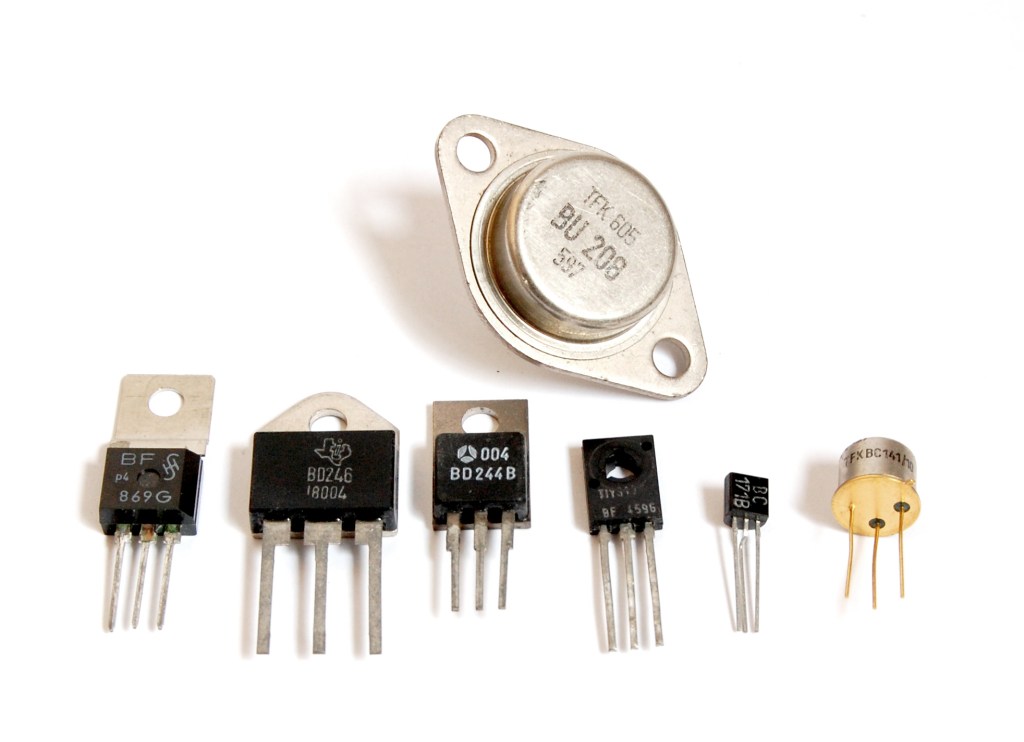
First of all, why do we use transistors and vacuum tubes? Let’s start with this question. Why exactly are they used?
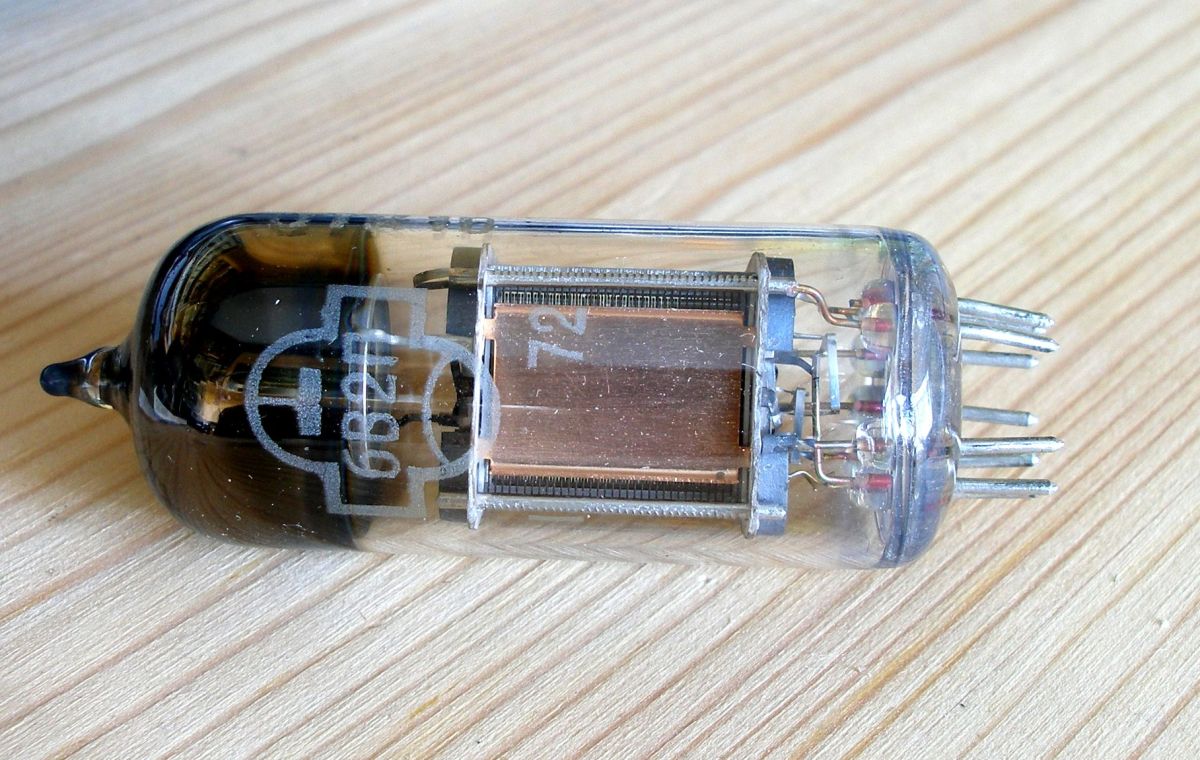
In the past, they were found in speakers, amplifiers, and even microphone preamps used by musicians—basically everywhere. The primary reason we use them is to “amplify” small electrical signals.
Now, I believe you understand why components like vacuum tubes or transistors are included in speaker power amps, integrated amps, microphone preamps, and why they are called “amps” in the first place.
In my previous post, “[Link – 9.1 Harmonics and Saturation],” I explained from a non-linear signal perspective why harmonics are produced when signals pass through these devices.
Let’s dive into how these harmonics are generated.
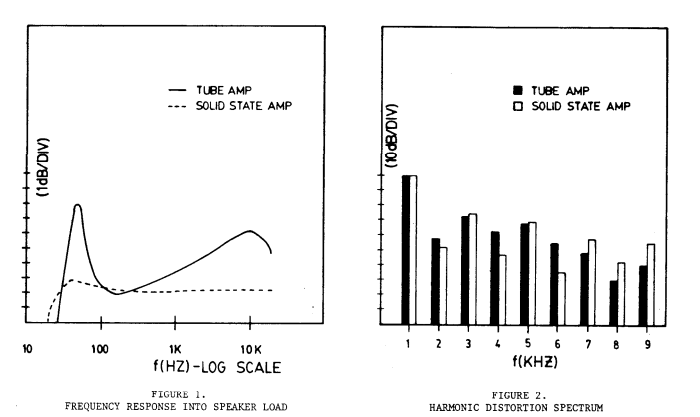
The image above is from a 1981 paper titled Tubes versus Transistors in Electric Guitar Amplifiers. It shows the response of electric guitar amps that use vacuum tubes or transistors.
The graph on the left shows the frequency response, while the one on the right displays harmonic distortion. It’s clear how different they are, even without further explanation.
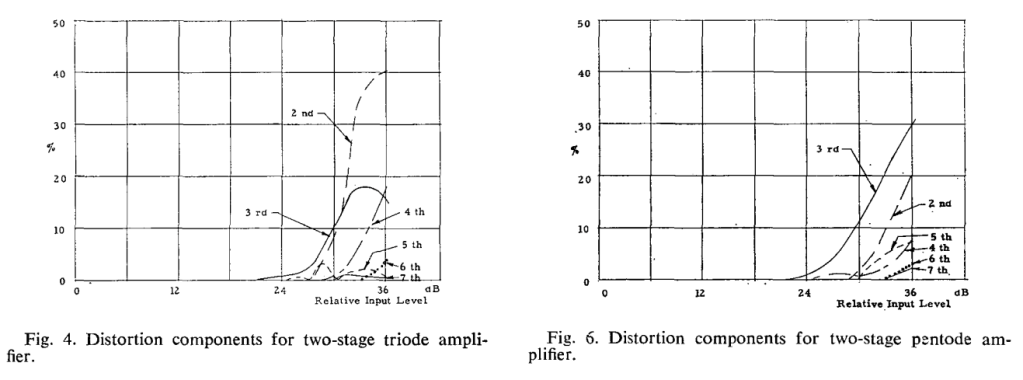
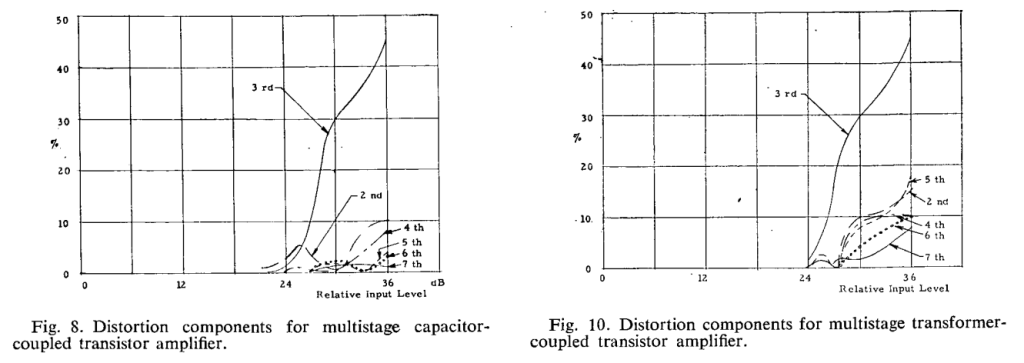
O., H. R. (1973). Tubes Versus Transistors – Is There an Audible Difference? Journal of the Audio Engineering Society, 21, 267–273.
If you search online for Tubes Versus Transistors – Is There an Audible Difference?, you’ll find this paper. It’s originally an AES paid article, so if there’s any issue with the image, I’ll remove it…^^;;
Anyway, the top left graph shows two triodes (vacuum tubes), and the top right shows two pentodes (vacuum tubes). The bottom left graph combines capacitors and transistors, while the bottom right combines transformers and transistors.
So, what is this measuring? It’s measuring harmonic distortion based on input level. Rather than focusing on specific meanings, it’s enough to note that they are all very different.
If each vacuum tube and transistor has different harmonic distortion characteristics, is it really meaningful to define sound solely based on whether it’s a tube or a transistor? In my view, it’s not that significant.
What’s important for music production, in my opinion, is not differentiating between these categories but understanding how each specific device affects sound individually.
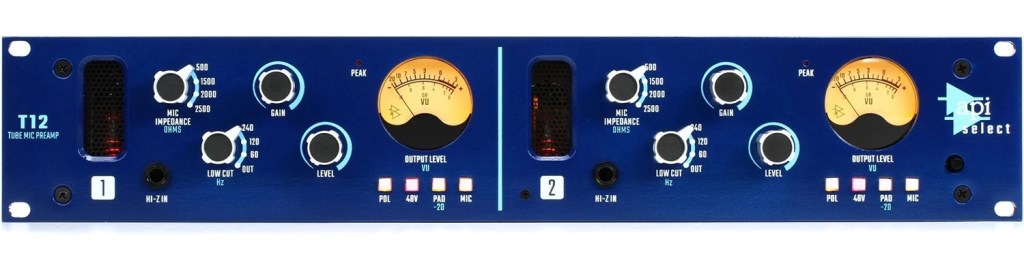
As an equipment enthusiast, I find myself trying to understand each piece of gear one by one, and my bank account… well… haha… ha… ha…
To make matters worse, I also play instruments, so it’s quite the struggle… I’ve been hunting for a second-hand bass recently because I’ve decided to play bass myself. It looks like I’ll be carrying this gear addiction with me for the rest of my life.
That’s it for today. In the next post, I’ll discuss the saturation effects of tape 🙂

 Jooyoung's Music Blog