Hello! This is Jooyoung Kim, mixing engineer and music producer.
Today, I’d like to introduce dither/dithering, the final step in mastering. This article is based on my book, Basics of Mixing, published in South Korea.
Let’s start!
Before we talk about dithering, we must know “quantization error”. Then, what is quantization?
You may have heard the word “quantum” like quantum physics or quantum electrodynamics. Quantum means ‘discreteness’ or ‘lack of continuity’. In microscopic world, particles like electrons, protons, and neutrons have discrete physical properties. So, the word ‘quantum’ often used in particle/nuclear/quantum physics.
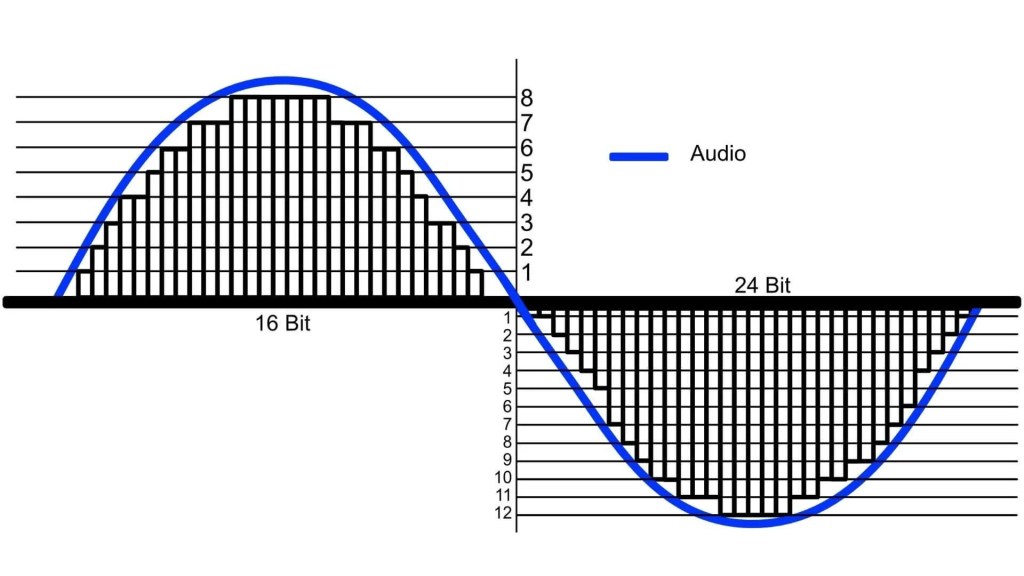
By the way, when we record sounds, they are saved as individual samples by sample rate and bit depth format.
In this process, continuous analog audio signals are converted into discrete digital signals. We can call this is a ‘quantization’ too.

When we play audio, digital signals are converted to analog signals in this kind of staircase format. The differences in magnitude value of original analog signals between converted signals are “quantization error”.
How to solve this problem?

The solution is really simple. Just mix noise with converted signals! The noise may sound slightly annoying, but it makes the audio sound more natural than before.
We call this noise, the solution, “dither”. Dither is more effective on digital audio files with lower bit depth.
As the bit depth increases, these quantization errors become less audible, but since quantization errors can be noticeable in very small sounds, this noise is added at the very last stage of mastering.
In the past, dither was simply used as overall noise from low to high frequencies.
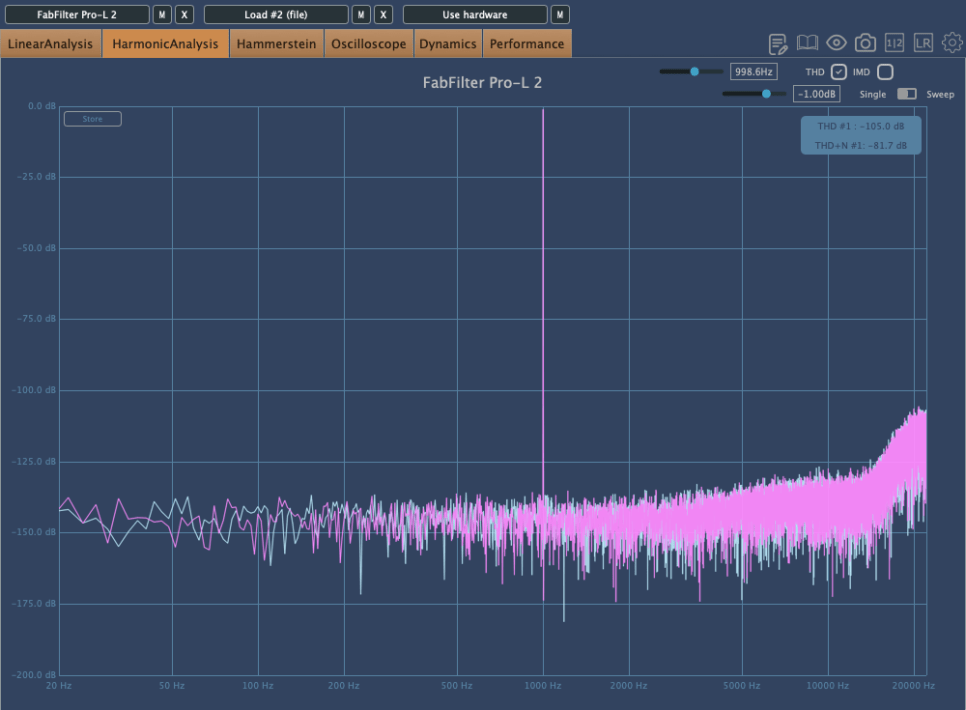
However, since you can use dither as long as there is irregular noise, these days, there are many cases where engineers use dither for ultra-high frequency noise that is low in real sound. Since this is noise, it is common to apply it only once, at the very last stage when all volume adjustments are complete.
Next time, I will explain the codec of music files and finish the basics of mixing. Then, I will see you again in the next article!

 Jooyoung's Music Blog