Hey there! I’m Jooyoung Kim, a mixing engineer and music producer.
Today, we’re diving into modeling synthesizers, continuing from Basics of Synthesizers (4).
Ready to get started? Let’s go!

In my post about FM synthesis, I mentioned how Yamaha dominated the market with the DX7 FM synthesizer, right?
Well, that FM synth came about through a collaboration between Stanford and Yamaha. And guess what? Physical Modeling synthesis is another product of that Stanford-Yamaha partnership.
Academically, Physical Modeling was already being discussed mathematically for a while. (Synthesizing Musical Sounds by Solving the Wave Equation for Vibrating Objects, 1971)
But creating the algorithms and implementing them efficiently? That’s a whole different story. Back then, computers didn’t have great DSP capabilities. So, in the 1983 paper (Digital Synthesis of Plucked-String and Drum Timbres), a simplified algorithm was proposed to make synthesis accessible to everyone via computer.
Fast forward to 1989, Stanford and Yamaha co-developed digital waveguide synthesis, and in 1994, the first product using this tech, the Yamaha VL1, hit the market.
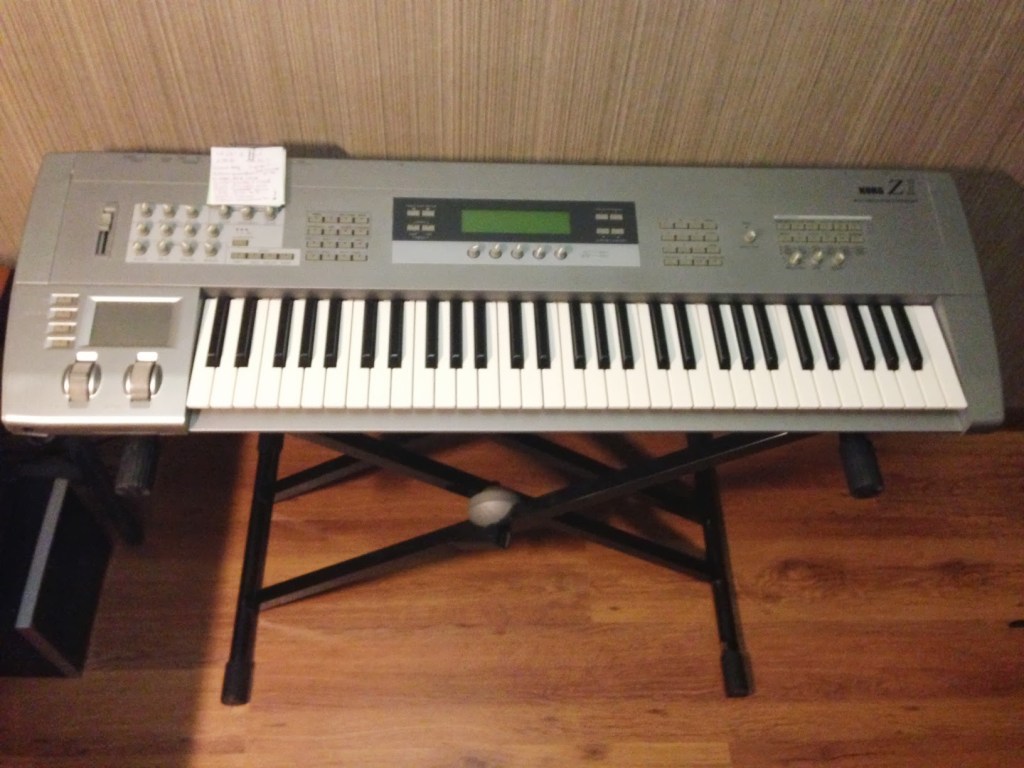
Unlike Physical Modeling, which models the instrument itself, there’s also Analog Modeling, which digitally recreates analog synthesizer circuits.
Korg was a major player in this space.
Why go for analog modeling? Well, analog synths needed multiple oscillators to produce multiple voices, but with analog modeling, as long as the DSP could handle it, you could generate as many voices as you wanted at once.
Nowadays, with CPUs being so powerful, virtual instruments using these modeling techniques are everywhere.
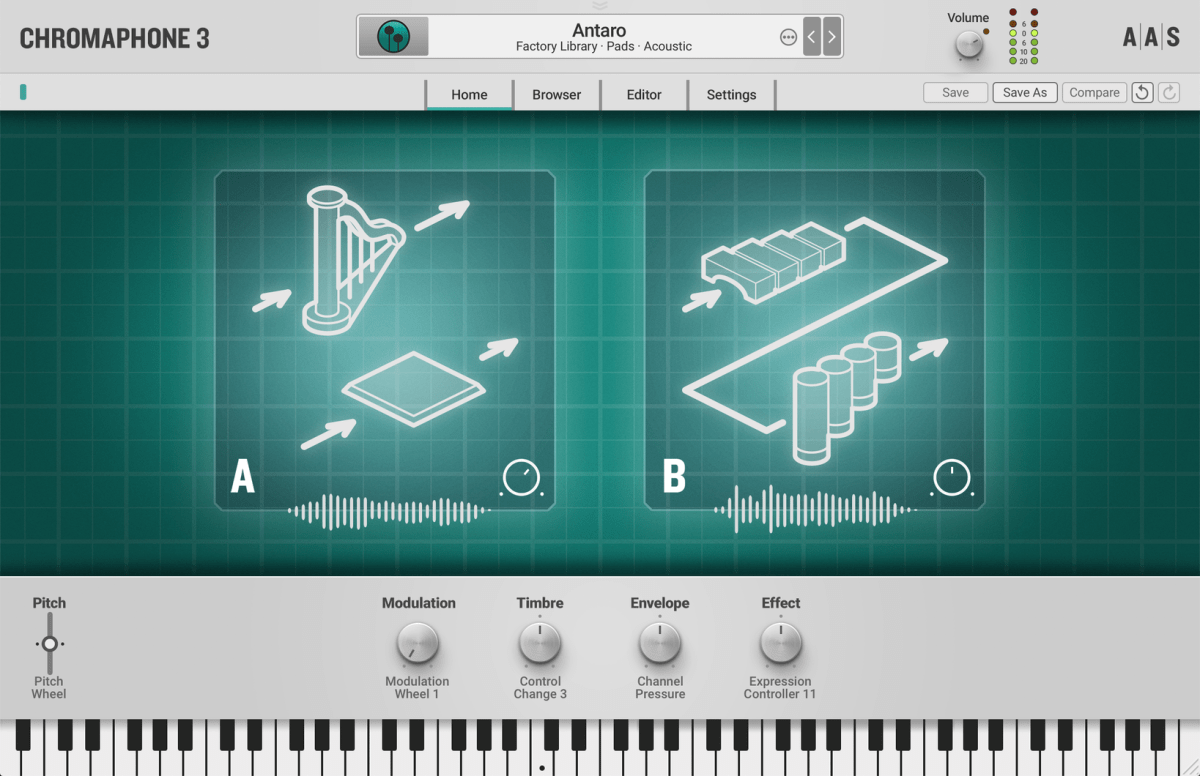
The string virtual instrument I introduced recently, Expressive E’s Soliste, is also based on Physical Modeling.
When I introduced IK Multimedia’s Total Studio products last year, Modo Drum and Modo Bass, which were included, are also Physical Modeling virtual instruments.
As CPU performance has improved, modeling tech has evolved to handle complex calculations that were previously impossible, allowing for realistic acoustic instrument sounds with minimal storage.
Still, it’s a bit hard to see these modeling synths as unique instruments that create a big splash like traditional synthesizers.
And that’s it for modeling in a nutshell!
See you in the next post!

 Jooyoung's Music Blog