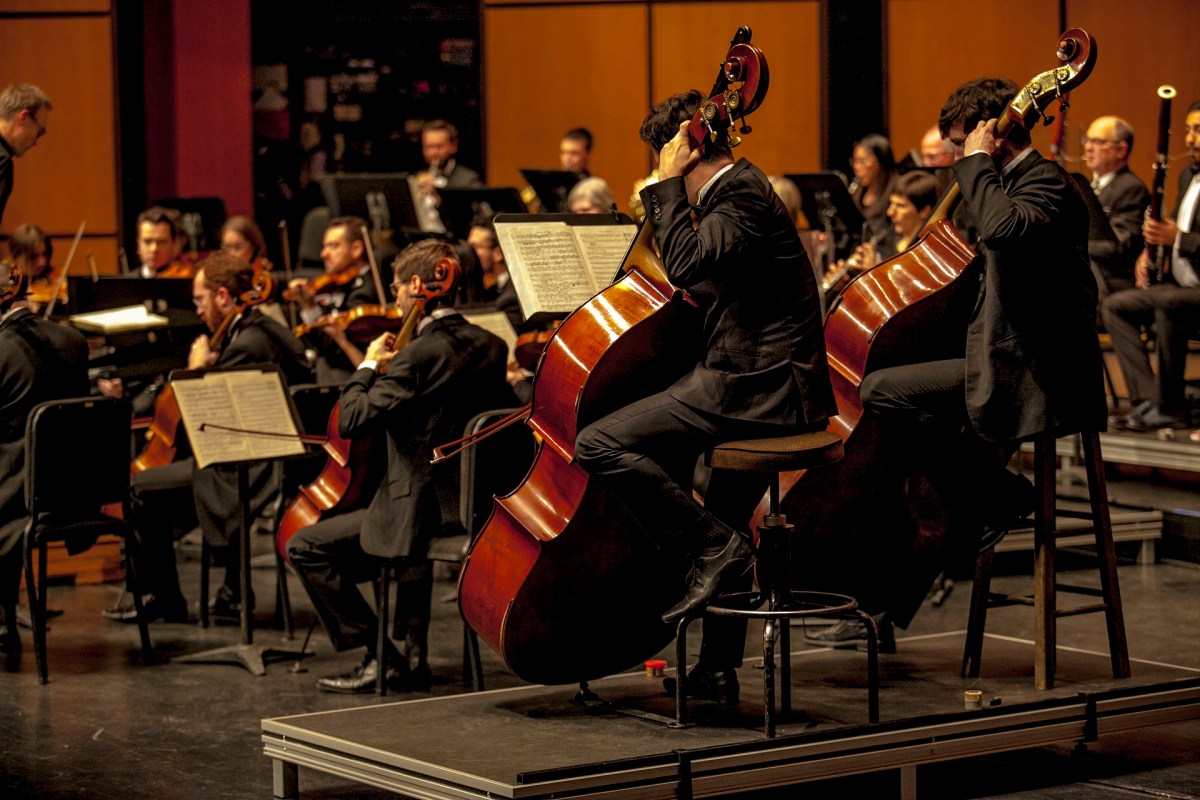
Orchestration Basics – Strings (3)

This article was written on August 6, 2022.

Hello? This is engineer and singer-songwriter Jooyoung Kim.

Continuing from the last article, today we will learn about bowing, a string technique.

Bowing can be broadly divided into two playing techniques: whether the bow falls off the string or not.

– On the String: Legato, Staccato, Detache, Marcato (Martele), Portato
– Off the string: Spiccato, Jete (Ricochet), Tremolo

​This is the classification done by the teacher who taught me, but as the teacher told me, the classification is not particularly important. Let’s look at them in order.

  • Legato

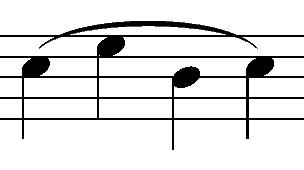
Legato is a playing technique in which the notes are played continuously without interruption. Therefore, whether it is Down Bow, where the bow is drawn downward, or Up Bow, where the bow is drawn upward, it is played all at once with one bow.

In sheet music, it is written as Slur as shown in the picture above, and it is the default playing method in most virtual instruments.

  • Staccato

This is a playing technique where you play briefly, with the string attached to the bow, at about 1/2 the original beat. Usually, in a virtual instrument, if there is only Legato or Sustain and no Sforzando playing technique, a mixture of playing such as Staccato with a strong attack nuance is used.

(I’d like to buy the Vienna Symphonic Library with Sforzando, but it’s too expensive…)

  • Detaché

Detaché, unlike Legato, is played with each bow. You might think it’s similar to Staccato, but this one is different in that it plays all the notes.

If you start from the tip (upper part) of the bow, it is marked At the Point, and if you start from the Frog (hand side) of the bow, it is marked At the Frog.

  • Marcato(Martelé)

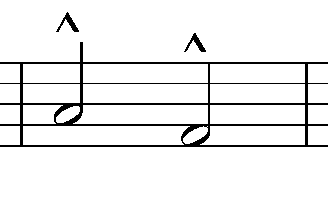
Marcato is derived from the Italian word Martellato, meaning hammer. It means to play hard and hard like a hammer, and is written in the shape of the letter Λ above the note.
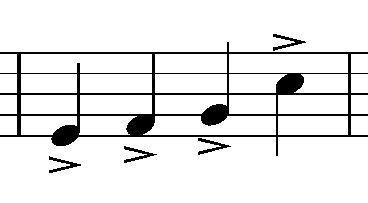
Be careful because it is different from the Accent symbol, and unless it is a cheap virtual instrument, it is a common playing method, so it is good to use it actively.

  • Portato

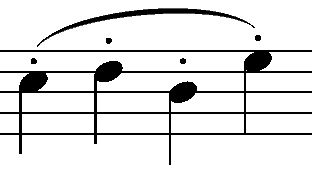
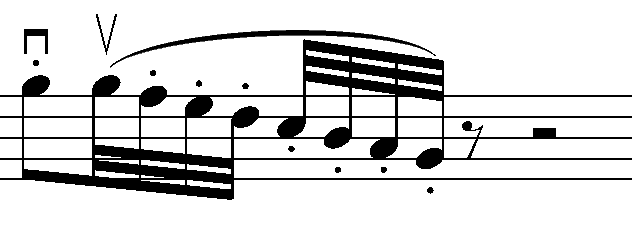
Portato is played somewhere between Legato and Detache. It is played with a continuous Down Bow or Up Bow, and is written as Slur Staccato as shown in the photo above.

Since the notation is the same as Spiccato, it must be written separately as Portato or the performer must interpret it independently by looking at the BPM and the length of the note.

  • Spiccato

Spiccato is mainly used in the middle part of the bow and is a playing technique used in the fast section. It is common to use notations such as Spiccato or Portato, and write Spiccato below.

Like Detaché, because it is played with each bow, the attack is clearly audible, so this friend is also good to use as a layer when you want to express strong legato or sustain in a virtual instrument.

  • Jete(Jeté, Ricochet)

Jete means ‘to throw away’ and is a technique in which the bow is thrown away and thrown away. Because the notation is Slur Staccato, the notation of the four playing methods, Staccato, Spiccato, Portato, and Jete, is very confusing.

Let’s write well in the sheet..!

  • Tremolo
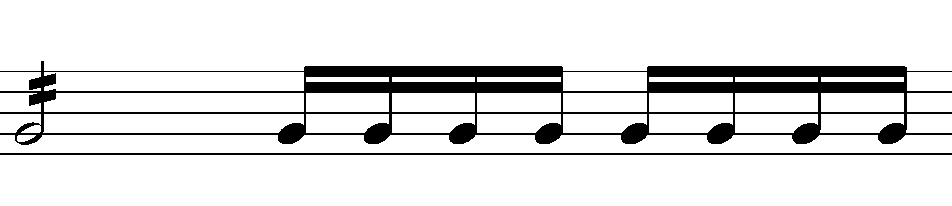
Tremolo (a)
Tremolo (b)

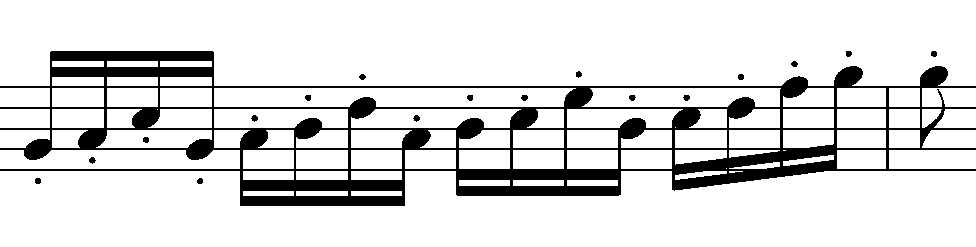
Tremolo is written as above, and the beat is determined by the number of sticks drawn on the note. You can think of one as 8 minutes, two as 16 minutes, and three as 32 minutes.

It is also divided into left-hand and right-hand Tremolo. (a) is the right-hand Tremolo, and (b) is the left-hand Tremolo.

Tremolo, which is played with the left hand, is often confused with Trill. Trill is generally played within a major 2nd, while Tremolo, where the note is moved, can be considered to be played over just a 3rd.

Tremolo can be used really effectively as a virtual instrument, so if you actively use it when writing songs, you can create dramatic effects.

  • Conclusion

There are some playing techniques that can be played on virtual instruments and some that cannot. There are three things to check when writing a song with string virtual instruments:

1) Will you use actual string instruments recorded and mixed?
2) If you can’t, what playing techniques can you choose and express on a virtual instrument?
3) Your song requires playing techniques that virtual instruments cannot use, but is it possible to create them using some unique tips?

As for number 1, if you mix real strings, it doesn’t matter which playing method you use, but for us musicians who are always worried about money, we have to worry between numbers 2 and 3 every time…

Therefore, you should first check the techniques you can use and use them according to the situation. There are other techniques, and we will look at them together in the next article..^^
Orchestration Basics – Strings (2)

This article was written on August 2, 2022.

Hello? This is Jooyoung Kim, a mixing engineer and singer-songwriter.

In the last article, we covered understanding basic string instruments. Today, we will continue with this and cover techniques mainly used in string instruments.

Shall we get started right away?

  • Vibrato

Vibrato can be used in 3 ways:

1) Finger Vibrato (using fingers)
2) Wirst Vibrato (using wrist)
3) Arm Vibrato (using the entire arm)

Depending on the player, it is used because it is easy to play and effective, but as far as I know, there is no virtual instrument that has been selected for this yet.

I think you just need to know that something like this exists.

  • Double Stop

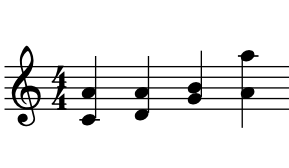
Double Stop refers to playing intervals and chords. It simply means producing two notes at the same time. A triple stop means playing three notes, and a quadruple stop means playing four notes at the same time. When playing multiple notes at the same time, you need to think about their positions.

In the last article, I said there was a formula for double stop, right?

When the upper note is played down a perfect 5th, it is possible as long as the difference from the lower note does not exceed an augmented 4th. For the viola, it is possible as long as it does not exceed a perfect 4th, and for the cello, it is a major 3rd.

In addition, simple features include

1) It is difficult to establish a major 3rd degree relationship, and a perfect 5th degree or more is desirable.
2) Since double stopping with distant strings is impossible, it is composed of adjacent strings.
3) Good effects are also observed for intervals between the 3rd and 6th (perfect 4th) or intervals between the 5th and 8th (perfect 4th).
4) In the case of Triple Stop or Quadruple Stop, Secco (sound made all at once at the same time) is not possible due to the curvature of the fingerboard.

Depending on the virtual instrument or the playing method of the instrument, Double Stop may or may not be possible. This is a playing method that you must carefully read the manual of the virtual instrument you plan to use.

  • Division

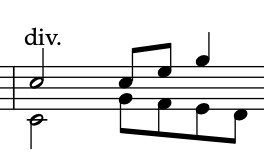
Division is a technique that can be used because it is an orchestra. In Double Stop, each person plays all the notes, while in Division, the notes are played separately by each person.

A double stop would be two groups, a triple stop would be three groups, and a quadruple stop would be four groups, right?

Abbreviated as Div. Alternatively, it is written in the score as Division. Some of these playing techniques are performed automatically depending on the virtual instrument.

A representative example is LASS (LA Scoring Strings).

  • Unision & Doubling

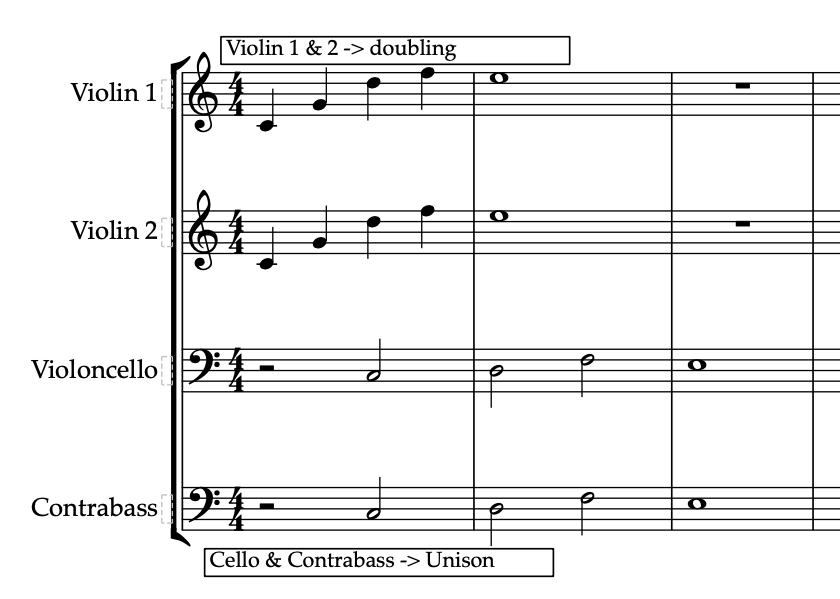
In classical music, unification refers to a technique in which different instruments produce exactly the same sound, and doubling refers to a technique in which sounds are produced in an octave relationship. This should not be confused with what we say about recording doubling in pop.

Violoncello and Contrabass often form a doubling relationship, and in many cases, doubling is done by placing an additional high string on top of Violin 1. When playing loudly and strongly, Violin 1 and Violin 2 sometimes unify.

  • Scordatura

Scordatura means anomalous coordination.

If you play guitar, you may have done this often, but string instruments often use irregular tuning depending on the song.

However, virtual instruments often do not support irregular tuning, so unless it is particularly necessary, it is more convenient to just use the original tuning and write the song.

In this way, we learned about external(?) techniques rather than how to play with a bow. In the next article, we will look at bowing, which is determined by how you play the bow.

Orchestration Basics – Strings (1)

This article was written on July 30, 2022

Hello? This is Jooyoung Kim, a mixing engineer and singer-songwriter.

In this orchestration basics, we will not cover much about arrangement or composition, but will mainly talk about instrument theory. Today is the first chapter on string instruments.

  • Strings

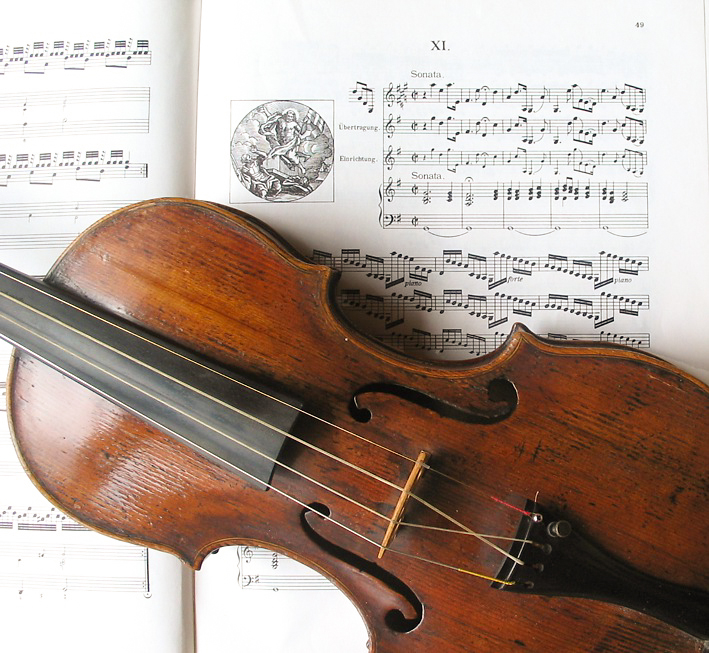
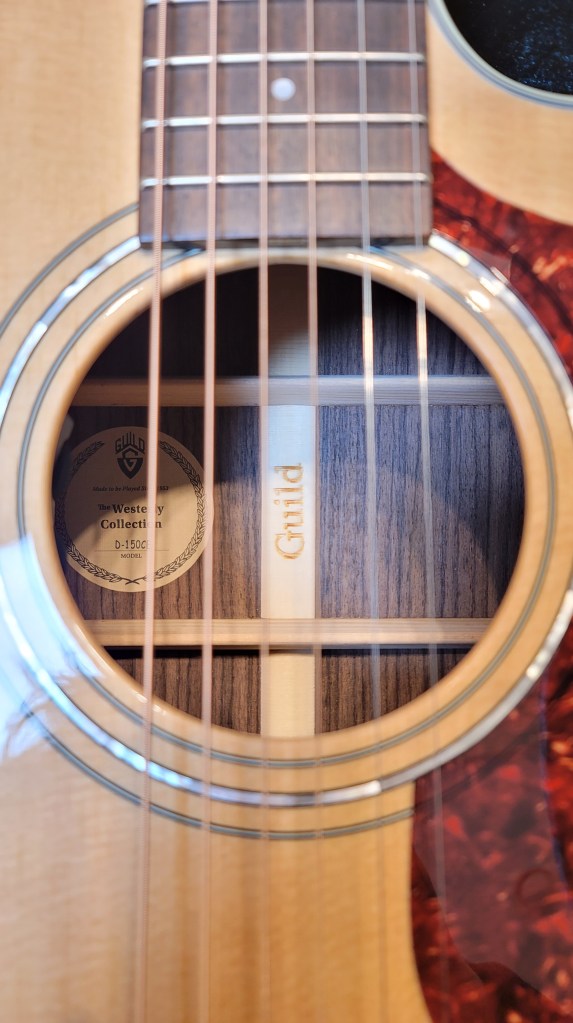
There are many musical instruments that use strings to produce sound. The piano is also an instrument that makes sound by hitting metal strings with a hammer, the guitar is an instrument that makes sound by plucking the strings, and the violin is an instrument that makes sound by rubbing the strings.

We can call them all string instruments.

However, in an orchestra, strings mainly refer to the violin family that makes sound by rubbing the strings.

Therefore, in the ‘Orchestra Basics’ article, please read the article as if the word ‘Strings’ refers to violin families.

  • Characteristics of the violin family

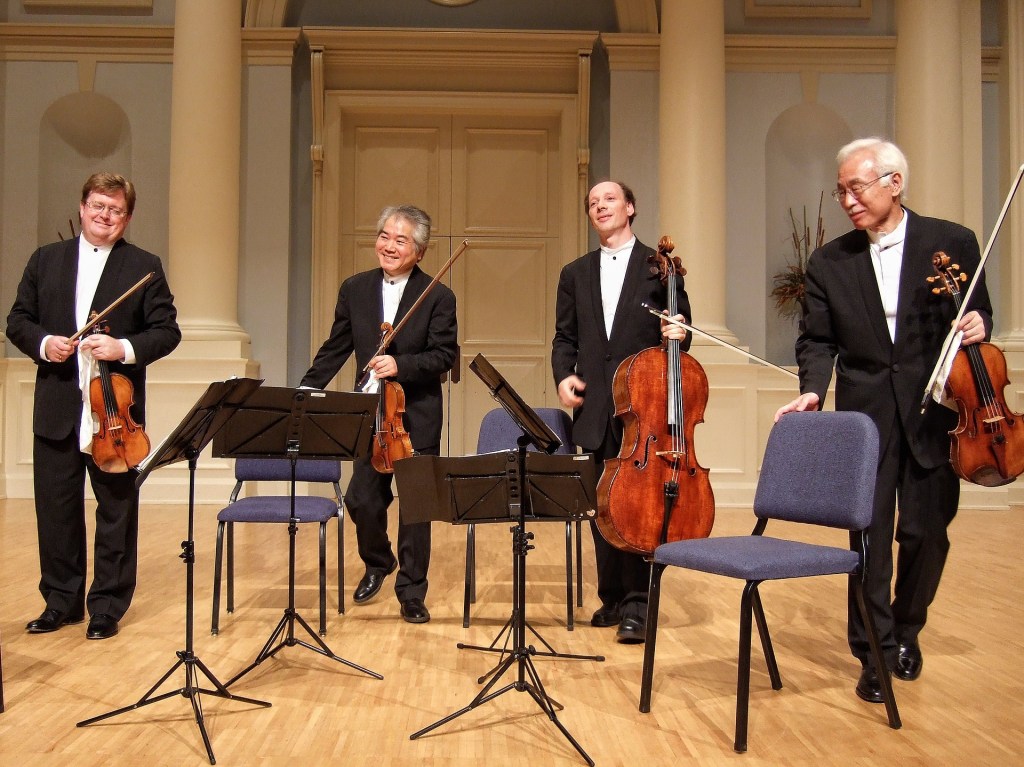
1) It consists of 4 instruments: Violin, Viola, Violoncello, and Contrabass.

2) Each instrument has a total of 4 strings (Contrabass also uses 5 strings), and the playing techniques are similar.

3) It has the largest number of members in the orchestra, making up more than half of the members.

4) All together, it has a wide range of about 7 octaves, which is almost similar to that of an 88-key piano, which is about 7 and a half octaves.

5) Delicate expressions are possible.

6) Compared to wind instruments, there is less fatigue, so you can play for a longer period of time.

Because of these characteristics, it is used as a central part of the orchestra and plays such an important role.

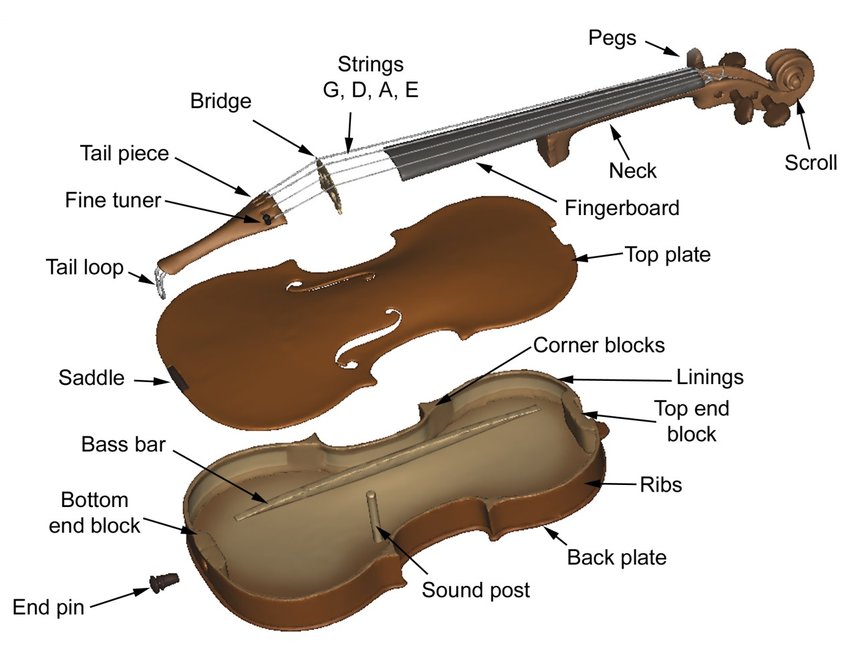
  • Structure of violin

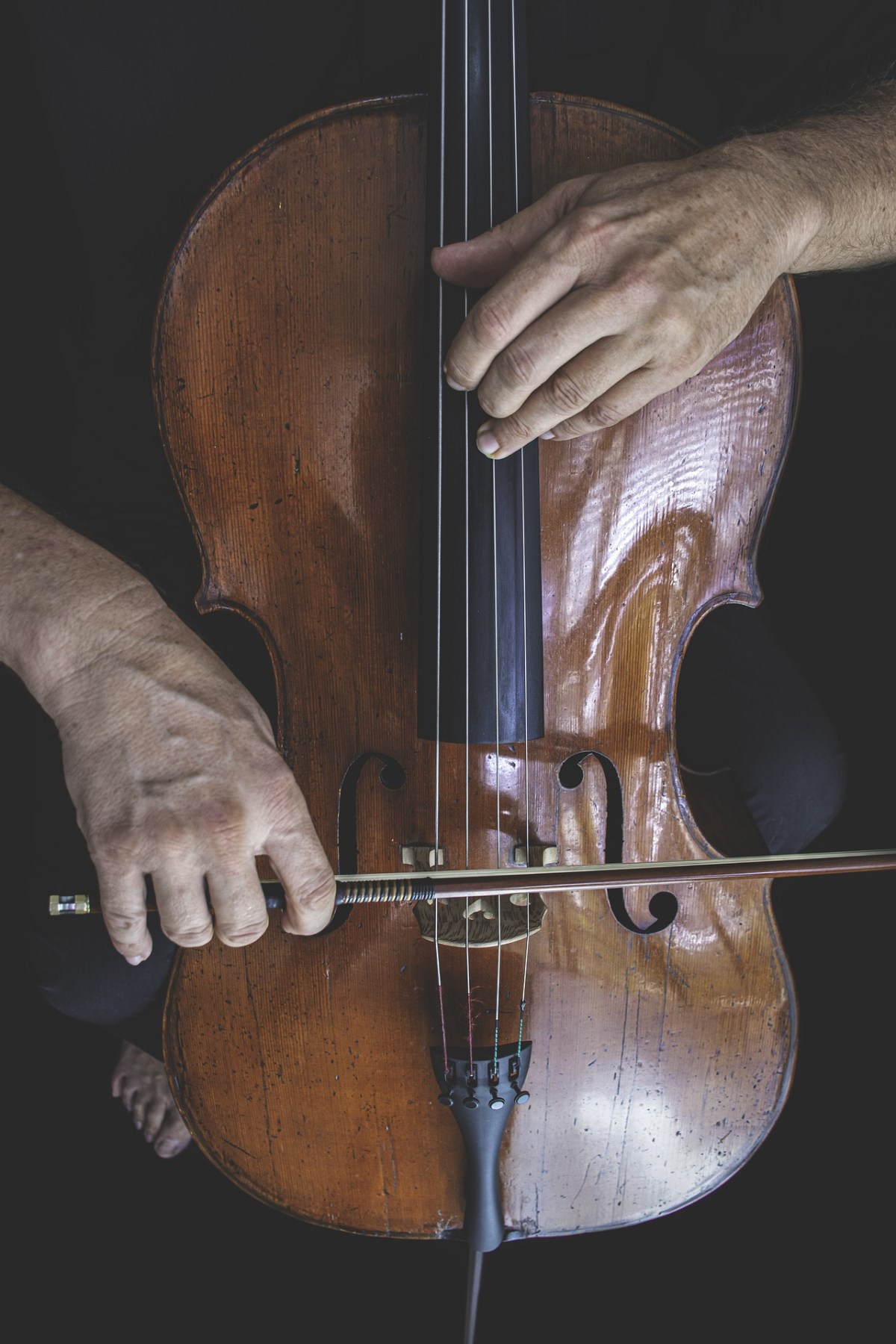
Anyone who has played guitar will know that the structures are quite similar. Like a guitar, playing from the bridge side produces a harder sound, and playing from the neck side produces a softer sound.

Additionally, the fingerboard is not flat but has a curvature, so when three or more strings are played simultaneously, an short arpeggio-like effect can be achieved due to the natural time difference.

​Cello and contrabass do not have a chin rest, but instead have a long bottom end pin, which acts as a pillar to support the instrument from the bottom.

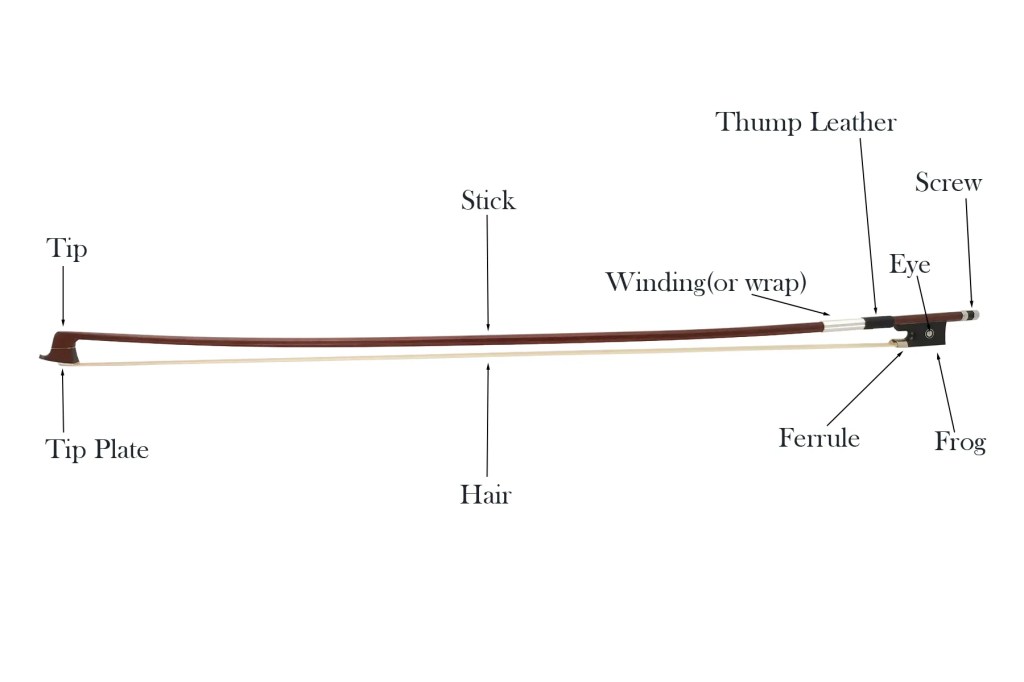
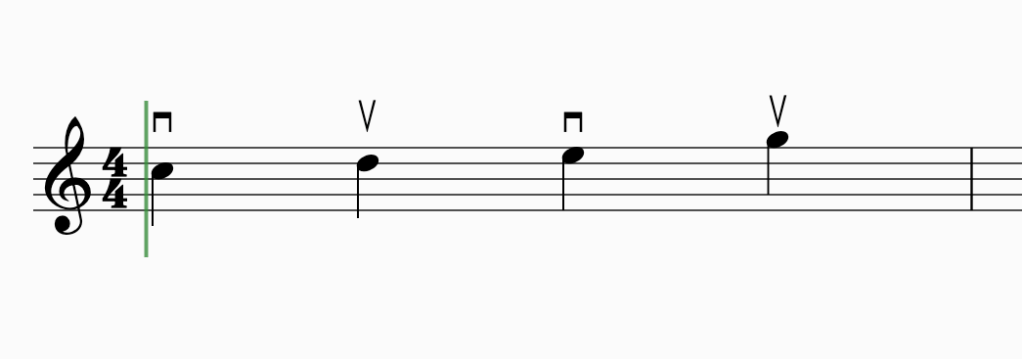
The upper part of the bow is called Tip and the lower part is called Frog, and the Up bow and Down bow signs come from this shape.

The guitar also adopts this same method and indicates the up stroke and down stroke in this way.

The closer you play to the Frog, the closer it is to your hand, making the sound stronger. The closer you play it to the Tip, the softer the sound becomes, as it moves further away from your hand.

  • Open strings and positions

Violin – G3, D4, A4, E5
Viola – C3, G3, D4, A4
Violoncello – C2, G2, D3, A3
Contrabass – C1 (if 5 strings), E1, A1, D2, G2

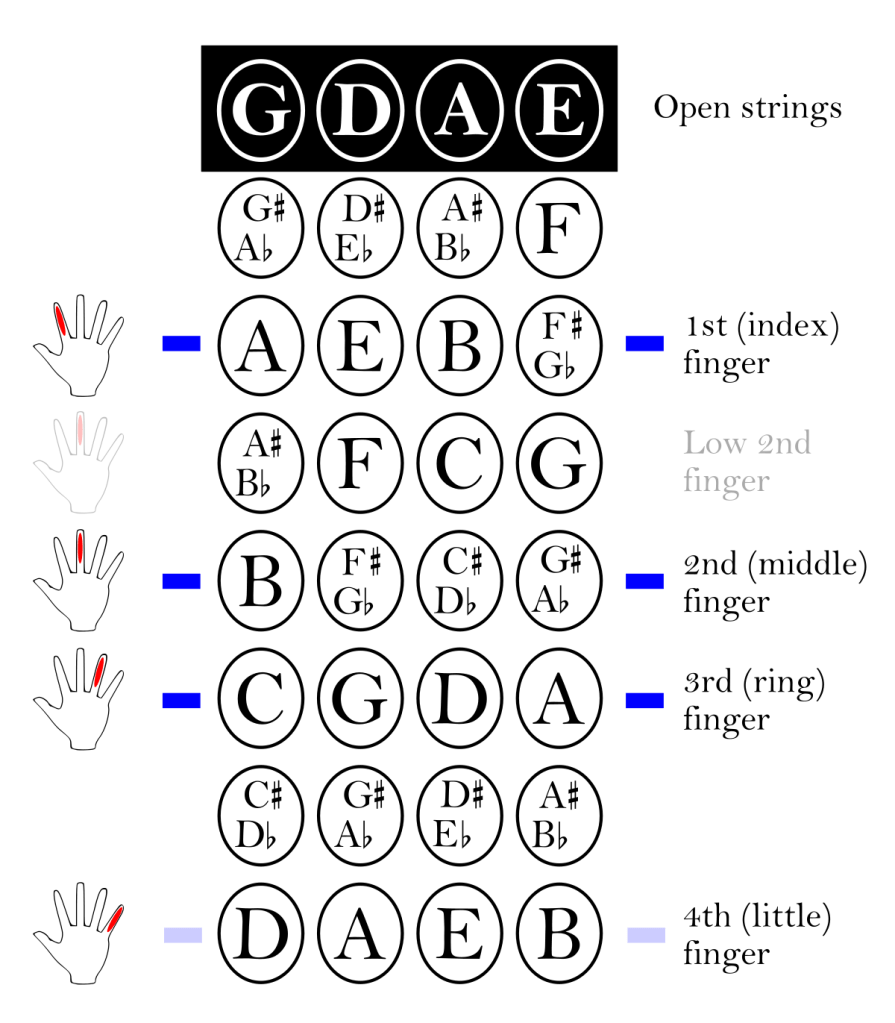
Position refers to where you place your finger on the fingerboard. I will omit the detailed explanation because it is difficult to explain in writing. These days, we use virtual instruments, so there is no need to know the details..^^

If you have an understanding of open strings and positions, you can write songs by distinguishing whether they can actually be played or not. Determining whether or not you can point out a chord with your fingers is a very important and basic factor when using chords in actual performance.

However, there is a formula that allows you to easily determine this even without understanding the position of the string instrument. I will explain this formula when I explain how to play string instruments in the next article.

Have a good day!

Orchestration Basics – Before we dive in

This article was written at July 29, 2022

Starting today, we are going to cover the basics of orchestration, namely instrument theory. I think I should write it down and organize it like this so I don’t forget what I learned less, and it will also be helpful to those who read it… haha.

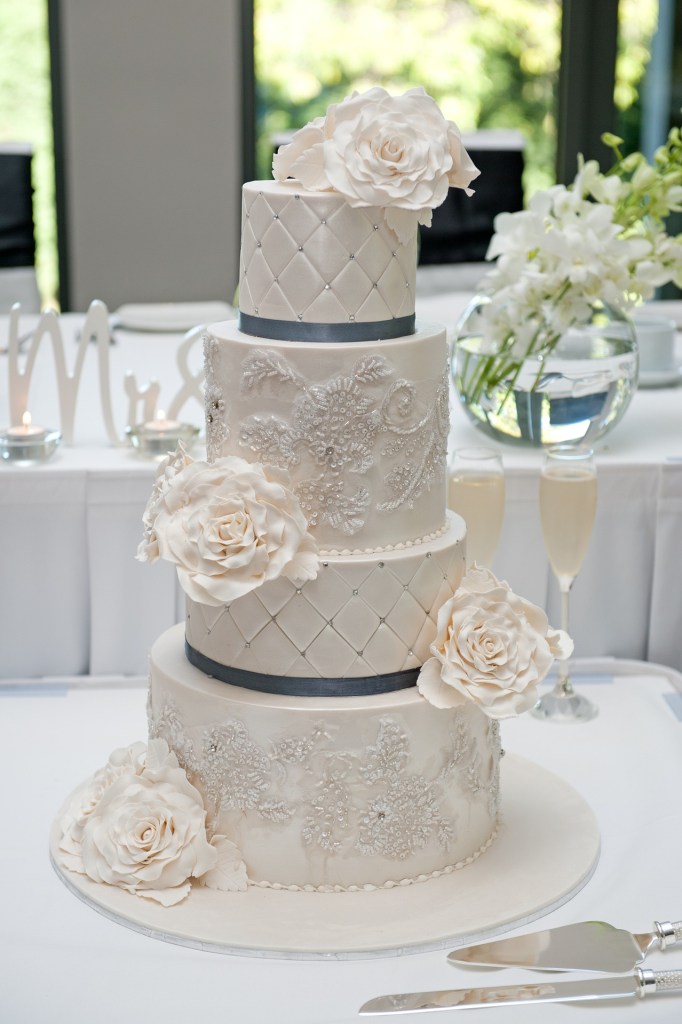
The instruments that make up an orchestra can be likened to a four-tiered cake. Each instrument group has four voices: soprano, alto, tenor, and bass, and instruments are classified into four groups: strings, woodwinds, brass, and percussion.

It would be convenient to think of the string instruments that are the most foundational and almost indispensable as the 1st tier, the woodwind instruments that come next as the 2nd tier, the brass instruments as the 3rd tier, and the remaining percussion instruments as the 4th tier.

The historical order in which musical instrument groups were added is similar to this. Initially, string instruments were adopted, followed later by woodwind, brass, and percussion instruments.

Therefore, this article will also be written in the following order: string instruments -> woodwind instruments -> brass instruments -> percussion instruments.

Well then, shall we begin?