
Hello, This is Jooyoung Kim, an engineer and music producer.
This post is a review-style article I wrote when I was working at Soop Records(Jan. 2023), where I had the opportunity to use Takamine guitars. I covered the history and lineups of Takamine guitars, including reviews of some mid-range models. Instead of letting this post remain only in Korean, I decided to translate it into English.
When I previously searched for information, I couldn’t find a comprehensive summary of how Takamine was established and what guitar lineups they offer.
Whether it’s due to my personality or not, I feel the need to organize these basic details before diving into more specific topics.
Let’s start with the history of Takamine guitars.
Takamine began in 1959.
Ohzone(大曽根), who worked at a musical instrument factory in the Nagoya region, decided to leave after the factory suffered severe damage from a typhoon and settled on Mount Takamine in Sakashita, Nakatsugawa City, Gifu Prefecture.
It started under the name Ohzone Musical Instruments(大曽根楽器製作所).

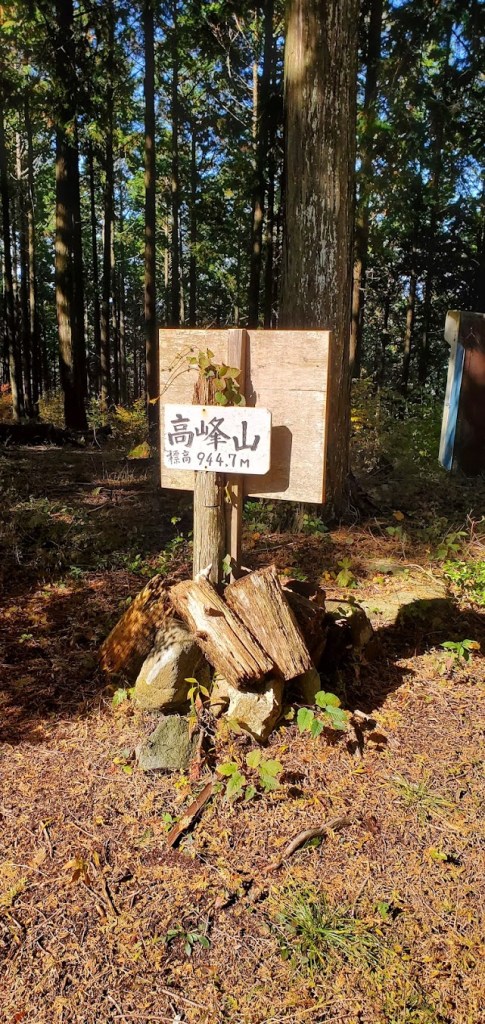
In 1962, dissatisfied with the company name, they changed it to Takamine Gakki (Takamine Musical Instruments, 高峰楽器製作所), named after the mountain.
(Side note: There are many mountains named Takamine in Japan. It was quite challenging to find pictures… haha)
By 1968, nearly ten years after the company was founded, it had grown into a sizable company with 60 employees, gaining fame for its classical guitars and mandolins.
During this period, guitarist Hirade, who played a significant role in the company, joined Takamine.

With Hirade as the president, in the 1970s, they anticipated a growing demand for steel-string acoustics and entered the international market. At the time, the guitars were reasonably priced and well-made, which helped them gain a foothold in the market.

However, Takamine couldn’t escape the shadow of Martin copies during this period.
Martin even sent Takamine a letter asking them not to copy their headstock design exactly.
Although Martin didn’t sue, the story got slightly distorted, leading to old Takamine Martin-style guitars being called “Lawsuit guitars.”
Regardless, this marked a turning point for Takamine, leading them to create their iconic pointed headstock and develop unique split saddles for better intonation.
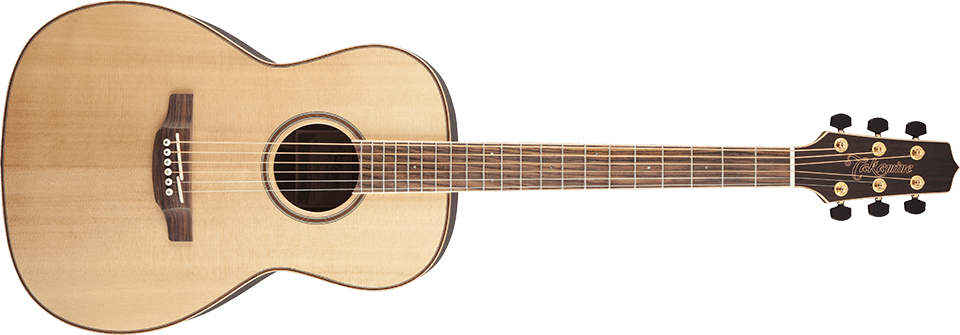
In 1978, Takamine developed their renowned Palathetic pickup.
The Palathetic pickup, with six individual piezo transducers, one for each string, is still highly regarded today and has been widely copied by other manufacturers.
Even though the company name was Takamine Gakki, previous guitars had names like Elite and Nashville. After the introduction of the pickup, they started using the name Takamine exclusively.
This solidified Takamine’s place in the market. It’s said that the Eagles used a Takamine 12-string guitar for “Hotel California” during this period.
In 1988, Takamine introduced a parametric EQ to their preamps, and in 1989, they developed an external battery box and a replaceable preamp system, making their guitars more suitable for performances.
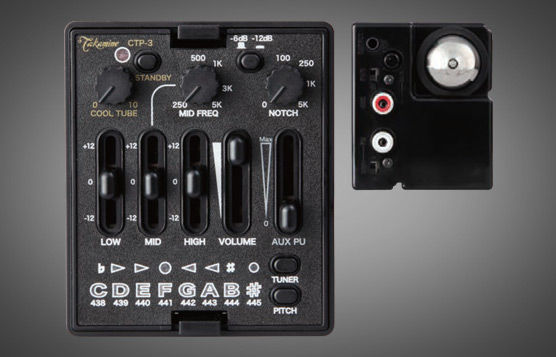
This innovation continued with the introduction of the CoolTube, the first onboard tube preamp, in 2004, along with other replaceable preamps.
Unfortunately, this feature is not available in the lower-priced G Series.
It would be great if these preamps could be swapped in lower-priced guitars, as they would be perfect as a second guitar for gigs, but it remains a bit of a drawback.
This covers the main points of Takamine’s history. In the next post, I will summarize Takamine’s lineup and price ranges.
See you in the next article!



 Jooyoung's Music Blog