Hello, I’m Jooyoung Kim, an engineer and music producer.
We’ve discussed various processors that control dynamics. Today, let’s talk about limiters and clipping.
Let’s dive right in!
Limiters
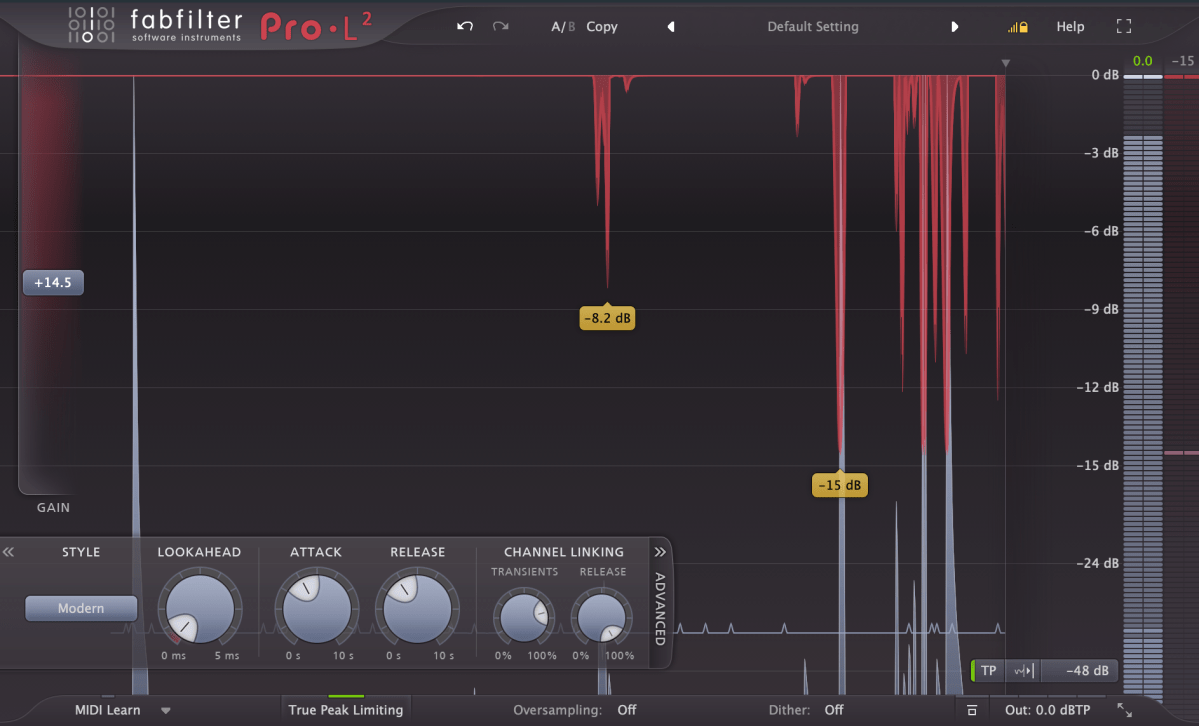
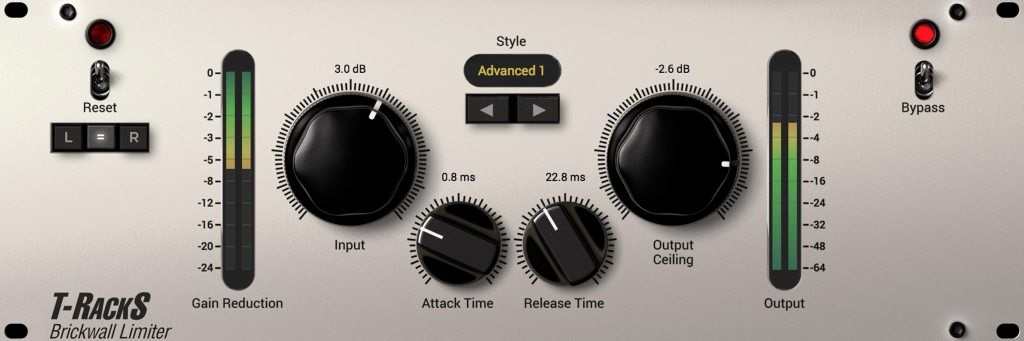
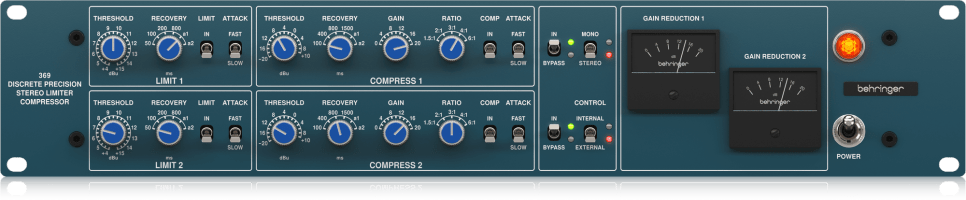
A limiter is a type of compressor. Generally, when the ratio exceeds 10:1, we call it a limiter. When it reaches ∞:1, it’s often referred to as a brickwall limiter.
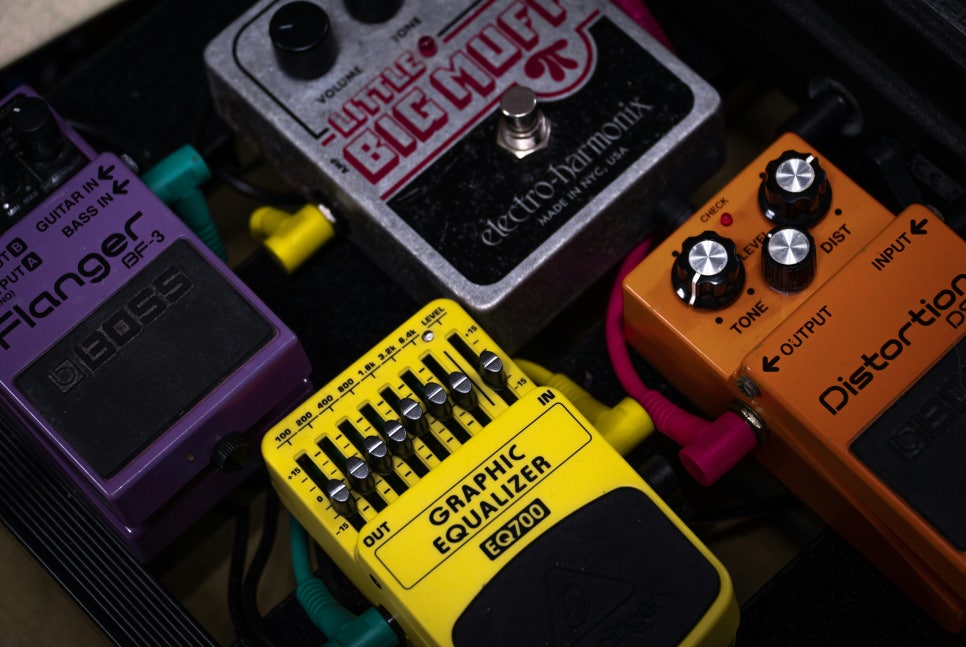
Limiters are processors that aggressively compress sound to prevent it from exceeding a certain volume level. A simple example of this would be guitar effects like distortion or overdrive, which are types of limiters. In mastering, limiters are used at the final stage to ensure the volume doesn’t exceed a certain level.
Any limiter, when viewed on a waveform, shows the top and bottom parts being cut off. This truncation introduces strong harmonic distortion, known as clipping, which we can perceive as a distorted sound.
Distortion-type limiters result in noticeable clipping, producing a heavily distorted sound. To minimize such distortion, some compressors/limiters include a feature called soft clipping.
Clipping / Soft Clipping
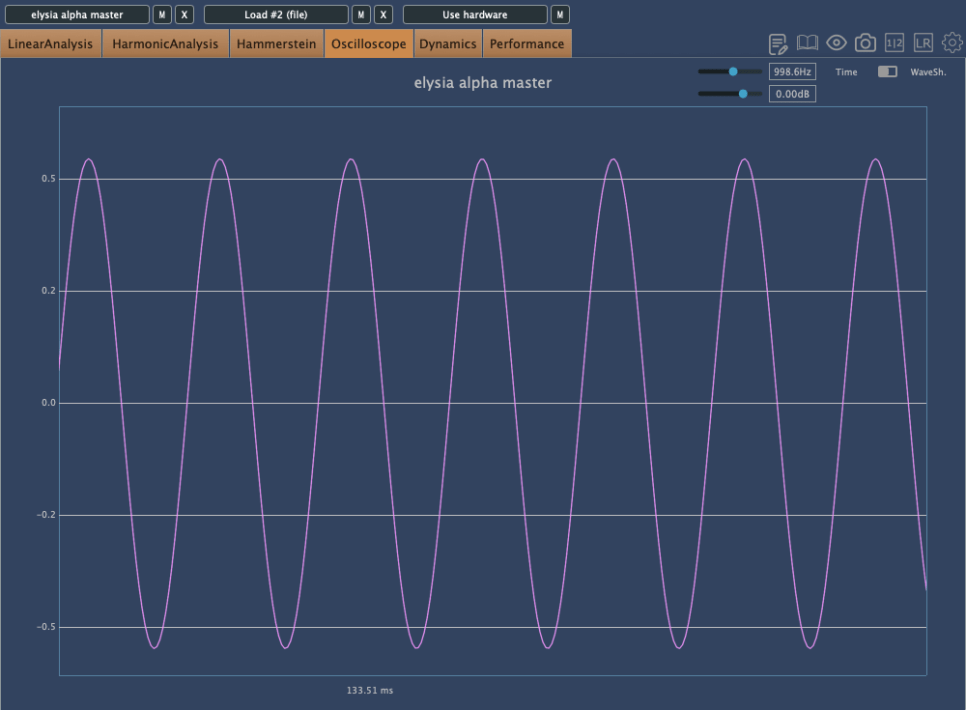
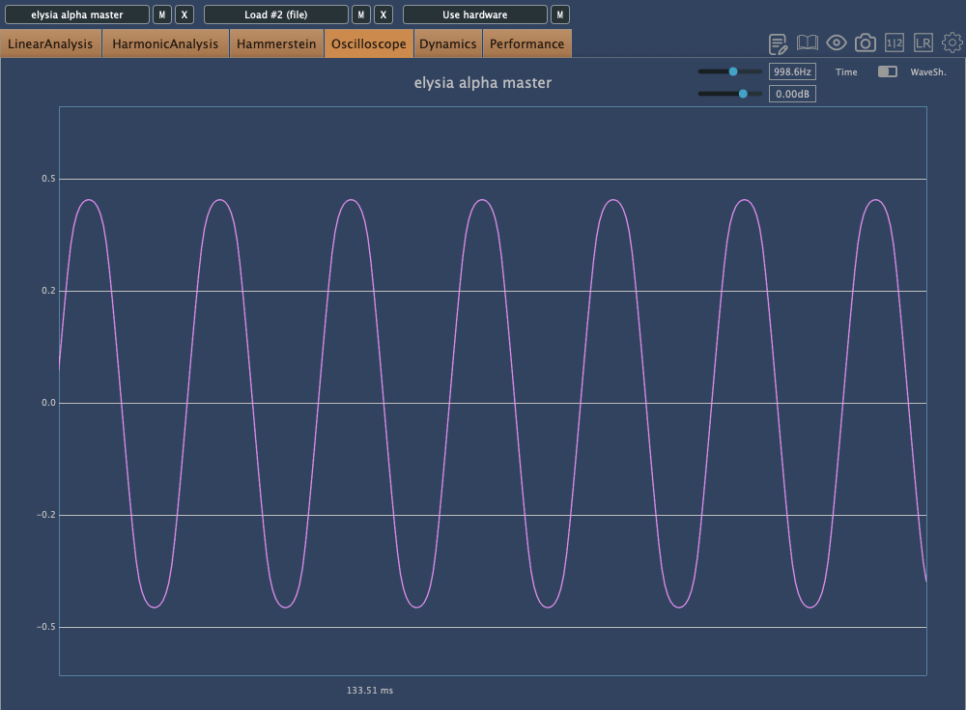
Elysia Alpha Compressor with Soft Clipping Function
Soft clipping gently smooths out the sharp edges of clipping. When a sine wave undergoes limiting with soft clipping, the result is a waveform that doesn’t have the abrupt cuts seen in regular clipping.
While soft clipping still introduces distortion, the sound is smoother compared to hard clipping. Using limiters or soft clipping helps to increase the overall loudness of a track. The reason for boosting volume is that people tend to perceive louder music as higher quality. However, equal LUFS (Loudness Units relative to Full Scale) values do not always mean the perceived volume is the same. For example, in vocal music, if the vocals are prominent, the music may seem louder even with similar LUFS values.
Even if you’re not mastering your own tracks, considering these aspects during mixing can help you create better productions.
Next time, I’ll explore reverb effects like delay. See you then!
Hello, I’m Jooyoung Kim, an engineer and music producer.
Today, we’ll delve into two subtypes of compressors: De-Essers and Multiband Compressors.
Let’s get started!
De-Essers
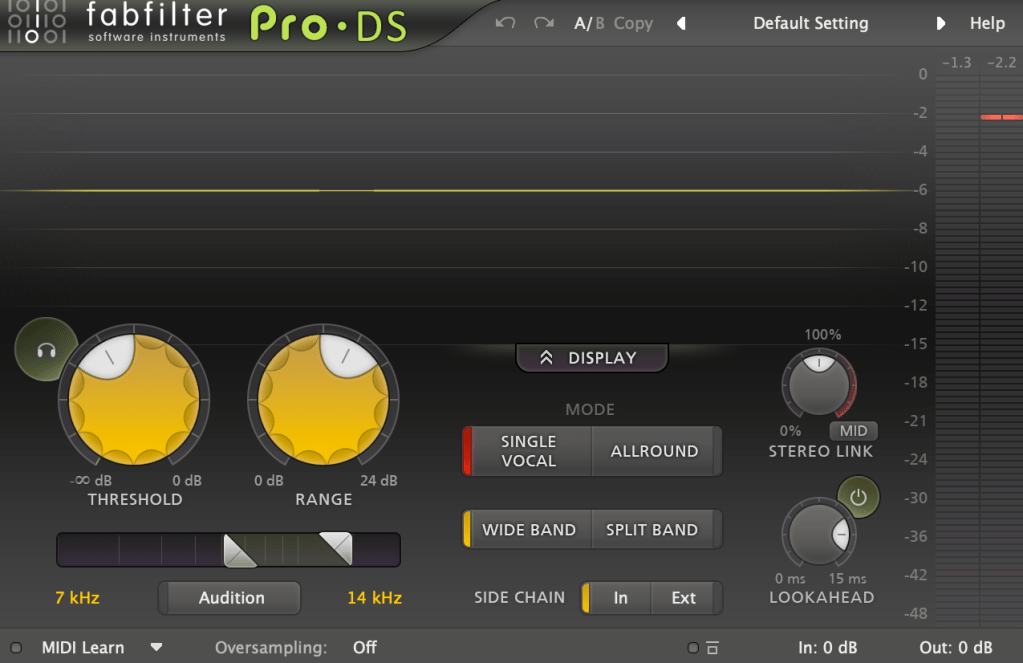
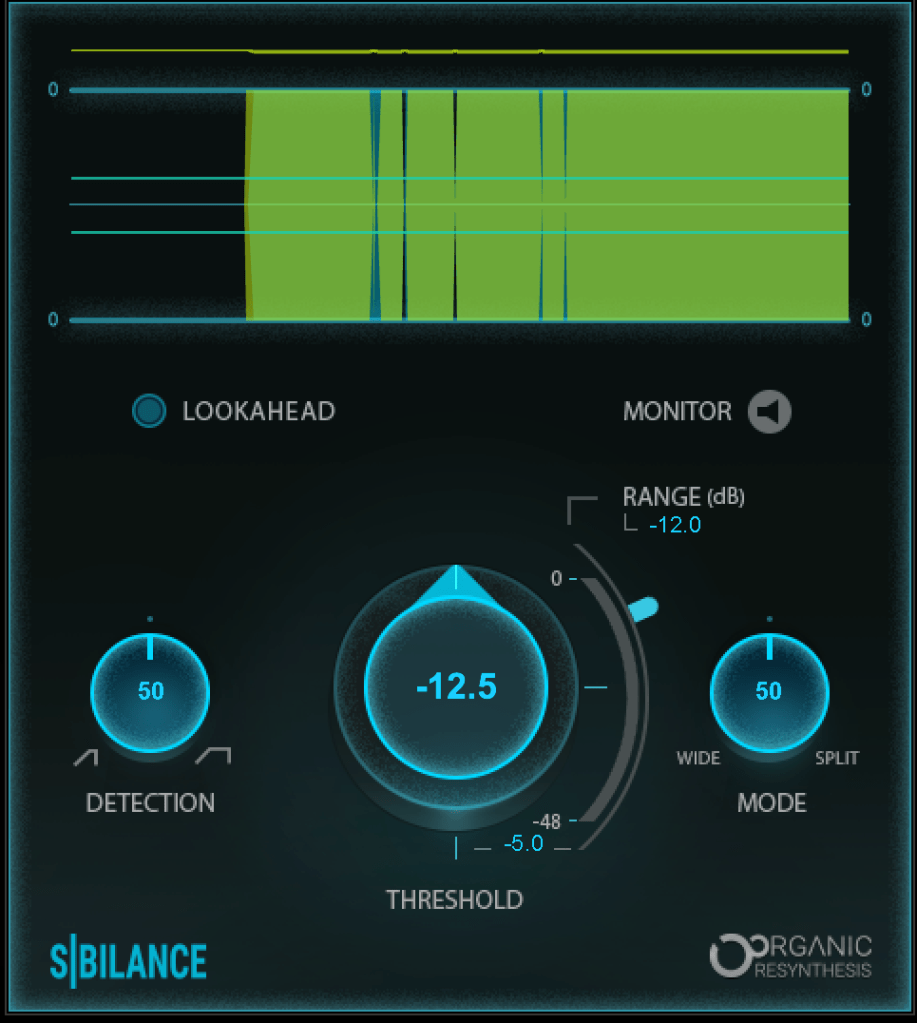
A De-Esser is a type of compressor that reduces “ess” sounds, also known as sibilance. Waves even has a De-Esser named “Sibilance” specifically for this purpose.
Sibilance typically falls between 3kHz and 10kHz. A De-Esser works by activating the compressor when the sound in this specific range exceeds a certain threshold. Unlike using an EQ, which reduces the selected frequency range across the entire source, a De-Esser targets only the problem area. You can think of it as a single-band compressor.
De-Essers are not only useful for reducing vocal sibilance but also for taming harsh high frequencies in acoustic guitar strums and other similar sounds.
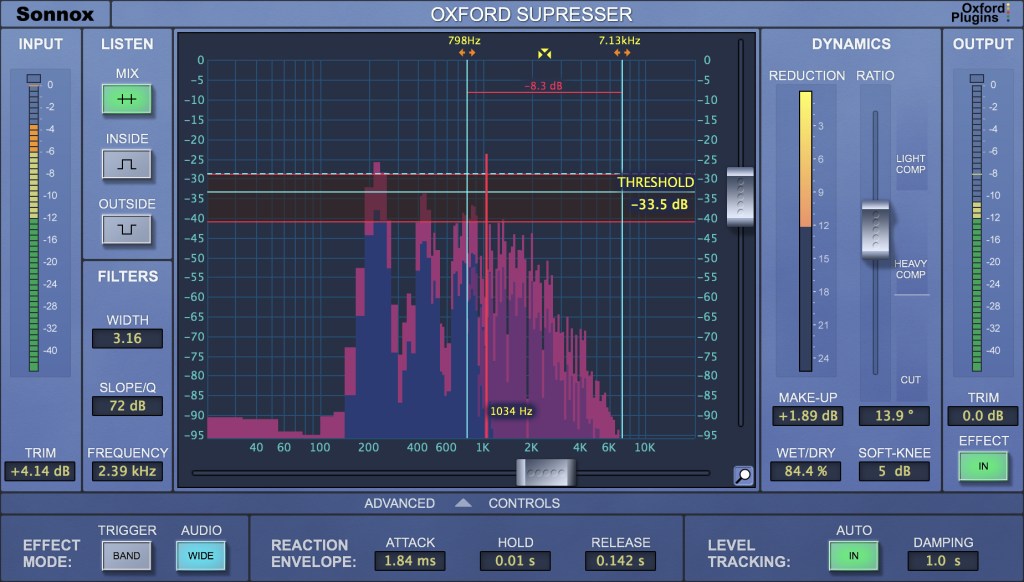
For instance, the Oxford SuprEsser by Sonnox offers a wide range of frequencies to adjust, making it versatile for various applications beyond its primary function of reducing high frequencies.
Multiband Compressors
A Multiband Compressor allows you to set different compression parameters for different frequency ranges. This is particularly useful when dealing with audio sources containing multiple instruments, which can be challenging to manage with a simple compressor.
For example, you might use a Multiband Compressor on a drum bus or to handle looped sources from platforms like Splice. It’s also commonly used in mastering.
Sidechain functionality in these compressors can add an interesting and effective dynamic to your tracks. For example, you can sidechain the low frequencies of other instruments to duck when the kick drum hits, or use it to carve out space for the vocal’s frequency range.
I’ll cover sidechain techniques more thoroughly in a future post, but mastering sidechain within dynamic plugins can significantly enhance the fun and effectiveness of your mixing. I’m not an expert yet, but I’m learning alongside you.
Hello everyone, this is Jooyoung Kim, an audio engineer and music producer.
Today, I’d like to talk about some friends that, like the compressor, help us control dynamics: the Decompressor, Expander, and Gate.
Decompressor
A decompressor works in the opposite way to a compressor, making sounds above a set threshold louder.
You might wonder, “Why would anyone use this?” Occasionally, it can be used to force a groove or to emphasize transient parts.
Expander and Gate
An expander decreases the volume of sounds below a certain threshold. When the ratio is increased, it starts to function as a gate.
Think of the relationship between an expander and a gate as similar to that between a compressor and a limiter. The parameters for these tools are similar to those of a compressor. If you understand how a compressor works, you can easily use these tools as well.
These effects can be particularly fun when used with sidechain.
For example, you can apply a gate to a track with white noise and use sidechain so that the white noise only plays when the hi-hats come in. Or, you can apply a decompressor to a track and use sidechain to make the instruments louder only when the snare hits.
There are countless creative ways to use these effects if you let your imagination run wild.
If you’re a songwriter, try applying these effects not only to your mixes but also to your instruments. They can be very effective.
That’s all for today. In the next post, we will look at other effects that have compressor-like functions. Stay tuned!
Hello! I’m Jooyoung Kim, a mixing engineer and music producer.
Today, I was initially planning to talk about historically famous compressors. However, I realized that discussing the characteristics of these famous compressors might not be as effective since many of their plugin emulations don’t faithfully reproduce the original characteristics.
You might wonder how I can make such a claim without trying every famous compressor. Well, simply measuring their frequency response often shows no changes, and many plugins are designed to produce only odd or even harmonic distortions, which is unrealistic given the nature of tubes and transistors.
Instead of delving into the history of famous compressors, I decided it would be more beneficial to explain how to analyze compressors, whether they are plugins or hardware, once you purchase them.
1) Understanding Frequency Response
To measure this, you’ll need a program called Plugin Doctor by DDMF. Unfortunately, I couldn’t find any viable alternatives.
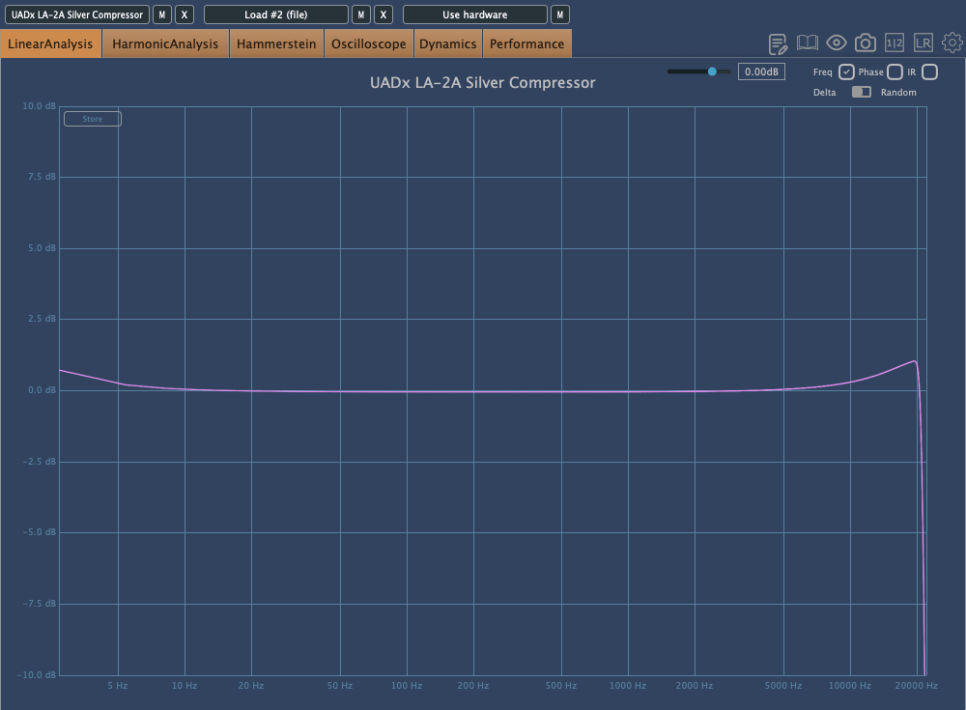
With this program, you can immediately see how the frequency response changes when a plugin or hardware is applied. Experienced mixers and producers might already have a feel for the frequency response just by listening, but visual aids can be incredibly helpful for study purposes.
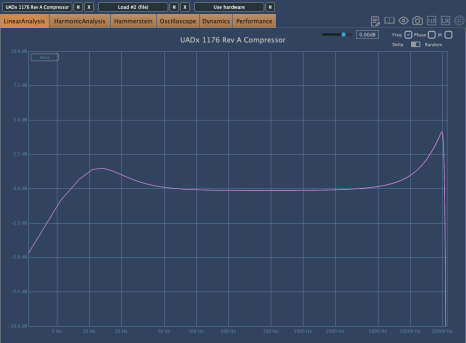
For example, some plugins alter the frequency response depending on how the input gain is set.
The above graph shows the frequency response of the UAD 1176 Rev A compressor. The left side shows the response with no changes, and the right side shows the response after increasing the input gain and adjusting the output gain.
Even a quick glance reveals significant differences.
2) Analyzing Phase Changes
Phase changes can greatly assist in identifying affected frequency bands. The graph below illustrates the phase changes of a tape machine emulation, indicating substantial alterations across the spectrum.
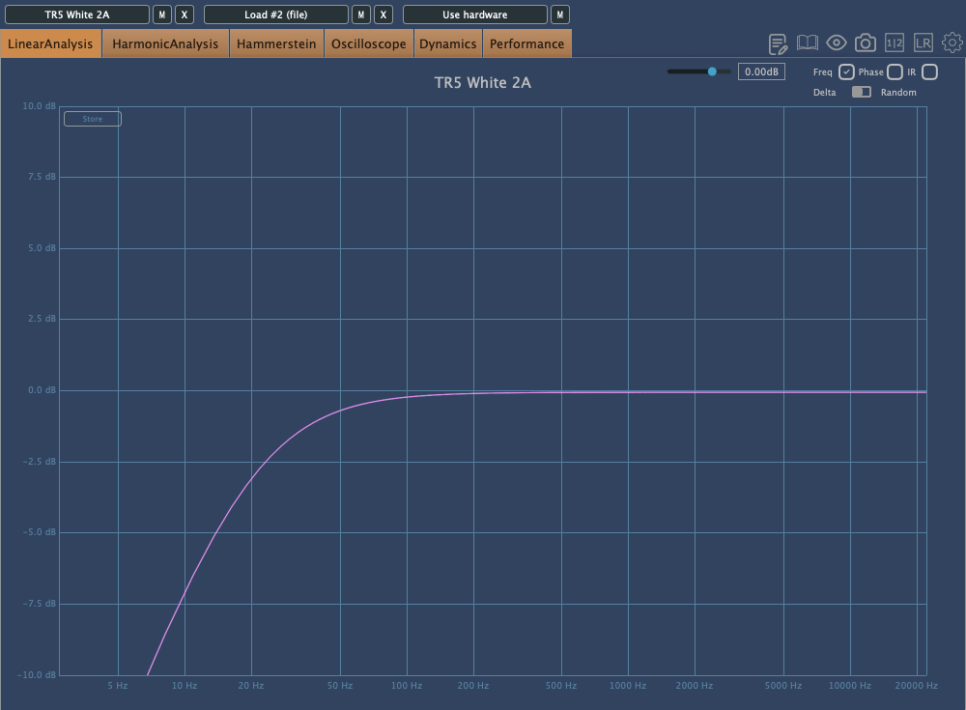
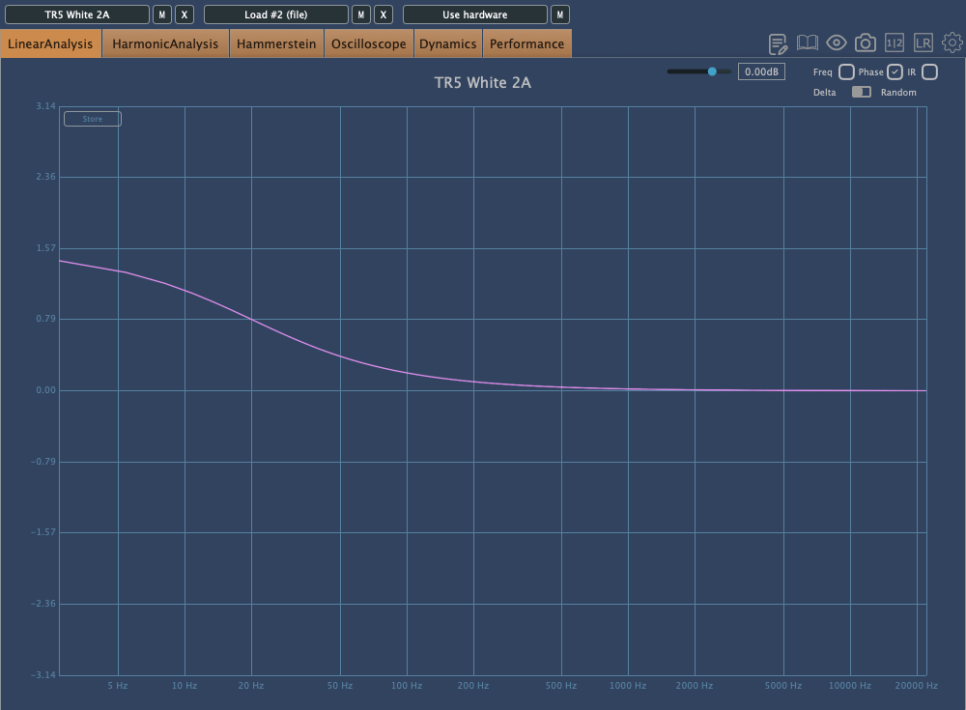
This graph shows the frequency response and phase changes of the White 2A compressor by IK Multimedia, which emulates the LA-2A.
From the frequency response, you can infer a low-cut filter was applied. The phase change graph suggests a π/2 shift, indicative of a -6dB/oct low-cut filter.
3) Assessing Harmonic Distortion
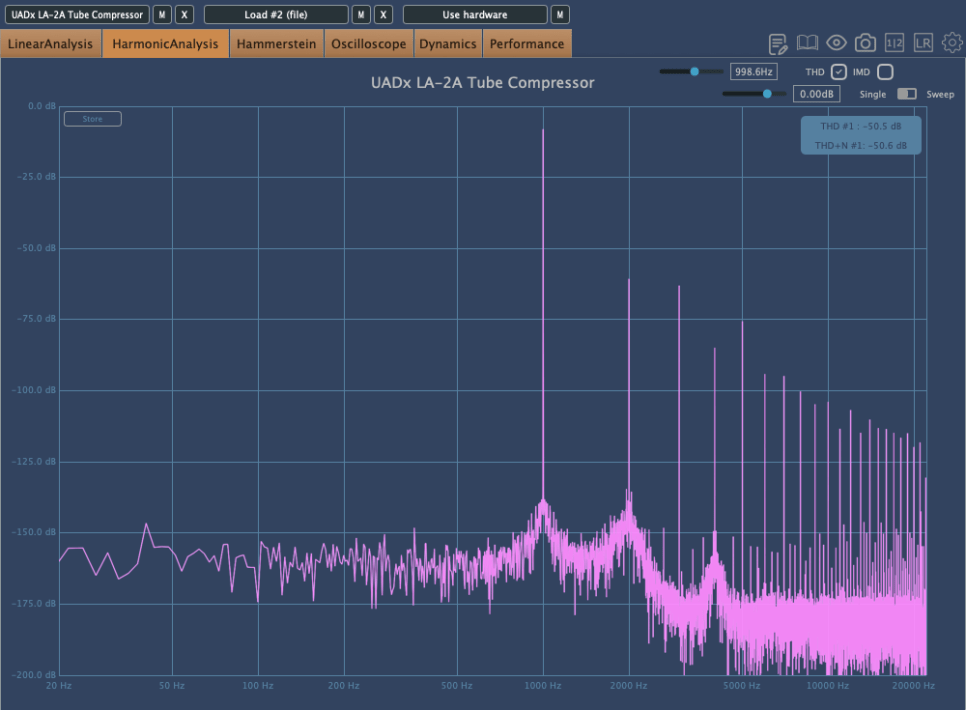
Harmonic distortion often refers to the presence of even and odd harmonics. Even harmonics tend to create a more pleasant sound due to their consonant nature, while odd harmonics can introduce dissonance and sound harsher.
By measuring and listening, you can identify whether a compressor produces more even or odd harmonics and how it affects your perception.
For example, I find the White 2A compressor somewhat dull, whereas the UAD LA-2A Silver feels richer in color.
This perception might be influenced by its slight high-frequency boost and the more complex harmonic distortion it introduces.
However, it’s important to note that more harmonic distortion doesn’t necessarily mean a better plugin. It simply provides insights into how and where to use it effectively.
4) Evaluating Attack and Release
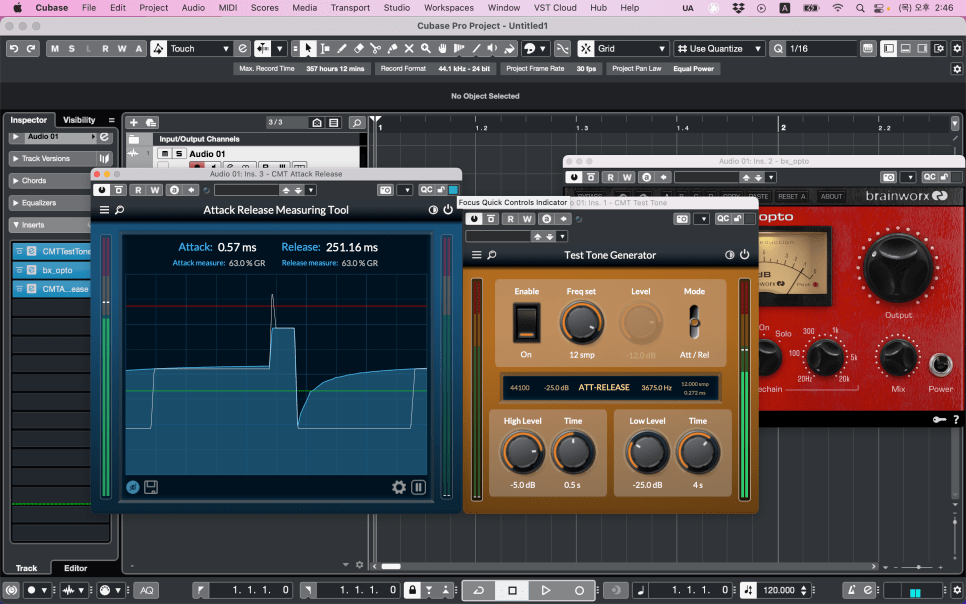
Although many plugins specify their attack and release times, some do not, necessitating manual measurement.
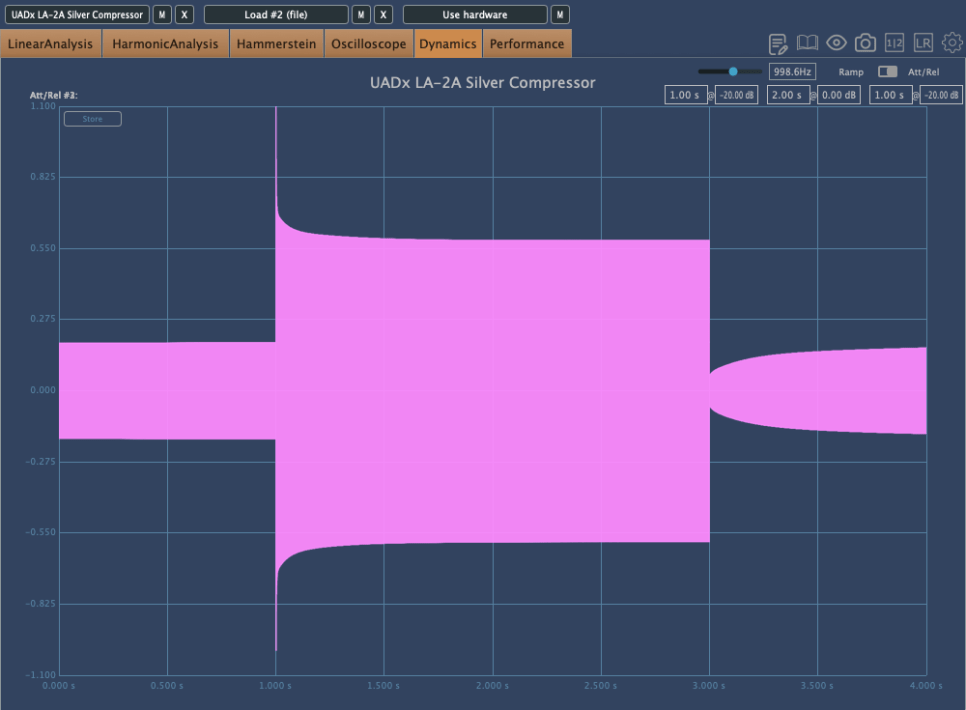
Using Plugin Doctor, you can visualize attack and release times with an oscillator. However, it doesn’t precisely indicate the time, which can be inconvenient.
A free tool called CMT can help here. You can download it from the description in a related YouTube video.
Knowing attack and release times is crucial because they influence how the compressor affects the source material’s groove and dynamics. Fast attacks can flatten a track’s groove, while fast releases can cause pumping effects.
Conversely, slow attacks may fail to control loud transients, and slow releases can cause continuous compression, making the sound feel squashed.
5) Examining Ratio Curves
Ratio curves reveal whether a compressor uses a soft or hard knee. A soft knee compressor starts compressing gradually before the threshold, resulting in smoother compression.
Manuals often don’t specify the knee type, so you might need to measure it yourself.
Understanding the knee type helps in grasping the compressor’s behavior and its suitability for different sources.
6) Soft Clipping in Mastering Compressors
Some mastering compressors offer a soft clipping feature, which we’ll cover in detail later. Soft clipping changes harmonic distortion and waveform shape, as shown below.
Soft clipping rounds off waveform peaks, introducing non-linear harmonic distortion. The more it resembles hard clipping, the more noise-like it becomes.
Think of a guitar distortion pedal for hard clipping and an overdrive pedal for soft clipping to understand the concept better.
Conclusion
Understanding these aspects will give you a solid grasp of a compressor plugin or hardware. Remember, you don’t need to memorize these values.
The key questions are:
How does it sound when applied?
How can it be used musically?
Measure and analyze your plugins/hardware, and listen to how they affect various sources. This combination of measurement and auditory experience will solidify your understanding.
Pay attention to how the source moves (up/down as discussed in Mixing Basics 2.4), how the tone changes, and how the compression feels. Being able to describe these in your own terms is a significant achievement.
I continue to buy and use hardware because of these nuanced changes. Emulation plugins often lack the detailed frequency response and harmonic distortion of their hardware counterparts due to digital reproduction limitations.
However, using hardware doesn’t automatically improve your tracks. The key lies in understanding and using these changes appropriately to enhance your mixing and sound design.
Mixing is always challenging, as each track requires a different approach. With numerous plugins at your disposal, the choices can be overwhelming.









 Jooyoung's Music Blog