I Bought a Vintage Cort A4 Bass!

Hello, I’m Jooyoung Kim, an audio engineer and music producer.

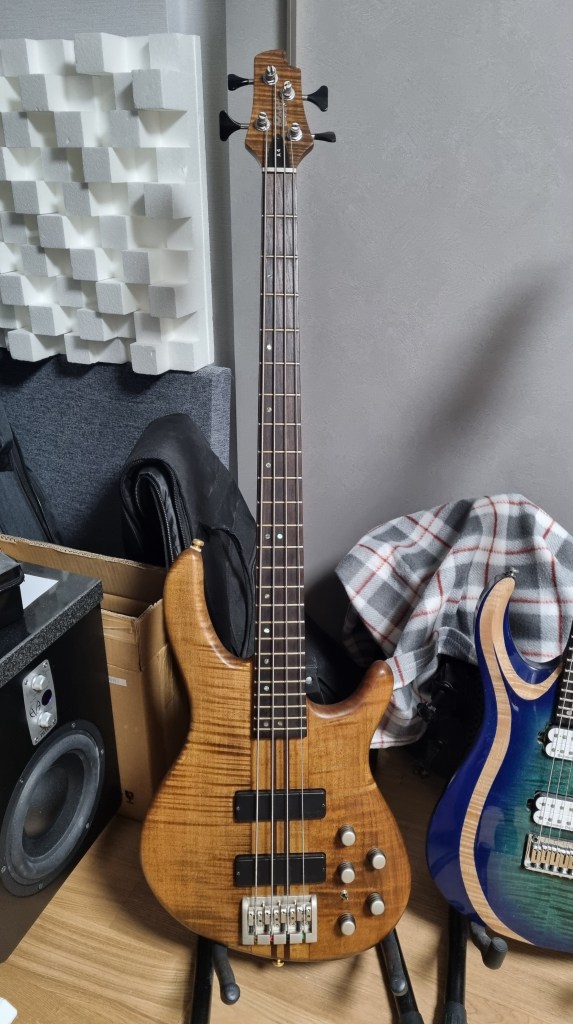
For a while now, I’ve been wanting to have more control over certain articulations, like sliding, vibrato, and slap techniques. That led me to decide that I should start playing the bass myself.

Since I’ll be using it for music production, I didn’t want to settle for a cheap, entry-level instrument. At the same time, I didn’t have the budget for a high-end one…

This is where a solid domestic brand comes in handy!

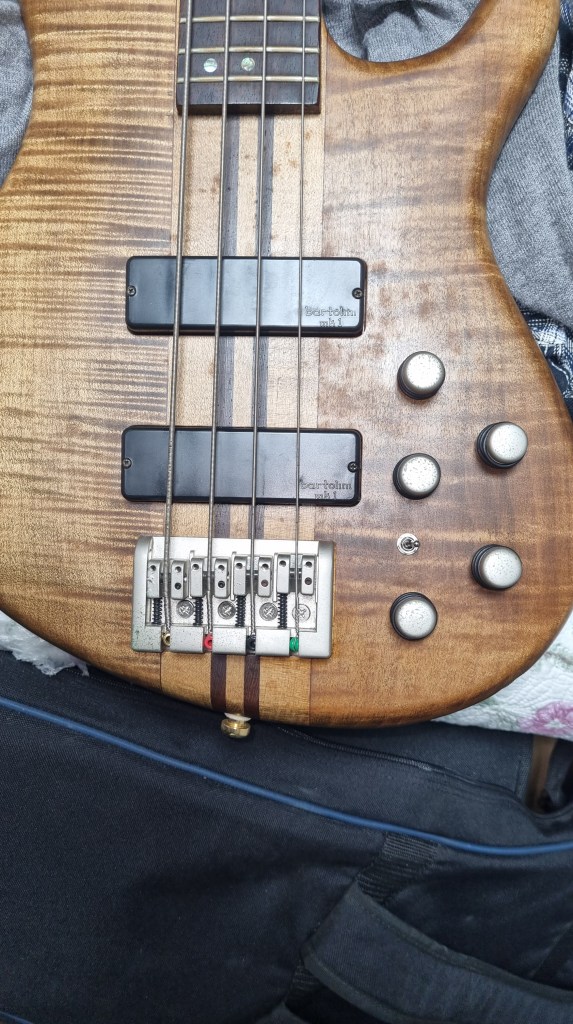
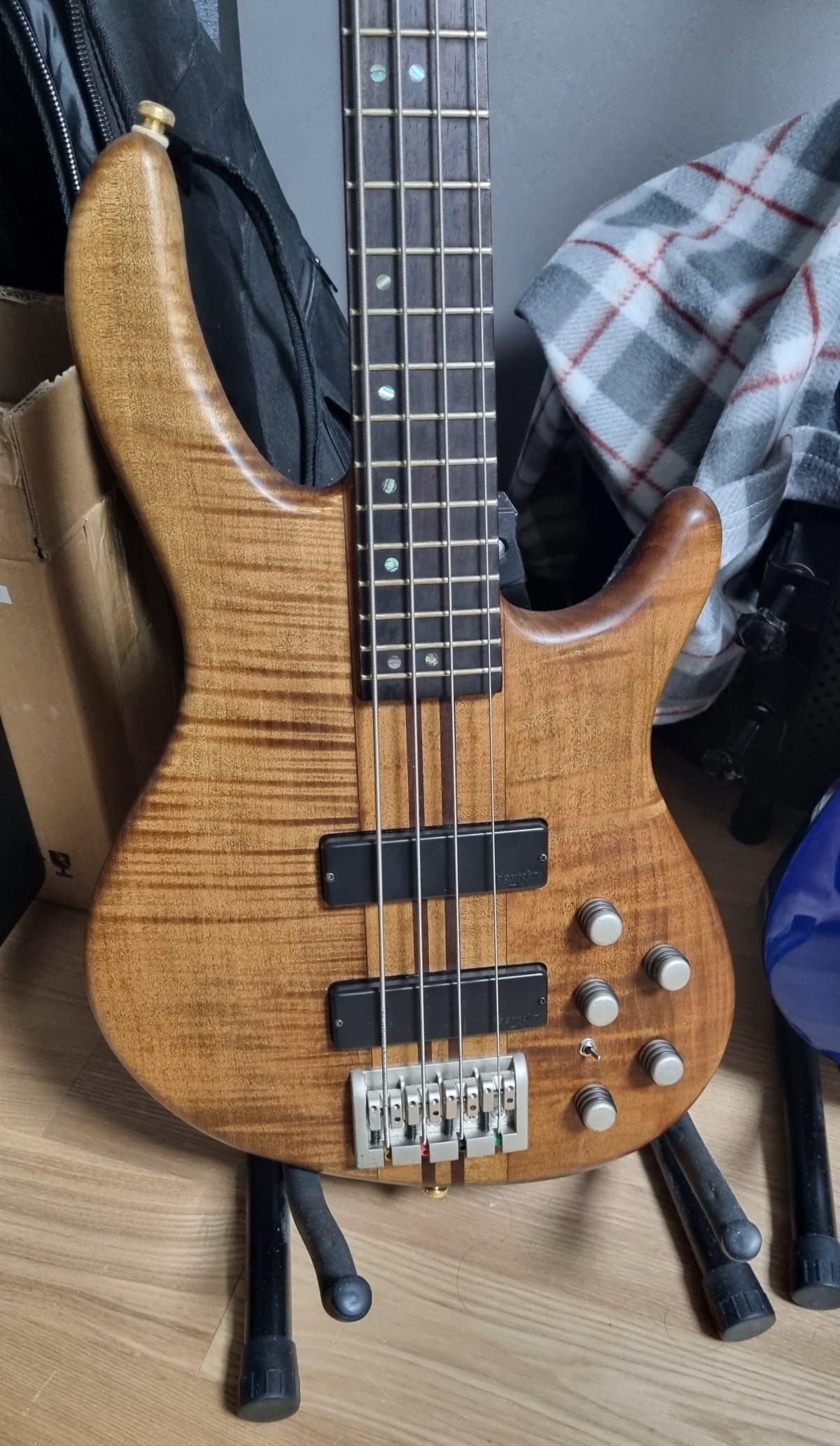
Yes, I’m talking about Cort. My electric guitar is Cort, and now my bass is too.

It’s an older model, so unfortunately, it only works in active mode with no option to switch to passive. There’s also some rust on the knobs and bridge, which is a slight drawback. However, after trying it out, I really liked the sound—it’s exactly what I was looking for.

I had borrowed a Squier bass from an older friend for a few days (though I’m not sure what model it was), and I have to say, this Cort bass feels way more comfortable in my hands.

The strings are a bit old, so I’m curious how it will sound once I change them.
Then I thought about adding a switch for active/passive mode and took a look inside the back panel.
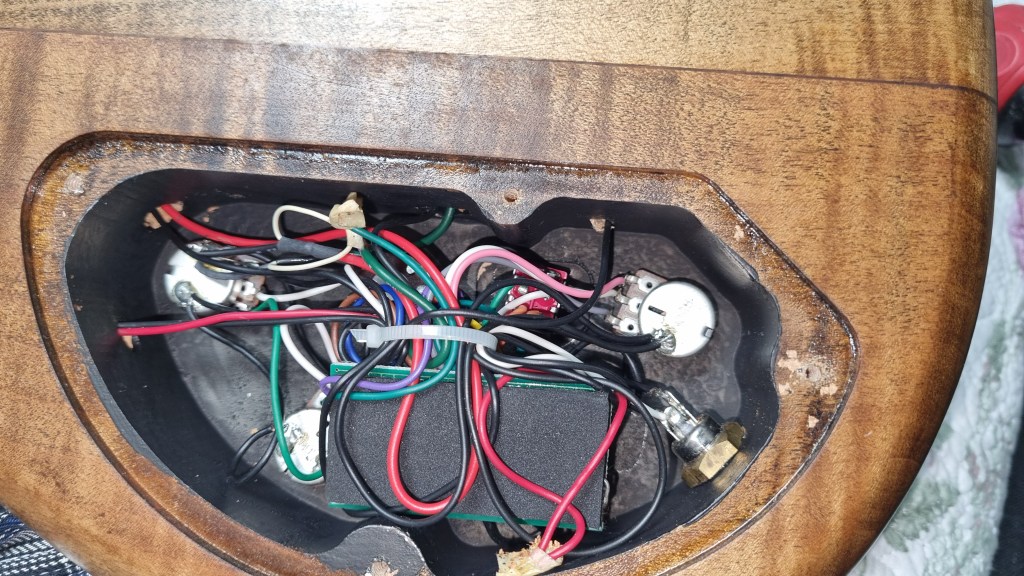
The wiring looks like a bit of a mess, so I’ll have to think it over when I get more time.

The goal is to practice more and eventually record most of the bass parts myself! But honestly, I feel like I might end up buying a Precision bass too… It never ends!

I’ve also been wanting to learn drums—am I becoming a one-man band? Haha.

See you in the next post!

Sonnox Drum Gate & Envolution Plugin Sale (~10/27)

Hello, I’m Jooyoung Kim, an audio engineer and music producer.

Today, I’d like to introduce a few Sonnox plugins that are currently on sale. The products were provided by Plugin Boutique as NFR (Not for Resale) versions.

Let’s dive right in!

Sonnox Drum Gate

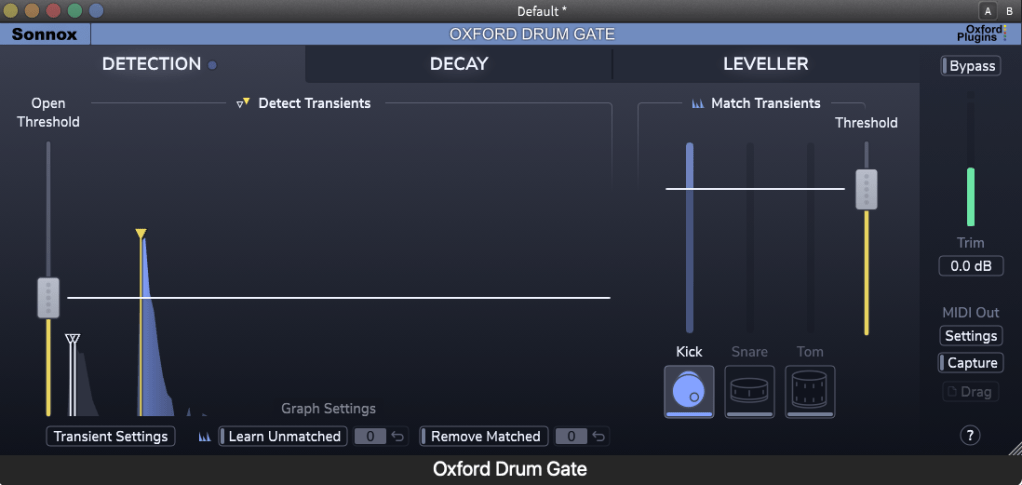
Sonnox Drum Gate is a gate plugin specifically designed for drums. On the left side, you can set the threshold like a typical gate using the Open Threshold. For kicks, snares, and toms, the Match Transients feature on the right allows for more precise separation.

When working with real drum recordings, it’s often better to avoid using a gate due to various issues. However, if you plan to use one, I can confidently recommend this plugin as it’s very well-made.

This plugin isn’t just a simple gate. Instead of a traditional release control, it offers a frequency-based delay adjustment, and you can boost the transient levels using the Leveller. The Leveller feature also allows you to set a Loud Target and Soft Target, enabling you to manage dynamic ranges effectively.

I tested it on some live-recorded drum tracks, and it did a great job isolating them. It seems particularly useful for handling tracks with heavy bleed.

Moreover, the MIDI Out feature allows you to extract MIDI from drum tracks with great grooves. This could be quite helpful for those learning to program drum MIDI.

Sonnox Envolution

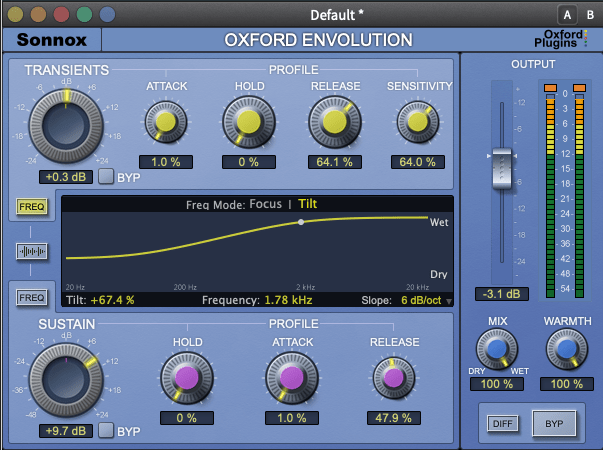
There are many plugins that adjust envelopes, but Sonnox’s Envolution, even after nearly 10 years since its release, remains one of the most powerful and highly recommended plugins.

It’s intuitive and easy to use. The oscilloscope shows what adjustments you’ve made, and it produces exactly the sound you’re expecting. It’s one of the best transient-focused plugins out there.

As for the parameters, the upper section controls the transients, while the lower section manages the sustain. Additionally, if you click on FREQ on the left:

You’ll see options for Tilt EQ or Parametric EQ, allowing you to EQ the sound precisely.

The Warmth knob on the right is simply a harmonic generator… haha.

This month, if you make a purchase from Plugin Boutique, you’ll receive either Air Music Technology’s Solina virtual instrument or Zynaptiq’s Orange Vocoder Nano for free. Both plugins are excellent, so if you’re considering any plugin purchase this month, I recommend checking out Plugin Boutique.

See you in the next post~:)

Basics of Mixing – 9.2 Saturation of Transistors and Vacuum Tubes

Hello, I’m Jooyoung Kim, an audio engineer and music producer. I’ve been quite busy lately, and my blog posts have been delayed…^^;;

Today, I want to talk about the saturation effects of transistors and vacuum tubes.

Shall we get started?

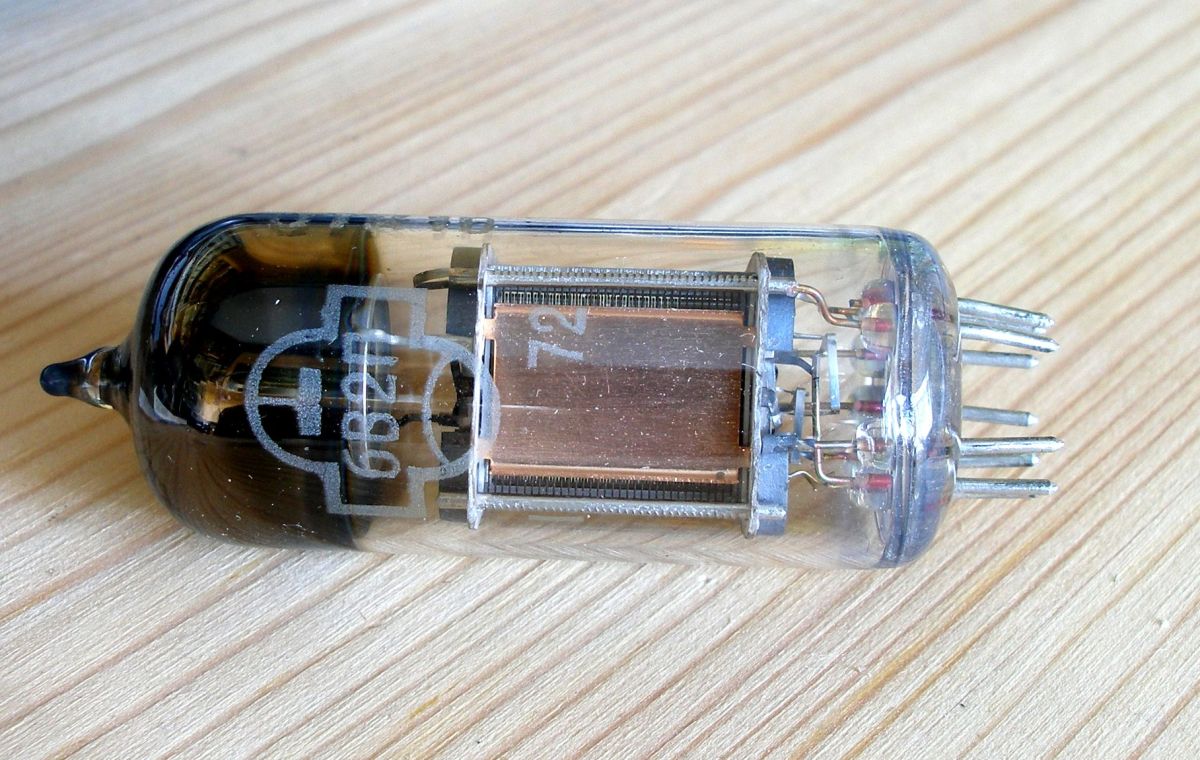
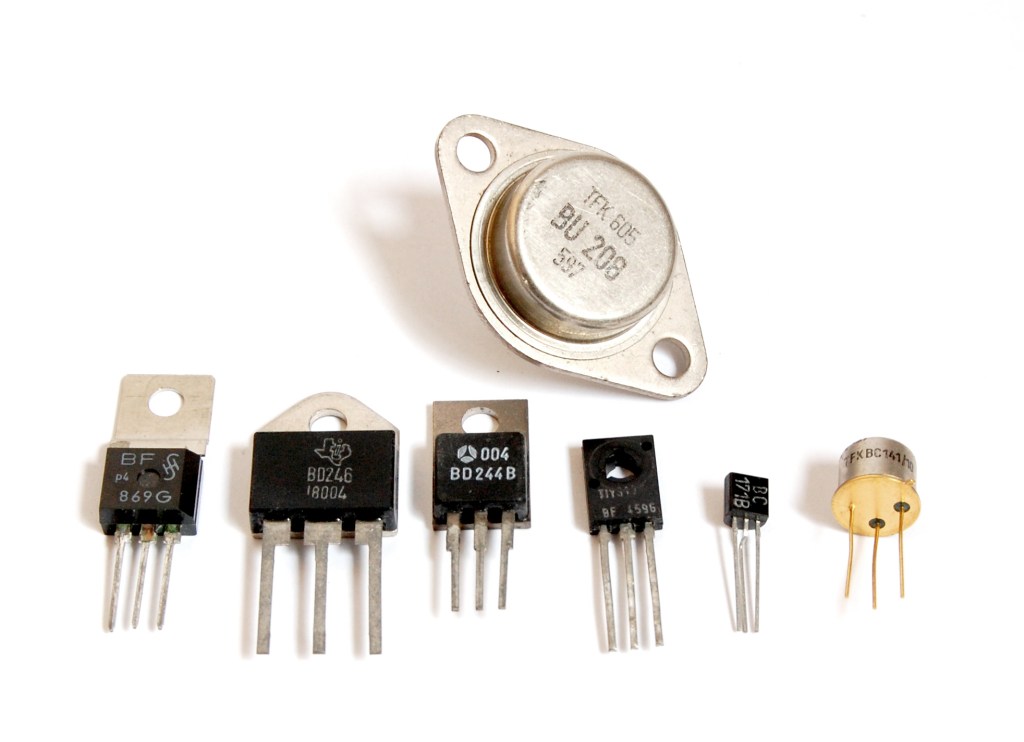
First of all, why do we use transistors and vacuum tubes? Let’s start with this question. Why exactly are they used?

In the past, they were found in speakers, amplifiers, and even microphone preamps used by musicians—basically everywhere. The primary reason we use them is to “amplify” small electrical signals.

Now, I believe you understand why components like vacuum tubes or transistors are included in speaker power amps, integrated amps, microphone preamps, and why they are called “amps” in the first place.

In my previous post, “[Link – 9.1 Harmonics and Saturation],” I explained from a non-linear signal perspective why harmonics are produced when signals pass through these devices.

Let’s dive into how these harmonics are generated.

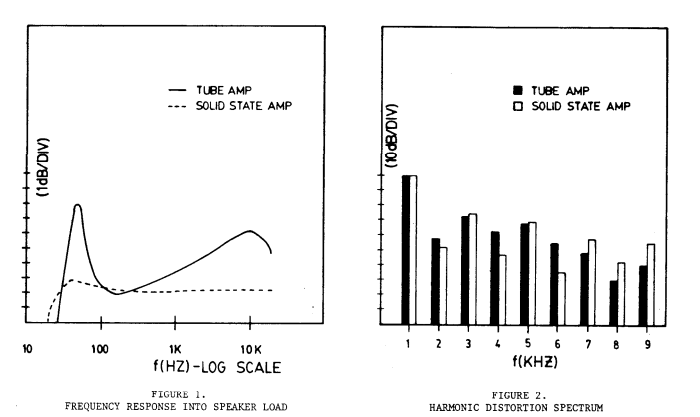
W. Bussey and R. Haigler, “Tubes versus transistors in electric guitar amplifiers,” ICASSP ’81. IEEE International Conference on Acoustics, Speech, and Signal Processing, Atlanta, GA, USA, 1981, pp. 800-803, doi: 10.1109/ICASSP.1981.1171205.

The image above is from a 1981 paper titled Tubes versus Transistors in Electric Guitar Amplifiers. It shows the response of electric guitar amps that use vacuum tubes or transistors.

The graph on the left shows the frequency response, while the one on the right displays harmonic distortion. It’s clear how different they are, even without further explanation.

References
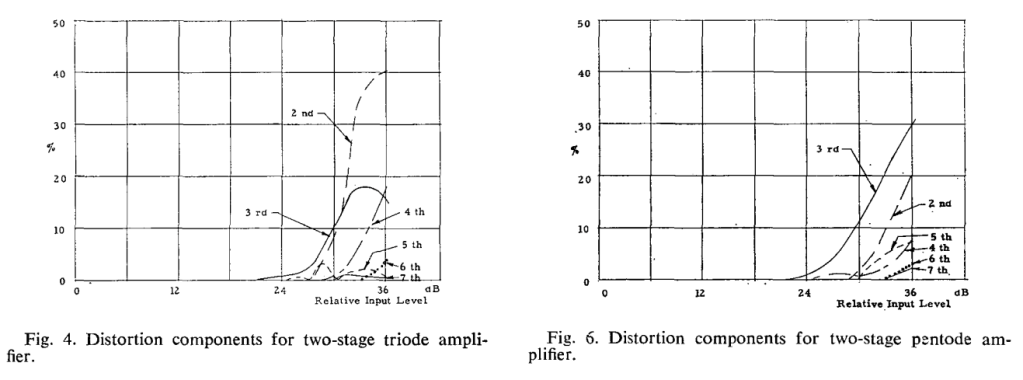
O., H. R. (1973). Tubes Versus Transistors – Is There an Audible Difference? Journal of the Audio Engineering Society, 21, 267–273.

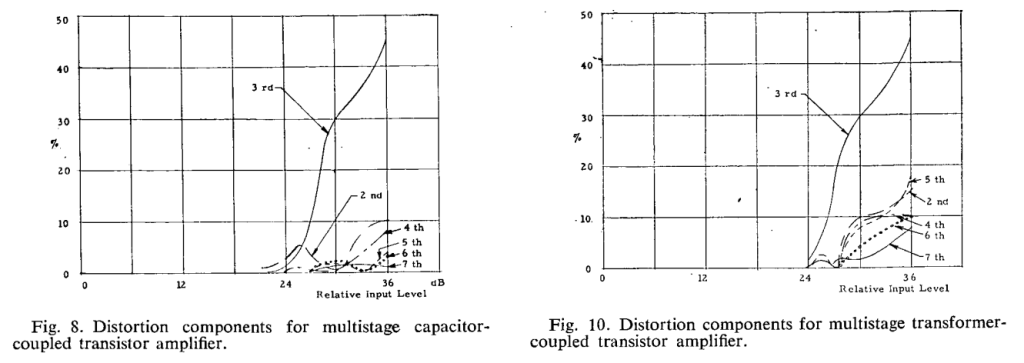
If you search online for Tubes Versus Transistors – Is There an Audible Difference?, you’ll find this paper. It’s originally an AES paid article, so if there’s any issue with the image, I’ll remove it…^^;;

Anyway, the top left graph shows two triodes (vacuum tubes), and the top right shows two pentodes (vacuum tubes). The bottom left graph combines capacitors and transistors, while the bottom right combines transformers and transistors.

So, what is this measuring? It’s measuring harmonic distortion based on input level. Rather than focusing on specific meanings, it’s enough to note that they are all very different.

If each vacuum tube and transistor has different harmonic distortion characteristics, is it really meaningful to define sound solely based on whether it’s a tube or a transistor? In my view, it’s not that significant.

What’s important for music production, in my opinion, is not differentiating between these categories but understanding how each specific device affects sound individually.

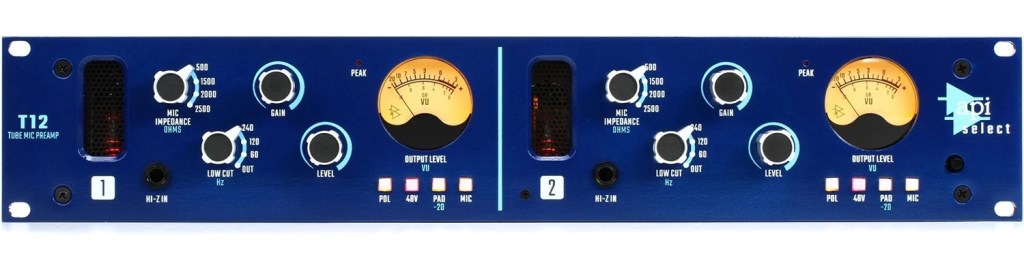
This is a microphone preamp with a vacuum tube… Doesn’t it make sense that different brands of tube preamps have their own distinct characteristics?

As an equipment enthusiast, I find myself trying to understand each piece of gear one by one, and my bank account… well… haha… ha… ha…

To make matters worse, I also play instruments, so it’s quite the struggle… I’ve been hunting for a second-hand bass recently because I’ve decided to play bass myself. It looks like I’ll be carrying this gear addiction with me for the rest of my life.

That’s it for today. In the next post, I’ll discuss the saturation effects of tape 🙂

Sonnox Vocal Production Bundle Sale (~10/20, $64.9)

Hello, I’m Jooyoung Kim, an audio engineer and music producer.

Sonnox is currently offering a great deal on a bundle of vocal processing plugins, so I thought I’d share this with you.

(If you purchase through the link above or any of the other links below, I receive a small commission, which greatly supports the maintenance of this blog!)

This bundle includes three plugins designed specifically for vocal processing:

  • Claro: EQ and stereo width control
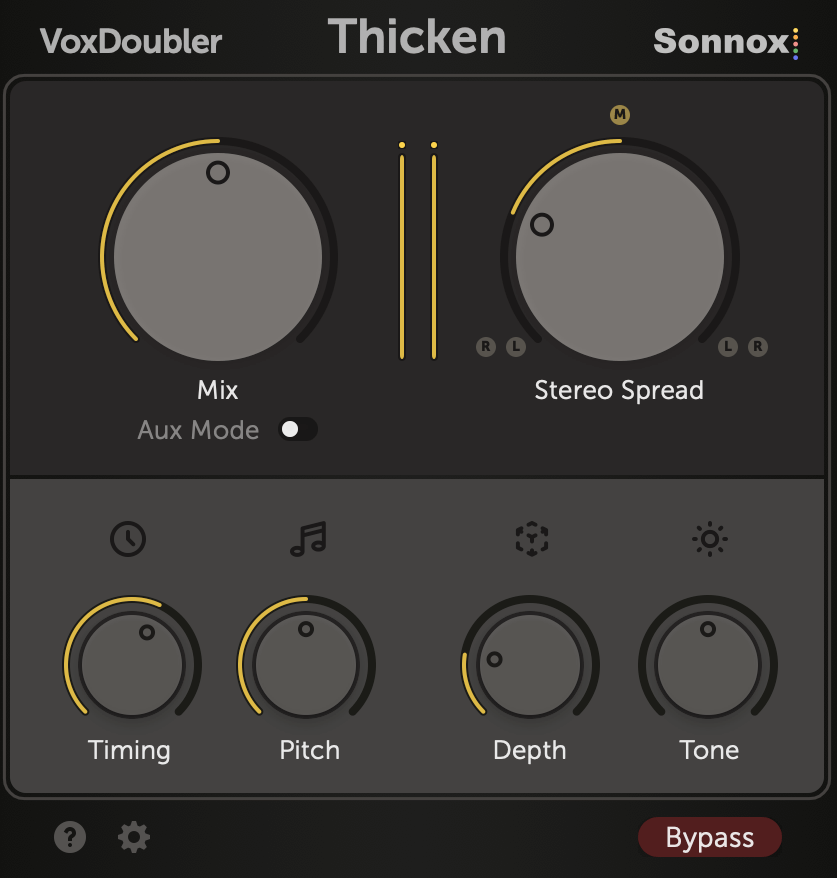
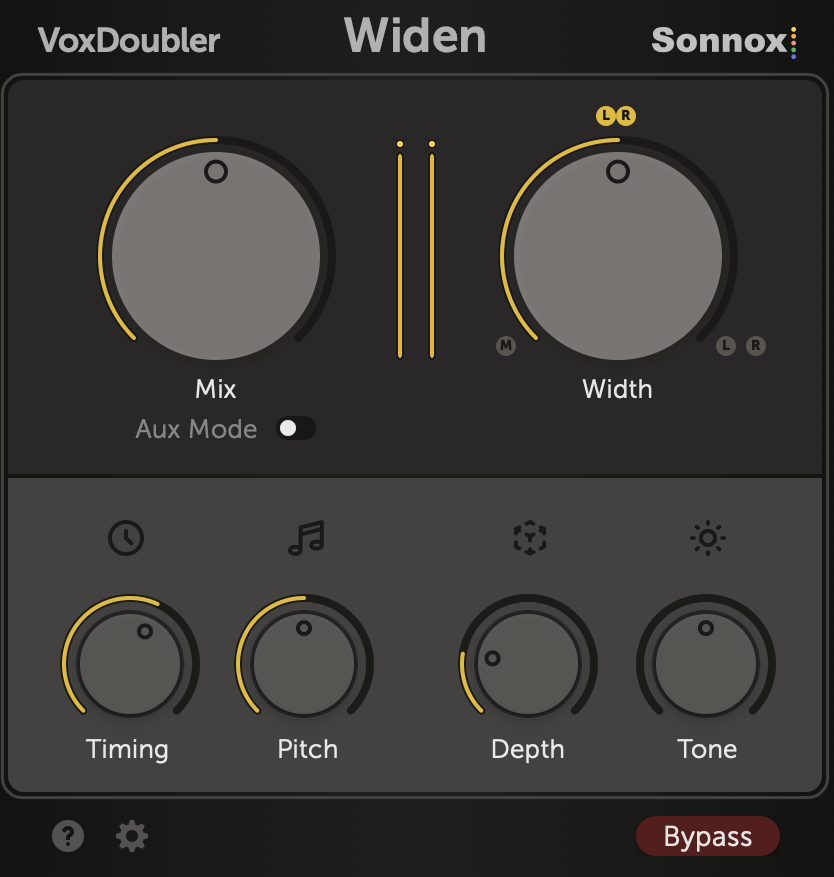
  • Vox Doubler (Widen, Thicken): Vocal doubler
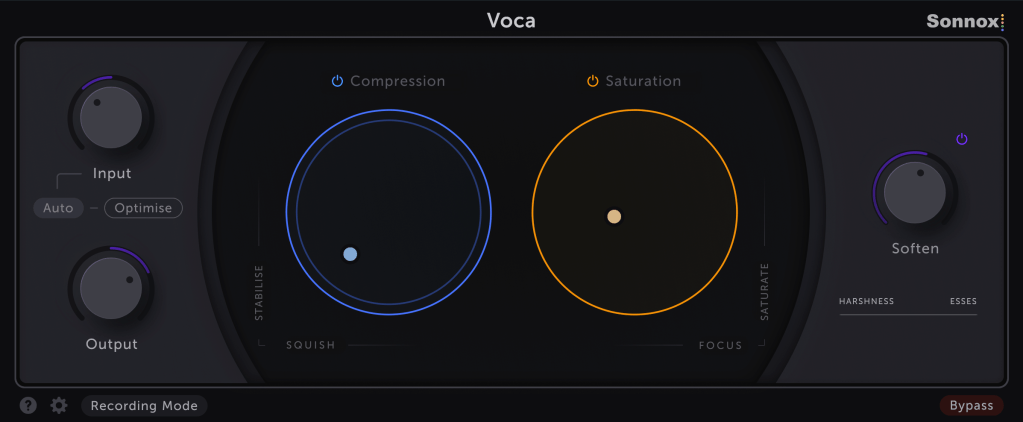
  • Voca: A processor combining compression, saturation, and de-essing

Let’s take a closer look at each, starting with Claro.


Claro

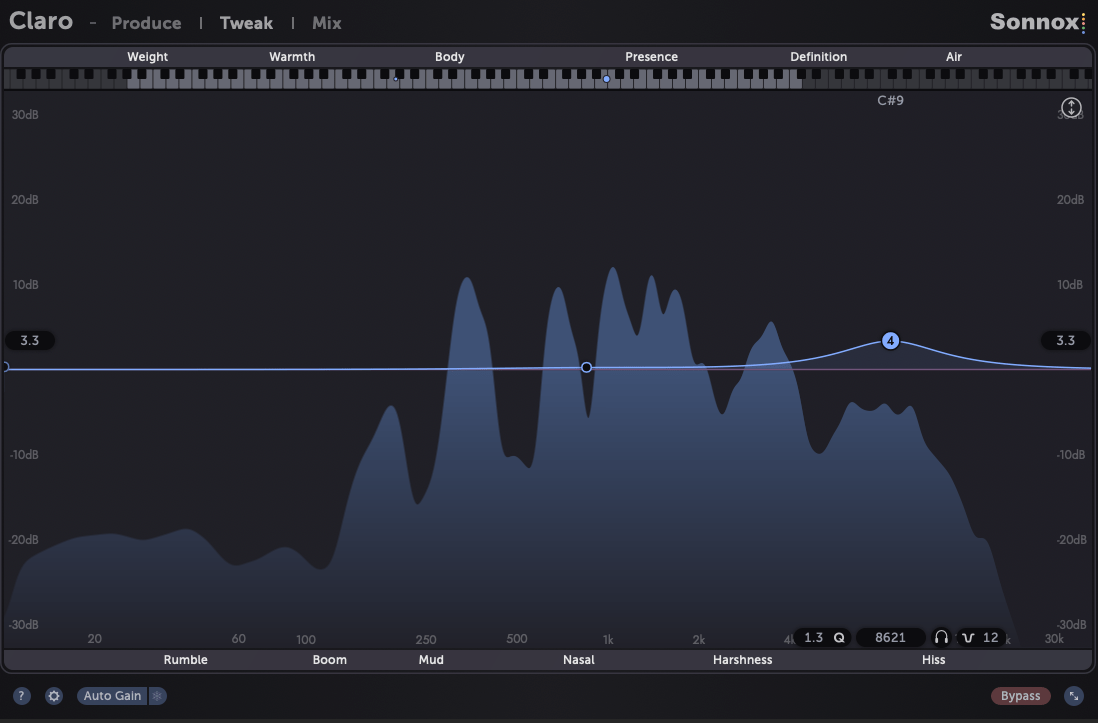
Sonnox’s Claro is a clean and highly functional EQ and stereo width enhancer. You can use it in a simple “Produce” UI, as shown above, or in a more detailed “Tweak” UI that includes a spectral analyzer.

Each frequency band features labels below for negative terms and above for positive ones, making it intuitive even for beginners to use.

Additionally, you can view frequencies in a keyboard format, which can be very familiar and useful for composers.

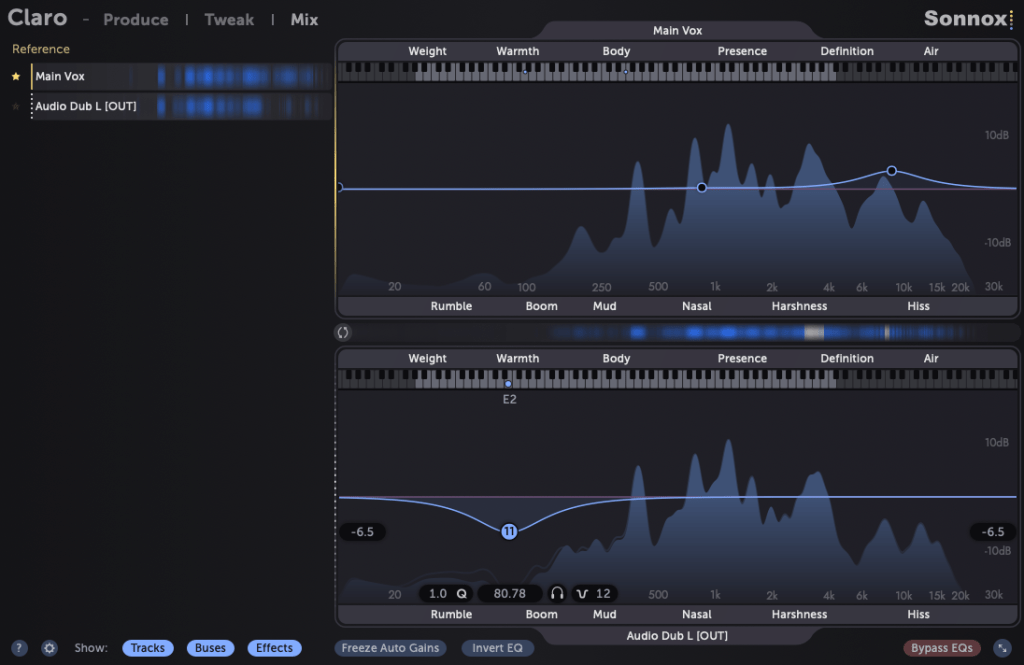
What impressed me the most about Claro is that you can view the EQ settings applied to other tracks simultaneously!

Moreover, you can adjust the EQ for those other tracks directly within this interface. This is an incredibly innovative feature.

For tracks that experience masking issues and don’t cut through the mix, you can quickly locate the interfering frequencies and make adjustments, significantly streamlining your workflow and saving time.

Claro’s competitor is clearly FabFilter’s Pro-Q3, but considering that you get two additional plugins for just $64.9, it’s a fantastic deal.

Although it’s not a dynamic EQ, it’s the first EQ I’ve seen that also allows width adjustment, making it a plugin I’m seriously considering as my main EQ from now on.

Vox Doubler

The Vox Doubler includes two plugins: Thicken and Widen. The difference is that Widen creates two separate mono tracks, one for each side, while Thicken produces a single stereo track.

While the difference is subtle, it’s perfect for background vocal doubling to emphasize the chorus parts.

Voca

Voca is essentially an all-in-one channel strip. In the compression section, the left/right parameters labeled as “Squish” work like a ratio, and the “Stable” parameter functions similarly to a threshold.

In the saturation section, “Saturate” controls the amount of coloration, while “Focus” adjusts the EQ curve (higher settings boost lows and highs, while lower settings emphasize the midrange).

The “Soften” parameter acts as a de-esser, specifically targeting the area around 5kHz. You can think of this as a versatile all-in-one effect.

Additionally, if you purchase plugins from Plugin Boutique this month, you’ll receive either a “Solina” synthesizer, which focuses on string sounds, or Zynaptiq’s Orange Vocoder Nano.

Both are incredibly useful plugins, so be sure to claim them if you make a purchase.

That’s it for today’s post. See you next time~!