
Hello! I’m Jooyoung Kim, a mixing engineer and music producer.
Yesterday was the announcement day for artist grants in Korea, and as expected, getting selected is getting tougher… I was hoping to buy some cables for research purposes with the grant, but those plans went up in smoke. Times are tough these days… 😢
Anyway, today I’m continuing with the Brainworx May sale. This time, I noticed a lot of bass amp plugins are included in the sale, so I’m introducing five Brainworx bass amps commonly used in mixing and composing.
I own the Ampeg SVT-VR Classic and B-15N, having purchased them myself. The other plugins were provided as NFR (Not for Resale) copies through Plugin Boutique. Also, if you purchase through the links in this blog, I earn a small commission, which helps me keep creating content and survive. Thank you for your support!
Let’s dive in!
Ampeg SVT-VR Classic

The Ampeg SVT (Super Valve Technology) is a tube-based bass amp head from the late 1960s, developed to meet the demand for powerful bass amps during large concerts. While most amps at the time were under 100W, the SVT delivered a whopping 300W.
The SVT-VR is a vintage reissue (VR) model based on the 1969 SVT. The Classic plugin is a simplified version of the SVT-VR plugin, designed for straightforward operation.
I use this one a lot when writing songs or when a mix source comes in as a DI signal. It has minimal controls, which makes it super easy to dial in the tone I want.
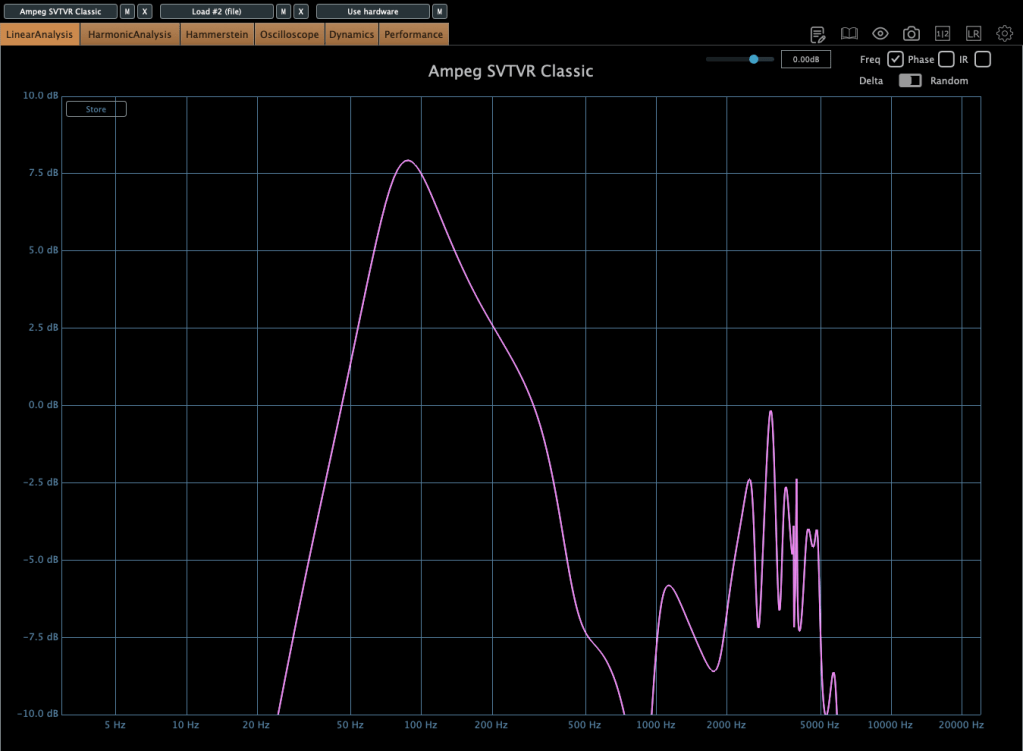
Some bassists I know prefer a brighter, more attack-heavy sound, but I lean toward a darker tone with subdued highs. Setting it to Normal for the input signal and enabling Ultra-Lo gives me exactly the deep, grounded sound I love. With a little EQ tweaking, it sits perfectly in the mix.
You can choose from three cabinet options, but I find the default 8×10 cabinet sounds the best. This plugin sometimes pops up for free or during events, so keep an eye out for it!
Ampeg V-4B
The Ampeg V-4B is a tube-based bass head from the early 1970s, designed for smaller venues. Think of it as a compact version of the SVT with 100W output.
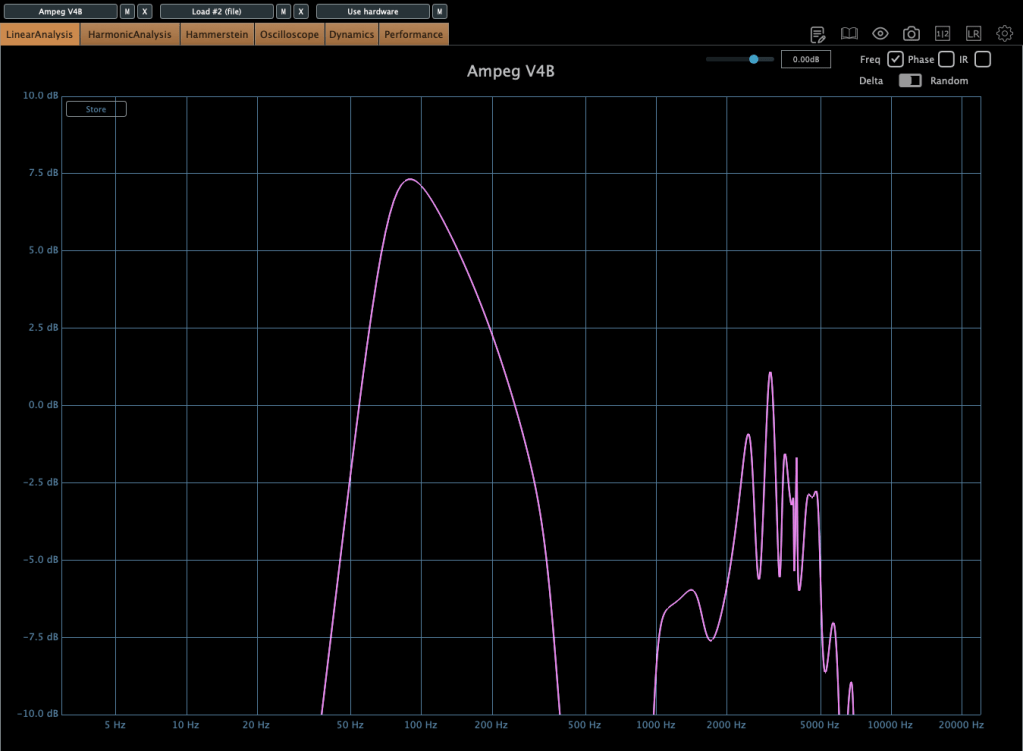
Its tone isn’t drastically different from the SVT-VR, but it has slightly more high-end presence and sits a bit higher in the stereo image. It’s great when you want a tone that’s just a touch lighter than the SVT-VR’s Ultra-Lo setting. Of course, switching cabinets changes the sound quite a bit! 😄
Unlike the SVT-VR Classic, this model includes a noise gate, filter, and EQ, which are handy for tone shaping.
Ampeg SVT-3Pro
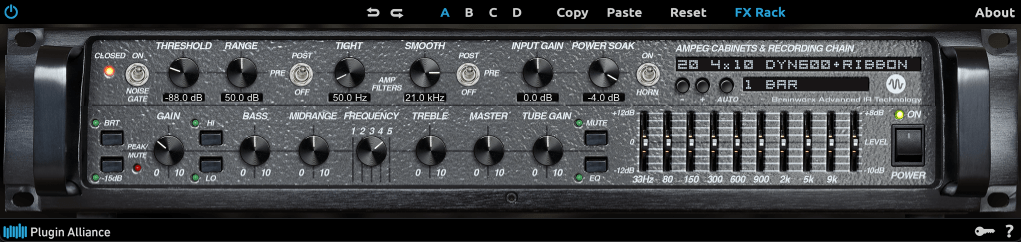
The SVT-3Pro is a modernized version of Ampeg’s SVT series from the 1990s, combining tubes and transistors to create a lighter hybrid head amp.
With 450W of output, it has less frequency loss compared to other heads in the series, so it can feel higher in resolution when you first hear it.
You can also adjust the harmonic structure using the Tube Gain control. (Cranking it up increases odd harmonics over even ones.)
This makes it especially useful for tracks with fewer instruments, where its clarity shines.
Ampeg B-15N

The B-15N is a reissue of the first model in Ampeg’s Portaflex series, where the amp head can be tucked into or removed from the cabinet.
It includes 1964 and 1966 input and bias settings, which significantly affect the sound. The 1966 bias emphasizes highs more, and the 1966 input adds a bit more high-end, lifting the sound slightly in the stereo image. These differences are hard to show on a frequency response graph in Plugin Doctor, unfortunately.
Compared to the SVT-VR or V-4B, the default sound is noticeably lighter with more prominent highs, making it a great starting point for tracks featuring solo bass performances. As always, swapping cabinets changes the sound dramatically.
Gallien-Krueger 800RB
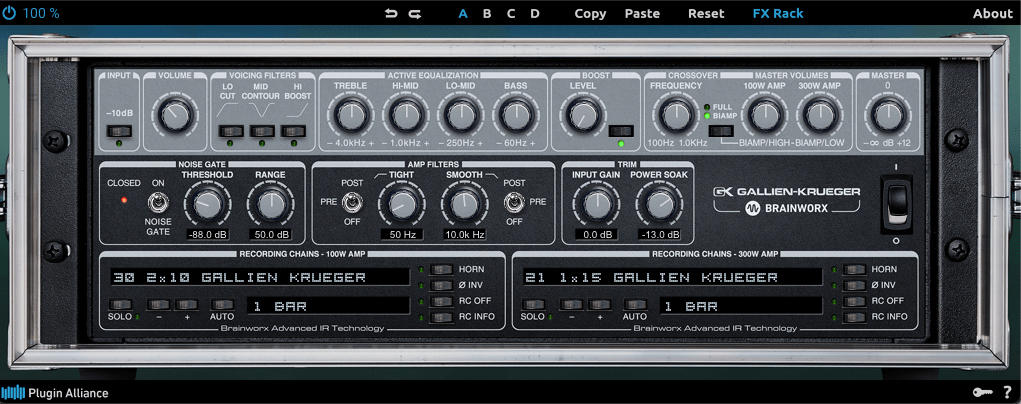
The Gallien-Krueger 800RB is a solid-state amp from the 1980s, designed with bi-amping (separating high and low frequencies) used in hi-fi systems, allowing connection to two cabinets.
In the plugin, you’ll see it split into 300W (lows) and 100W (highs). You can choose the Crossover Frequency to determine how frequencies are divided or use it in Full Range mode without bi-amping.
In its default state, this amp has the lightest sound of all the amps covered here, sitting higher in the stereo image. As with the others, EQ and cabinet tweaks can drastically alter the tone.
Today, we explored these five bass amp plugins. Bass amp plugins aren’t just for electric bass—they can also enhance synth bass or acoustic bass for great results.
All of these are solid amp plugins, so grabbing a few during this sale would be a smart move.
See you in the next post! 😊
 Jooyoung's Music Blog