Hello! I’m Jooyoung Kim, an audio engineer and music producer.
This semester, the CEO of Sorigio (a Korean acoustic construction company) is teaching one of our graduate courses. As part of the course, we visited Sorigio this past Thursday, so I wanted to share my experience!
Let’s get started!
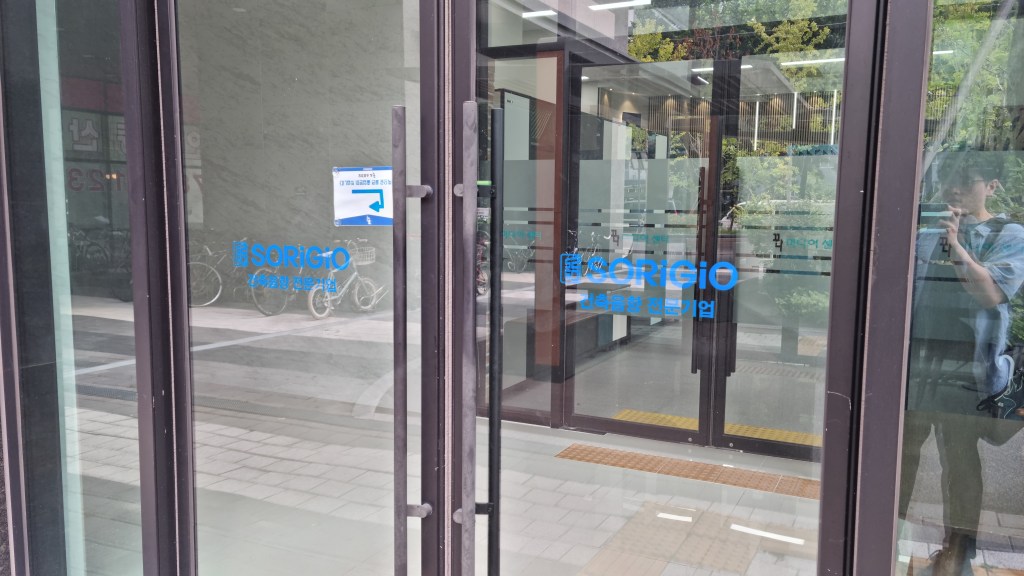
Sorigio is located on the first floor of the Jungheung S-Class residential-commercial complex in Yeongdeungpo. The door that faces the street is locked, but you can find the entrance around the side.


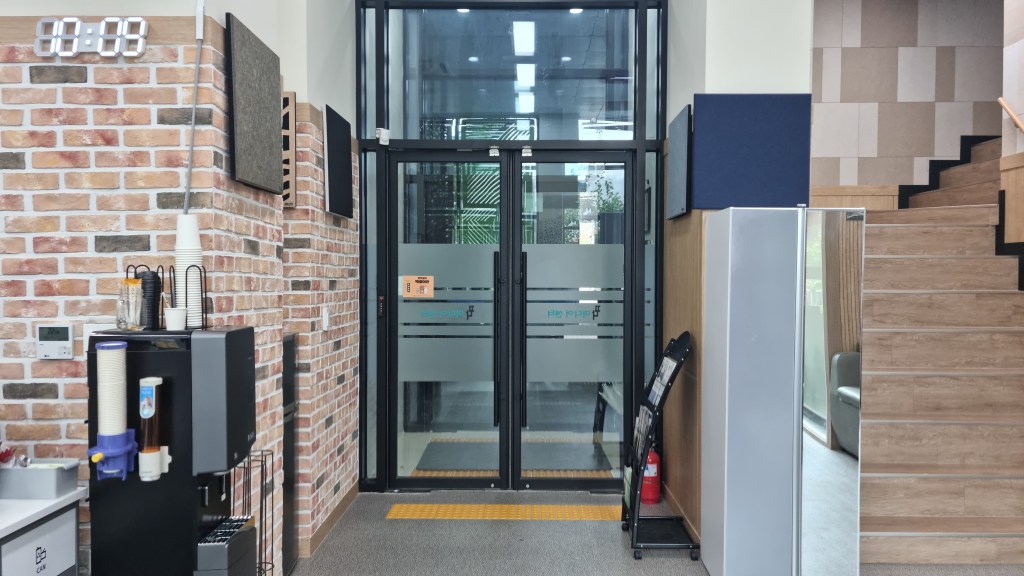
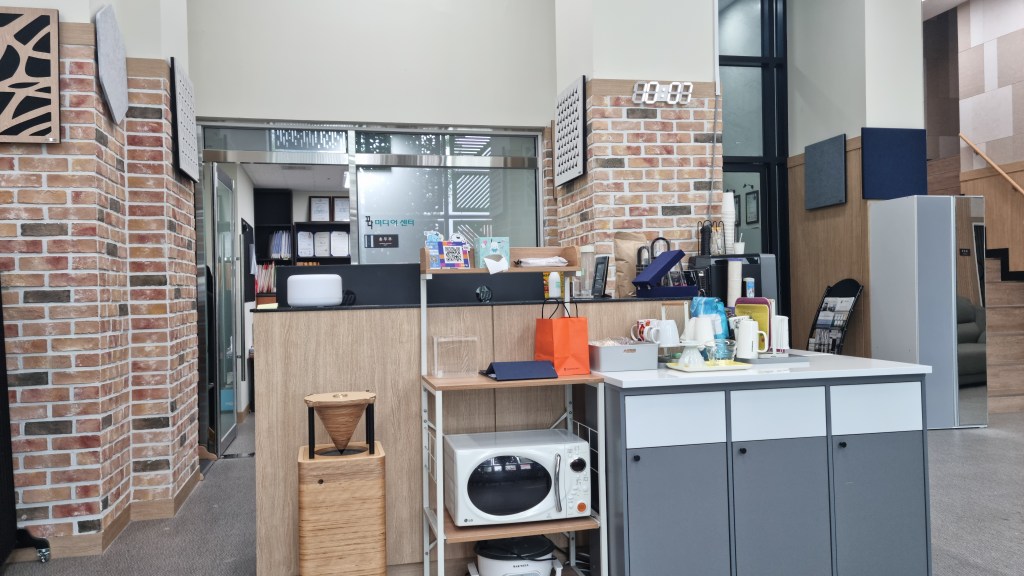
Once you step inside, this is what you’ll see.
Here’s a view from the top of the stairs:
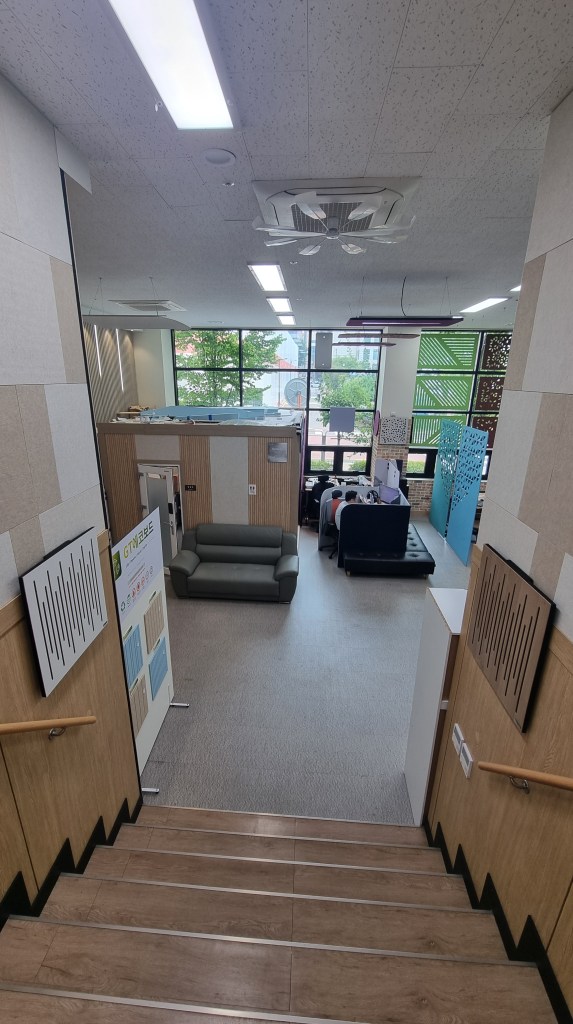
That area looks like it’s used as an office, and even the soundproof booths are repurposed as workspaces. I didn’t capture the ceiling in detail, but it’s quite high, and they’ve installed artboard clouds for sound absorption.
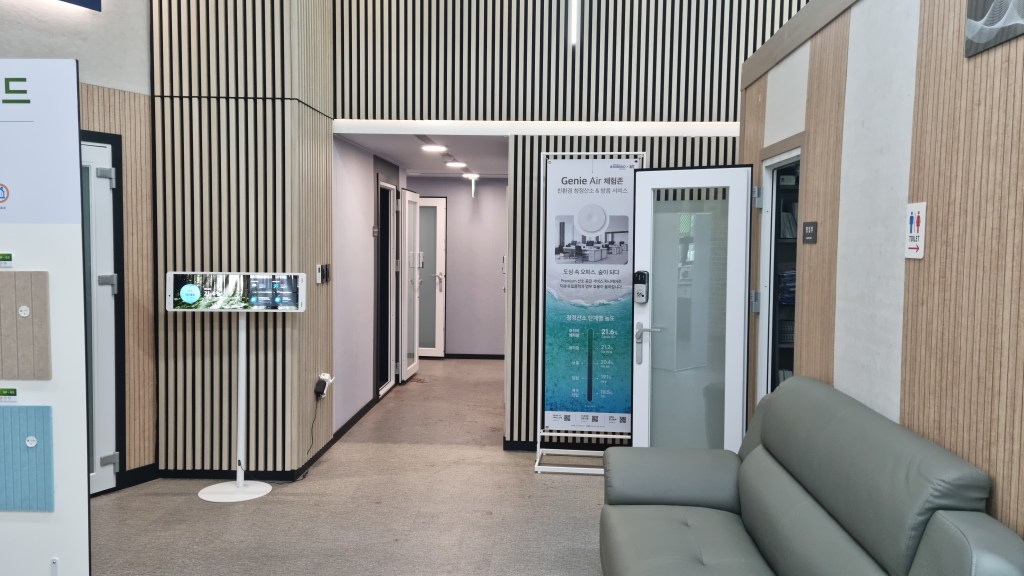
Next to the stairs, it looks like this.
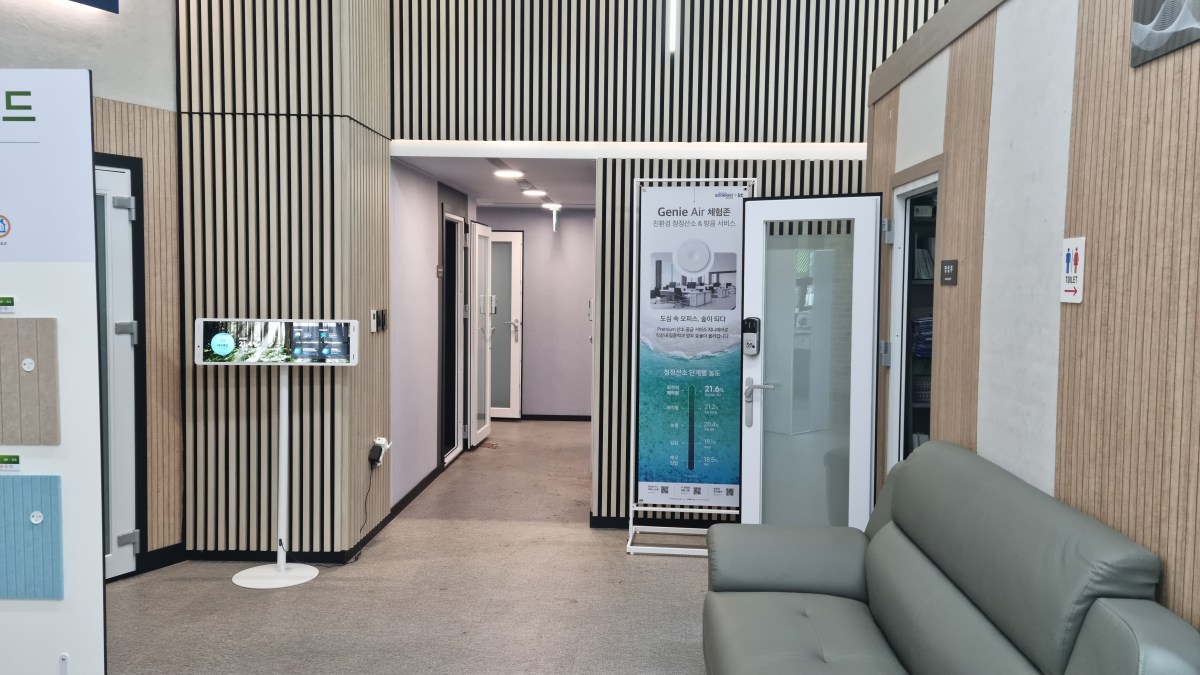
If you go further in, there are several soundproof booths. Originally, they planned to rent these out to artists, but due to the pandemic, they are now used as AI virtual interview rooms.
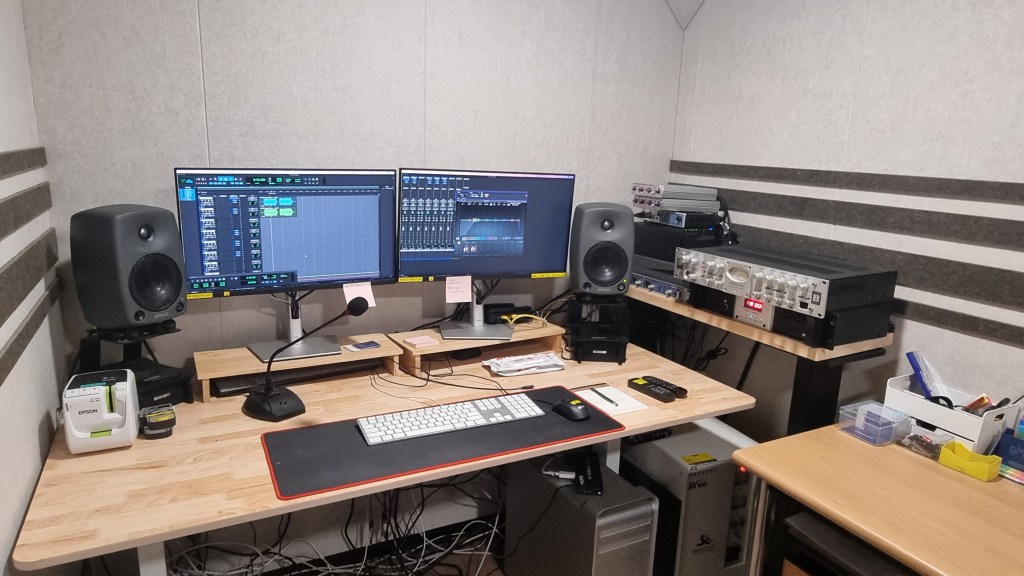
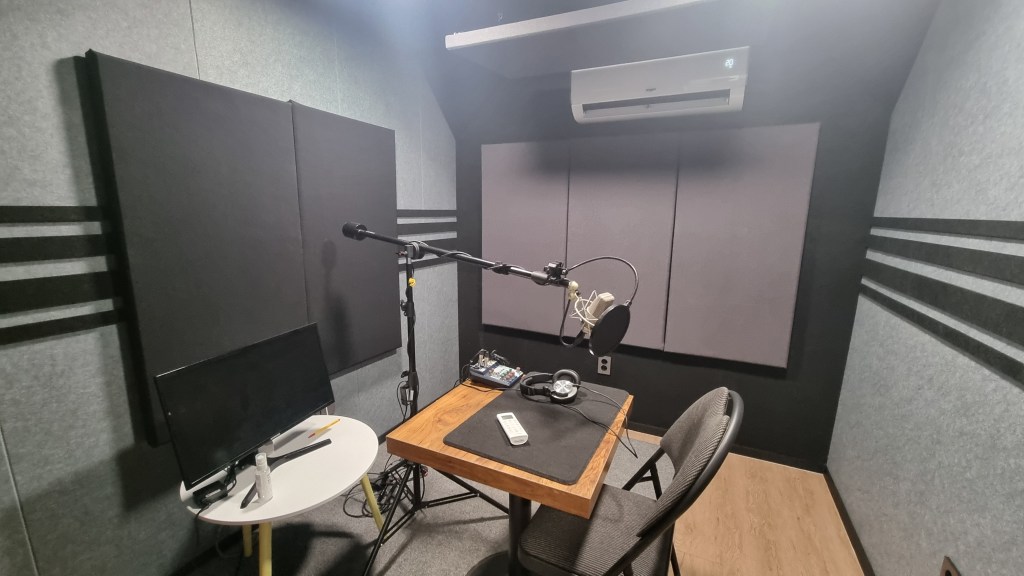
However, one of the booths is still used as the professor’s studio, and another is a recording booth. Recording is done with an Avalon VT-737 and a Neumann TLM 103.
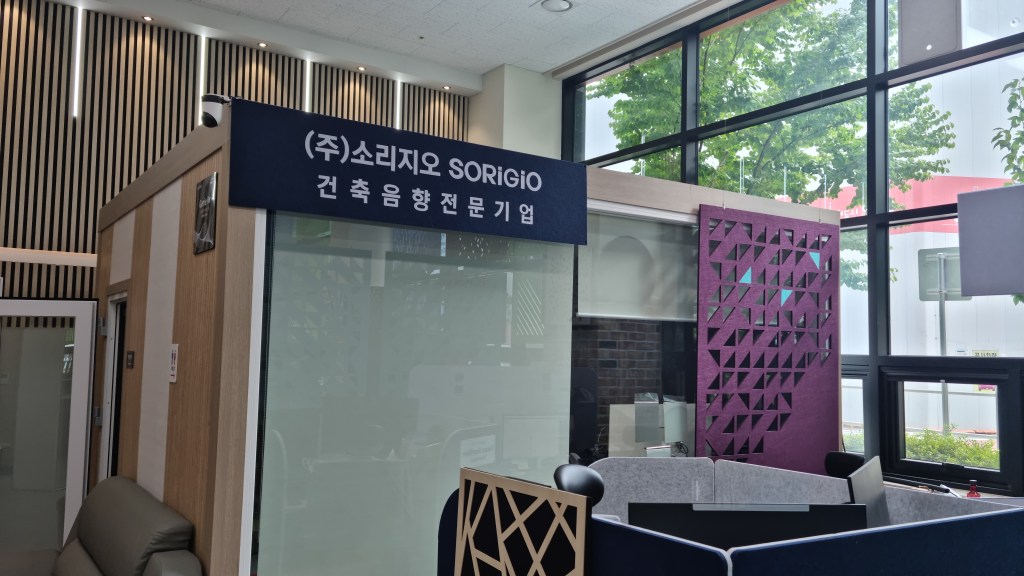

You’ll notice that artboards are installed throughout the studio. During class, the professor showed us test results and examples of previous projects using REW (Room EQ Wizard). He mentioned that artboards have been Sorigio’s flagship product and technology since the early days.
What stood out to me was how the bass absorption rate changes significantly depending on how far the artboards are mounted from the wall, even though they’re just artboards!
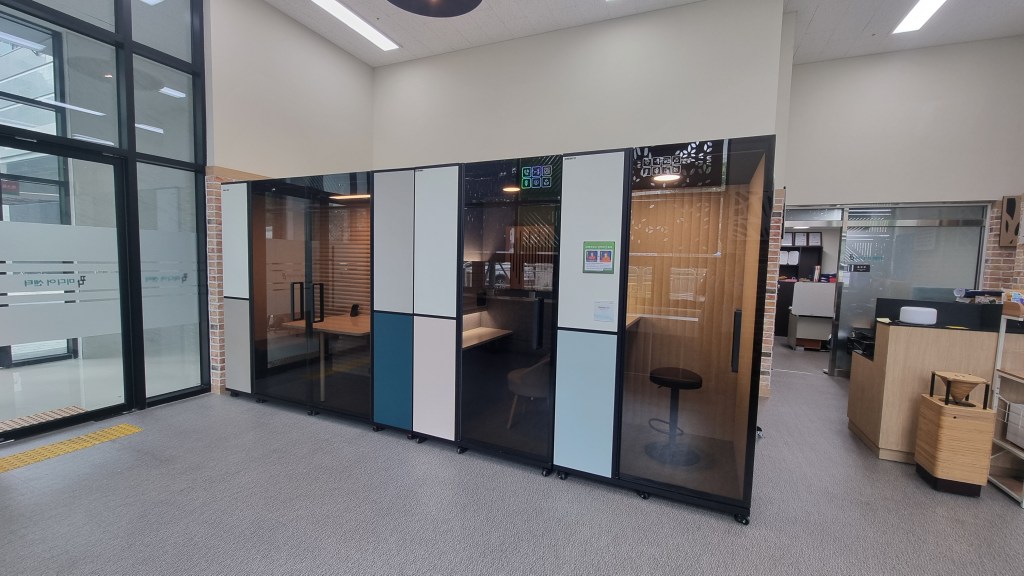
Besides soundproofing and room acoustics, Sorigio also manufactures phone booths for businesses.
If you head back towards the stairs and go up…
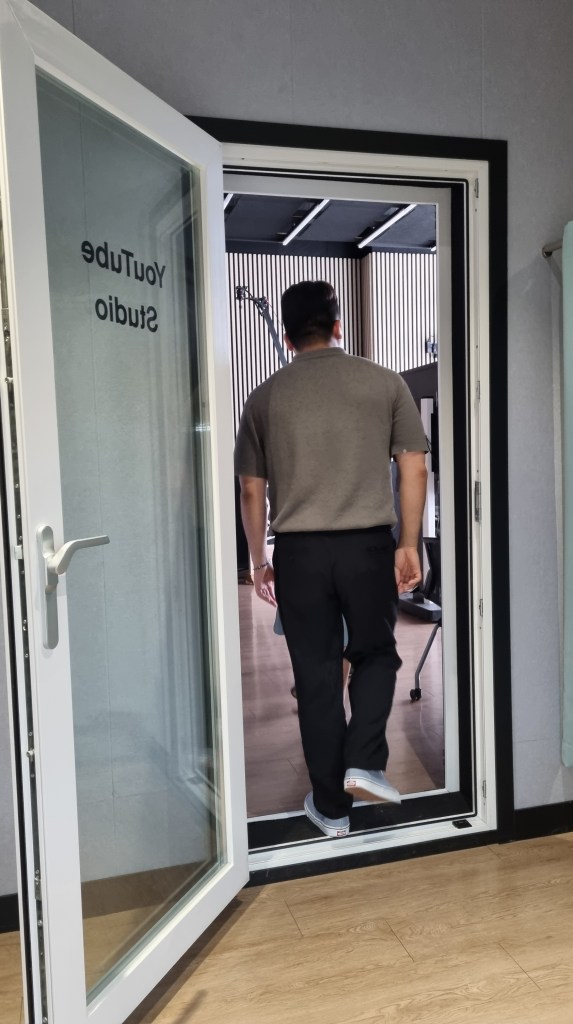
There’s a studio set up for filming.
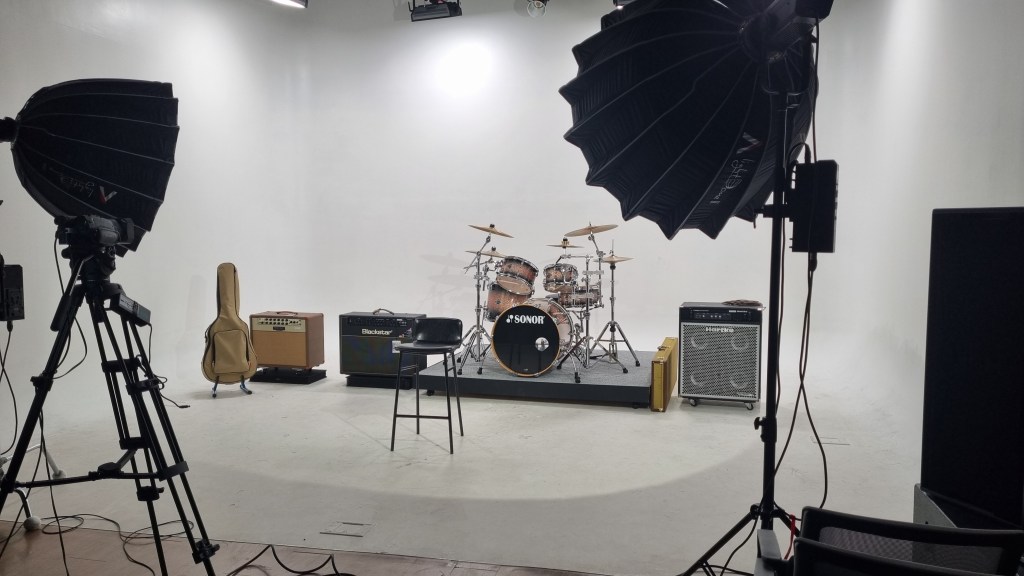

They manage it using a Midas console.
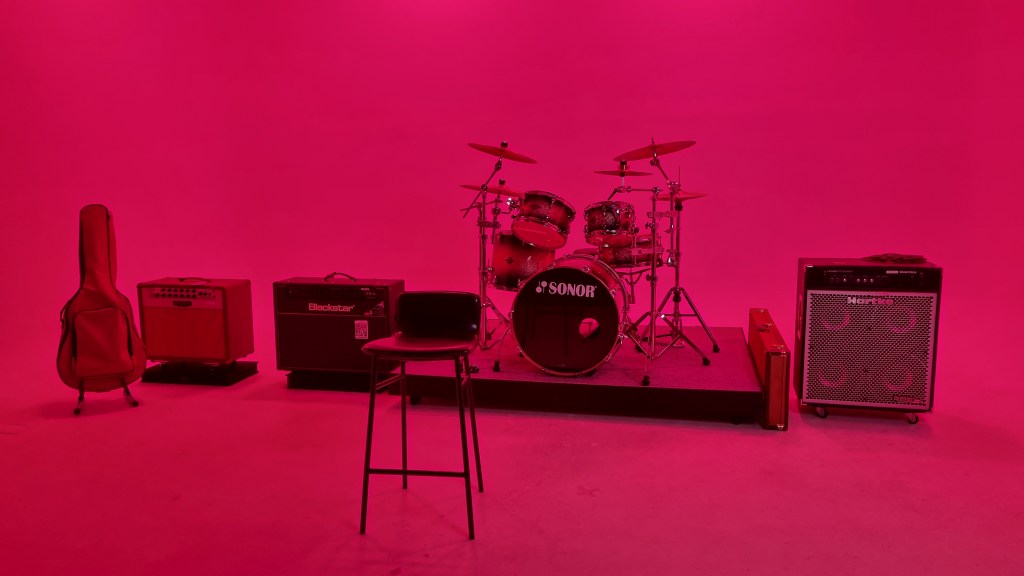
They also have various lighting options to create different moods.
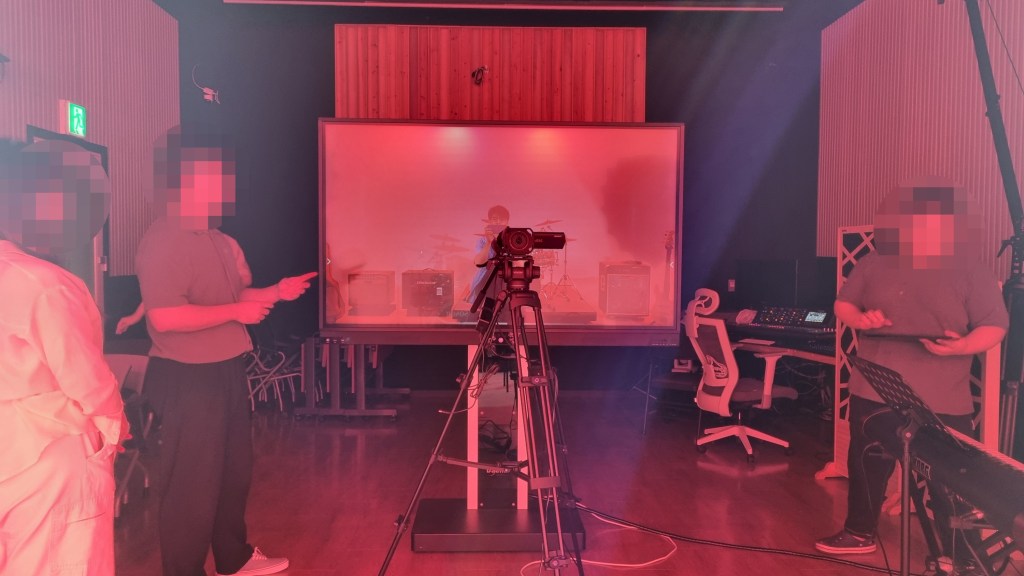
Here’s what it looks like from the center of the studio.
The high ceiling gave me the impression that this would be a great space for string recordings if it were converted into a recording room. I think we might end up working on a project here this semester!
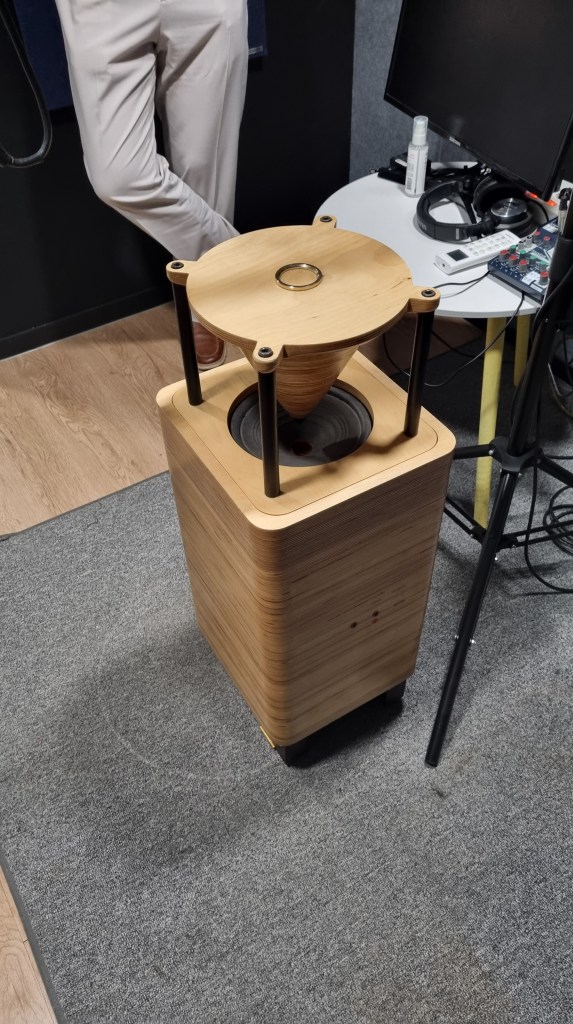
While I was there, we also conducted a room measurement in the recording booth to compare the difference between having the corner traps and panels installed versus removed.
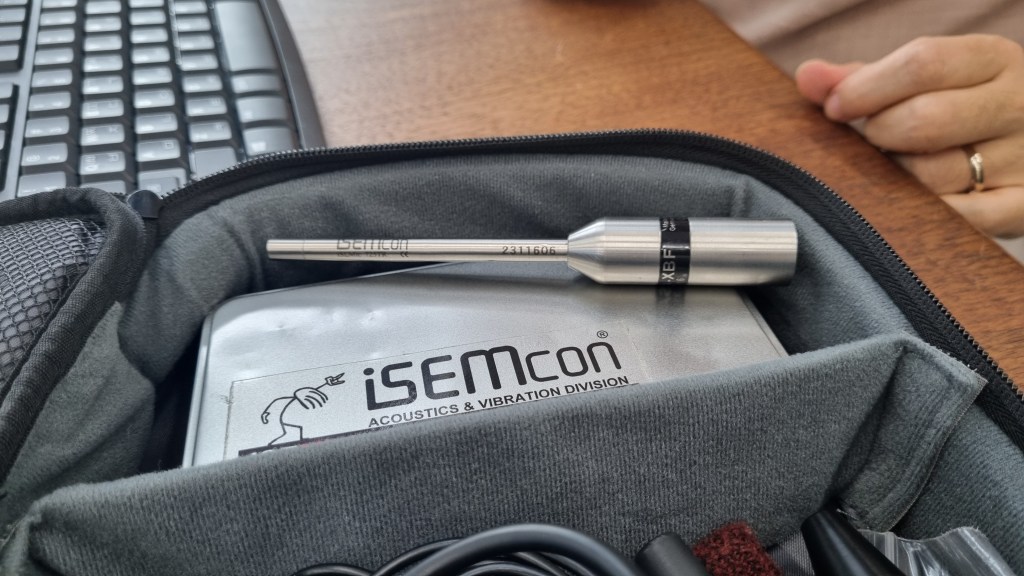
They used a microphone from a company called Isemcon for the measurement. I’m more familiar with pricier options like Earthworks, Brüel & Kjær, and NTI Audio, so it was interesting to see a brand I hadn’t come across before.
There was a lot to see, and it gave me a lot to think about—like how much money it actually takes to build a proper studio room!
Recently, I’ve had my eye on the SPL Vitalizer mk2-T, which could be dangerous for my wallet… I already bought a passive speaker I couldn’t resist a few days ago.
I’ll be sure to write a review of the speaker in a few days!
Until next time, see you in the next post! 😊
 Jooyoung's Music Blog