2025 Summer Expressive E Soliste String Virtual Instrument Series Launch Sale (~July 18, 40% Off)

Hey there! I’m Jooyoung Kim, a mixing engineer and music producer.

Today, I’m excited to introduce you to a brand-new release from Expressive E called the Soliste series, featuring four virtual string instruments: violin, viola, cello, and double bass.

As with my previous plugin and virtual instrument posts, if you purchase through the links in this post via Plugin Boutique, I get a small commission, which really helps me keep going! So, let’s dive in!
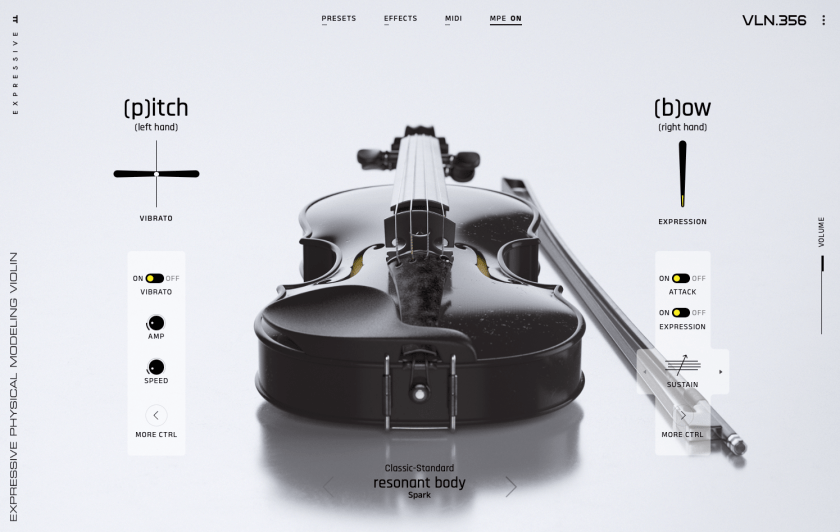
Unlike traditional sample-based instruments, Soliste uses Physical Modeling technology, so it’s super lightweight. Even if you buy all four instruments—violin, viola, cello, and double bass—it only takes up about 1.3GB of space.

I’m not sure if I mentioned this when I talked about synthesizer types before, but physical modeling involves mathematically simulating the principles of how sound is produced. I believe it all started with Yamaha’s waveguide modeling.

Back in the day, these modeled instruments were tough to use due to high CPU demands, but with today’s powerful CPUs, they’re super efficient, compact, and easy to tweak while sounding great.

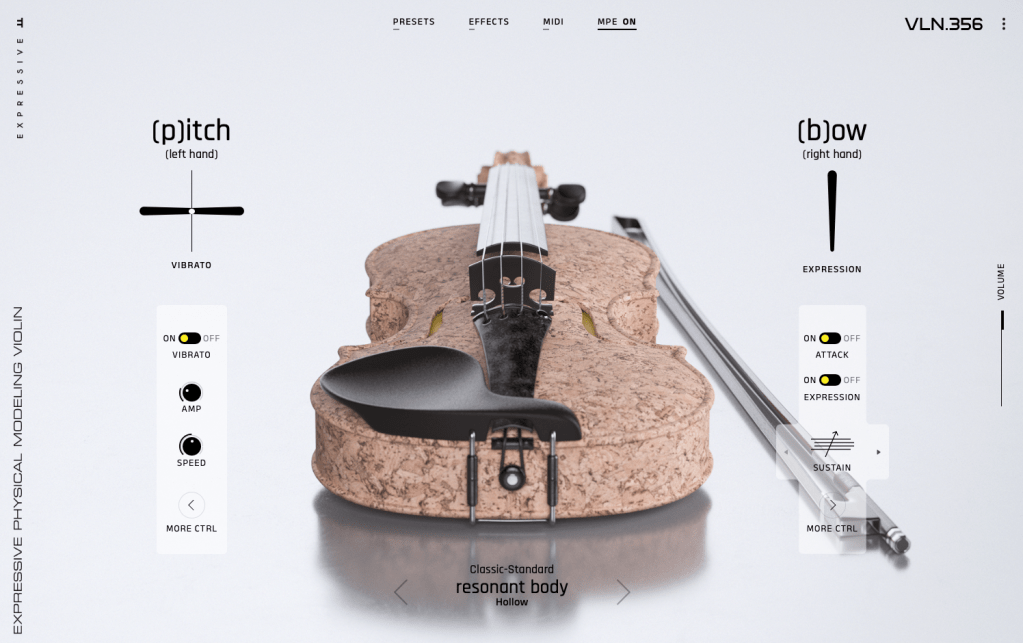
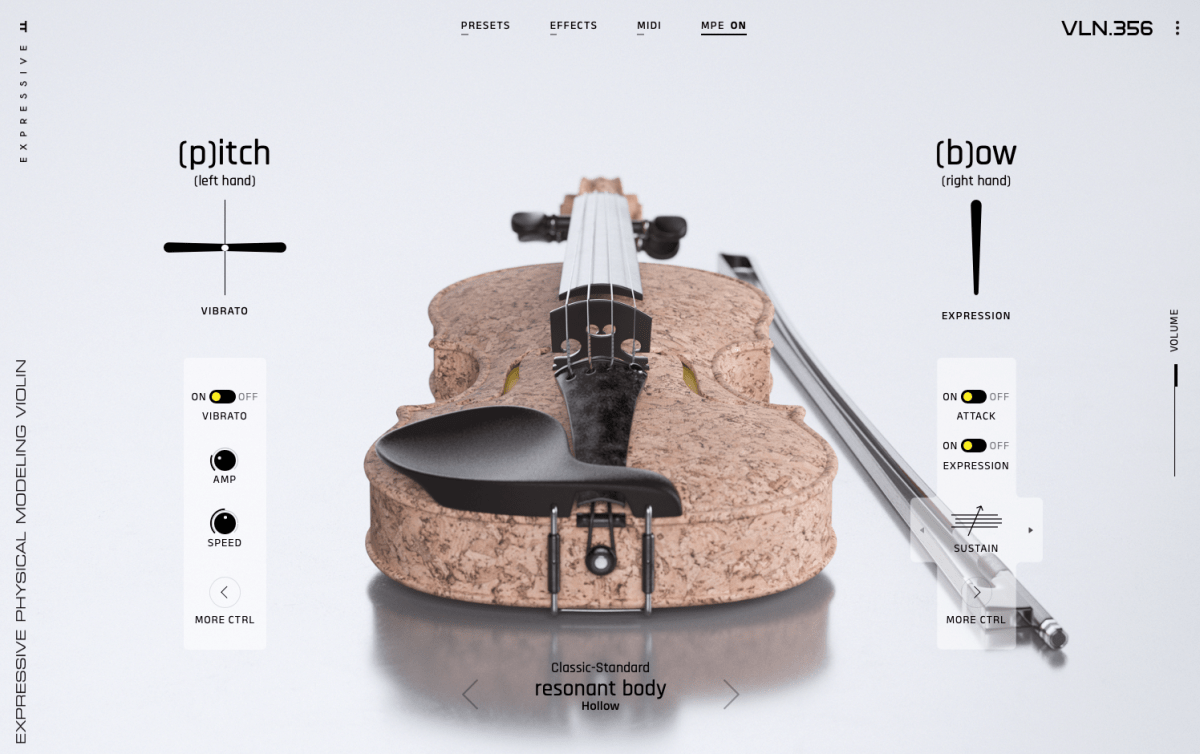
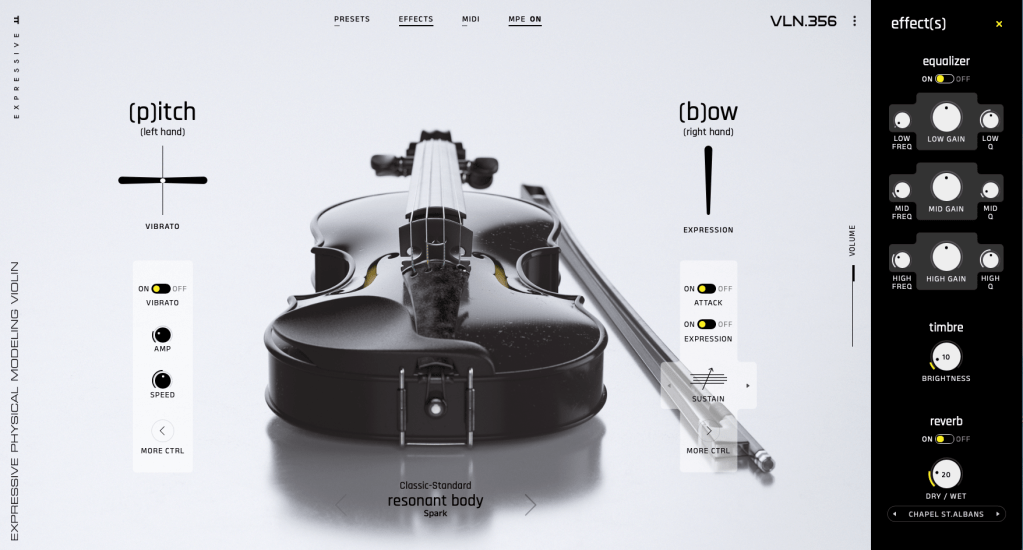
What’s cool about Soliste is how it’s laid out: effects related to the left hand (like vibrato and portamento) are on the left side of the interface, while bowing-related effects are on the right. Pretty intuitive!

Here are the standout features of Soliste:
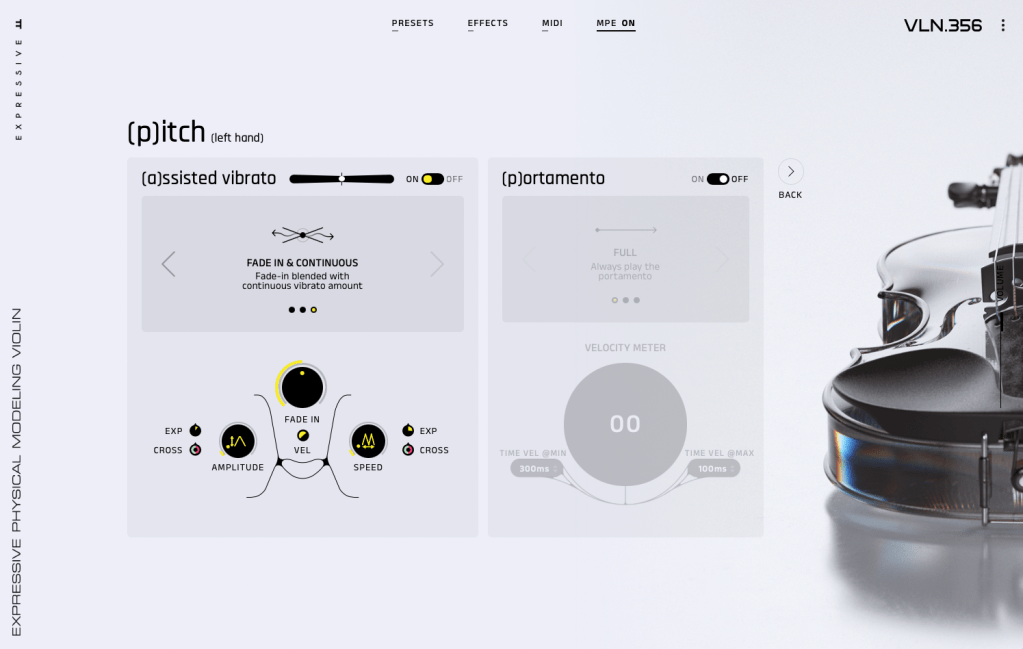
  1. Vibrato and Portamento Control: You can adjust the intensity of vibrato and portamento, and control their amount using the Expression (labeled as EXP, tied to modulation).
  2. Aftertouch for Extra Expression: Beyond the modulation wheel, you can use aftertouch to dial in more EXP, which is mapped by default for convenience (though other instruments could do this too if set up).
  3. Six Tonal Flavors: Choose from Spark, Hollow, Sleek, Antique, Lyric, or Mellow to shape the sound.
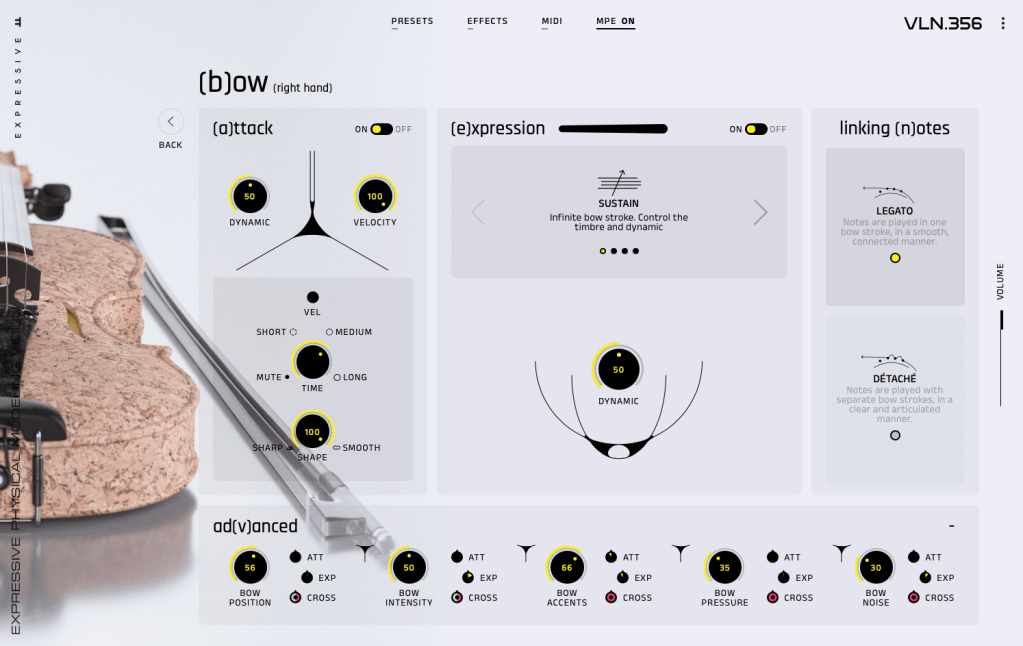
  4. Bowing Parameters: Adjust Attack, Position, Tension, and more, with the ability to change their intensity in real-time based on Expression, just like vibrato or portamento.
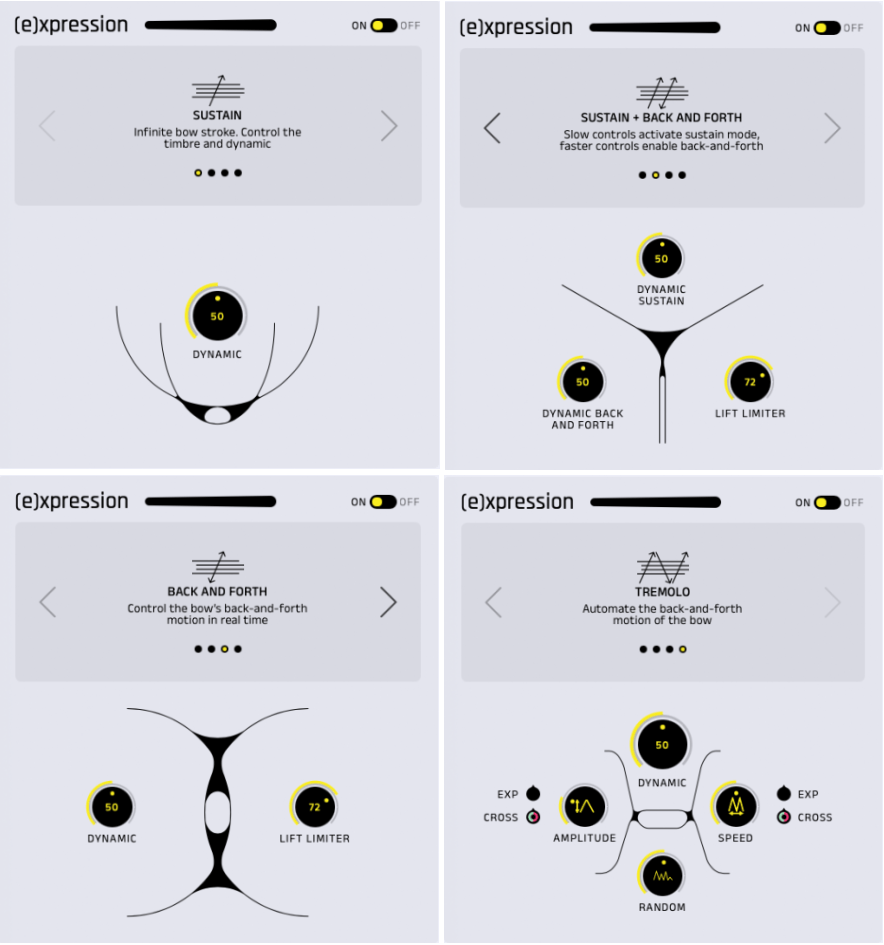
That’s the gist of it!
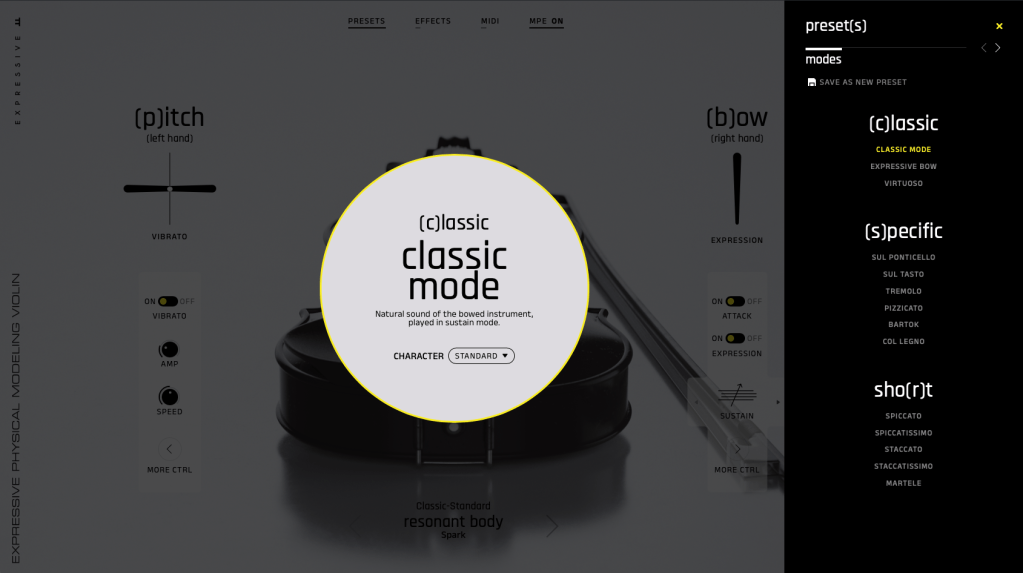
You also get presets for different playing techniques, simple effects, and MIDI settings for flexible use. I used to think SWAM was the king of modeled solo instruments, but after listening to Soliste’s samples [Link] and trying it out myself, I think it’s a solid alternative. The only downside? It doesn’t seem to support double or triple stops (yet), and if you’re not careful with articulation or play it solo, the modeled nature can feel a bit obvious.
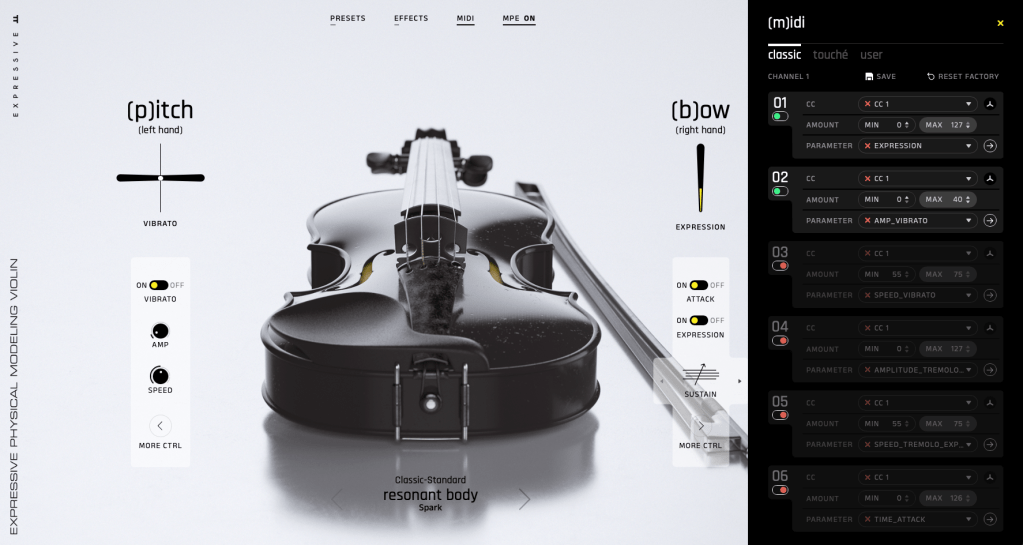
Still, for the price, it’s a fantastic deal, haha. It’s great as a solo instrument, but since there aren’t many virtual instruments with this tonal vibe, it’d also shine when mixed into a chamber string ensemble for a richer sound.

  1. Soliste VLN 356 – Violin
  2. Soliste VLA 419 – Viola
  3. Soliste CLO 756 – Cello
  4. Soliste DBS 1130 – Double Bass

You can buy the bundle or pick individual instruments based on your needs.

Oh, and if you purchase from Plugin Boutique this month, you’ll get Excite Audio Motion: Dimension Lite for free!

I’ve previously introduced the full version of Dimension (not the Lite one), and it’s a really solid delay/reverb plugin, so don’t miss out on this freebie!

That’s all for now—see you in the next post!

I purchased a bow for an acoustic guitar (+ brief thoughts)

Hello, this is Jooyoung Kim, a mixing engineer and music producer.

Some time ago, I briefly saw a bow for an acoustic guitar. I wanted to buy it, but it was too expensive to justify purchasing it as a novelty.

Time passed, and when I was ordering a toroidal transformer for device repair from AliExpress, I wondered if they might also sell guitar bows. To my surprise, they were selling them very cheaply. I decided to purchase from a seller with a decent number of reviews and buyers.

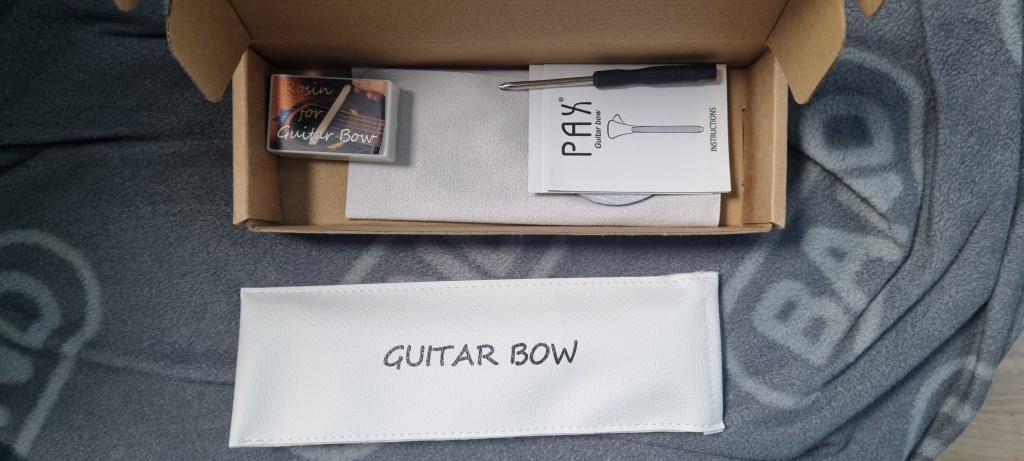
The packaging was quite neat, which was surprising. Including shipping, I think I paid around 15$, and they even included rosin. The package contents seemed quite substantial.

Below is a video I recorded with my phone camera, so the quality isn’t great.

Due to the structure of the guitar and the bow, you can play double stops.

I also tried bowing sideways to see if I could play all six strings simultaneously, but the bow was too short, and I couldn’t apply enough pressure to produce a sound. A better guitar might produce a smoother and richer sound, but I didn’t want to use too much rosin and risk it absorbing moisture and becoming sticky.

When playing, I noticed that if the bow touched the guitar’s harmonic points, the sound would break. It was quite challenging to play, and I realized I might have underestimated it.

Originally, I planned to use this bow to dub MIDI recordings of violin parts, since recording strings can be expensive. However, it might be too difficult. The bow is too short for fast pieces, and the speed required would make it even more challenging.

On the other hand, it seems quite effective for fiddle techniques often used in country music, such as tremolo effects and repeated staccato chords. I think I’ll try writing some pieces incorporating these elements.

I have some songs I’ve been working on, but I haven’t released anything recently. This year, I plan to release at least three songs.

See you again in the next article!

Orchestration Basics – Strings (4)

Today, continuing from last time, we will look at the remaining playing techniques and arrangements for string instruments.

– Con Sordino (Mute), Pizzicato, Bartok Pizzicato, Harmonics
– Glissando, Sul Ponticello, Sul Tasto, Col Legno (Tratto & Battuto)

This is the state law that was not covered last time.

  • Con Sordino(Mute)

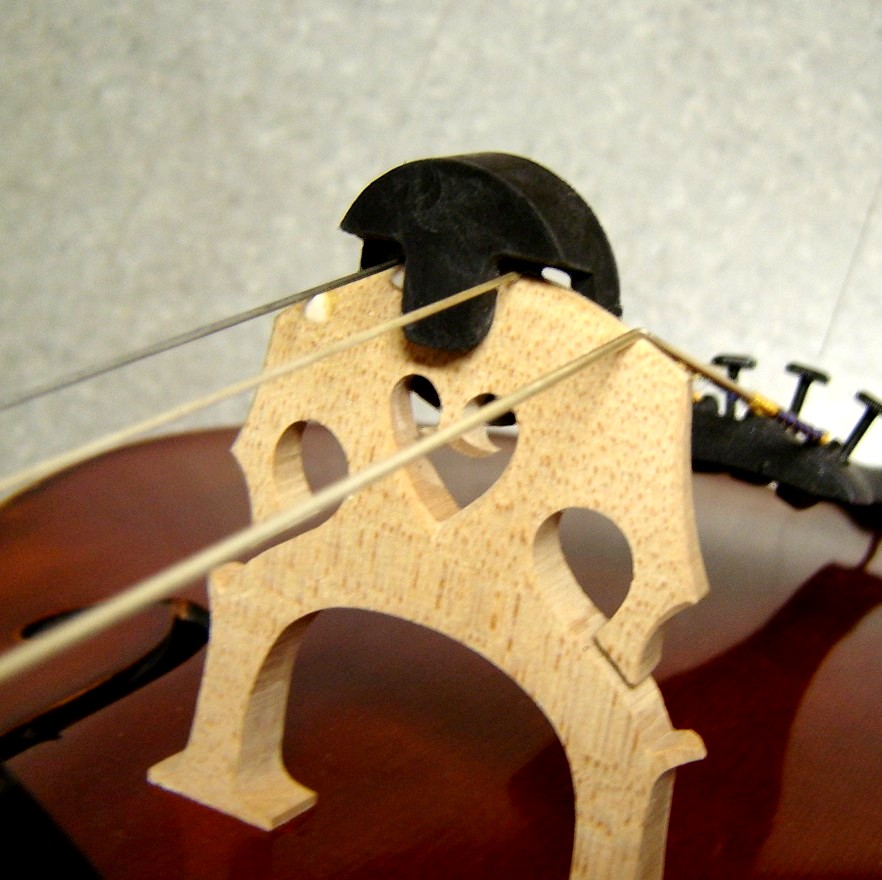
Sordino means to play with a muted instrument, and Con Sordino means to play with a muted instrument. It is made of various materials such as wood, metal, and rubber, and its function is to reduce the volume and change the tone.

It is sometimes written as Muted, and when it returns to its original state, it is written as Senza Sordino, Without Mute, etc.

When working on a song, in order to achieve a richer sound, additional recordings are made with a muted sound on top of the basic recorded sound. These techniques can also work effectively with virtual instruments. If you feel like the sound is lacking for something, it might be a good idea to give it a try.

  • Pizzicato, Bartok Pizzicato

Pizzicato refers to a playing method where you pluck the strings with your hands to make a sound, like a guitar. It can be used with both the left and right hands, and a cross is placed on the note only when playing Pizzicato with the left hand.

It is usually written as Pizz.

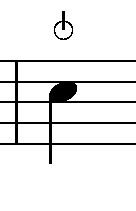
Bartok Pizzicato is a playing technique that involves plucking the string very hard and hitting the fingerboard to make a sound.

It was invented by a composer named Bartok and given this name, and a symbol that looks like a power button is used as shown in the picture above, or a symbol such as ◎ is used. ​It is very effective because it can give a percussion-like effect even though it is not a percussion instrument.

Both Bartok Pizzicato and Pizzicato are playing techniques found on most virtual instruments, so if you use them when writing songs, you can create very effective sounds.

  • Harmonics

Harmonics means overtones. However, the playing technique refers to playing the overtones of the strings.

There are two types of Harmonics: Natural Harmonics and Artificial Harmonics.

Natural Harmonics is a playing technique in which you play by gently placing your fingers on integer multiples, such as 1/2, 1/3, and 1/4 of the open strings, without touching the fingerboard. The notation is done by placing a circle on top of the note, and sometimes drawing a diamond below along with the circle.

Sometimes it just displays a diamond.

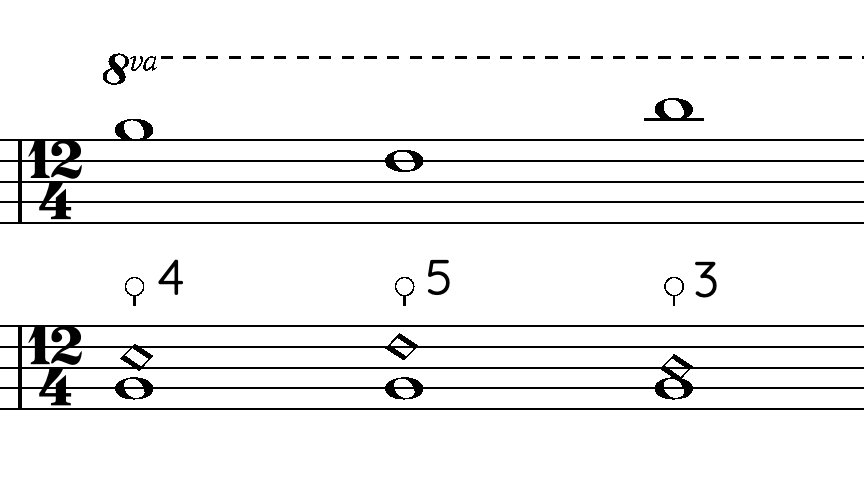
Artificial Harmonics is a playing method that produces overtones while holding the fingerboard. Due to the nature of the string, 4th harmonics are used most often, and in notation, the point above the desired frequency is indicated with a diamond on the regular note.

In order from left to right, they are 4th, 5th, and 3rd harmonics.

  • Glissando

Glissando is a technique of skimming through the middle notes by sliding slowly or quickly between two notes. In some cases, all middle notes are written down. A straight line notation, as shown in the photo above, is also often used. It is also indicated as Sweep or Run.

It is a very effective playing technique for string instruments, and it would be a shame if it did not appear in pop that uses strings. It is also my favorite playing method among string instruments..^^

You can create great effects with virtual instruments as well, so I think it would be a good idea to use them.

  • Sul Ponticello, Sul Tasto

Sul Ponticello means play on the bridge side, and Sul Tasto means play on the fingerboard side.

Anyone who has played the guitar will understand that, just as playing close to the bridge of a guitar produces a hard and solid sound, playing with Sul Ponticello produces a loud, rough, and metallic sound. Conversely, playing with Sul Tasto produces a soft and delicate sound.

​The notation is Sul Ponticello, Sul Tasto, and to return to the legato, it is written as arco.

  • Col Legno

Col Legno, which is disliked by players, is a playing technique where the bow is turned upside down. It is divided into Tratto and Battuto. Tratto is a playing method where you simply play the string with a bow, and Battuto is a playing method where you hit the string with a bow.

As shown above, the notation is col legno, col legno tratto, col legno battuto, etc. If you want to return to the basic performance, write mode natural or arco.

  • Conclusion

Musicians who compose popular music should look at the virtual instrument manual to see how the staff is organized. Whether it has a rough chamber feel or a full orchestra feel, and if it is a chamber, whether it is a large or small chamber, you should listen to the demo sample and think carefully about when to use it.

This is how I learned about string instruments. I don’t know if it was helpful…^^

In fact, the requirements are completely basic, the theory of Voicing, its use as a pad, Run and the use of the 6th High String, etc. are very diverse.

However, this is a large amount, so I will deal with it later when I have time.

Have a good day!

Orchestration Basics – Strings (3)

This article was written on August 6, 2022.

Hello? This is engineer and singer-songwriter Jooyoung Kim.

Continuing from the last article, today we will learn about bowing, a string technique.

Bowing can be broadly divided into two playing techniques: whether the bow falls off the string or not.

– On the String: Legato, Staccato, Detache, Marcato (Martele), Portato
– Off the string: Spiccato, Jete (Ricochet), Tremolo

​This is the classification done by the teacher who taught me, but as the teacher told me, the classification is not particularly important. Let’s look at them in order.

  • Legato

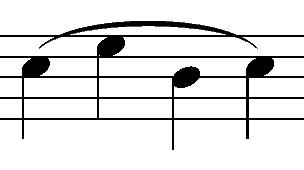
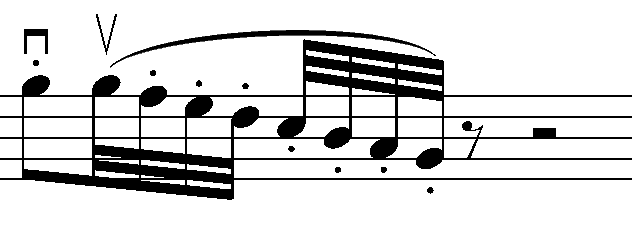
Legato is a playing technique in which the notes are played continuously without interruption. Therefore, whether it is Down Bow, where the bow is drawn downward, or Up Bow, where the bow is drawn upward, it is played all at once with one bow.

In sheet music, it is written as Slur as shown in the picture above, and it is the default playing method in most virtual instruments.

  • Staccato

This is a playing technique where you play briefly, with the string attached to the bow, at about 1/2 the original beat. Usually, in a virtual instrument, if there is only Legato or Sustain and no Sforzando playing technique, a mixture of playing such as Staccato with a strong attack nuance is used.

(I’d like to buy the Vienna Symphonic Library with Sforzando, but it’s too expensive…)

  • Detaché

Detaché, unlike Legato, is played with each bow. You might think it’s similar to Staccato, but this one is different in that it plays all the notes.

If you start from the tip (upper part) of the bow, it is marked At the Point, and if you start from the Frog (hand side) of the bow, it is marked At the Frog.

  • Marcato(Martelé)

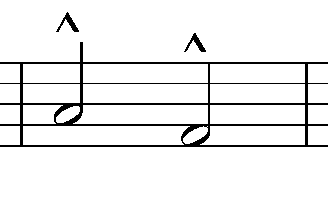
Marcato is derived from the Italian word Martellato, meaning hammer. It means to play hard and hard like a hammer, and is written in the shape of the letter Λ above the note.

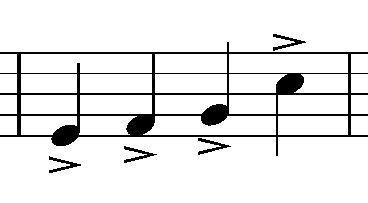
Be careful because it is different from the Accent symbol, and unless it is a cheap virtual instrument, it is a common playing method, so it is good to use it actively.

  • Portato

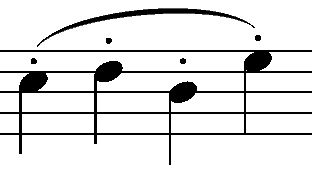
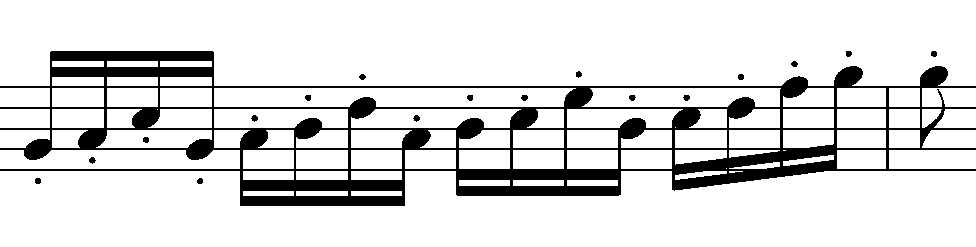
Portato is played somewhere between Legato and Detache. It is played with a continuous Down Bow or Up Bow, and is written as Slur Staccato as shown in the photo above.

Since the notation is the same as Spiccato, it must be written separately as Portato or the performer must interpret it independently by looking at the BPM and the length of the note.

  • Spiccato

Spiccato is mainly used in the middle part of the bow and is a playing technique used in the fast section. It is common to use notations such as Spiccato or Portato, and write Spiccato below.

Like Detaché, because it is played with each bow, the attack is clearly audible, so this friend is also good to use as a layer when you want to express strong legato or sustain in a virtual instrument.

  • Jete(Jeté, Ricochet)

Jete means ‘to throw away’ and is a technique in which the bow is thrown away and thrown away. Because the notation is Slur Staccato, the notation of the four playing methods, Staccato, Spiccato, Portato, and Jete, is very confusing.

Let’s write well in the sheet..!

  • Tremolo
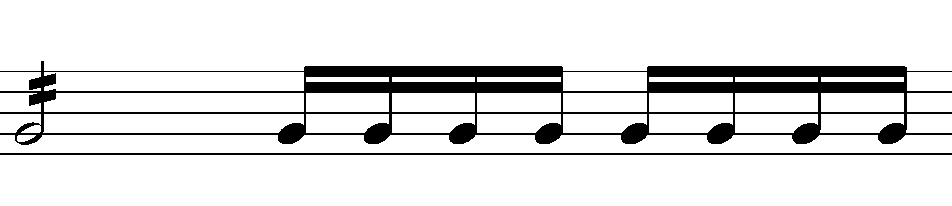
Tremolo (a)
Tremolo (b)

Tremolo is written as above, and the beat is determined by the number of sticks drawn on the note. You can think of one as 8 minutes, two as 16 minutes, and three as 32 minutes.

It is also divided into left-hand and right-hand Tremolo. (a) is the right-hand Tremolo, and (b) is the left-hand Tremolo.

Tremolo, which is played with the left hand, is often confused with Trill. Trill is generally played within a major 2nd, while Tremolo, where the note is moved, can be considered to be played over just a 3rd.

Tremolo can be used really effectively as a virtual instrument, so if you actively use it when writing songs, you can create dramatic effects.

  • Conclusion

There are some playing techniques that can be played on virtual instruments and some that cannot. There are three things to check when writing a song with string virtual instruments:

1) Will you use actual string instruments recorded and mixed?
2) If you can’t, what playing techniques can you choose and express on a virtual instrument?
3) Your song requires playing techniques that virtual instruments cannot use, but is it possible to create them using some unique tips?

As for number 1, if you mix real strings, it doesn’t matter which playing method you use, but for us musicians who are always worried about money, we have to worry between numbers 2 and 3 every time…

Therefore, you should first check the techniques you can use and use them according to the situation. There are other techniques, and we will look at them together in the next article..^^