
Hello! This is mixing engineer and music producer, Jooyoung Kim~
Finally, I am writing a review for a Takamine guitar!
Previously, I asked the Takamine headquarters about the guitar specifications since they weren’t clearly listed, but I haven’t received a reply yet. So, I’ll post the review first and update it later when I get a response.
Today, I’ll be reviewing the Takamine GD30CE NAT guitar.
Let’s get started!
- Appearance

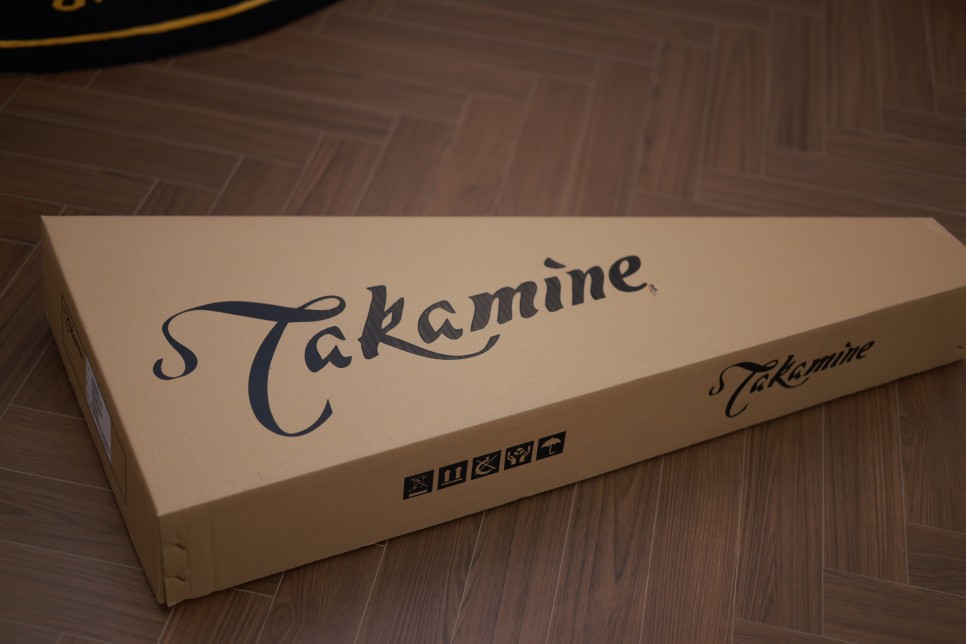
Here is the packaging box, which was smaller than I expected. Inside is the GD30CE NAT guitar reviewing today. The packaging itself is quite standard.

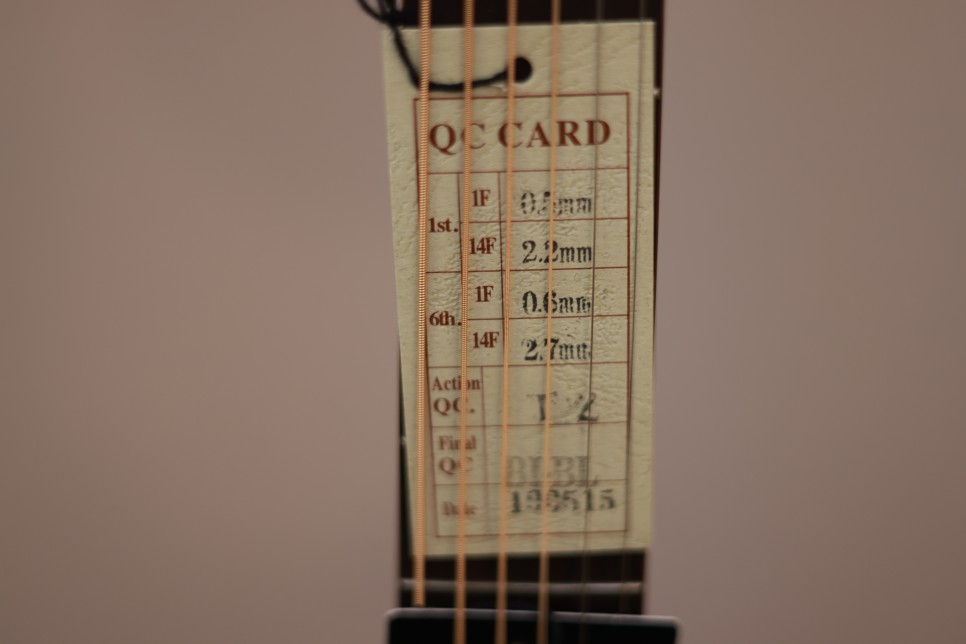
Included are a truss rod adjustment wrench and a QC card indicating it passed inspection in 2019. This makes it a slightly older model. The QC card shows a date from 2019, meaning this guitar is a bit aged.
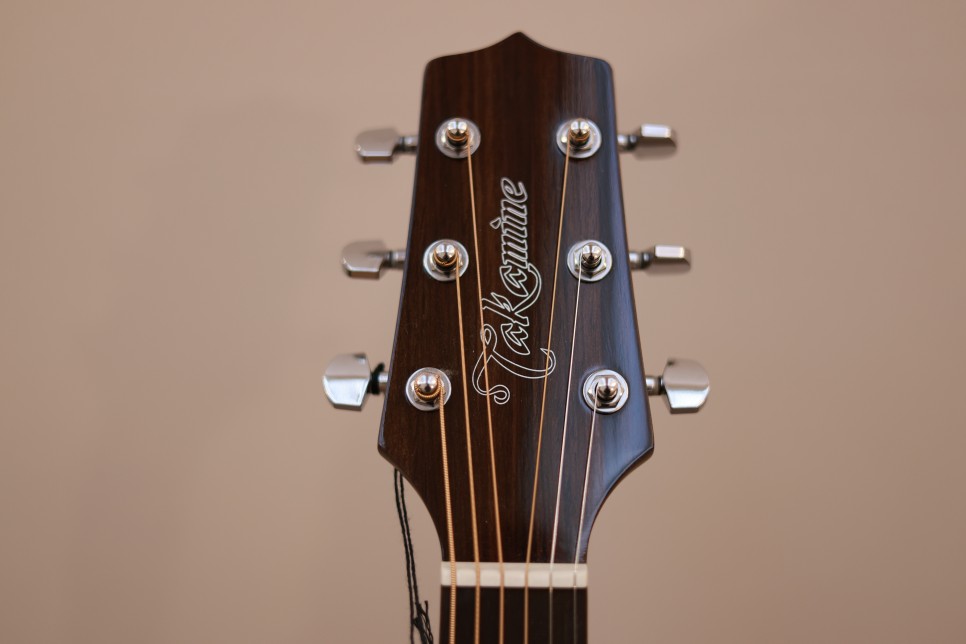
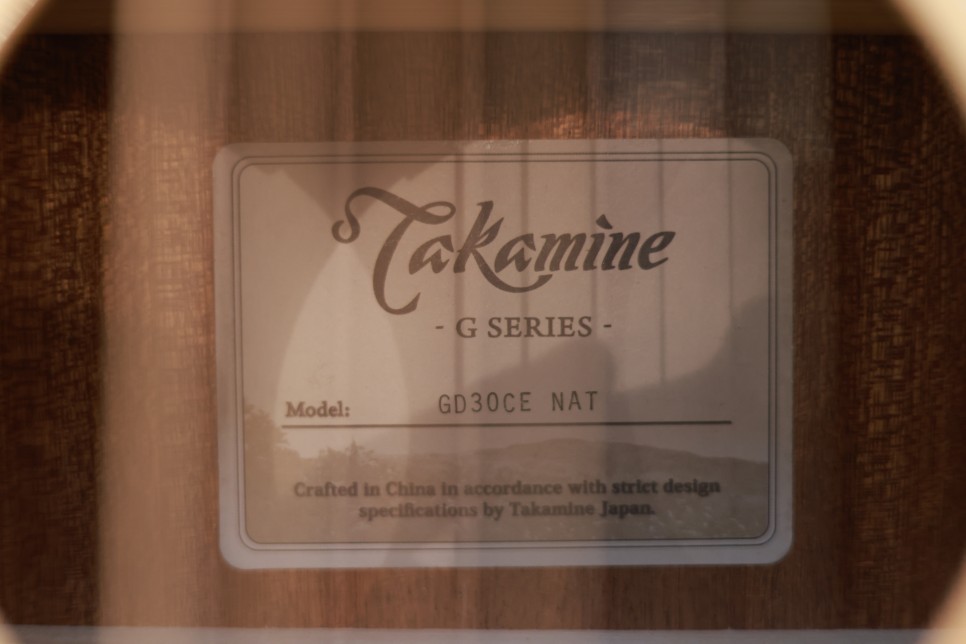

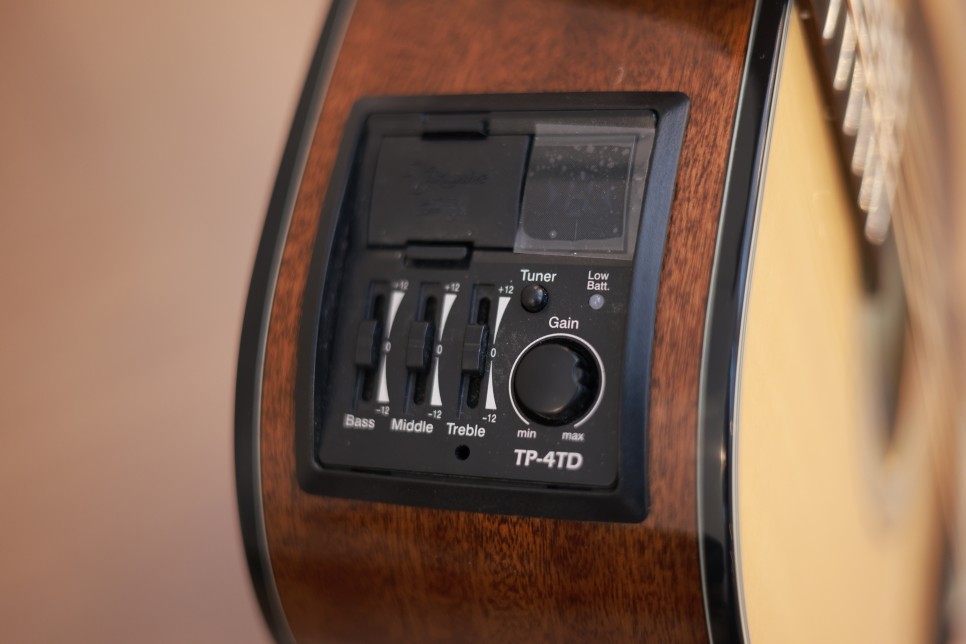
The preamp has a built-in tuner, making it convenient as you don’t need an external tuner. My first guitar had a built-in tuner, and it was incredibly convenient for tuning.
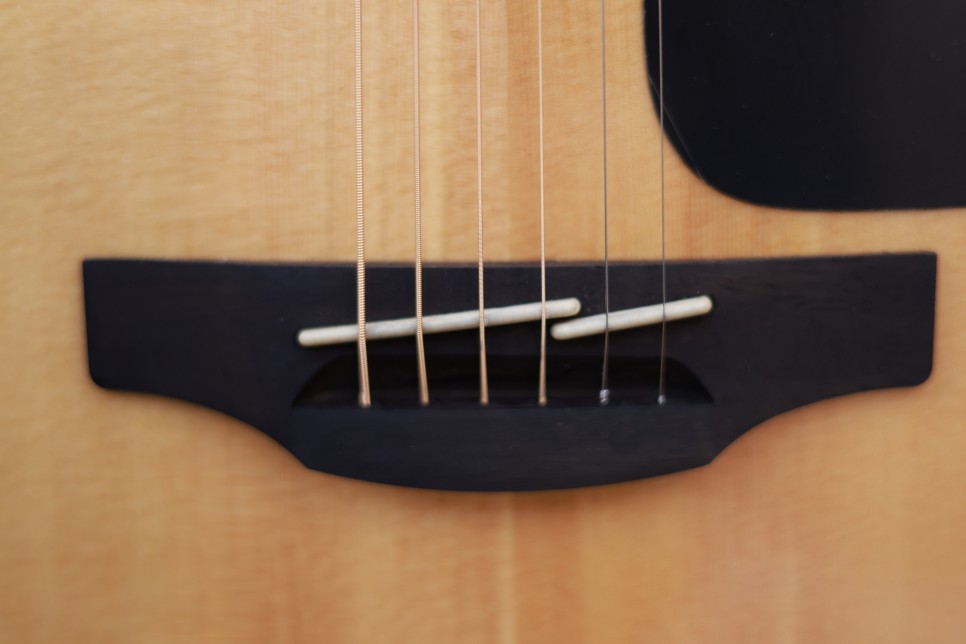
Takamine’s signature split saddle is designed for precise intonation. A notable difference between the older and newer versions of the GD30CE is the bridge. The newer versions use bridge pins to secure the strings, while the older versions allow you to attach the strings directly to the bridge without pins.
Bridge Differences
- Pinless Bridge:
- The vibration is directly transferred to the bridge and guitar, enhancing resonance.
- However, if you don’t have a habit of loosening the strings after playing, the bridge can easily lift.
- Pinned Bridge:
- The strings are secured differently.
- Just like the pinless bridge, if you don’t loosen the strings after playing, the bridge can lift and the neck can warp.
Make it a habit to loosen your strings after playing or consider tuning half a step down as an alternative.

I forgot to take a picture of the neck, but the back of the neck has a matte finish, making it easier to grip the fretboard.
- Specifications
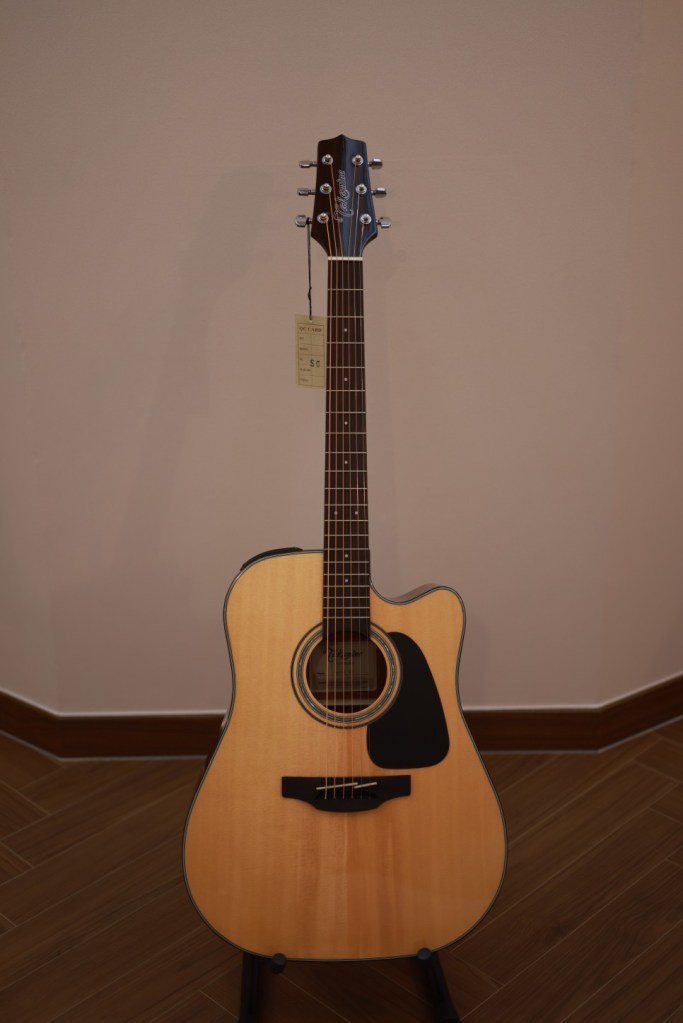
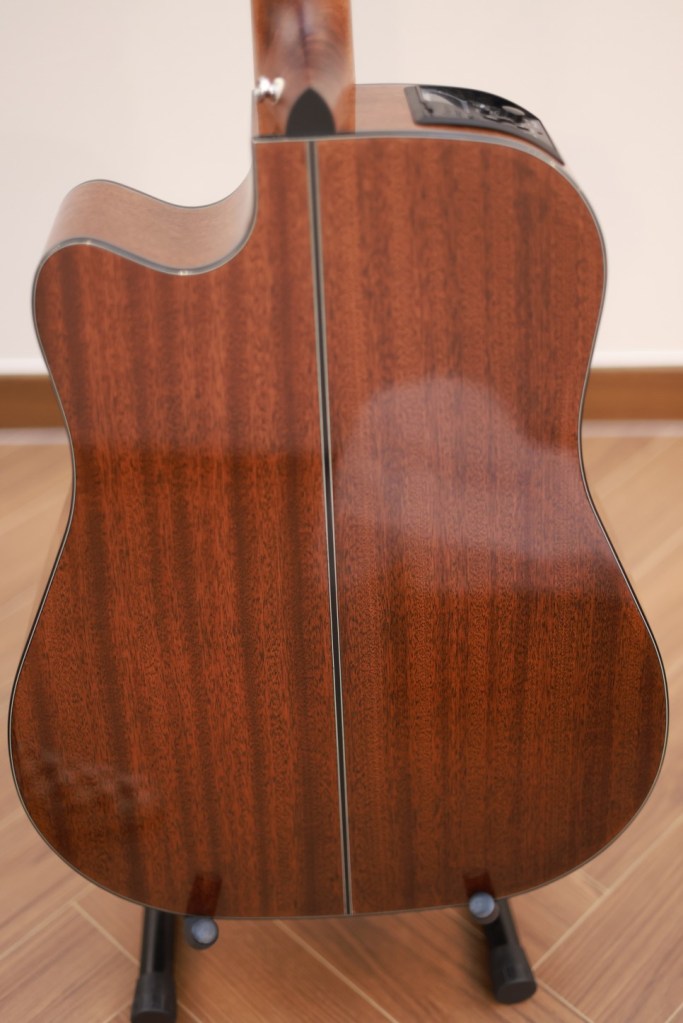
The GD30CE features a dreadnought body with a cutaway and is equipped with the TP-4TD preamp, making it a solid-top guitar. The remaining specifications are:
- Solid Spruce Top
- Mahogany Back and Sides
- Synthetic Bone Nut and Saddle
- Nut Width: 42.8mm
- Ovangkol Fingerboard
I inquired about the bridge material with the headquarters but haven’t received a reply yet. I will update this information once I get a response.
- Sound

I recorded the sound using the following setup:
- MacBook Pro 2015
- Audient ID14 (borrowed from a friend)
- OC818 Microphone for stereo recording
No reverb or delay effects were applied. I only adjusted the volume slightly and set the limiter to not exceed 1dB at peak level.
Before listening to the sound, I must admit that I haven’t played the guitar for a long time, so my playing skills are rusty. Please focus on the sound rather than the playing.
Sound Samples
1. Strumming
2. Fingerpicking (Apologies for the noise; please listen at a higher volume)
3. Amp Strumming (Using Roland AC33 amp, recorded with OC818 in mono)

4. Amp Strumming + Preamp EQ Adjustment
- Personal Overall Impression
The GD30CE NAT has decent finish quality, sound, pickups, and neck feel. It’s a well-rounded guitar with no significant flaws. It would make a great second guitar. (Although if I get another guitar, it would actually be my fourth one…!)
Out of the guitars I recently demoed, this one impressed me the most, which is why I decided to write about it first.
Pros
- Good finish quality
- Decent sound
- Convenient preamp
- Comfortable neck feel
- Affordable price: 600$
Cons
- Slightly aged model as indicated by the QC date.
- Most necks might need adjustment via the truss rod.
Despite these two cons, it’s a great guitar if you can overlook them. It’s a solid choice for those who don’t like Yamaha’s high tones, offering a similar position to the Yamaha LL6 but with a different tonal character.
I hope this review helps, and I look forward to sharing more reviews in the future!

 Jooyoung's Music Blog