Life Update (May 27, 2025)

Hey there! I’m Jooyoung Kim, a mixing engineer, music producer, and computer music researcher.

Lately, I’ve been living like a hermit… haha.

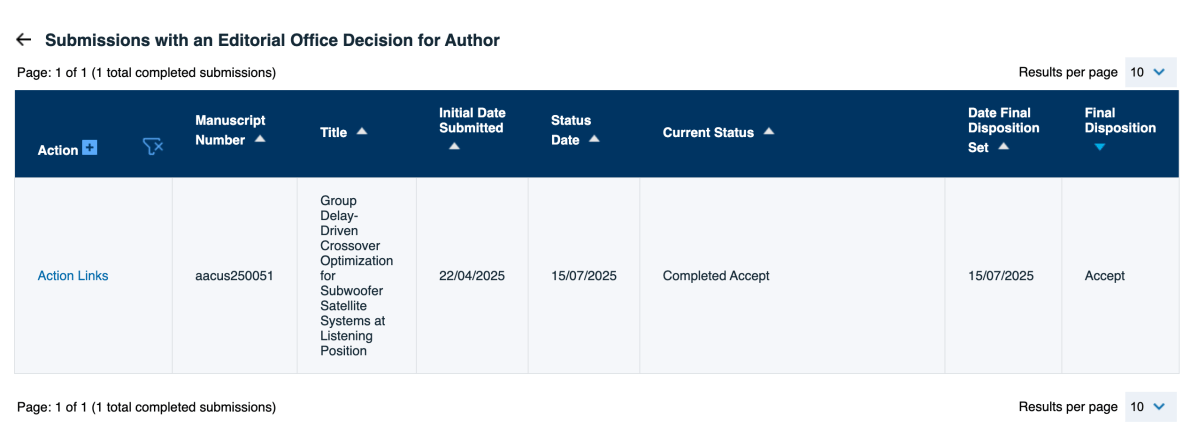
A while back, I think I mentioned grumbling about an “Editor Invited” status dragging on for over a month. Well, good news—it’s finally moved to “Under Review”! I’m keeping my fingers crossed because I really need this to wrap up soon so I can secure some thesis funding from my university to keep things afloat. The timeline’s tight, so I’m a bit on edge.

Oh, and I believe I once mentioned working on digitally recreating the SA-2A on this blog.

Here’s how that went down:

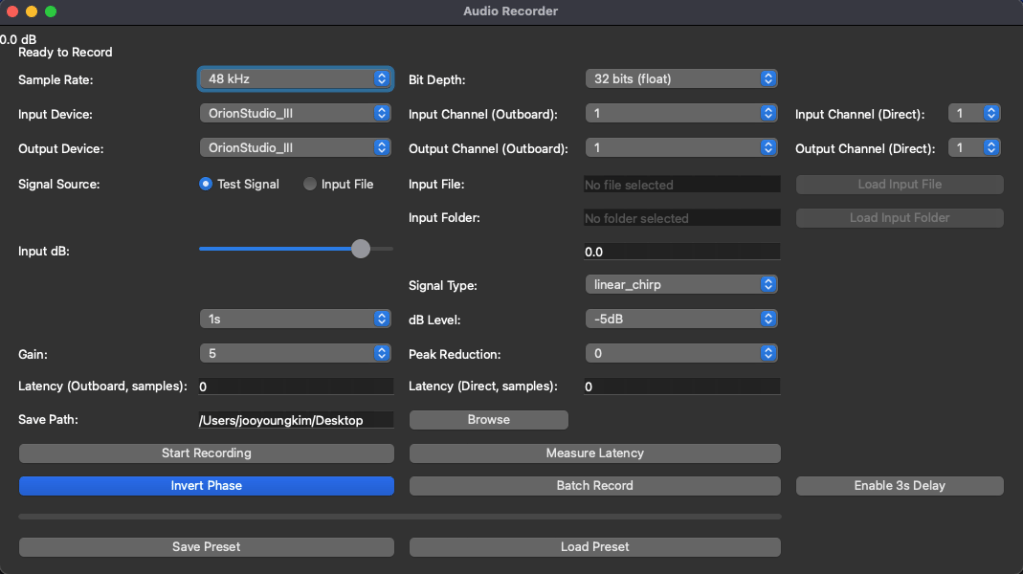
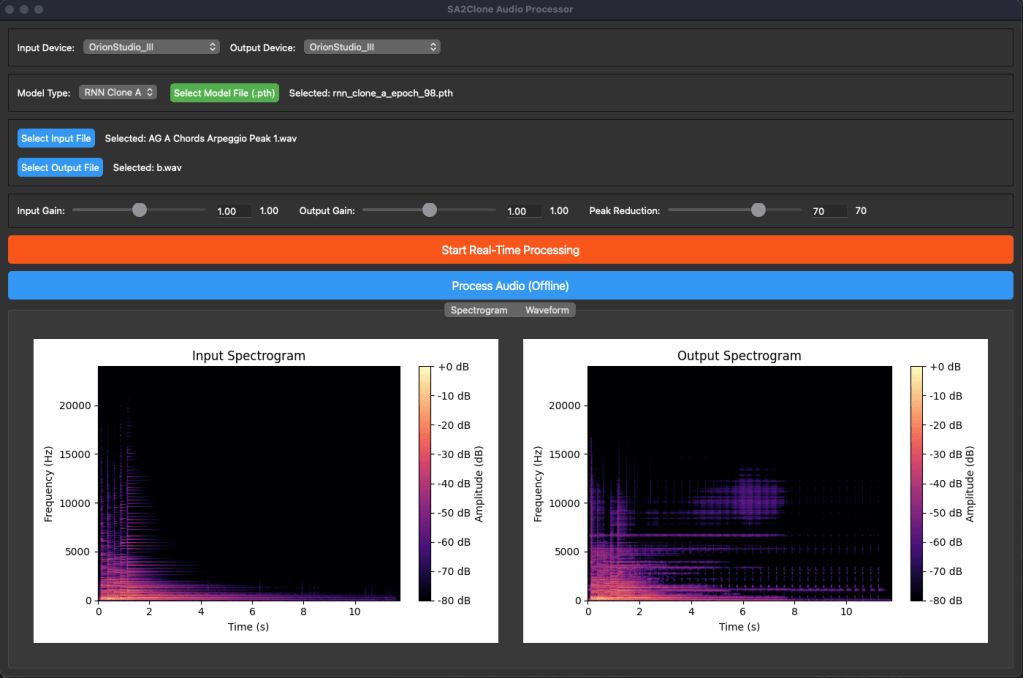
  1. Analog recording grind (plus building a recording program from scratch… ugh). That recording program UI still gives me nightmares. I built it with Qt Creator, and… let’s just say it was a few days of pure torment.
  2. Training with deep learning using CNN and RNN (LSTM) methods (which meant coding up some PyTorch for the training process…).
  3. Implementing the compressor with that training data (cue JUCE and Python code-building…).

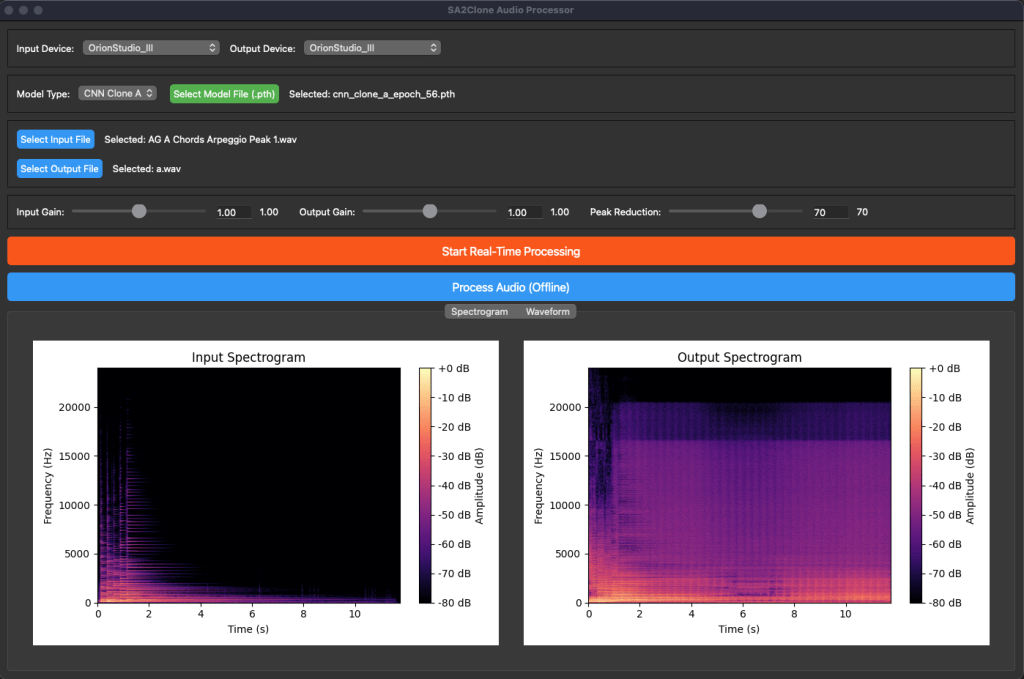
And, well, it spectacularly flopped. 😭

Just looking at the spectrogram tells you all you need to know, right?

I built a recording program in C++, slogged through endless recording sessions, spent ages training the model, and then tried real-time processing with JUCE—only to realize real-time processing wasn’t happening, so I switched to Python. After pouring over a month into this, it feels like such a letdown.

The RNN (LSTM) approach might still have some potential with more time, but CNN? Total dead end. My original idea would take way too long to execute, so I’ve shelved it for now. That said, the program set itself isn’t half bad, so I’m planning to polish it up and eventually share it on GitHub.

Meanwhile, I’ve pivoted to experimenting with a new topic. For this, I’ve been measuring THD, crosstalk, and frequency response, and I wrote a Python program to store the data and generate graphs.

This one actually turned out pretty well! I’m thinking of sharing some of the code and distributing the program around the time I submit my next paper. It might need a bit more refinement before I consider selling it, though.

https://github.com/JYKlabs

Oops, this is starting to sound like a GitHub channel plug, isn’t it?

The first half of this year has been consumed by experiments and coding for my thesis, leaving me with barely any time to work on my own music. 😢 But I’ve got something in the works, and I’m determined to release at least one track next month. I really need to get into a groove and churn stuff out consistently instead of these sporadic bursts… sigh.

I’ve always been drawn to niche things—studying physics as a kid, making music, diving into audio engineering, and now coding for obscure projects. Guess I’m just wired to love the less mainstream stuff, haha.

Anyway, that’s what I’ve been up to lately. With grad school graduation looming, I’m feeling a bit lost and anxious about what’s next. But I’m choosing to believe things will work out and keep pushing forward.

Catch you in the next post! 😊

Visiting the KOBA Show 2025 (May 20, 2025)

The KOBA Show, or Korea International Broadcasting, Media, Audio & Lighting Show, is a major annual trade fair held in Seoul, South Korea, showcasing the latest in broadcasting, audio, and lighting technology. Since its start in 1991, it has become a key event for industry professionals, featuring cutting-edge equipment, technical seminars, and networking opportunities across 27,997 square meters at the COEX Convention Center. This year’s event, held from May 20-23, highlighted the future of media and entertainment industries.

Hey there! I’m Jooyoung Kim, a mixing engineer and music producer.

I got a free pass to the KOBA Show and visited last Tuesday. This year’s event felt a bit smaller compared to previous ones, with fewer exhibitors and gear on display, which was a little disappointing. Still, it was great to catch up with some folks and check out the latest equipment.

JD Solution

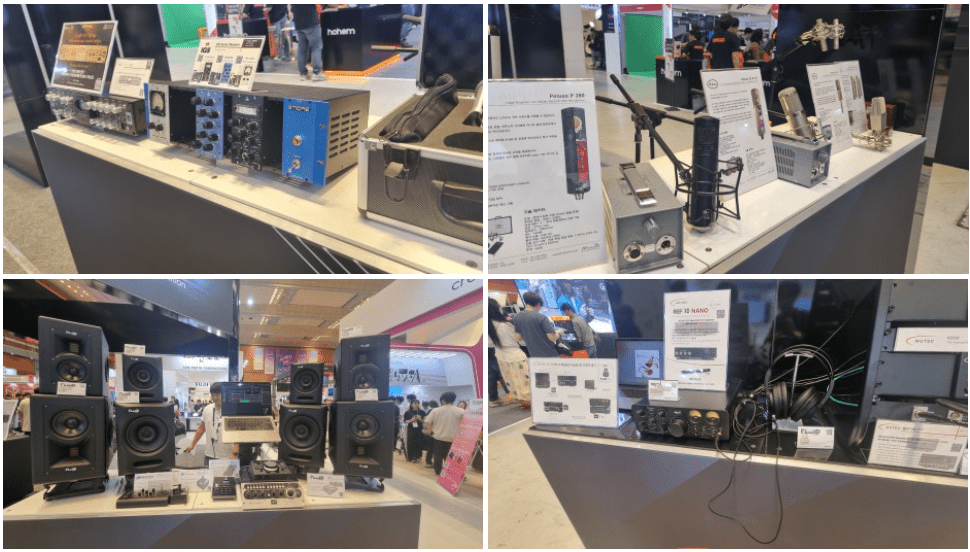
Most audio-related companies were on the first floor, but JD Solution had their booth on the third floor. They showcased products from brands I love, like Peluso microphones, Avalon, IGS, and DAD. I was really hoping to test a Peluso mic through an Avalon preamp—would’ve been a killer combo—but unfortunately, they weren’t set up that way. Oh well!

On my way back to the first floor, I took a wrong turn and stumbled upon Bongeunsa Temple nearby. It was a nice little surprise!

BLS

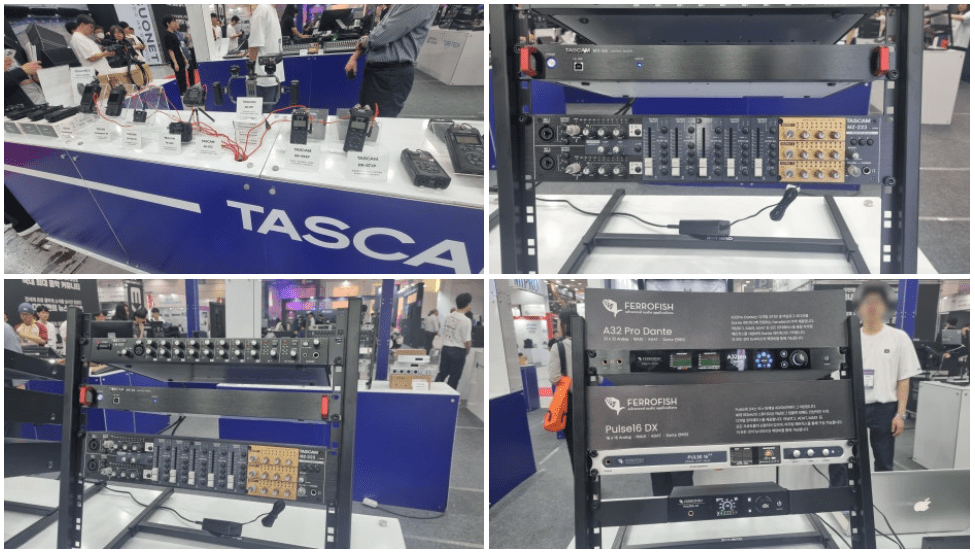
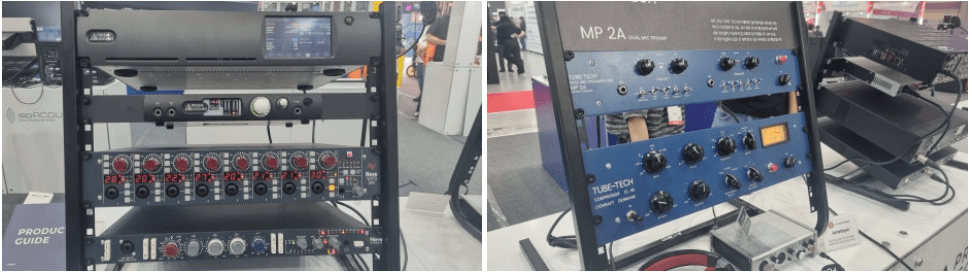
BLS had an impressive lineup, featuring Tascam, Ferrofish, Lynx, Focal, Manley, Prism Sound, and Tube Tech. They also had mics and headphones set up for hands-on testing, which was awesome.

I found myself drawn to the Manley VoxBox over the Core—it’s just so good, though the price is a bit steep!

Soundus

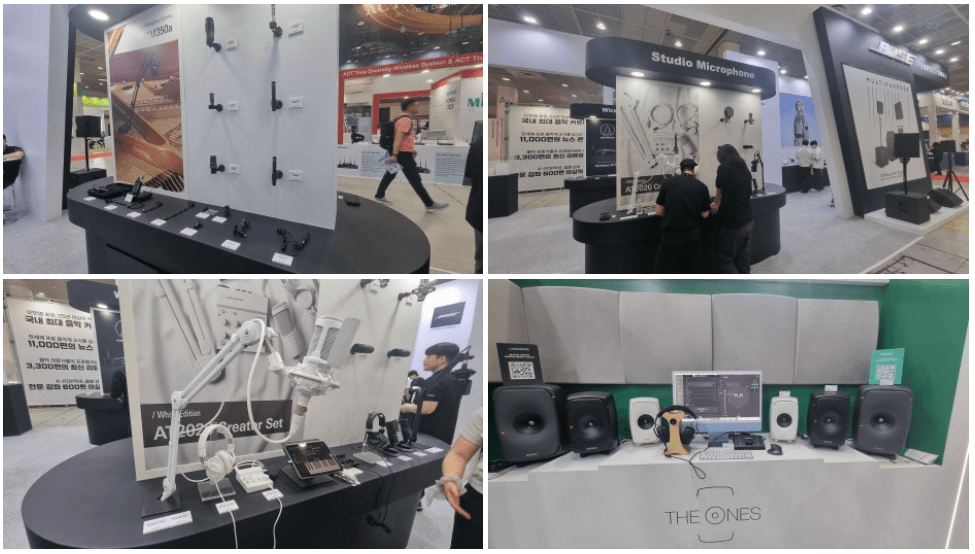
At the Soundus booth, they showcased KLANG’s binaural headphone mixing gear and some DiGiCo consoles (not my main interest, so I hope I got that right!). What really caught my eye was this wall-mounted, picture-frame-style speaker by CODA. It looked like a piece of art but was actually a speaker—super cool! If I had the budget, I’d definitely consider getting one.

Cuonet

Cuonet’s booth was interactive, with nine different missions to try out. I got so caught up in them that I forgot to take pictures! One of the missions involved guitar tuning, and I was surprised to see an Epiphone Masterbilt series f-hole acoustic guitar—pretty unique.

I also ran into someone I used to work with at a studio, which was such a pleasant surprise!

SAMA Sound

Sam-A Sound had a ton of gear on display, as always. I spotted some Genelec monitors, which my professor absolutely loves. Last year, they had the 8381A, but it wasn’t there this time, which was a bit of a bummer. They also had an impressive variety of cables!

Yamaha Music Korea

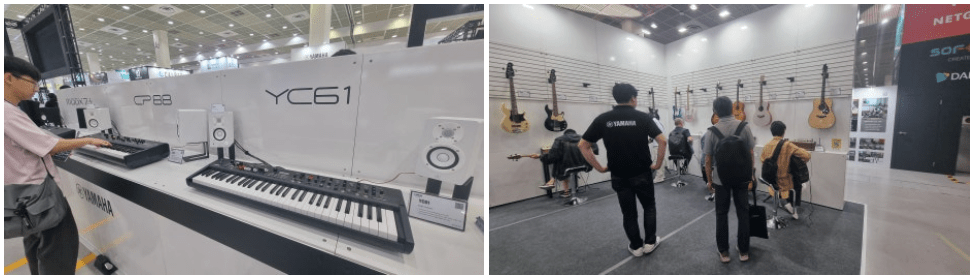
Yamaha’s booth was divided into sections for synthesizers, guitars, and streaming setups. The synthesizer area featured the CP88, YC61, and various compact synths that could double as master keyboards.

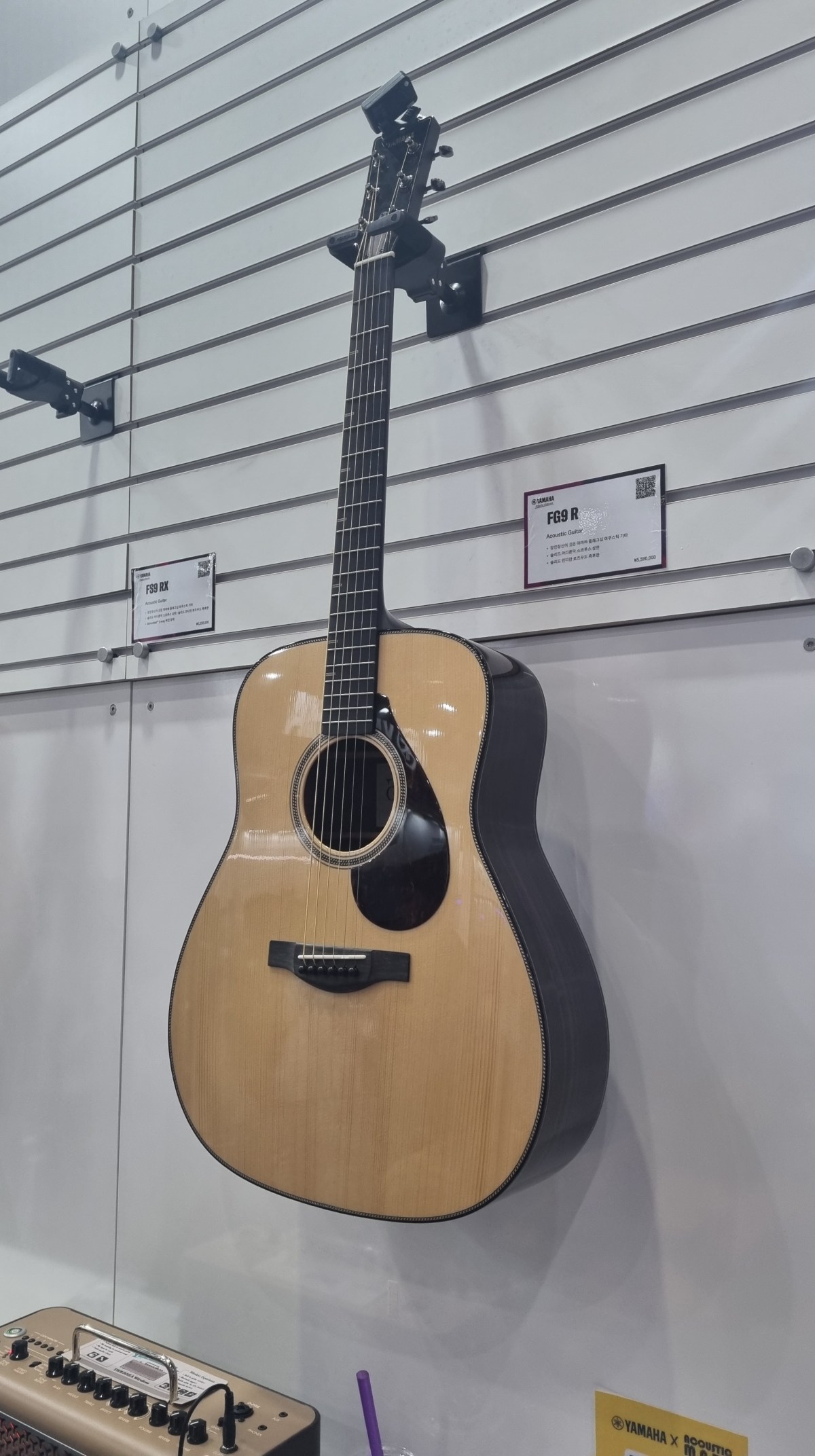
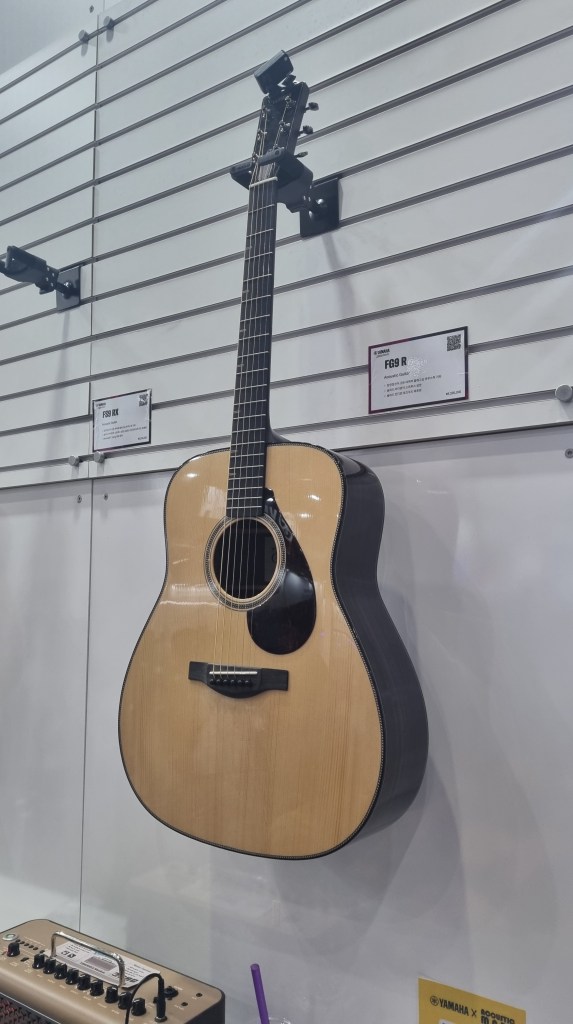
As an acoustic guitar player, I was thrilled to finally try Yamaha’s flagship 9-series guitar. It was on display, but with a performance stage right in front and so many people around, I couldn’t hear it properly. Still, it was clear the guitar was top-notch. Personally, I’m more of a dreadnought guy than an OM—guess that’s just my style! I’d love to get a dreadnought, but the affordable ones don’t sound great, and the high-end ones are just too tempting (and expensive!).

Yamaha also had a dedicated area for streaming setups, with several compact broadcast configurations. It’s clear they’re putting a lot of effort into that space.

Dasan SR

At Dasan SR, the SSL consoles stood out the most. I was secretly hoping to see some Millennia or Earthworks mics paired with them, but no such luck.

Final Thoughts

For those into studio audio or music production, these were the highlights. I noticed Music Metro didn’t participate this year, and Cuonet didn’t showcase synths like Behringer, which made the event feel a bit smaller. It almost feels like the industry is tightening its belt again. I overheard someone mention that the KBS booth was about a third of its usual size, which was surprising.

With my own finances getting a bit tight, I’m wondering how we’ll all navigate these times. Anyway, that’s my quick recap of the KOBA Show 2024. Thanks for reading, and I’ll catch you in the next post!

Changes in Loudness Over the Years (1995–2024 GRAMMY Nominees)

Hello! I’m Jooyoung Kim, a mixing engineer and music producer.

Recently, I mentioned that I had written a simple paper in Korean. Initially, it was just a school assignment, but I decided to submit it as a formal paper rather than letting it collect dust.

Today, I searched for it on RISS and found that it’s officially listed! So, I’d like to share some insights from it.


As the title suggests, this paper involved a lot of hands-on work and analysis. Here’s what I did:

  1. I tracked down GRAMMY Record of the Year nominees from 1995 to 2020 that were released on CD, importing the CDs directly from Japan.
  2. From 2021 onward, CDs were no longer released due to declining sales. For these years (2021–2024), I purchased FLAC 44.1kHz/16-bit files for the nominees.
  3. I extracted FLAC files from the CDs and measured their loudness values using the Youlean Loudness Meter.

This meter allowed me to measure Momentary Max, Short-Term Max, and Integrated Max LUFS (Loudness Units Full Scale). Using this tool, I processed a total of 520 songs.


Data Analysis

For analysis, I used common statistical methods like linear regression and ANOVA. While the statistical methods might not be particularly meaningful to engineers or artists, the results are worth noting.

In summary, I observed:

  1. Starting in 2015 (just before loudness normalization became standard across music streaming platforms), the 3-year moving average of loudness began to decrease significantly in a linear trend.
  2. Let’s break down the results with some key points about loudness:
    • LUFS (Loudness Units Full Scale) measures the perceived loudness of audio.
    • A value of 0 LUFS represents the maximum output level. Lower values (negative) indicate quieter audio.

Average Integrated LUFS by Year

Integrated LUFS represents the average loudness of a track from start to finish. Here’s the year-by-year trend:

YearAverage Integrated LUFS
2011-7.9668
2012-8.7532
2013-8.5582
2014-9.17
2015-7.5467
2016-8.7710
2017-8.4776
2018-8.27
2019-8.7814
2020-8.6533
2021-8.1338
2022-9.145
2023-8.706
2024-8.8175

This data reflects the overall average loudness of music in recent years.


Momentary Max LUFS by Year

Momentary Max LUFS represents the peak loudness within a short 0.4-second window. Below is the year-by-year trend:

YearAverage Momentary Max LUFS
2011-4.3868
2012-5.0709
2013-4.5377
2014-5.1439
2015-4.2238
2016-4.8648
2017-4.4562
2018-4.5686
2019-4.9491
2020-4.9752
2021-4.4825
2022-5.125
2023-4.944
2024-4.6863

Takeaways for Audio Engineers

From this analysis, I’ve noticed two important trends:

  1. Integrated Loudness Levels:
    • In recent years, tracks with Integrated LUFS around -8 to -9 LUFS seem to be well within acceptable ranges, meaning engineers no longer need to obsess over achieving higher loudness levels.
  2. Peak Loudness (Momentary Max LUFS):
    • Most highlights in songs fall within -4 to -5 LUFS. Standard deviation has also decreased over time, suggesting a narrowing range in peak loudness levels.

These findings could serve as helpful guidelines for mixing and mastering.


Personal Notes

Currently, I’m working on another audio-related paper using LaTeX—a tool that feels more like coding than writing! While it’s challenging, I’m preparing this paper for submission to the ASA (Acoustical Society of America), aiming for SCI recognition.

If rejected, I’ll submit it to AES (Audio Engineering Society) instead—or another venue if necessary.

I hope these insights into loudness trends prove useful for those in music production and audio engineering! If you have any questions about loudness, feel free to reach out via email.

See you in the next post! 😊

2024 Year in Review

Hello! I’m Jooyoung Kim, an engineer and music producer.

It’s already the last day of 2024…
It feels like I’ve barely done anything, yet the end of the year has come around again. 😊
This year, I want to take a moment to look back on what I’ve done.


First Half of the Year

In January, I started writing introductory posts about mixing techniques.
I’d been wanting to publish articles elsewhere, but after receiving rejections from various outlets, I decided to focus on writing consistently on my blog instead.

I lost count of how many times I revised those posts! Eventually, I submitted them to Kyobo Bookstore’s POD (Print on Demand) service. To my surprise, Joongpil Goo, an engineer from Klang Studio with extensive experience as an SM engineer, graciously wrote a recommendation for the book. Even now, it feels surreal! 😊

This was finally completed by late September, and it was quite an intense journey just to publish a single book.

From January to April, I worked with a studio called Studio Dolphin, producing YouTube videos where AI collaborated with indie musicians to create songs.
We used Soundraw for the AI-generated music, ChatGPT for lyrics, and melodies were composed by indie musicians. The challenge was to create a full song in just 90 minutes.

I participated as both an engineer and a panelist, but unfortunately, the videos didn’t garner much attention, and they’ve since been taken down.

At the start of January, I was extremely busy with various recording and mixing tasks for school projects. In February, I spent a lot of time preparing paperwork to apply for government-sponsored projects. Sadly, none of these applications were successful, which left me feeling rather deflated.

In March, I returned to school, and things got busier from there.

In May, I launched my English blog and started promoting Plugin Boutique products more actively, which kept me even busier.


Summer

From July to August, I worked on producing Danny Boy’s EP from start to finish.
I handled everything—recording, arranging, mixing, and mastering. 😊

At the same time, I collected measurement data for my thesis. The data turned out well enough that I’m now preparing to submit it to an international academic journal.

While processing the data, I found myself delving into coding—a field I never thought I’d explore! Surprisingly, tools like Copilot and ChatGPT were lifesavers. At first, I barely understood anything, but after asking countless questions, things started making sense. 😊


Second Half of the Year

September was tough. I applied for several positions but didn’t get any of them. My final interview was with the Gyeonggi Arts Center, but, well… things didn’t work out. Back in May, I’d also made it to the final round for a position at Kumho Art Hall at Yonsei University but was ultimately rejected. I guess that’s just how life goes. 😊

In October, I filmed a music video, and November passed without anything particularly noteworthy.

In December, I wrote a short paper about loudness in audio and submitted it to a domestic academic journal. It was accepted and will be published in early January.

Also, during this semester, a professor from Sorigeo joined the faculty, and I took his class. In collaboration with him, I gathered data for another research paper, spending two days on measurements. The data looks promising, but I haven’t organized it yet. Once I do, I plan to publish another paper and share the details. 😊

In addition to all this, I continued working on my own music, doing external mixing/mastering, composing/arranging, and providing guide vocals.


Unforgettable Projects

One of the most memorable projects this year was mastering the EP for the Bulkuksa Team’s Random Game. My favorite track was definitely “Microdust.”

A heads-up: the song contains explicit language. 😊

A friend had asked if I could master the track using only an MP3 demo, as they’d lost the original files. I was initially concerned about the sound quality but was blown away by how creative the music was. I couldn’t say no!

Some tracks were well-balanced, while others were completely off, but I managed to improve them significantly through proactive mastering. While the sound quality wasn’t ideal due to the limitations of MP3, the sheer fun of the music made up for it. 😊


Gear Purchases

  1. Stam Audio SA-4000 MK2 Compressor
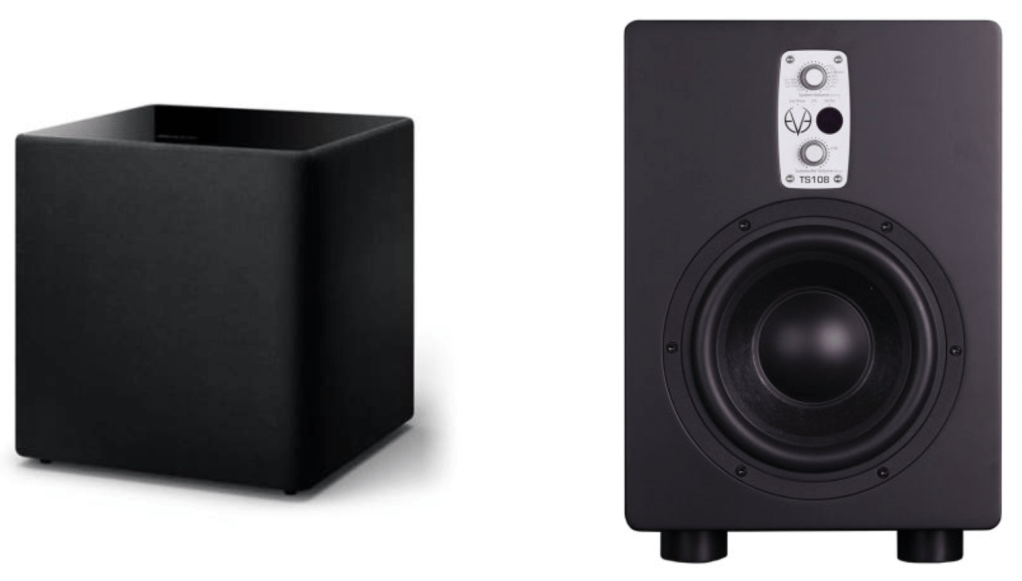
  2. KEF Kube 15 MIE Subwoofer
  3. Stam Audio SA-2A Compressor
  4. Earthworks M30 Measurement Microphone
  5. Rack Cabinet and Patch Bay
  6. Wharfedale D310 Passive Speakers
  7. Cort A4 Bass
  8. A broken Heritage Audio Successor Compressor

I bought quite a bit this year…

Next year, I’m thinking of adding a tube microphone preamp and an EQ. Maybe another compressor or a mic too? The gear wishlist never ends! 😊