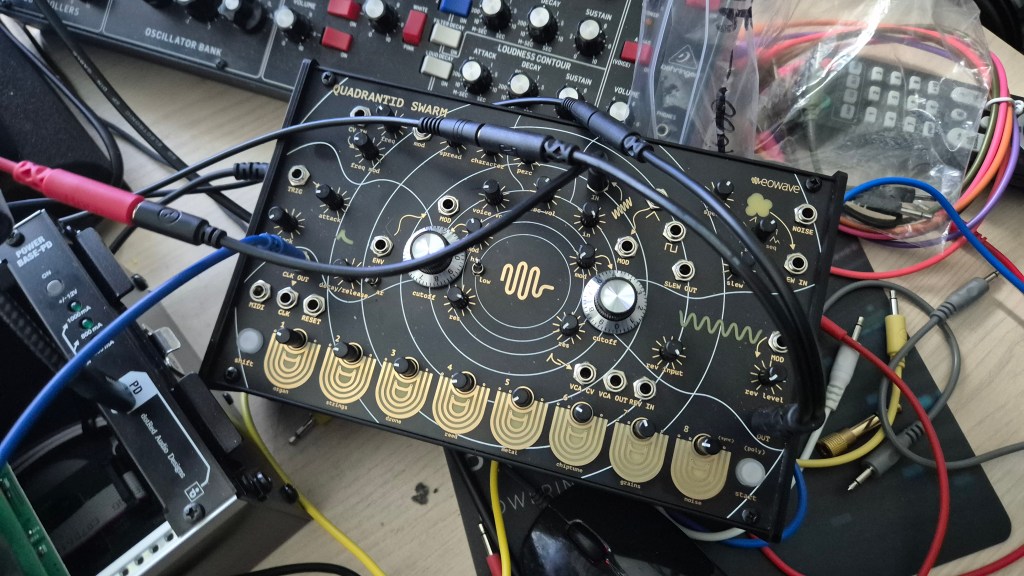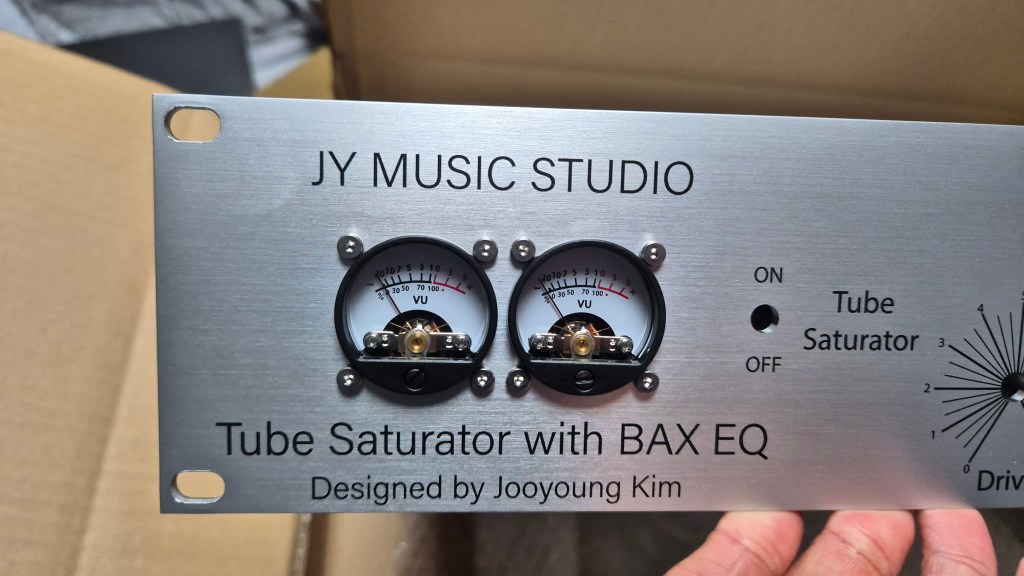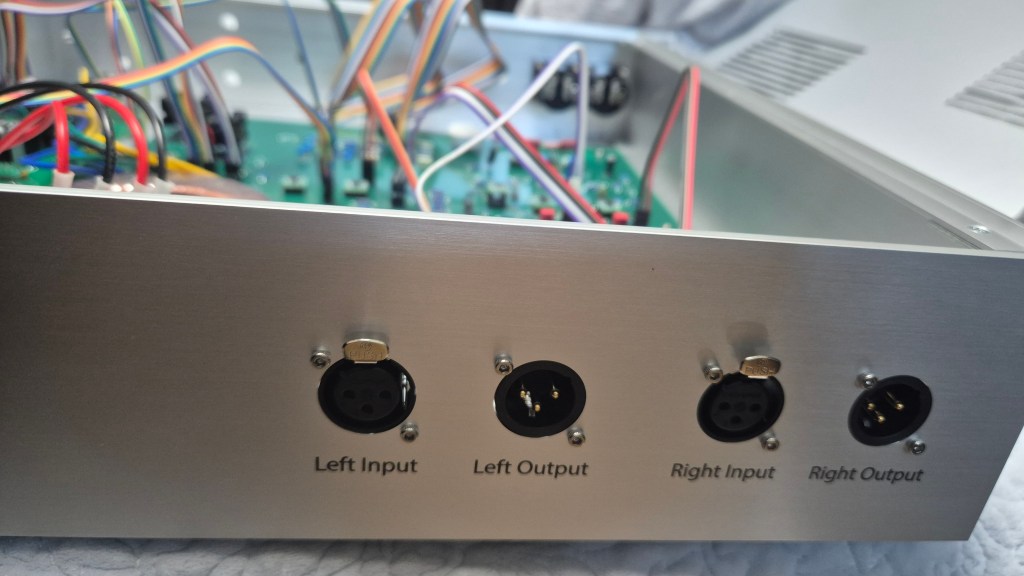
I bought microKORG XL (older version) and Bolanle passive stereo DI box

Hello! This is Jooyoung Kim, a mixing engineer and music producer.

Recently, I bought a small portable synthesizer: the microKORG XL. KORG currently sells the microKORG XL+, but this discontinued version has a very reasonable price on the used market (just about $140 in Korea!), and its sounds are still perfectly usable.

The keys are made of cheap plastic. However, I can connect an external controller via a MIDI cable or transmit MIDI data via a USB cable.

It also has an external audio input, such as a microphone or line input, which can be used for the vocoder function.

There are two kinds of outputs, unbalanced L/R and headphones, which are very convenient to use.

The synth has 8 categories/genres and 2 selectable banks. Therefore, a total of 8 X 8 X 2 = 128 preset programs are available.

But I’m really disappointed by the microKORG XL editor software provided by KORG. It’s no longer usable, and I cannot even install the program on my Mac system.

Also, I have microphone preamps but no DI box. So, I decided to purchase a stereo DI box. However, you might realize I’m not an affluent musician if you’ve been following my posts. After some web searching, I found a cheap DI box made by Bolanle (just $33!) being sold on Aliexpress.

I really didn’t have high expectations for this gear because of its price, but surprisingly, the build quality is great!

I can’t say I love all of the sound presets on the microKORG XL. However, I am particularly fond of one lead sound preset and one keyboard sound preset. The vocoder function is quite valuable as well.

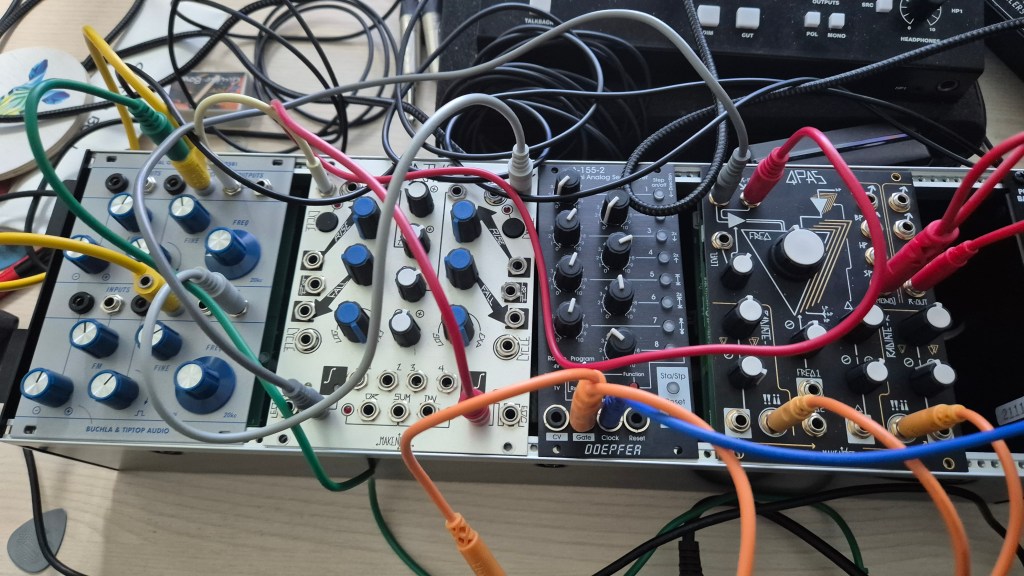
Now I am eager to get a full analog multi-voice synthesizer. Music making always drains my wallet!

That’s all for today. See you in the next post!

Life Update: Live Sound Engineer, Mixing Instructor, and Thesis Work (Oct 26, 2025)

Hello everyone, this is mixing engineer and music producer Jooyoung Kim.

It’s been another busy week, so this one’s going to be a short life update post. ^^;


Last Saturday, we held the second “Frisketch x Yeonjun Yoon | Um” concert.

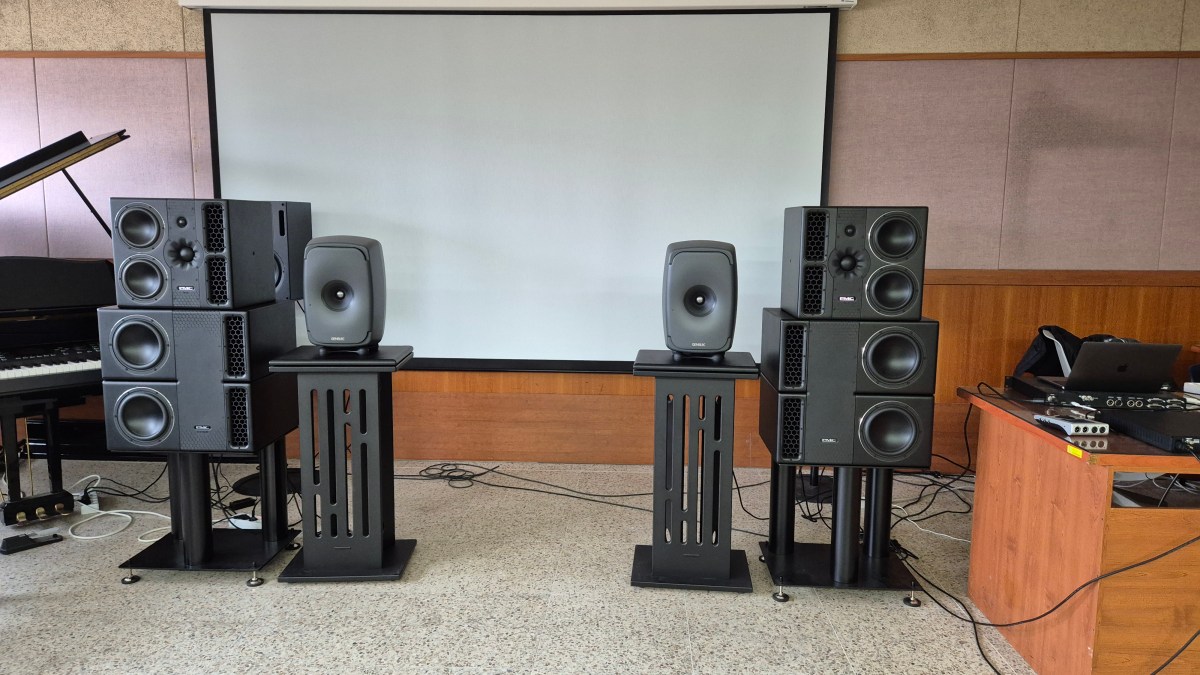
I worked as the sound director again. We used the same venue as the June concert, but this time we positioned the piano differently.

In the meantime, I picked up another Peluso P87 and added two RØDE NT55s for ambience. The sound came out much closer to what I had in mind this time.

Because of the speaker placement, I decided to run the mix in mono. Since the only instrument was the piano, the main mic (P87) captured it beautifully.

That said, when the artist mentioned, “I wish the piano tone were a bit less metallic,” I completely agreed. Haha.


Then on Tuesday and Wednesday, I assisted Sound Director Sung-won Yang in his class “Mixing with IR Reverb” at the Arko Arts Human Resources Institute in Ilsan.

On Wednesday afternoon, I took over and led the mixing lecture myself.

Sometimes I wonder if I made things too difficult, but the topics I consider most important in mixing tend to be the challenging ones.

So I told the students, “It’ll all make sense later—trust me,” and just went for it. Haha.

Honestly, I had so much I wanted to cover, but time was short. I trimmed and trimmed until the lecture fit the schedule perfectly—but it still felt a bit like a Spartan session.

Hopefully it wasn’t too much to absorb all at once.


By the way, I don’t think I’ve mentioned this here before, but I’ve been teaching major practical courses at my graduate school since finishing my master’s degree.

I used to give private lessons only to a few close acquaintances, but now that I’m officially teaching as part of the program, I’ve been thinking a lot more seriously about pedagogy and teaching methods.


Also, my master’s thesis has finally appeared on D-Collection (The archive of theses in South Korea).

The topic is the same as my journal publication, though since it’s an earlier research version, the experimental conditions may feel a bit rougher.

I wanted to cite my published journal paper in the thesis abstract (which is normally standard practice), but unfortunately the publication and submission dates overlapped too closely.

I even contacted the university library afterward, but they said the submission was already finalized and online revisions weren’t possible.

Still, since the journal was published first, there’s no real issue academically.

(For context: a thesis isn’t considered an official publication—once your advisor approves it, the degree is granted.)

Interestingly, I couldn’t find another case online where the timing overlapped this perfectly. ^^;


As for my recent live recordings, I’ve finished most of the mixing, and now my Mac Studio is running endless deep learning sessions again.

Compared to my old Windows PC with a GTX 1080, the Mac runs quieter and stays much cooler.

I’m redoing the experiment I failed back in May, and this time I plan to take my time and turn it into a proper paper.

I already got IRB approval, so I’m hoping the training finishes soon.

(Each CNN run takes about 20 days, by the way… hahaha… ha… 😭)

I’m planning to try a WaveNet model as well, but I’m slightly worried it might overrun the IRB deadline. 😭


That’s how things have been lately.
See you in the next post!

Won the Gold Prize in the DTM Koshien (甲子園) + Life Update (Oct 17, 2025)

Hello, this is Mixing Engineer and Music Producer Jooyoung Kim.

Lately I’ve mostly been posting about sound engineering projects, but this time, I finally did something more in line with my role as a music producer.

Last month, I submitted one of my tracks to the DTM Koshien, organized by Movement Production in Japan.

To be honest, I’d been so busy afterward that I almost forgot about it—but out of a total of 431 entries, my track placed in the top 11 and was officially awarded the Gold Prize.

Everything is labeled as a “Gold Prize,” so I suppose it’s more like being recognized as a finalist. (The video thumbnail says “Gold Prize Nominee,” but it really is a Gold Prize…^^)

The song I submitted is called Seiun (星雲, “Seongun”, means “Constellation”).
Originally, it was a full track with two verses, but since the competition required only a one-verse submission, I merged the first and second verses into a single version.

Also, the bass in the song was performed by me and painstakingly edited note by note. As with most of my works, I handled everything on my own—vocals, instruments, arrangement, mixing, and mastering.

I really appreciate that, just like with Sonicwire before, Movement Production judged the entries fairly and still awarded a foreigner like me. I’d like to release the full version with both verses someday, but that’s something I’ll need to discuss further.

The awards ceremony and event, along with the grand prize announcement, will take place in Tokyo next Sunday. I’d really love to attend, but between my limited Japanese and the cost of the flight ticket… it’s not easy.

Money’s been draining fast these days. For instance, I just got my TOEFL results today—and I completely messed up the speaking section, so I’ll need to retake it… another 300 USD gone. This will be my third attempt…

These photos are from last Tuesday’s performance of Practice Piece: Triptych, held at a venue called Seoul National University Power Plant. It featured simultaneous live recording and amplification of saenghwang (Korean mouth organ), drums, processed vocals, piano, and synthesizers. The artist is considering releasing a live album, and I’m currently working on that.

Tomorrow I’m also working as a sound director for a small concert, and next week I’ll be assisting as a lecturer at a place called Arko.

Fortunately, I do have some projects lined up, like live recording for concerts and teaching—but all my earnings immediately go into buying gear like microphones and cables, so I’m broke again. ^^; I suppose that’s just the fate of those of us in music and sound.

If only I had passed the TOEFL this time, I could have worried less for a while…

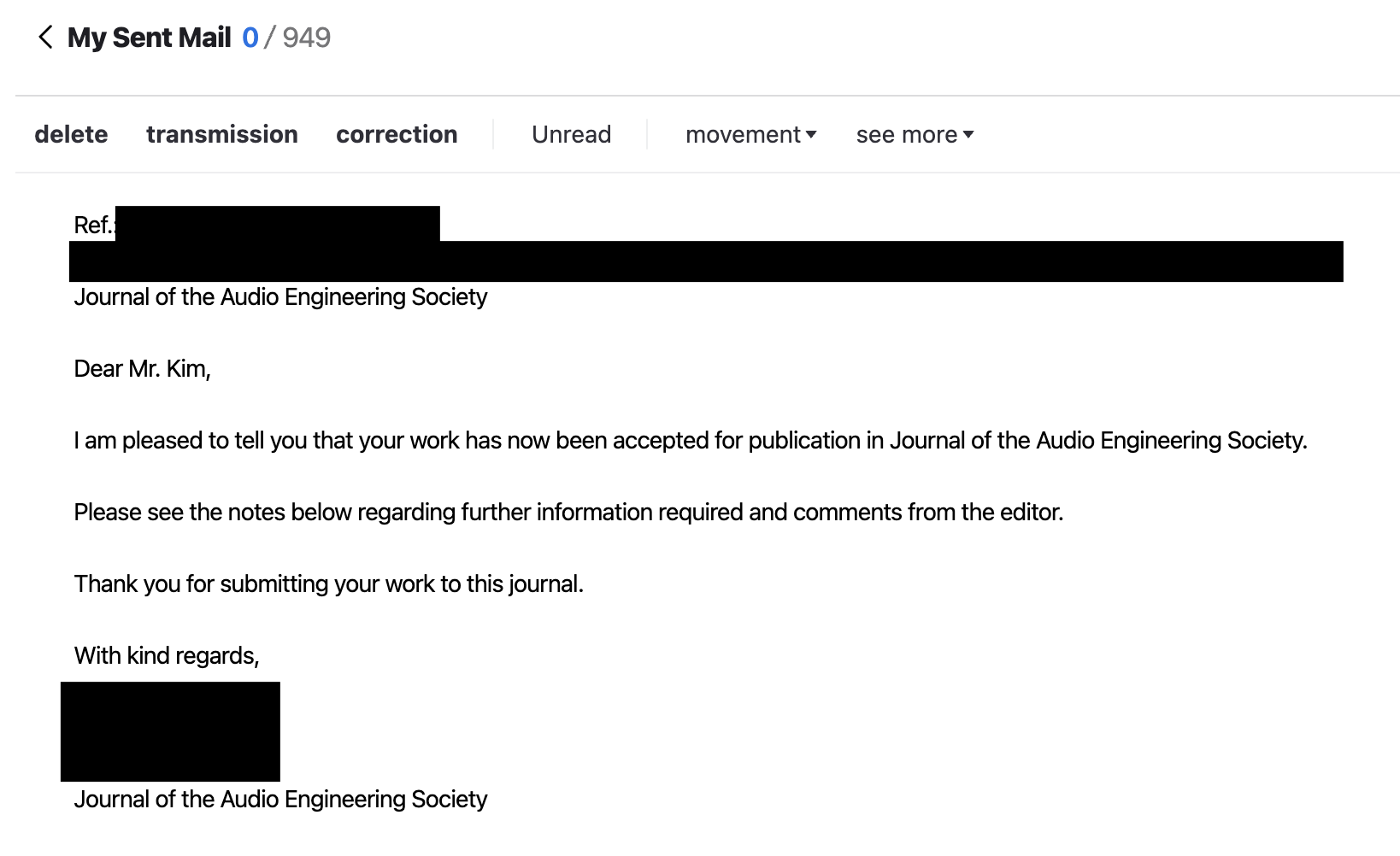
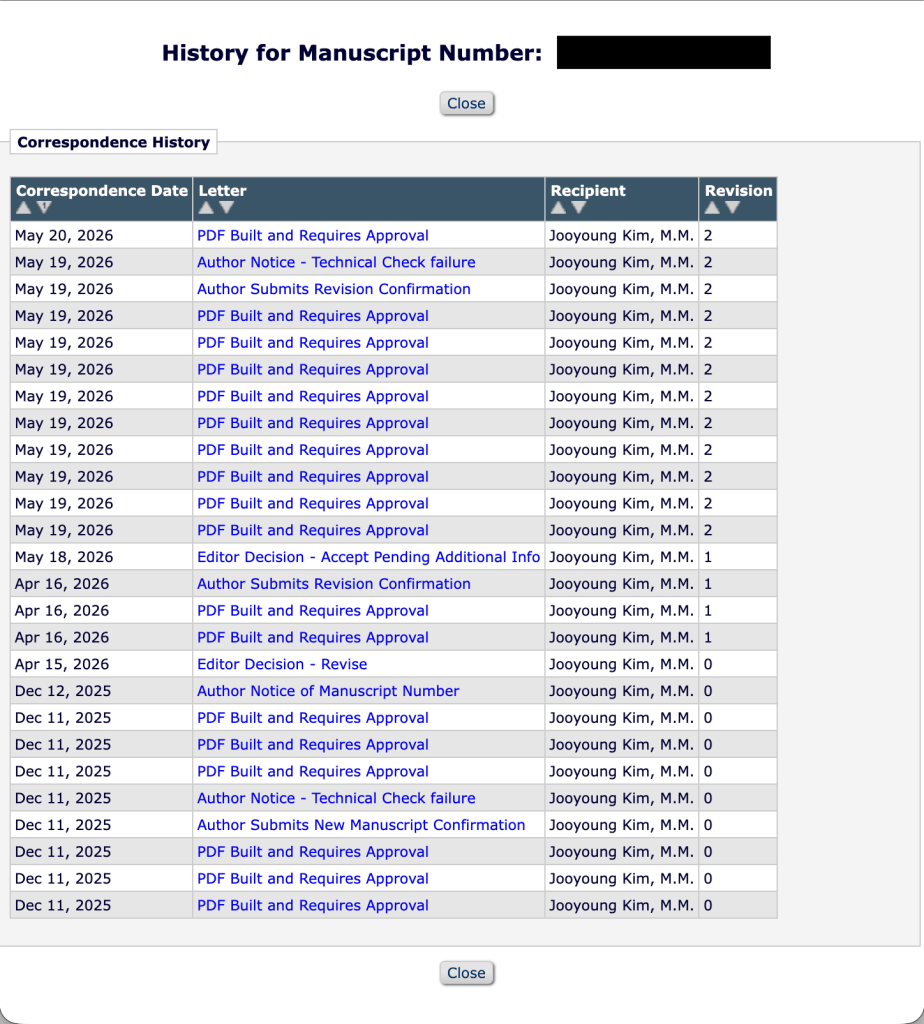
On top of that, I’ve also submitted a paper with a fairly simple topic. If it gets rejected again, it’s going to hurt, but at least I managed to finish it well enough to submit. Time to start writing the next one.

Anyway, that’s a quick update from me!
See you in the next post. 🙂

I Earned the Stage Sound Engineer Level 3 Certification

Hello, this is Jooyoung Kim—sound engineer and music producer.

In Korea, there is a government-issued certification called Stage Sound Engineer (Level 3, 3 is the first (or beginner) level, followed by 2 and 1.).
It doesn’t have a direct equivalent in the US, UK, or Canada, but you can think of it as something like a formal audio engineering license, proving both practical and theoretical knowledge in live sound.

As I’ve been working in the audio field, I realized that while practical skills are essential, having an official certification also helps when listing credentials on a résumé. For a long time, I wasn’t sure if it was worth pursuing—but I figured if I didn’t get it this year, it would only become harder later. So, I decided to take the exam.


Studying for the Written Exam

I had already bought some textbooks back when I ambitiously wanted to “master all of audio engineering.”
Unfortunately, the exam content had been updated recently, which meant my older materials were out of date.

At first, I tried to get by without buying the new edition, but after checking last year’s exam questions, I realized too many things had changed. So, I finally bought the updated books just two days before the exam and studied them intensely.

In total, I prepared for about ten days—definitely a crash course. The audio-related parts were manageable thanks to my background, but the legal regulations and stage-specific terminology were quite difficult. Memorization has never been my strong suit (even in English vocabulary study these days, I struggle a lot!).

I didn’t go through the entire book cover to cover, but I solved past exams one set per day and focused on reviewing the parts I got wrong. It was a very “efficient cramming” strategy.


The Practical Exam

Since much of the practical portion overlapped with my usual work, I didn’t need to prepare too heavily.

The main part was a listening test: adjusting pink noise with a 15-band graphic EQ to balance different frequency ranges, and identifying test tones across the EQ bands.

Because I couldn’t find a simple 15-band graphic EQ plugin anywhere, I actually built one myself as a VST3 and AU plugin. If anyone needs it, I uploaded it here:

🔗 GitHub – JYKlabs/15-Band-Graphic-EQ

Mac users can simply extract the files and place them in /Library/Audio/Plug-Ins/VST3 and /Library/Audio/Plug-Ins/Components.

Windows users can place the VST3 file in their VST3 plugin directory. (Since I only built it on Mac, I haven’t tested it on Windows yet.)

The plugin is extremely minimal—no extra features, just a straightforward EQ.

During the actual exam, there were 10 listening questions in total. The first five (identifying effects) were fairly easy, but the last five (detecting EQ adjustments applied to music or noise) were much harder. Since the exam environment was different from my usual studio setup, I struggled a bit.

Also, I tend to think of EQ in terms of musical intervals, but the test was structured entirely in octave relationships, which threw me off at first.

Still, since passing only required 6 correct answers out of 10, I managed to make it through. Thankfully, my hearing was in decent condition that day (sometimes ear fatigue can really mess me up).


Final Thoughts

Unlike in South Korea, many Western countries don’t offer official government-issued certifications specifically for live or stage sound engineering. Instead, recognition and credibility often come from trusted industry certifications, educational credentials, or portfolio evidence.

For example, the Certified Audio Engineer (CEA) credential from the Society of Broadcast Engineers (SBE) is well-regarded and requires both experience and passing a technical exam. For those focused on live sound, programs like Berklee’s Live Events Sound Engineering Professional Certificate offer structured, practical training.

Even if you already have solid skills, it can sometimes be difficult to secure projects or convince clients without something official to show. That’s where certifications and structured programs help: they provide a clear, external validation of your abilities and open doors that pure experience alone may not.

At the end of the day, audio work is unpredictable: sometimes you’re mixing in a studio, other times you’re troubleshooting live sound under pressure. The more prepared you are, the easier it is to adapt.

Thanks for reading, and I’ll see you in the next post!