Audio Expo Seoul 2024 (AES 2024) Recap

Hello, this is Jooyoung Kim, a mixing engineer and music producer!

I always tell my fellow music creators never to overlook hi-fi products.

The term “hi-fi” itself is short for “high fidelity,” meaning playback that is as true to the original sound as possible, without distortion.

Among hi-fi manufacturers, there are many companies with advanced technology that deliver excellent measurements. Working with such devices can be highly beneficial.

All passive speakers, rarely seen in professional audio environments!

I also work in this kind of environment.

However, since anechoic chamber measurements provided by companies don’t tell the whole story, it’s crucial to assess how the devices sound in real working environments and how the sound changes depending on the listener’s position.

With that preamble, let’s dive into my experience at the Audio Expo Seoul, which runs from yesterday through tomorrow. Here’s my review after my visit.


Venue

The event took place on the 30th to 32nd floors of Novotel Ambassador Yongsan and the 2nd floor of Yongsan Electronics Market.

Attendees could check in and receive wristbands at the 1st-floor lobby of Novotel Ambassador.

I explored the exhibits in the recommended order: 32nd floor → 31st floor → 30th floor → Yongsan Electronics Market 2nd floor.


Dynaudio Contour Legacy

First up was Dynaudio’s Contour Legacy, a well-known name even in the pro-audio industry.

It was impressive. I’d love to test it in a more controlled listening environment.


Avantgarde Colibri C2

This was one I’d been eager to hear. However, in the hotel room setup, midrange resonances were quite noticeable.

I switched positions to see if it was a placement issue, but my impression remained the same.


ub+ dB1

At first glance, I thought it was a new release from Devialet, but it turned out to be another brand.

Its sound was decent for the price, and the design was intriguing enough to spark some buying interest. If I recall correctly, the pair was around ₩900,000.


Harbeth Super HL5 plus XD

I finally got to experience Harbeth. It reminded me a bit of ATC in terms of sound character.


Monitor Audio Gold 100 6G

Monitor Audio is known for producing excellent measurements. This model felt somewhat restrained, which might make it suitable for certain types of studio work.


Focal Diva Utopia

Focal is another brand known for its professional audio monitors. While solid, it wasn’t to my taste this time.


Piega COAX 811

Piega’s coaxial ribbon design intrigued me, but the midrange resonance was noticeable—perhaps due to the room acoustics.


Tannoy Kensington GR, Classic Gold

Classic Tannoy sound—impressive as always. It made me consider its potential for studio use.


Wharfedale

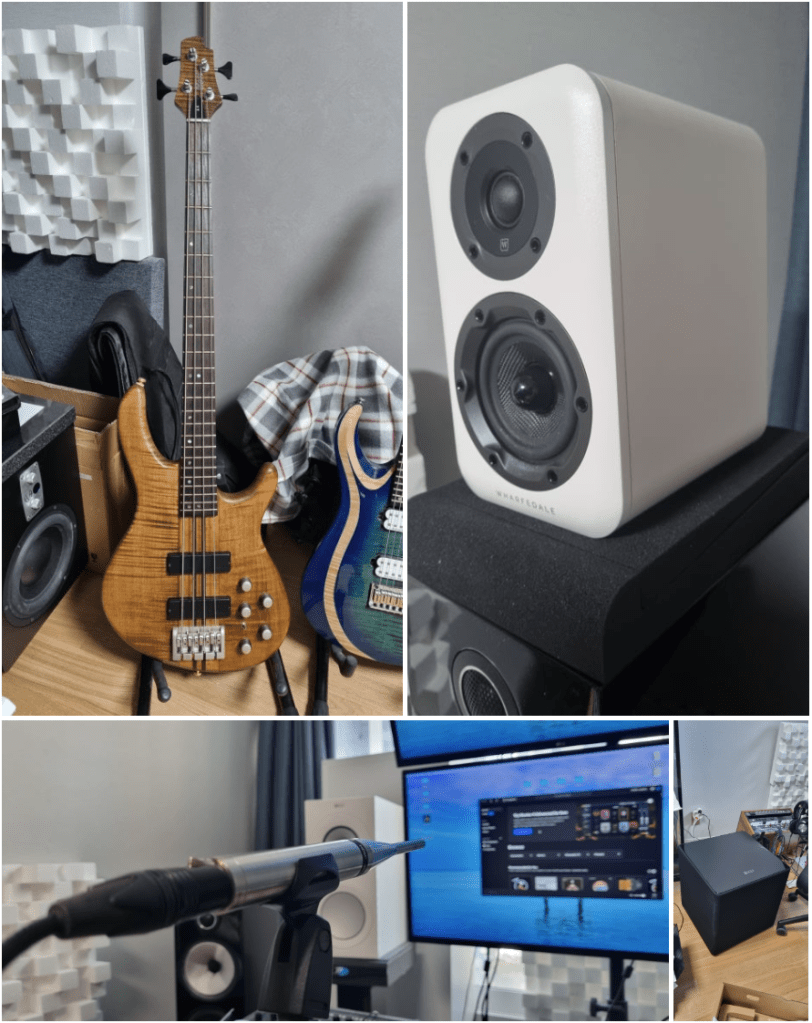
Great value for money. While not mind-blowing, the quality was solid for the price point.


Marten Mingus Septet

Visually stunning, though the listening experience didn’t fully convince me.


Audio Physic

Although I don’t recall which model I listened to, it left a positive impression.


Genelec

Genelec, a staple for many engineers, had a setup with coaxial speakers and subwoofers. Unfortunately, the playback was marred by distortion, likely from the LP source.


JBL L100 Classic mk2

Solid, dependable sound, living up to expectations.


Revival Audio Sprint

A standout for me. I could see myself using it in a studio setting. The price was also quite reasonable.


YG Acoustics Hailey

A solid performer with tight, well-defined low frequencies.


Avalon PM 3.2

The most impressive speaker I heard at the expo. Its tight bass and wide frequency range were perfect for modern music production.


B&W 801D4

Sadly, the LP setup held back this speaker’s potential. I’d love to hear it in a better environment.


Overall Highlights

My top picks from the expo:

  1. Dynaudio
  2. Tannoy
  3. Audio Physic
  4. Revival Audio
  5. Avalon

The Revival Audio models particularly stood out for their affordability and performance.


Attending events like this is refreshing for both the mind and soul. That’s all for now—see you in the next post!

I Bought a Vintage Cort A4 Bass!

Hello, I’m Jooyoung Kim, an audio engineer and music producer.

For a while now, I’ve been wanting to have more control over certain articulations, like sliding, vibrato, and slap techniques. That led me to decide that I should start playing the bass myself.

Since I’ll be using it for music production, I didn’t want to settle for a cheap, entry-level instrument. At the same time, I didn’t have the budget for a high-end one…

This is where a solid domestic brand comes in handy!

Yes, I’m talking about Cort. My electric guitar is Cort, and now my bass is too.

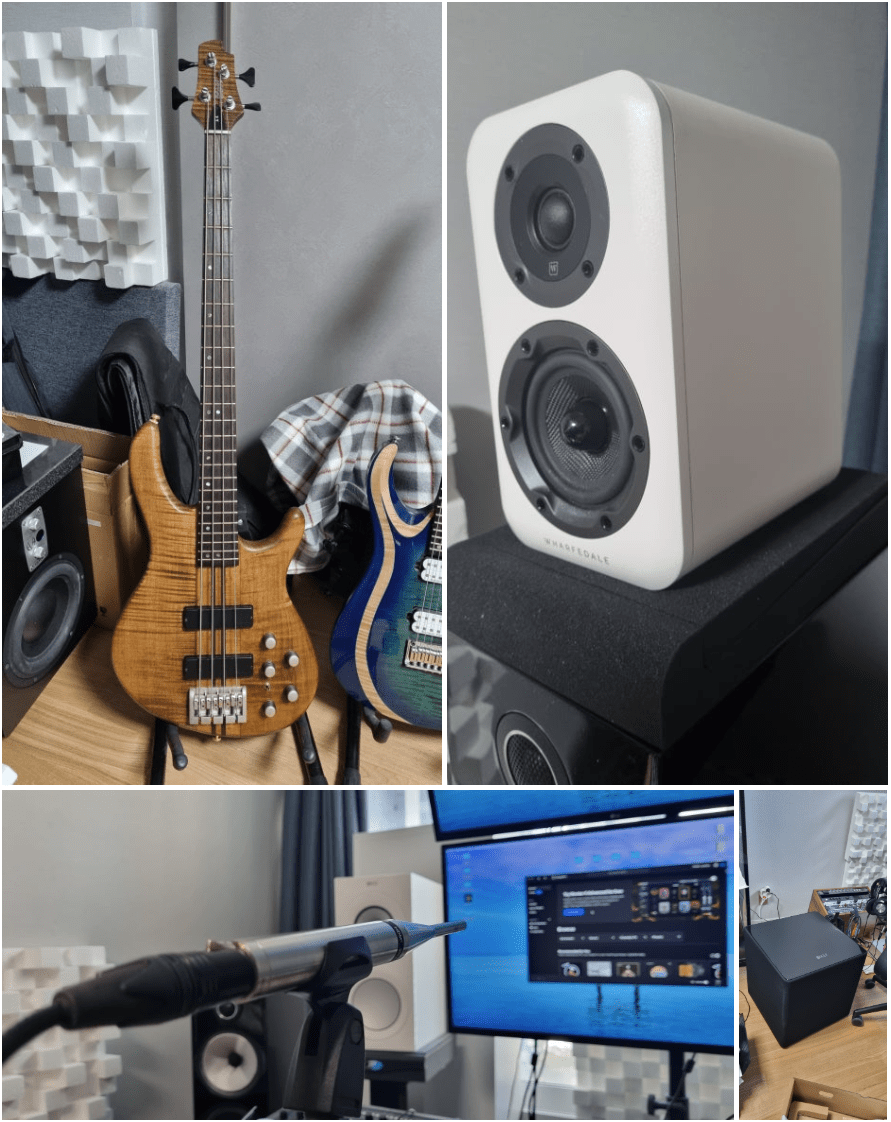
It’s an older model, so unfortunately, it only works in active mode with no option to switch to passive. There’s also some rust on the knobs and bridge, which is a slight drawback. However, after trying it out, I really liked the sound—it’s exactly what I was looking for.

I had borrowed a Squier bass from an older friend for a few days (though I’m not sure what model it was), and I have to say, this Cort bass feels way more comfortable in my hands.

The strings are a bit old, so I’m curious how it will sound once I change them.

Then I thought about adding a switch for active/passive mode and took a look inside the back panel.

The wiring looks like a bit of a mess, so I’ll have to think it over when I get more time.

The goal is to practice more and eventually record most of the bass parts myself! But honestly, I feel like I might end up buying a Precision bass too… It never ends!

I’ve also been wanting to learn drums—am I becoming a one-man band? Haha.

See you in the next post!

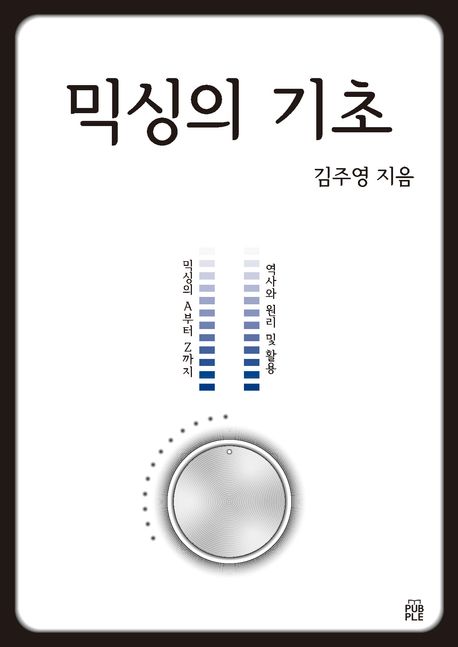
My New Book, “The Basics of Mixing,” is Now Published in Korea!

Hello! I’m Jooyoung Kim, an audio engineer and music producer.

I’m excited to announce that the book I’ve been working on for quite some time about mixing has finally been published in Korea!

Since I first started diving into audio engineering head-on, I’ve gone through countless books and resources. One of the biggest frustrations I encountered was the lack of educational materials available in Korean. As I continued my studies, I made a promise to myself that I’d one day write a book on mixing.

After finishing the manuscript, I sent it to several publishers, but many found the content to be too complex. While navigating those hurdles, I discovered the POD (Print on Demand) service offered by Kyobo Bookstore in Korea, which allowed me to publish the book online. Although it’s a bit limiting, the book can now be purchased through Kyobo’s website.

I’m deeply grateful to my mentor, Director Yongsoo Choi, and Professor Minho Jang from my university, for reviewing my manuscript. I’m also honored that the renowned engineer, Director Jongpil Koo from Klang Studio, read the book and wrote a recommendation for it. There are so many people to thank for their support and encouragement throughout this process.

To be clear, I’m not claiming to be an expert or someone with an extraordinary career. But I’ve worked hard to organize and share everything I know in the most comprehensive way possible. While the content isn’t exactly easy, I believe it’s worth the effort.

Since this blog is mostly in English, I know most of you won’t be able to read the book. However, if you have any questions about its content, feel free to reach out to me at joe1346@naver.com, and I’ll be happy to respond.

That’s all for today’s post. Thanks for reading!

My Visit to Sorigio(a Korean acoustic construction company)!

Hello! I’m Jooyoung Kim, an audio engineer and music producer.

This semester, the CEO of Sorigio (a Korean acoustic construction company) is teaching one of our graduate courses. As part of the course, we visited Sorigio this past Thursday, so I wanted to share my experience!

Let’s get started!

Sorigio is located on the first floor of the Jungheung S-Class residential-commercial complex in Yeongdeungpo. The door that faces the street is locked, but you can find the entrance around the side.

Once you step inside, this is what you’ll see.

Here’s a view from the top of the stairs:

That area looks like it’s used as an office, and even the soundproof booths are repurposed as workspaces. I didn’t capture the ceiling in detail, but it’s quite high, and they’ve installed artboard clouds for sound absorption.

Next to the stairs, it looks like this.

If you go further in, there are several soundproof booths. Originally, they planned to rent these out to artists, but due to the pandemic, they are now used as AI virtual interview rooms.

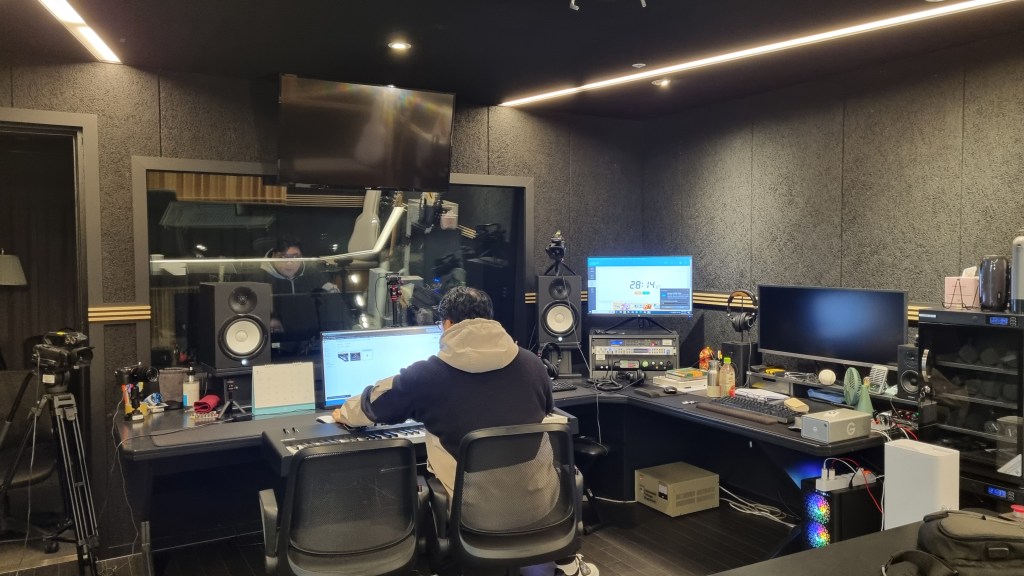
However, one of the booths is still used as the professor’s studio, and another is a recording booth. Recording is done with an Avalon VT-737 and a Neumann TLM 103.

You’ll notice that artboards are installed throughout the studio. During class, the professor showed us test results and examples of previous projects using REW (Room EQ Wizard). He mentioned that artboards have been Sorigio’s flagship product and technology since the early days.

What stood out to me was how the bass absorption rate changes significantly depending on how far the artboards are mounted from the wall, even though they’re just artboards!

Besides soundproofing and room acoustics, Sorigio also manufactures phone booths for businesses.

If you head back towards the stairs and go up…

There’s a studio set up for filming.

They manage it using a Midas console.

They also have various lighting options to create different moods.

Here’s what it looks like from the center of the studio.

The high ceiling gave me the impression that this would be a great space for string recordings if it were converted into a recording room. I think we might end up working on a project here this semester!

While I was there, we also conducted a room measurement in the recording booth to compare the difference between having the corner traps and panels installed versus removed.

They used a microphone from a company called Isemcon for the measurement. I’m more familiar with pricier options like Earthworks, Brüel & Kjær, and NTI Audio, so it was interesting to see a brand I hadn’t come across before.

There was a lot to see, and it gave me a lot to think about—like how much money it actually takes to build a proper studio room!

Recently, I’ve had my eye on the SPL Vitalizer mk2-T, which could be dangerous for my wallet… I already bought a passive speaker I couldn’t resist a few days ago.

I’ll be sure to write a review of the speaker in a few days!

Until next time, see you in the next post! 😊