Just Found Out: Yeonjoon Yoon’s Etudes: Triptych – Live Was Out + Life Update (26.8.3)

Hello, this is Jooyoung Kim, an audio engineer and music producer.

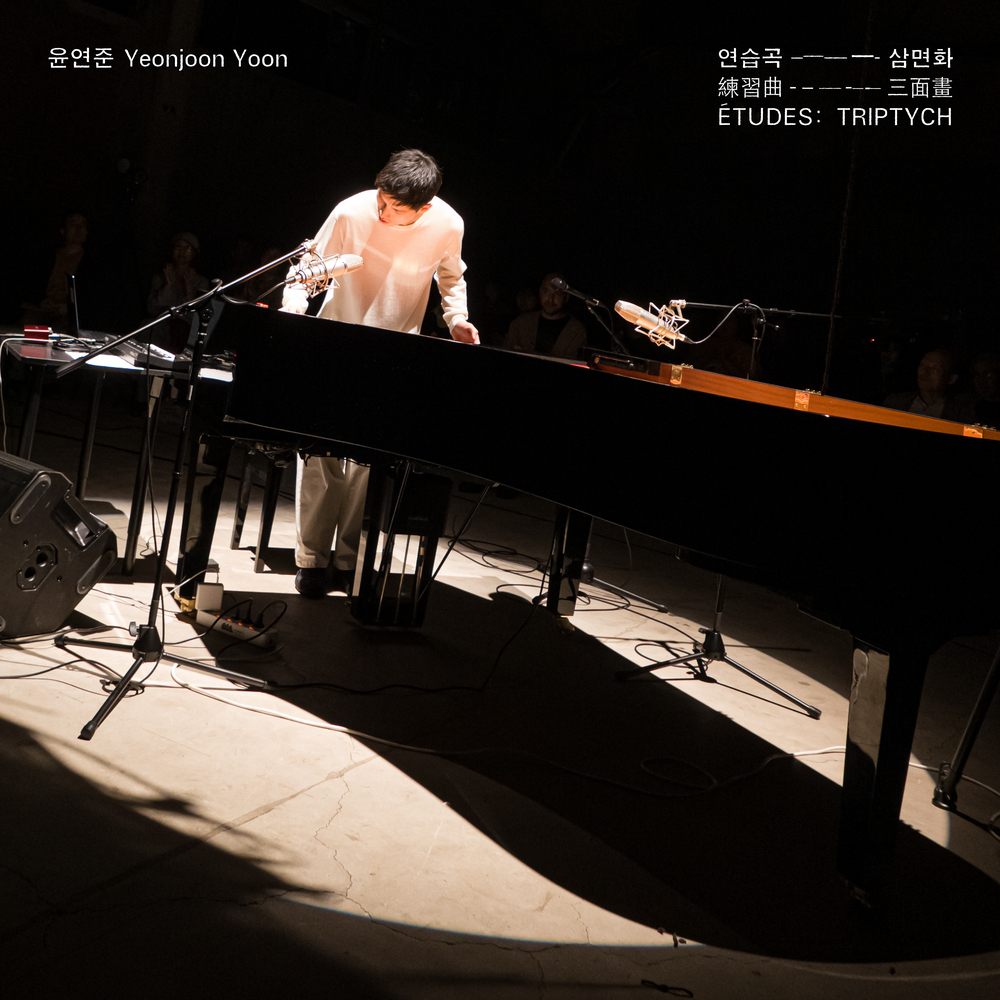
Recently, I’ve been busy conducting research related to Korean traditional musical instruments, which requires several listening tests. Therefore, I met Yeonjoon Yoon, a composer and pianist who has worked with some Korean traditional musicians.

After the test, I asked him when the album that we worked on together last year would be released. He surprisingly said it had already been released!

So I decided to introduce the album.

I used Peluso P-87 microphones for stereo miking on the grand piano, and Rode NT-55 microphones for the drum overheads and ambience positions. I also positioned two Shure SM57s on the top and bottom of the snare. I can’t quite remember, but I believe there was a rack for the kick microphone, so I likely used a Shure SM57 for that role as well.
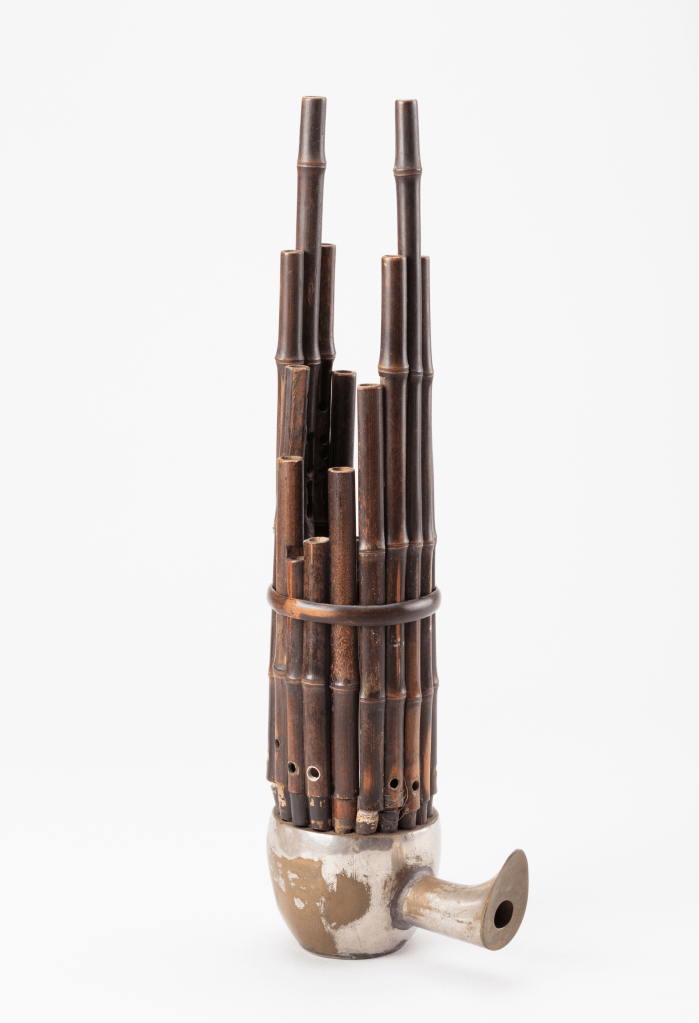
There is also a peculiar musical instrument called the Saenghwang (a mouth organ). I remember that I installed a Peluso CEMC 6 over the head of the musician.
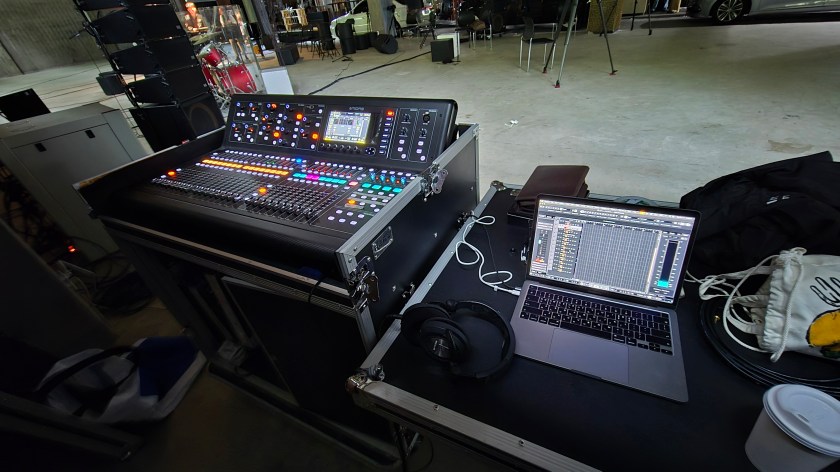
I used a Midas m32 console for both live mixing and recording simultaneously.

Yes, that’s all—maybe. It’s been about 9 months, so I can’t remember all the details accurately.

I only remember that the venue’s interior was made of concrete and brick, so it had a pretty long reverb time. Because of that, I struggled with the acoustics while mixing the live sound. However, in the recorded tracks, the piano actually sounded a bit too dry, so the artist wanted to add a huge amount of ambience—around -10 dB (whereas in popular music, ambience effects like reverbs are usually added around -30 to -20 dB).

These are unique and interesting tracks, so check them out..!
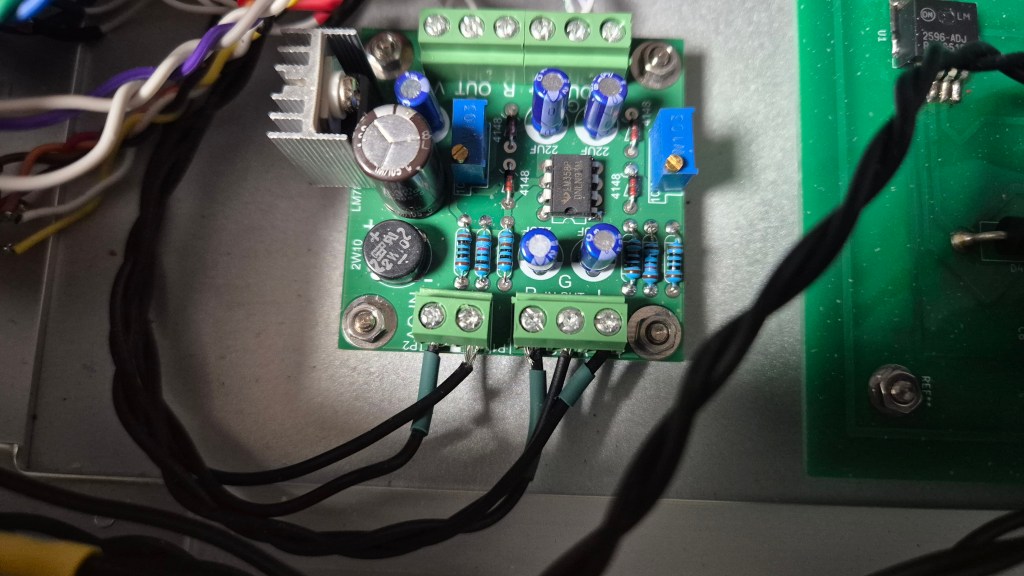

Meter part

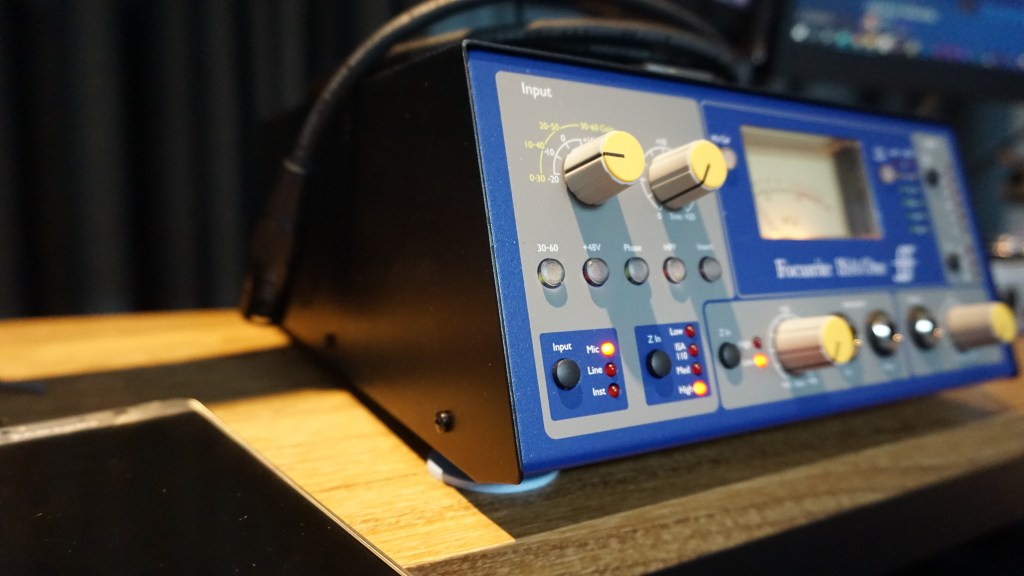
As you know if you read my DIY hardware post series, about a month ago, I finished wiring and assembling all the components for my DIY audio hardware. When I powered it on, I immediately ran into two major problems. Only the left channel’s meter responded while the right channel’s meter remained completely dead, and there was no audio output at all.

I wasn’t even sure where to begin troubleshooting. After wiring up all the components for my DIY audio hardware, I ran into two major problems right away. First, only the left channel’s meter responded, while the right channel’s meter remained completely dead. Second, there was no audio output at all.

After spending so much time on the project without making any progress, I became so frustrated that I stopped working on it for a while. It honestly felt like burnout.

When I came back to it yesterday, I started thinking more logically. The meter was connected just before the THAT1646 output driver stage. If the left meter was responding correctly, that meant the entire signal path leading up to that point had to be functioning. In other words, the problem couldn’t be somewhere earlier in the circuit.

Following that line of reasoning, I first discovered that I had simply wired the right meter incorrectly. That explained why only the left meter had been moving.

With the meter issue solved, the only remaining suspect for the missing audio output was the THAT1646 itself. So I started digging into its documentation and pinout.
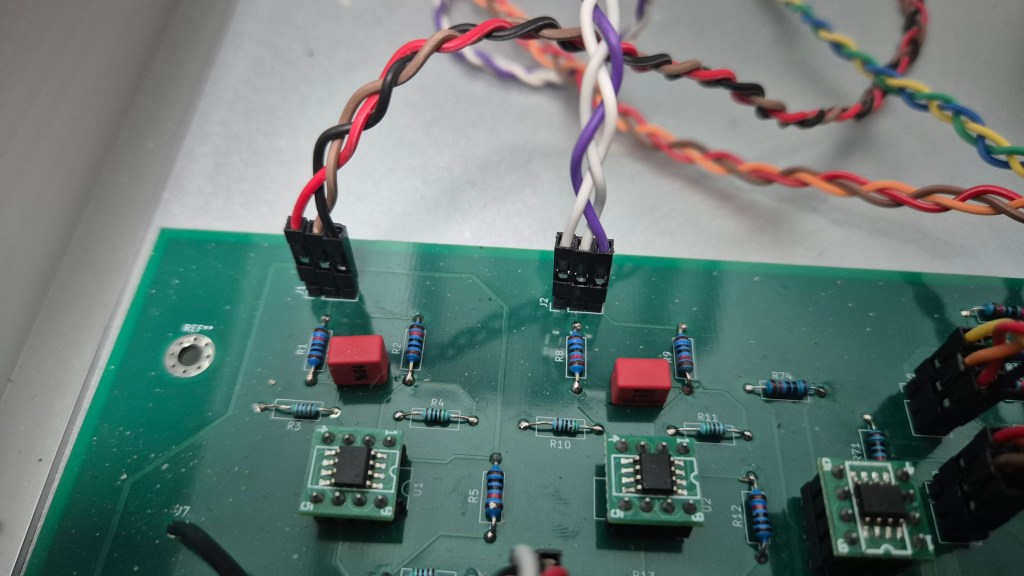
OPA 1612…!!

However, after replacing the devices, I discovered another problem. A significant amount of broadband noise was present, measuring higher than -75 dBFS across nearly the entire frequency spectrum.

I went back through the schematics and the datasheets, comparing my design with the recommended application circuits. That’s when I realized I had made a fundamental mistake: I hadn’t included the power-supply bypass capacitors for either the OPA1612 op-amps or the THAT1646 output drivers.

Looking back, it seems obvious. High-performance analog ICs like these rely on proper local decoupling to keep their supply rails stable and free from high-frequency noise. Without those capacitors placed close to the power pins, the circuit is far more susceptible to noise and instability.

So, despite thinking I was finally done troubleshooting, I ended up ordering yet another batch of components. Now I’m waiting for the capacitors to arrive before I can continue.

At this point, the project is slowly turning into Frankenstein’s monster. Every problem I solve seems to require another small modification to the hardware. Hopefully, these will be the last stitches before it finally comes to life.


That’s it for today.

Lately, I’ve barely had enough time to breathe between studying English and working on my research, so progress on this project has been a little slower than I’d like.

On the bright side, I recently picked up an SPL Vitalizer MK3, so you can look forward to a review of that in an upcoming post.

Thanks for reading, and I’ll see you in the next one!
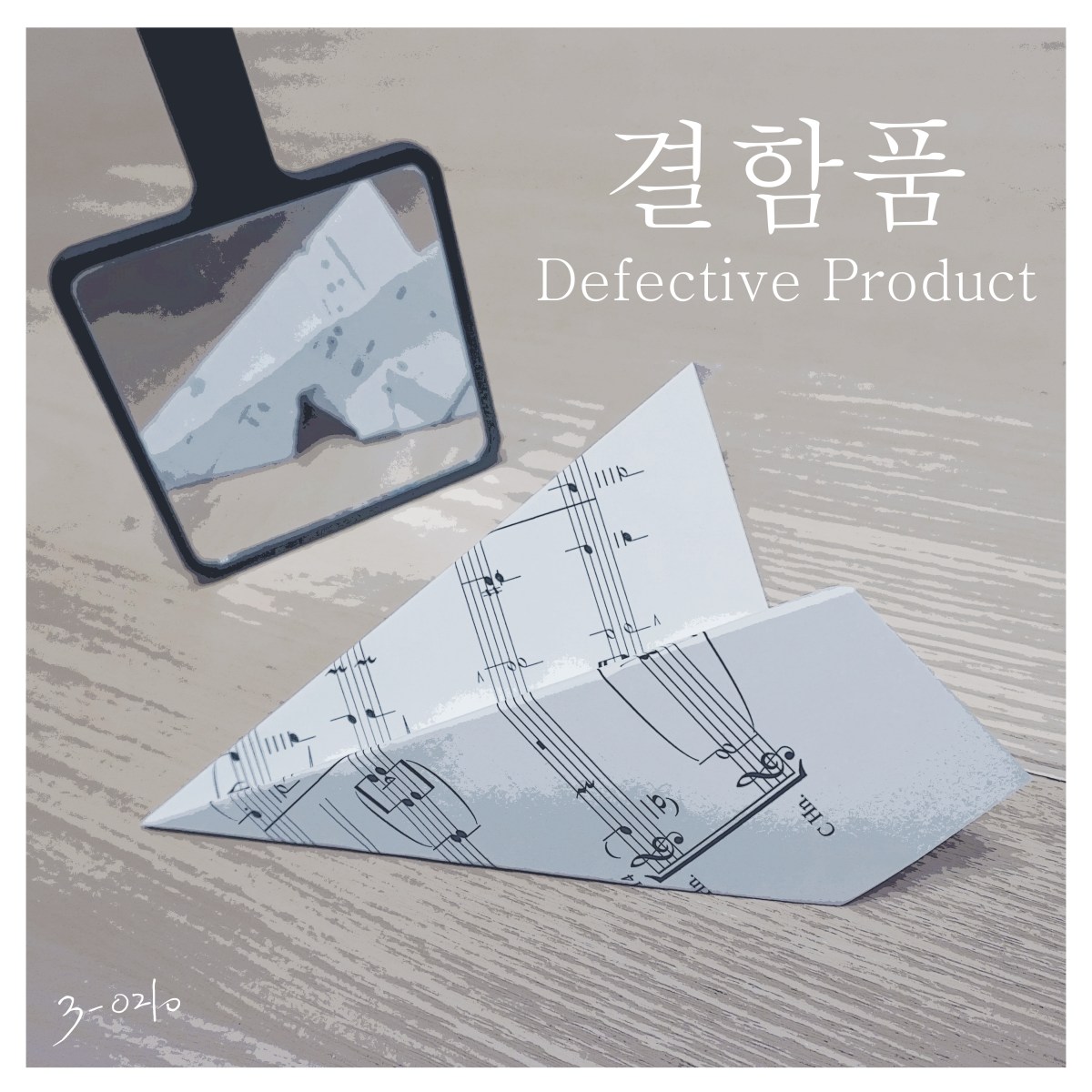
Defective Product(결함품) Single

I released my single album ‘Defective Product’ at 12 PM on Saturday, November 21, 2020. I will reorganize the work records I previously wrote on my Korean blog and write them in English.

  • Concept & Opportunity

It’s been so long that I can’t remember, but I first came up with the song between February and March 2020. Considering that the main guitar was recorded in mid-March, I think it’s probably about right.

This was a really mentally difficult time for me. Due to my mother’s sudden illness, I stopped all performances and outside activities, was eliminated from dozens of contests throughout 2019, and in the meantime, the coronavirus suddenly broke out again…

I couldn’t avoid doing household chores, and I didn’t have time to do stress-relieving activities like exercise. I was so busy and exhausted, but nothing came back to me.

In the meantime, there was a time when I was working hard all week to submit an orchestral piece for a contest, and suddenly I got so dizzy that I had a hard time even standing.

After going through this series of events, I suddenly felt like I was a person with a screw missing. When I was young, I went to many places and won awards at national competitions and quite a few awards at math and science competitions, but compared to who I am now, I felt like I had a flaw somewhere and was falling somewhere.

That’s how the first lyrics came out.

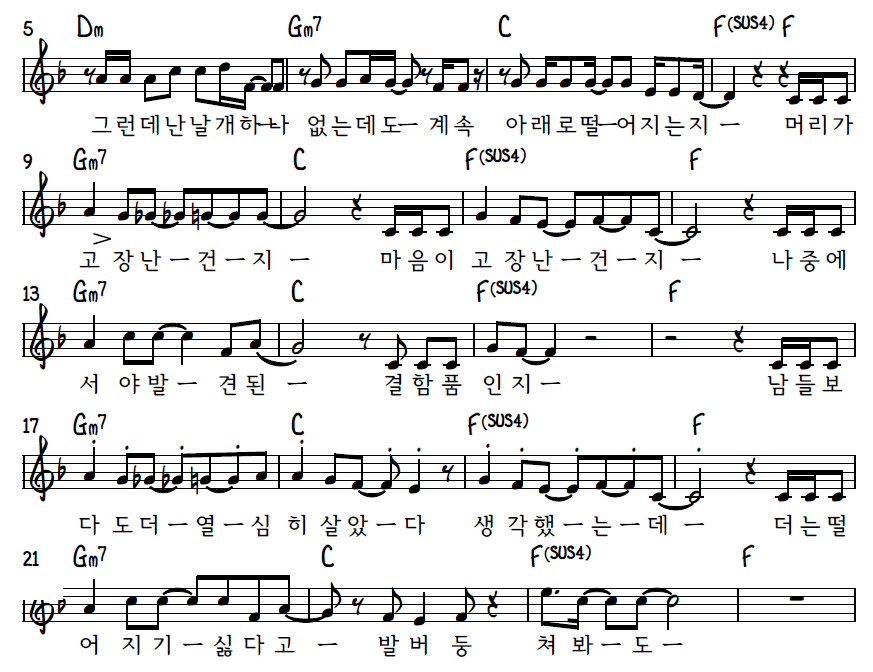
추락하는 모든 것들에는 날개가 있어.
그런데 난 날개 하나 없는데도 계속 아래로 떨어지는지.
(Everything that falls has wings.
But why do I keep falling even though I have no wings?)

And the next lyrics were written naturally.

‘I am a defective product, but my body is fine, right? So is my head broken? Or is my heart broken?’ The thoughts came together one after another and the lyrics came out.

With these lyrics, I wanted to quickly spit out what was in my heart.

And from the countless self-deprecatory lyrics that came out, I selected the ones that I felt were most appropriate for my situation. That’s how this song started.

  • Instruments

Percussion – Real Kick Sample, 808 Kick, 808 Clap, Battery Ride, Cabasa, Shaker, Cymbal, Reverse Cymbal, Chime, Reverse Tambourine, and other FX.

Bass – Real bass module, tremolo bass module (both sources from Trillian)

Synth – Pad synth with slow tremolo (Arturia Analog Lab)

Guitar – Acoustic guitar (recorded myself)

String instruments – I put in full orchestra size string instruments, but the string instruments seemed to be playing a little separately, so I mixed them with chamber size.

Vocal – pad, doubling, main vocal

  • Recording

Vocal & Guitar are recorded by ISA One, Peluso P87.

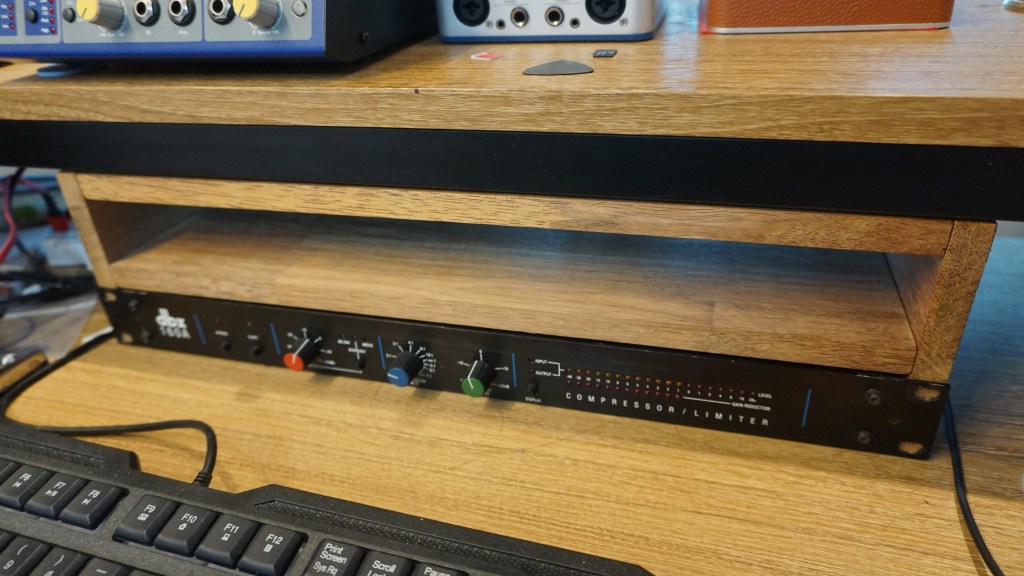
However, if there was something unusual, I wanted to test the dbx 160a at this time, so I set it so that when the vocal sound approaches the headroom, the compression is applied slightly. (It was so slight that it didn’t seem to have much meaning whether I put it on or not)

​The reason we considered a compressor at this time was because the part shouting ‘down’ in the last chorus was so loud that it broke through the headroom. However, if you listen to it softly, there is a big dynamic difference between the small and loud sounds, so the part that connects to the front part feels different.

When recording vocals as a pad, I used the P87 as the main microphone and placed it facing the front, and installed the second microphone, WA-47jr, on top of it and placed it facing both sides for Mid/Side recording.

  • Album Cover

When the song was almost finished, I asked the person who had always taken care of my album covers to do the album cover this time.

He said he would create a rough draft and work on it in about a week, but personal circumstances suddenly arose, so I had to create it myself.

​There were two concepts I initially thought of.

1) Torn paper airplane
2) Broken robot toy

Among these, the robot toy is actually too difficult for me to buy or draw myself, so I decided to make it with a paper airplane concept. And I worked hard at folding the paper airplane.

While I was making this and that, I thought the shape wasn’t right, so I looked for a paper airplane, and I found a paper airplane called a Stinger that looked just right.

Also, I thought it would be too boring to just use white paper, so I copied the sheet music I was working on on both sides, and as you can see, it came out pretty, which was nice.

When I folded it all up, I wondered how this paper airplane could represent the theme of ‘defective products’… After thinking about it for a while, I thought of a mirror.

​I thought it would be a good contrast, like the lyrics of the song, to make the part in front look fine and the part reflected in the mirror behind look broken.

That’s how the song was released. It’s been so long since I made the song that I forgot how I made it, but while translating it into English, I feel like I took a trip down memory lane for the first time in a while.

These days, I can’t release it due to financial issues, but I’ve been working hard on making songs and stocking up on them. I will gradually release it later.

I hope you enjoy the article.