Lewitt LCT 1040 Microphone Review

This post is a translation of a Korean blog post I wrote on February 27, 2022.

Hello, I’m Jooyoung Kim, a mixing engineer and music producer. I recently had the opportunity to review the new Lewitt LCT 1040 microphone, thanks to Sound & Music, Lewitt’s distributor in Korea. They provided me with a demo unit for a week, with no other compensation.

Since I was going to be busy soon, I conducted a quick two-day test as soon as I received the unit and wrote this review. Let’s dive in!

Unboxing and Appearance

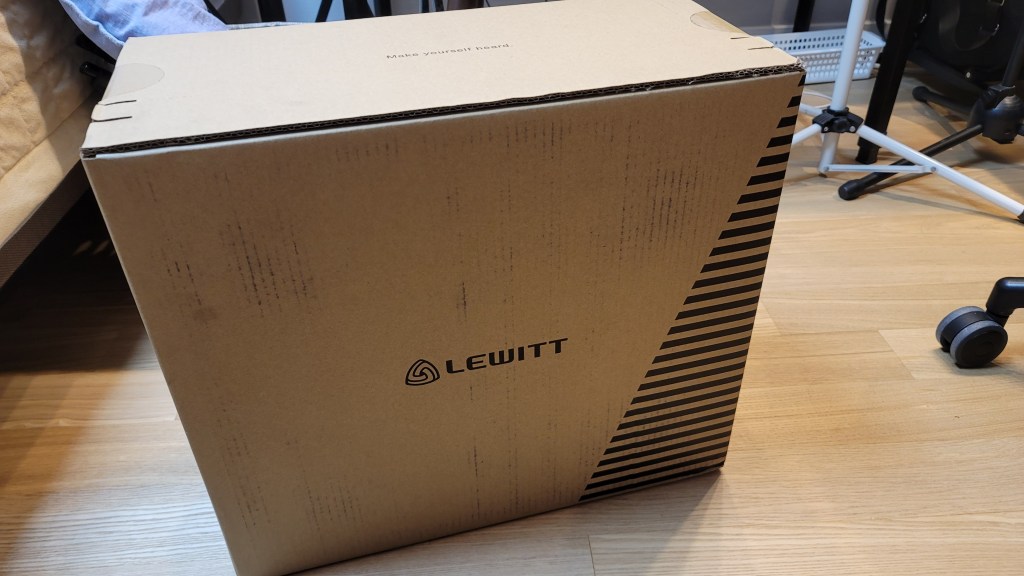
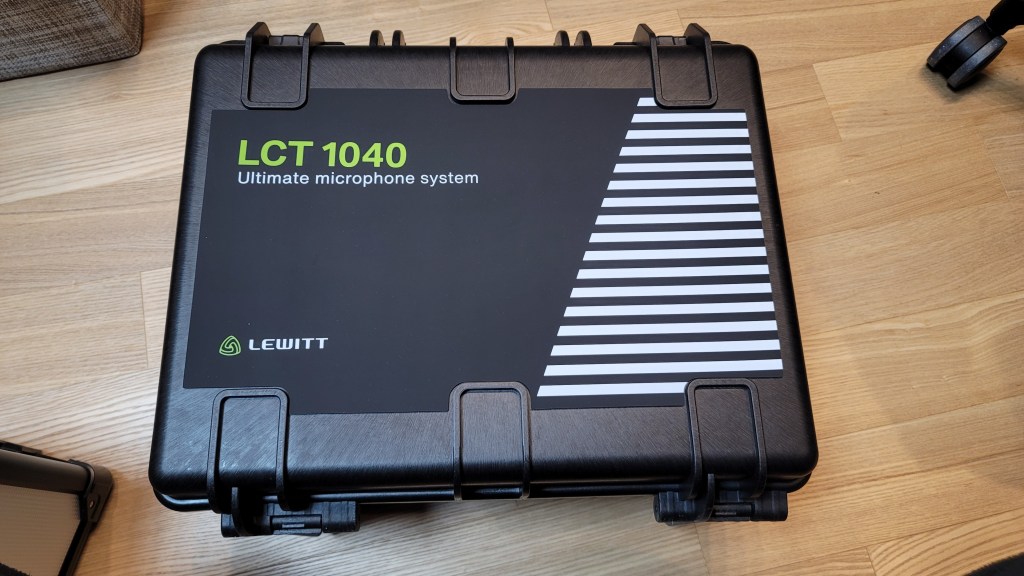
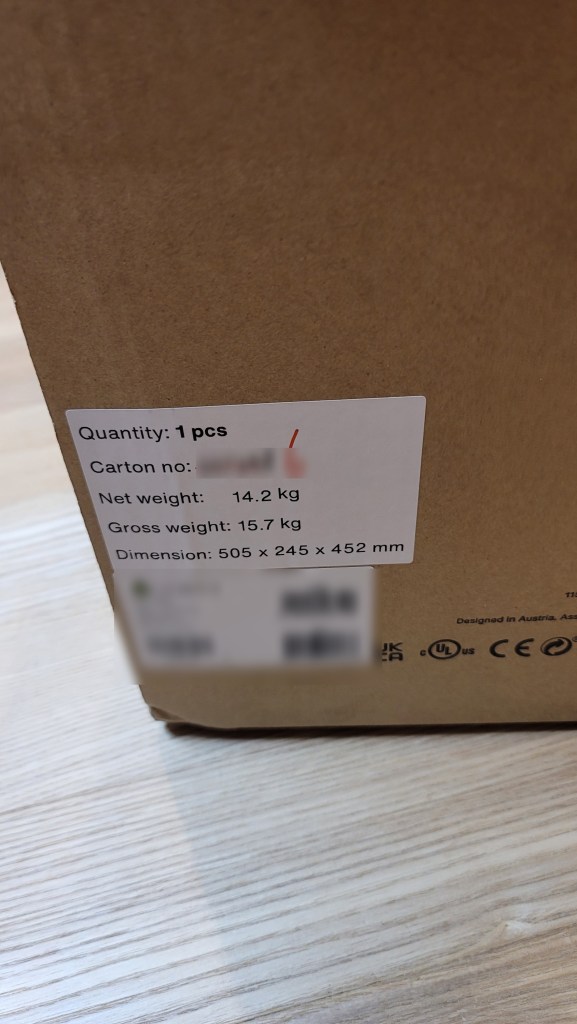
I received a brand-new, unopened demo unit, which was a pleasant surprise. The package was quite heavy. The box design was unique, with tear-off strips to open it.
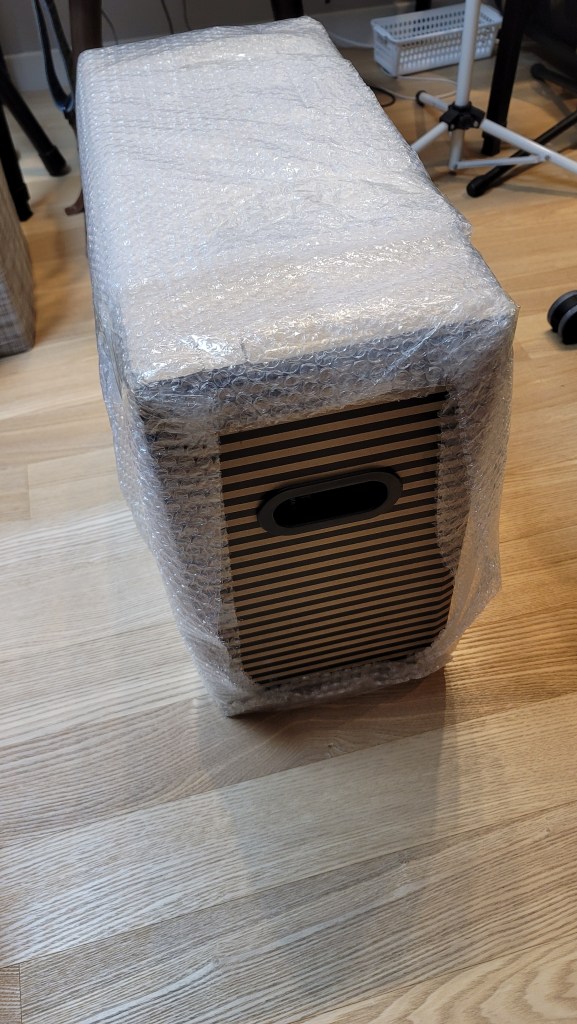
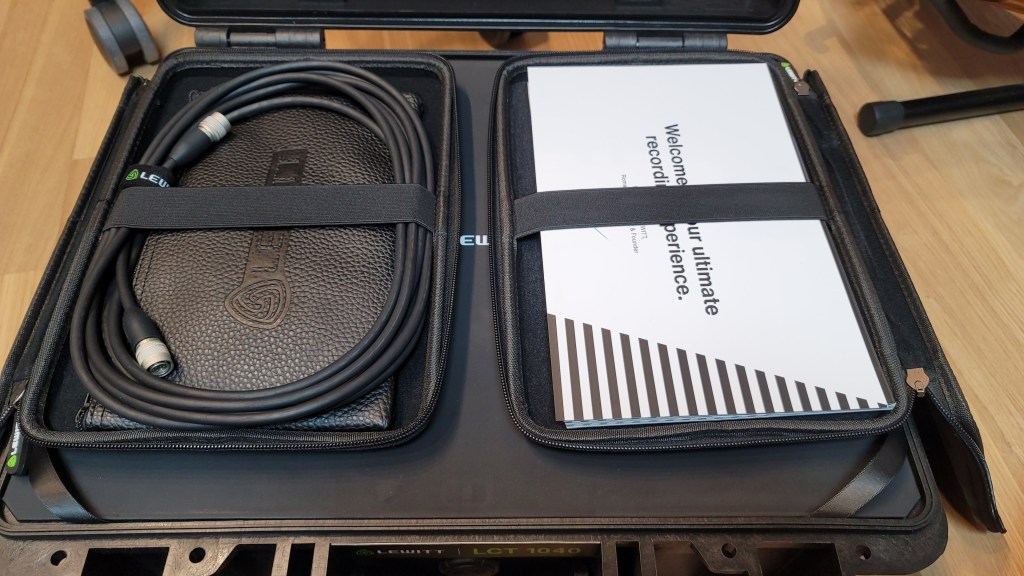
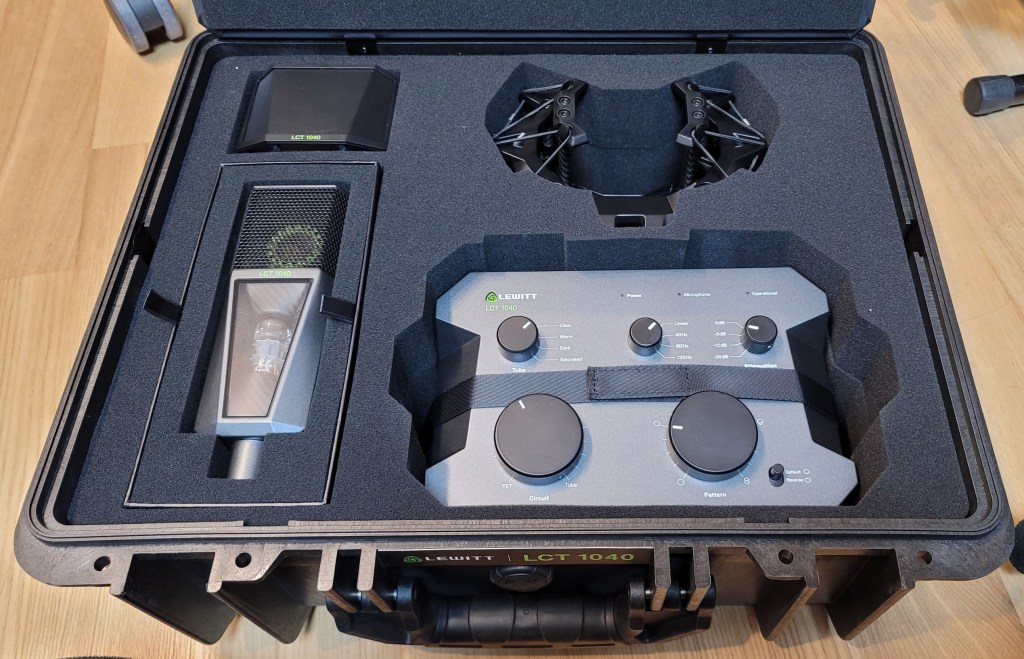
Inside the box, there were two pouches containing cables, manuals, and other documents. Below them were the microphone components.
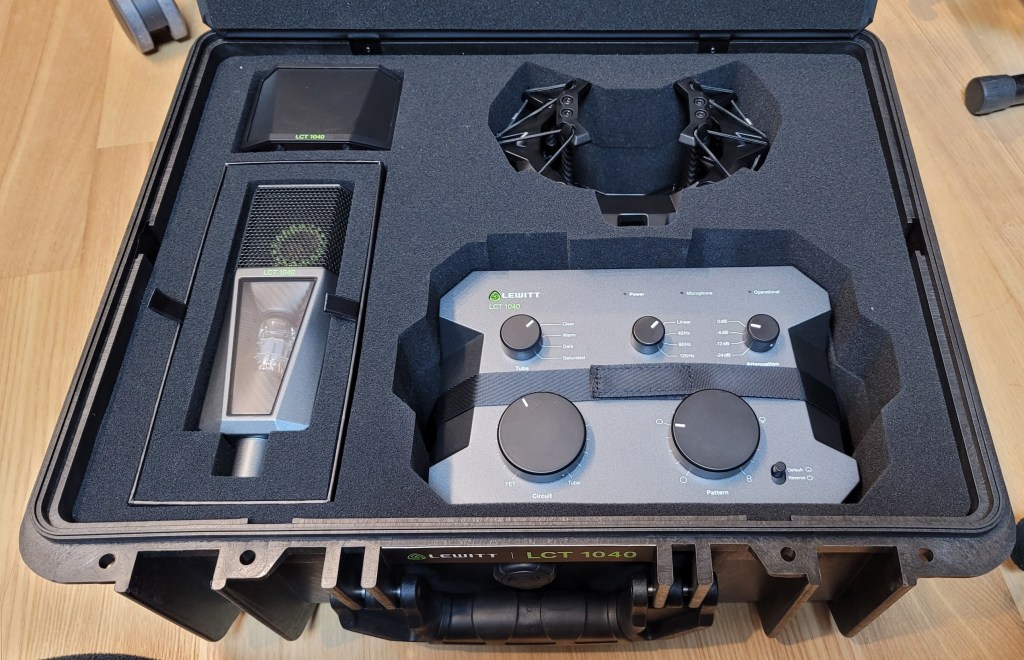
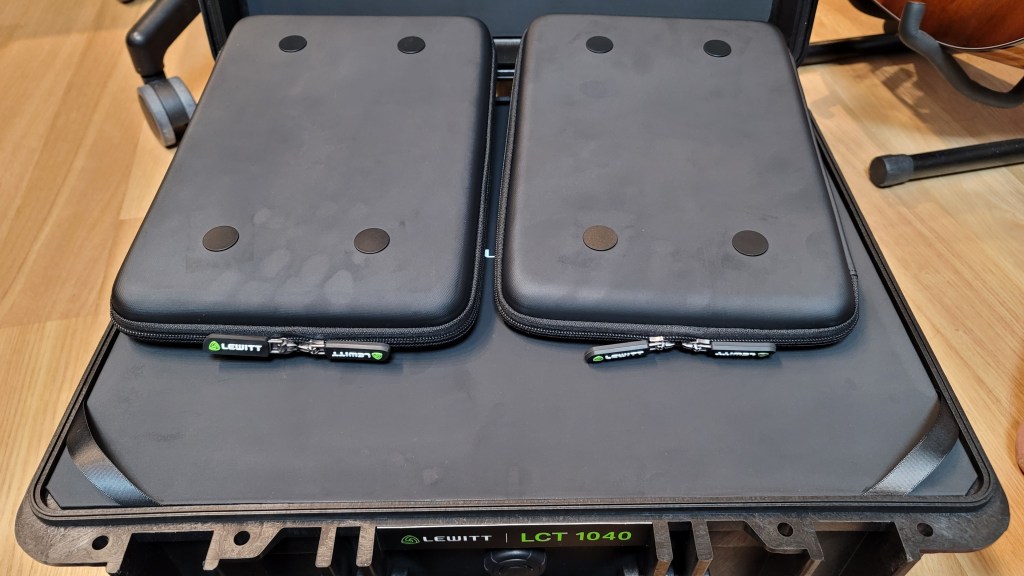
The photo was taken immediately upon delivery, and you can see some handprints, probably because it was cold.

The pouches are attached magnetically and can be easily removed. The contents include manuals, a recall sheet, and a booklet detailing the development process of the LCT 1040.

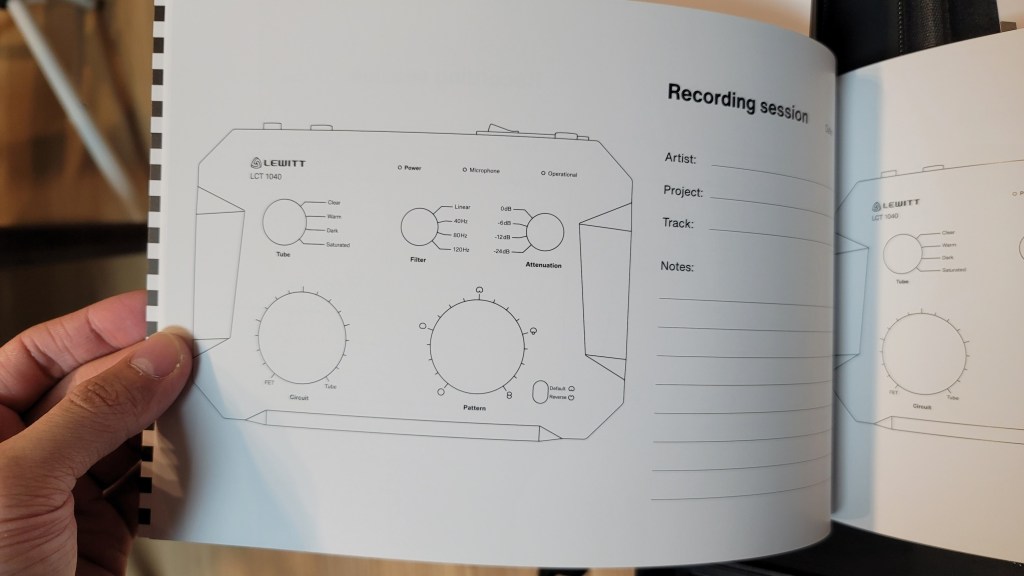
They included the names of beta testers, and I was pleased to see my name included!

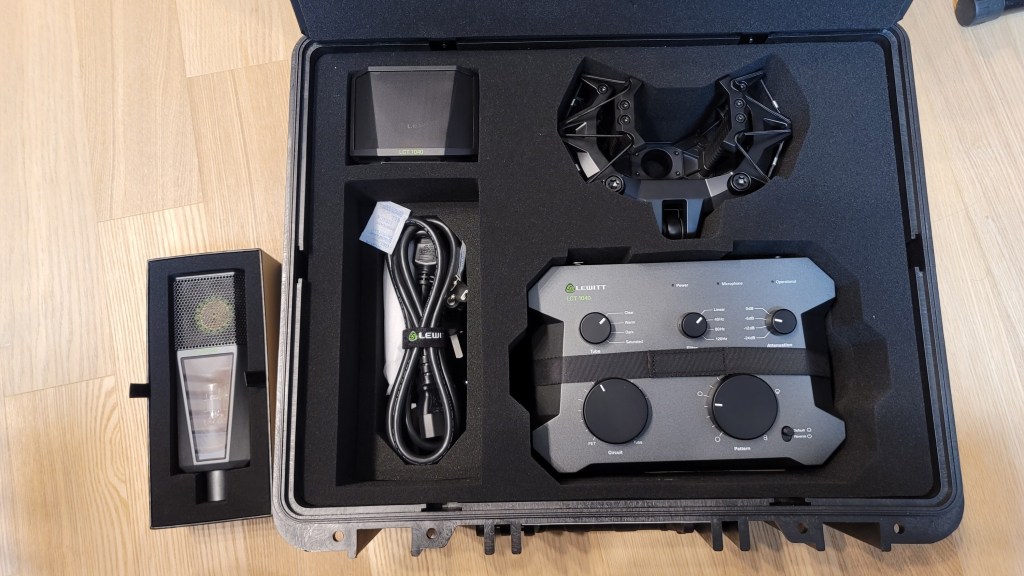
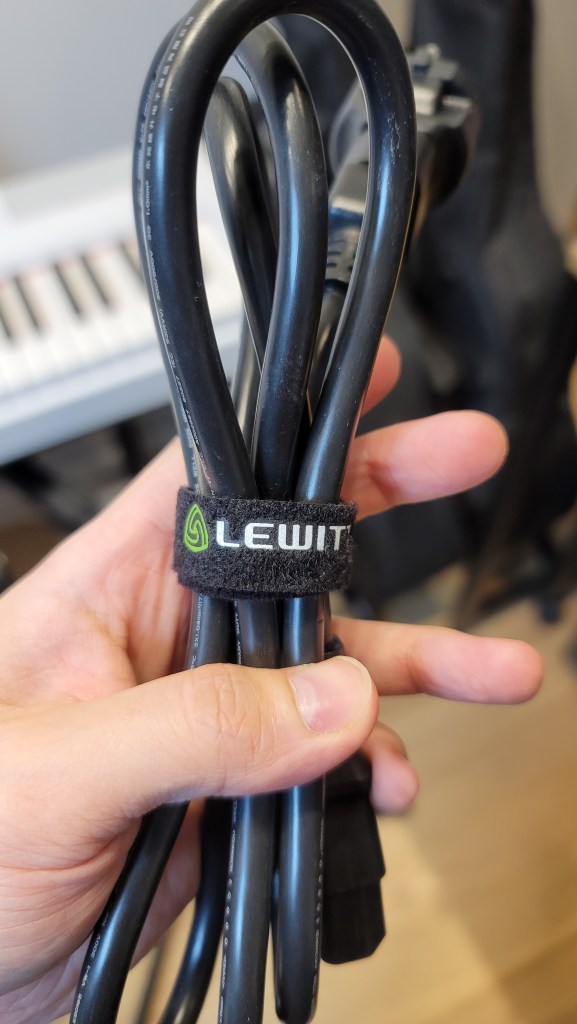
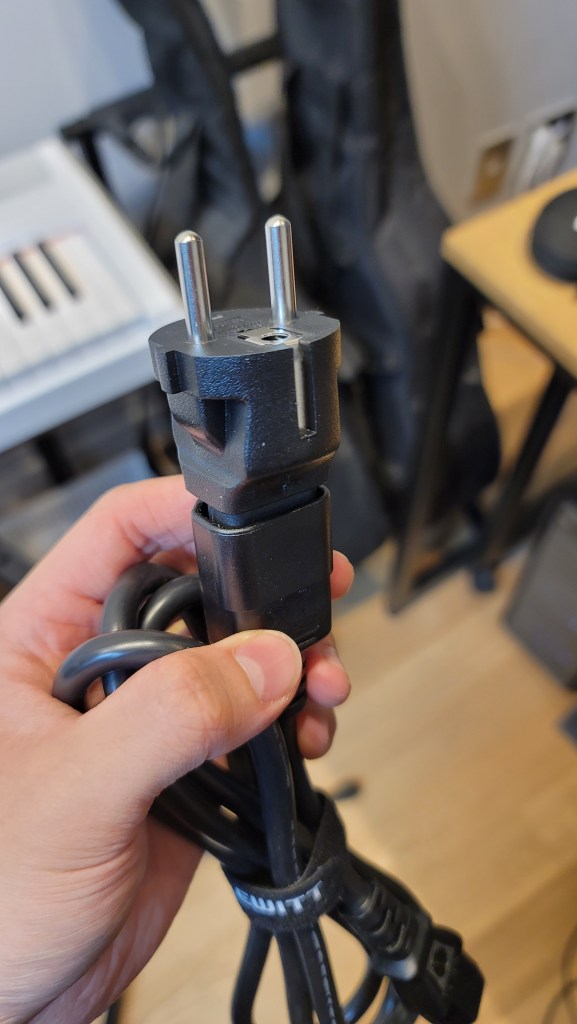
Underneath the microphone, there were power cables and adapters for different types of outlets. I found this modular system quite innovative.
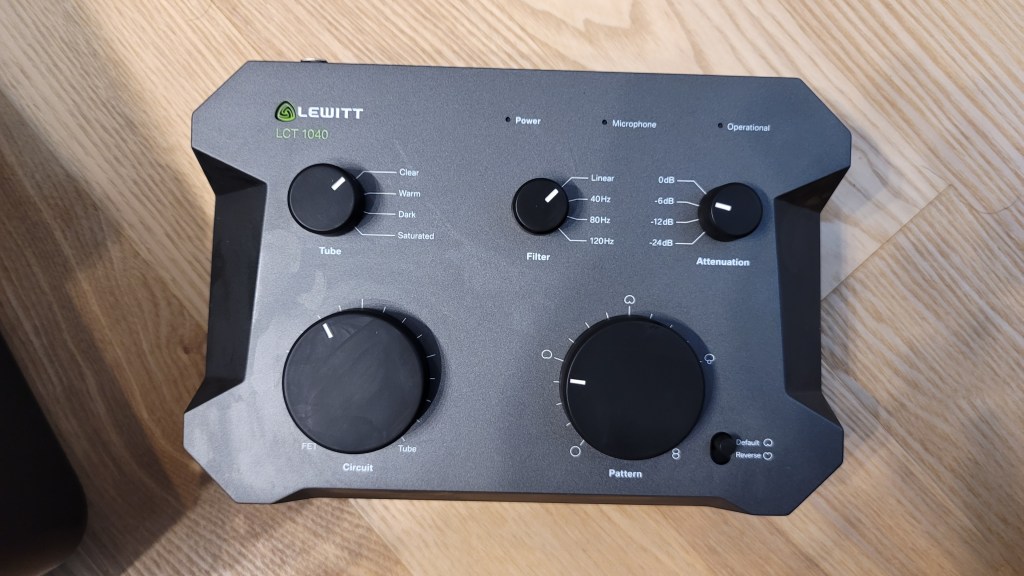
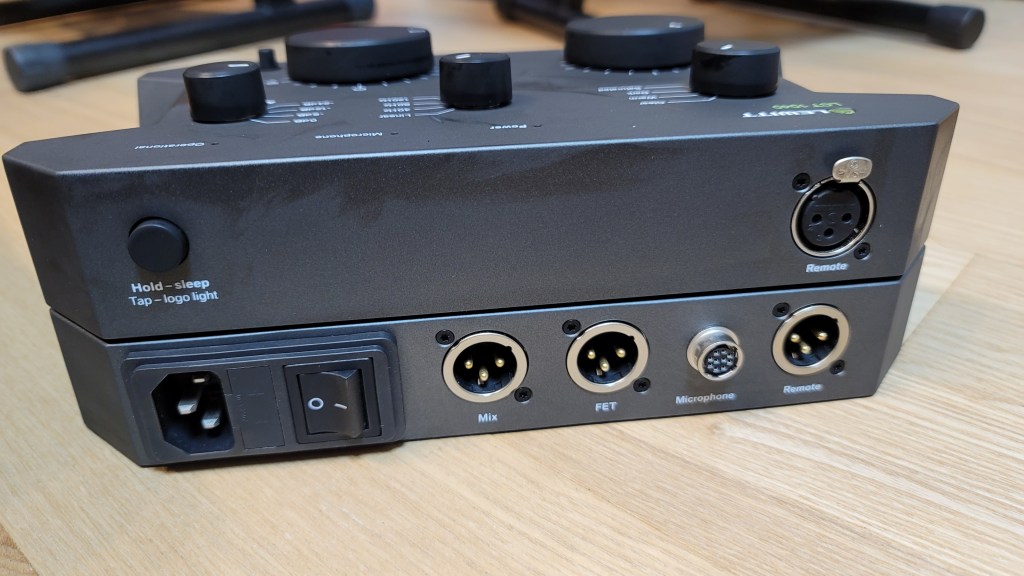
The control unit is entirely metal and feels hefty. The knobs are both linear and stepped, providing a smooth and convenient experience.
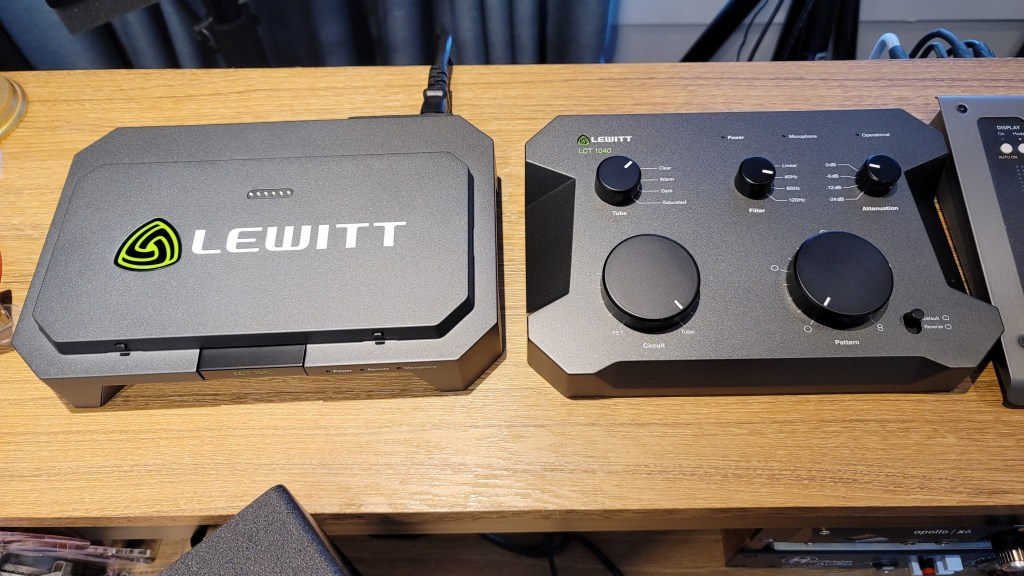
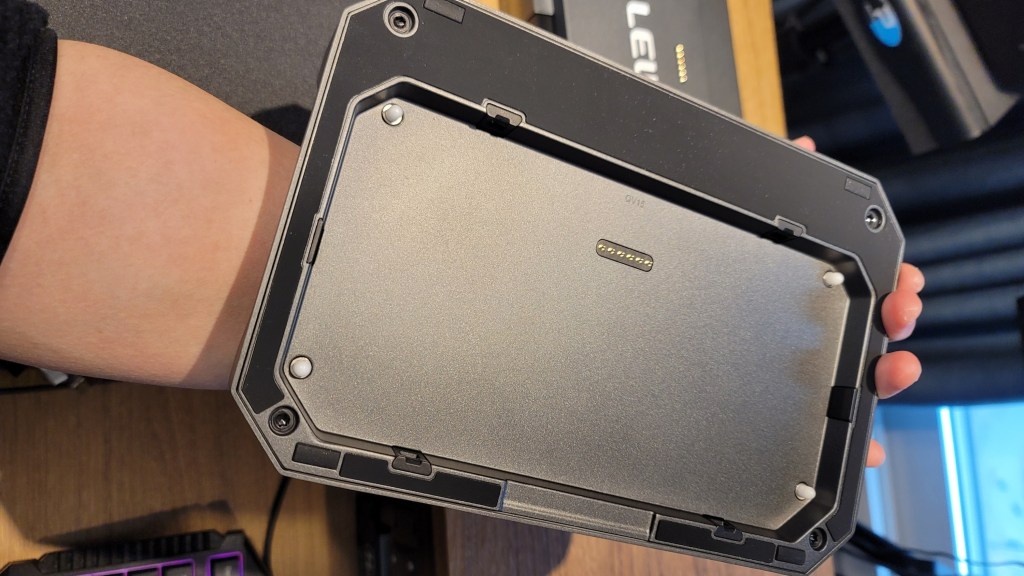
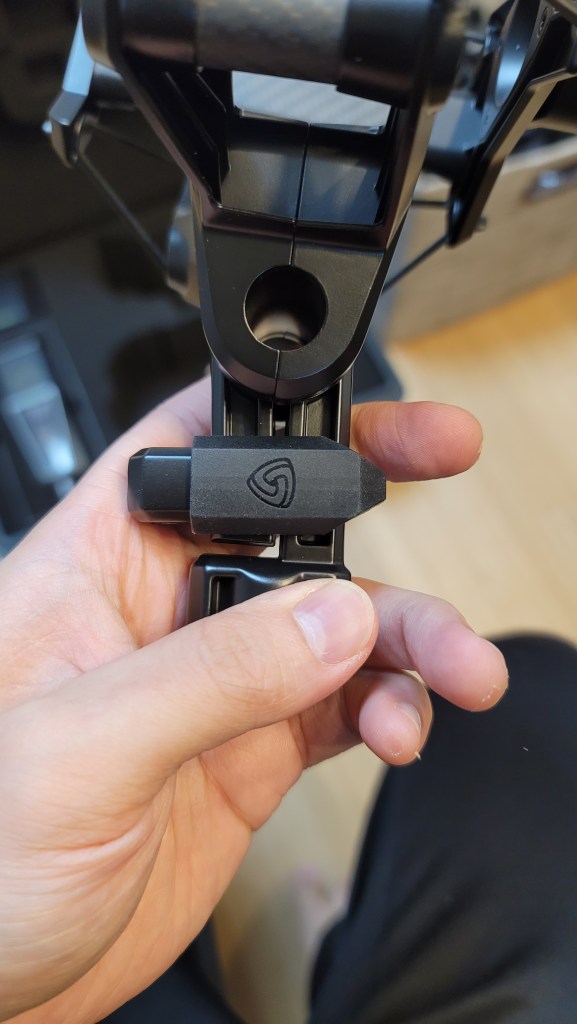
Pressing the “LCT 1040” label in the center allows for the remote to be detached. The remote can then be connected to the microphone using an XLR connector. This is a pretty innovative feature!

Once everything is connected, the lights turn on as shown in the photo below.
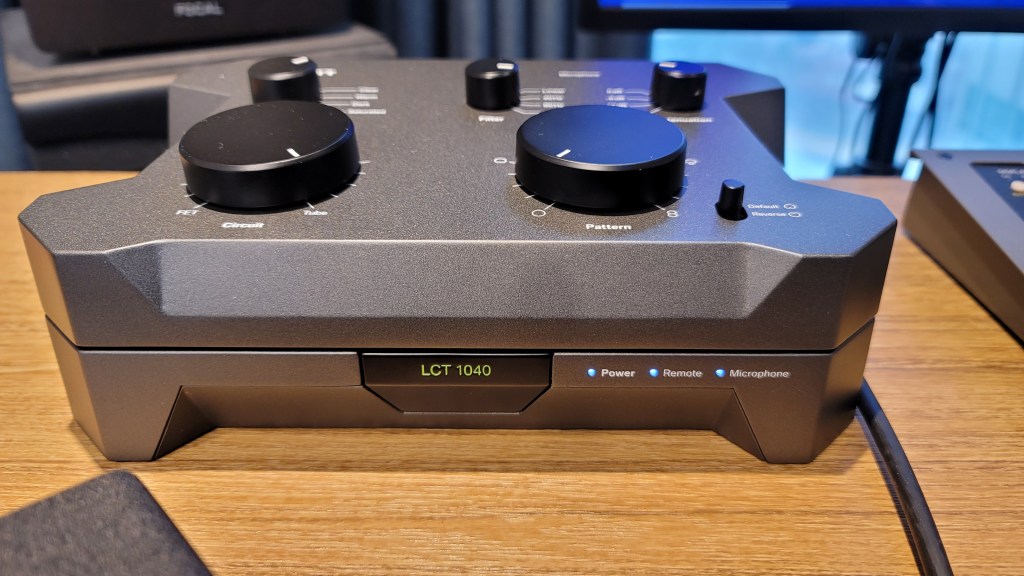
The Operational indicator blinks when adjusting the Attenuation (Pad) and Pattern settings, indicating a brief processing time. However, adjustments to Circuit, Tube, and Filter settings are immediate. There’s also a button for switching the front and back diaphragms.
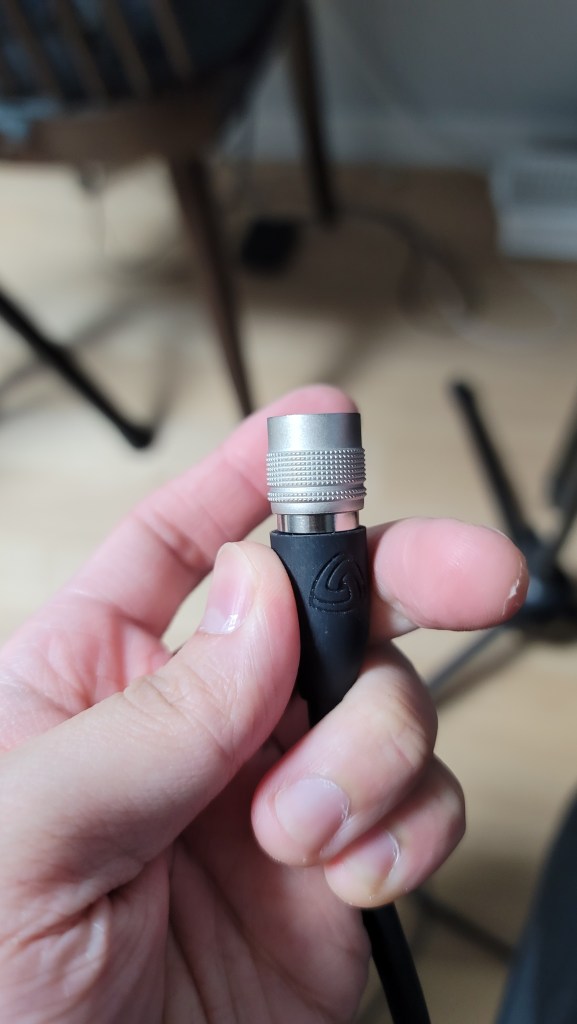
The microphone cable connector clicks securely into place when inserted correctly. The shock mount includes carbon material and features a unique, easy-to-use clamping mechanism.

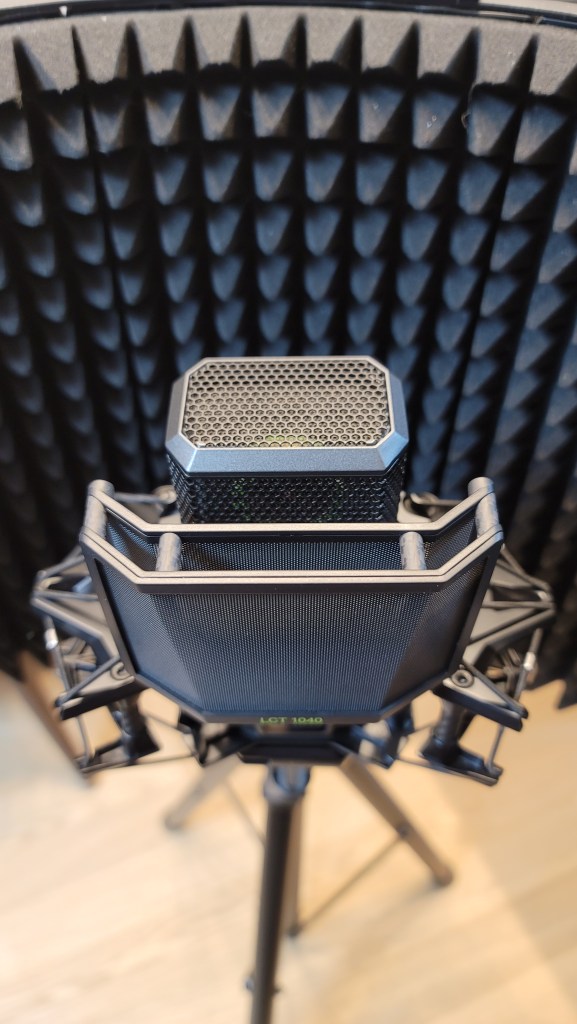
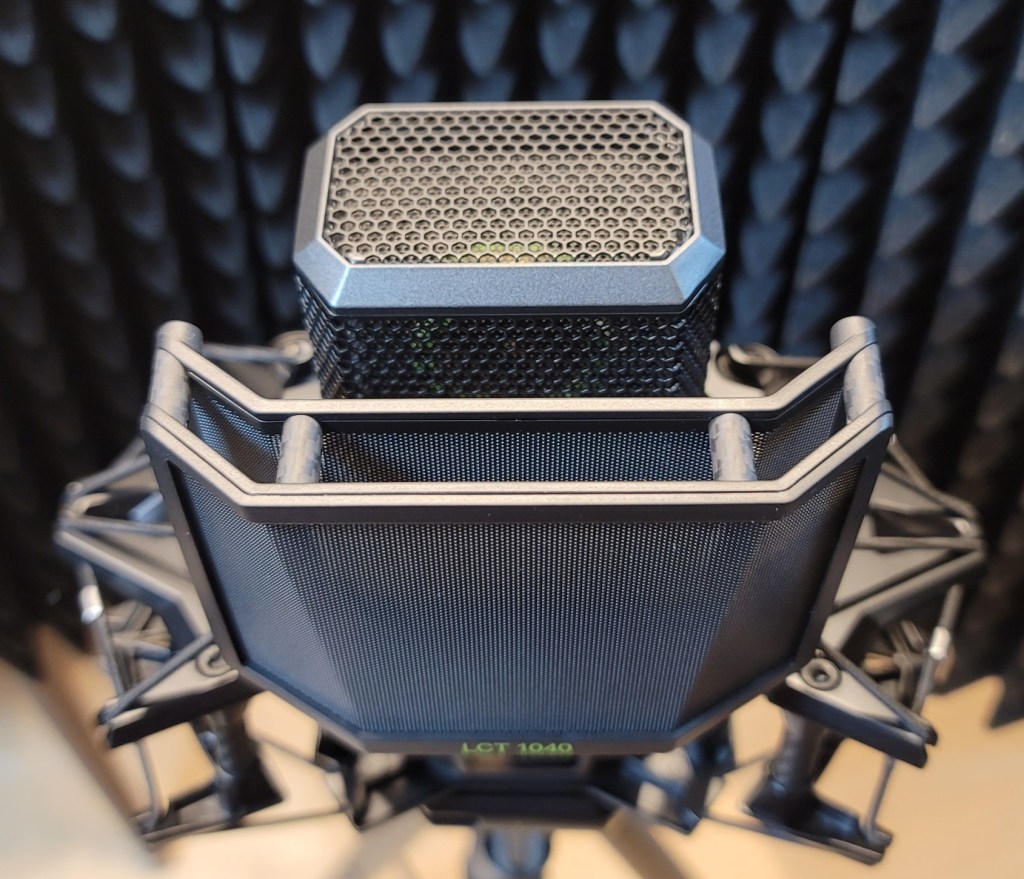
The pop filter and the microphone’s grill both have double layers, which shows attention to detail. The pop filter, also made of carbon material, attaches magnetically, making it easy to use.
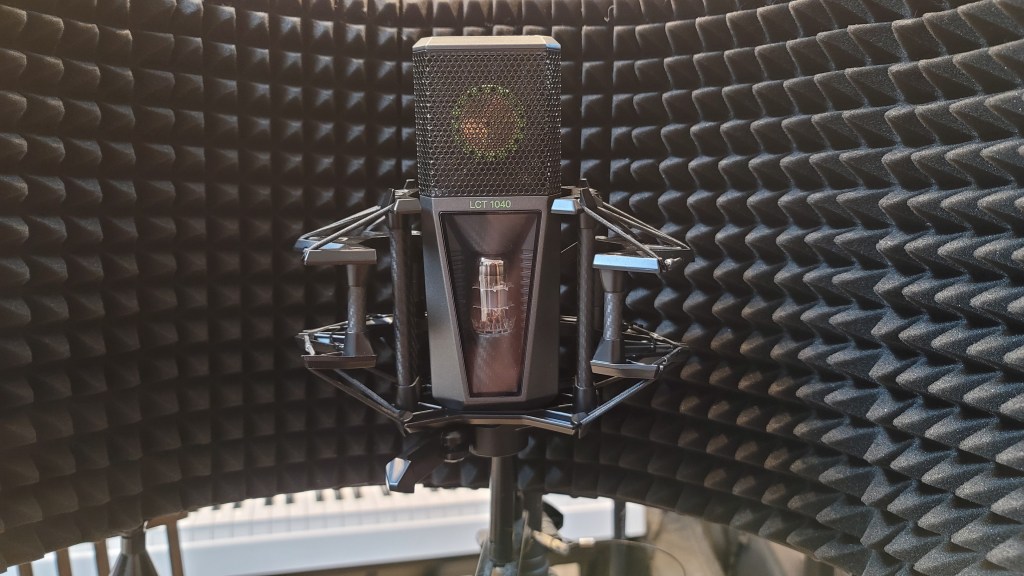
The bottom clamp for mounting the microphone is simple and effective.
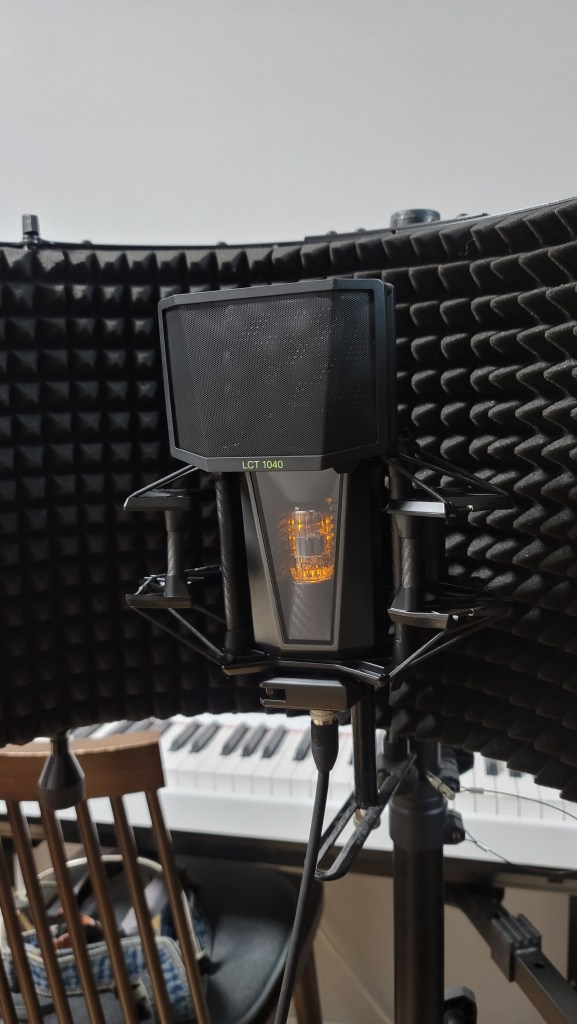
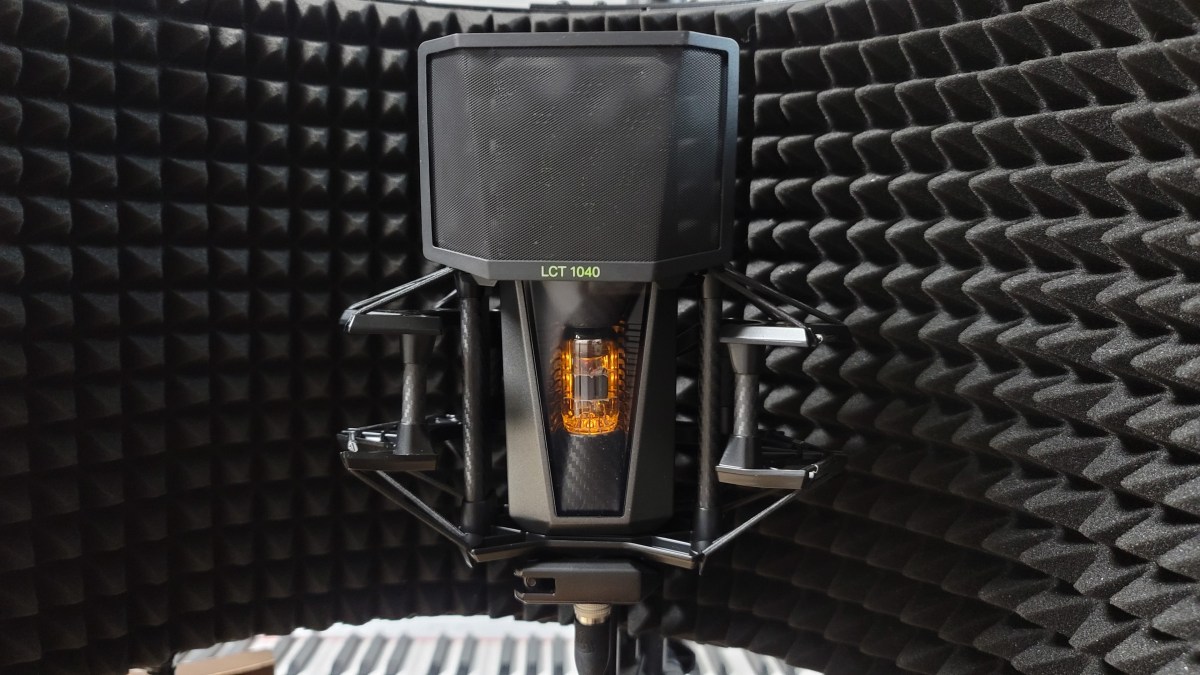
The microphone, when powered, looks like this. I think this gives you a good overview of its appearance. Now, let’s move on to the sound test.

Recording Test

For the test, I recorded both vocals and guitar. For vocals, I used a reflection filter and recorded in Clear, Warm, Dark, and Saturated modes with Omnidirectional, Cardioid, and Figure-8 patterns, using three settings: FET, FET=5:5, and Tube.

(Note: FET 100% sounds consistent across Clear, Warm, Dark, and Saturated, so I grouped them under FET.)

Due to the number of recordings, I might have missed some distorted parts in the song. I hope you’ll understand. My voice was a bit worn out, too… 😢

I used a low cut at 80Hz and lightly reduced 148Hz and 179Hz where noted.
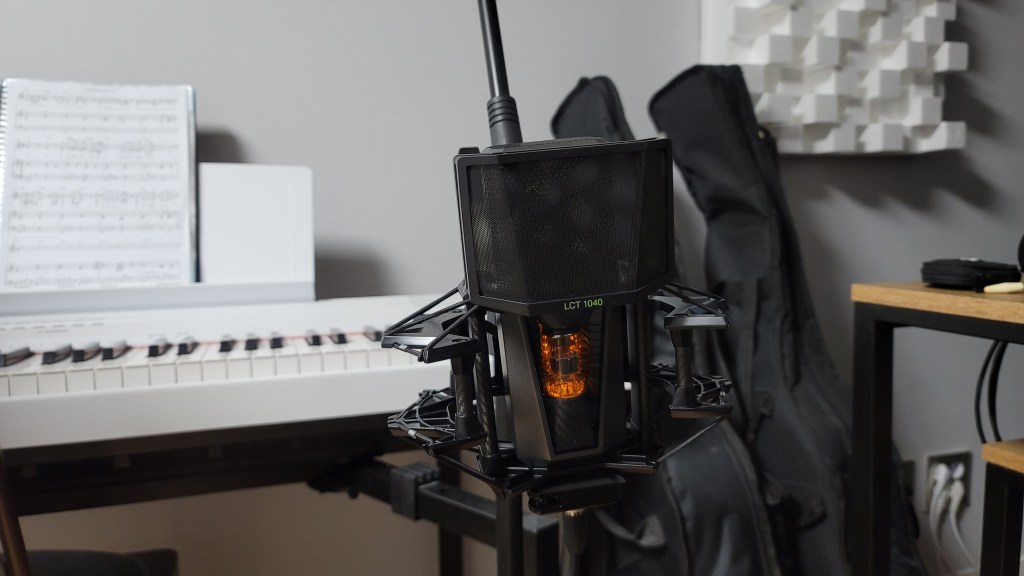
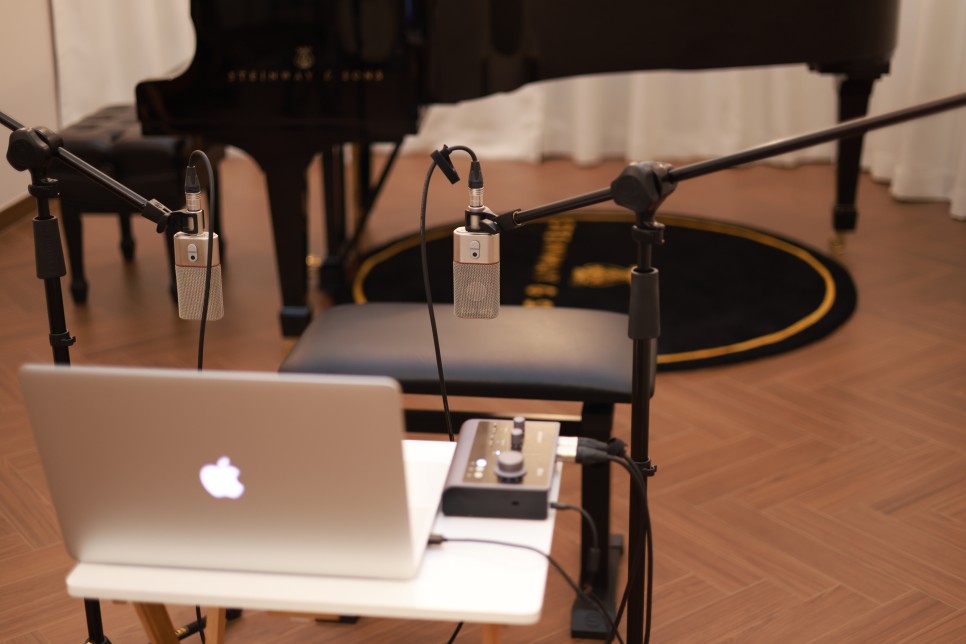
For the guitar, I couldn’t use a reflection filter, so I placed the mic in a standard holder. I recorded only in Cardioid, as Figure-8 and Omnidirectional were not necessary. I used a Guild D-150ce with new D’Addario XS Phosphor Bronze light gauge strings.
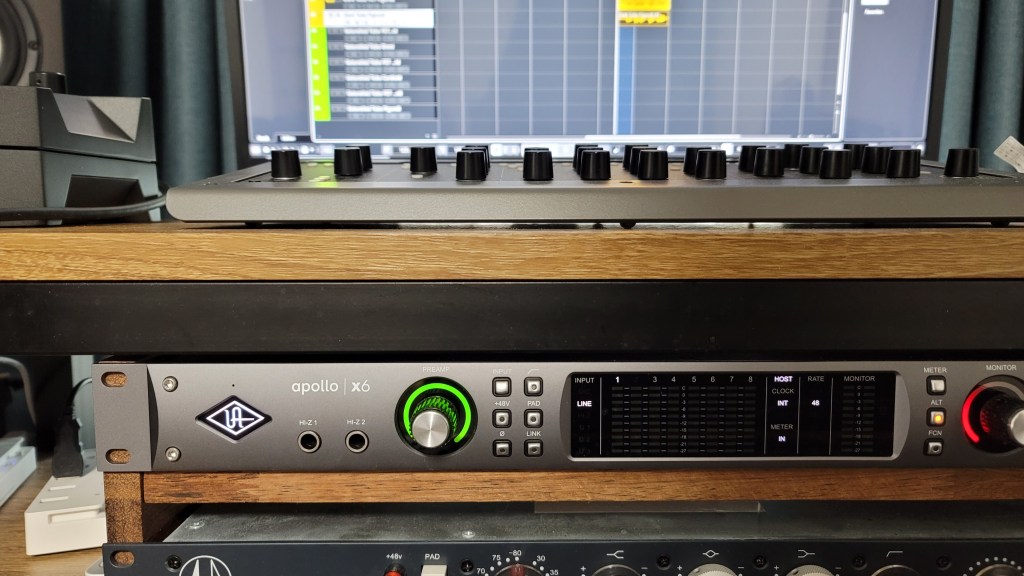
I applied a low cut at 80Hz and reduced the boominess at 138Hz and 179Hz for fingerstyle, while strumming did not require cuts. The recordings were captured directly into an Apollo x6 interface, with gain set around 53-55dB.

Impressions

FET, Clear
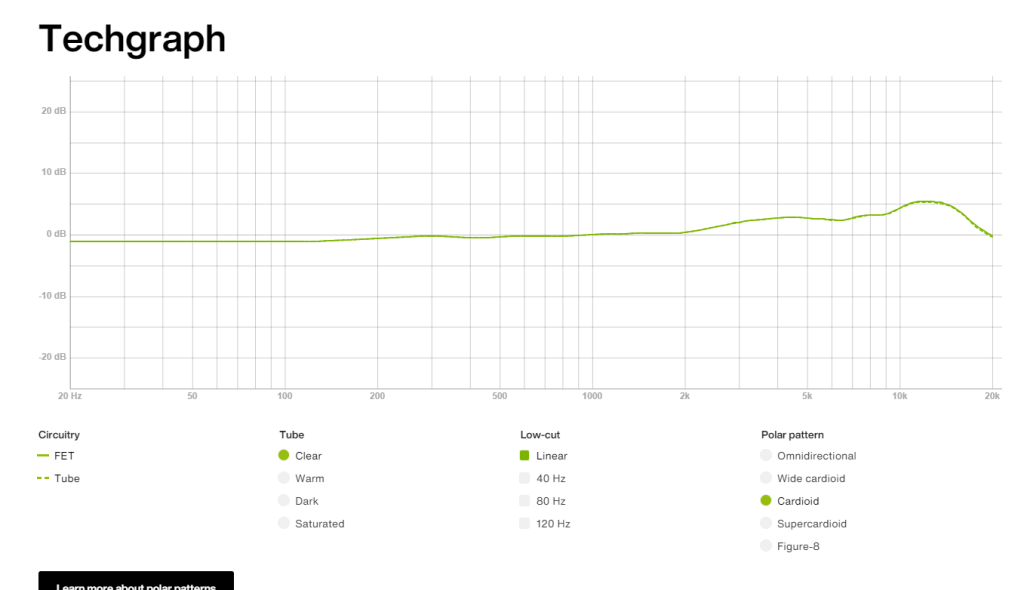
The high frequencies are pleasantly clear. However, the low-mid range feels slightly lacking, making the FET sound somewhat thin and sharp. Still, both the FET and Tube modes produce the expected quality sound.

Warm
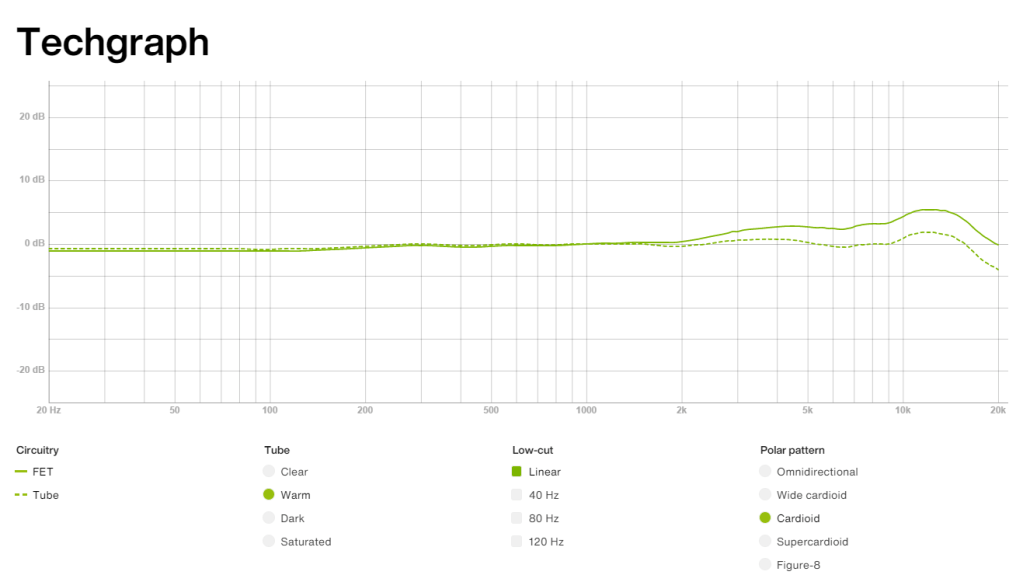
The highs are a bit subdued compared to Clear, but they still maintain a presence.

Dark
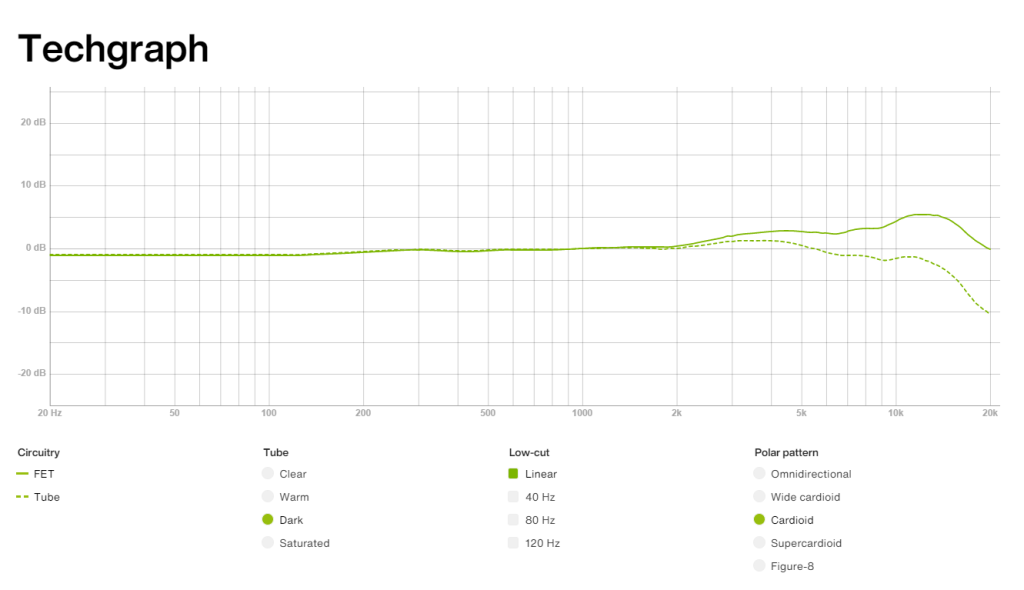
The highs feel significantly reduced, which might highlight the mids and make the sound somewhat nasal. This could be useful for creating a distant or lo-fi effect.

Saturated
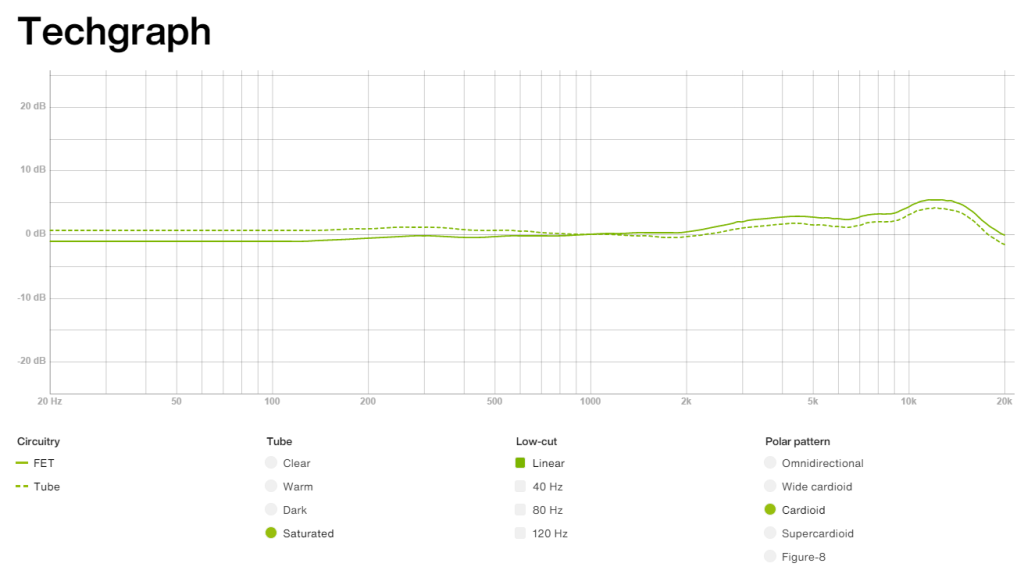
This was my favorite among Warm, Dark, and Saturated. It retains high-frequency clarity while boosting the lows, providing a pleasing sound without much EQ.

The frequency response graphs matched my impressions, which was quite satisfying.
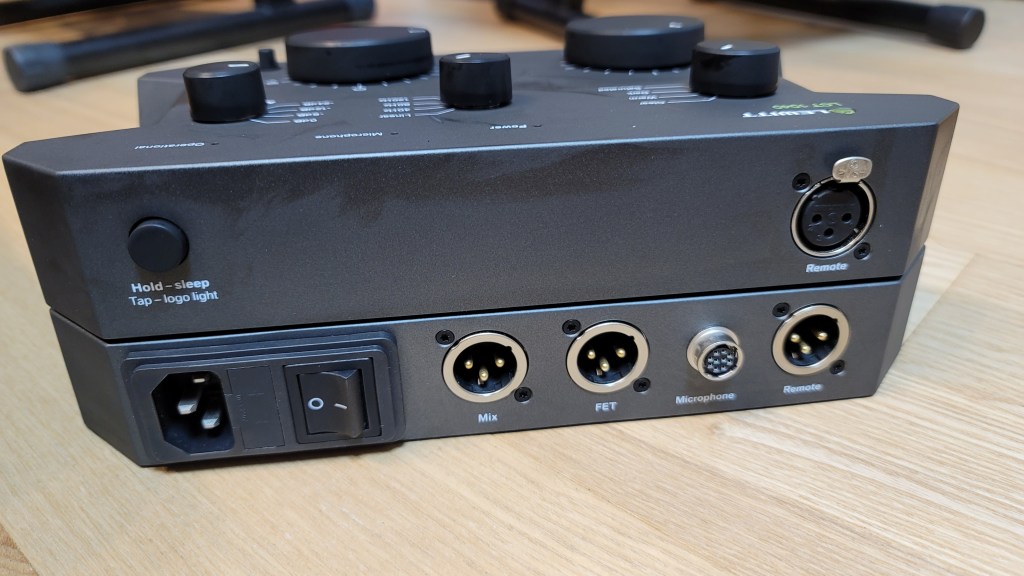
Additionally, the Mix and FET can be recorded separately, which could be handy for saving FET as a backup.

Pros

The detachable remote makes it versatile for studios of all sizes. The dual-layered grill and pop filter demonstrate careful design.
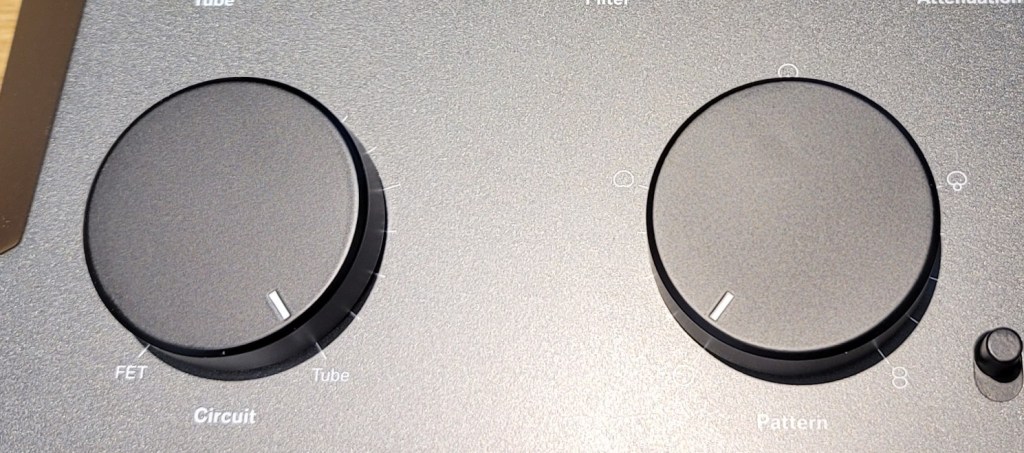
The knobs provide a satisfying tactile response, and the build quality is excellent. They even included a recall sheet, which can likely be requested in PDF form.

Cons
The unit is heavy, and there’s no volume control on the remote, which can be slightly inconvenient. However, this is common for tube microphones, so it’s hard to consider it a significant downside.

Conclusion
The sound quality and attention to detail are impressive, and the price seems justified. Although the absolute price is high, considering you effectively get five distinct tones—FET, Clear, Warm, Dark, Saturated—and can blend Tube with FET, it’s a compelling value.

Buying five high-quality microphones for the price of one LCT 1040 would be challenging. Given the rising cost of equipment, with AKG C414s nearing 2 million KRW, and considering the versatility and quality of this mic, I’d choose the LCT 1040 over a Neumann U87ai. It’s also an excellent option for those looking for a secondary mic.

While I haven’t used it long enough to comment on durability or long-term use, Sound & Music offers a 10-year warranty, which is reassuring.

I hope you enjoyed this review. See you in the next post!

I’m always open to reviewing hardware products! If you’d like me to review a product, please feel free to reach out at joe1346@naver.com.
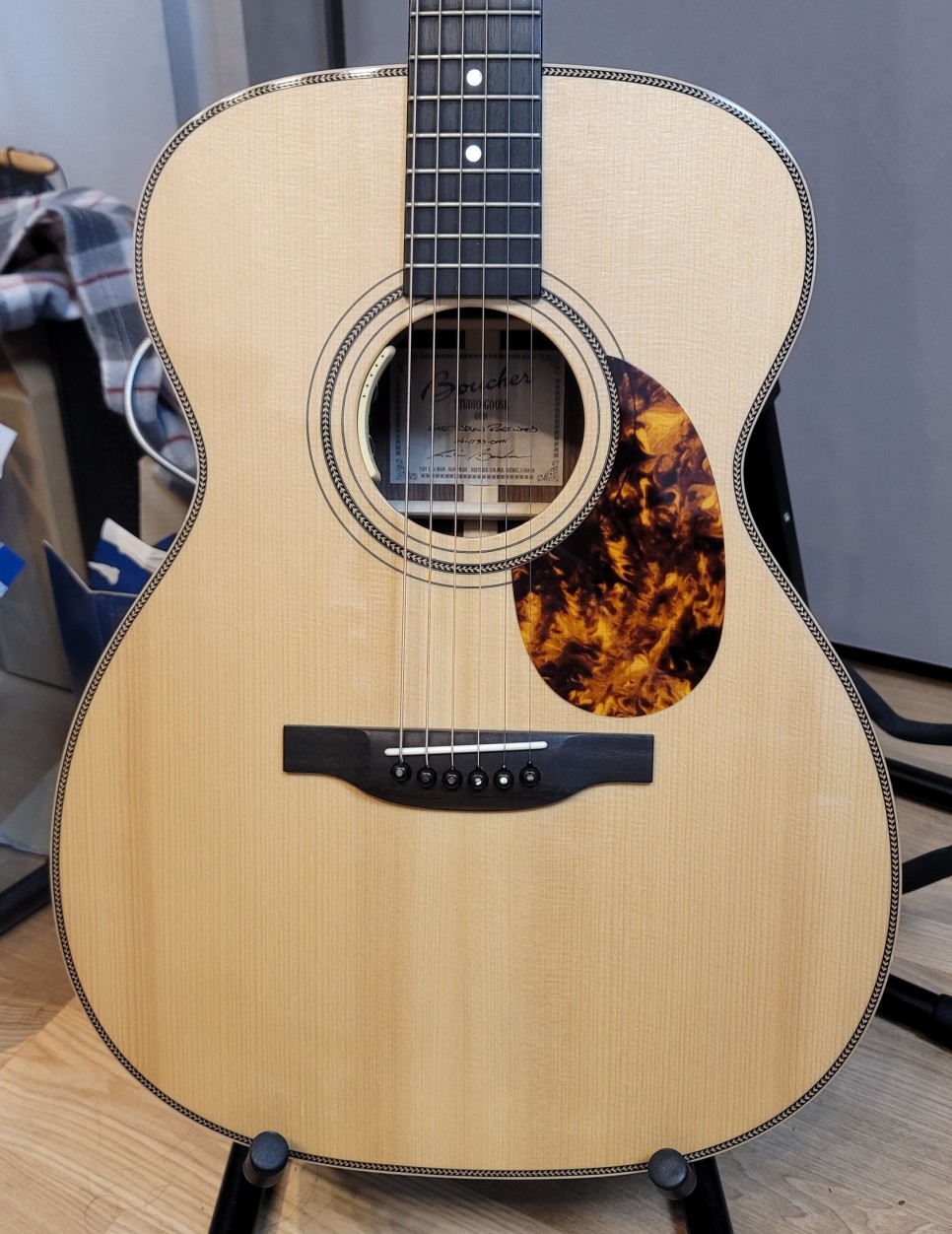
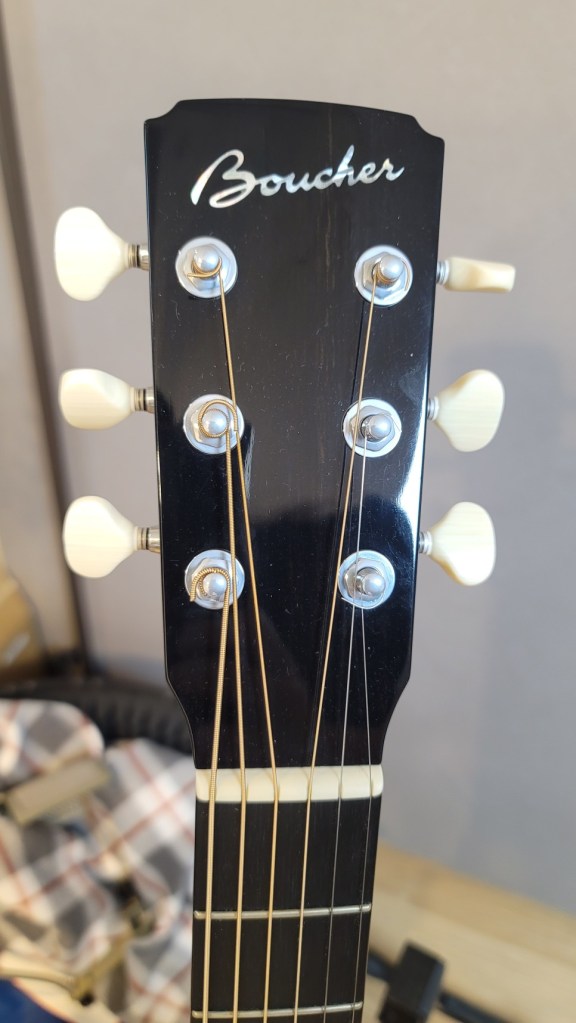
I Purchased a Boucher Studio Goose OMH Guitar

This post was originally written on June 12, 2022

Hello, I’m Jooyoung Kim, a mixing engineer and music producer.

After parting with my Taylor 220CE K-dlx model, I decided it was time to add a new guitar to my collection, one that differed from my Taylor and Guild preferences.

I visited my favorite shop to test out some guitars and found that the higher-end models from Headway, a Japanese brand, and Boucher, a small Canadian workshop, produced impressive sounds.

I was particularly interested in the seasonal commemorative models from Headway, but unfortunately, they weren’t available in Korea. Ordering directly from Japan would have added nearly 600,000 KRW(about 450$) in shipping and customs fees. Given the high cost, I thought it would be wiser to look for a used Boucher guitar.

As luck would have it, I found a well-maintained Boucher guitar at a reasonable price and traveled to Siheung this morning to pick it up.

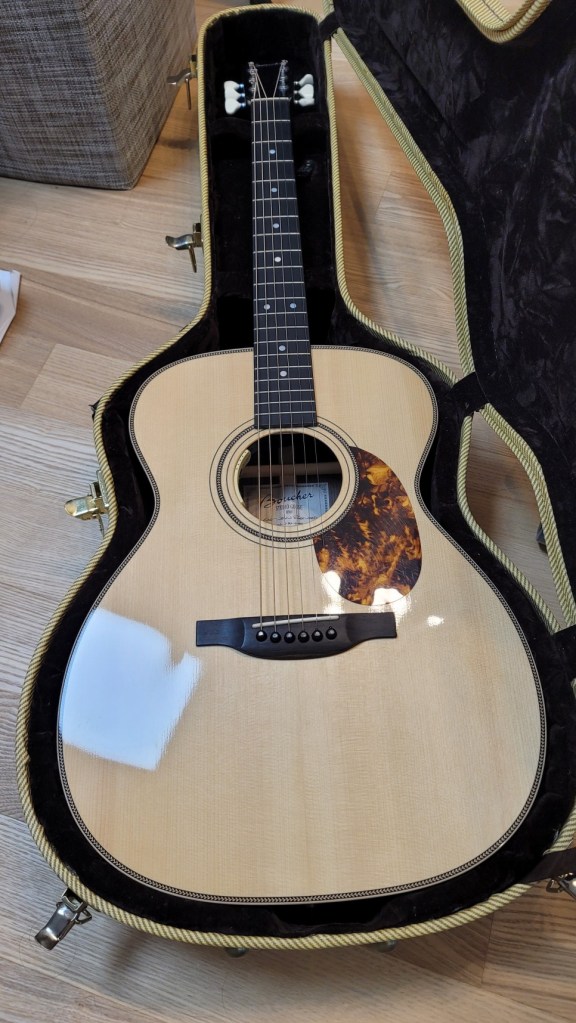
Although it’s an older model, the specifications match the SG51. The label inside simply reads “Studio Goose OMH East Indian Rosewood.”

The binding is made of maple, giving it a distinctly high-end appearance.

While I’m not particularly fond of the D’Addario EXP strings currently on it, the balance of the sound is incredible. Throughout my years of playing guitar, I never gave much thought to the balance of sound. However, playing this guitar made me realize what good balance truly means.

I’m curious to see how the sound will change once I switch out the strings.

It’s been a while since I’ve purchased a piece of equipment that brings me this much joy just by looking at it.

*As I translate this post in 2024, I’m still finding this guitar incredibly useful. I’ve used it extensively for recording, and the high-end harmonic overtones that come from such a premium instrument have greatly enhanced my recordings, adding a touch of sophistication to my music.

I look forward to sharing more with you in my next post. See you then!

Takamine D5D NAT Guitar Review

Hello! I’m Jooyoung Kim, a mixing engineer and music producer.

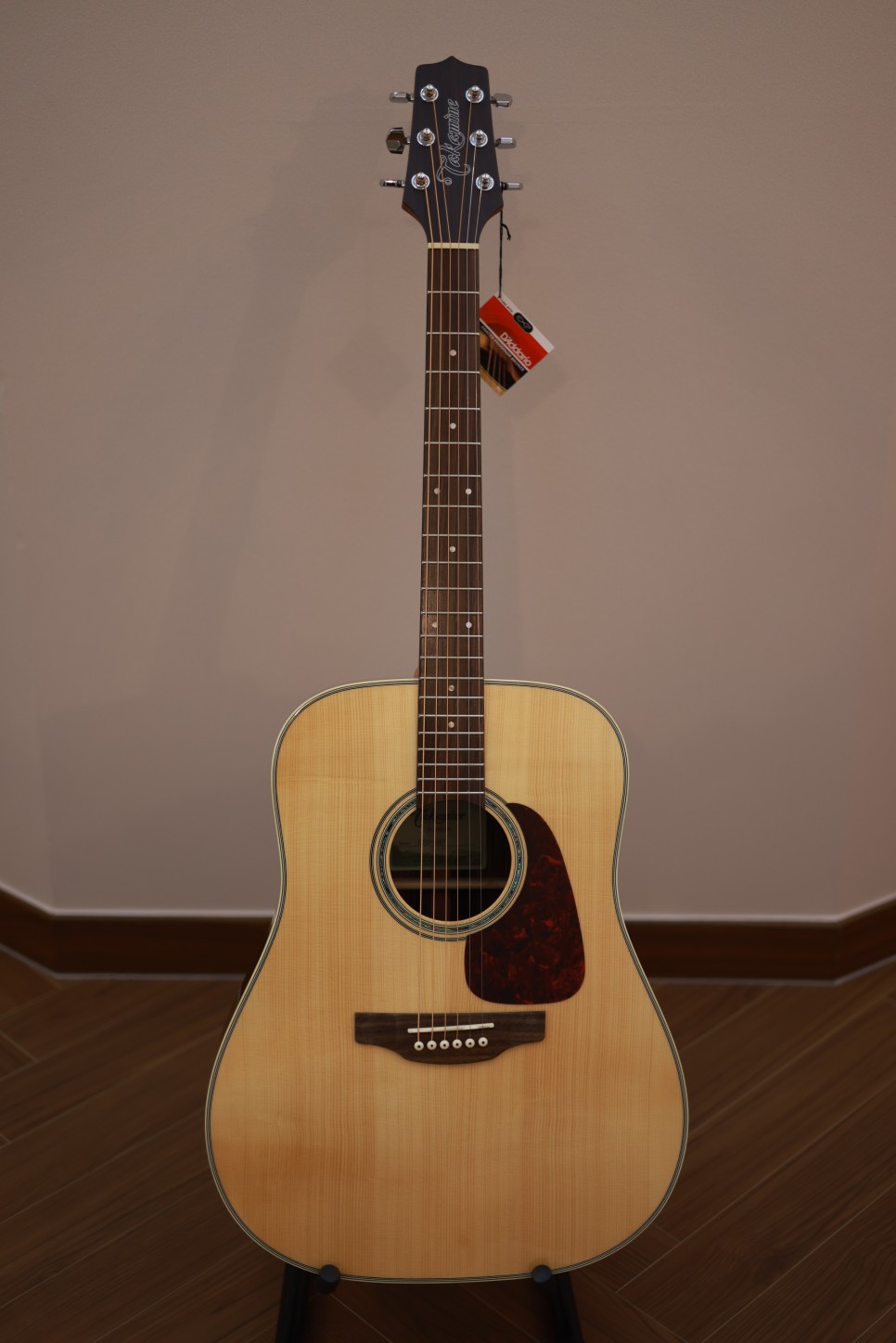
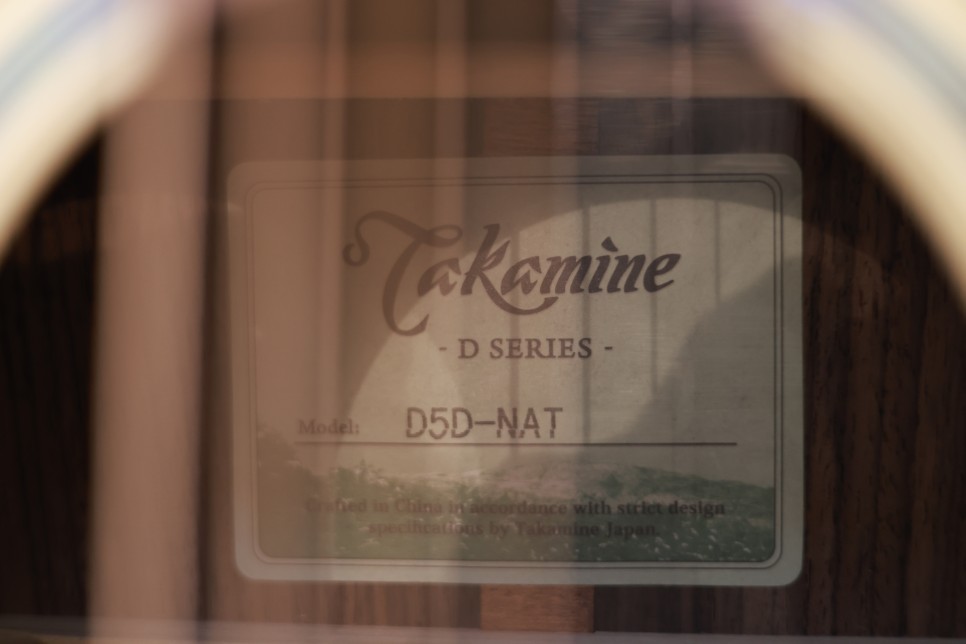
The D series is Takamine’s entry-level lineup, structured as D-series, G-series, and Pro-series.The D-series is numbered from 1 to 5, with models 1 to 3 featuring laminated tops and models 4 and 5 having solid spruce tops. The D4 comes with a mahogany back and sides, while the D5 features rosewood back and sides.Let’s dive into the details!

  • Appearance

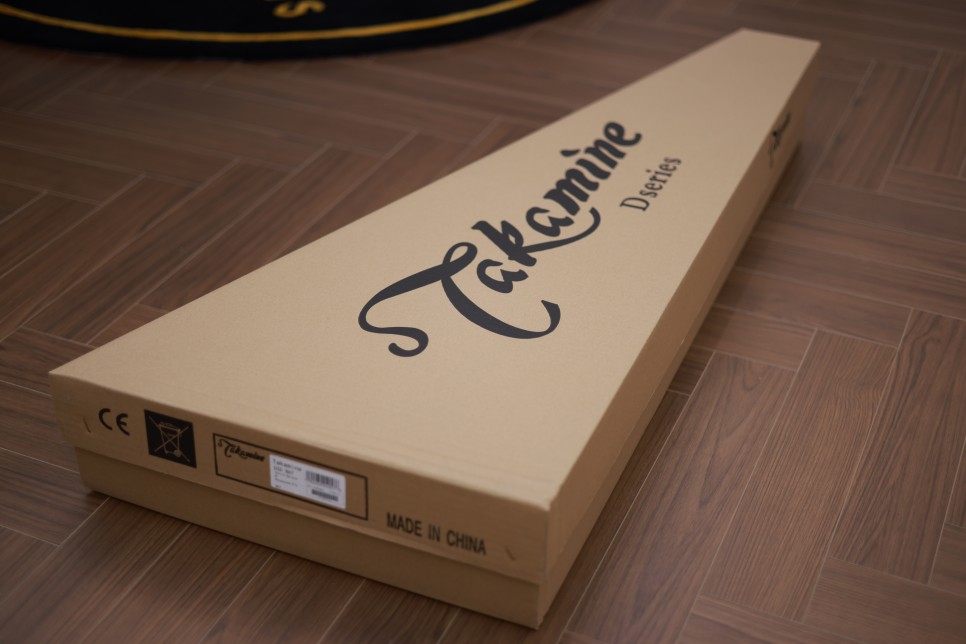
The packaging is slightly different this time, prominently displaying the D-series label.

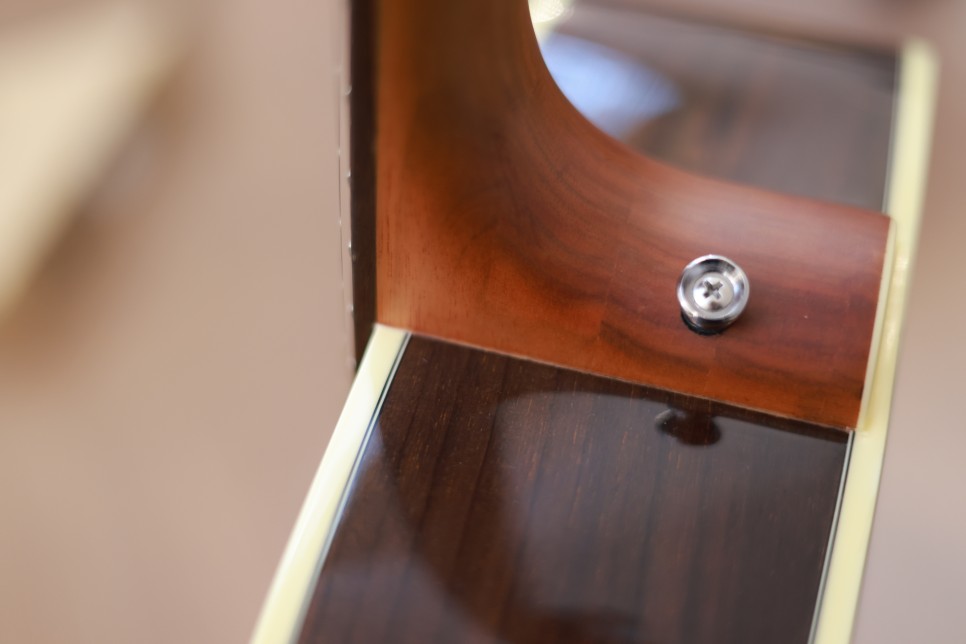
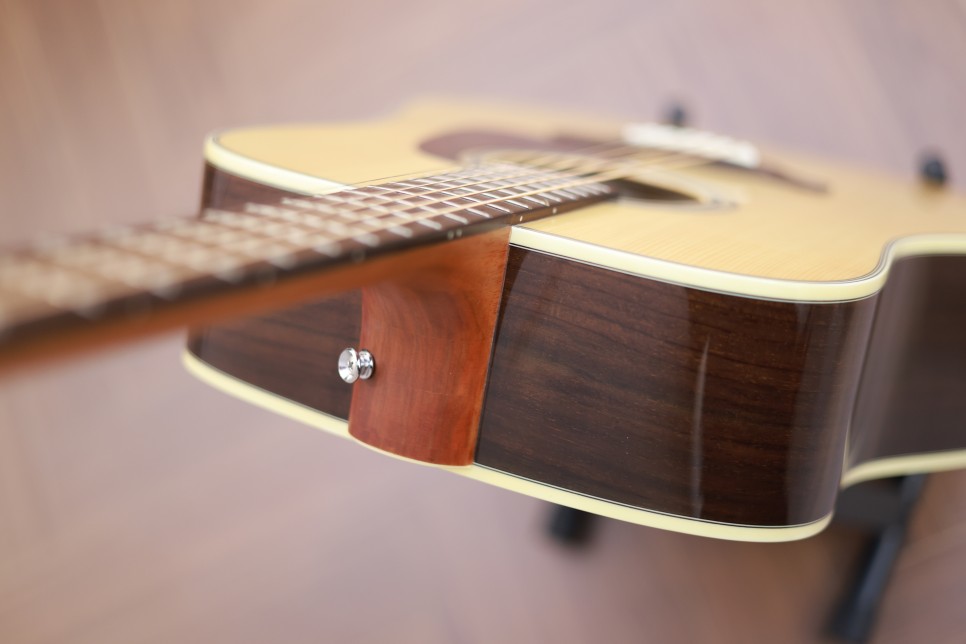
This model has bridge pins. The nut, saddle, and pins are all plastic.

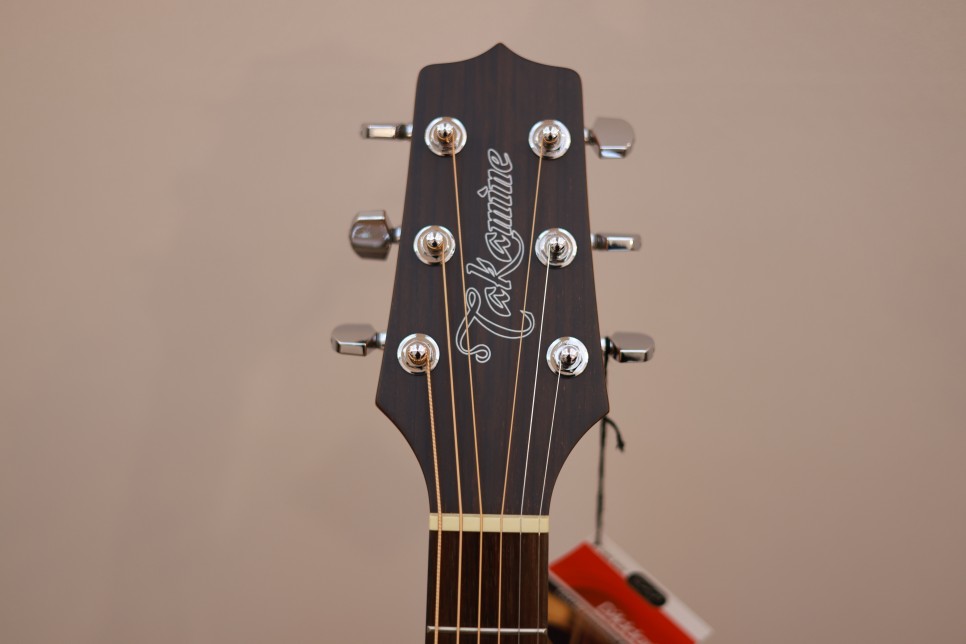
The guitar comes strung with discontinued D’Addario EXP strings. It seems that while individual packs are sold out, bulk packs are still available.

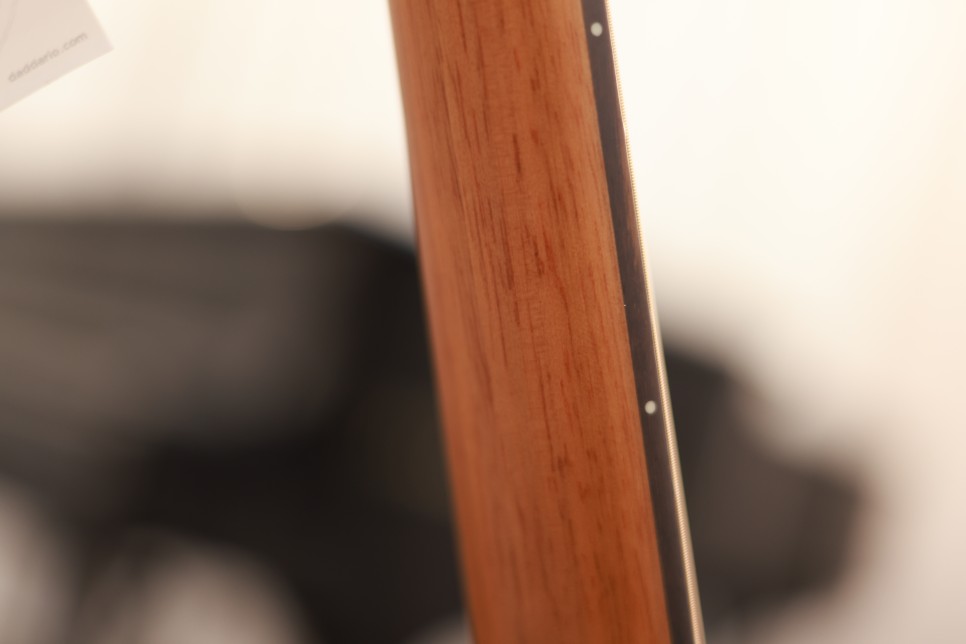
The neck has a matte finish, and the binding is a slightly yellowish plastic.

As an entry-level model, the wood grain isn’t perfectly uniform, but it’s challenging to find a foreign brand with these specs at this price point.

  • Specifications
  1. Solid spruce top
  2. Rosewood back and sides
  3. Rosewood fingerboard
  4. Plastic saddle and nut
  5. Plastic pins
  6. 42.5mm nut width
  • Sounds

I received this guitar on the same day as my last review, so the setup is identical. The recording was done using an Audient id14 mk2 and an Austrian Audio oc818 in stereo. No reverb or delay was added; only the volume was adjusted.

A quick disclaimer: I haven’t played guitar in a while, so my playing might not be the best. Please focus on the sound quality.

For the best experience, increase the video quality on YouTube to avoid losing high frequencies.

1) Strumming

2) Fingerpicking (There’s some noise, so please turn up the volume.)

  • Overall Impression

The sound is loud and robust, but the price does reflect in the quality. Compared to the G30 series, the D5D’s sound feels a bit more scattered, possibly due to the plastic nut and saddle. Changing the strings might help achieve a more mellow tone.

This guitar might be ideal for country music where a more open, airy sound is preferred. While the D5D has solid specs, the sound quality doesn’t quite match the G30CE models, which are exceptionally well-made for their category.

Like the other models, the neck tends to lift slightly. Some adjustments to the truss rod, saddle, and nut might be necessary upon receiving the guitar.

Priced at 495,000 KRW(about 360$), it is approximately 170,000 KRW cheaper than the 30 series, which is a noticeable difference.

The neck is slightly thicker than the G series, which I personally prefer. My main guitar has a neck width of 45mm, so I like a bit of heft. However, everyone has their preferences, so it’s best to try a guitar in person and use that as a reference.

Generally, Taylor guitars are known for their slim necks. The G series has a neck similar to Taylor’s 100 and 200 series, while the D series is slightly thicker.

Takamine GN30CE NAT Guitar Review

Hello, this is Jooyoung Kim, a music producer and mixing engineer.

Today, I’m going to review the Takamine GN30CE NAT guitar. Let’s get started!

  • Appearance

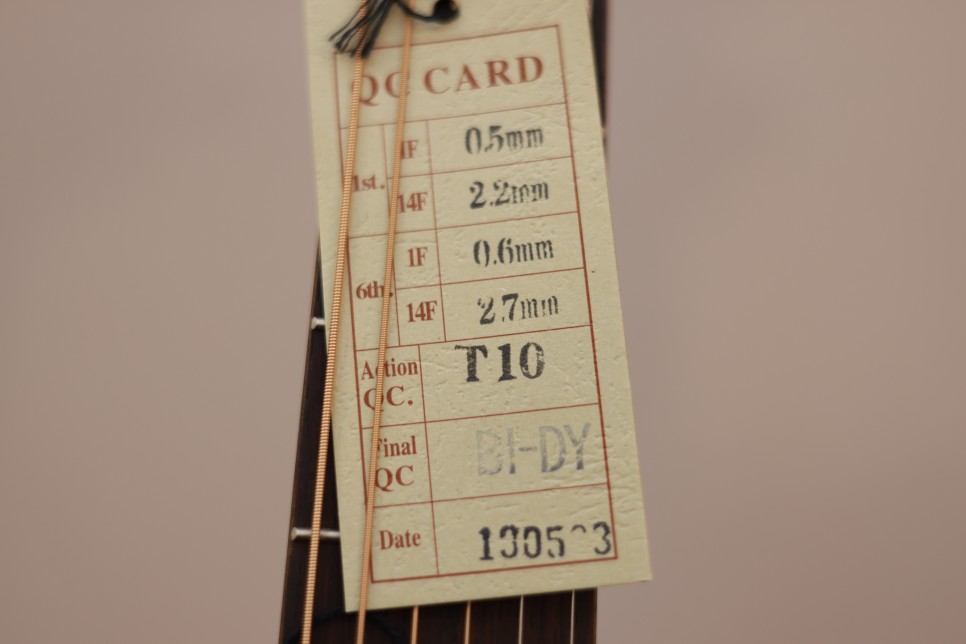
The packaging is the same as the GD30CE NAT model I reviewed before. It includes a truss rod and a QC card.

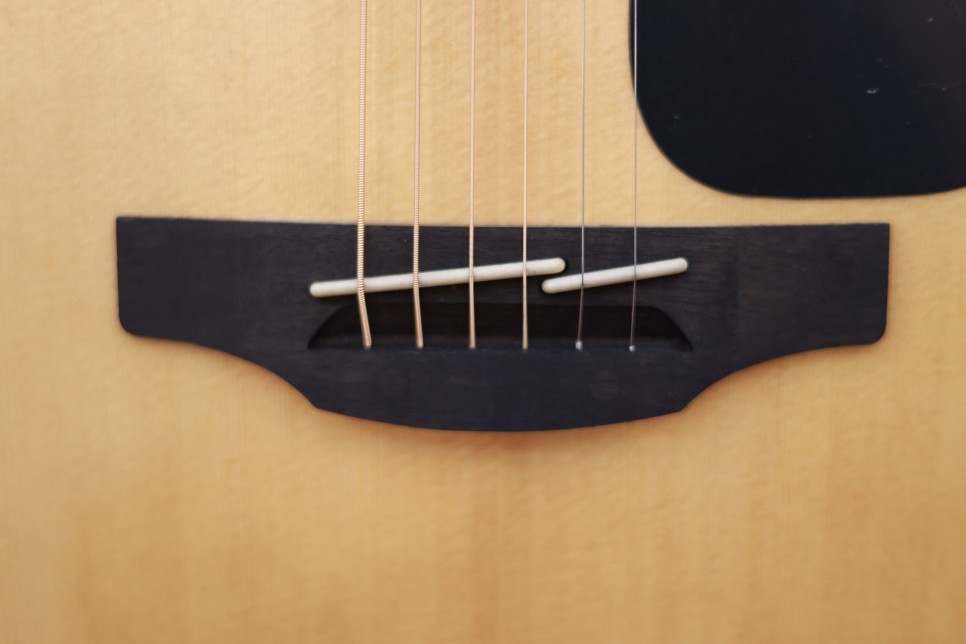
Like the GD30CE NAT, this model passed QC in 2019. Additionally, it has a pinless bridge.

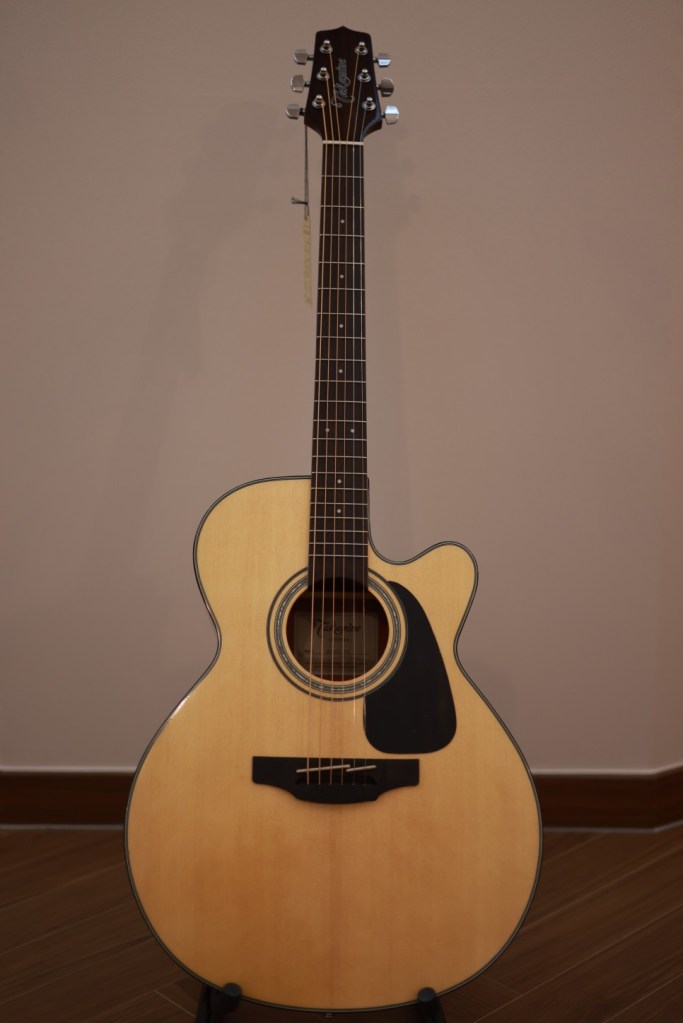
The overall look is clean.

The outer binding is black, so there’s no worry about discoloration over time. Personally, I prefer black plastic binding.

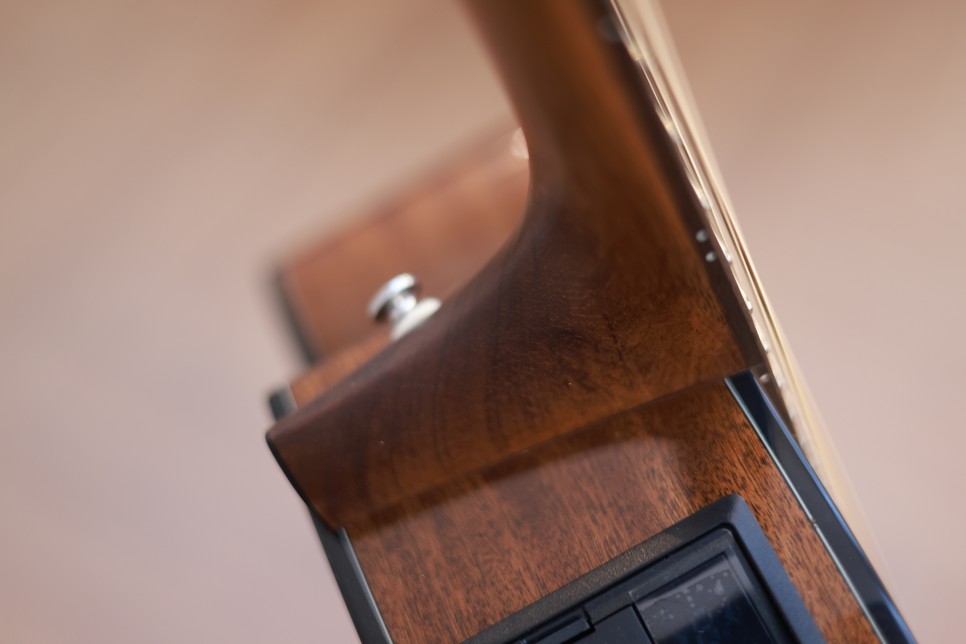
Though it’s hard to tell, the body has a glossy finish, while the neck has a matte finish. This makes it easier to play.

  • Specifications

The GN30CE NAT is a top-solid model with a NEX-style body. The NEX body is Takamine’s version of a little jumbo, and it looks similar to a slightly larger GA (Grand Auditorium) body.

As you can see, it has a cutaway and is equipped with Takamine’s TP-4TD preamp.

Other specifications include:

  1. Solid spruce top
  2. Mahogany back and sides
  3. Synthetic bone nut and saddle
  4. 42.8mm nut width
  5. Ovangkol fingerboard
  • Sound

The sound was recorded together with previous recordings, using the same setup: a 2015 MacBook Pro with Audient id14 mk2 and oc818 for stereo recording.

As I mentioned before, I haven’t played the guitar in a long time, so please focus on the sound rather than my playing skills. Also, please listen in the highest quality possible, as YouTube lowers the high frequencies if not set to the maximum quality.

Let’s listen!

1) Strumming

    2) Fingerpicking (please increase the volume as it’s low. When I increased it myself, there was too much noise.)

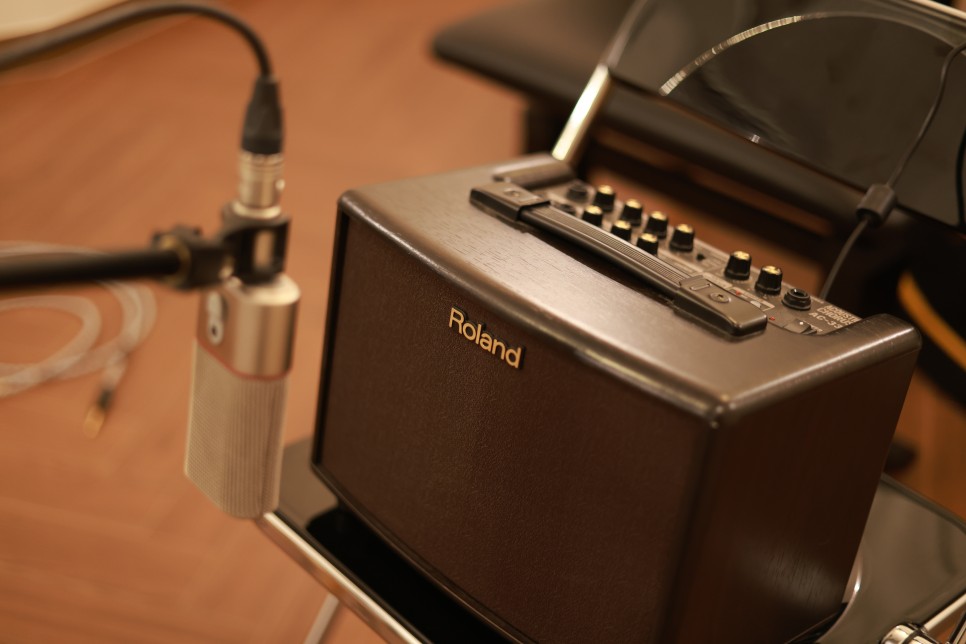
    As with the previous review, I also recorded the sound from a Roland AC33 amp in mono.

    3) Amped strumming

    4) Amped strumming + adjusting the guitar preamp (I accidentally forgot to take a picture, but I set the lows to neutral, mids down, and highs up.)

    • Personal Overall Assessment

    Before playing, I expected it to be similar to a scaled-down jumbo body as described by Takamine. However, it felt more like a Taylor 14 or 16 in terms of body size and feel.

    The sound is neither completely thin like a parlor body nor fully resonant like a dreadnought, making it suitable for both strumming and picking.

    For those who find it difficult to handle guitars with large bodies like dreadnoughts, the NEX body is a good alternative as it’s smaller. Choosing a guitar that matches your body type can be an important criterion.

    Personally, I have a small stature and hands but prefer dreadnought bodies for their encompassing sound over the sharp clarity of smaller bodies.

    To diverge slightly, larger guitar bodies tend to have better resonance, making them ideal for strumming, while smaller bodies produce clearer single notes, which are better for melody. Typically, dreadnought bodies are used for strumming, OM or parlor bodies for melody, and NEX bodies can be used for both.

    Though I’m not particularly fond of GA or NEX bodies, they are stylish and well-designed. Taylor guitars, for example, have better sound in their 12 and 16 or 10 models, but the GA body (14) is the most popular in the second-hand market, likely due to its attractive appearance.

    This guitar has specs and looks comparable to Yamaha’s LS16. If you don’t prefer Yamaha’s characteristic high tones, the GN30CE NAT is worth considering.

    While it’s not my personal favorite compared to the GD30CE NAT, which I highly recommend, the GN30CE NAT has decent finish and sound quality.

    When purchasing, consider the following:

    1. It might be an older model like the QC date suggests.
    2. The neck might need adjustment with the truss rod.

    If these two points are acceptable, it’s a good choice.