Hello! I’m Jooyoung Kim, a mixing engineer and music producer.
It’s been a while since my last post, hasn’t it?
After getting rejected by AES for the second time, I was like, “Alright, let’s fix this research!” So, I scrapped my experiments, started over, re-collected all the data, and reformatted everything for submission elsewhere. Time just flew by in the process… haha.
I’m really hoping this one gets accepted before I graduate. Fingers crossed this time…
Lately, I’ve been working on recreating hardware compressors using deep learning. I trained the model with test signals, but when I fed it guitar sounds, all I got was white noise and sine sweeps… That took about two weeks of work.
So, I’ve spent the past few days coding from scratch, preparing new training data, and running the training process again. Here’s hoping the results turn out well, but man, it’s exhausting…
I’d love to own a Yamaha DX7 in real life
On another note, I recently wrapped up a year-long series on the basics of mixing, and I was wondering what to write about next. Then it hit me: why not talk about using synthesizers?
Even though my music style doesn’t heavily rely on synths, understanding how different synthesizers work can definitely broaden the creative spectrum for writing music. From an engineer’s perspective, learning about filter techniques and the unique sound characteristics of various synths can spark a ton of new ideas.
That said, I’m still organizing my research on this topic, and with some recent worries about making ends meet, it’s been tough to write as quickly as I’d like… Still, I’ll do my best to keep the posts consistent.
The content will likely follow a simple structure: “Sound synthesis methods and their history -> Iconic synthesizers”
That’s the plan. Looking forward to catching you in the next post!
Hello, this is Jooyoung Kim, music producer and audio engineer. Today, I’ll be discussing the history and various types of reverb.
Shall we dive in?
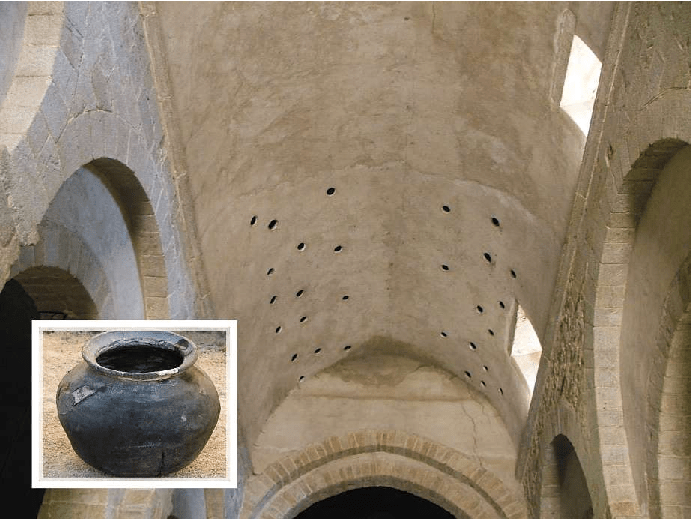
Valiere, Jean-Christophe & Palazzo-Bertholon, Benedicte & Polack, Jean-Dominique & Carvalho, Pauline. (2013). Acoustic Pots in Ancient and Medieval Buildings: Literary Analysis of Ancient Texts and Comparison with Recent Observations in French Churches. Acta Acustica united with Acustica. 99. 10.3813/AAA.918590.
The image above is from a paper on “Acoustic Pots” found in ancient and medieval architecture. These pots were embedded in walls to function as a type of Helmholtz Resonator.
That might sound too technical, but a Helmholtz resonator is essentially a device that reduces specific frequencies. Modern-day applications include using this concept in car design, though that’s a more recent development.
In ancient times, the Aztecs built temples like Kukulkan Temple, which used echo to create fascinating sounds.
The Greeks also designed spaces with excellent acoustic properties, enabling sound to be heard clearly from specific spots.
Back then, without microphones, these architectural advances allowed sound to be projected effectively, and this often included reverb.
Moving to the Modern Era
In the modern era, Bill Putnam, the founder of Urei, which later became Universal Audio, was the first to experiment with reverb. He used it in the song “Peg o’ My Heart” by the Harmonicats.
For this track, they recorded instruments, played the sound in a studio bathroom, and re-recorded it to capture the reverb. If you’ve ever sung in the shower, you’ll know exactly the kind of reverb I’m talking about! This was the earliest form of what we now call an echo chamber.
Echo Chamber (Chamber Reverb)
Inspired by this, studios started building dedicated rooms for reverb, known as echo chambers.
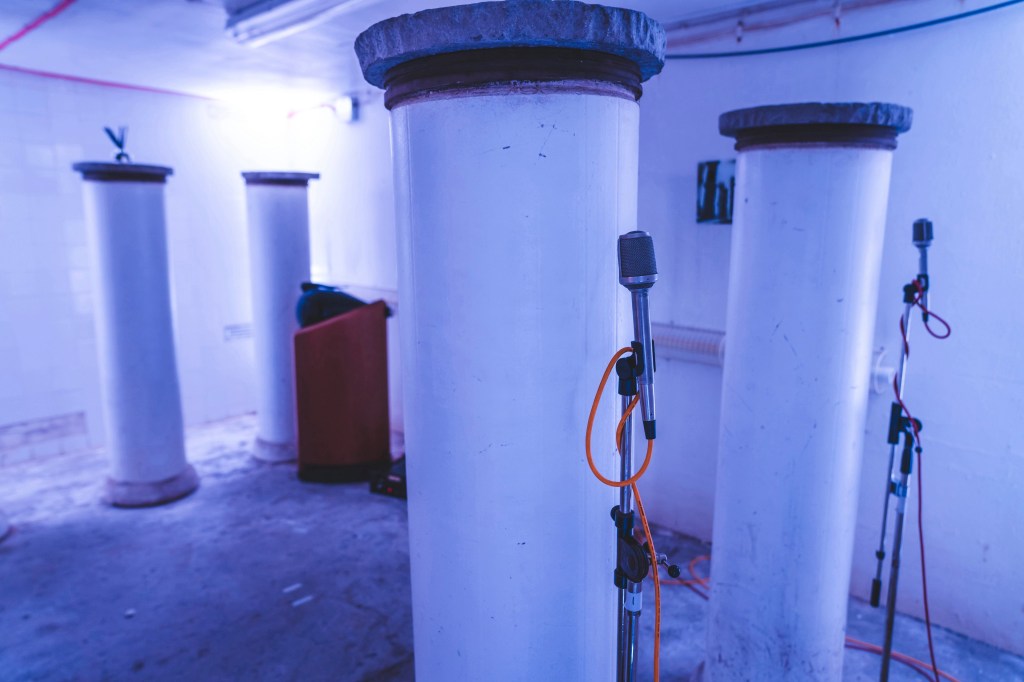
The image above shows one of the echo chambers at the famous Abbey Road Studio. For those familiar with plugins, this might ring a bell.
Waves created a plugin called Abbey Road Chambers, which is based on impulse responses (IR) from these very rooms. Notice the tile walls—similar to bathroom tiles—used to reflect sound. The process involves playing sound through speakers and capturing it with microphones.
By the way, the classic speakers you see in that plugin are B&W 800D speakers. The 800 series is a dream for many, though the price is quite steep, even second-hand. Hopefully, I’ll own a pair of 801D4s someday…
Anyway, there are plenty of plugins that emulate these echo chambers. While the sound quality is great, the cost of building these rooms is astronomical.
Imagine dedicating an entire room just for reverb—it’s quite an investment! Unless, of course, money is no object…
Plate Reverb
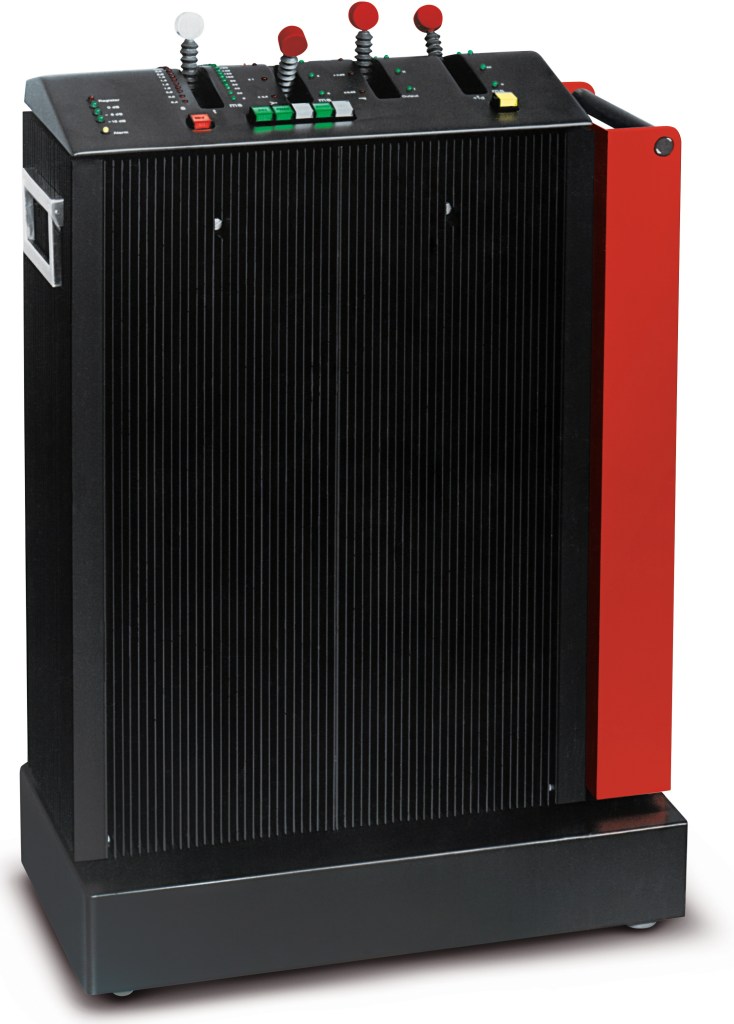
Plate reverb was developed as a more cost-effective alternative to the echo chamber.
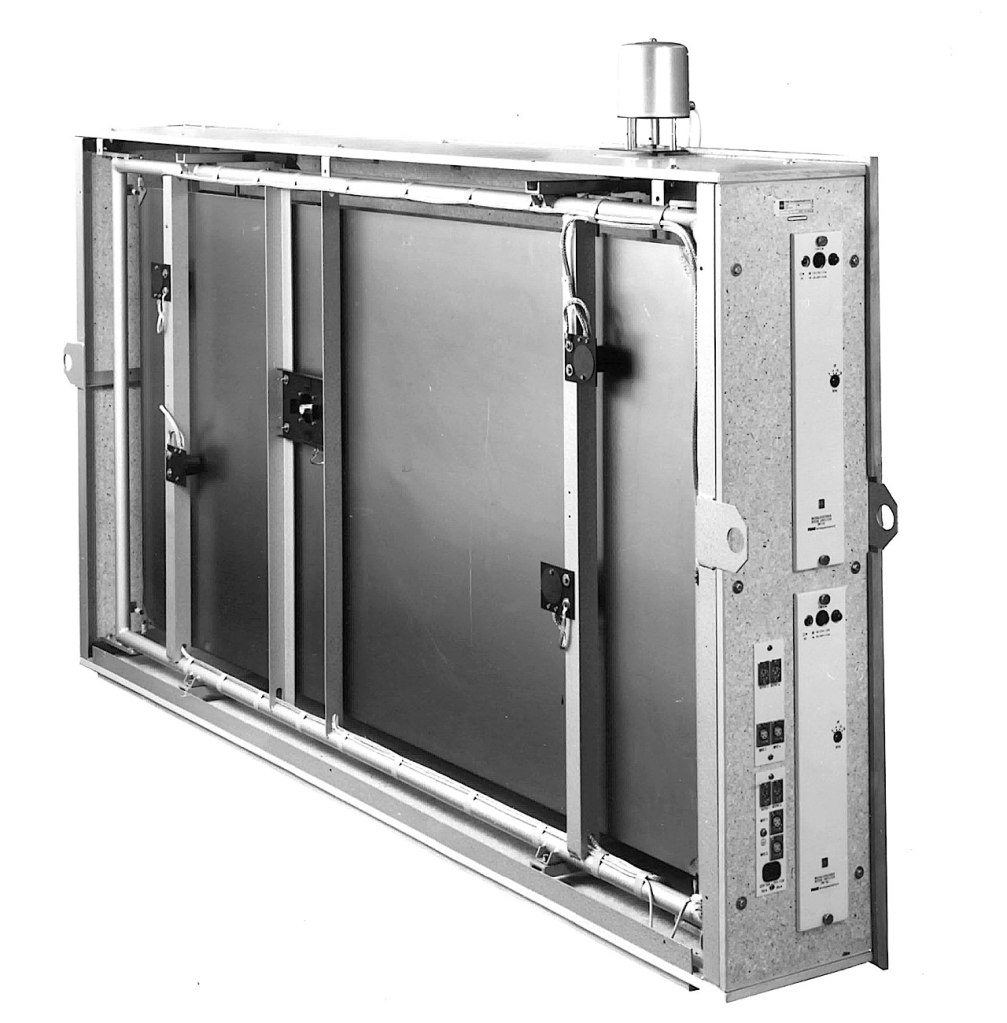
This type of reverb works by vibrating a metal plate, with microphones attached to capture the sound. The tone varies depending on the type of metal used, giving plate reverb its distinctive sound.
While these units could weigh up to 250kg and were still quite expensive, they were far more affordable than building a dedicated reverb room.
Digital Reverb
To reduce the size and cost further, digital reverb was invented. The image above shows the first commercial digital reverb, the EMT 250.
Spring Reverb
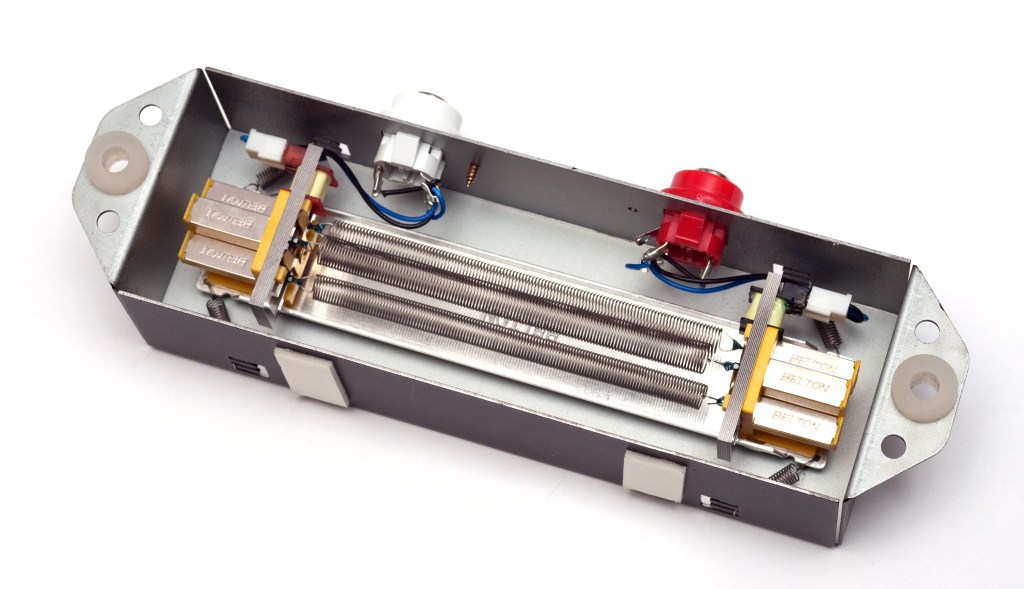
Spring reverb was originally developed for use in Hammond organs to create reverb effects.
The technology was later licensed to Fender, leading to the inclusion of spring reverb in Fender guitar amps. Its function is similar to plate reverb, and because it’s been embedded in guitar amps for so long, it has a familiar and pleasant sound when used with guitars.
Shimmer Reverb
Shimmer reverb adds pitch modulation to the reverb, producing a characteristic shimmering effect. It’s perfect for when you want that lush, expansive sound.
Hall, Studio, and Other Reverbs (Convolution Reverb)
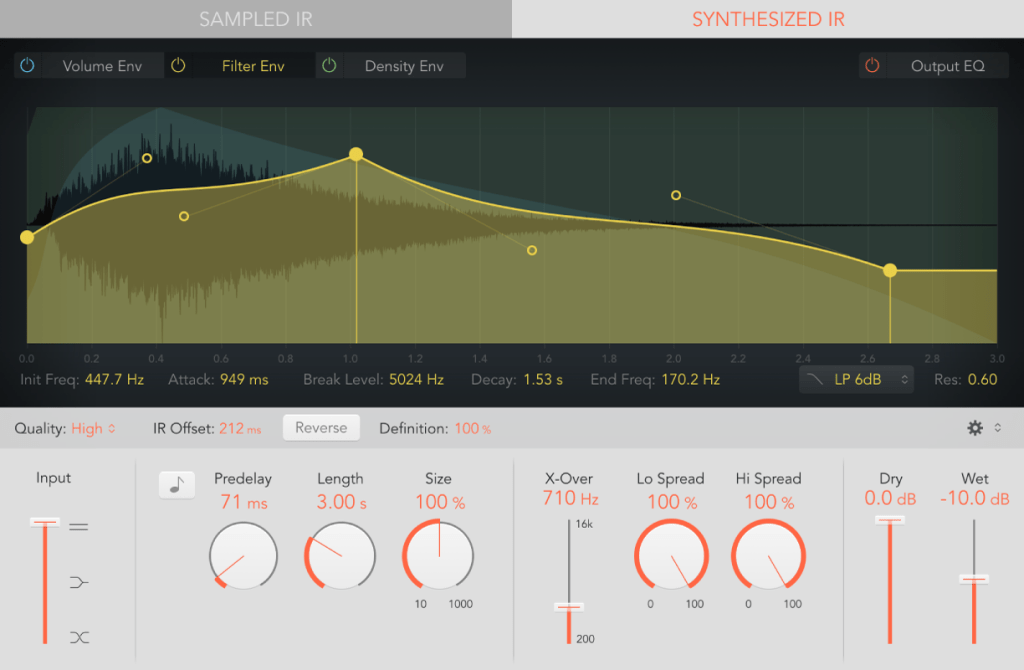
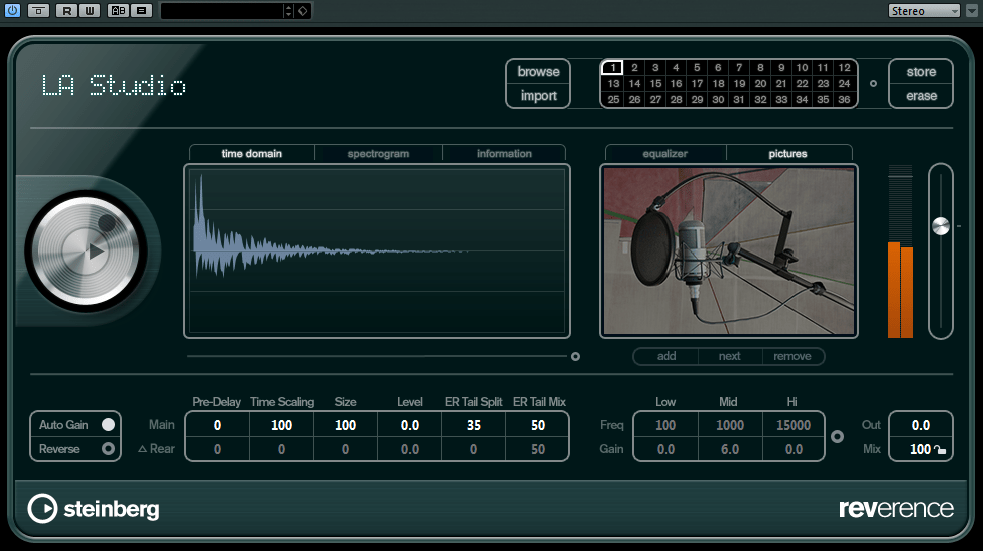
Reverbs like hall or room reverb are actually quite tricky to classify. These reverbs are generated using an impulse response (IR) of real spaces through a process called convolution.
Let me briefly explain what an impulse is: it’s a very short, high-amplitude signal. Mathematically, it’s known as a Dirac delta function, where:
if x = 0, y = ∞
if x ≠ 0, y = 0
and its integral from -∞ to ∞ equals 1.
This impulse can be used to measure the frequency response of speakers. When measuring a space, we use a signal known as a sine sweep, which is recorded and mathematically transformed through deconvolution to generate the impulse response.
While this might sound complicated, you can think of it as recording a sine sweep in WAV format and using it to create a reverb through calculation.
With IR reverbs, you can also use other sounds like snare hits or kick drum samples as IR files to create unique effects.
Logic has its Space Designer plugin for this,
Cubase uses Reverence,
and Pro Tools has Space.
In the end, the reverbs we use on our computers can be divided into two types: algorithmic reverb and convolution reverb.
Conclusion
That covers the history and types of reverb. I may have gone off on a tangent at times, but if some of it was too complex, don’t worry! You don’t need to fully understand every detail—music is all about what sounds good, after all.
On a different note, I finally received permission from Universal Audio to use some photos for my book. I’ll post an update when the book is ready!
Hello, This is Jooyoung Kim, an engineer and music producer.
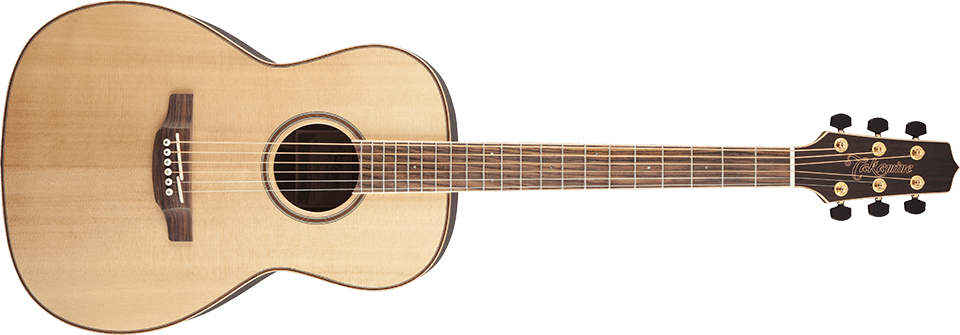
This post is a review-style article I wrote when I was working at Soop Records(Jan. 2023), where I had the opportunity to use Takamine guitars. I covered the history and lineups of Takamine guitars, including reviews of some mid-range models. Instead of letting this post remain only in Korean, I decided to translate it into English.
When I previously searched for information, I couldn’t find a comprehensive summary of how Takamine was established and what guitar lineups they offer.
Whether it’s due to my personality or not, I feel the need to organize these basic details before diving into more specific topics.
Let’s start with the history of Takamine guitars.
Takamine began in 1959.
Ohzone(大曽根), who worked at a musical instrument factory in the Nagoya region, decided to leave after the factory suffered severe damage from a typhoon and settled on Mount Takamine in Sakashita, Nakatsugawa City, Gifu Prefecture.
It started under the name Ohzone Musical Instruments(大曽根楽器製作所).
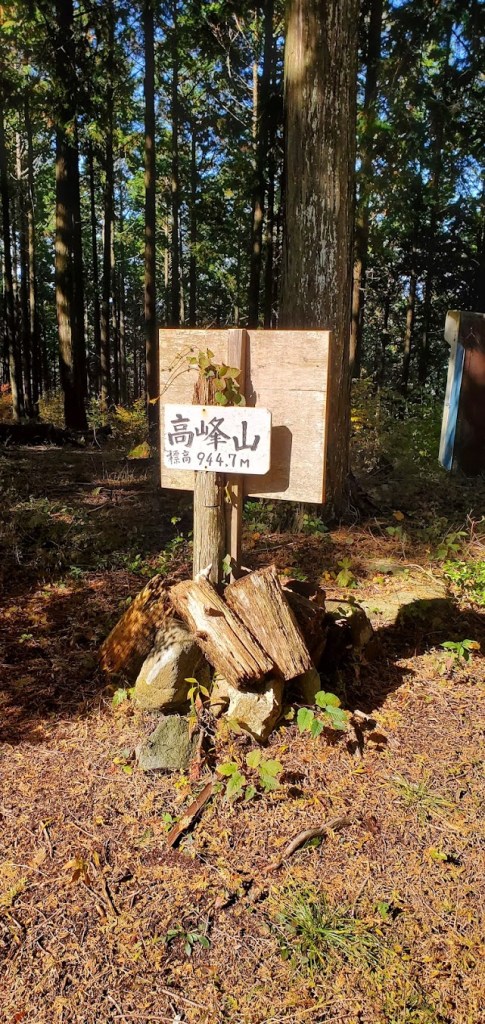
Mount Takamine in Gifu Prefecture (岐阜県 高峯山)
Almost 1000 meters!(3300 feet!!)
In 1962, dissatisfied with the company name, they changed it to Takamine Gakki (Takamine Musical Instruments, 高峰楽器製作所), named after the mountain.
(Side note: There are many mountains named Takamine in Japan. It was quite challenging to find pictures… haha)
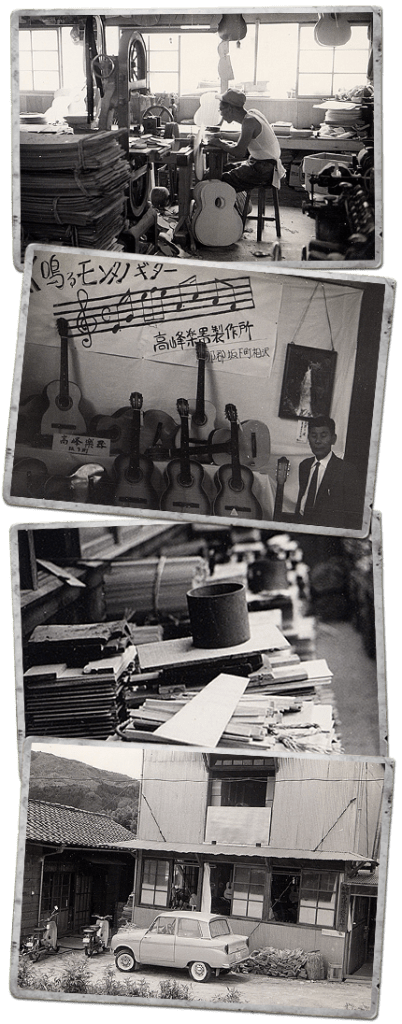
By 1968, nearly ten years after the company was founded, it had grown into a sizable company with 60 employees, gaining fame for its classical guitars and mandolins.
During this period, guitarist Hirade, who played a significant role in the company, joined Takamine.
Pictures from the Takamine website
With Hirade as the president, in the 1970s, they anticipated a growing demand for steel-string acoustics and entered the international market. At the time, the guitars were reasonably priced and well-made, which helped them gain a foothold in the market.
1970s Martin-style Takamine guitar
However, Takamine couldn’t escape the shadow of Martin copies during this period.
Martin even sent Takamine a letter asking them not to copy their headstock design exactly.
Although Martin didn’t sue, the story got slightly distorted, leading to old Takamine Martin-style guitars being called “Lawsuit guitars.”
Regardless, this marked a turning point for Takamine, leading them to create their iconic pointed headstock and develop unique split saddles for better intonation.
The iconic pointed headstock and split saddles commonly found in their guitars
In 1978, Takamine developed their renowned Palathetic pickup.
The Palathetic pickup, with six individual piezo transducers, one for each string, is still highly regarded today and has been widely copied by other manufacturers.
Even though the company name was Takamine Gakki, previous guitars had names like Elite and Nashville. After the introduction of the pickup, they started using the name Takamine exclusively.
This solidified Takamine’s place in the market. It’s said that the Eagles used a Takamine 12-string guitar for “Hotel California” during this period.
In 1988, Takamine introduced a parametric EQ to their preamps, and in 1989, they developed an external battery box and a replaceable preamp system, making their guitars more suitable for performances.
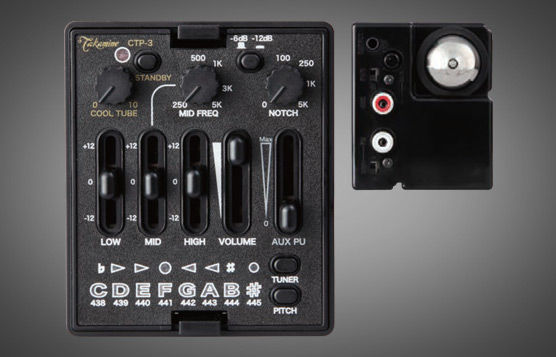
CoolTube – not just a name, it actually has a tube!
This innovation continued with the introduction of the CoolTube, the first onboard tube preamp, in 2004, along with other replaceable preamps.
Unfortunately, this feature is not available in the lower-priced G Series.
It would be great if these preamps could be swapped in lower-priced guitars, as they would be perfect as a second guitar for gigs, but it remains a bit of a drawback.
This covers the main points of Takamine’s history. In the next post, I will summarize Takamine’s lineup and price ranges.










 Jooyoung's Music Blog