Hello! This is Jooyoung Kim, an audio engineer and music producer.
Last post, we figured out the fundamental components of the modular synthesizer: VCO, VCF, and VCA. Today, I’ll talk about modulation , which is essential in various systems, including vocoder.
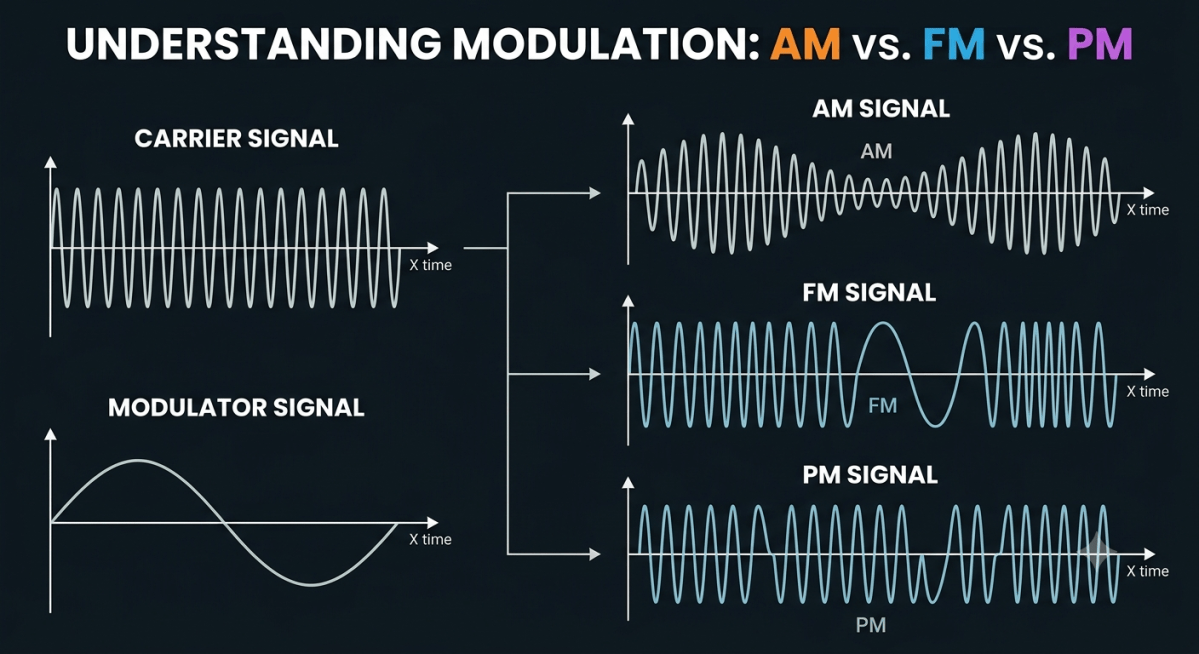
I have already written a few posts on modulation principles and related synthesizers—especially frequency modulation. Please read them first if you are not yet familiar with the basics of FM (Frequency Modulation), AM (Amplitude Modulation), PM (Phase Modulation), and RM (Ring Modulation).
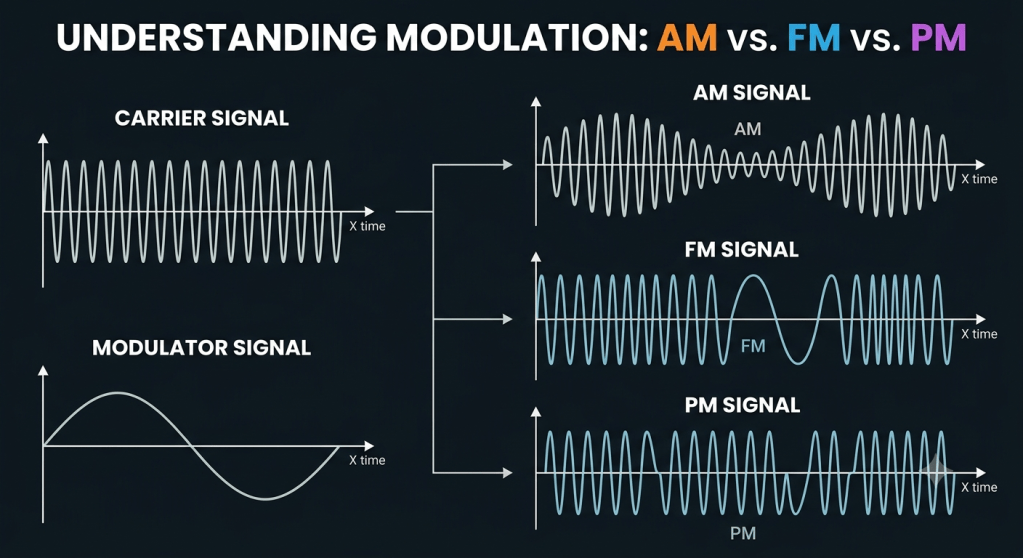
Although the PM graph in the AI-generated image contains some visual inaccuracies, the overall illustration still serves as a helpful conceptual guide when paired with the article.
So, what is modulation?
Essentially, it is the process of altering a parameter of one audio signal (Carrier) using another (Modulator). This creates a temporal cycle, which produces more complex and evolving timbres.
For instance, we can modulate a signal’s amplitude, frequency, or phase; these methods are known as AM, FM, and PM, respectively.
How about ring modulation?
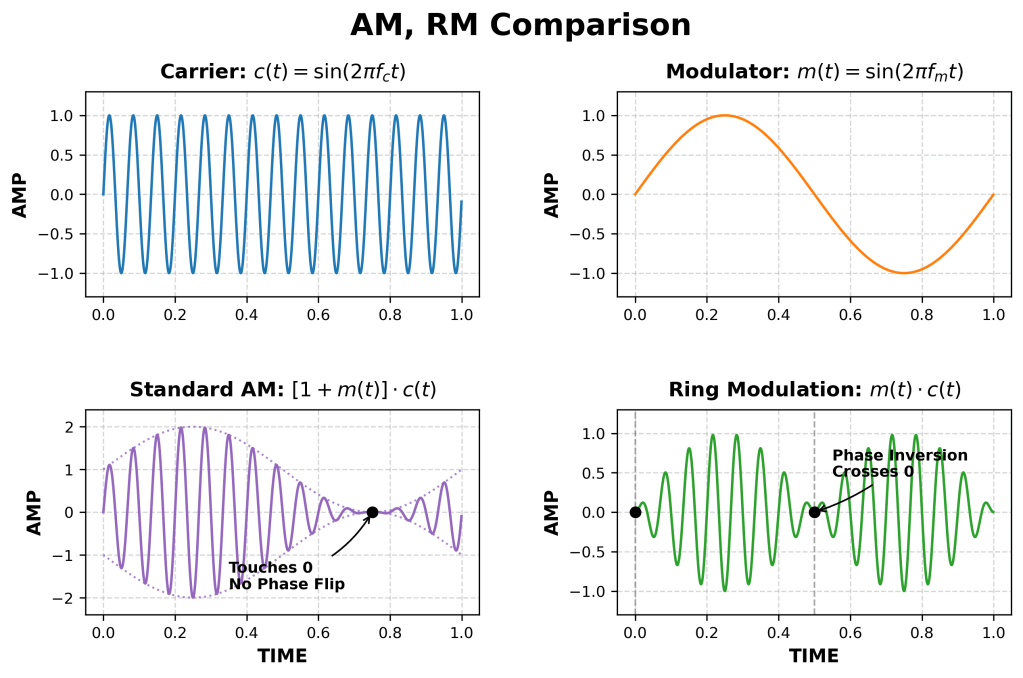
Since Gemini kept glitching, I just had it generate the Python code and tweaked it myself to make this chart..:)
At first glance, Ring Modulation’s (RM) waveform appears highly similar to that of Standard AM. However, a closer look reveals distinct differences, particularly at the null points (zero-crossing points). While Standard AM exhibits no phase inversion, Ring Modulation instantly flips the phase of the carrier signal by 180° every time the modulator crosses the zero axis.
In Standard AM, the unmodulated carrier component is always present because the modulator operates with a positive DC offset. As a result, the waveform’s envelope simply scales down to a null point at its lowest peak and expands back up, maintaining a perfectly continuous phase alignment.
Ring Modulation, conversely, is a form of suppressed-carrier transmission. Without a DC offset, the carrier is completely wiped out whenever the modulator hits zero. The moment the modulating signal goes negative, the carrier wave inside the envelope mirrors itself upside down.
This constant, rapid flipping completely destroys the original harmonic structure of the sound. Instead of creating musical, harmonic overtones, it introduces harsh, non-harmonic, and metallic sidebands.
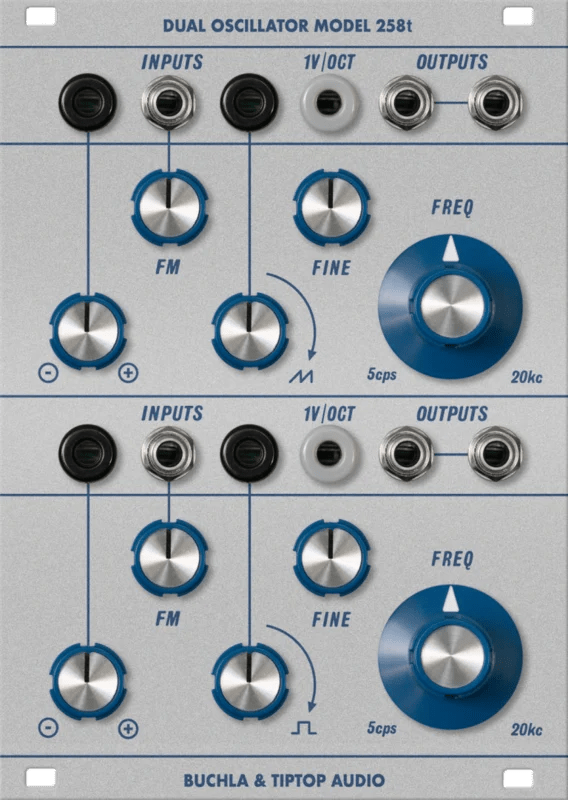
Buchla & Tiptop Audio Model 258t
Additionally, you can easily find these modulation functions built directly into various VCO modules as well. For instance, the Buchla & Tiptop Audio Model 258t panel shown in the figure above features an FM function with a 3.5mm input jack.
Vocoder
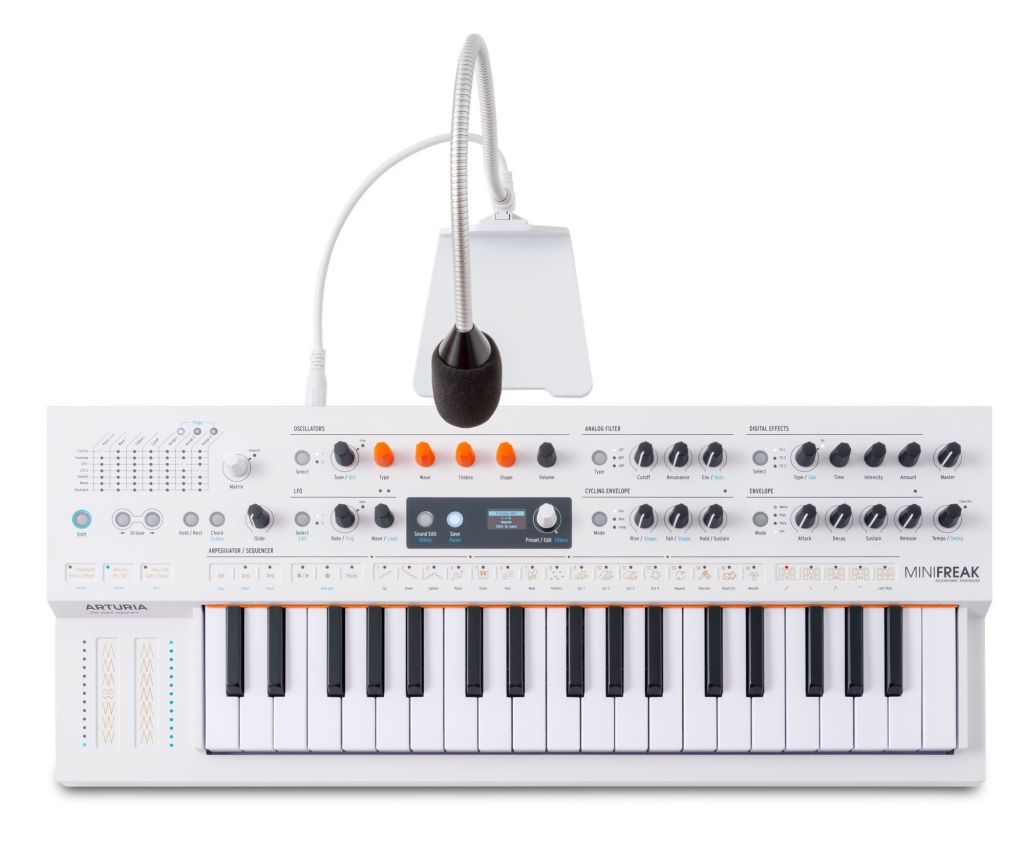
Arturia Minifreak Vocoder
Even though both the Vocoder and the Talkbox (Vox Box) use the human voice to shape sound, their underlying principles are entirely different. In a vocoder, the human voice functions as a modulator that controls the amplitude of a carrier signal—essentially acting as a multi-band AM system.
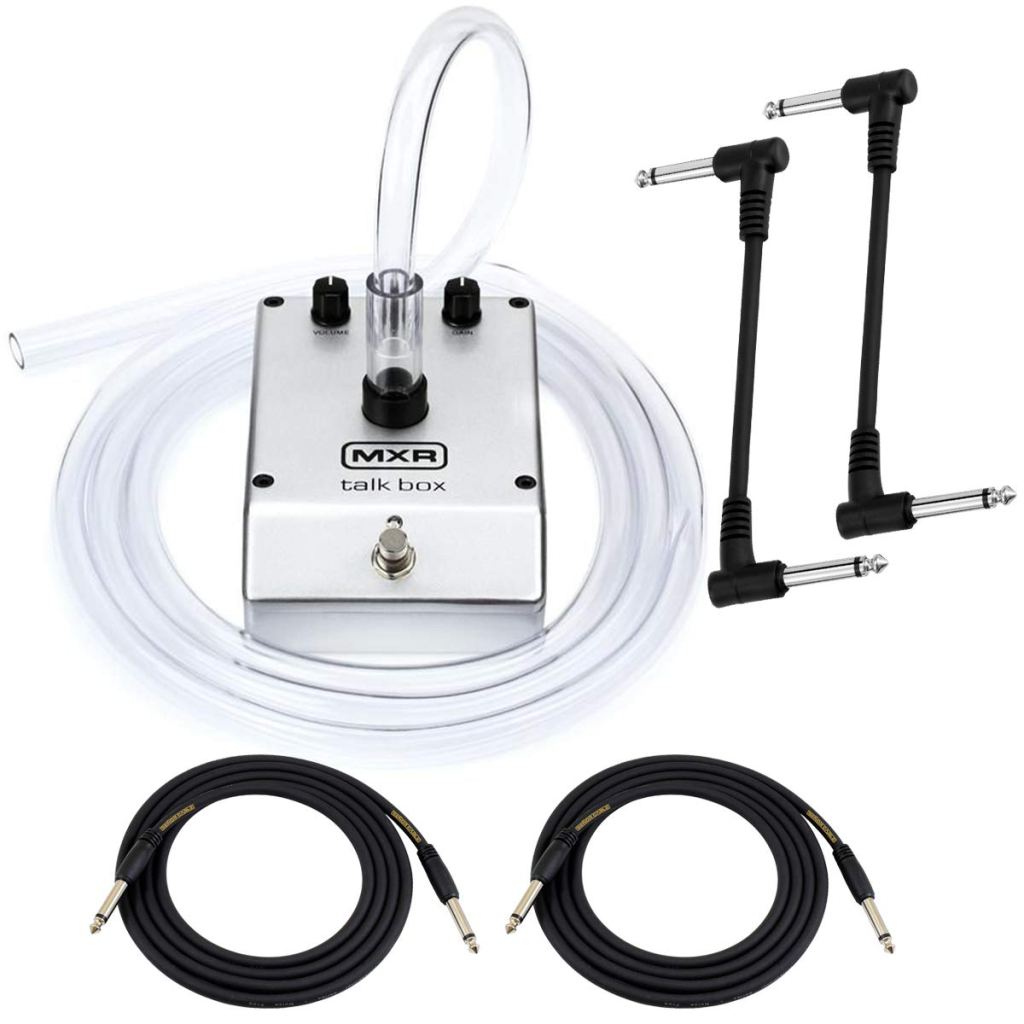
MXR Talk Box
On the other hand, a Talkbox uses the physical structure of the human mouth to filter the original instrument sound. It behaves like a dynamic formant filter—a concept I will dive into deeper in a future post—emphasizing specific frequency bands as the performer shapes their mouth to speak.
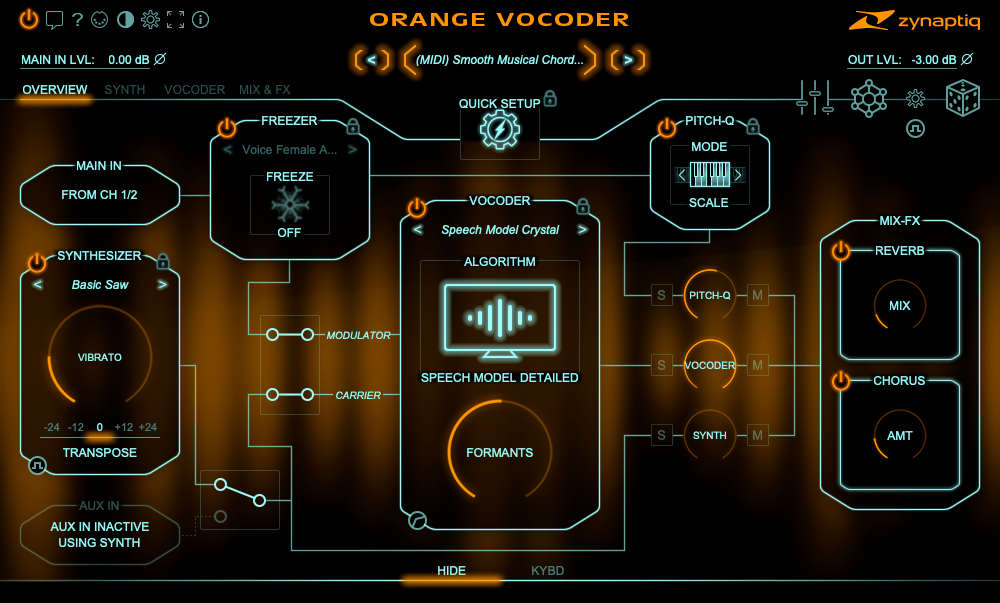
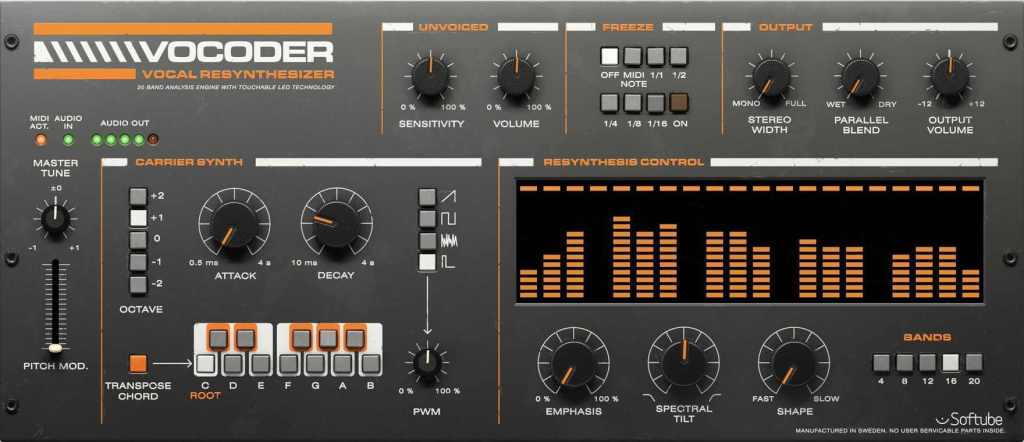
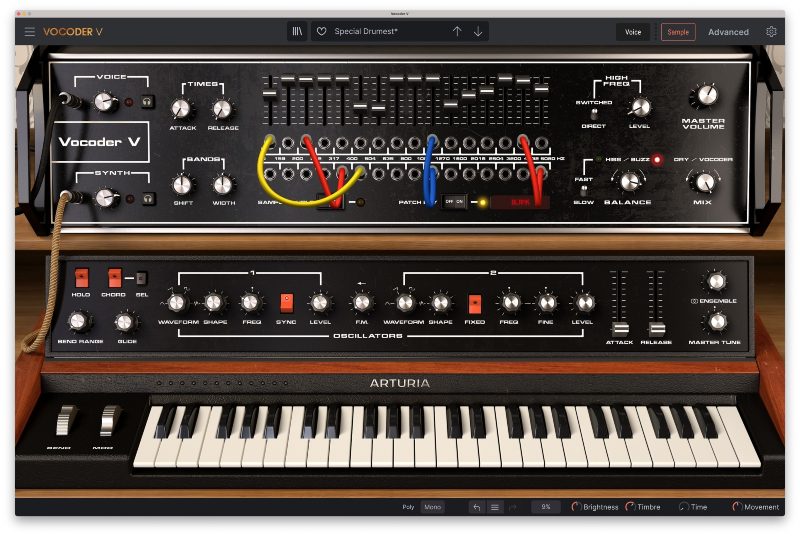
n recent years, vocoders have transitioned into convenient virtual instruments that are incredibly easy to integrate into any modern DAW. To help you get started, here are some of the most acclaimed vocoder plugins on the market today.
(The links below are affiliated with Plugin Boutique, meaning I may earn a small commission at no extra cost to you if you decide to make a purchase—your support keeps this blog running!)
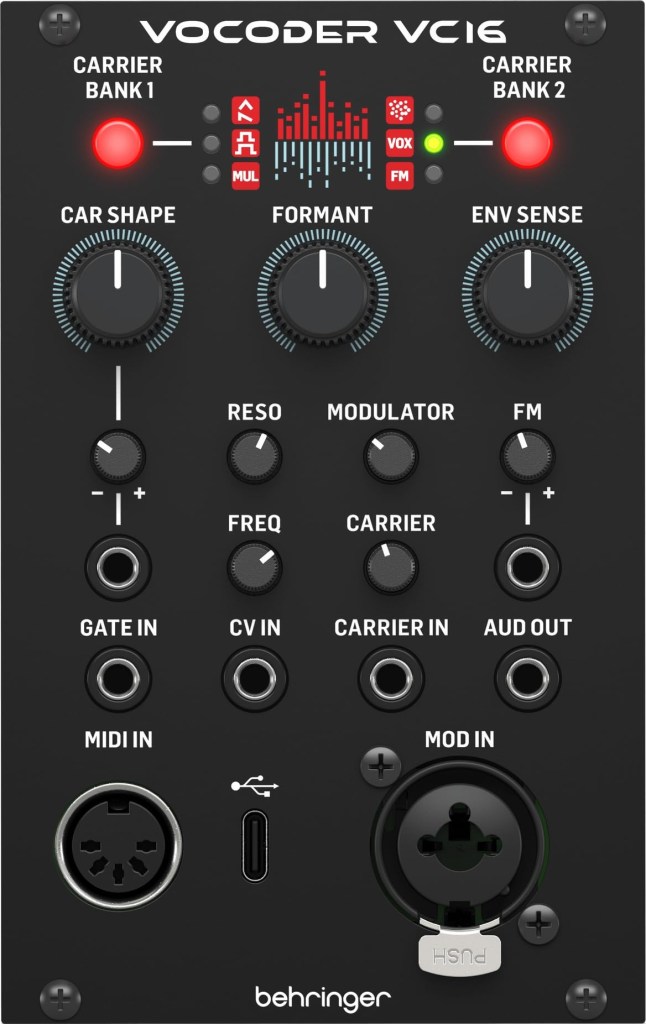
What’s more, vocoder modules exist in modular synthesizer systems as well like Behringer VC16!
To be honest, I don’t usually attach sound examples in my posts—embedding audio into a blog takes a serious amount of time and effort. That said, every modulation type has a completely different vibe. If you truly want to design your own sounds, you just have to dive in and get familiar with the unique sonic characteristics of each method.
Hello! I’m Jooyoung Kim, an audio engineer and music producer.
Today, I’d like to talk about the essential components of sound generation in a synthesizer. Every synthesizer or modular system utilizes these three core functions: the VCO, VCF, and VCA.
Their functions are explained below:
VCO (Voltage Controlled Oscillator): Generates basic waveforms such as sine, square, sawtooth, and triangle waves.
VCF (Voltage Controlled Filter): Processes the signal from the VCO by attenuating specific frequencies. Common types include low-pass, high-pass, and band-pass filters, which are essential for sound design.
VCA (Voltage Controlled Amplifier): Acts as a gate or gain stage that shapes the volume of the audio signal over time, typically controlled by an envelope generator (which defines the attack, decay, sustain, and release of the sound).
VCO – Basic Waveforms
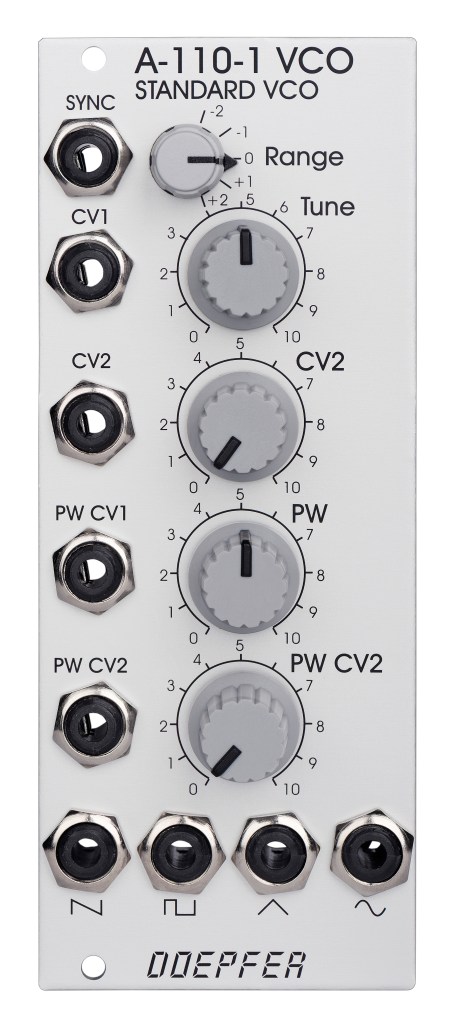
Doepfer A-110-1 Standard VCO
You can easily find these waveforms on a VCO module. The image above is an example from Doepfer A-100 module system; the waveforms are depicted on the panel, located below the output connectors.
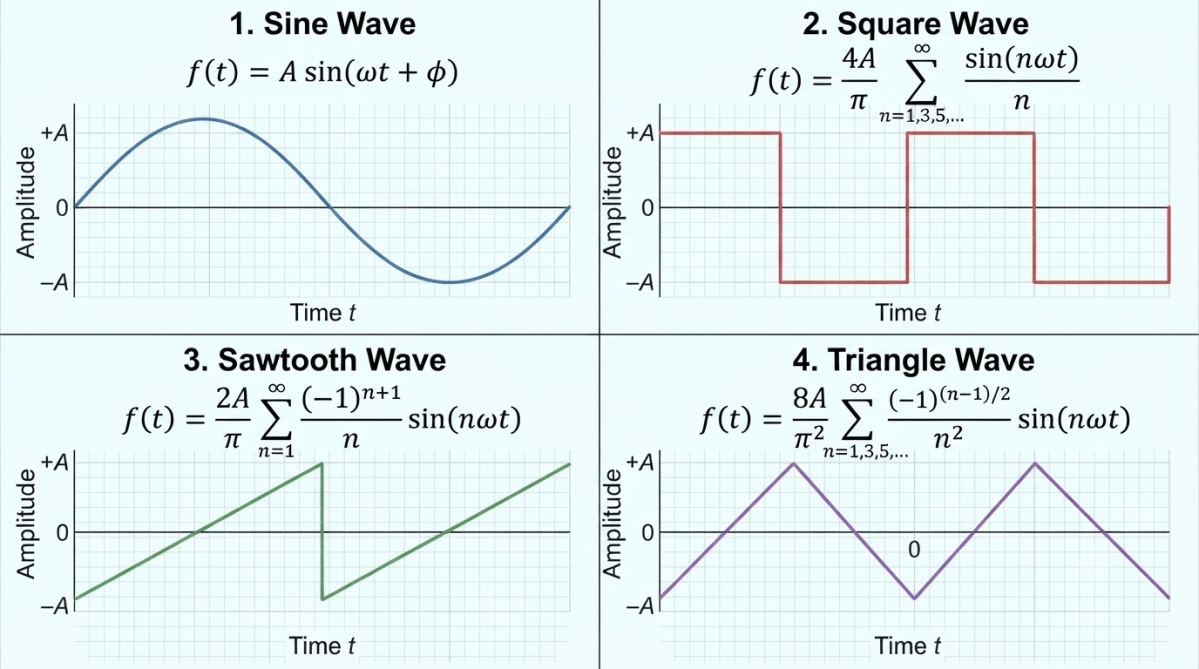
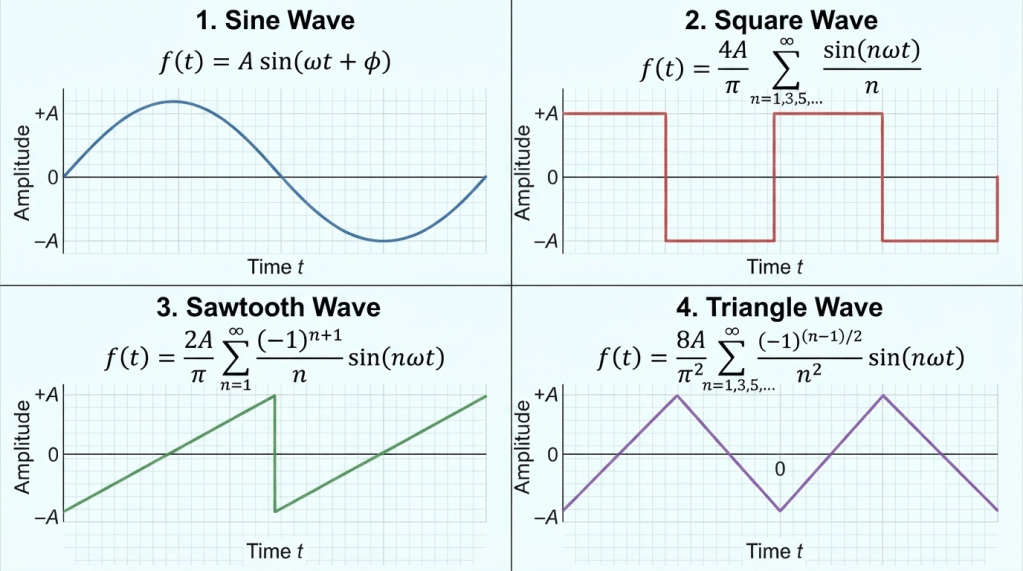
As you can see, there are four types of basic waveforms: sine, square (pulse), sawtooth, and triangle. They are created by combining various harmonics, which can be expressed using mathematical equations.
Therefore, I will explain all types of waveforms with graphs and equations.
Sine Wave
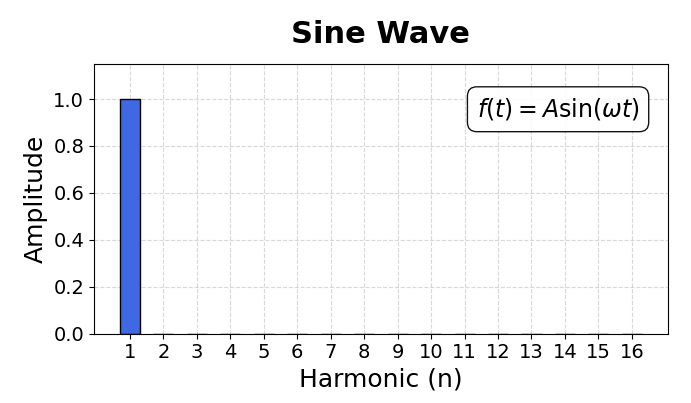
Sine wave is the most fundamental wave. It is defined by the function:
A: Amplitude (peak value)
ω: Angular frequency
ϕ: Phase shift
t: time
Square Wave
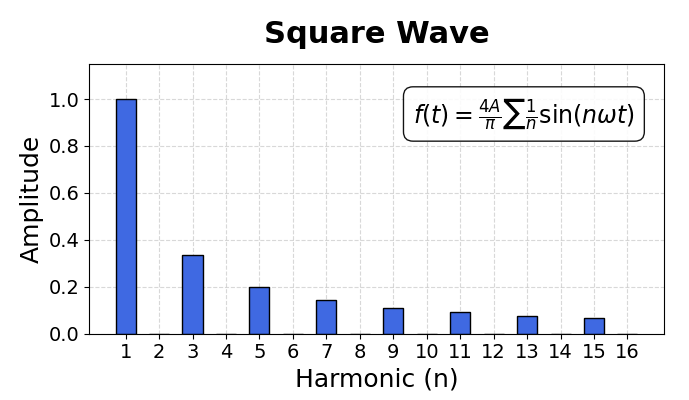
Square wave is a periodic wave that switches between two levels. It can be represented as an infinite summation of odd harmonics of sine waves:
A: Amplitude (peak value)
ω: Angular frequency
t: time
Sawtooth Wave
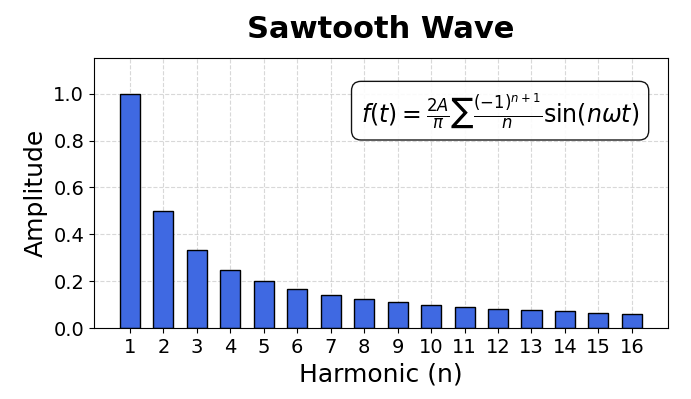
This waveform increases linearly and drops instantly. It contains all integer harmonics:
A: Amplitude (peak value)
ω: Angular frequency
t: time
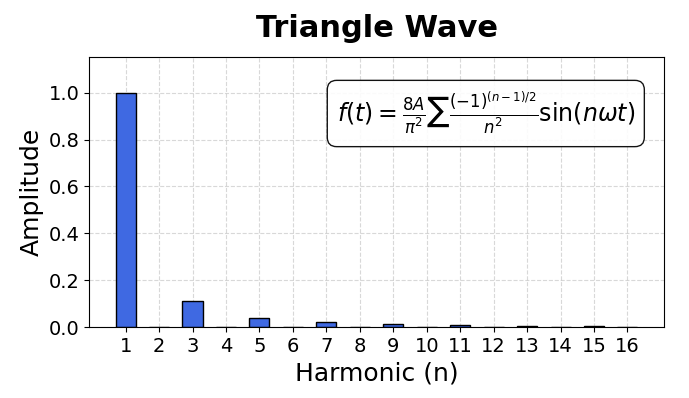
Triangle Wave
It is similar to a sawtooth, but symmetric. It consists only of odd harmonics, but with a faster decay of amplitude:
A: Amplitude (peak value)
ω: Angular frequency
t: time
Each waveform has distinctive sound characteristics, and these basic waves are the foundation of synthesizers.
As a side note, because the sawtooth wave contains the richest harmonics among these basic forms, it is frequently used to create pad sounds to fill up the background.
VCF – Basic Filters
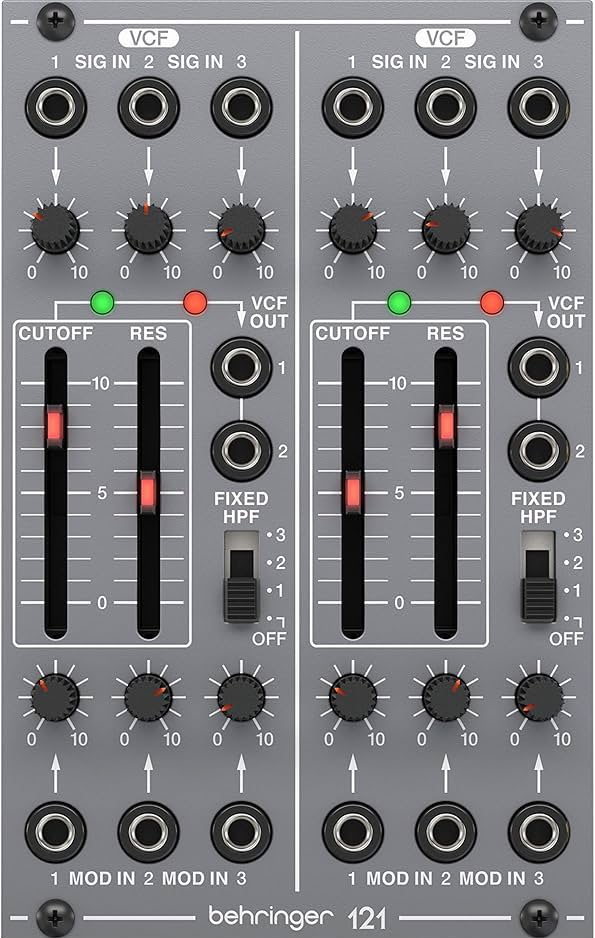
Behringer 121 Dual VCF
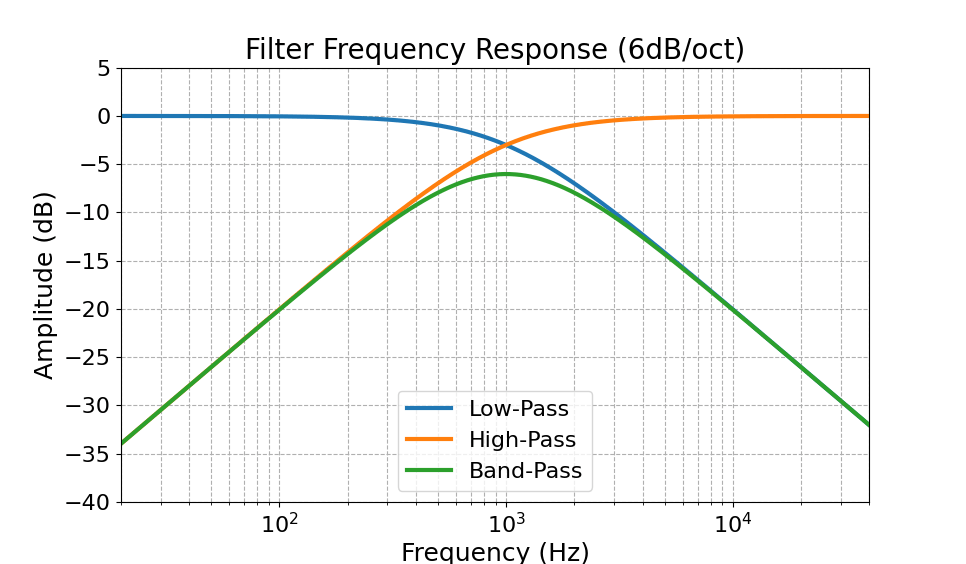
Basic filters are typically categorized into three types: low-pass (high-cut), high-pass (low-cut), and band-pass. Filters have various parameters, but I will introduce only the basics today.
Cutoff Frequency: Due to the characteristics of the Butterworth filter (the standard filter used in audio), 3 dB of attenuation occurs at the cutoff frequency.
Slope: 6dB/oct is the fundamental slope. This represents one ‘pole’ of the filter. Since filter order (the number of poles) determines the steepness, you will commonly see slopes of 12, 18, 24 dB/oct, etc.
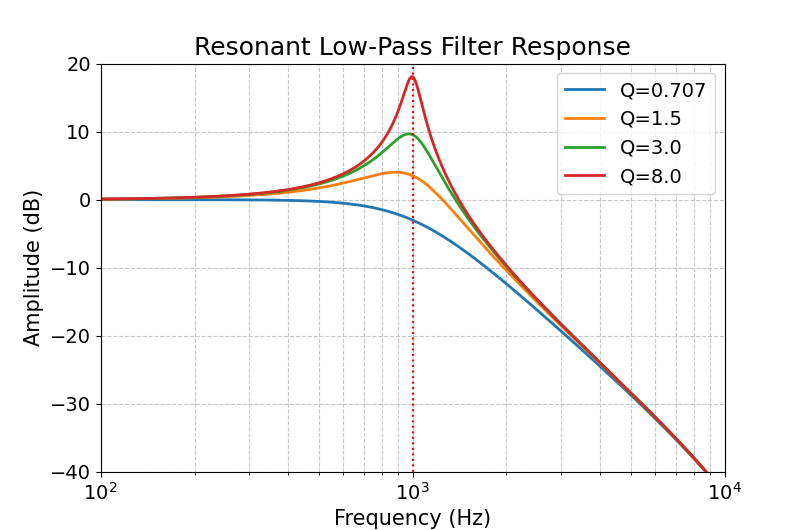
Many filter modules include a resonance function that emphasizes frequencies near the cutoff frequency. When modulated, the fluctuating cutoff frequency also causes the resonance peak to shift. This shifting creates the perception of pitch fluctuation, even though the actual fundamental pitch remains unchanged.
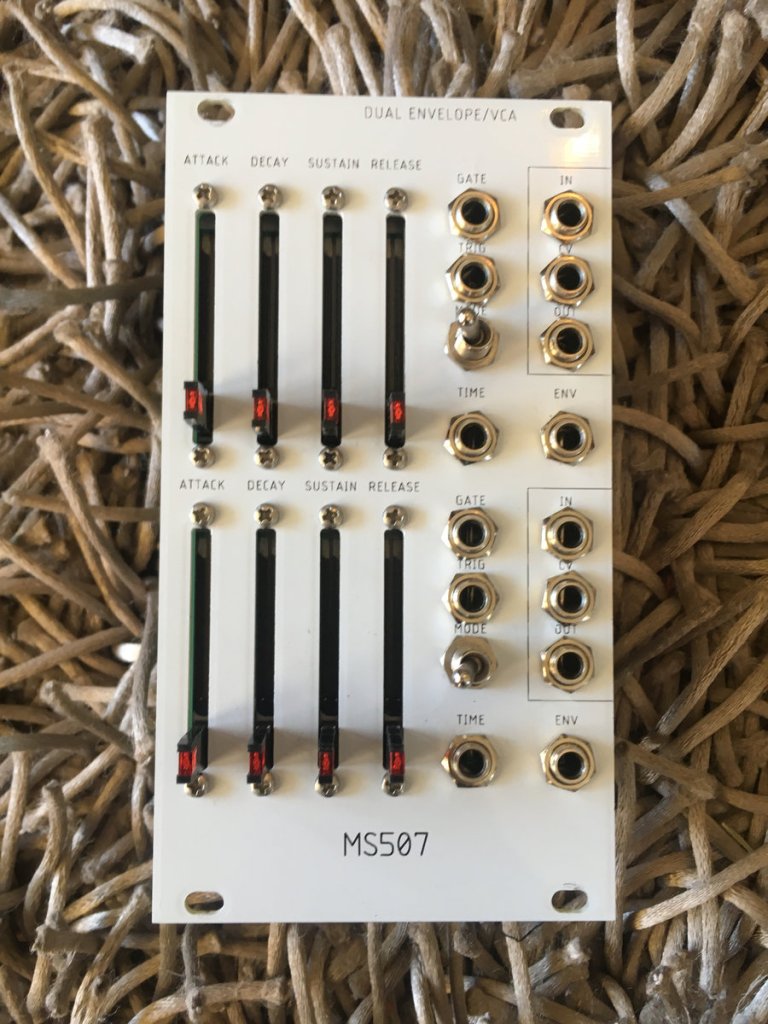
Although I have covered the ADSR concept previously, I will break it down again for those who are new to it. While a VCO and VCF are essential for creating and shaping a sound, they do not have a built-in gate mechanism to trigger or shape the signal’s output. This is where the ADSR envelope comes in.
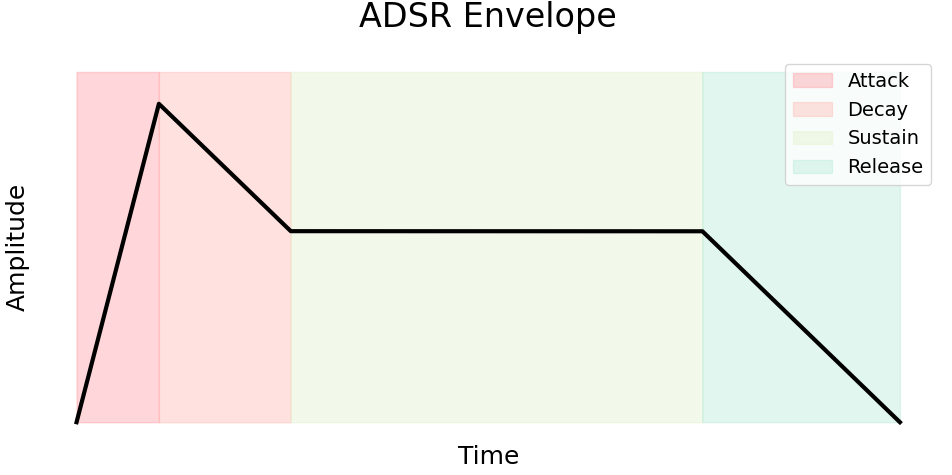
ADSR stands for Attack, Decay, Sustain, and Release. These four parameters define how the amplitude of a signal changes over time as it passes through a VCA.
Attack (time): The time it takes for the sound to reach its peak level from the moment a key is pressed.
Decay (time): The time it takes for the sound to drop from its peak level to the designated sustain level.
Sustain (level): The volume level that the sound maintains while the key is held down.
Release (time): The time it takes for the sound to fade away completely after the key is released.
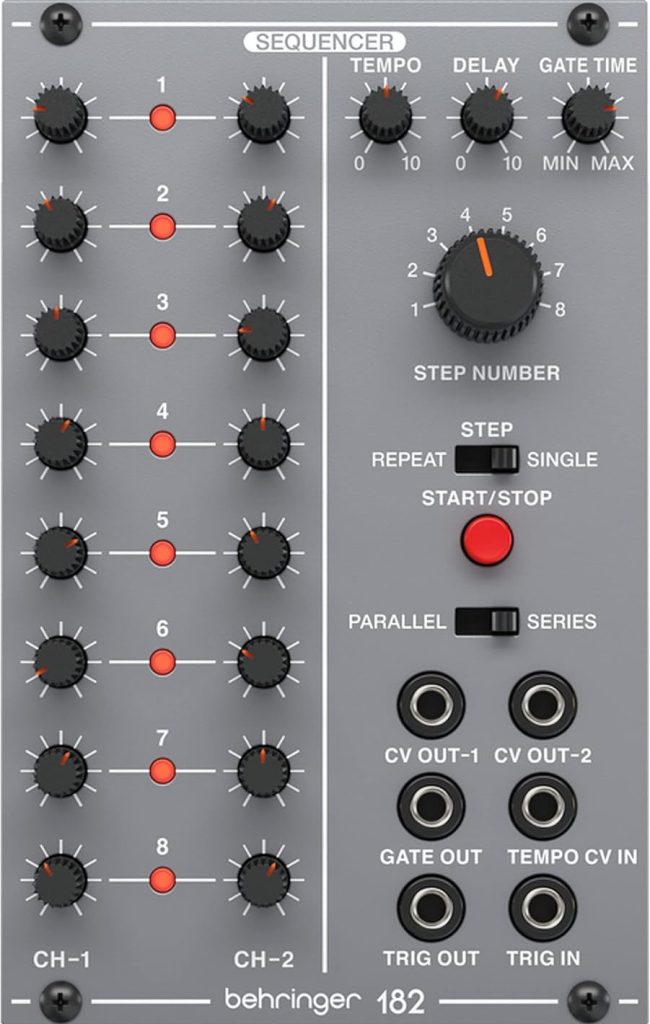
Behringer 182 sequencer
In modular synthesizers, sequencer modules are often used instead of keyboards.
So far, we have explored the essential building blocks of a synthesizer. These modules serve as the ‘alphabet’ of sound design; therefore, becoming familiar with them is crucial for mastering these complex musical instruments.
That’s all for today. I hope this overview helps, and I look forward to seeing you in the next post!
Hello! This is Jooyoung Kim, an audio engineer and music producer. Today, I’ll talk about the most common standard of modular synthesizers, Eurorack.
These days, despite the appearance of many different kinds of synthesizers, a lot of people who make electronic music usually compose their songs with modular synthesizers.
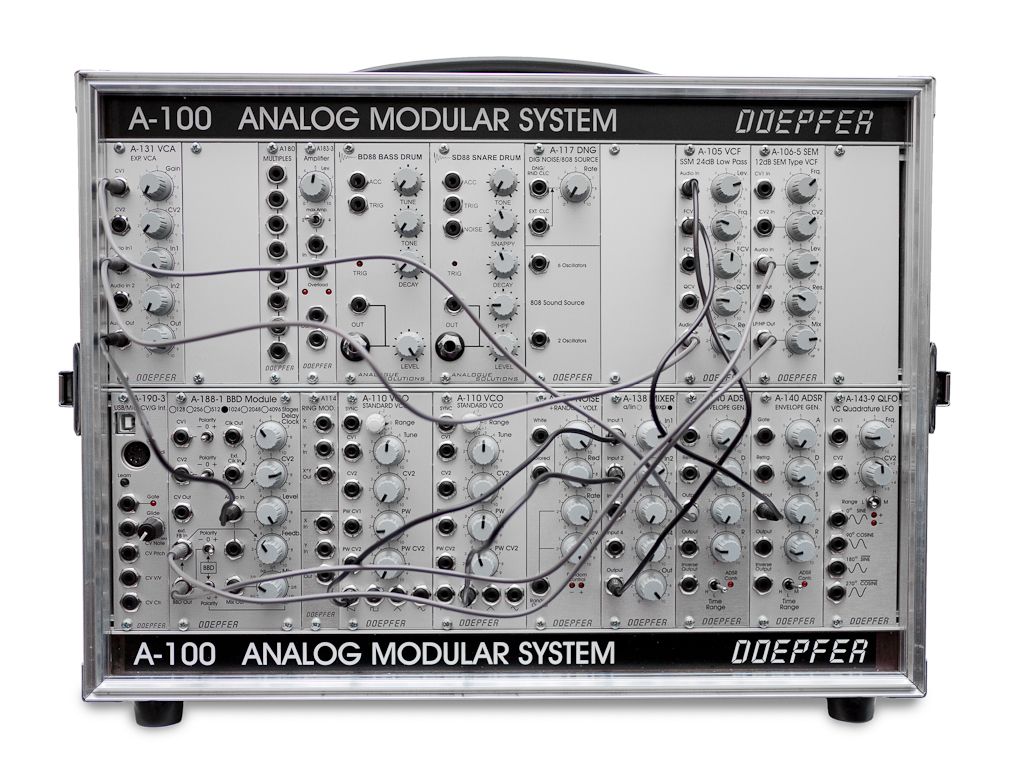
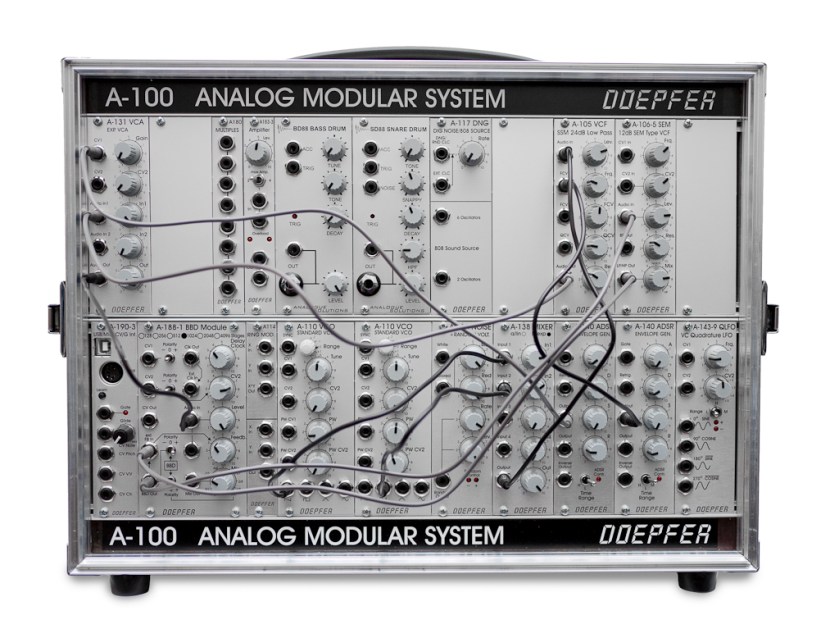
In the past, every modular synthesizer company followed its own unique standards. Amid this chaos, the Eurorack format emerged by Doepfer Musikelektronik, in 1996 (especially Doepfer A-100) and eventually became the international standard for modular synthesizers.
This standard consists of two types of rules: physical and electrical.
Physical Rules
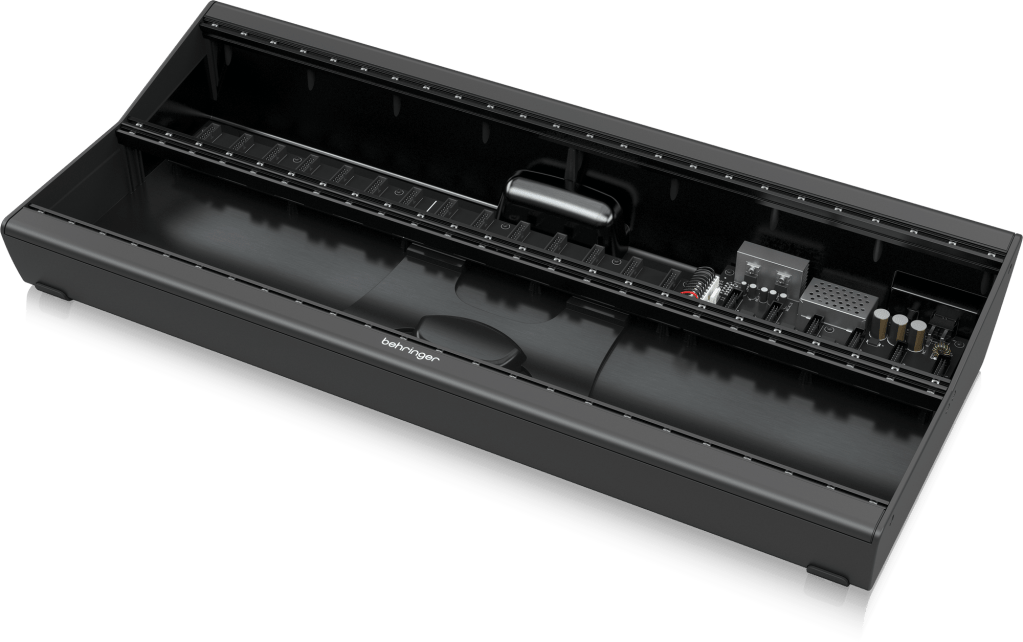
Behringer EURORACK GO
Height (3U): The standard height of all Eurorack modules is 3U (which is approximately 128.5 mm or 5.06 inches). This originates from the industrial rack unit standard.
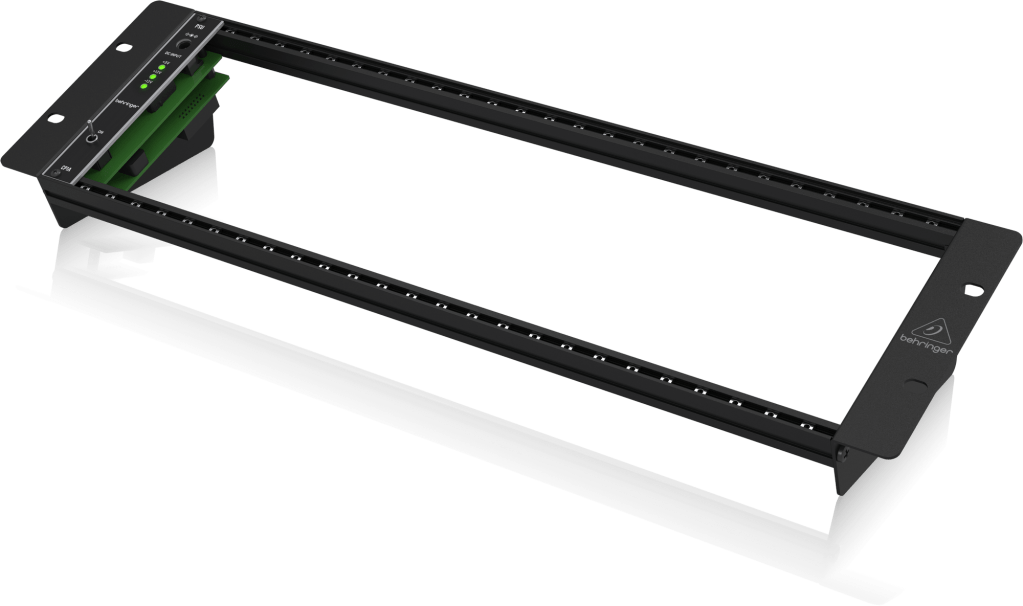
Behringer EURORACK RACK
Width (HP): The width of a module is measured in HP (Horizontal Pitch).
1 HP = 5.08 mm (0.2 inches).
A module’s width is always a multiple of this unit.
Mounting: Modules are secured to the case rails using M3 screws (M3 means that the diameter of the screw is 3mm).
Electrical Rules
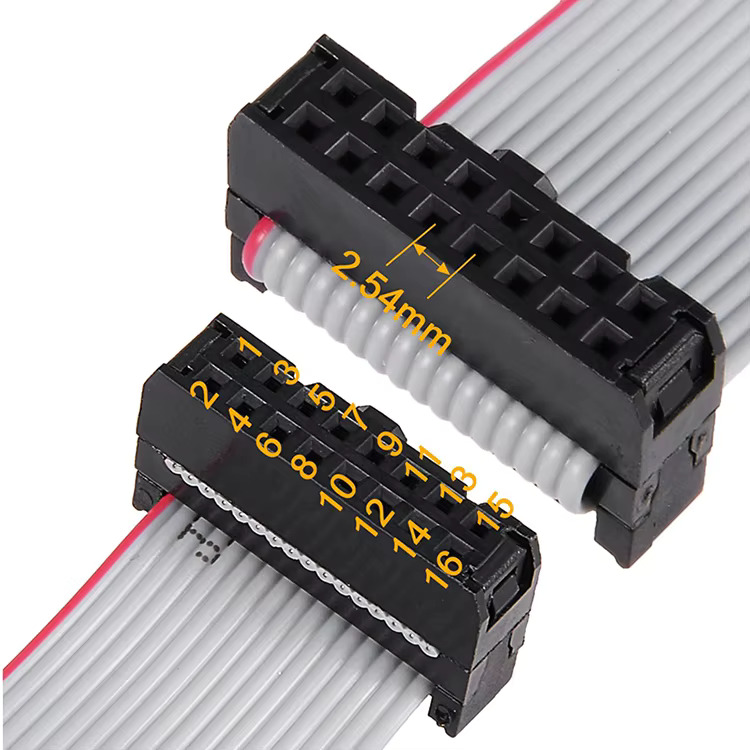
IDC 16-pin ribbon cable
Power Supply (Voltage): Eurorack cases provide a bipolar power bus consisting of +12V, -12V, and Ground. Many modern systems also include a +5V rail to power digital modules. Modules draw this power via IDC ribbon cables:
10-pin cables: Provide the standard power rails (+12V, -12V, and Ground).
16-pin cables: Provide all the standard rails plus a +5V rail and optional CV/Gate bus lines for inter-module communication.
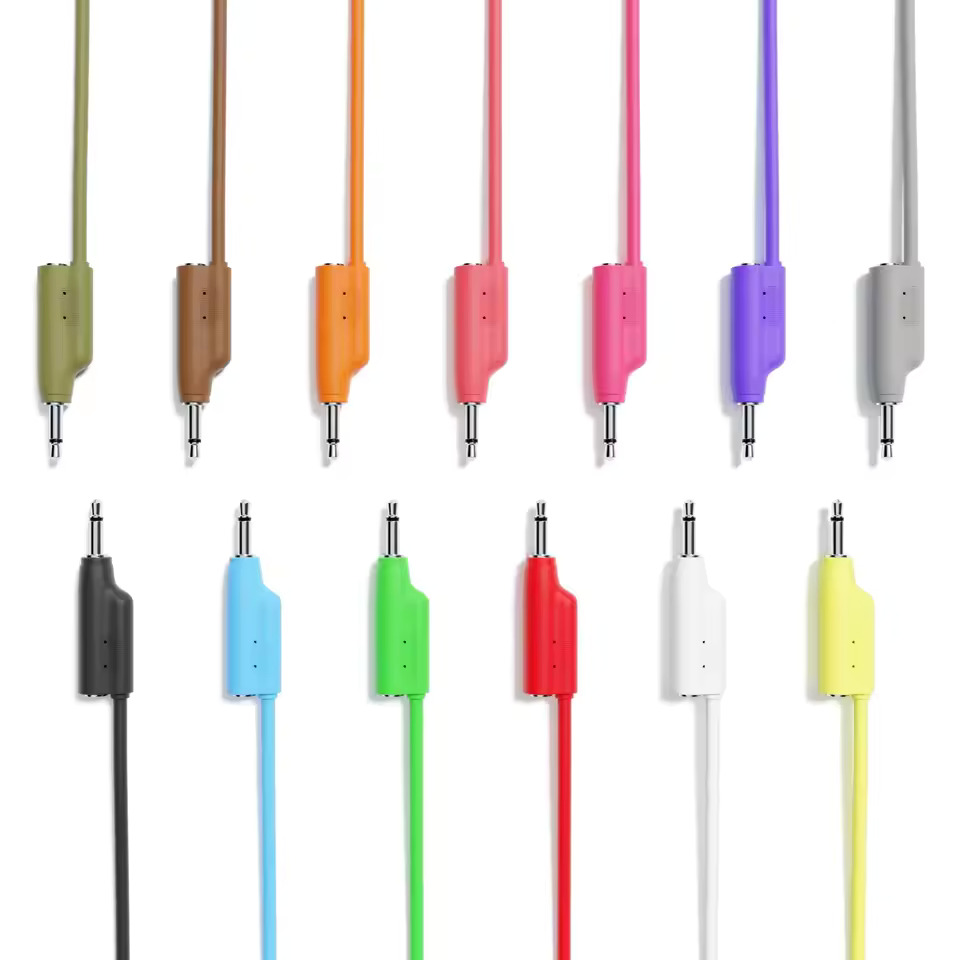
Patching (Signals): Modules communicate using 3.5 mm (1/8″) mono patch cables. These cables transmit both audio signals and Control Voltage (CV), allowing for a flexible, semi-permanent signal path.
Control Voltage (CV) Logic:
Arturia Keylab MK2 (in MK3, CV functions are disappeared)
Pitch (1V/Oct): The standard for controlling musical pitch is 1 Volt per Octave. This means that if you increase the control voltage by 1V, the pitch of the oscillator increases by exactly one octave.
Gate/Trigger: These are signals used to start or sync events.
Those electric signals are transmitted by 3.5mm TS cables.
In modular synthesizer systems, the concept of the sequencer is vital to composers. As I mentioned in my last article, Buchla-style synthesizers usually do not have keyboard-style controllers or interfaces. Therefore, they are mainly controlled by sequencer modules that include clock sync, gate/trigger, and pitch functions.
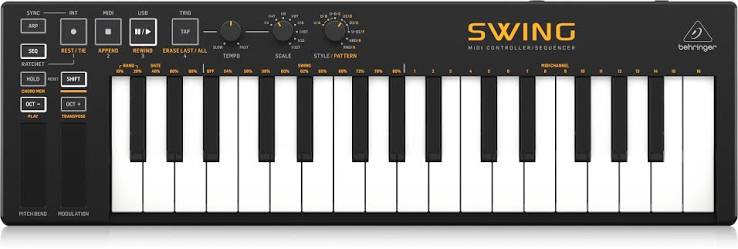
These sequencer modules can be connected to external keyboard controllers to achieve mutual clock synchronization, where either device can act as a master to drive the system’s tempo. Furthermore, many of these keyboard controllers can function as independent sequencers themselves, provided they include an integrated arpeggiator or built-in sequencing features.
I have Behringer Swing that includes CV functions. It’s really handy!
Therefore, if you intend to design sounds or compose music using Eurorack modules while requiring MIDI integration, you should choose a keyboard controller that supports these specific standards.
For instance, I have two keyboard-style midi controller that have CV functions, Behringer Swing and Arturia Keylab 61 mk2. Actually, I don’t have lots of modules or modular systems, but if I have to adapt to the external modular systems or plan to expand my own, having these connectivity options is a huge advantage.
Even if you don’t use them every day, these controllers offer a versatile bridge between your DAW and the Eurorack systems. While I personally use the Behringer Swing and KeyLab 61 MkII, there are other options like the Arturia KeyStep series or the Novation SL MkIII that serve the same purpose. They provide that link to modular gear without sacrificing the convenience of a standard MIDI controller, making them a good addition to a modern composing setup.
In practical usage, we need to talk about VCO (Voltage Controlled Oscillator), VCF (Voltage Controlled Filter), and VCA (Voltage Controlled Amplifier).
However, to explain those concepts need quite a lot of words. So, I’ll continue them in the next post!
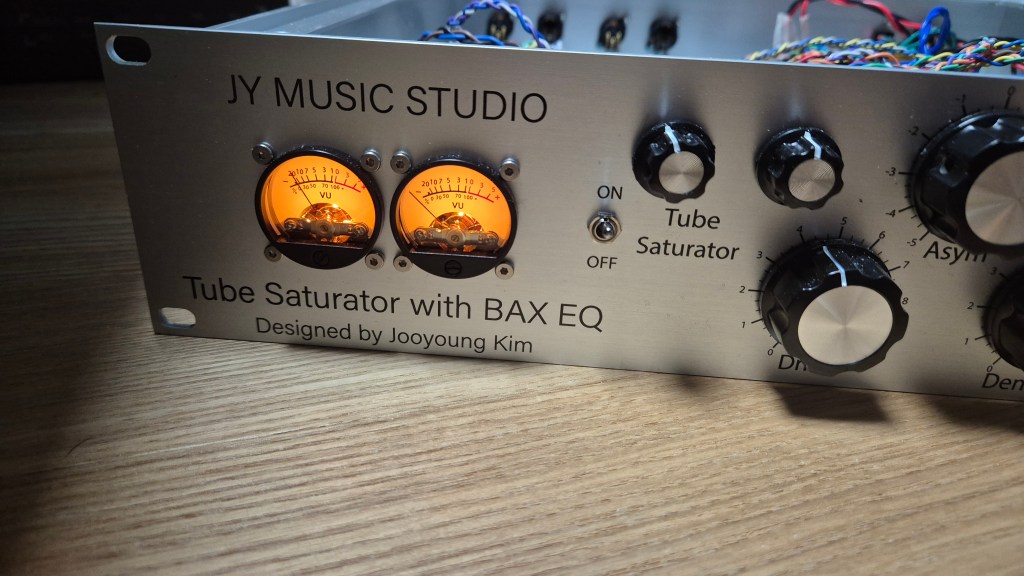
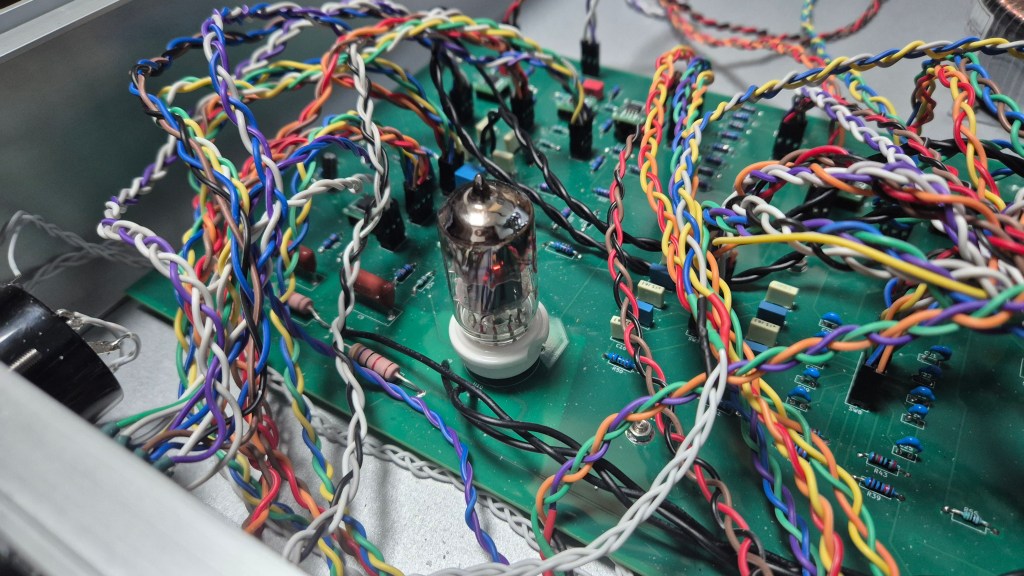
By the way, I finally powered on my DIY hardware! However, the toroidal transformer is making a strange noise, and the amount of heat it is generating suggests there might be a problem with the circuit. I need to investigate what is causing this.
Even though I happily expect that I will be able to measure and add a final post about this hardware!
Also, I received a major revision decision on my new paper. There are quite a lot of required revisions, but that’s still great news for me.
Hello! This is Jooyoung Kim, an audio engineer and music producer. Today, I’ll begin a new article series, Advanced Synthesizers & Gear.
In this series, we’ll talk about the history of modular synthesizers and the equipment. Also, we’ll figure out why famous synthesizers became so popular and how they work.
Before we focus on these topics, we need to know about the history of synths and how electricity can be turned into sound.
Let’s dive in!
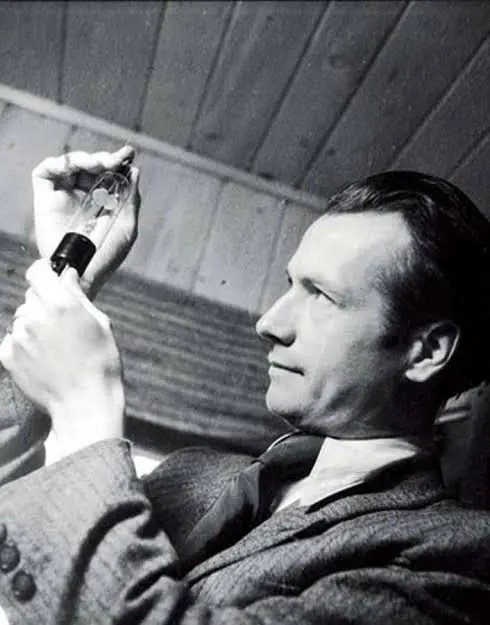
Harald Bode
Harald bode, a German engineer and physicist(as a physics major myself, I feel a deep sense of kinship with Harald Bode), was a pioneer of the synthesizer.
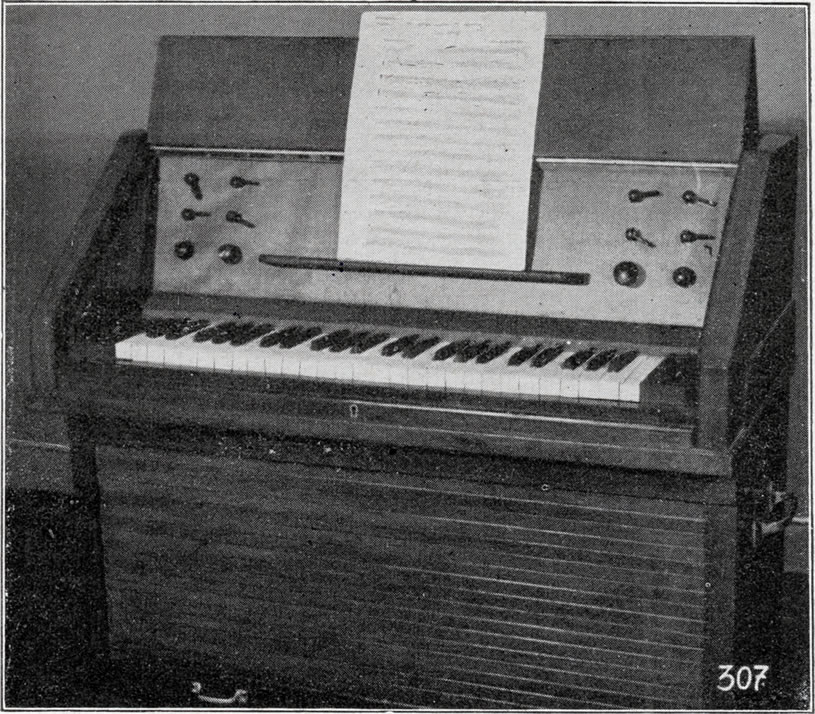
He started a recording business, but soon ran into a major obstacle: the grand piano. At the time, recording technology was in its infancy compared to today, making it incredibly difficult to capture the true depth of the instrument.
Driven by this limitation, his inner physicist took over. Instead of trying to perfect the replication of acoustic instruments, he envisioned a completely new path—creating musical sounds 100% out of electronics using vacuum tubes. Guided by the physical principle that human voice timbres (Klangfarben) change based on the intensity of overtones, he laid the very foundation of modern synthesis by designing a system where parameters could be shaped with half-rotary knobs.
His groundbreaking concept of using voltage control to adjust parameters quickly spread through the pioneer community, deeply inspiring the figures who would go on to invent the world’s most iconic synthesizers: Robert Moog and Don Buchla.
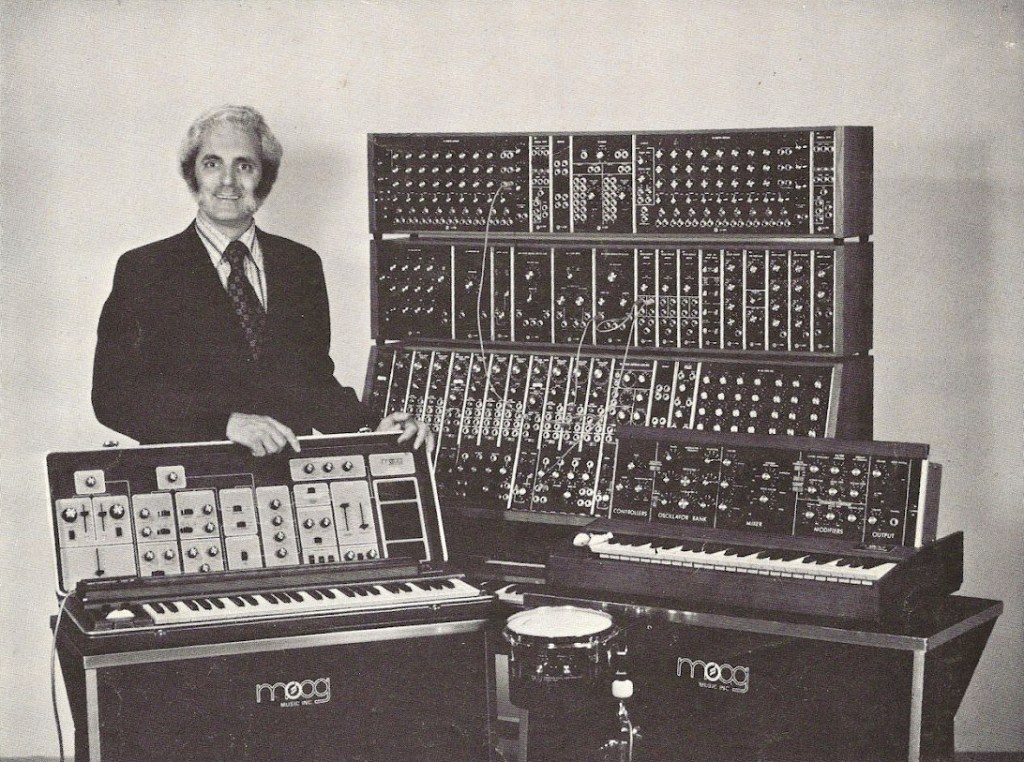
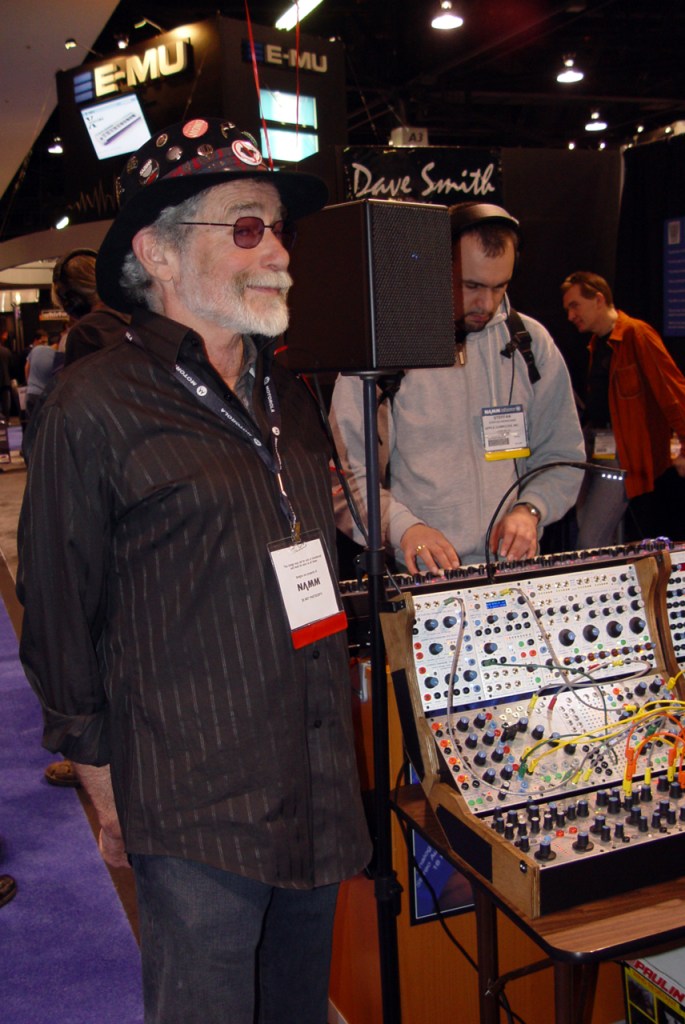
Robert Moog
Robert Moog also majored in Physics during his undergraduate years, earning his Bachelor of Science from Queens College in 1955 before completing a PhD in Engineering Physics at Cornell University. With this background, Moog approached electronic music through a technological lens very similar to Harald Bode’s.
In the fall of 1960, at the Audio Engineering Society (AES) convention in New York, Moog attended Harald Bode’s presentation of his modular ‘Audio System Synthesizer’. At this convention, Bode demonstrated the concept of using voltage control to manipulate audio parameters within a modular architecture.
Following this exposure to Bode’s design, Moog set out to develop a compact, practical synthesizer for musicians, contrasting with the room-sized systems of the era like the RCA Mark II. While previous instruments relied on hundreds of vacuum tubes, Moog utilized newly available silicon transistors, leveraging the exponential relationship between input voltage and output current.
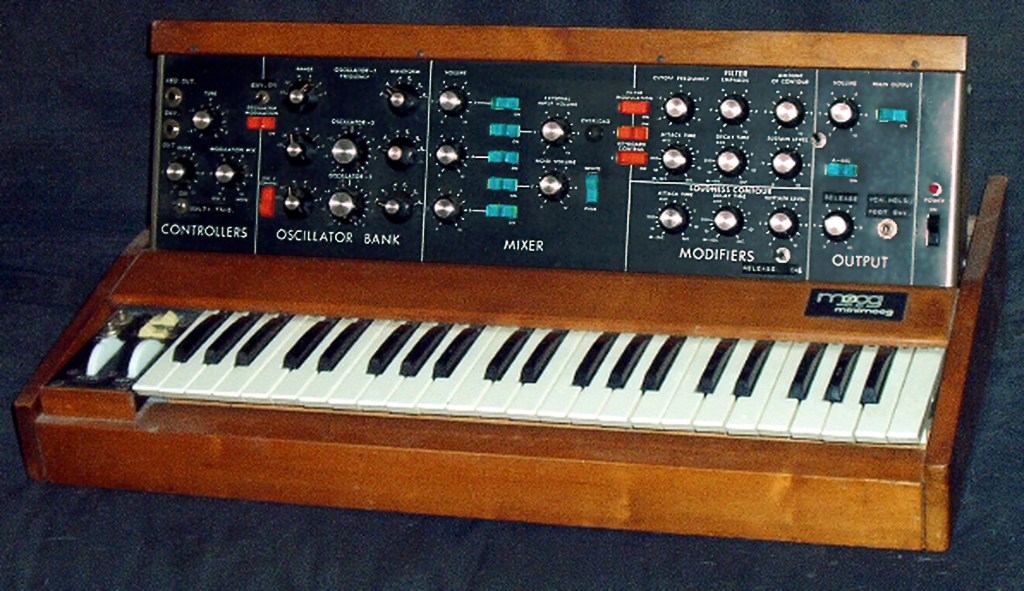
Moog Minimoog
This application of transistor physics led to his principal innovation in 1964: the Voltage-Controlled Oscillator (VCO). While Bode established the foundational concept of altering parameters via voltage, Moog engineered the precise circuitry that mapped input voltage to specific musical intervals. Through this hardware, Moog standardized fundamental synthesizer concepts, including modularity, envelope generation, and the pitch wheel.
Moog viewed his role primarily as a toolmaker for artists rather than a corporate businessman, choosing not to patent core innovations like modularity or voltage control.
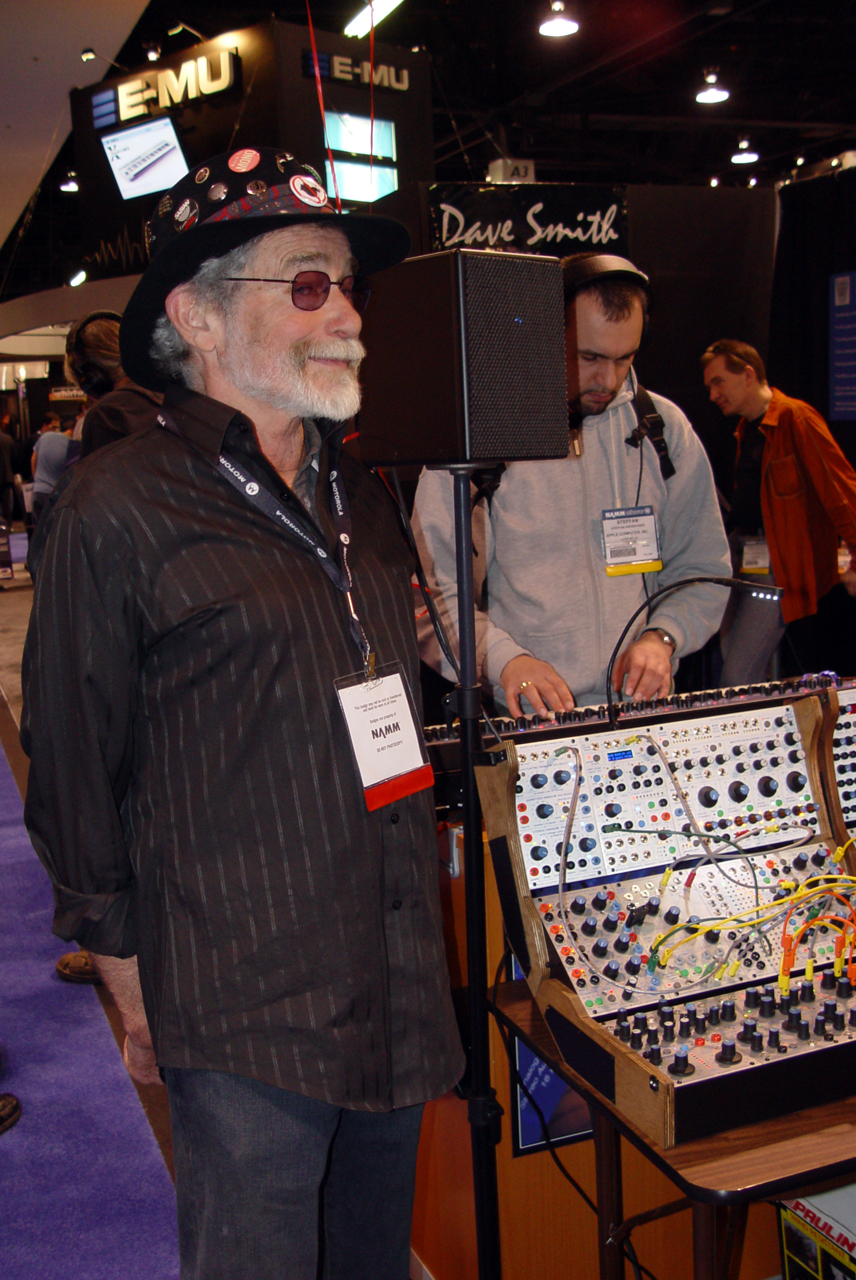
Don Buchla
Interestingly, the application of physics to modular synthesis was not confined to Harald Bode and Robert Moog. Donald Buchla, another pioneer who co-invented the voltage-controlled modular synthesizer independently during the early 1960s, also graduated as a physics major from the University of California, Berkeley, in 1959.
In 1962, Buchla formed his company, Buchla and Associates, in Berkeley. He was commissioned by composers Morton Subotnick and Ramon Sender of the San Francisco Tape Music Center to create an electronic instrument tailored for live performance. Guided by this request, Buchla began designing his first modules in 1963.
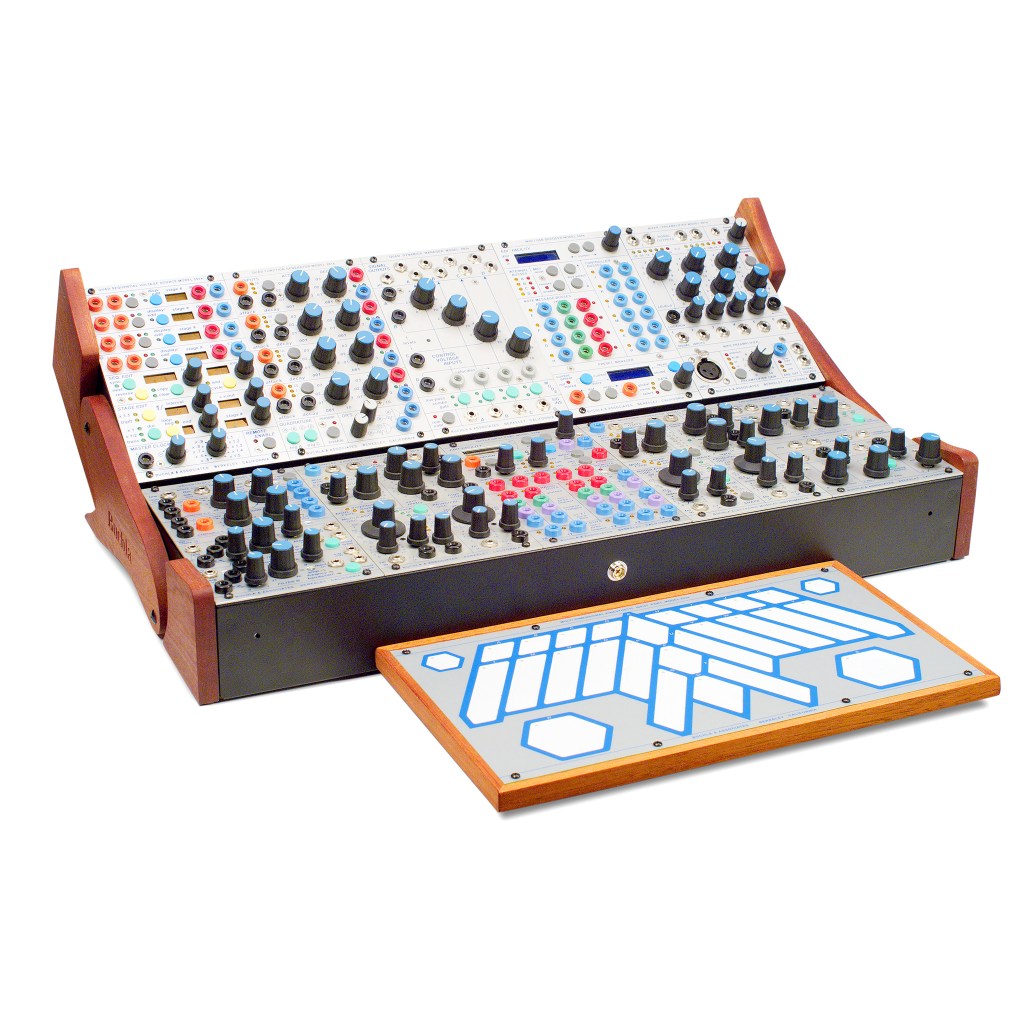
Buchla Skylab
While Robert Moog was developing his system on the East Coast, Buchla was working independently on the West Coast. In 1965, utilizing a grant from the Rockefeller Foundation, he assembled these modules into the Buchla Modular Electronic Music System (later known as the Series 100), which entered commercial production in 1966.
Like Moog, Buchla utilized voltage control as the core mechanism to alter audio parameters. However, his approach to user interfaces and musical philosophy differed significantly. While Moog standardized the traditional piano-style keyboard to make the instrument accessible to conventional musicians, Buchla deliberately rejected the keyboard, viewing it as a limitation carried over from acoustic history. Instead, he pioneered alternative control interfaces, such as touch-sensitive plates that allowed for non-traditional, expressive manipulation of voltage.
Because these two distinct styles of synthesizers were developed independently based on the geographical regions where their creators worked, Moog’s system became known as the East Coast style, while Buchla’s was termed the West Coast style.
Doepfer
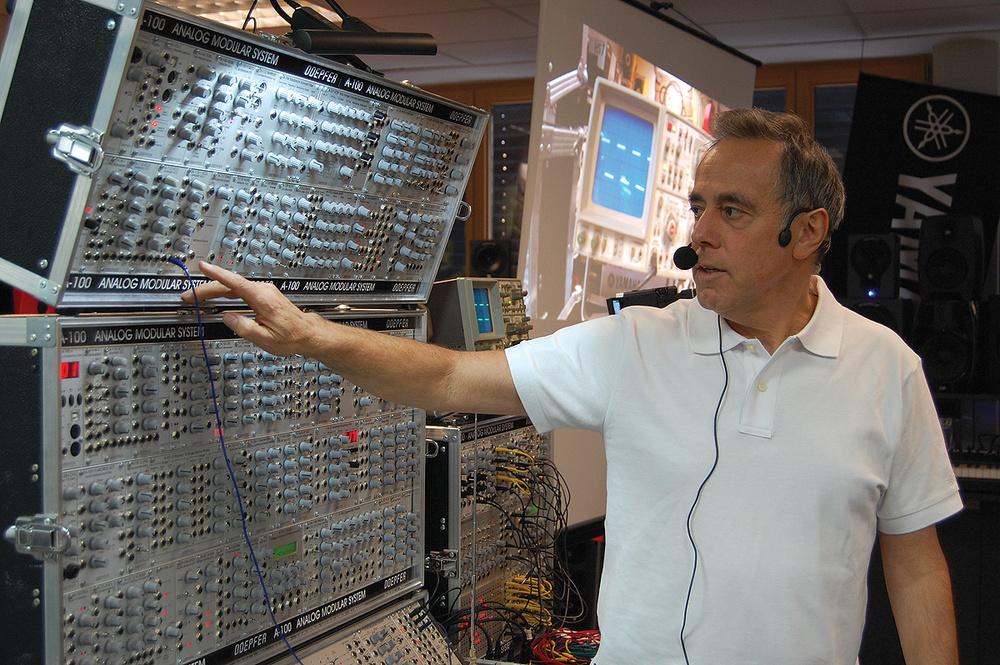
The historical lineage of physics-driven modular synthesis culminated in the late 20th century with the establishment of the Eurorack standard. Developed in 1995 by Dieter Doepfer, the founder of Doepfer Musikelektronik, Eurorack solved a critical fragmentation problem in the modular synthesizer market. Like Bode, Moog, and Buchla before him, Doepfer formally studied physics, beginning his academic training at Munich in 1972.
Doepfer’s entry into hardware development was directly influenced by his background in physics. While completing his mandatory community service in the ophthalmology department of a Munich hospital, Doepfer utilized the department’s dedicated electronics laboratory—originally built for laser eye surgery research—to quietly develop his earliest synthesizer circuits. This research resulted in his first complete system, the Polyphonic Module System (PMS), released as a DIY kit.
Throughout the 1980s, Doepfer continued to expand his technical expertise. He integrated specialized integrated circuits (ICs) from Curtis Electronic Music Specialties (CEM) to build highly efficient analog systems, and later adapted to the digital transition by developing 8-bit sampler cards and MIDI master keyboards. However, the commercial market shifted during the 1990s; a resurgence of interest in analog synthesis led to the unexpected success of his MS-404 monophonic synthesizer in 1994, which prompted high demand for expanded modular options.
To address this demand systematically, Doepfer introduced the A-100 system in 1995, establishing the Eurorack format. Prior to this, systems by Moog or Buchla used incompatible dimensions and electrical standards. Doepfer unified the ecosystem by introducing open, standardized physical and electrical specifications:
Physical Dimensions: Height was set using the sub-rack unit standard at 3U (approx. 128.5 mm), and width was measured in HP (Horizontal Pitch), where 1 HP equals 0.2 inches (5.08 mm).
Electrical Connectivity: Power was distributed via standardized ribbon cables supplying ±12V DC.
Signal Interface: Control Voltages (CV) were routed using compact 3.5mm mini-jacks rather than the bulky 1/4-inch or banana jacks of earlier decades.
By keeping this format open, Doepfer created a universal framework that allowed third-party manufacturers and boutique designers to build compatible components. His designs even attracted pioneers of the genre; Florian Schneider of Kraftwerk collaborated with Doepfer to modify hardware for speech synthesis triggering, a relationship that later influenced the development of the MAQ 16/3 MIDI analog sequencer.
Through these modular standards, Eurorack transformed synthesis from a market of isolated, proprietary hardware into a decentralized, global ecosystem.
Furthermore, because this standard has become so widespread, even non-Eurorack standalone hardware instruments often feature compatible 3.5mm patching connectors. Thanks to this universal connectivity, users can cross-connect entirely different, independent synthesizers to act as interlinked sub-components—such as routing one synthesizer’s output to serve purely as an oscillator, bypassing into another instrument’s filter, or patching through separate external units for saturation and effects.
I will explain the technical details and creative mechanics of these Eurorack modular synthesizers in a later post.



 Jooyoung's Music Blog