FRISKETCH X Yeonjun Yoon | Um – Sound Directing for the June 14 Performance

Hello, I’m Jooyoung Kim, an engineer and music producer.

Today, I’d like to share a quick recap of the performance I worked on as a sound director last Saturday.

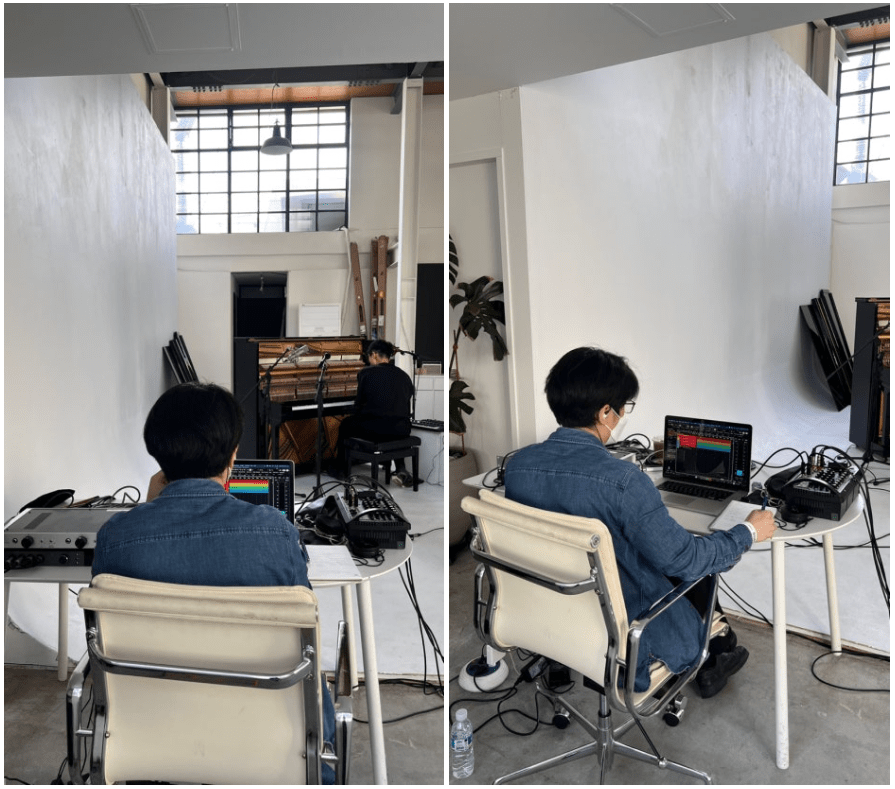
Originally, the plan was to rent some basic speakers and gear for simultaneous recording. But things took a slight turn, so I ended up hauling my own audio interface (Antelope Orion Studio Synergy Core) to the venue… haha.

I also brought a boutique mic preamp, handcrafted in Japan, known for its clean sound. It felt like a perfect fit for recording the acoustic piano, so I decided to take it along.

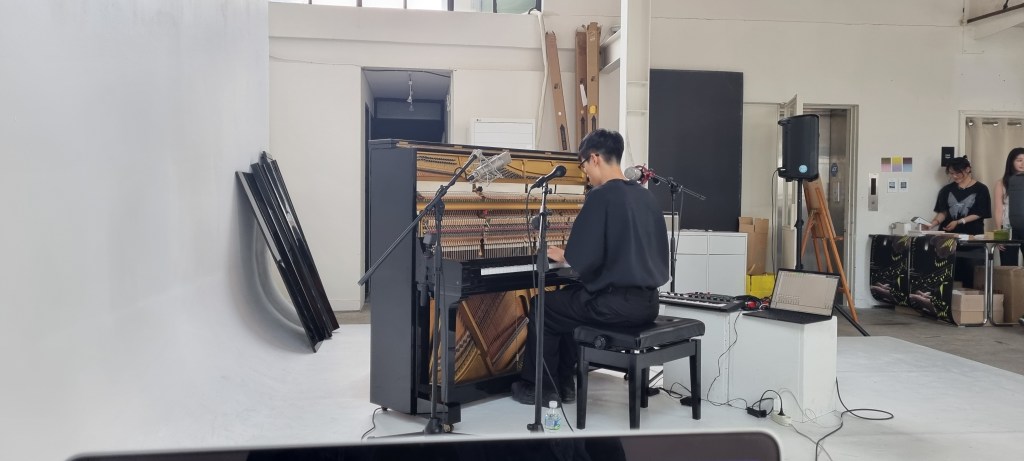
For miking, I went with an unconventional setup. To avoid peaks, I positioned the mics slightly off the hammers, using different mics for the left and right channels (Peluso P87 and Charter Oak E700). With just a touch of EQ in post-production, the sound came out surprisingly great.

For the audience-facing ambience mics, I was a bit short on options, so I used a Peluso CEMC 6 and an M30 measurement mic. They have different directionality and characteristics, but the result was honestly pretty impressive. Now I’m wondering if I should grab another pair of each to make a proper set…

The main mics ran through the external preamp, while the ambience and vocal mics for narration went through the built-in preamp. The synthesizer was recorded via the artist’s audio interface as a mono line while simultaneously outputting.

In post-production, I widened the synth’s mono line using the UAD Precision Reflection Engine and Leapwing Audio StageOne 2 to enhance the stereo image.

For output, we rented Yamaha 400i speakers, commonly used for busking.

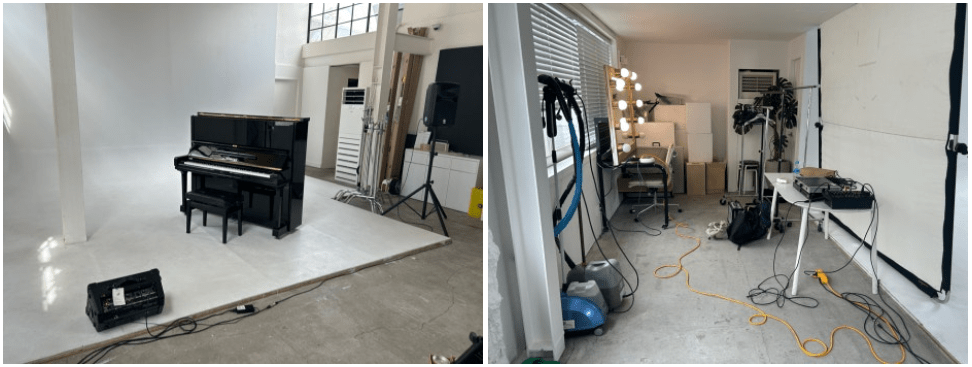
I didn’t get a chance to snap a photo of the audience mic setup… oops. The photos I do have were kindly taken by a friend I was working with. [photo]

Hauling all the cables and gear was a bit of a hassle, but the sound came together nicely, and I was pretty satisfied.

The final mix turned out better than expected, and both the artist and I were really pleased with it. I’d love to share it with you all, but I can’t just post it without permission. If the artist releases it on YouTube or as promotional content later, I’ll make sure to share it here.

Until next time, see you in my next post! 😊

Life Update (May 27, 2025)

Hey there! I’m Jooyoung Kim, a mixing engineer, music producer, and computer music researcher.

Lately, I’ve been living like a hermit… haha.

A while back, I think I mentioned grumbling about an “Editor Invited” status dragging on for over a month. Well, good news—it’s finally moved to “Under Review”! I’m keeping my fingers crossed because I really need this to wrap up soon so I can secure some thesis funding from my university to keep things afloat. The timeline’s tight, so I’m a bit on edge.

Oh, and I believe I once mentioned working on digitally recreating the SA-2A on this blog.

Here’s how that went down:

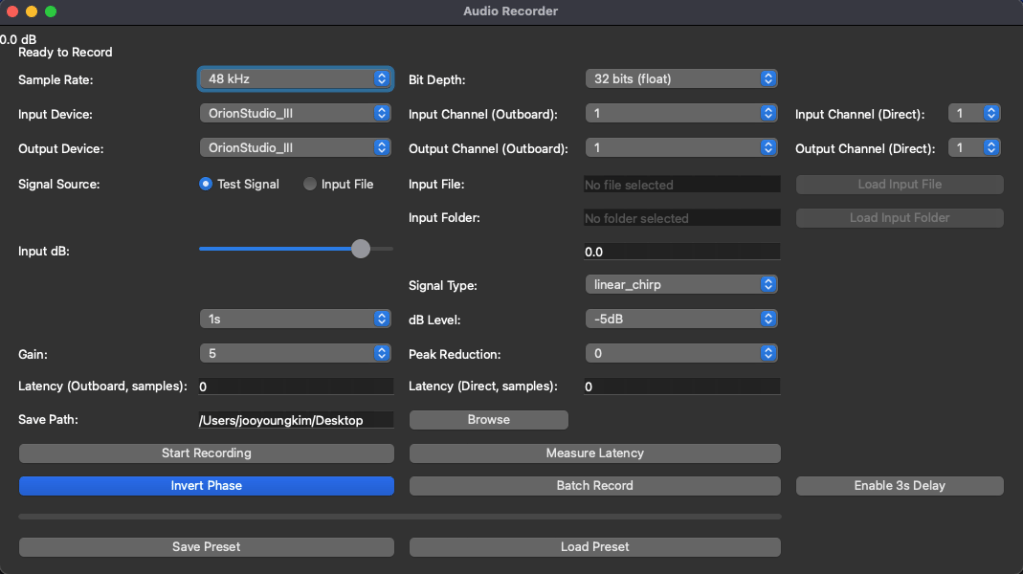
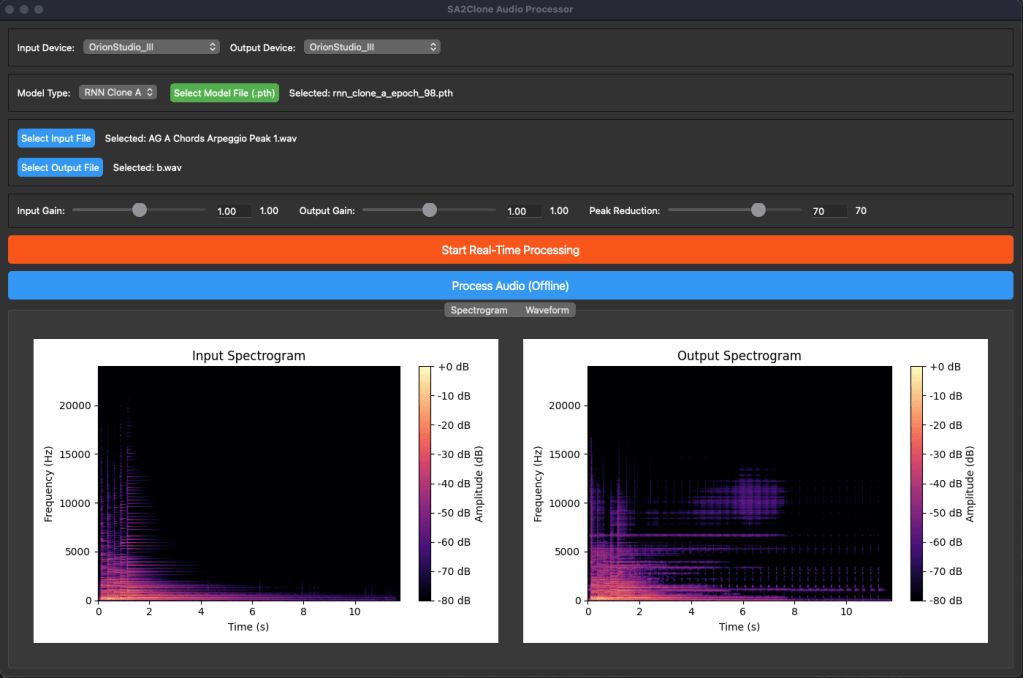
  1. Analog recording grind (plus building a recording program from scratch… ugh). That recording program UI still gives me nightmares. I built it with Qt Creator, and… let’s just say it was a few days of pure torment.
  2. Training with deep learning using CNN and RNN (LSTM) methods (which meant coding up some PyTorch for the training process…).
  3. Implementing the compressor with that training data (cue JUCE and Python code-building…).

And, well, it spectacularly flopped. 😭

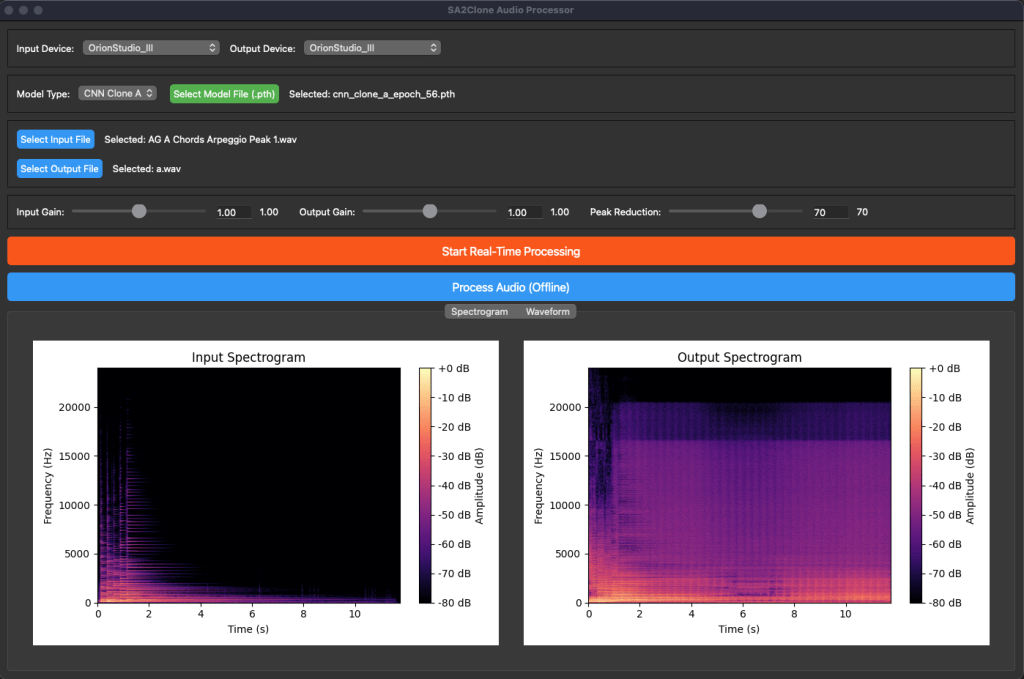
Just looking at the spectrogram tells you all you need to know, right?

I built a recording program in C++, slogged through endless recording sessions, spent ages training the model, and then tried real-time processing with JUCE—only to realize real-time processing wasn’t happening, so I switched to Python. After pouring over a month into this, it feels like such a letdown.

The RNN (LSTM) approach might still have some potential with more time, but CNN? Total dead end. My original idea would take way too long to execute, so I’ve shelved it for now. That said, the program set itself isn’t half bad, so I’m planning to polish it up and eventually share it on GitHub.

Meanwhile, I’ve pivoted to experimenting with a new topic. For this, I’ve been measuring THD, crosstalk, and frequency response, and I wrote a Python program to store the data and generate graphs.

This one actually turned out pretty well! I’m thinking of sharing some of the code and distributing the program around the time I submit my next paper. It might need a bit more refinement before I consider selling it, though.

https://github.com/JYKlabs

Oops, this is starting to sound like a GitHub channel plug, isn’t it?

The first half of this year has been consumed by experiments and coding for my thesis, leaving me with barely any time to work on my own music. 😢 But I’ve got something in the works, and I’m determined to release at least one track next month. I really need to get into a groove and churn stuff out consistently instead of these sporadic bursts… sigh.

I’ve always been drawn to niche things—studying physics as a kid, making music, diving into audio engineering, and now coding for obscure projects. Guess I’m just wired to love the less mainstream stuff, haha.

Anyway, that’s what I’ve been up to lately. With grad school graduation looming, I’m feeling a bit lost and anxious about what’s next. But I’m choosing to believe things will work out and keep pushing forward.

Catch you in the next post! 😊

Diving into the Basics of Synthesizers…

Hello! I’m Jooyoung Kim, a mixing engineer and music producer.

It’s been a while since my last post, hasn’t it?

After getting rejected by AES for the second time, I was like, “Alright, let’s fix this research!” So, I scrapped my experiments, started over, re-collected all the data, and reformatted everything for submission elsewhere. Time just flew by in the process… haha.

I’m really hoping this one gets accepted before I graduate. Fingers crossed this time…

Lately, I’ve been working on recreating hardware compressors using deep learning. I trained the model with test signals, but when I fed it guitar sounds, all I got was white noise and sine sweeps… That took about two weeks of work.

So, I’ve spent the past few days coding from scratch, preparing new training data, and running the training process again. Here’s hoping the results turn out well, but man, it’s exhausting…

I’d love to own a Yamaha DX7 in real life

On another note, I recently wrapped up a year-long series on the basics of mixing, and I was wondering what to write about next. Then it hit me: why not talk about using synthesizers?

Even though my music style doesn’t heavily rely on synths, understanding how different synthesizers work can definitely broaden the creative spectrum for writing music. From an engineer’s perspective, learning about filter techniques and the unique sound characteristics of various synths can spark a ton of new ideas.

That said, I’m still organizing my research on this topic, and with some recent worries about making ends meet, it’s been tough to write as quickly as I’d like… Still, I’ll do my best to keep the posts consistent.

The content will likely follow a simple structure:
“Sound synthesis methods and their history -> Iconic synthesizers”

That’s the plan. Looking forward to catching you in the next post!

SSL X-Delay & X-Echo Plugin Sale (Until 4/14)

Hey there! I’m Jooyoung Kim, a mixing engineer and music producer.

Now that my “Mixing Basics” series is wrapped up, I’m scratching my head about what to write next… haha. Maybe something about synthesizers? Lately, I’ve had a lot on my mind, and it’s been a bit overwhelming.

Anyway, today I’m excited to talk about two delay plugins from SSL’s X series—X-Delay and X-Echo—which are currently on sale. Let’s check them out!

[link: https://www.pluginboutique.com/product/81-Bundles/39-Effects-Bundles/14642-SSL-X-Delay-Native-X-Echo-Bundle/?a_aid=622ea9ee9160c]

I received these plugins as NFR (Not for Resale) copies from Plugin Boutique. If you buy through the links in this post, I’ll earn a small commission that really helps me keep going—thanks so much for the support!

Ready? Let’s get started.


X-Delay

Click image to purchase X-Delay at Plugin Boutique

X-Delay draws inspiration from 1980s hardware digital delays. My guess? It’s channeling vibes from the iconic AMS DMX 15-80—those big, bold delays from back in the day… haha.

This plugin lets you run up to four delays at once, packed with a bunch of extra features. Let’s break it down.

Up top, you’ve got a power button on the left and a Sync button on the right to switch between milliseconds (ms) and BPM sync. Below the “Time” label, it shows whether you’re in ms or BPM mode. To the right, you can tweak delay length in beats or ms—BPM mode offers options like straight (-), dotted (d), or triplet (t). In the screenshot, it’s set to dotted.

Then there’s Level control, a Ping Pong delay toggle, and Panning adjustments. Pretty simple, right?

Now, let’s peek at the bottom section:

  • Modulate: This applies an LFO to the delay time, adding some wobble. Crank it up a bit, and your sound gets lush and full.
  • Saturate: Adds saturation (duh!). Max it out, and you’ll hear harmonic distortion kick in with a gentle soft-knee compression starting around -12.5 dB (it’s subtle, so hard to pin down exactly). It colors the sound nicely—turn it up for some rich warmth.
  • Diffuse: A room reverb effect.
  • De-Ess: Tames harsh highs.
  • Freeze: Locks the feedback sound in place.
  • Kill: Cuts all feedback instantly.

This thing’s a beast. It’s perfect for wet, dreamy tones but versatile enough for all sorts of uses. At a sale price of $24.99, it feels like a steal.


X-Echo

X-Echo takes its cues from 1960s tape delays—think Echoplex vibes, maybe? Haha. Unlike tape hardware built for playback, these old-school delay units often rolled off the highs due to slower tape speeds. You can see it in the frequency response—everything above 13 kHz just drops off.

It’s got that classic tape delay character—slight harmonic distortion included. One listen, and you’re like, “Yup, that’s tape delay!” Haha.

The controls are similar to X-Delay, but here’s what’s different:

  • Zoom: A scope to magnify the waveform for a closer look.
  • Grid: Adjusts delay time to your BPM with a grid—pick a note value (like quarter or eighth), or drag the connected circle to fine-tune.
  • Fit: Tweaks the waveform’s horizontal length.
  • Four Delay Buttons: Toggle between four delay lines, each with its own light.
  • Sync/Tap: Set BPM manually or tap it in.

The bottom section’s mostly the same as X-Delay, except for Wow & Flutter—that’s the tape-style distortion from uneven movement, like stretched tape, wobbles, or dust. Think vintage quirks!

  • Freeze: Holds the feedback sound.
  • Kill: Stops all feedback.

At $24.99 on sale, X-Echo nails that tape delay tone you’d expect—great for anyone hunting for that retro sound.


Bundle Deal & Bonus

The X-Delay & X-Echo Bundle is just $39.99. If you’ve been wrestling with spatial effects in your mixes, this is a fantastic deal worth considering.

Plus, this month, any plugin or virtual instrument purchase from Plugin Boutique comes with a free synth, MOK Miniraze. Don’t forget to grab it when you check out!


Wrapping Up

Both X-Delay and X-Echo bring something special to the table—vintage-inspired delays with modern flair. At these prices, they’re hard to pass up. The sale runs until April 14th, so now’s the time to jump in.

That’s it for now—see you in the next post! 😊