I Bought a Vintage Cort A4 Bass!

Hello, I’m Jooyoung Kim, an audio engineer and music producer.

For a while now, I’ve been wanting to have more control over certain articulations, like sliding, vibrato, and slap techniques. That led me to decide that I should start playing the bass myself.

Since I’ll be using it for music production, I didn’t want to settle for a cheap, entry-level instrument. At the same time, I didn’t have the budget for a high-end one…

This is where a solid domestic brand comes in handy!

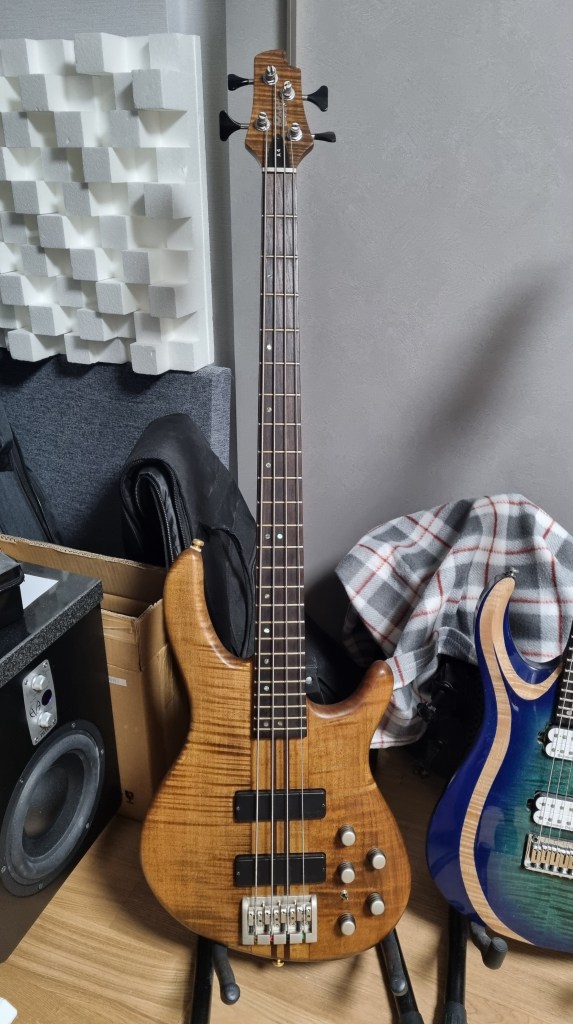
Yes, I’m talking about Cort. My electric guitar is Cort, and now my bass is too.

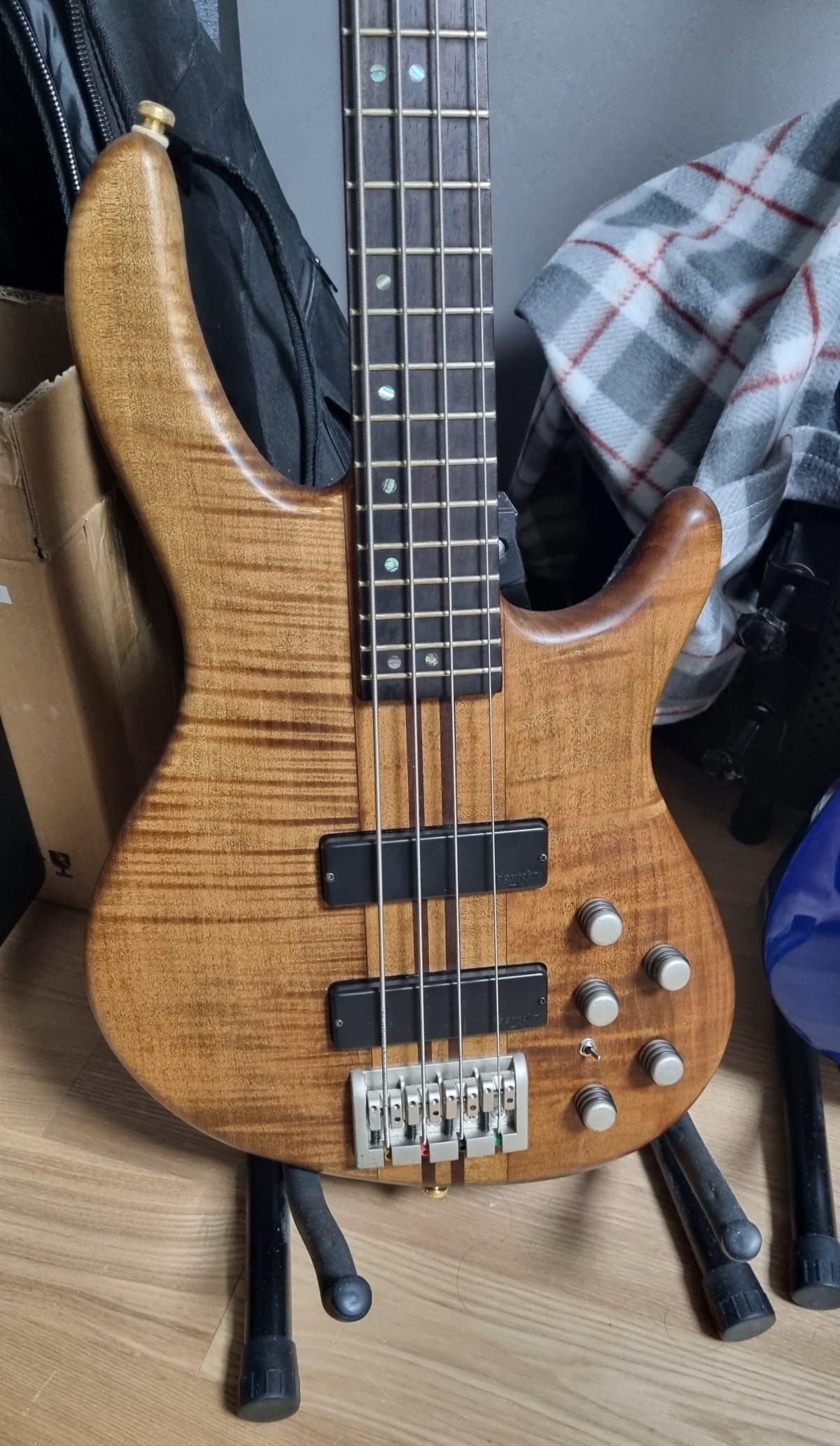
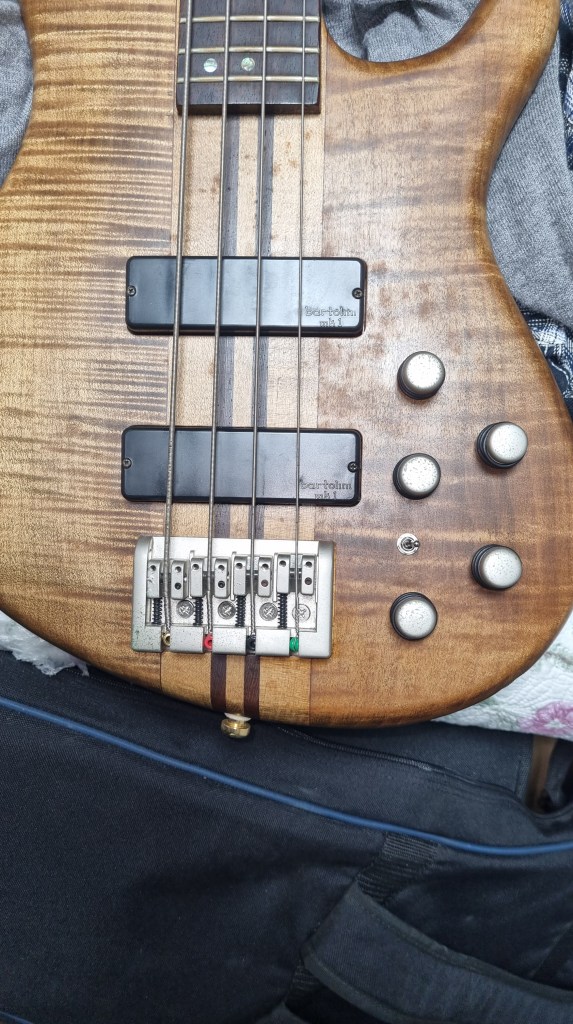
It’s an older model, so unfortunately, it only works in active mode with no option to switch to passive. There’s also some rust on the knobs and bridge, which is a slight drawback. However, after trying it out, I really liked the sound—it’s exactly what I was looking for.

I had borrowed a Squier bass from an older friend for a few days (though I’m not sure what model it was), and I have to say, this Cort bass feels way more comfortable in my hands.

The strings are a bit old, so I’m curious how it will sound once I change them.

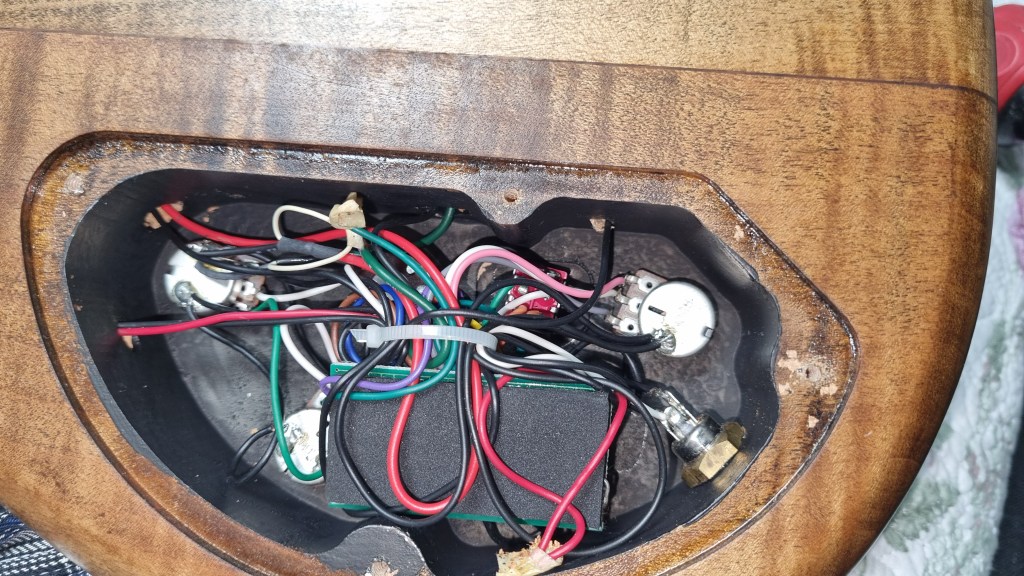
Then I thought about adding a switch for active/passive mode and took a look inside the back panel.

The wiring looks like a bit of a mess, so I’ll have to think it over when I get more time.

The goal is to practice more and eventually record most of the bass parts myself! But honestly, I feel like I might end up buying a Precision bass too… It never ends!

I’ve also been wanting to learn drums—am I becoming a one-man band? Haha.

See you in the next post!

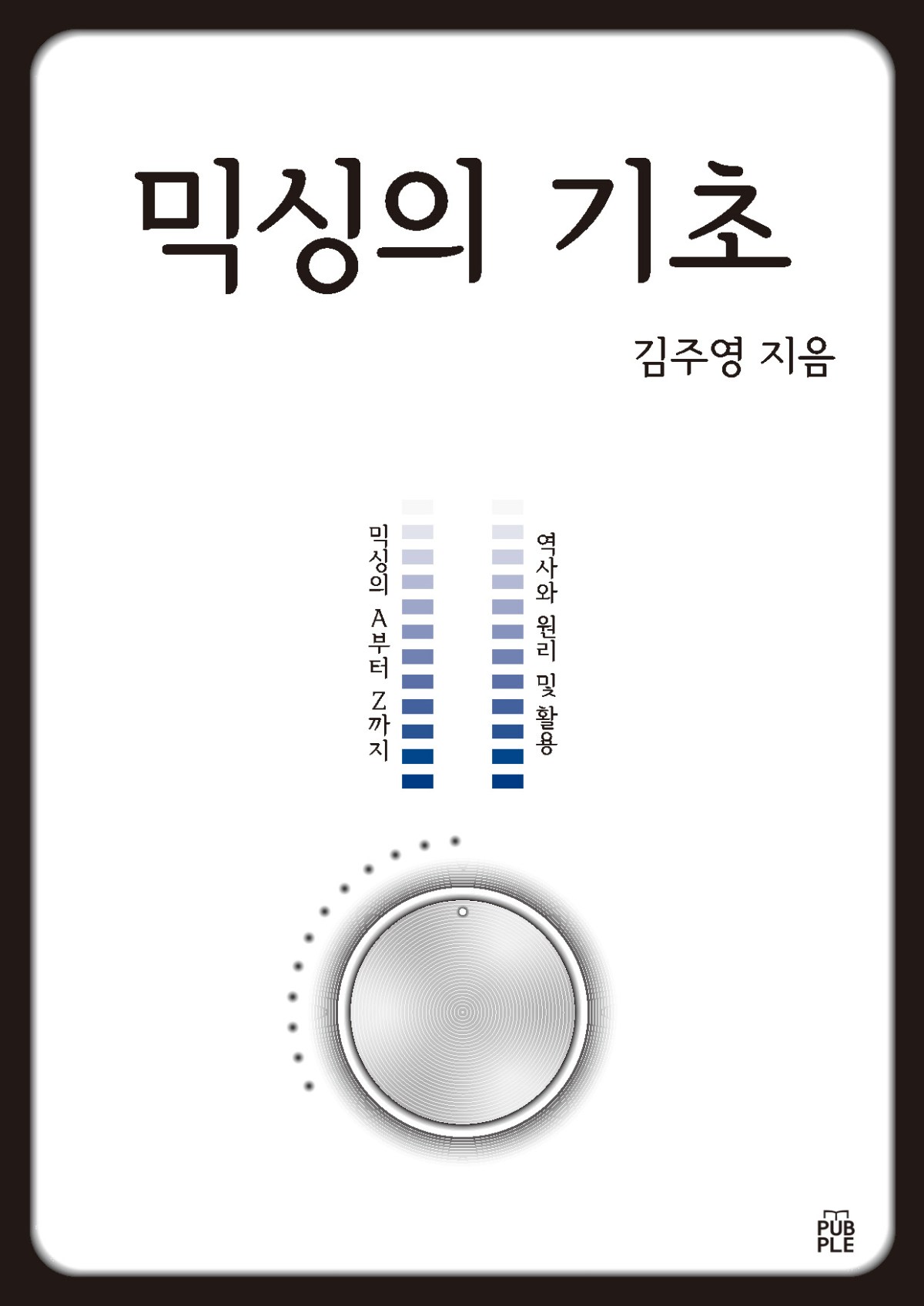
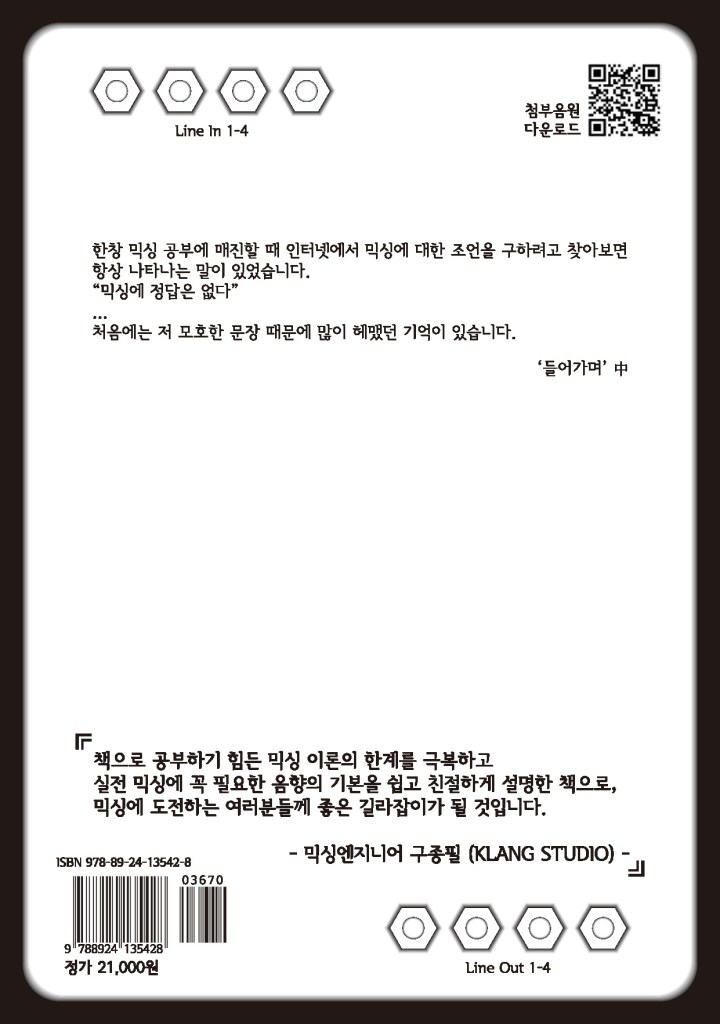
My New Book, “The Basics of Mixing,” is Now Published in Korea!

Hello! I’m Jooyoung Kim, an audio engineer and music producer.

I’m excited to announce that the book I’ve been working on for quite some time about mixing has finally been published in Korea!

Since I first started diving into audio engineering head-on, I’ve gone through countless books and resources. One of the biggest frustrations I encountered was the lack of educational materials available in Korean. As I continued my studies, I made a promise to myself that I’d one day write a book on mixing.

After finishing the manuscript, I sent it to several publishers, but many found the content to be too complex. While navigating those hurdles, I discovered the POD (Print on Demand) service offered by Kyobo Bookstore in Korea, which allowed me to publish the book online. Although it’s a bit limiting, the book can now be purchased through Kyobo’s website.

I’m deeply grateful to my mentor, Director Yongsoo Choi, and Professor Minho Jang from my university, for reviewing my manuscript. I’m also honored that the renowned engineer, Director Jongpil Koo from Klang Studio, read the book and wrote a recommendation for it. There are so many people to thank for their support and encouragement throughout this process.

To be clear, I’m not claiming to be an expert or someone with an extraordinary career. But I’ve worked hard to organize and share everything I know in the most comprehensive way possible. While the content isn’t exactly easy, I believe it’s worth the effort.

Since this blog is mostly in English, I know most of you won’t be able to read the book. However, if you have any questions about its content, feel free to reach out to me at joe1346@naver.com, and I’ll be happy to respond.

That’s all for today’s post. Thanks for reading!

My Visit to Sorigio(a Korean acoustic construction company)!

Hello! I’m Jooyoung Kim, an audio engineer and music producer.

This semester, the CEO of Sorigio (a Korean acoustic construction company) is teaching one of our graduate courses. As part of the course, we visited Sorigio this past Thursday, so I wanted to share my experience!

Let’s get started!

Sorigio is located on the first floor of the Jungheung S-Class residential-commercial complex in Yeongdeungpo. The door that faces the street is locked, but you can find the entrance around the side.

Once you step inside, this is what you’ll see.

Here’s a view from the top of the stairs:

That area looks like it’s used as an office, and even the soundproof booths are repurposed as workspaces. I didn’t capture the ceiling in detail, but it’s quite high, and they’ve installed artboard clouds for sound absorption.

Next to the stairs, it looks like this.

If you go further in, there are several soundproof booths. Originally, they planned to rent these out to artists, but due to the pandemic, they are now used as AI virtual interview rooms.

However, one of the booths is still used as the professor’s studio, and another is a recording booth. Recording is done with an Avalon VT-737 and a Neumann TLM 103.

You’ll notice that artboards are installed throughout the studio. During class, the professor showed us test results and examples of previous projects using REW (Room EQ Wizard). He mentioned that artboards have been Sorigio’s flagship product and technology since the early days.

What stood out to me was how the bass absorption rate changes significantly depending on how far the artboards are mounted from the wall, even though they’re just artboards!

Besides soundproofing and room acoustics, Sorigio also manufactures phone booths for businesses.

If you head back towards the stairs and go up…

There’s a studio set up for filming.

They manage it using a Midas console.

They also have various lighting options to create different moods.

Here’s what it looks like from the center of the studio.

The high ceiling gave me the impression that this would be a great space for string recordings if it were converted into a recording room. I think we might end up working on a project here this semester!

While I was there, we also conducted a room measurement in the recording booth to compare the difference between having the corner traps and panels installed versus removed.

They used a microphone from a company called Isemcon for the measurement. I’m more familiar with pricier options like Earthworks, Brüel & Kjær, and NTI Audio, so it was interesting to see a brand I hadn’t come across before.

There was a lot to see, and it gave me a lot to think about—like how much money it actually takes to build a proper studio room!

Recently, I’ve had my eye on the SPL Vitalizer mk2-T, which could be dangerous for my wallet… I already bought a passive speaker I couldn’t resist a few days ago.

I’ll be sure to write a review of the speaker in a few days!

Until next time, see you in the next post! 😊

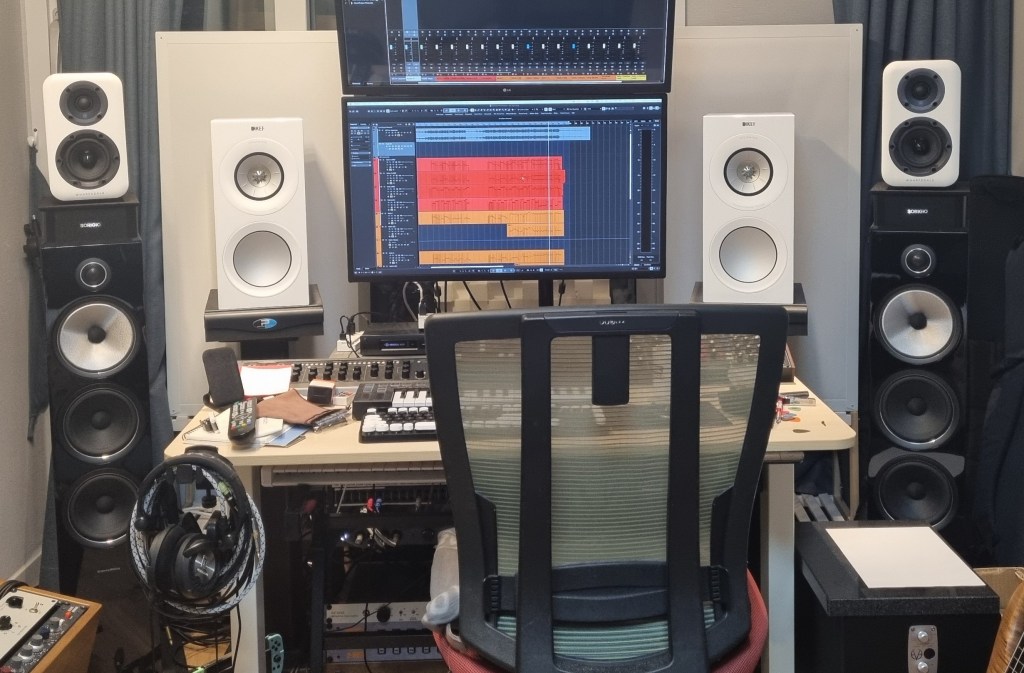
I overhauled my studio setup

Hello, this is Jooyoung Kim, an engineer and music producer.

Previously, I mentioned that I had to custom order and repair a toroidal transformer for my Stam Audio SA-2A. After it was fixed and returned, I was quite satisfied. However, I realized I needed more rack space, so I decided to buy a new rack cabinet.

Thinking ahead about the additional equipment I’d be adding, I also bought a patch bay and cable connectors.

I wanted to get a Samson patch bay to match my other gear, but since there were no Samson S-Patch bays available for delivery to Korea on Amazon, I ended up buying the cheapest one that could be set to Normal mode.

The yen was quite weak recently, so I took advantage of that when purchasing cables and connectors via Rakuten. I bought 100 meters of Canare L-2T2S cable and around 20 Neutrik TRS and XLR connectors.

After looking around, I decided to order a custom-made rack cabinet from Shinsun Workshop(Korean: 신선공방), as their products seemed the most suitable. Other ready-made options were either too shallow or too deep for my setup.

I pre-made the cables and installed everything.

Haha… It was quite a task. I started around 4 PM and finished by 11 PM, with breaks for meals. I even had to do some soldering because I forgot something with the multi-cable… haha…

But in the end, everything looked neat and tidy. I forgot to take a photo of the finished setup, though. After repeatedly sitting and standing, my legs were shaking the next day.

I plan to add a 2U tube preamp to the large rack cabinet, and a Behringer 369 to the smaller one. That will leave about 1U of space, which I might use for an API 2500 or a saturator later on.

I recall making a resolution last year not to buy any more equipment, but I’ve completely broken that promise. Despite buying things relatively cheaply, I should be spending money on releasing my songs. It’s quite ironic that I’m spending all my song budget on gear… Equipment addiction is real…

Lately, I’ve been collaborating with a contact I met through a previous project. We’re producing a few tracks together. Additionally, I’ll be recording and mixing a song for a regular client.

I haven’t posted much about my recent work or projects, but these collaborations have been fun, and I plan to share more once they’re finished.

See you in the next post! 🙂