Heritage Audio Successor Hardware & Plugin Review

Hello, there! I’m Jooyoung Kim, a mixing engineer and music producer.

About half a year ago, I bought a Heritage Audio Successor that had some intermittent noise issues. I kept telling myself I’d write a review after getting it fixed… and, well, here I am finally getting around to it now, haha.

I didn’t originally have any burning desire to get this unit, like, “I have to own this thing!” It was just a good deal, even factoring in the repair costs, so my hand moved faster than my brain, lol.

I was initially eyeing the Behringer 369, but since this is also a diode bridge compressor, I figured why not. Plus, it’s a mastering compressor pushed by Heritage Audio, so I thought the channel balance would be decent enough, and it wouldn’t be a total gamble. So, I went for it.

As expected, there was noise coming from the left channel, so I just dove in and opened it up without much thought. Usually, noise or low output points to a capacitor issue—something simple, right? Or so I thought…!

No matter how much I looked, it didn’t seem like a soldering issue or a blown capacitor. So, I detached the circuit board and swapped the left and right transformers, but the left channel was still the problem.

Testing every tiny component by buying replacements was, frankly, not humanly reasonable. So, I handed it over to the folks at MS Tech for repairs, explaining the tests I’d done and admitting I couldn’t pinpoint the issue.

A few months later, I went to pick it up. When I asked the technician, he said he wasn’t entirely sure, but it seemed like the variable resistor in the left channel was the culprit. On the outside, the components looked fine, but something inside was faulty, haha.

Yeah, I probably underestimated the repair when I bought it. But, thankfully, it’s all fixed now, so no harm done.

And here’s something cool:

Even though I bought it secondhand, I reached out to Heritage Audio’s Support Center to ask if they could provide the plugin, and they happily gave it to me! The plugin is actually pretty solid, and I find myself using it quite a bit.

Hardware Measurements

The channel balance is pretty tight, though, being analog, it’s not completely perfect. You might wonder if the repair changed anything, but even before the noise issue, the balance was about the same.

The extreme high frequencies are slightly boosted, and, like many hardware units, it looks like there’s a high cut around 20kHz. The low frequencies are boosted as well.

The THD looks clean, but it definitely has some character.

The compression curve shows a gentle knee.

Even when limiting, it’s not a completely hard knee.

This unit has a max input of +22 dBu. Since pro audio typically works at +24 dBu, it’s a bit shy of that, but my interface operates at +20 dBu, so it’s plenty for my mixes or mix bus.

The max output is +26 dBu at 600 ohms, so as long as you manage the input carefully, it should work well for mastering too.

Plugin Measurements

The plugin has a unique feature called “Nuke.” It pushes the input by 20 dB for some intense saturation.

The top figure shows the default Frequency Response, and the bottom figure shows it with the Nuke function enabled.

Similarly, the top figure is the default Harmonic Distortion, and the bottom figure is with Nuke activated.

The compression curve feels less like a natural, smooth knee and more like it has a slight two-step bend somewhere.

Personal Impressions

Describing sound in words is probably the hardest thing. Everyone hears and expresses things differently, so… ugh, it’s tough.

Still, here’s what I think:

Hardware
  1. Compared to the Stam 4000 mk2, the high frequencies feel more alive, which gives it a certain quality that feels worth its price.
  2. The center feels a bit prominent (maybe because of the transformers?).
  3. The knobs feel great to turn—probably because they used high-quality variable resistors—and the Threshold and Gain have a subtle stepped feel.
  4. For its full price, it feels just about right.
Plugin
  1. The Frequency Response shows better high-end response than the hardware, but that sparkly, satisfying vibe just isn’t there in the plugin.
  2. The center feels quite prominent. In other words, you might need to tweak it with a stereo imager or something.
  3. It’s got a lot of character. So, when using it on a bus, you really need to pay attention to how it affects the balance.

Looking back, it sounds like I was pretty harsh on the plugin, but it’s actually good! Diode bridge compressor plugins aren’t exactly common (think UAD Neve 33609C or Arturia Diode 609), so it’s a solid new option to consider.

The hardware? Yeah, it’s great! I wish the highs sparkled just a bit more, but it’s plenty good as is.

Next up, I’m eyeing the Warm Audio WA76-D2 for a FET compressor. The audio samples sound amazing, but, as always, the biggest hurdle is money… sigh. If a broken one pops up on the secondhand market, I’m jumping on it.

I sometimes wonder if my reviews lean too technical or analytical, but hey, there’s gotta be at least one person out there reviewing stuff like this, right? Haha.

That’s it for today! See you in next post 🙂

Sonnox’s Insane Sale Kicks Off (90% Off, Until 8/30)

Hello, I’m Jooyoung Kim, a sound engineer and music producer.

Starting yesterday, it seems Sonnox is feeling the heat and has ditched their high-price strategy for an explosive sale!

(If you purchase through the links in this blog, I earn a small commission, which really helps me keep going. Thank you!)

Check it out—everything except the Restore Plugin bundle is at a jaw-dropping 90% off. I’ve never seen Sonnox plugins this cheap before. This is the perfect time to add them to your cart!

Here are my personal recommendations:

Oxford SuprEsser

Widely used as a de-esser, this plugin also doubles as a dynamic EQ with a simple mode for quick fixes and an advanced mode for precise tweaks.

Oxford Envolution

A go-to envelope shaper, loved for its versatility and power in shaping transients.

The other plugins may not have the flashiest UIs, but they’re clean, reliable, and have been industry standards for years. Definitely worth considering!

Sure, there could be bigger sales in the future, but I doubt they’ll hit 95% off. This 90% discount feels like it might stick around as their new benchmark. The next big sale will likely be around Black Friday or Christmas, but with this one running until August 30, we probably won’t see deals this good again until the holidays or early next year.

If you’re thinking about it, I’d say grab them now!

Also, this month, if you buy from Plugin Boutique, you get Excite Audio Motion: Dimension Lite for free.

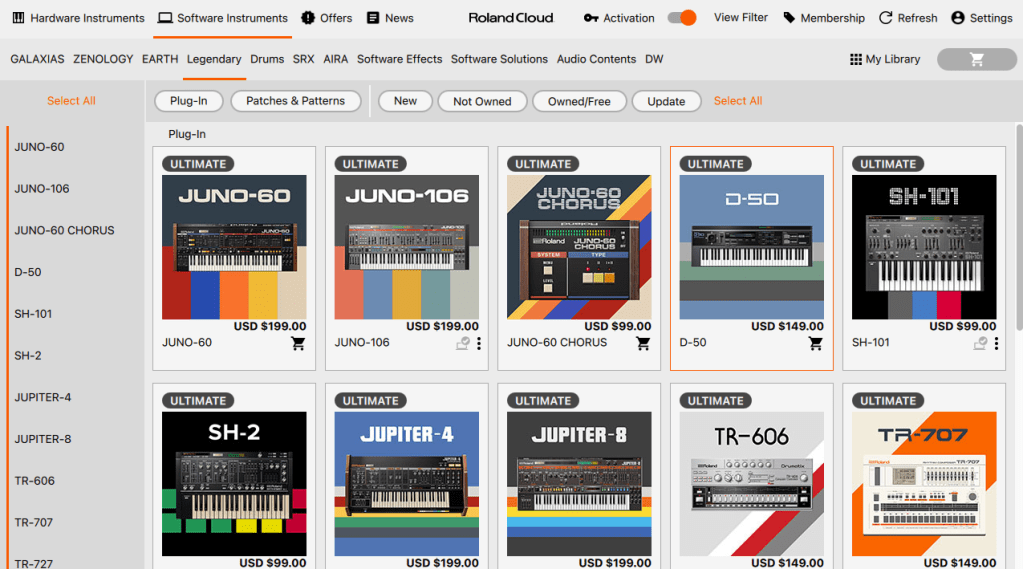
Plugin Boutique, like many retailers, now adds a 10% tax, so prices are similar across the board. (The price in the first photo includes tax.) That said, some places don’t charge tax and might be cheaper. Still, this free plugin is so good that I recommend factoring it in, even if it means paying the 10% tax. With Sonnox plugins at 90% off, buying something like SuprEsser for $2.50 essentially gets you this free plugin as a bonus! 😄

That’s it for now. See you in the next post! 😊

Basics of Synthesizers (4) – Modulation Synthesis and FM (Frequency Modulation)

Hello, I’m Jooyoung Kim, a sound engineer and music producer.

In my last post, I talked about my thesis, but here’s a funny update: the journal that desk-rejected my paper (Transactions on Consumer Electronics) sent me an email asking me to be a reviewer. It’s a bit of a niche SCIE journal, but still Q1-Q2 level, so I was pretty floored. I’m flattered, but since I haven’t even graduated with my master’s yet and my main paper isn’t published, I politely declined. Who am I to judge someone else’s work at this stage? 😅

Now, let’s get to today’s topic: picking up where my synthesizer series left off last month, we’re diving into modulation synthesis, focusing on the legendary FM (Frequency Modulation) synthesis, made famous by the Yamaha DX7.

Here we go!

Modulation

What is modulation? I touched on this in my Basics of Mixing series a while back:

In short, modulation involves using an external signal (the modulator) to alter specific parameters of another signal (the carrier), changing its sound. The external signal is often a Low Frequency Oscillator (LFO), but other sources can be used too.

Types of Modulation

TypeDescription
AM (Amplitude Modulation)Modulates the amplitude of the carrier signal using a modulator. Think tremolo effects.
FM (Frequency Modulation)Modulates the frequency of the carrier signal. Famous for metallic and bell-like sounds, as heard in the Yamaha DX7.
PWM (Pulse Width Modulation)Modulates the pulse width of a square wave. Common in analog synths and compressors like the PYE Compressor. [photo]
RM (Ring Modulation)Multiplies the carrier and modulator signals, producing only the sum and difference frequencies (a+b, a-b).
PM (Phase Modulation)Modulates the phase of the carrier signal. Fun fact: the DX7 is technically PM-based but was marketed as FM for mass appeal.

AM and FM might sound familiar from radio broadcasting. FM, in particular, shines in synths for creating those iconic metallic or bell-like tones. There are also other modulation types like Cross Modulation, Wavetable Modulation, and Granular Modulation, but I’ll cover those in their respective sections later. 😄

FM (Frequency Modulation)

Dr. John Chowning

Meet Dr. John Chowning, the mastermind behind FM synthesis, developed in the late 1960s at Stanford University. [photo] FM synthesis modulates the carrier’s frequency with a modulator, producing complex, irregular harmonics that are perfect for metallic and bell-like sounds.

Yamaha’s YM2612 chip

FM synthesis was a staple in 1990s video games and software. Yamaha’s YM2612 chip (aka OPN2) powered sound cards like AdLib and Sound Blaster, as well as consoles like Sega’s Mega Drive and Fujitsu’s FM Towns Marty.

In 1971, Dr. Chowning saw the commercial potential of FM synthesis and pitched it to companies like Hammond and Wurlitzer, but they all passed. Yamaha, however, struck a deal, securing a one-year license and exclusive rights to the technology by 1975. Looking at its massive success, both Yamaha and Dr. Chowning had incredible foresight! 😊

Yamaha GS-1

In 1980, Yamaha released the GS-1, their first FM synthesizer, with only 16 units made for studio use. It was used by legends like Stevie Wonder, Chick Corea, Herbie Hancock, and Toto.

Priced at $16,000 back then—about $66,000 today, or roughly 1 billion KRW—it was a luxury item.

Yamaha GS-2

The GS-1’s unique sound was a hit, leading Yamaha to release the more portable and affordable GS-2, as well as the CE-20 and CE-25 Ensemble series for the home organ market.

Yamaha CE-20
Yamaha CE-25

Yamaha’s PAMS and DX Series

Yamaha later developed the PAMS (Programmable Algorithmic Music Synthesizer), which offered flexible programming but had too many parameters.

To simplify, Yamaha’s engineers made the modulator and carrier envelope generators share parameters, leading to the DX series: DX-1 (73-key flagship), DX-5 (76-key, budget version of DX-1), DX-7 (6-operator), and DX-9 (4-operator).

The Yamaha DX7 is arguably the most iconic FM synthesizer, selling 200,000 units worldwide at 248,000 yen each—a massive commercial success.

It featured six sine wave operators that could act as either carriers or modulators, with 32 selectable sound algorithms to switch their roles. In the diagrams, each vertical line represents a sound synthesis path, with parallel lines combining, the bottom being the carrier, and those above it modulators.

The DX7 also supported MIDI, often paired with sequencers like the Yamaha QX-1. Beyond bell-like sounds, it’s famous for electric piano (FM EP) and bass (FM Bass) patches—search for those terms, and you’ll find tons of resources. 😄

In one sentence: FM synthesizers excel at creating sounds with irregular harmonics.

Modern FM Synths
Some great virtual instruments carry the DX7’s FM legacy:

If you buy through these links, I earn a small commission, which helps me keep going—thank you! That said, I recommend waiting for bundle sales to grab these at a better price. I previously covered Arturia’s V Collection X bundle, which is worth checking out:

Don’t just take my word for it—try a free virtual synth, play around, and hear the sounds for yourself!

That’s it for today. See you in the next post! 😊
Life Update (07.12.25)

Hello, I’m Jooyoung Kim, a sound engineer and music producer.

My last life update was all about programming, wasn’t it? This time, it’s about my thesis and research.

First off, my dissertation has been printed and bound! It’s about how to set subwoofer crossover frequencies, which required a ton of measurements—let’s just say, a lot of gritty work.

The dissertation itself wasn’t too tough, but submitting a related paper to an international journal was a real challenge. I got rejected twice, and by the third submission, I had to overhaul it multiple times. While the core methodology stayed the same, the journal paper became more refined with way more measurements. Including the ones that didn’t make the cut, I probably did about 300 measurements for the dissertation and 1,500 for the journal submission. 😅

Recently, I got a “Minor Revision” decision from Acta Acustica, an SCIE-level journal from the European Acoustics Association. After seeing “Reject” so many times, spotting “Minor Revision” almost brought tears to my eyes! 😄 This journal became Diamond Open Access this year, meaning no publication fees for authors and no subscription fees for readers. As someone with no funding and no institutional support for publication costs, getting rejected by major journals like the Audio Engineering Society or the Acoustical Society of America was tough, and I was really stressing about where to submit next. This feels like a huge relief.

Here’s hoping it gets accepted without further revisions! I need to finalize publication by next Thursday to apply for a school scholarship, but timing is always tricky… 😢 If I get the scholarship, I’m eyeing some outboard gear or a stereo mic pair… hehe.

Once the paper is officially published, I’ll dive into the details here.

On another note, I recently participated in a songwriting contest called Soniccon, hosted by Sonicwire, a company under Crypton Future Media (famous for Vocaloid). I submitted a song in Japanese that I wrote and performed myself.

I made it to the final round, ranking in the top 18! 😊 My dream has always been to work across songwriting, sound engineering, practical work, and academia, and it feels like things are finally starting to come together.

But, of course, whenever I say that, something goes wrong… 😅 My second international paper, submitted to IEEE Transactions on Consumer Electronics, got desk-rejected in just four days. The rejection letter said:

“Your manuscript has been denied publication in the Transactions on Consumer Electronics as this paper is identified as more appropriate for publication in other reputable journals.”

Even with a rejection, getting reviewer feedback helps pinpoint what to fix, but a desk rejection like this leaves me a bit lost. The topic leans toward circuits and electronics, but I don’t know any conferences or journals in that field, and I don’t have any electrical engineering friends or professors to ask for advice.

Looking at how music and research are often funded, I guess I’m destined to chase grants. 😄 But honestly, I’ve been funding all this myself—my subwoofer research used my own music gear or borrowed subwoofers from my professor, though the Earthworks M30 measurement mic was a painful purchase… 😢

The second paper cost about 250,000 KRW (~$180 USD) for materials, which is relatively cheap. Add in KCI journal publication fees, conference memberships, CDs, and music purchases, and I’ve probably spent around 800,000 KRW (~$580 USD) out of pocket. If I’d refined it more and aimed for an international journal, I could’ve saved about 600,000 KRW in fees, but I didn’t know the process back then. I’m chalking it up to tuition for learning the ropes.

I’d love to tackle bigger, time-intensive projects like Dolby multichannel, binaural audio, or deep learning, but those require serious funding. Binaural and Dolby Atmos setups need completely different gear, and the costs add up fast. 😅 Even for smaller projects, just covering material costs or extra page fees for open-access journals would be a huge help. Research support for master’s graduates is practically nonexistent, which makes things tough.

That’s the rough update for now!
See you in the next post! 😊