Hello, there! I’m Jooyoung Kim, a mixing engineer and music producer.
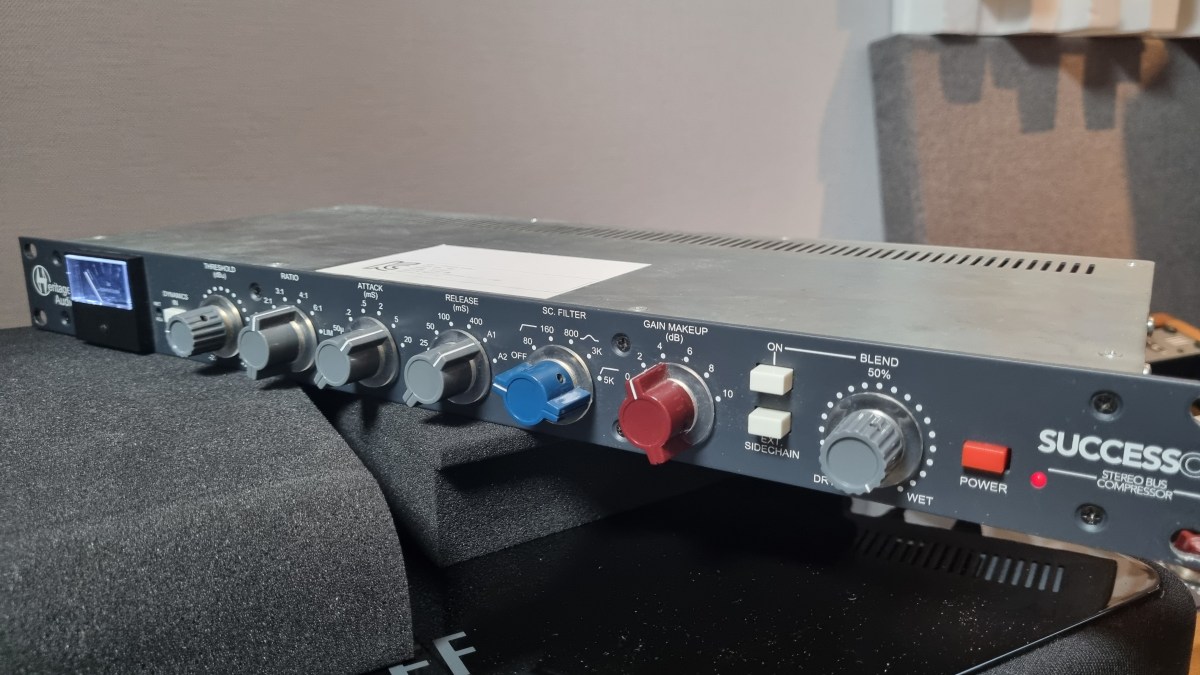
About half a year ago, I bought a Heritage Audio Successor that had some intermittent noise issues. I kept telling myself I’d write a review after getting it fixed… and, well, here I am finally getting around to it now, haha.
I didn’t originally have any burning desire to get this unit, like, “I have to own this thing!” It was just a good deal, even factoring in the repair costs, so my hand moved faster than my brain, lol.
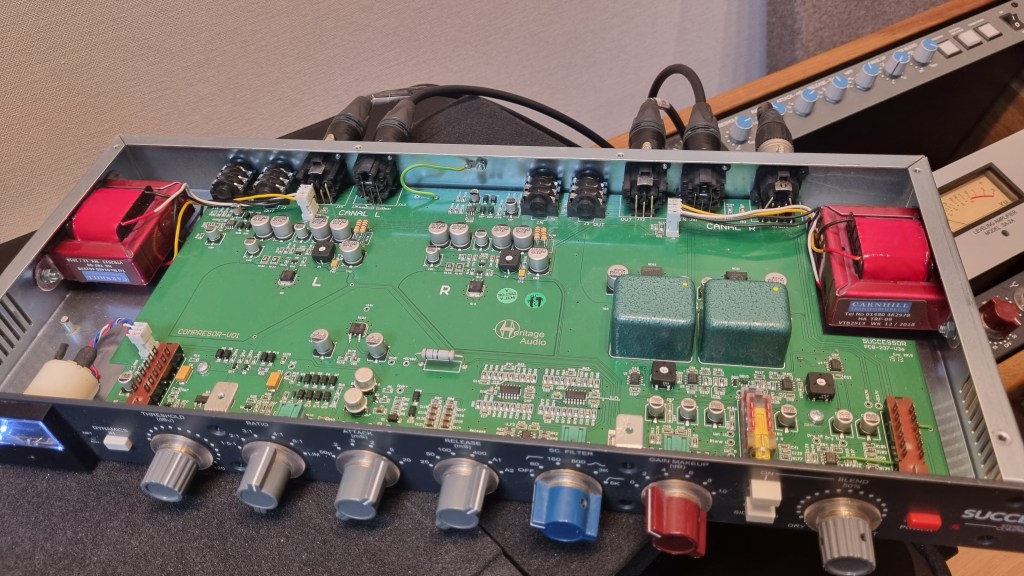
I was initially eyeing the Behringer 369, but since this is also a diode bridge compressor, I figured why not. Plus, it’s a mastering compressor pushed by Heritage Audio, so I thought the channel balance would be decent enough, and it wouldn’t be a total gamble. So, I went for it.
As expected, there was noise coming from the left channel, so I just dove in and opened it up without much thought. Usually, noise or low output points to a capacitor issue—something simple, right? Or so I thought…!
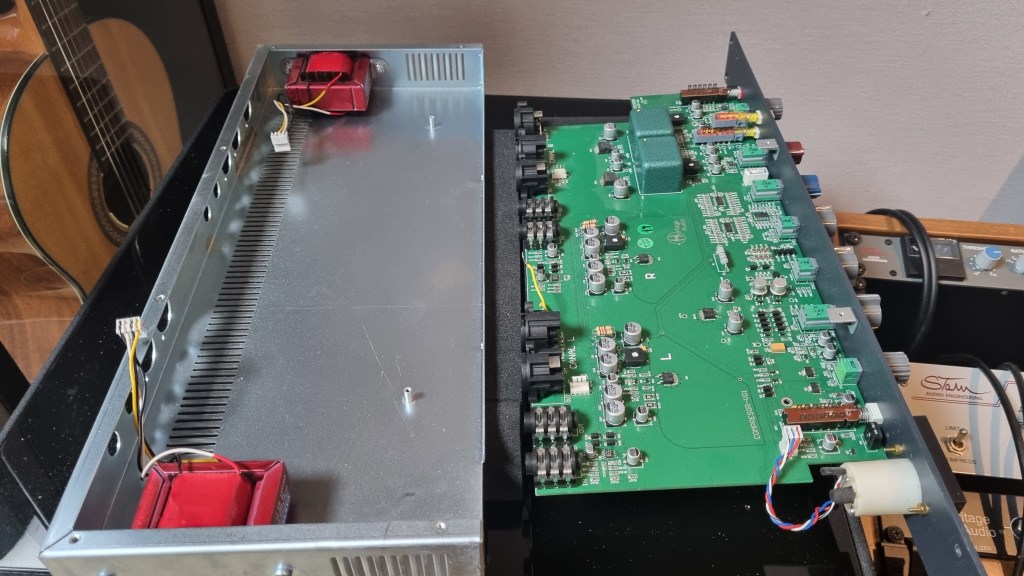
No matter how much I looked, it didn’t seem like a soldering issue or a blown capacitor. So, I detached the circuit board and swapped the left and right transformers, but the left channel was still the problem.
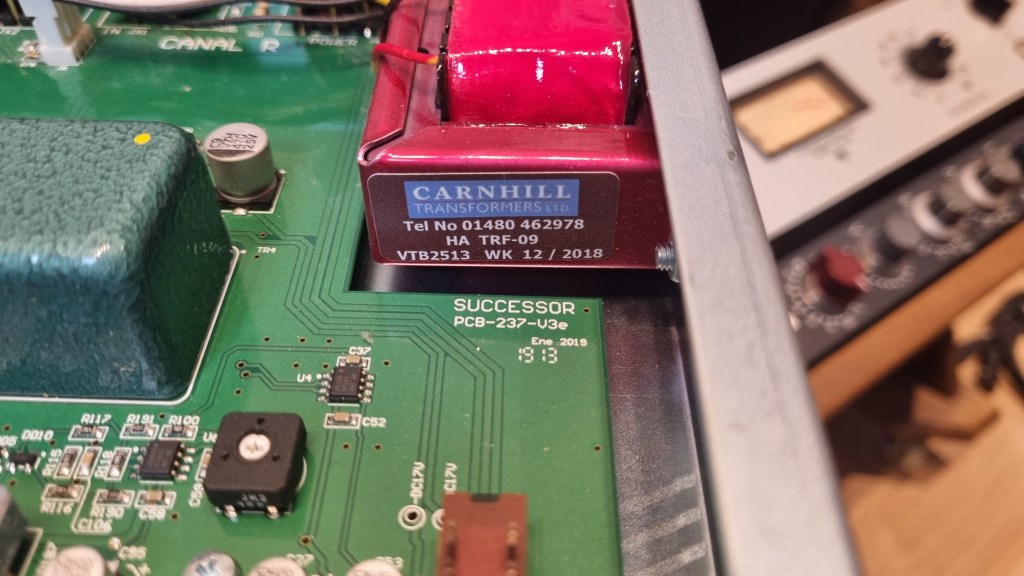
Testing every tiny component by buying replacements was, frankly, not humanly reasonable. So, I handed it over to the folks at MS Tech for repairs, explaining the tests I’d done and admitting I couldn’t pinpoint the issue.
A few months later, I went to pick it up. When I asked the technician, he said he wasn’t entirely sure, but it seemed like the variable resistor in the left channel was the culprit. On the outside, the components looked fine, but something inside was faulty, haha.
Yeah, I probably underestimated the repair when I bought it. But, thankfully, it’s all fixed now, so no harm done.

And here’s something cool:
Even though I bought it secondhand, I reached out to Heritage Audio’s Support Center to ask if they could provide the plugin, and they happily gave it to me! The plugin is actually pretty solid, and I find myself using it quite a bit.
Hardware Measurements
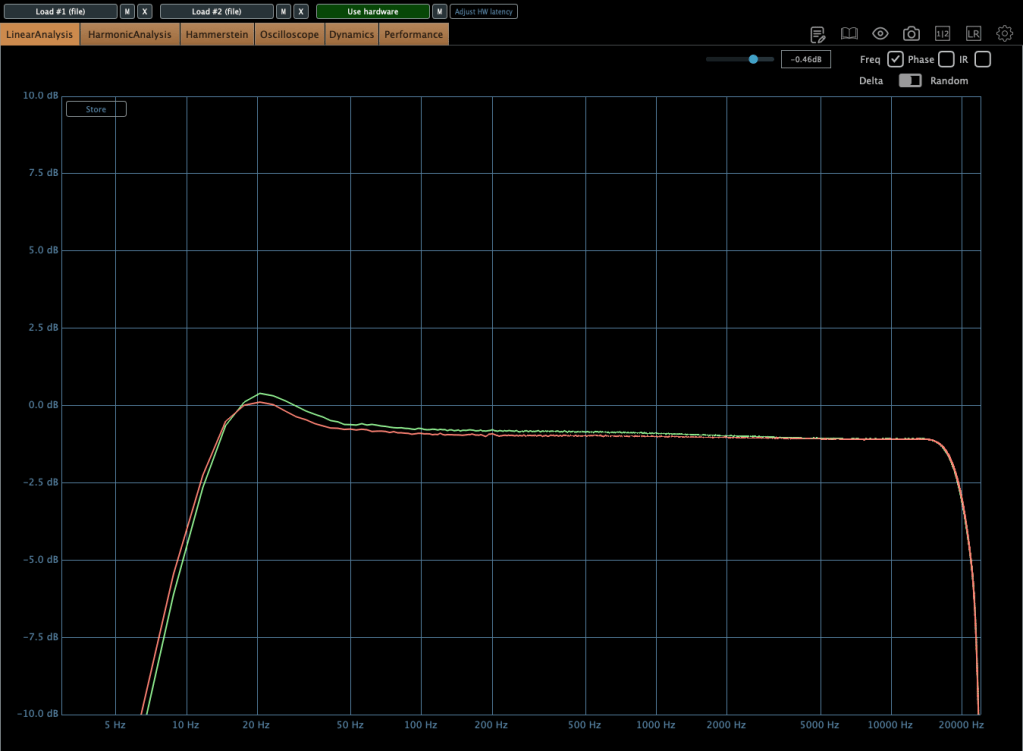
The channel balance is pretty tight, though, being analog, it’s not completely perfect. You might wonder if the repair changed anything, but even before the noise issue, the balance was about the same.
The extreme high frequencies are slightly boosted, and, like many hardware units, it looks like there’s a high cut around 20kHz. The low frequencies are boosted as well.
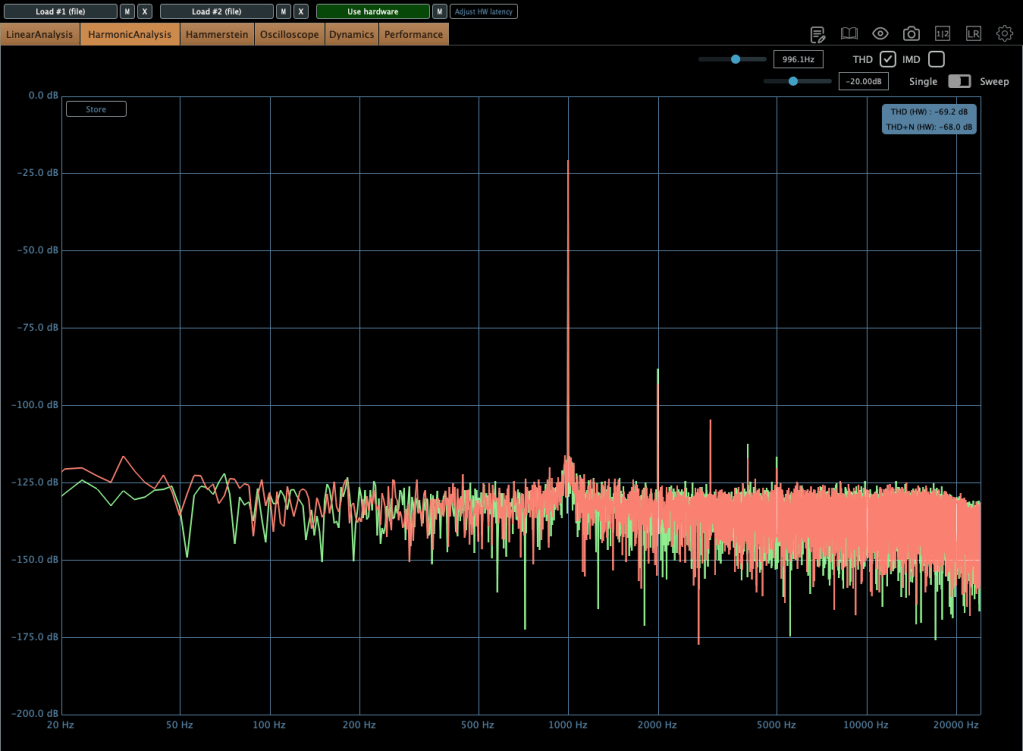
The THD looks clean, but it definitely has some character.
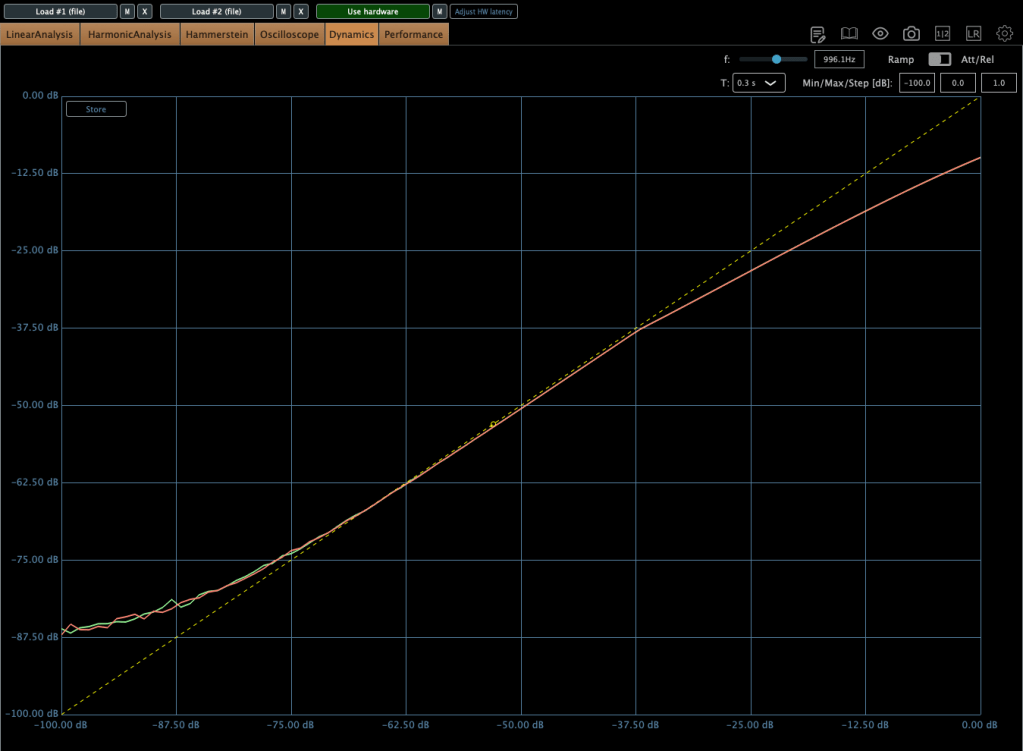
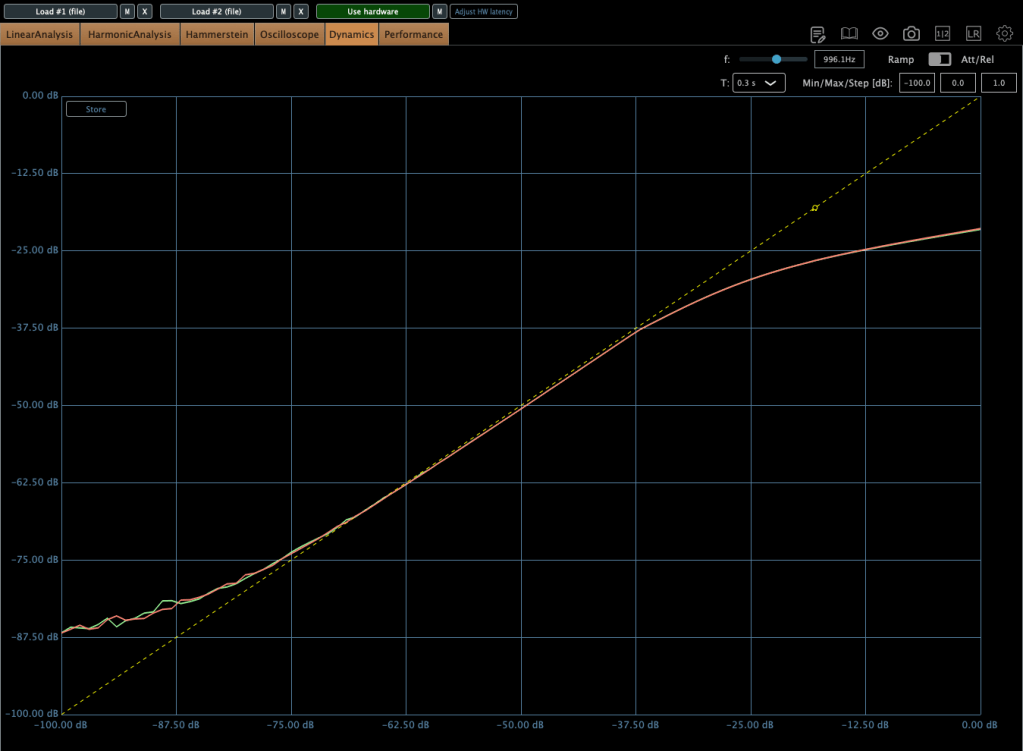
The compression curve shows a gentle knee.
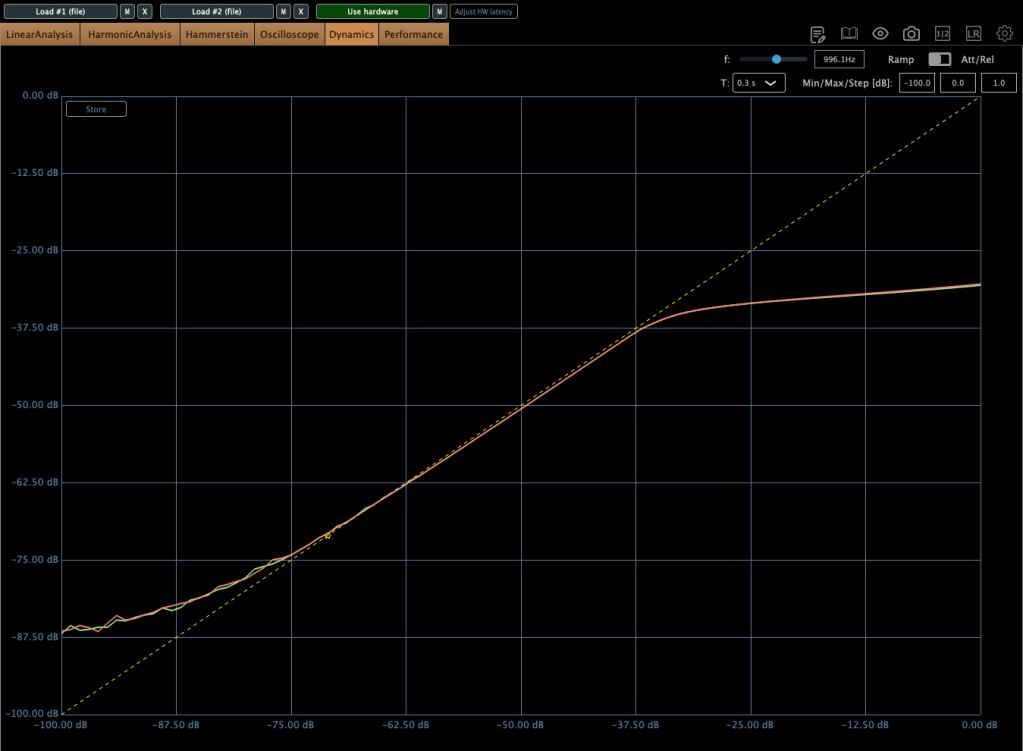
Even when limiting, it’s not a completely hard knee.
This unit has a max input of +22 dBu. Since pro audio typically works at +24 dBu, it’s a bit shy of that, but my interface operates at +20 dBu, so it’s plenty for my mixes or mix bus.
The max output is +26 dBu at 600 ohms, so as long as you manage the input carefully, it should work well for mastering too.
Plugin Measurements
The plugin has a unique feature called “Nuke.” It pushes the input by 20 dB for some intense saturation.
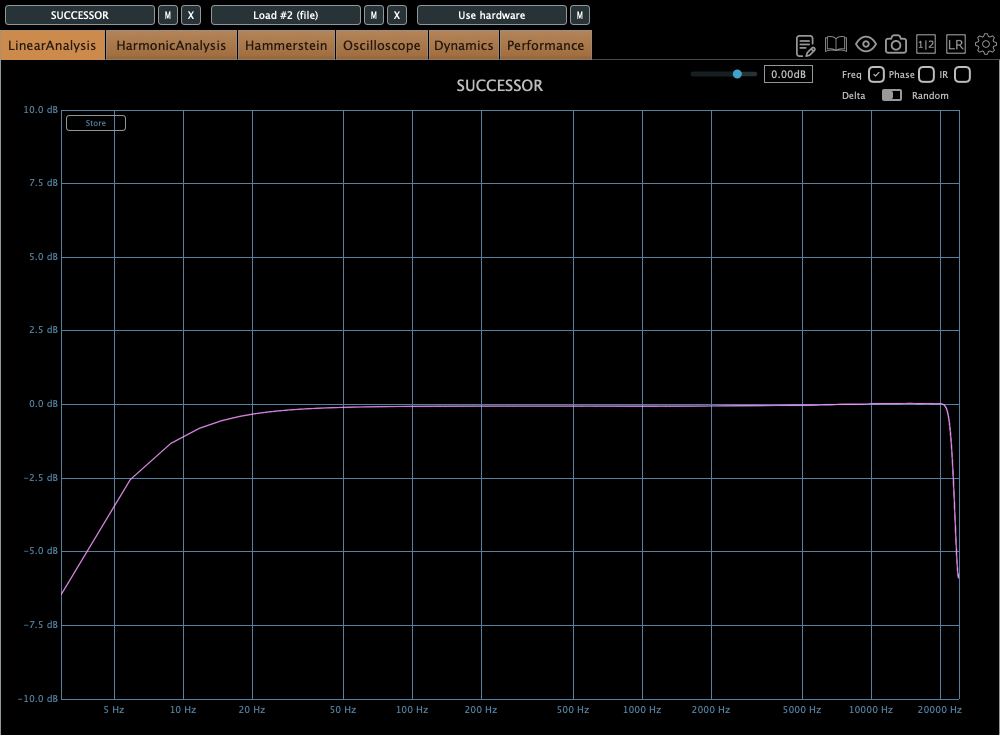
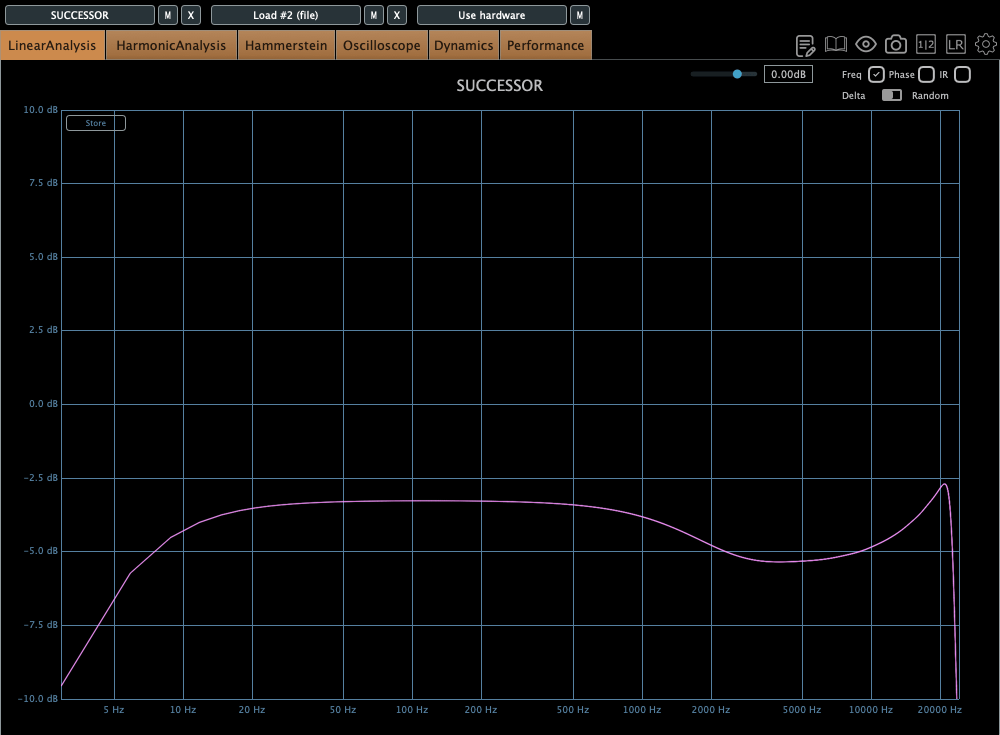
The top figure shows the default Frequency Response, and the bottom figure shows it with the Nuke function enabled.
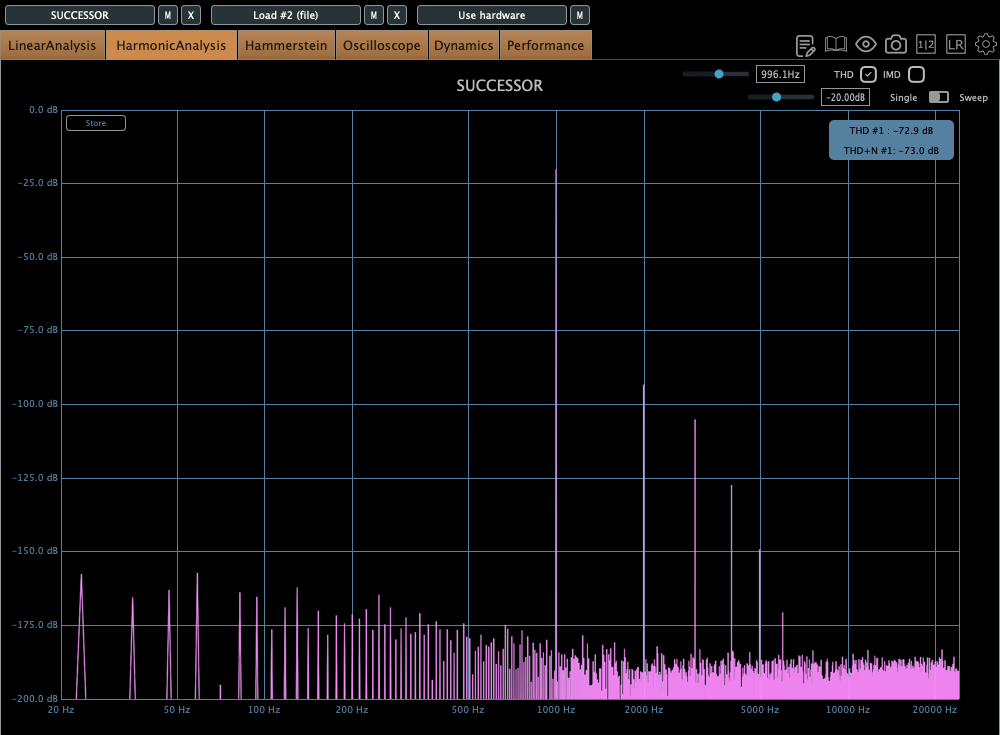
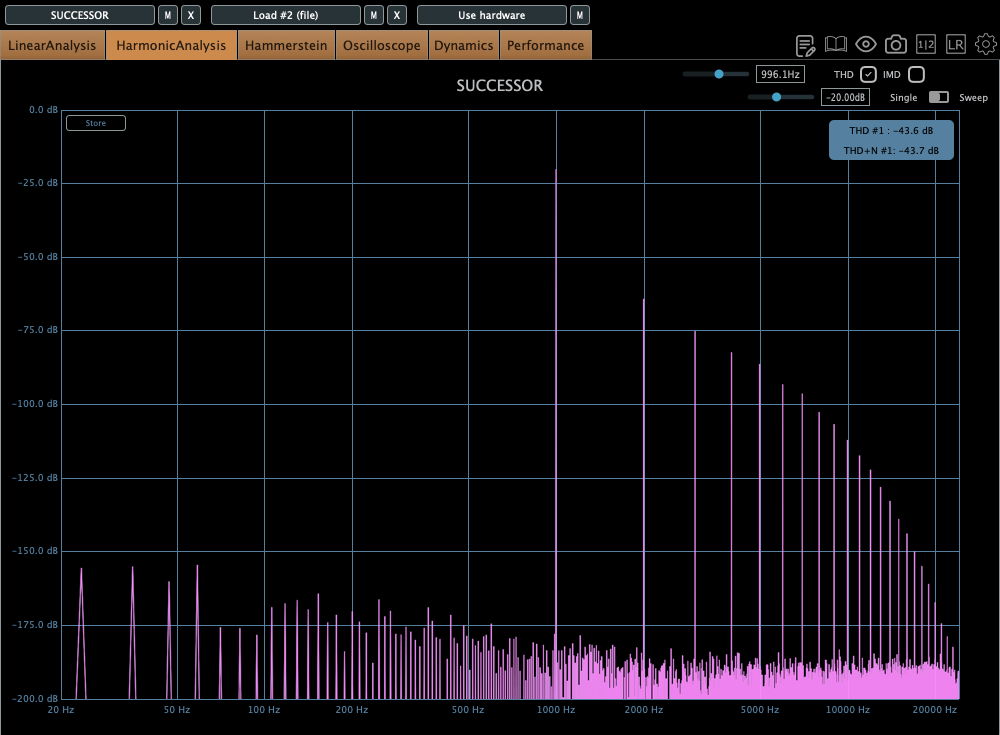
Similarly, the top figure is the default Harmonic Distortion, and the bottom figure is with Nuke activated.
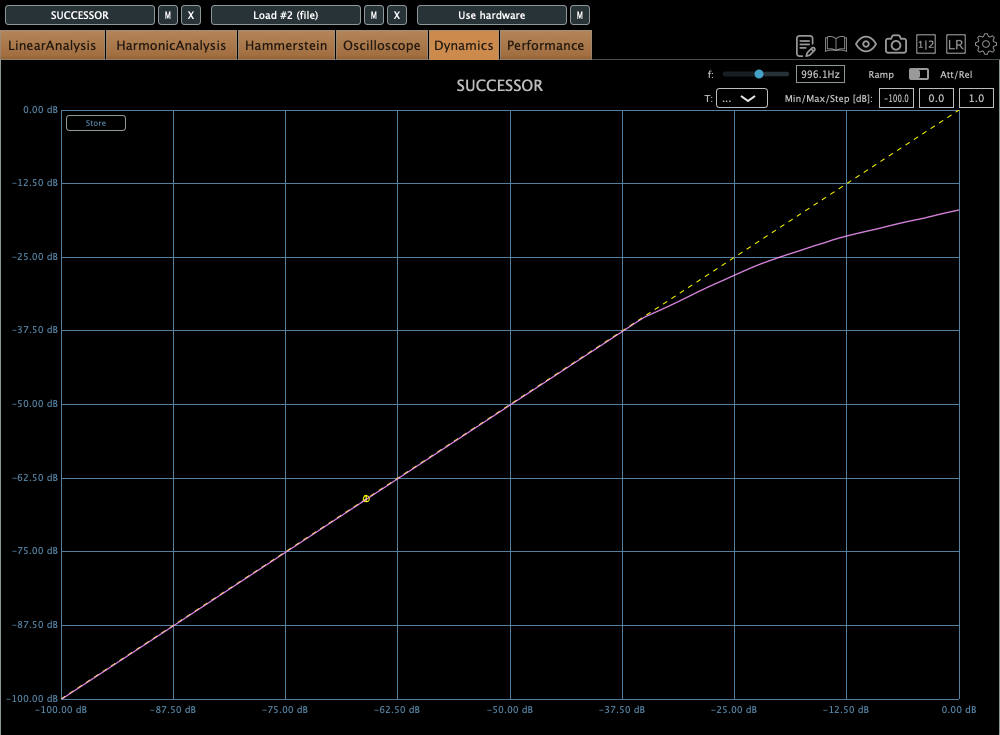
The compression curve feels less like a natural, smooth knee and more like it has a slight two-step bend somewhere.
Personal Impressions
Describing sound in words is probably the hardest thing. Everyone hears and expresses things differently, so… ugh, it’s tough.
Still, here’s what I think:
Hardware
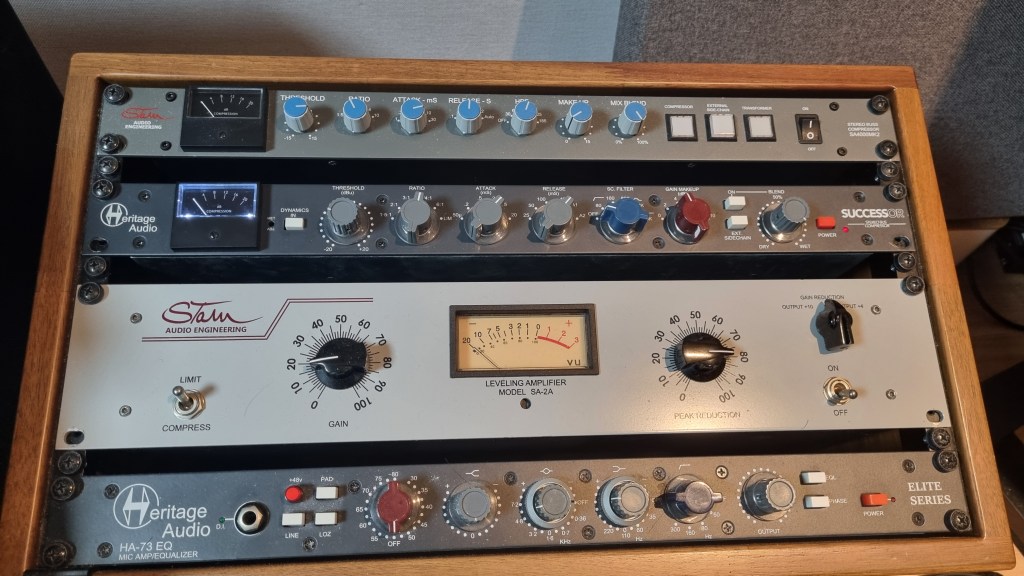
- Compared to the Stam 4000 mk2, the high frequencies feel more alive, which gives it a certain quality that feels worth its price.
- The center feels a bit prominent (maybe because of the transformers?).
- The knobs feel great to turn—probably because they used high-quality variable resistors—and the Threshold and Gain have a subtle stepped feel.
- For its full price, it feels just about right.
Plugin

- The Frequency Response shows better high-end response than the hardware, but that sparkly, satisfying vibe just isn’t there in the plugin.
- The center feels quite prominent. In other words, you might need to tweak it with a stereo imager or something.
- It’s got a lot of character. So, when using it on a bus, you really need to pay attention to how it affects the balance.
Looking back, it sounds like I was pretty harsh on the plugin, but it’s actually good! Diode bridge compressor plugins aren’t exactly common (think UAD Neve 33609C or Arturia Diode 609), so it’s a solid new option to consider.
The hardware? Yeah, it’s great! I wish the highs sparkled just a bit more, but it’s plenty good as is.
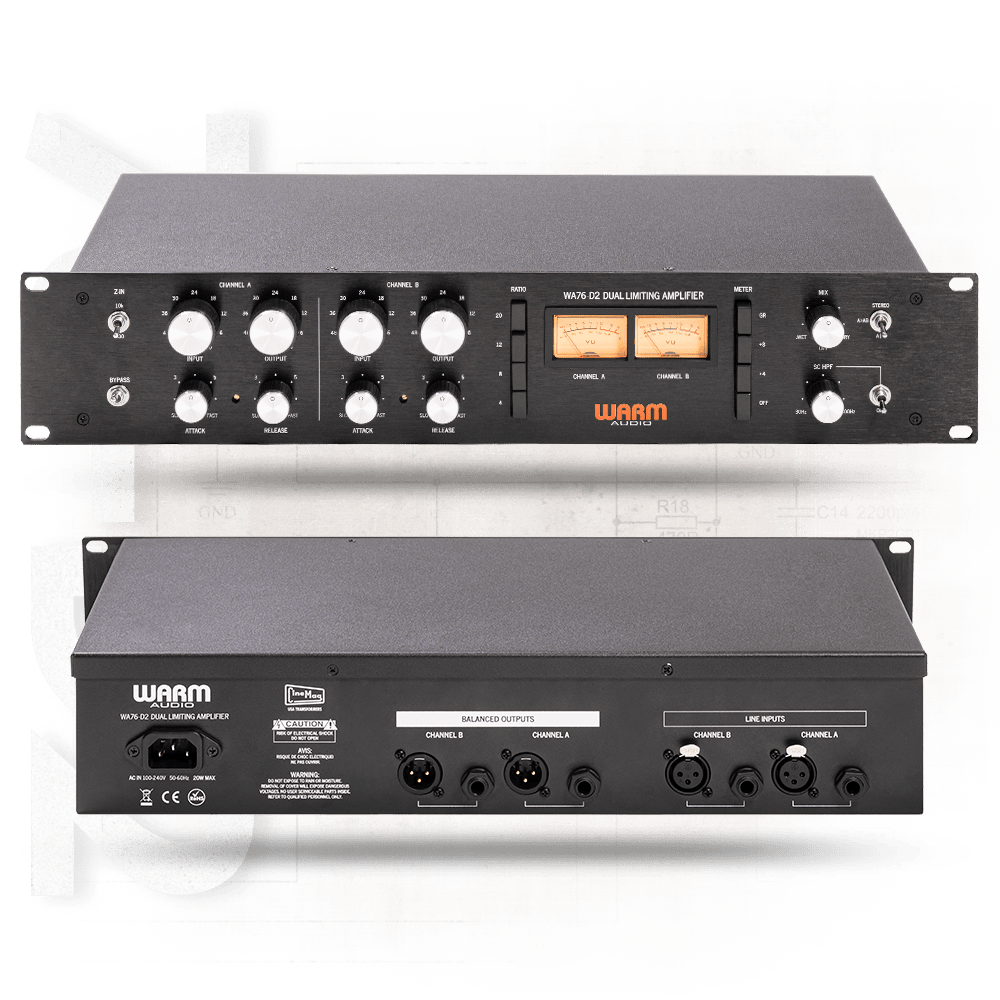
Next up, I’m eyeing the Warm Audio WA76-D2 for a FET compressor. The audio samples sound amazing, but, as always, the biggest hurdle is money… sigh. If a broken one pops up on the secondhand market, I’m jumping on it.
I sometimes wonder if my reviews lean too technical or analytical, but hey, there’s gotta be at least one person out there reviewing stuff like this, right? Haha.
That’s it for today! See you in next post 🙂
 Jooyoung's Music Blog