Black Friday Sale Summary: 2025 Virtual Instruments & Mixing Plugins

Hi! This is Jooyoung Kim, a mixing engineer and music producer. Black Friday is right around the corner, so, as I did last year, I’ll summarize all the plugin sales that I want to recommend for composing, mixing, and mastering music.

This post is not sponsored by any of the plugin companies listed. However, I have an affiliate partnership with Plugin Boutique, so, I’ll provide their purchase links alongside my explanations for any plugins they offer. Furthermore, purchasing through the provided link earns me a small commission that helps support this content..^^ (It’s really hard to make a living these days…haha..)

Then… Let’s start!


1) WAVES
I always recommend plugins made by waves to people around me. While their update plan policy is incredibly frustrating, it certainly doesn’t detract from the quality of their plugins. Additionally, they usually offer significant discounts during the Black Friday season.
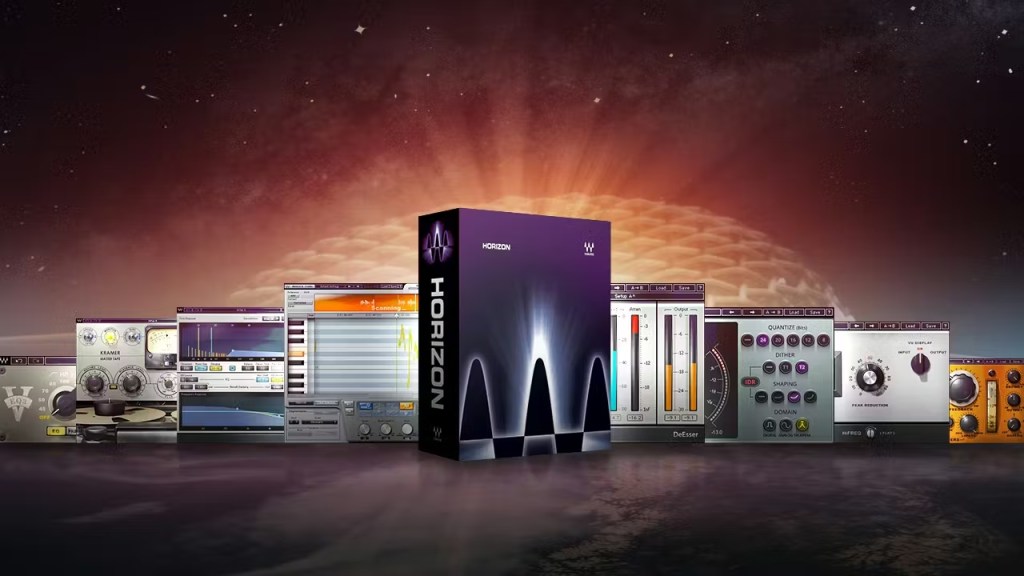
I highly recommend the Horizon Bundle. This bundle features 93 plugins, all of which are highly versatile. The price is only $219(Tax Included), leaving no reason not to recommend it.

Specifically, the CLA series, the Renaissance Compressor, and the H-Delay are my favorites.

2) UAD (Universal Audio Digital)
Universal Audio has lots of useful plugins too. The LA-2A series, the 1176 series and the chamber reverbs are definitely my go-to plugins from UAD.
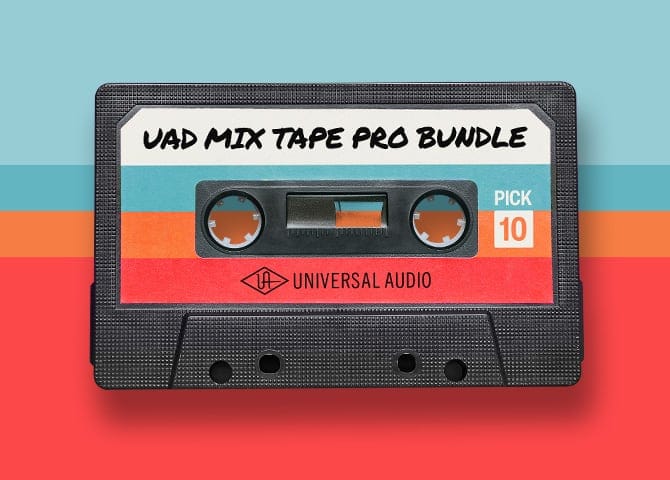
I own quite a few UAD plugins, and they were really expensive before Universal Audio launched the native versions. Additionally, the 10-plugin bundle was also very pricey, if I recall correctly. However, for this Black Friday sale, you can get 10 plugins for only $108.90 (Tax Included). I must admit, I find that a little unfair….^^. It’s a really great deal, so I highly recommend grabbing this opportunity.

If you haven’t had any experience with UAD plugins, I will select my top 10 recommended plugins for you.

  1. Teletronix LA-2A Leveler Collection
  2. 1176 Classic Limiter Collection
  3. API 2500 Bus Compressor
  4. Teletronix LA-3A Classic Audio Leveler
  5. EMT 250 Classic Electronic Reverb
  6. Fairchild Tube Limiter Collection
  7. Pultec Passive EQ Collection
  8. UAD Sound City Studios
  9. Hitsville Reverb Chambers
  10. Lexicon 224 Digital Reverb

3) IK Multimedia

Unfortunately, IK Multimedia already concluded its “Group Buy” event last month, so it is unlikely there will be any additional sales during Black Friday. However, I have written about IK Multimedia’s virtual instruments and mixing plugins previously, so, if you have an interest in this company, please read this article.

4) Arturia

Arturia offers a wide range of virtual instruments and mixing plugins. They boast significantly high quality, tthe only drawback is their high CPU usage. However, as CPU processing speeds have grown rapidly, I believe this is no longer a critical issue.
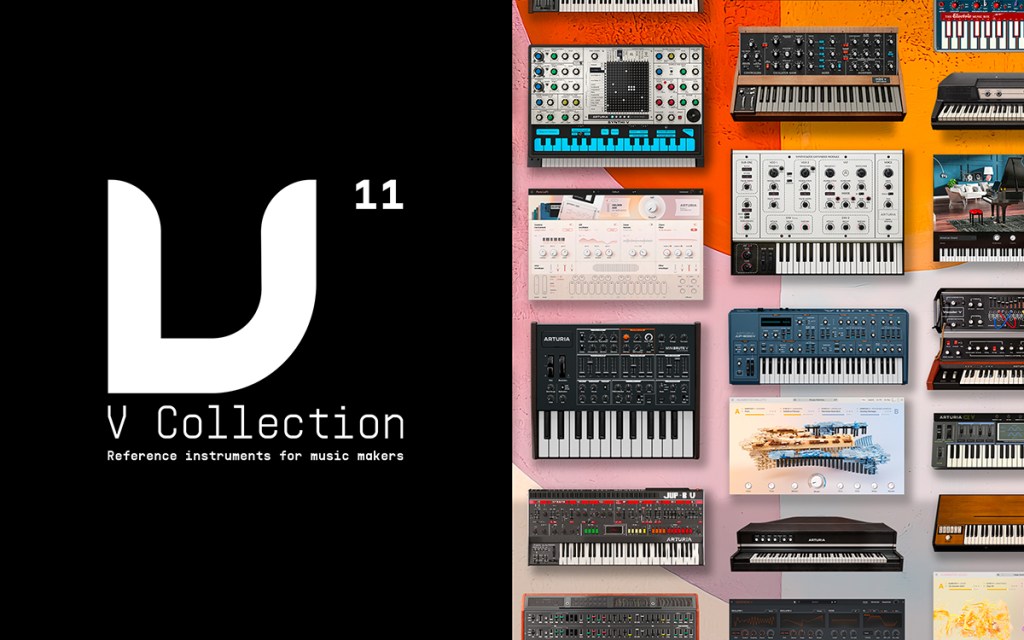
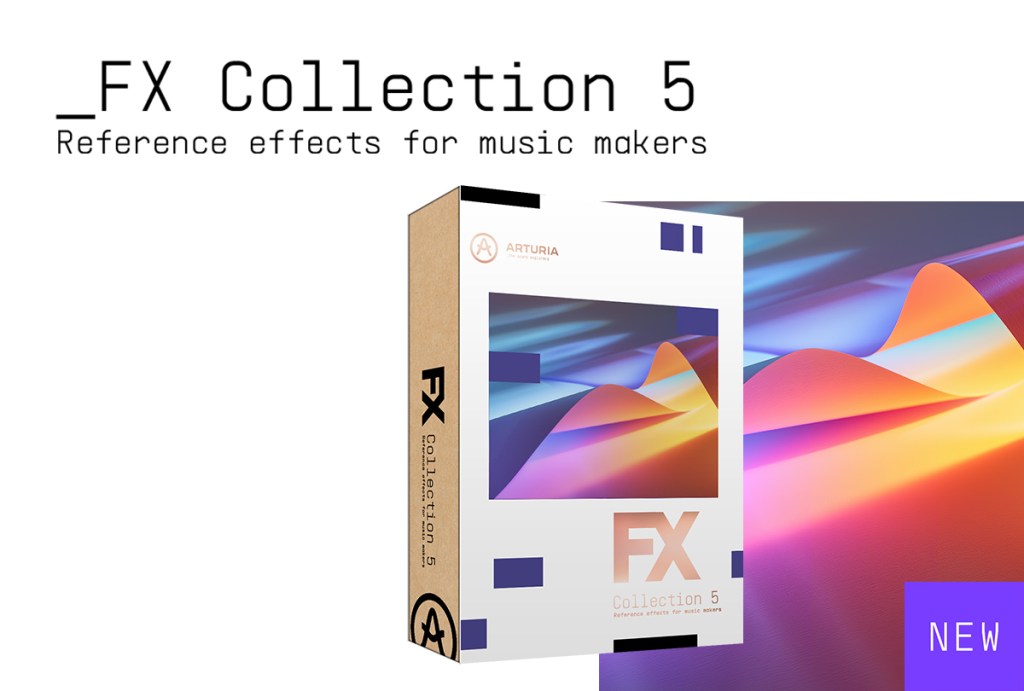
The price of the V collection 11 is $383.90 (Tax Included), and the FX Collection 5 is $273.90 (Tax Included).

I have written reviews before, if you have an interest, please read these articles.

5) Brainworx

Brainworx was founded by Dirk Ulrich, the same individual who established Plugin Alliance. They offer superb mixing plugins with remarkably good quality. They are also remarkably affordable, so you should definitely consider purchasing their plugins if you have a limited budget.

Specifically, I recommend the digital EQ, the bx_digital V3, from Brainworx. At just $11 (including tax), it is incredibly useful for identifying the frequencies where resonances occur.

6) Celemony -Melodyne
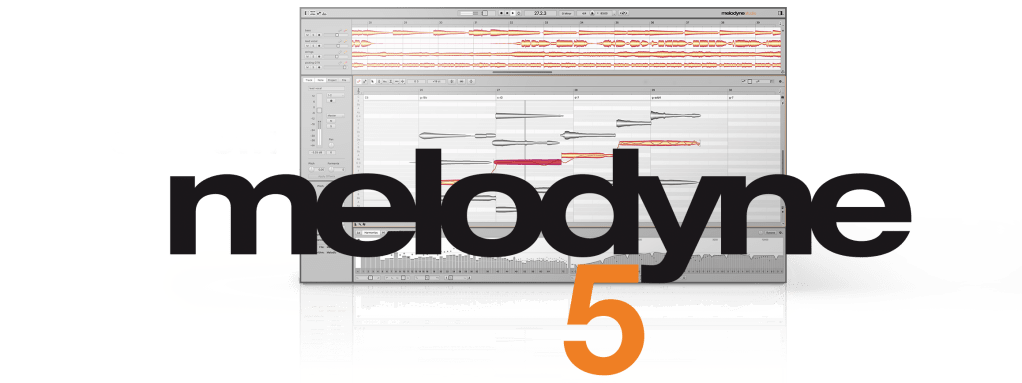
I currently use three main pitch correction plugins: Auto-Tune, Melodyne, and Revoice Pro. However, I find Melodyne to be the most intuitive plugin. I use it on almost every project.

The Studio version is now $301.40 (Tax Included).

7) Native Instruments

Native Instruments sells a lot of virtual instruments. Their Komplete bundle is their most famous, and it features a 50% upgrade discount during Black Friday.
8) Cableguys
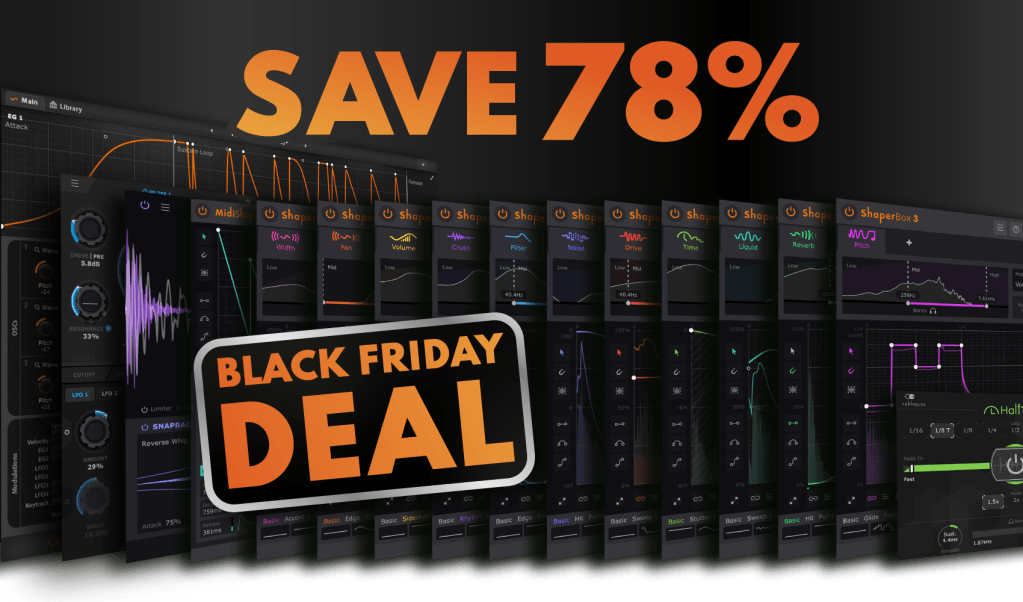
I think you need Cableguys’ plugins if you want to create a modern-sounding track. Recently, many producers and composers are making the source audio groovy, and these grooves are created through artificial manipulation.

Cableguys’ plugins are made for these purposes.

I recommend Shaper Box 3 (at $97.90 including tax). Also if your budget is larger, the Cableguys bundle (at $163.90 including tax) is a great choice.

9) Eventide

Eventide’s reverb plugins are truly irreplaceable. The Blackhole reverb and the ShimmerVerb reverb are strongly recommended.

10) BFD Drums
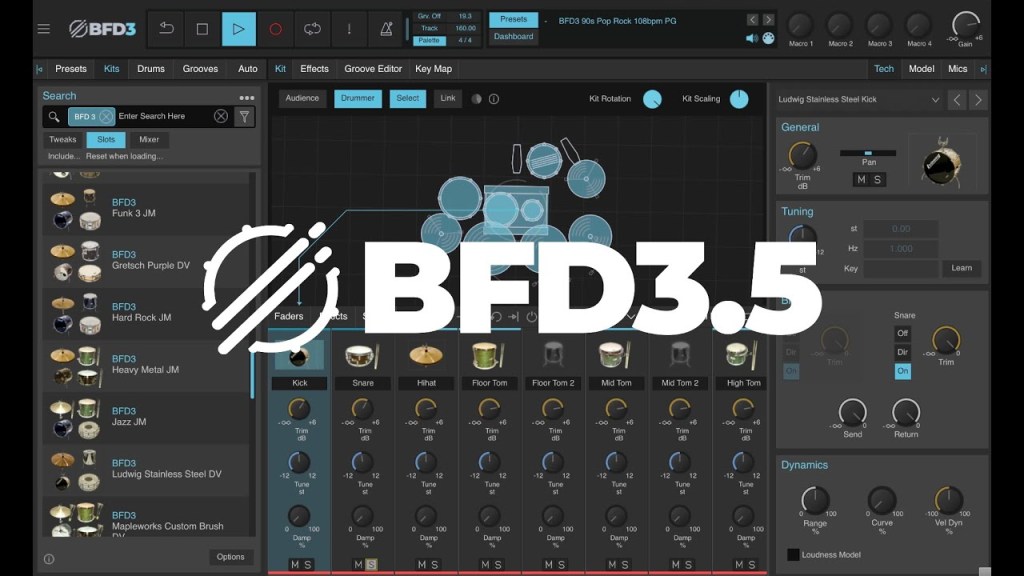
I love the BFD drum plugin. My main drum VST is BFD, and their sounds are exceptional. While it has a steep learning curve, once you understand its complexities, it will provide truly realistic drum sounds.

The drum sounds on this song were created using BFD drums.

The basic components are quite good, but I highly recommend buying the London Sessions expansion pack.

BFD 3.5 is currently only $42.90 (tax included), and the expansion pack is only $20.90 (tax included). I strongly recommend these two products.

11) iZotope
iZotope offers famous plugins like the RX and Ozone series. They also have excellent reverb plugins. Currently, they are offering a 40% discount on their bundle upgrades.

12) Plugin Alliance
Since a certain point, Plugin Alliance began including tax when they sell their products to international customers on their website. Therefore, there is no compelling reason to buy their plugins directly from their website. You can earn points and free plugins when you purchase plugins through Plugin Boutique. Thus, I highly recommend purchasing them there instead.

My favorites include the Maag EQ4, the SPL series, and the Bettermaker C502V plugins.


I believe that covers all the main recommendations. There are still a few plugins I would like to recommend, but they are either not currently on sale or have fully transitioned to subscription models (like Musio 1).

Honestly, these days, I feel that plugins are not the most crucial factor in music production. The ideas and concepts are the most important aspects. Sound design and engineering are just the finishing touches to the music.

So, if you want to make meaningful music, I would advise against spending a lot of money on plugins you might use in the future. Just buy what you need now.

Then.. have a nice Black Friday season!

Working on “Miwha” EP with Danny Boy

Hello, everyone! This is Jooyoung Kim, a mixing engineer and music producer.

Today, I’d like to share the story of an EP project called Miwha, which I worked on with a friend this past summer.

The EP was released on November 8th, so it’s already been nearly a month! I kept meaning to write about it here but had too much going on. Finally, I’ve found some time to share it with you.


About the Artist

The artist, originally known by his Korean name, Hanseong Kim, has been an indie band musician. For this project, he rebranded himself as Danny Boy and wanted to explore a new musical style.

He came across some of my past work and asked me to handle the production for this EP. We ended up working on a total of four tracks together.

The Production Process

  1. Initial Submission: The artist sent me rough Logic projects with basic piano chords, vocals, and song structures.
  2. Arrangement: I added instrumental arrangements.
  3. Recording: We recorded vocals.
  4. Final Touches: I handled vocal tuning, mixing, and mastering.
Initial Logic Project
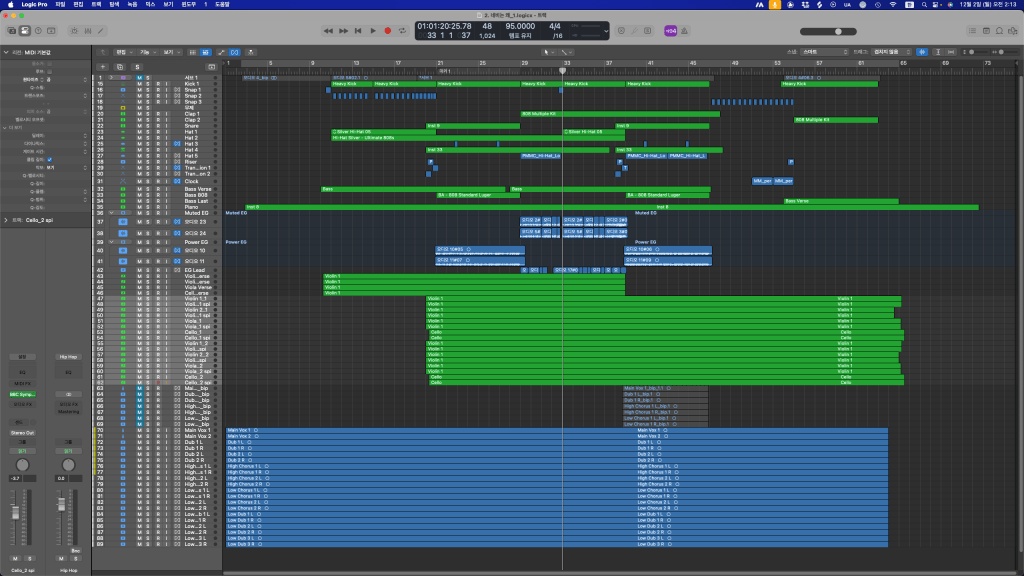
Arranged and Mixed Project

Track Breakdown

Track 1. 귀엽게 입었어 (Dressed Cute)

The artist originally used Logic’s built-in Fender Rhodes virtual instrument for the comping, which matched the vibe perfectly. I decided to use Arturia’s Stage 73 V for the main tone.

Since the lyrics were playful, I kept the arrangement simple rather than overcomplicating it. Initially, I considered layering lots of vocal harmonies but ended up scaling back for a cleaner feel.

Recording went smoothly, and everything came together nicely.


Track 2. 네비는 왜? (Why GPS?)

This is my favorite track on the EP. 😊

The initial demo was a simple four-chord loop. To match the melody, mood, and tempo, I opted for a Japanese-style arrangement, breaking up the chords and adding more complex instrumentation.

I used string libraries like Musio and mixed it with either LASS or BBCSO for texture.

The artist gave me free rein with this one, so I even modified the song form. It was a lot of fun but also very time-consuming.

The vocal recording was particularly tricky. The artist’s voice had some harsh resonances in the high-energy parts, so I had to use a notch filter—something I rarely do for vocals.


Track 3. 미화 (Miwha)

This track was the hardest to arrange.

I wanted to add subtle swing or groove with 16th-note drums, but the artist preferred a straight 8th-note drum feel, so we stuck with that.

The song features both electronic and acoustic drums:

  • Trap-style electronic drums for the rap sections.
  • Acoustic drums for the chorus.

The artist had sketched out the basic chords with Logic’s built-in Wurlitzer piano, so I replaced it with Arturia’s Wurli V2.

The Bye Bye vocal chop in the intro was a fun accident—it was originally just a vocal ad-lib that sounded like “Bye” after pitch-shifting. It worked so well we decided to keep it.

The rap recording had its challenges since it was the artist’s first time rapping, but we made it work!


Track 4. 그럼에도 (Nevertheless)

This ballad-style track was relatively straightforward in terms of arrangement but took the longest to record.

With its slow tempo and vocally-driven melody, every line had to be carefully sung, especially since the lyrics in the first and second chorus differed.

Recording all the vocal parts left both me and the artist completely drained. We started recording at around 2 or 3 PM and finished the final track around 1:30 AM. This particular song alone took over three hours to complete!


Final Thoughts

The project spanned about two and a half months, from early July to mid-September. It was a whirlwind of a summer.

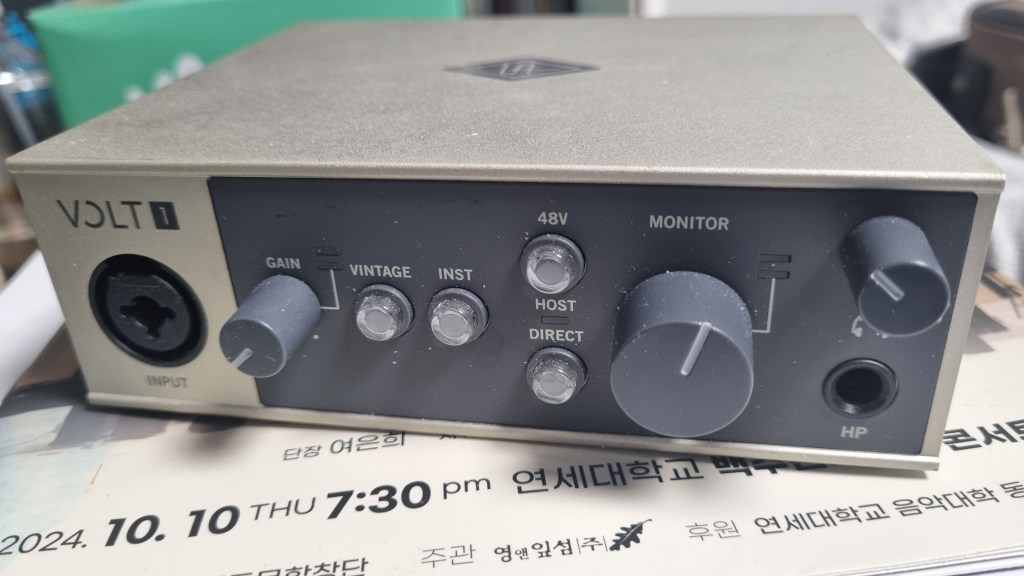
Since we were working on a tight budget, I handled most of the production solo. For the recordings, a director friend lent us his studio, where I used:

  • Preamp/EQ: HA-73EQ
  • Microphone: Peluso P87
  • Audio Interface: UA Volt1

I also brought my Nero monitor controller, reflection filter, stands, cables—pretty much everything. Looking back, I should’ve taken more photos of the setup.

This experience reaffirmed that even with an affordable interface, good input gear and recording conditions make all the difference. Honestly, in most cases, something like a Focusrite Clarett should suffice if the rest of the chain is solid.

That said, I understand why studios lean toward higher-end gear for versatility and reliability. If it weren’t for my summing mixer, I’d probably use simpler equipment too.

I had so many thoughts during the production process that I wanted to write down, but now that I’m finally writing this, it’s hard to recall everything.

Anyway, that’s it for today! See you in the next post. 😊

The Basics of Mixing – 10.1 Modulation Effects (Part 2)

Hello, this is Jooyoung Kim, a mixing engineer and music producer!

Continuing from my previous post, today we’re diving deeper into modulation effects.

This content is based on my book, The Basics of Mixing, which I wrote in Korea.

Let’s get started!


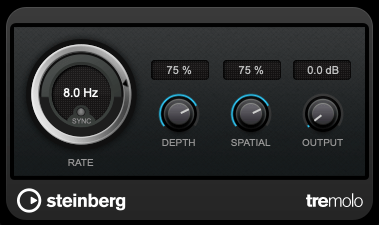
1) Tremolo

As previously mentioned, modulation effects involve altering a parameter over time. Tremolo specifically modulates volume over time.

When applied heavily, it can create a pulsing effect, and it’s also useful for adding an artificial groove to your track.


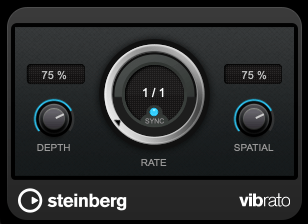
2) Vibrato

Vibrato, unlike tremolo, modulates pitch instead of volume.

Pretty simple, right?


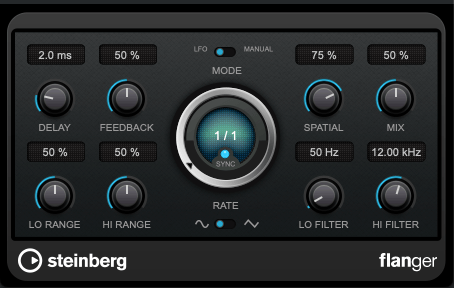
3) Flanger

The flanger effect has roots tracing back to Christiaan Huygens, the Dutch mathematician, physicist, and astronomer. (For those familiar with physics, you might recall Huygens’ Principle from studying waves!)

Flanger works by duplicating the original sound and playing the copy after a very short delay, creating what’s known as a comb filter effect.

By adjusting the delay time, the peaks and troughs in the frequency response created by the comb filter shift back and forth.

This may sound complex, but experimenting with it will make the concept much clearer. It’s this shifting comb filter effect that produces the signature whooshing or “rocket-like” sound of flanging.


4) Chorus

Chorus is similar to flanger but has a few key differences.

In chorus, the original sound is copied and delayed (often with multiple copies), but the delay time is longer than in flanging. Additionally, chorus effects often include adjustments to panning and pitch, creating a richer and fuller sound.


5) Phaser

Phaser is another modulation effect that shares similarities with flanger but operates differently. Instead of applying a short delay like flanger, a phaser uses an all-pass filter to manipulate the phase of the sound.

This phase-shifted sound is then blended with the original, resulting in a comb filter effect, just like flanger. However, the method of achieving this effect gives phasers their unique, swirling sound.

If you look at the waveforms, you’ll notice the phase shifts caused by the phaser. While the subtle changes in pitch can also be observed in the waveform, it’s tricky to capture it perfectly in a screenshot.


Final Thoughts

Understanding the principles behind these effects can help, but hands-on practice is essential to mastering their use. Spend time experimenting with these effects to familiarize yourself with their unique sounds and applications.

Both theoretical knowledge and practical experience are crucial, so try to balance learning with experimentation!

See you in the next post! 😊

2024 Black Friday Virtual Instruments and Plugins Sale Guide: Part 2 – Virtual Instruments

Hello! This is Jooyoung Kim, mixing engineer and music producer, and singer-songwriter.

Now, let’s dive into Part 2 – Virtual Instruments (Synthesizers, Sample-Based Instruments, Orchestration Tools).

As mentioned in Part 1, I’ve collaborated with Plugin Boutique for this guide. Links to products on Plugin Boutique will direct you there, while those unavailable on their platform will link to their respective websites or other discount pages.

Purchasing through Plugin Boutique links provides me with a small commission, which helps support my work. Your support is greatly appreciated!

This section is organized by instrument type for easier navigation.


Virtual Instruments

1) Acoustic Drums

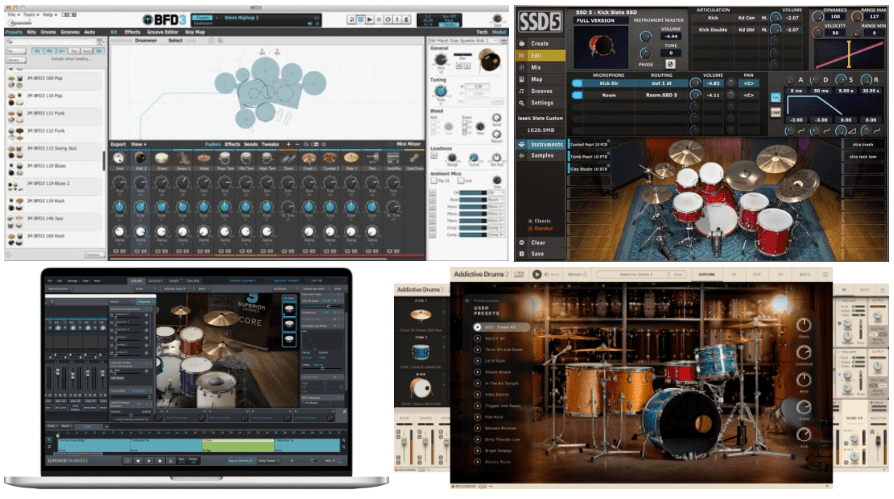
  • BFD3: My go-to acoustic drum plugin. While the initial setup might seem tricky, just a bit of knowledge about drum recording will let you create realistic drum tracks. At $42.9, it’s a steal! However, you’ll likely need to invest in some expansion packs for serious use.
  • SSD5.5: Another solid acoustic drum plugin. Currently priced at $49. It also requires expansion packs for full functionality. I used to use the free version back on Cubase 10 with Windows, though there were compatibility issues back then. These should be resolved now.
  • Superior Drummer 3: Although I haven’t used this personally, it’s a favorite among pop producers. It comes with a wealth of preloaded sounds but is quite pricey at €299 (Black Friday price).
  • Addictive Drums 2: I haven’t tried this one either, but it seems to be a popular choice for simpler setups. Their discounted collections include the Custom Collection (3 kits for $92.4), Custom XL Collection (6 kits for $178.2), and Custom XXL Collection (10 kits for $273.9).

2) Piano & Synthesizer Emulations

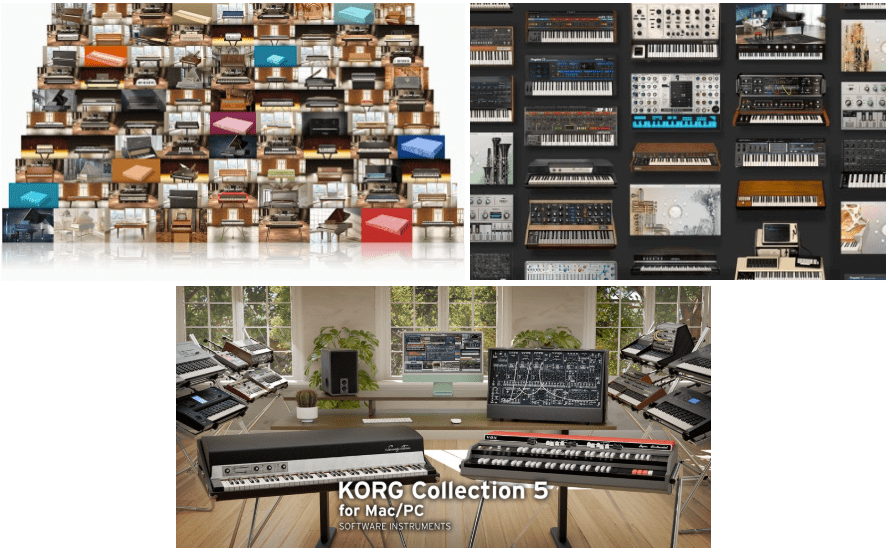
  • UVI Key Suite: Offers an extensive and diverse library of sampled pianos and synthesizers, surpassing even Keyscape. At $224, this is a great deal if you’re looking for an all-in-one bundle.
  • Arturia V Collection X: Arturia excels at emulating classic synthesizers. This collection features 39 instruments, including acoustic pianos (Piano V, with nine piano types), electric pianos, and synthesizers. Priced at $328.9, it’s worth exploring if you love classic sounds.
  • Korg Collection 5: This bundle includes 15 emulations of iconic Korg synthesizers and is priced at $328.9.

Other honorable mentions include Native Instruments Komplete, Roland Cloud subscriptions, Xfer Serum, Keyscape, and Omnisphere, though they don’t seem to have discounts at the moment. Perhaps on the day itself?


3) Bass Virtual Instruments & Guitar Effects

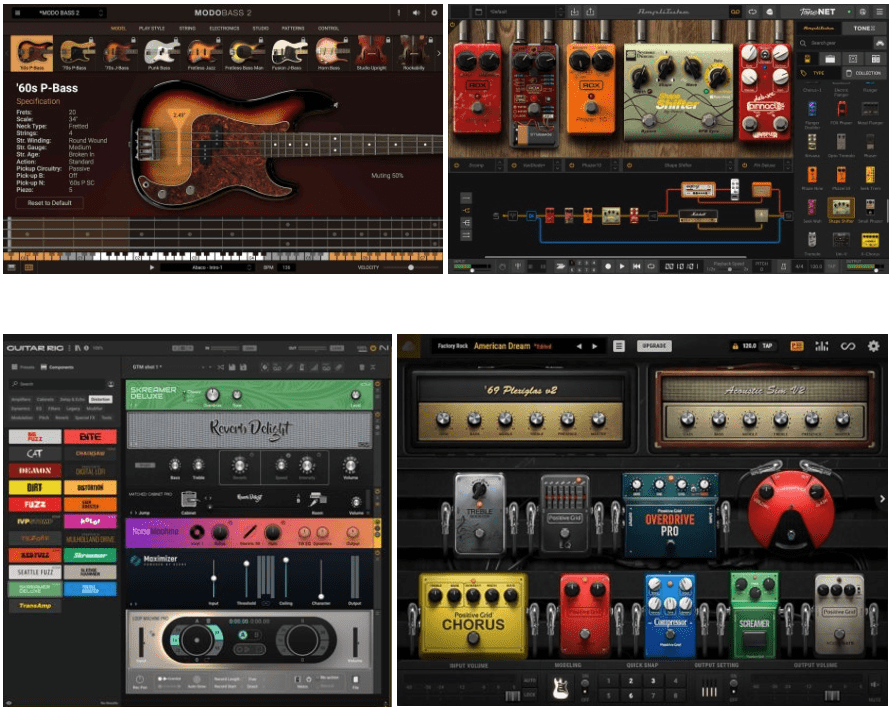
  • IK Multimedia Modo Bass 2: Instead of purchasing the bass plugin alone ($54.99), consider the IK Multimedia Total Studio 4 MAX bundle ($164.99) for better value. Many are transitioning from Trilian to this plugin, though I ended up buying a physical bass instead.
  • Scarbee Series: Decent bass libraries, but it’s better value to purchase them as part of Native Instruments Komplete during sales.
  • IK Multimedia Amplitube 5 MAX v2: A must-have for guitarists. With both bass and guitar amp simulations, it’s a versatile tool priced at $109.99. Again, Total Studio 4 MAX is more cost-effective.
  • NI Guitar Rig 7 Pro: Another top-tier effects processor for guitarists. However, for composers, it’s wiser to wait for a Komplete sale rather than buying this standalone ($103.4).
  • Bias FX2: Widely used among guitarists. Currently 50% off at $149—definitely worth checking out.
  • Brainworx Guitar & Bass Bundle: Includes 24 amp models, 7 pedals, and various effects, all for $69.3. With 34 plugins in total, it’s an excellent value for its price.

Unfortunately, Trilian, the staple of bass virtual instruments, doesn’t seem to be on sale either. Perhaps closer to the day?


4) Strings & Orchestration Tools

  • Musio 1: Amazing value! With over 80 instruments (including the iconic Cinesamples library) at $163.9, this is a no-brainer. Updates are ongoing, and though a “2” version may be on the horizon, this is still an unbeatable deal.
  • Spitfire Audio: A classic name in orchestration. Albion One is great for cinematic sounds, while Chamber Strings suits pop strings. BBCSO is excellent for classical vibes, and their Abbey Road and Studio series are worth exploring.
  • EastWest Sounds: Known for their Hollywood Orchestra OPUS Edition and Symphonic Orchestra. Their Pop Brass and Voices series are also excellent. Their ComposerCloud subscription is discounted at $149/year for Black Friday.
  • VSL (Vienna Symphonic Library): Produces ultra-realistic orchestral libraries with a steep price tag and a learning curve. Ideal for professionals dedicated to orchestration.
  • Orchestral Tools: A long-established brand, now offering 50% off. Their Berlin series is highly recommended.
  • Project SAM: Known for their Symphobia series, which is great for cinematic sound design. Symphobia 1 and 2 are staples, while 3 and 4 add more nuanced effects.
  • Audiobro: Popular for Korean pop strings, particularly the LA Scoring Strings series. They’re now pushing their Modern Scoring series as well.

Closing Thoughts

I wanted to include samplers or sound effects for video work, but I’m less familiar with these areas. I primarily use Logic’s built-in sampler and NI Battery. Also, since I play guitar myself, I didn’t cover virtual electric or acoustic guitars here.

Hopefully, this guide helps you navigate this year’s deals!

Stay tuned for the final part, covering effects plugins and miscellaneous tools—coming soon. Time to recharge before tackling the rest!