Hi! This is Jooyoung Kim, a mixing engineer and music producer. Today, I’ll introduce granular synthesis, which is composed of “grain” units.
The principle of this type of sound synthesis is very similar to the concept of sampling. Granular synthesizers take small parts of a sample and store them as units. Those units are called “grains.” That is where the name “Granular Synthesis” comes from.
The grains have lengths ranging from approximately 1 to 100 ms, and these samples can be played at different times, phases, speeds, and frequencies in a granular synthesizer. Thus, cloudy sounds that resemble long reverberations and continuous tails are produced by these manipulations.
In 1947, Dennis Gabor introduced this concept, which was first implemented in a computer in 1974 by Curtis Roads, an electronic music composer specializing in granular and pulsar synthesis. The spans are quite long, aren’t they?
The emergence of granular synthesizer hardware was significantly delayed due to the large computational requirements and high CPU speed needed for the calculations. Thus, the real-time version of this synthesizer emerged 12 years after the use of granular synthesizers in Curtis Roads’ music.
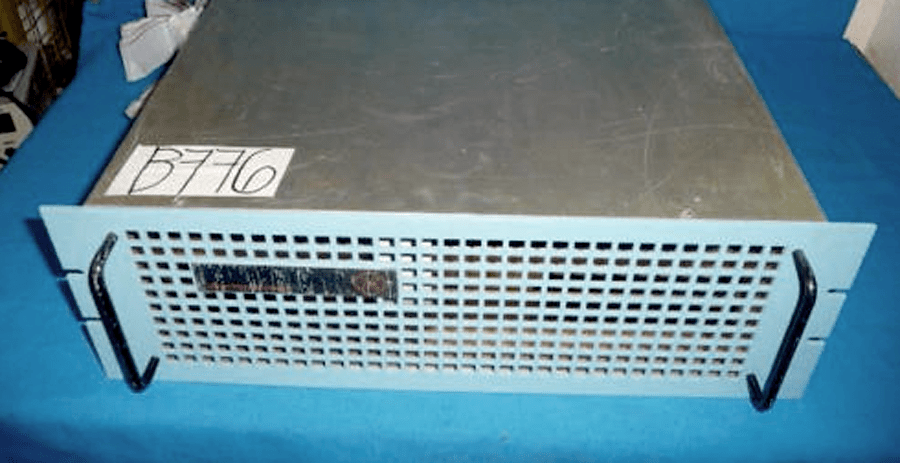
The real-time granular synthesis was invented by Barry Truax, a Canadian composer. This synthesis was processed by the DMX-1000 computer.

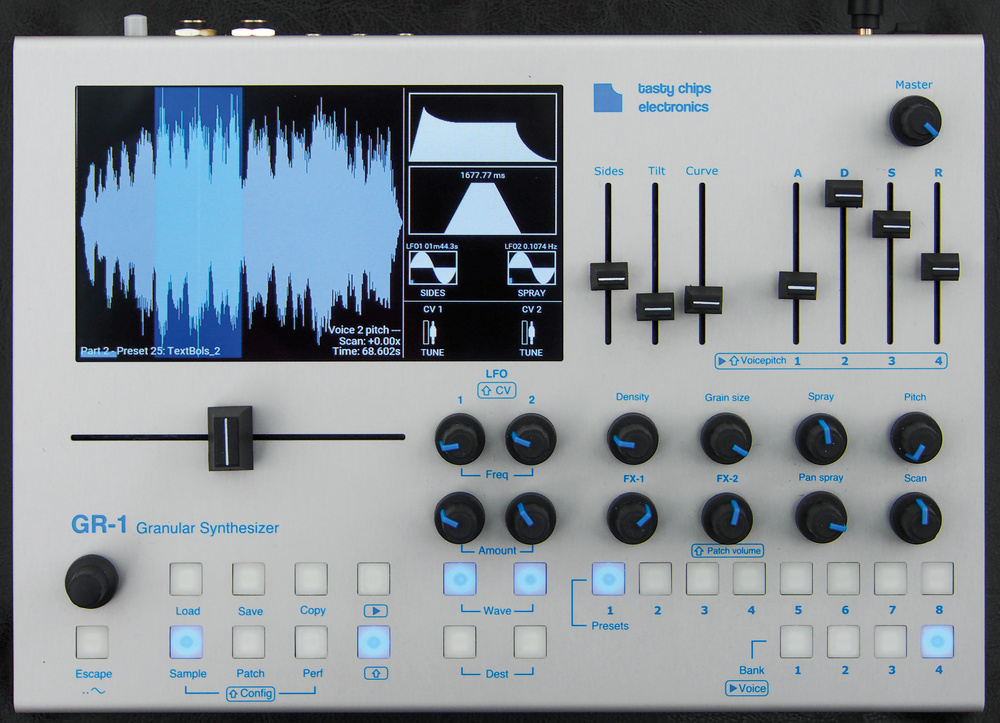
Naturally, you might wonder about the existence of physical hardware, as with other synthesizers. The upper photo shows the modern, dedicated granular synthesizer hardware, the GR-1, which was released in 2017.
This shows that this kind of synthesis processing requires a lot of computing resources. And this means that many virtual synthesizers using this method require significant computing power.
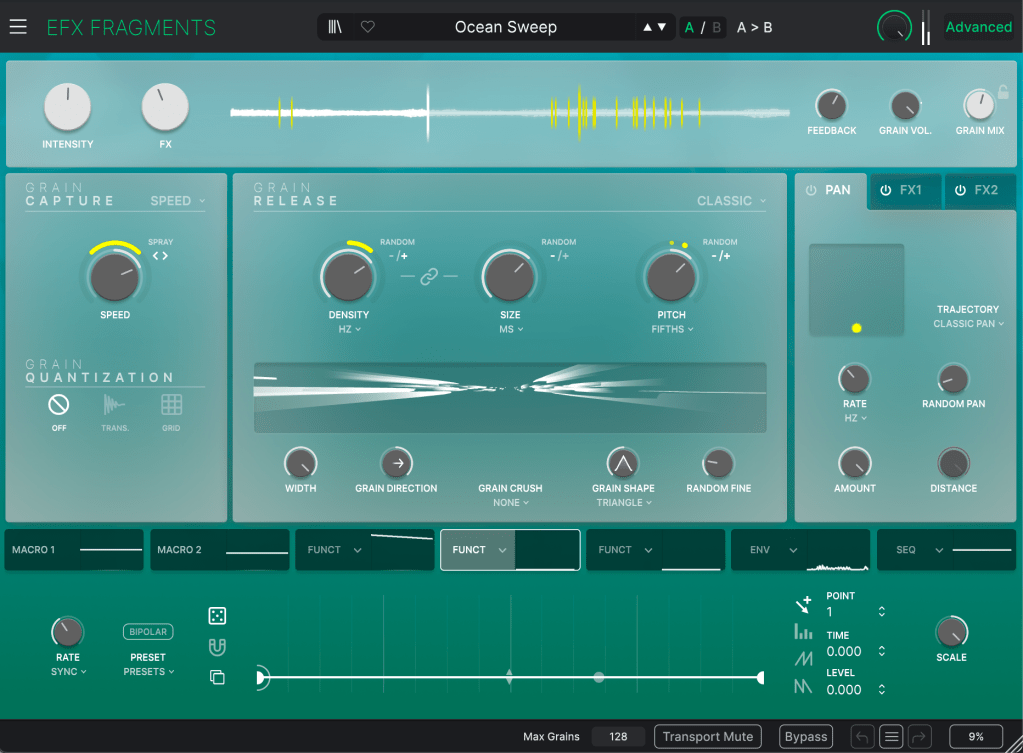
However, for implementation in DAWs (Digital Audio Workstations), no physical hardware is needed to use granular synthesis. Arturia’s EFX Fragments is a great example.

Output’s “Portal” plugin is another excellent granular effect.
This is the official video of the EFX Fragments. You might hear the “shimmering sound” from it.
This sound could be effective in ambient music that requires long tails on the sounds. I like these sounds, but I’ve never used them in my music… ^^;; However, someday I will…
OK, I’ll wrap this up today. See you in the next post!
 Jooyoung's Music Blog