Hello! This is Jooyoung Kim, a mixing engineer and music producer. Today, I’ll talk about the phase distortion synthesis method and synthesizers.
This post includes a few affiliate links. If you make a purchase through them, I may receive a small commission, which helps me keep writing…^^
In my last post, “Basics of Synthesizers (4) – Modulation Synthesis and FM,” I mentioned that Yamaha’s DX7 was called an FM synthesizer, but in reality, it uses phase modulation synthesis. Also, I already explained the phase modulation in short. Therefore, I will not discuss phase modulation further.
However, there is one more signal synthesis method, Phase Distortion (PD), invented by Casio, which uses the phase of the signal. Its principle is similar to that of Phase Modulation, which was invented by John Chowning.
The picture illustrates how the PD method works. First, you can see that the basic frequency counter resets to zero after a certain period – (a).
There is also another frequency counter with a slightly higher frequency than (a), which resets to zero when the (a) signal resets to zero – (b).
(b) signal is used the phase value of the sine signal – (c).
The inverted base signal (a), which is used as a windowing function that goes to zero at the end of the period -(d).
The final output signal obtained by multiplying (c) by (d). This multiplication levels out the sudden jump in (c), resulting in a smooth, filtered PD waveform – (e).
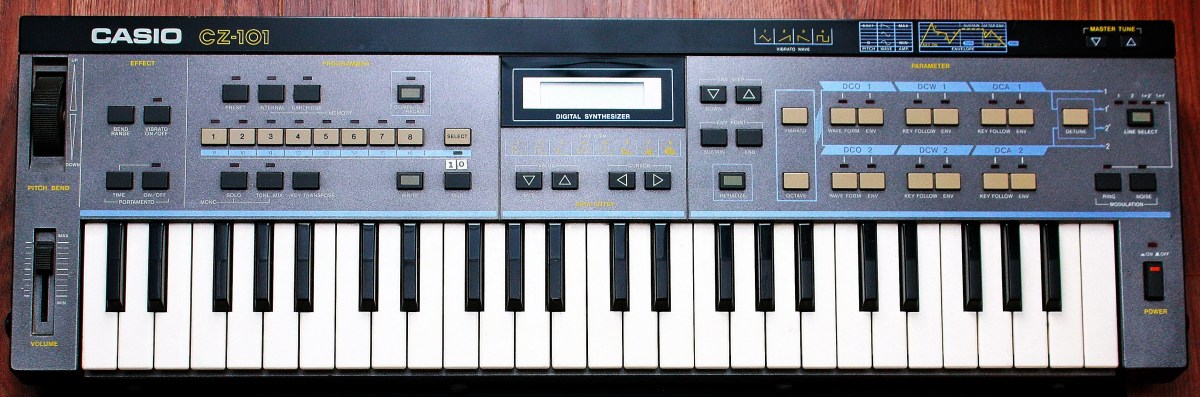
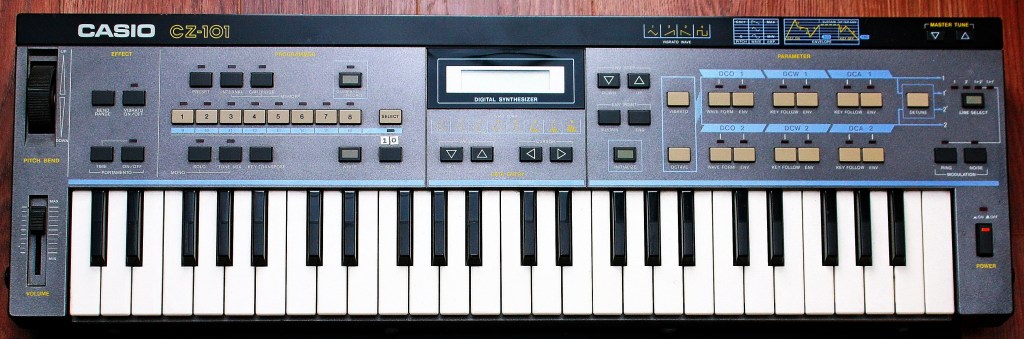
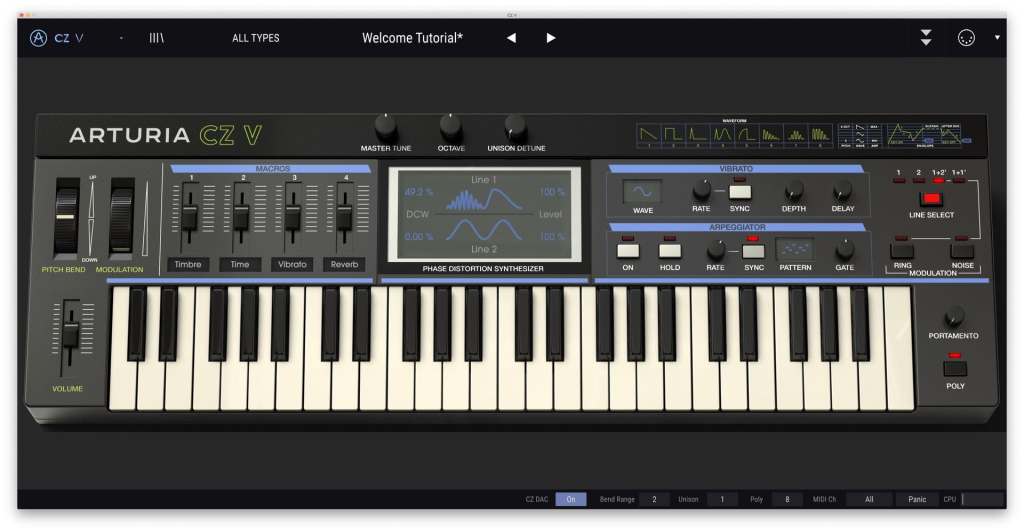
Phase Distortion (PD) method hardware synthesizers are not sold by other companies besides Casio. Therefore, if acquiring the real hardware is too expensive or inconvenient, using software emulations like Arturia’s CZ-V is a handy alternative.
Hi! This is Jooyoung Kim, a mixing engineer and music producer. Today, I’ll introduce granular synthesis, which is composed of “grain” units.
The principle of this type of sound synthesis is very similar to the concept of sampling. Granular synthesizers take small parts of a sample and store them as units. Those units are called “grains.” That is where the name “Granular Synthesis” comes from.
The grains have lengths ranging from approximately 1 to 100 ms, and these samples can be played at different times, phases, speeds, and frequencies in a granular synthesizer. Thus, cloudy sounds that resemble long reverberations and continuous tails are produced by these manipulations.
In 1947, Dennis Gabor introduced this concept, which was first implemented in a computer in 1974 by Curtis Roads, an electronic music composer specializing in granular and pulsar synthesis. The spans are quite long, aren’t they?
The emergence of granular synthesizer hardware was significantly delayed due to the large computational requirements and high CPU speed needed for the calculations. Thus, the real-time version of this synthesizer emerged 12 years after the use of granular synthesizers in Curtis Roads’ music.
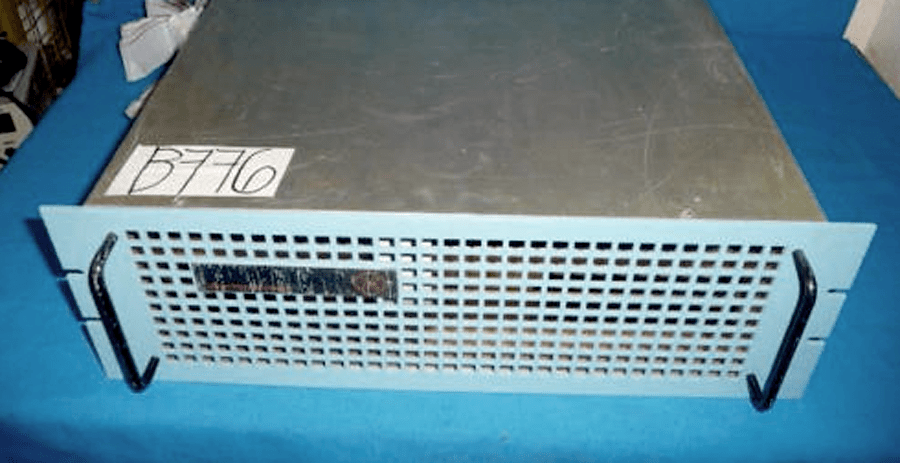
The real-time granular synthesis was invented by Barry Truax, a Canadian composer. This synthesis was processed by the DMX-1000 computer.
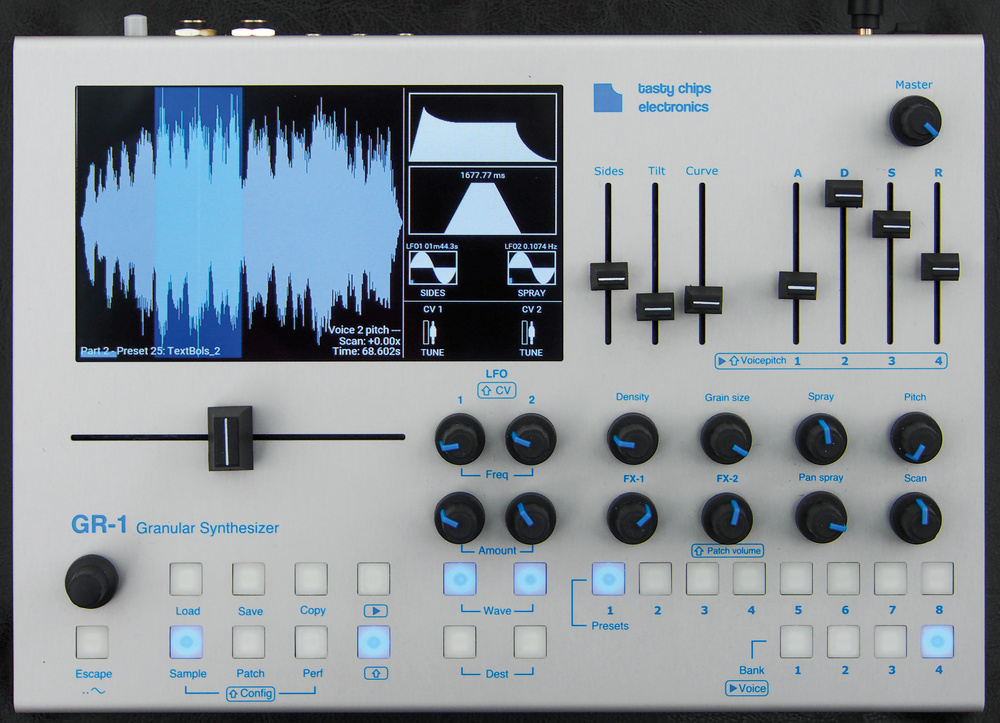
Naturally, you might wonder about the existence of physical hardware, as with other synthesizers. The upper photo shows the modern, dedicated granular synthesizer hardware, the GR-1, which was released in 2017.
This shows that this kind of synthesis processing requires a lot of computing resources. And this means that many virtual synthesizers using this method require significant computing power.
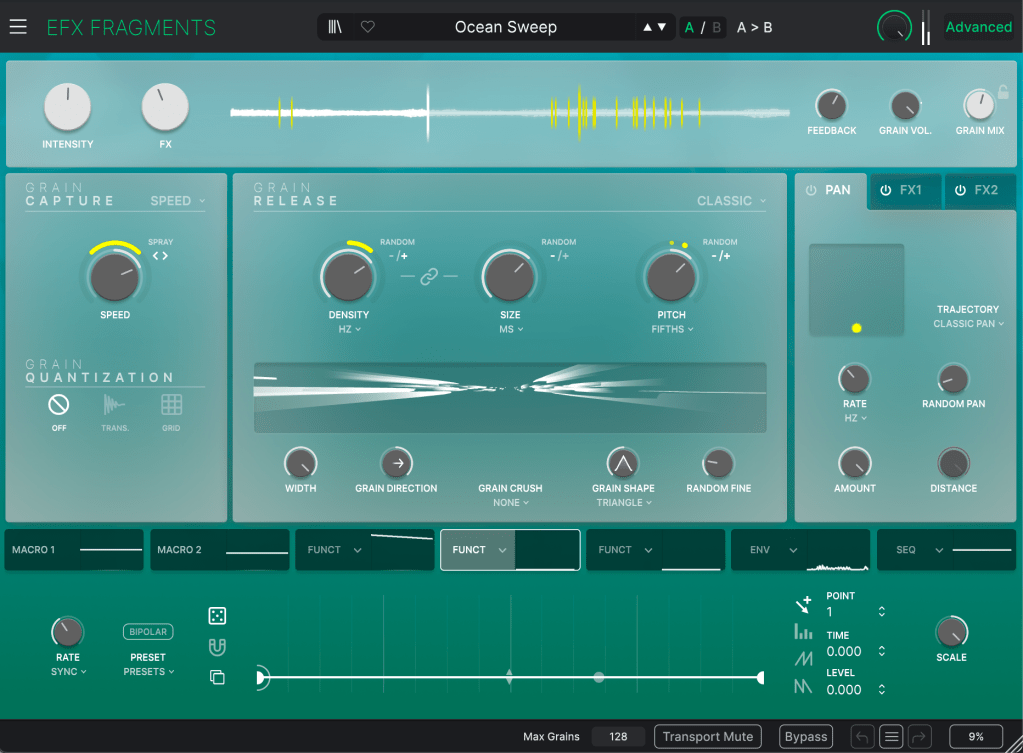
However, for implementation in DAWs (Digital Audio Workstations), no physical hardware is needed to use granular synthesis. Arturia’s EFX Fragments is a great example.
Output’s “Portal” plugin is another excellent granular effect.
This is the official video of the EFX Fragments. You might hear the “shimmering sound” from it.
This sound could be effective in ambient music that requires long tails on the sounds. I like these sounds, but I’ve never used them in my music… ^^;; However, someday I will…
OK, I’ll wrap this up today. See you in the next post!
Hey there! I’m Jooyoung Kim, a mixing engineer and music producer.
Ugh… English has been killing me lately. Seriously… 😭
I wish it would just sink into my brain step by step, but it feels like I’m cramming it in, and my head’s about to explode. Words, especially, are the worst. Haha.
Anyway, with my schedule being so tight, I’m finally getting around to writing this on the weekend.
It’s been a while, but I’m back with another post on synthesizer basics! 😊
Today, we’re diving into vector synthesis and wavetable synthesis.
Ready? Let’s get started!
(By the way, if you make a purchase through the links in this post, I may earn a small commission, which helps me keep the lights on and keep creating content!)
Vector Synthesis
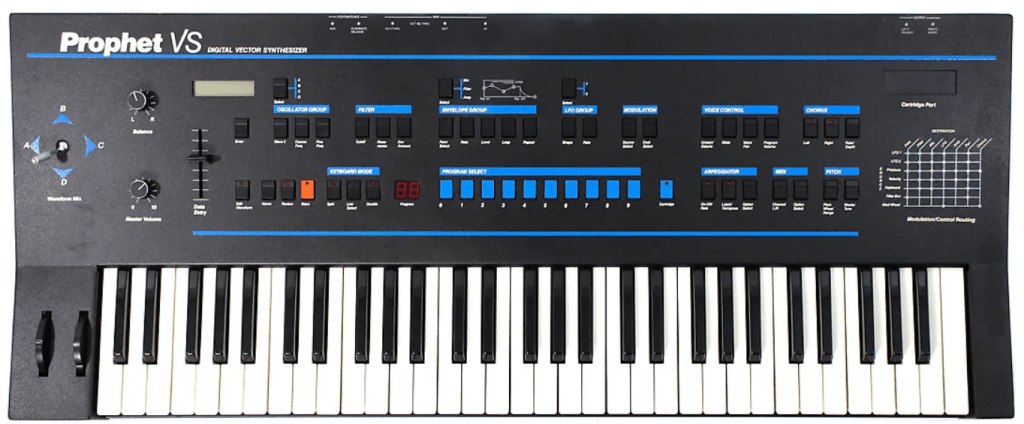
Vector synthesis was a fresh concept introduced by Sequential in the 1980s with their Prophet VS synthesizer.
Prophet VS synthesizer. You can see the joystick on the left.
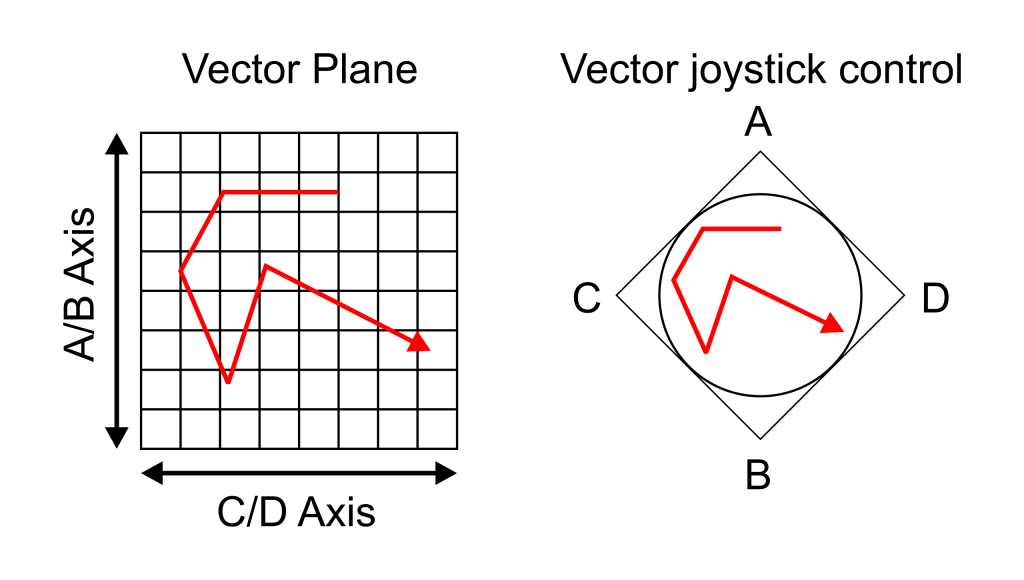
This method assigns different sound timbres to the four corners of a square. Using a joystick, you can intuitively blend these sounds together! The resulting sound, created by mixing these four sources, can be represented as a single point on a coordinate plane using vectors—hence the name “vector synthesis.”
(If you took physics as an elective in high school, this concept might feel pretty familiar!)
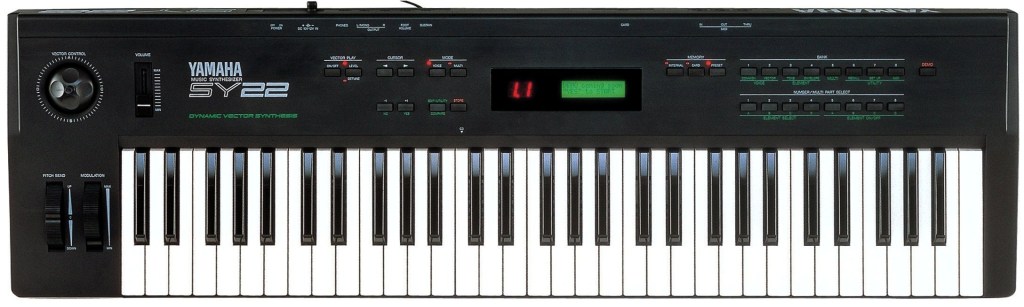
Yamaha SY22
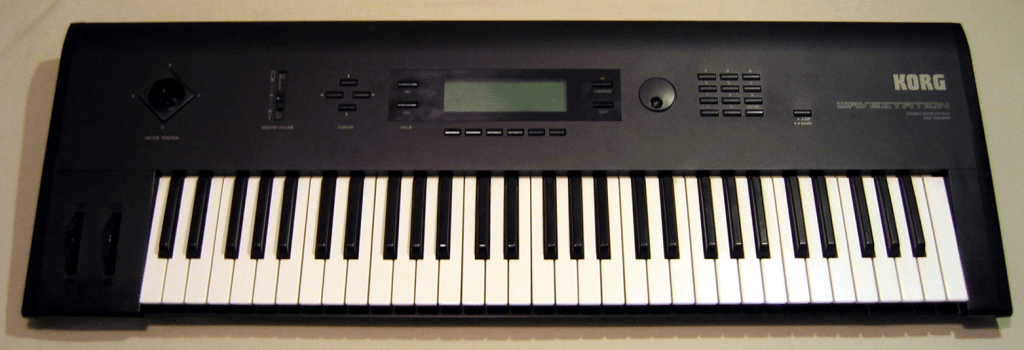
Korg Wavestation
Later, Sequential was acquired by Yamaha, and the development team moved on to join Korg. This led to the release of two vector synthesizers: the Yamaha SY22 and the Korg Wavestation.
Arturia has a virtual instrument called Prophet-VS V.
Korg also released a virtual version of the Wavestation, bringing its advanced vector synthesis system to software.
If you’re curious about vector synthesizers, these are worth checking out!
Wavetable Synthesis
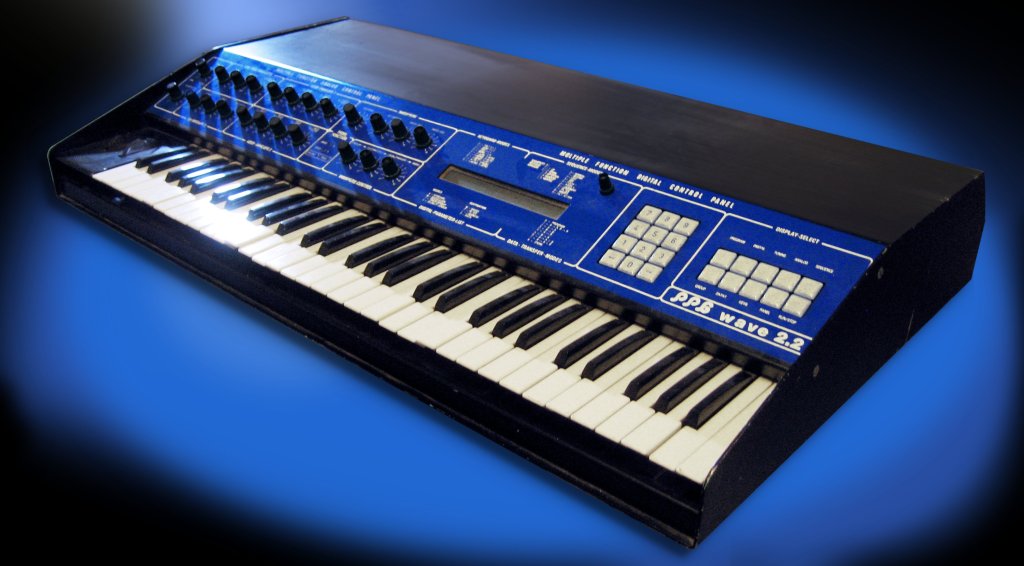
Wavetable synthesis actually predates vector synthesis by a bit. It was first utilized in MUSIC-II, a sound design program developed by Max Vernon Mathews in 1958. It was later commercialized by PPG with their Wavecomputer 360 in the late 1970s and the Wave series in the 1980s.
The concept? It’s about mixing different waveforms to create new sounds. It’s somewhat similar to vector synthesis, in that both methods interpolate between different timbres to generate a sound. That’s why I’m covering both in the same post! 😄
The key difference is this:
Vector synthesis calculates the volume balance between four sound sources based on their position in a coordinate plane.
Wavetable synthesis works within a single waveform cycle, calculating the amplitude ratios of different waveforms.
This distinction should help clarify how the two approaches differ.
Also, you might notice that both vector and wavetable synthesizers let you tweak the ADSR (Attack, Decay, Sustain, Release) parameters independently. If you’ve read my earlier post on subtractive synthesis, you’ll know I mentioned that these parameters are pretty universal across synthesis methods.
If you’re feeling a bit lost, check out that post for a primer on using something like a Minimoog. Most synths don’t stray too far from that foundation, and trust me, you’ll end up using a Minimoog sound in a track at least once in your life! 😄
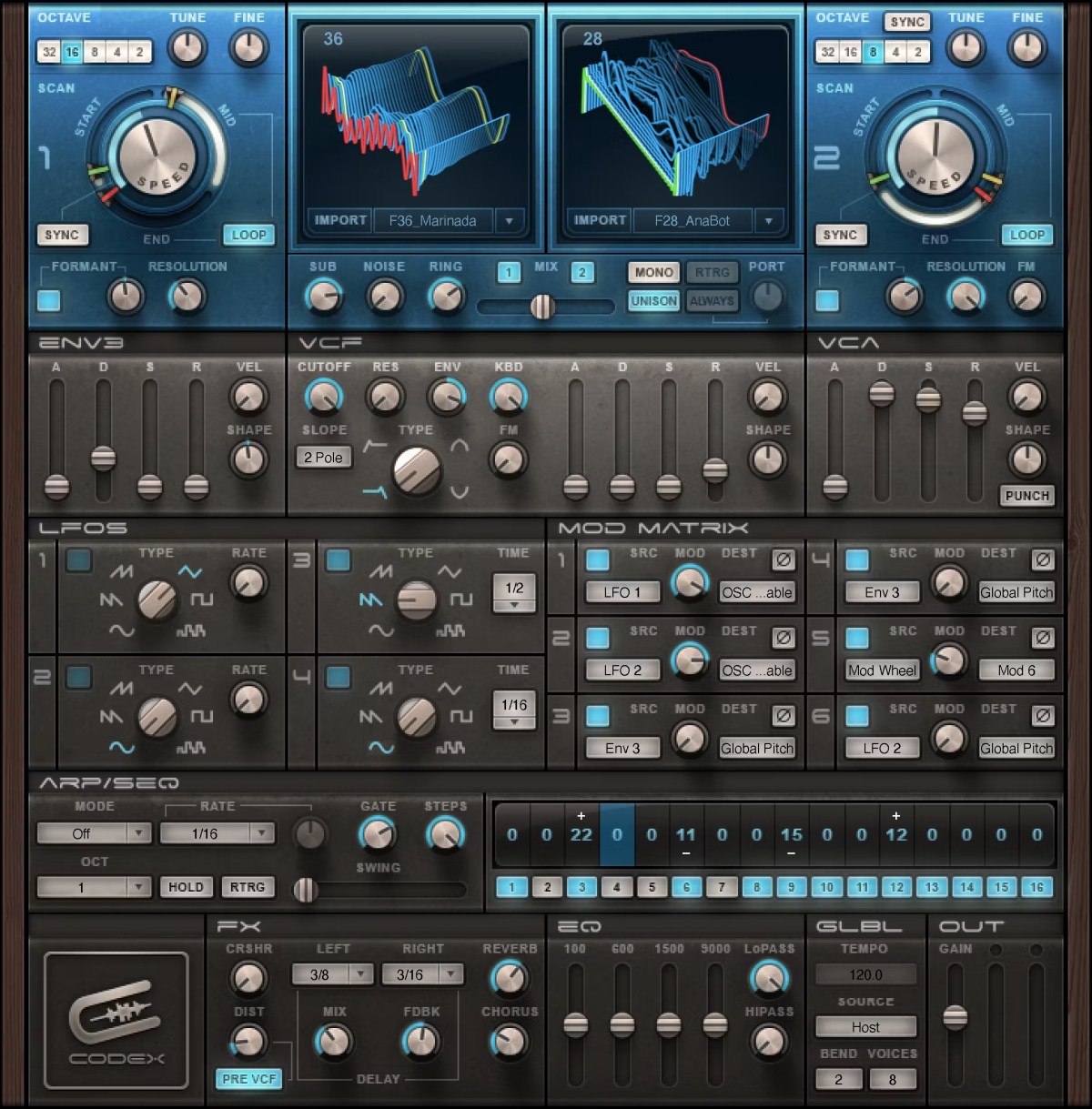
Waldorf has recreated the PPG Wave as a virtual instrument, bringing back its iconic 80s sound.
There are tons of wavetable synths out there—Serum, Waves, the free Vital, and LANDR Synth X, to name a few. My personal recommendation? Go with Serum. It’s got a huge user base, which means tons of presets and a great community. Plus, it’s just well-designed.
A Few Final Thoughts
The thing about vector and wavetable synthesis is that you can’t pin down their sound to something specific like sine, triangle, square, or saw waves. Throw in a bunch of different sounds, and the output changes dramatically. Unlike FM synthesis or analog subtractive synthesis, it’s hard to describe the “typical” sound of these methods. 😅
Personally, I love messing around with synthesizers to craft the perfect sound, but it can be a time sink. My advice? Start with a preset that’s close to what you’re after. (If you familiarize yourself with basic waveforms like sine, saw, triangle, and square, it’ll be easier to figure out which category your desired sound falls into.) Build your track first, then tweak the sound later to get it just right.
That’s it for today! Thanks for reading, and I’ll catch you in the next post! 😊
Hello, I’m Jooyoung Kim, a sound engineer and music producer.
In my last post, I talked about my thesis, but here’s a funny update: the journal that desk-rejected my paper (Transactions on Consumer Electronics) sent me an email asking me to be a reviewer. It’s a bit of a niche SCIE journal, but still Q1-Q2 level, so I was pretty floored. I’m flattered, but since I haven’t even graduated with my master’s yet and my main paper isn’t published, I politely declined. Who am I to judge someone else’s work at this stage? 😅
Now, let’s get to today’s topic: picking up where my synthesizer series left off last month, we’re diving into modulation synthesis, focusing on the legendary FM (Frequency Modulation) synthesis, made famous by the Yamaha DX7.
Here we go!
Modulation
What is modulation? I touched on this in my Basics of Mixing series a while back:
In short, modulation involves using an external signal (the modulator) to alter specific parameters of another signal (the carrier), changing its sound. The external signal is often a Low Frequency Oscillator (LFO), but other sources can be used too.
Types of Modulation
Type
Description
AM (Amplitude Modulation)
Modulates the amplitude of the carrier signal using a modulator. Think tremolo effects.
FM (Frequency Modulation)
Modulates the frequency of the carrier signal. Famous for metallic and bell-like sounds, as heard in the Yamaha DX7.
PWM (Pulse Width Modulation)
Modulates the pulse width of a square wave. Common in analog synths and compressors like the PYE Compressor. [photo]
RM (Ring Modulation)
Multiplies the carrier and modulator signals, producing only the sum and difference frequencies (a+b, a-b).
PM (Phase Modulation)
Modulates the phase of the carrier signal. Fun fact: the DX7 is technically PM-based but was marketed as FM for mass appeal.
AM and FM might sound familiar from radio broadcasting. FM, in particular, shines in synths for creating those iconic metallic or bell-like tones. There are also other modulation types like Cross Modulation, Wavetable Modulation, and Granular Modulation, but I’ll cover those in their respective sections later. 😄
FM (Frequency Modulation)
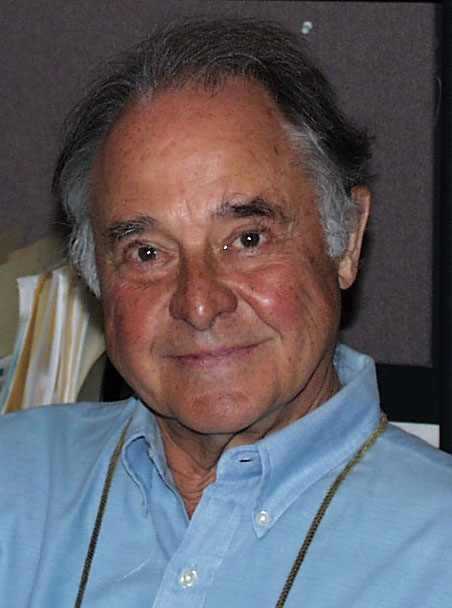
Dr. John Chowning
Meet Dr. John Chowning, the mastermind behind FM synthesis, developed in the late 1960s at Stanford University. [photo] FM synthesis modulates the carrier’s frequency with a modulator, producing complex, irregular harmonics that are perfect for metallic and bell-like sounds.
Yamaha’s YM2612 chip
FM synthesis was a staple in 1990s video games and software. Yamaha’s YM2612 chip (aka OPN2) powered sound cards like AdLib and Sound Blaster, as well as consoles like Sega’s Mega Drive and Fujitsu’s FM Towns Marty.
In 1971, Dr. Chowning saw the commercial potential of FM synthesis and pitched it to companies like Hammond and Wurlitzer, but they all passed. Yamaha, however, struck a deal, securing a one-year license and exclusive rights to the technology by 1975. Looking at its massive success, both Yamaha and Dr. Chowning had incredible foresight! 😊
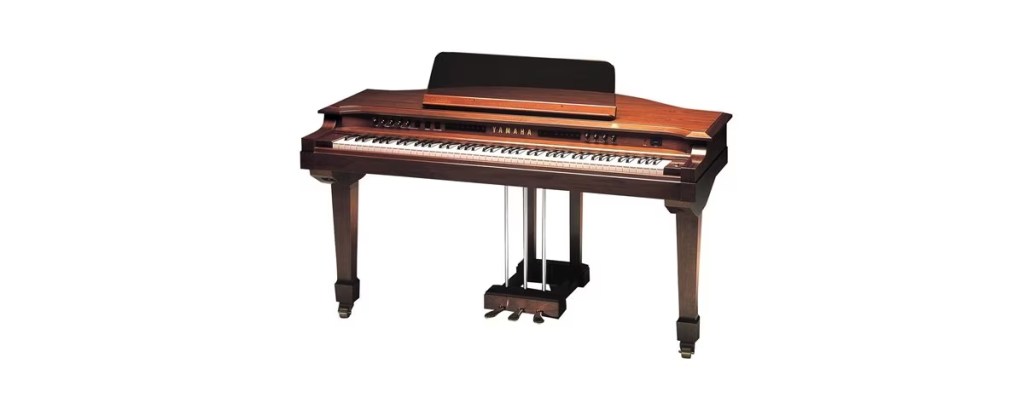
Yamaha GS-1
In 1980, Yamaha released the GS-1, their first FM synthesizer, with only 16 units made for studio use. It was used by legends like Stevie Wonder, Chick Corea, Herbie Hancock, and Toto.
Priced at $16,000 back then—about $66,000 today, or roughly 1 billion KRW—it was a luxury item.
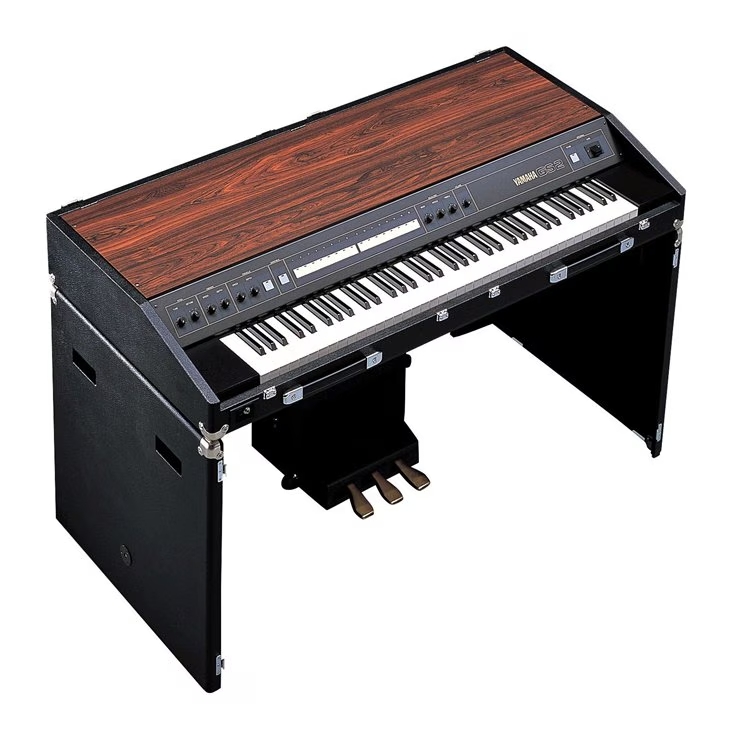
Yamaha GS-2
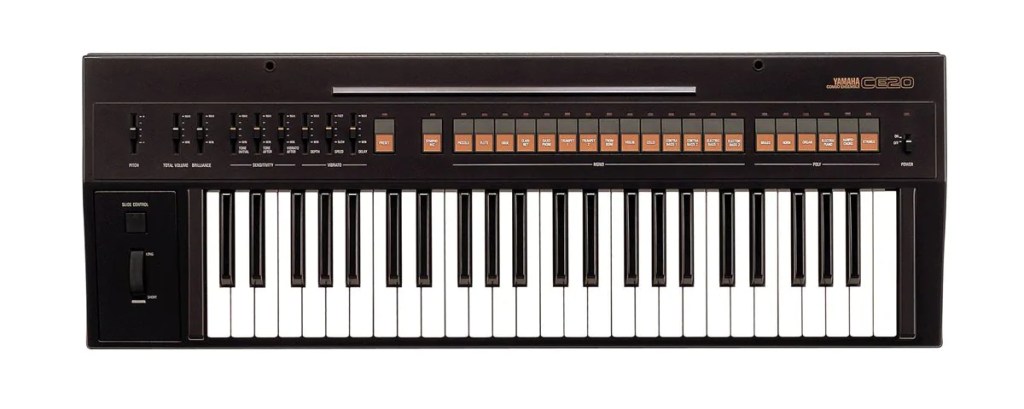
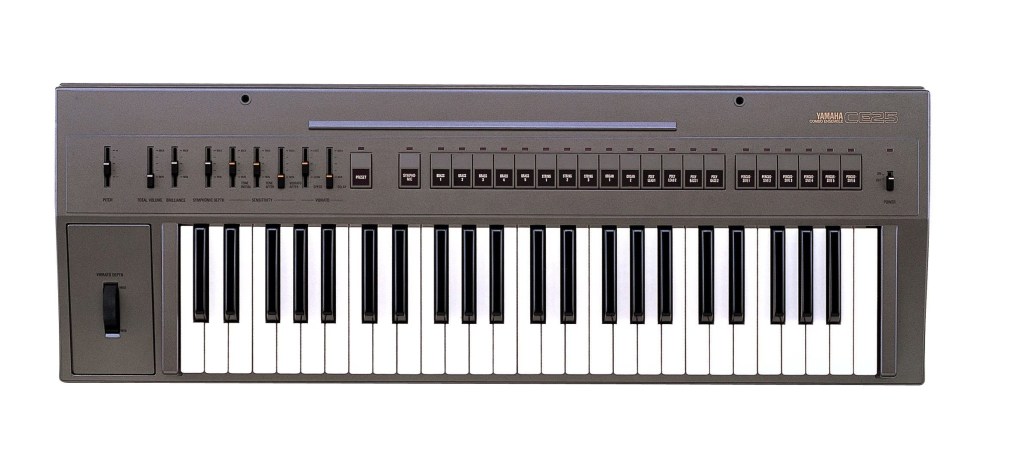
The GS-1’s unique sound was a hit, leading Yamaha to release the more portable and affordable GS-2, as well as the CE-20 and CE-25 Ensemble series for the home organ market.
To simplify, Yamaha’s engineers made the modulator and carrier envelope generators share parameters, leading to the DX series: DX-1 (73-key flagship), DX-5 (76-key, budget version of DX-1), DX-7 (6-operator), and DX-9 (4-operator).
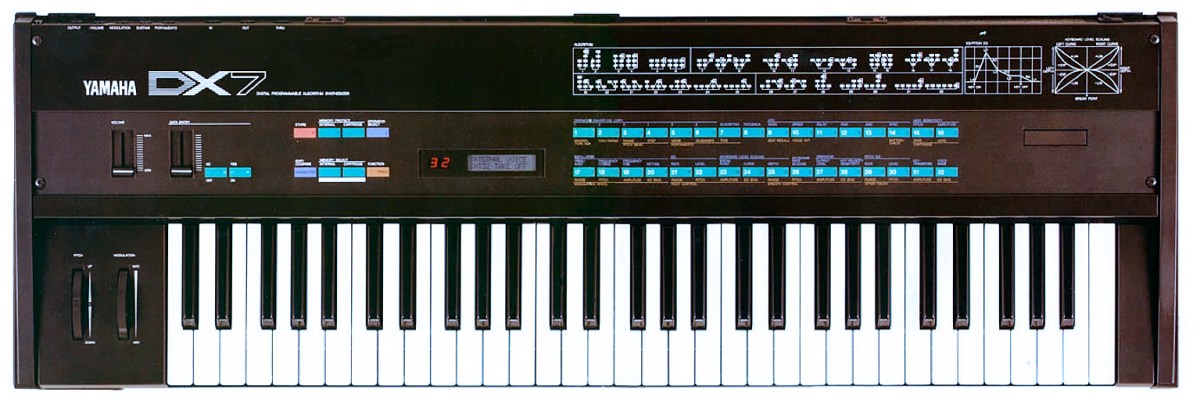
The Yamaha DX7 is arguably the most iconic FM synthesizer, selling 200,000 units worldwide at 248,000 yen each—a massive commercial success.
It featured six sine wave operators that could act as either carriers or modulators, with 32 selectable sound algorithms to switch their roles. In the diagrams, each vertical line represents a sound synthesis path, with parallel lines combining, the bottom being the carrier, and those above it modulators.
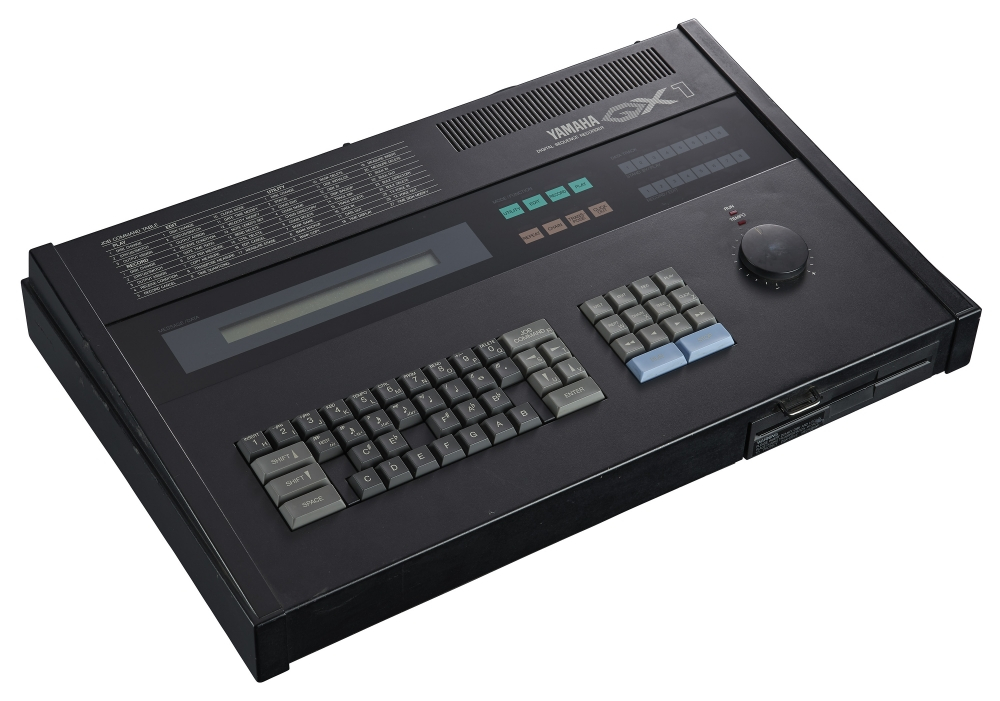
The DX7 also supported MIDI, often paired with sequencers like the Yamaha QX-1. Beyond bell-like sounds, it’s famous for electric piano (FM EP) and bass (FM Bass) patches—search for those terms, and you’ll find tons of resources. 😄
In one sentence: FM synthesizers excel at creating sounds with irregular harmonics.
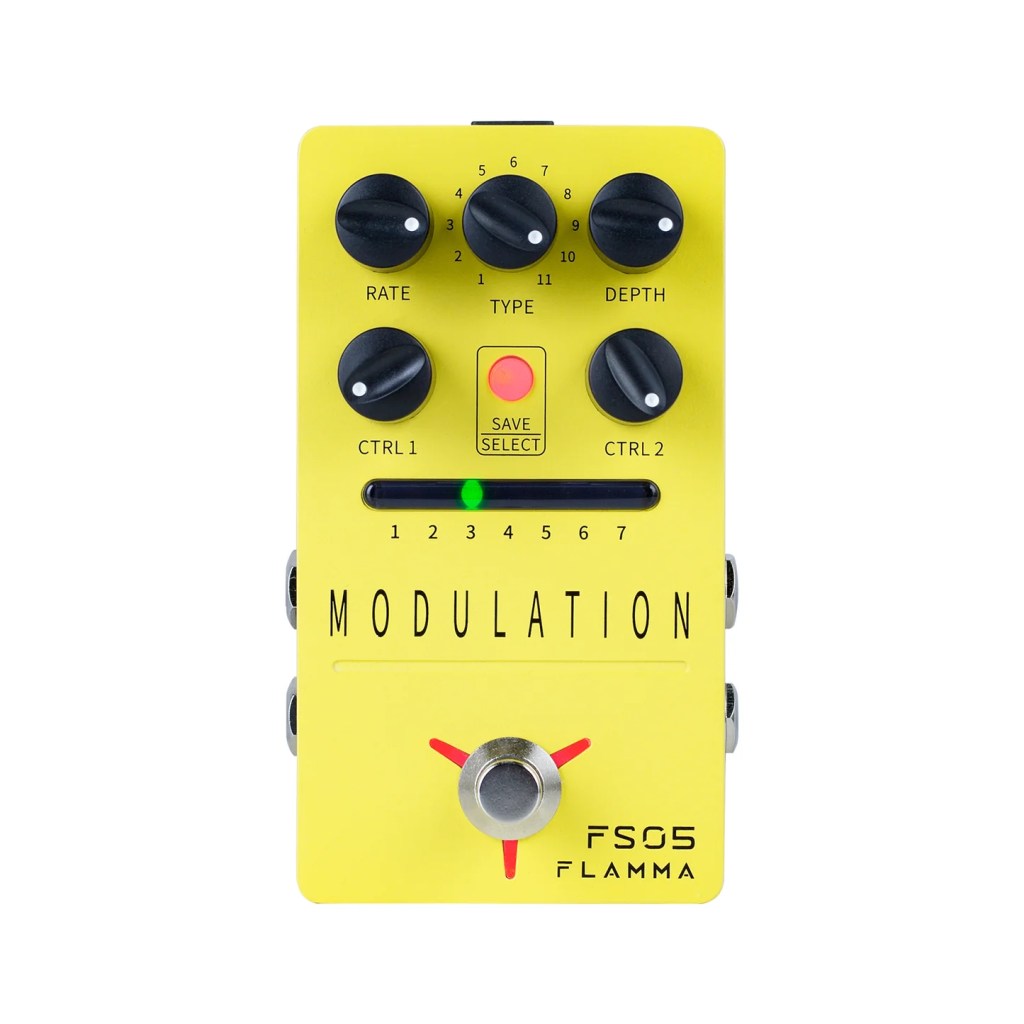
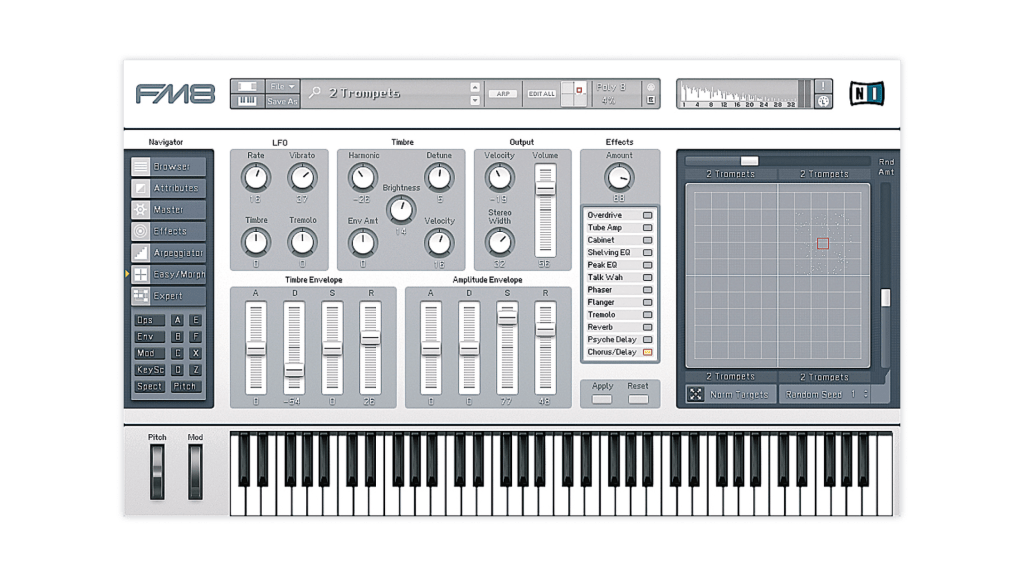
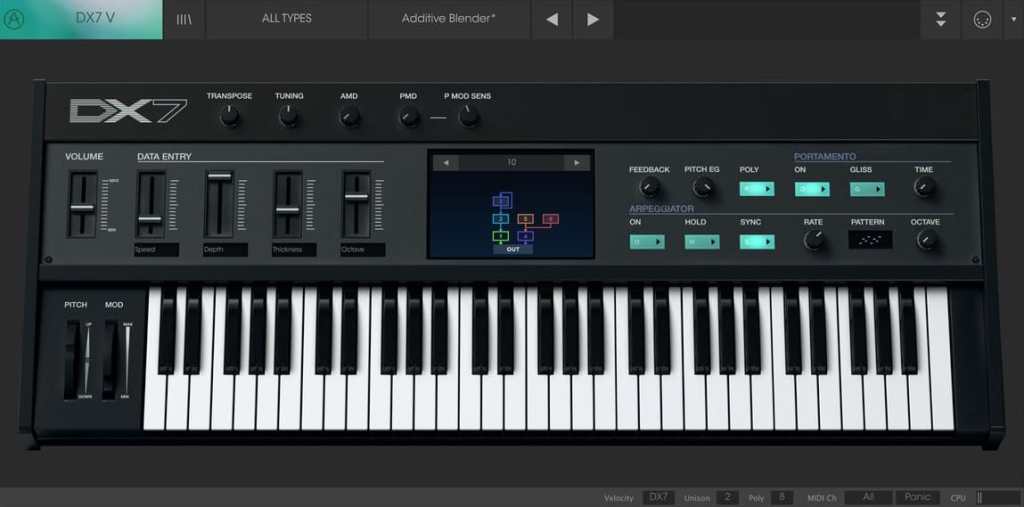
Modern FM Synths Some great virtual instruments carry the DX7’s FM legacy:
If you buy through these links, I earn a small commission, which helps me keep going—thank you! That said, I recommend waiting for bundle sales to grab these at a better price. I previously covered Arturia’s V Collection X bundle, which is worth checking out:









 Jooyoung's Music Blog


.jpg)