Visiting the KOBA Show 2025 (May 20, 2025)

The KOBA Show, or Korea International Broadcasting, Media, Audio & Lighting Show, is a major annual trade fair held in Seoul, South Korea, showcasing the latest in broadcasting, audio, and lighting technology. Since its start in 1991, it has become a key event for industry professionals, featuring cutting-edge equipment, technical seminars, and networking opportunities across 27,997 square meters at the COEX Convention Center. This year’s event, held from May 20-23, highlighted the future of media and entertainment industries.

Hey there! I’m Jooyoung Kim, a mixing engineer and music producer.

I got a free pass to the KOBA Show and visited last Tuesday. This year’s event felt a bit smaller compared to previous ones, with fewer exhibitors and gear on display, which was a little disappointing. Still, it was great to catch up with some folks and check out the latest equipment.

JD Solution
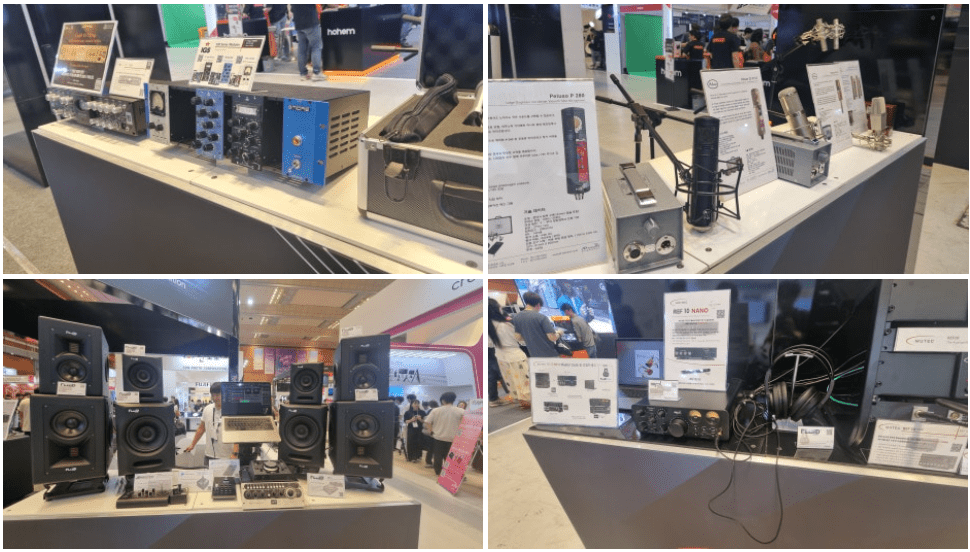
Most audio-related companies were on the first floor, but JD Solution had their booth on the third floor. They showcased products from brands I love, like Peluso microphones, Avalon, IGS, and DAD. I was really hoping to test a Peluso mic through an Avalon preamp—would’ve been a killer combo—but unfortunately, they weren’t set up that way. Oh well!

On my way back to the first floor, I took a wrong turn and stumbled upon Bongeunsa Temple nearby. It was a nice little surprise!

BLS
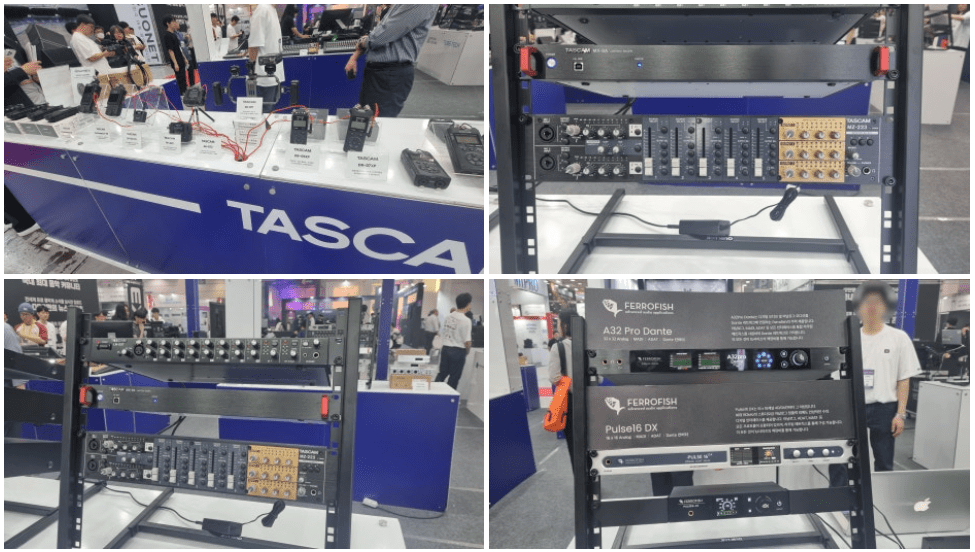
BLS had an impressive lineup, featuring Tascam, Ferrofish, Lynx, Focal, Manley, Prism Sound, and Tube Tech. They also had mics and headphones set up for hands-on testing, which was awesome.
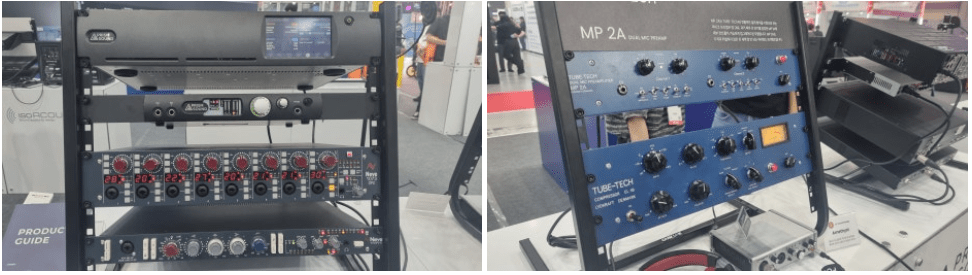
I found myself drawn to the Manley VoxBox over the Core—it’s just so good, though the price is a bit steep!

Soundus

At the Soundus booth, they showcased KLANG’s binaural headphone mixing gear and some DiGiCo consoles (not my main interest, so I hope I got that right!). What really caught my eye was this wall-mounted, picture-frame-style speaker by CODA. It looked like a piece of art but was actually a speaker—super cool! If I had the budget, I’d definitely consider getting one.

Cuonet

Cuonet’s booth was interactive, with nine different missions to try out. I got so caught up in them that I forgot to take pictures! One of the missions involved guitar tuning, and I was surprised to see an Epiphone Masterbilt series f-hole acoustic guitar—pretty unique.

I also ran into someone I used to work with at a studio, which was such a pleasant surprise!

SAMA Sound
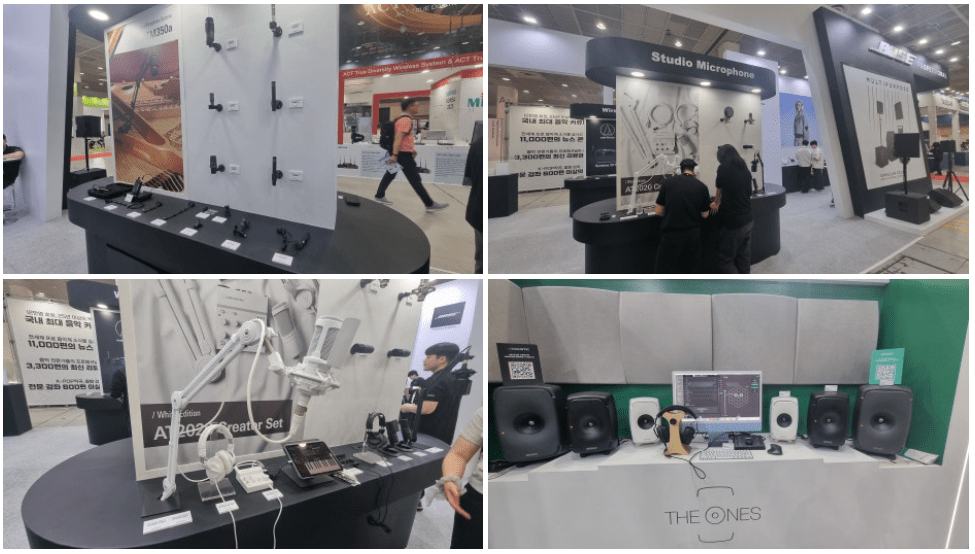
Sam-A Sound had a ton of gear on display, as always. I spotted some Genelec monitors, which my professor absolutely loves. Last year, they had the 8381A, but it wasn’t there this time, which was a bit of a bummer. They also had an impressive variety of cables!

Yamaha Music Korea
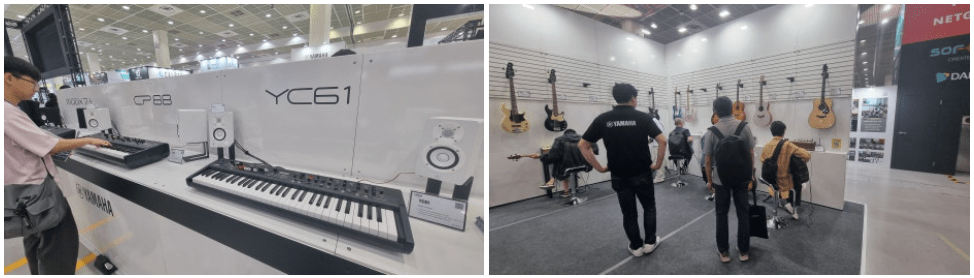
Yamaha’s booth was divided into sections for synthesizers, guitars, and streaming setups. The synthesizer area featured the CP88, YC61, and various compact synths that could double as master keyboards.
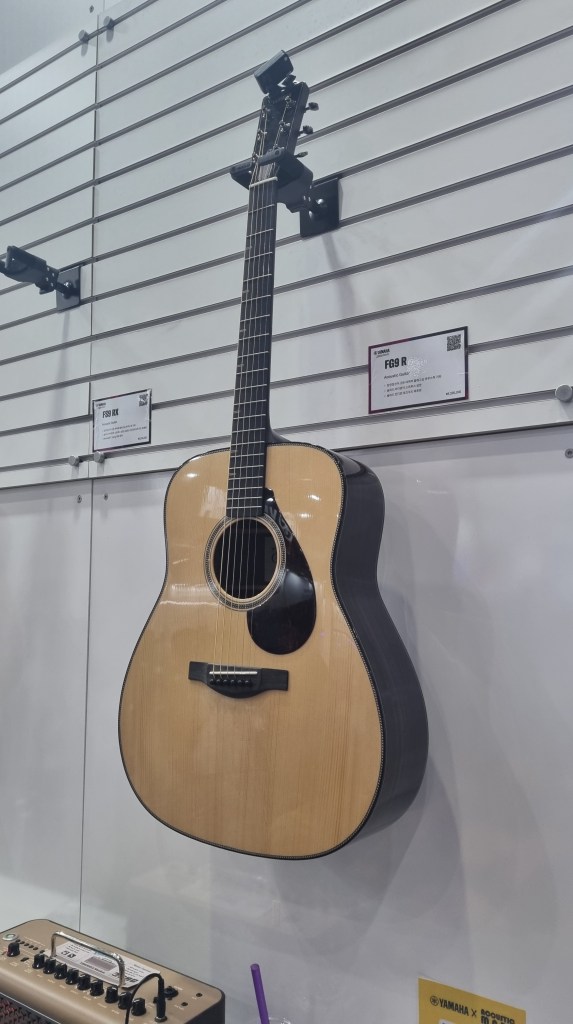
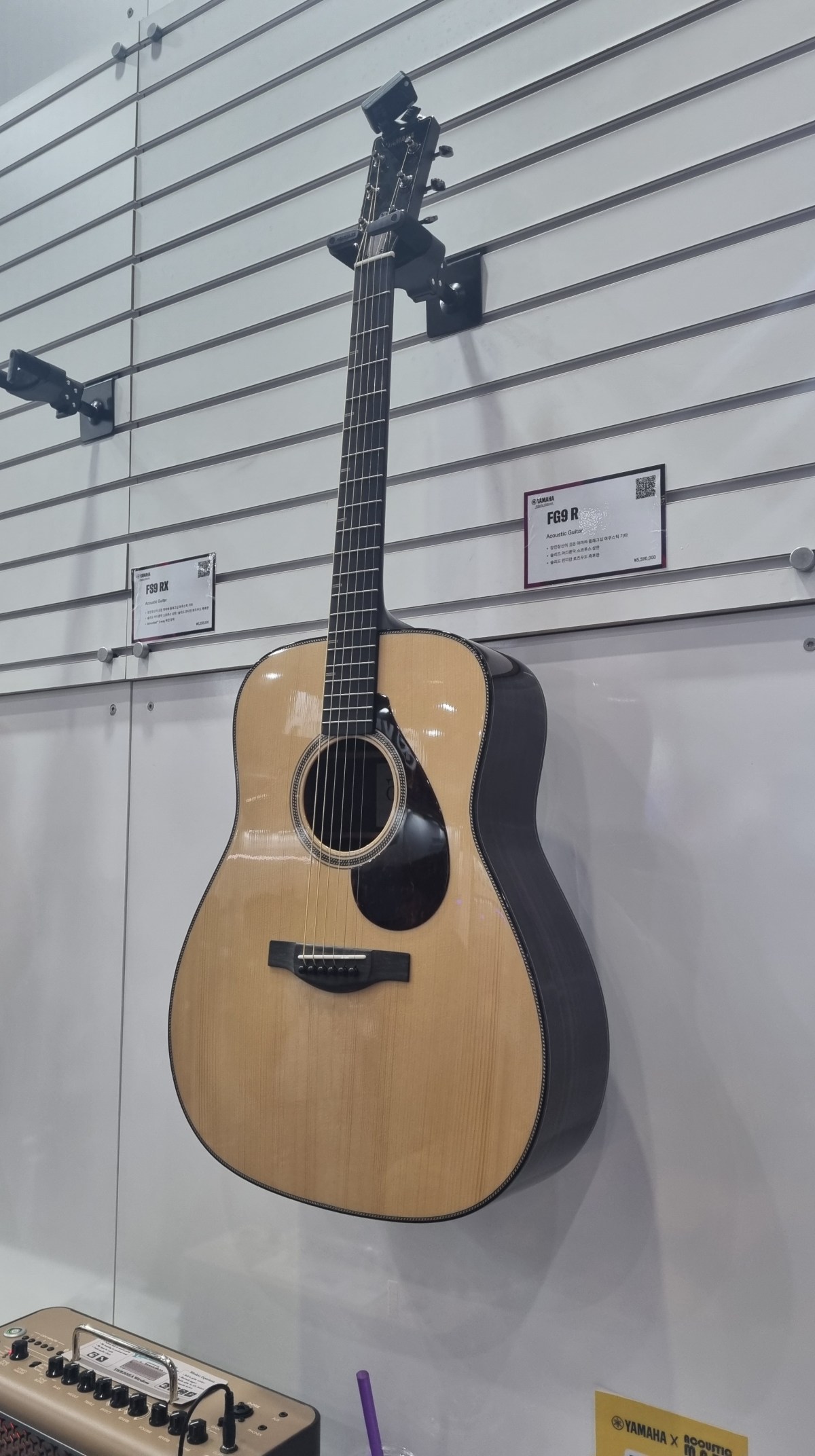
As an acoustic guitar player, I was thrilled to finally try Yamaha’s flagship 9-series guitar. It was on display, but with a performance stage right in front and so many people around, I couldn’t hear it properly. Still, it was clear the guitar was top-notch. Personally, I’m more of a dreadnought guy than an OM—guess that’s just my style! I’d love to get a dreadnought, but the affordable ones don’t sound great, and the high-end ones are just too tempting (and expensive!).

Yamaha also had a dedicated area for streaming setups, with several compact broadcast configurations. It’s clear they’re putting a lot of effort into that space.

Dasan SR

At Dasan SR, the SSL consoles stood out the most. I was secretly hoping to see some Millennia or Earthworks mics paired with them, but no such luck.

Final Thoughts

For those into studio audio or music production, these were the highlights. I noticed Music Metro didn’t participate this year, and Cuonet didn’t showcase synths like Behringer, which made the event feel a bit smaller. It almost feels like the industry is tightening its belt again. I overheard someone mention that the KBS booth was about a third of its usual size, which was surprising.

With my own finances getting a bit tight, I’m wondering how we’ll all navigate these times. Anyway, that’s my quick recap of the KOBA Show 2024. Thanks for reading, and I’ll catch you in the next post!
Basics of Synthesizers (2) – Subtractive Synthesis

Hey there! I’m Jooyoung Kim, a mixing engineer and music producer.

Looking at synthesizer history, additive synthesis came first but was limited to physical, mechanical methods. Modern additive synthesis came much later, so let’s start with subtractive synthesis!

Quick heads-up: if you buy virtual instruments through the links in this series, I get a small commission, which really helps me keep going. ^^ Ready to dive in?

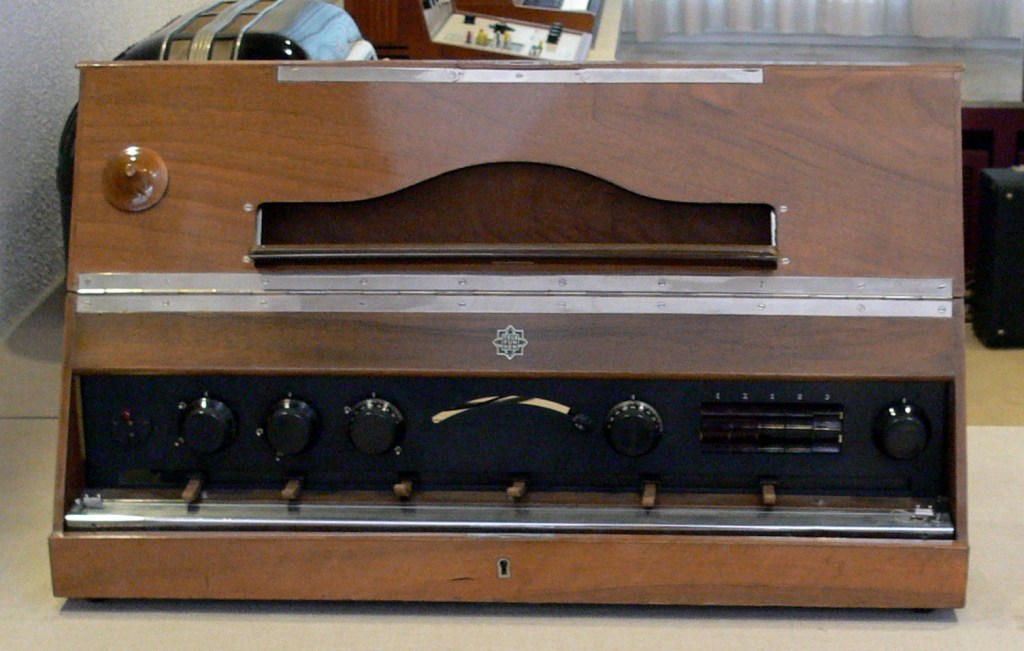
The Early Subtractive Synthesis Synthesizer: Telefunken’s Trautonium

Subtractive synthesis is named for how it shapes sound by filtering out (subtracting) frequencies. The “filter” here is like an EQ’s cutoff filter, tweaking low or high frequencies.

These synths use voltage to control filters, hence the term VCF (Voltage Controlled Filter). Built entirely with analog circuits, they’re also called analog synthesizers.

They have three main parts:

  1. VCO (Voltage Controlled Oscillator): Generates the signal
  2. VCF (Voltage Controlled Filter): Shapes the sound
  3. VCA (Voltage Controlled Amplifier): Controls volume

The Iconic Minimoog Model D

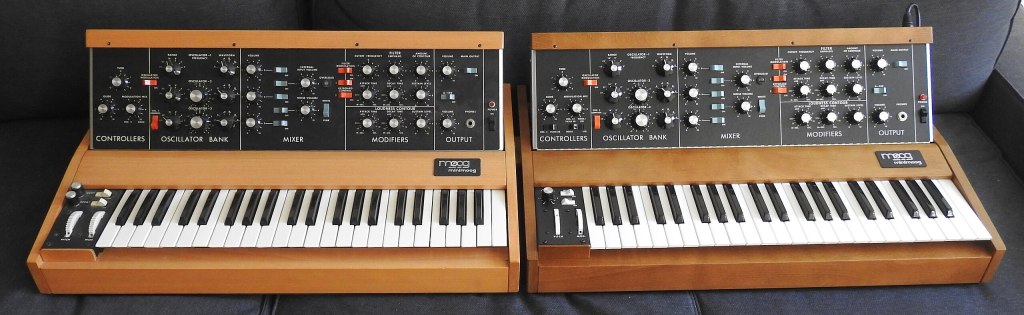
Left – 1979 Minimoog Model D, Right – 2017 Reissue Minimoog Model D

The Moog Minimoog Model D is the most famous subtractive synth, with others like the ARP 2600, Oberheim OB-1, and Korg MS-20 also standing out. Let’s check out the Minimoog Model D virtual instrument, a favorite for many.

UAD’s Moog Minimoog

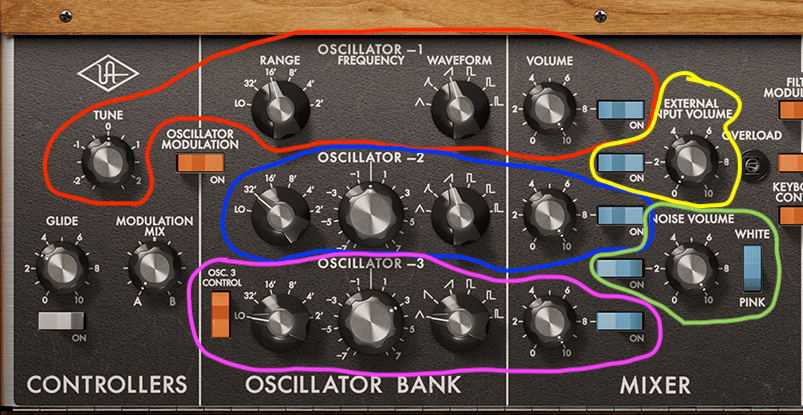
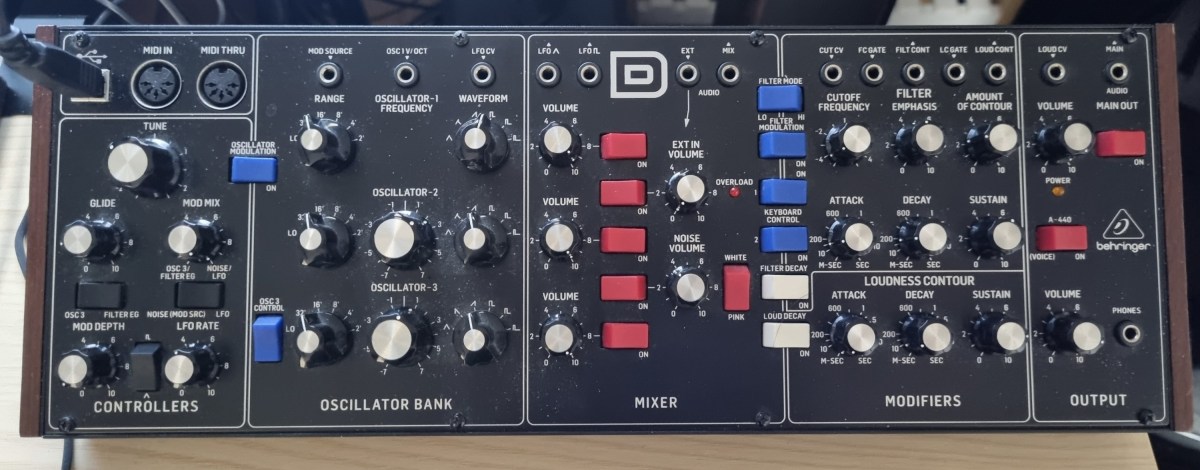
Since most subtractive synths share similar concepts, we’ll use the UAD Minimoog as our example. It breaks down into four sections:

  1. VCO: Oscillators (signal generators)
  2. VCF: Filters with resonance control
  3. VCA: Amplifiers with Attack, Decay, Sustain controls
  4. Modulation and other components

Let’s look at the oscillators first.

Oscillators

The oscillator section has about five parts. Oscillators 1, 2, and 3 are exactly what they sound like—three separate oscillators.

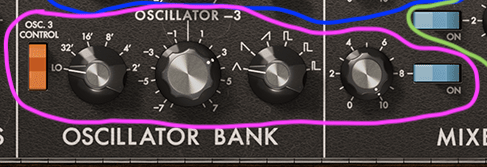
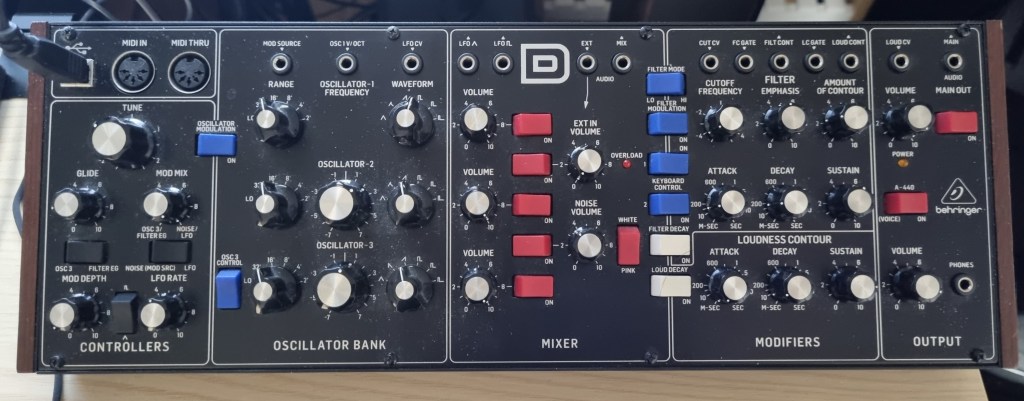
Being fully analog, the Minimoog Model D’s tuning could drift due to humidity, temperature, runtime, or electrical conditions. So, each oscillator has a pitch tuning knob. The tuner’s at the far left in the red section (labeled “Tune”), with others in the blue and pink sections.

  • Range: Sets the octave. Higher numbers give lower pitches.
  • Waveform: Chooses the waveform type.

Oscillator 3 could be used for modulation instead of sound output, controlled by a switch on the far left.

The yellow section, though not an oscillator, lets you process external signals through the synth’s filter—a feature often used to apply the Minimoog’s filter to other sounds.

The green section is a noise generator for white or pink noise. You can modulate with noise, an extra LFO, or an envelope filter.

Filters and Output

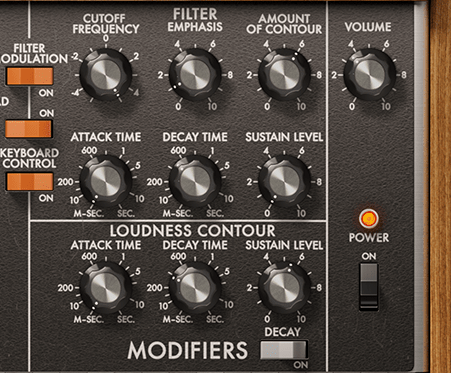
The filter section is the top three knobs in the “Modifiers” area:

  • Cutoff Frequency: Sets which frequencies to filter.
  • Emphasis: Boosts frequencies near the cutoff point.
  • Amount of Contour: Controls how much the Attack, Decay, and Sustain knobs affect the filter.

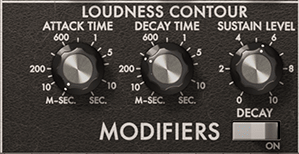
Below, the Loudness Contour (Attack, Decay, Sustain) shapes the output sound’s envelope, not the filter’s. (I explained Attack, Decay, and Sustain in my last post.)

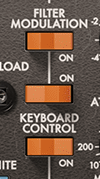
Turn on the Filter Modulation switch, and the cutoff frequency gets modulated. The Keyboard Control switches make the cutoff follow keyboard notes:

  • Switch 1 (top): Tracks by 1/3.
  • Switch 2 (bottom): Tracks by 2/3.
  • Both on: Cutoff moves in sync with notes for consistent timbre.

It might feel tricky, but tweak it for five minutes, and you’ll get the hang of it.

Other Minimoog Model D Virtual Instruments

Besides UAD’s Minimoog, there are other solid options:

Arturia’s Mini V is a great Model D emulation.

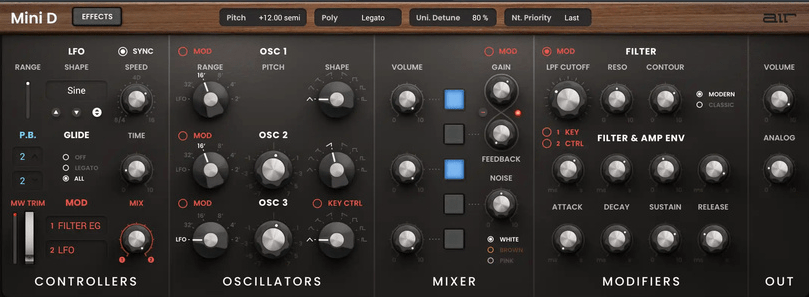
Air Music Technology also makes a Model D virtual instrument.

As mentioned, the Minimoog can filter external signals. There are even standalone filter plugins, like:

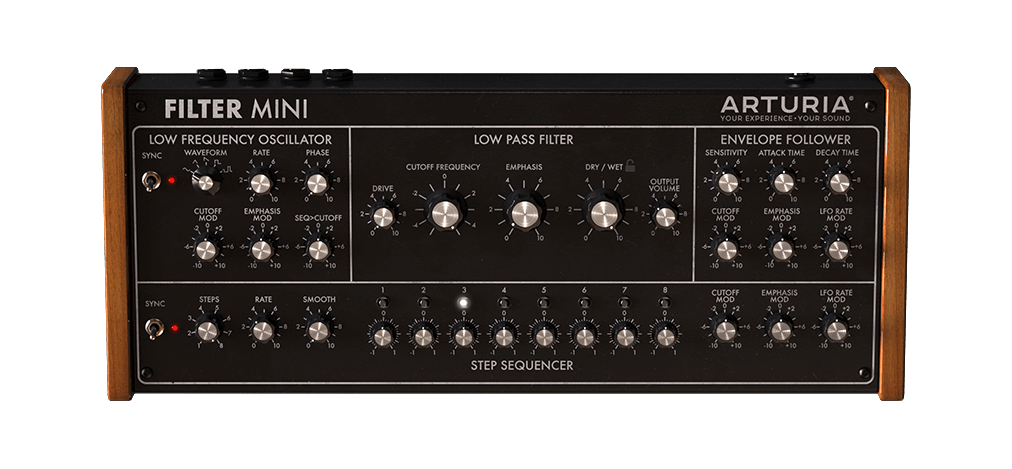
Arturia’s Filter Mini, a plugin designed for this purpose.

Not all Moogerfooger pedals from Moog come from the Minimoog, but the Moogerfooger MF-101 Lowpass Filter uses its 4-pole (24dB/octave) ladder filter design. Moog turned these pedals into plugins too.

I’ve covered these separately before. [link]

Owning a Physical Model D

I always wanted a real Minimoog Model D and ended up with Behringer’s Model D reissue. Hardware synths shine when run through preamps or compressors for a fully analog vibe. But tuning is a chore, and since it’s monophonic, you’d need to record each note for chords. Also, dusting those knobs is a nightmare! 😅

Still, it’s affordable, so a used analog synth like this can be a cool addition.


Not all subtractive synthesis synthesizers work exactly like the Minimoog, but understanding its basics should give you a solid foundation for handling most early subtractive synths.

See you in the next post! 🙂
What is ADSR? – Envelope Generator

Hello! I’m Jooyoung Kim, a mixing engineer and music producer.

While working on the next post in my synthesizer basics series yesterday, I realized I’ve never covered the concept of ADSR on my blog. So, today, let’s dive into what ADSR is all about.

I’ve included a plugin link below, and if you purchase through it, I earn a small commission that really helps me keep going. Thank you for your support!

Let’s get started!

Envelope Generator

A single oscillator produces a steady sound, like a sine wave, square wave, or triangle wave, at a specific frequency. But these sounds can feel flat or even harsh on the ears.

To address this, Robert Moog, the founder of Moog, developed the Envelope Generator to make simple oscillators mimic real-world sounds by varying their amplitude over time.

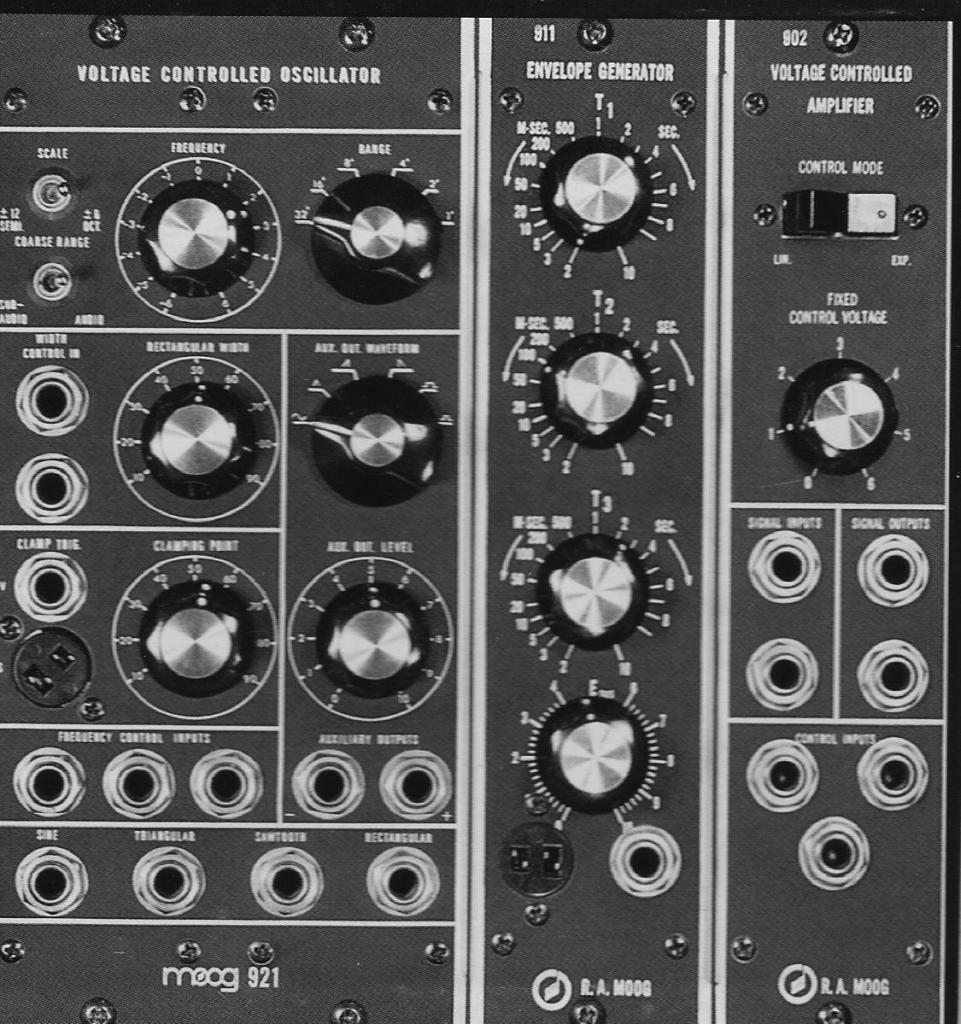
The 911 module in the center is the Envelope Generator.

Early envelope modules were labeled with terms like T1 (Attack), T2 (Decay), T3 (Release), and ESUS (Sustain). Later, the ARP 2500 synthesizer used Attack, Initial Decay, Sustain, and Final Decay, and the ARP Odyssey replaced Final Decay with Release. This standardized the envelope as ADSR (Attack, Decay, Sustain, Release).

So, what exactly is ADSR?

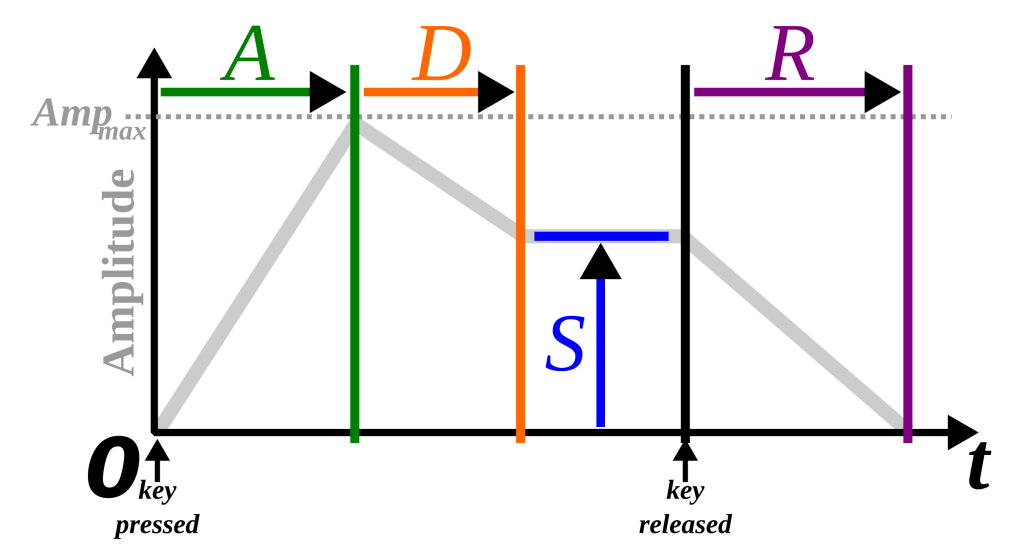
ADSR Explained

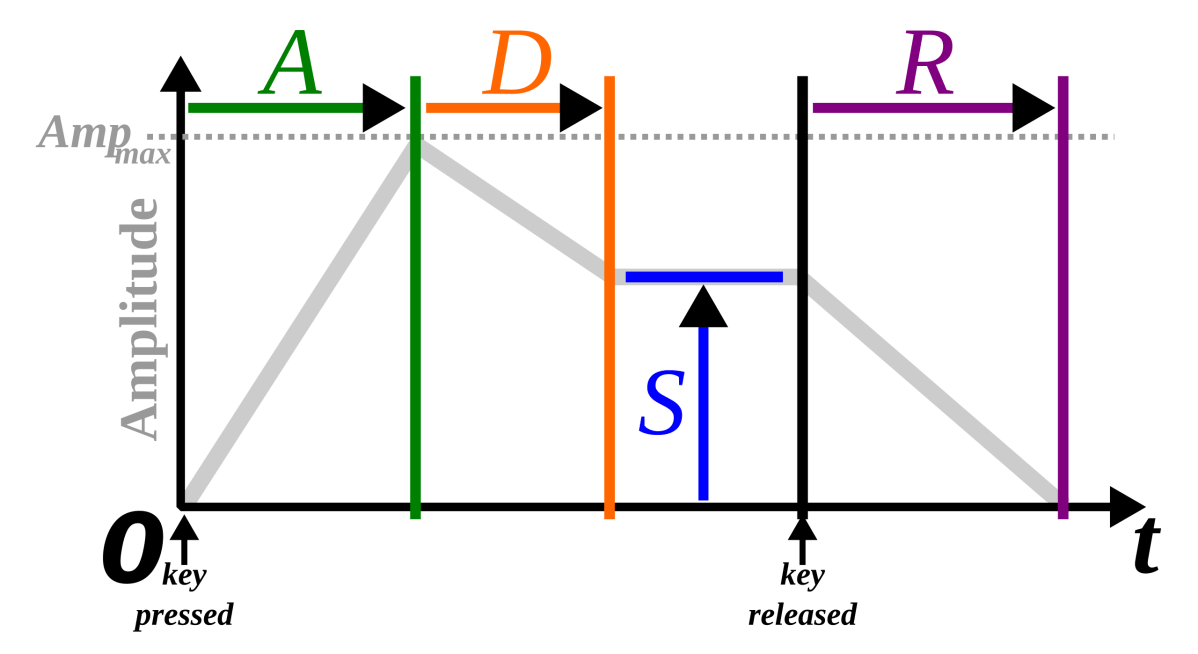
  1. Attack: The time it takes for the sound to reach its maximum volume after being triggered.
  2. Decay: The time it takes for the sound to drop from its maximum volume to the sustain level.
  3. Sustain: The volume level maintained while the key is held down.
  4. Release: The time it takes for the sound to fade to silence after the key is released.

Pretty straightforward, right?

The Envelope in the Casio CZ-1

However, Envelope Generators aren’t limited to just ADSR. For example, the Korg MS-20 includes a Hold parameter, which lets you set how long the sound stays at its maximum amplitude after the attack. This could be represented as AHDSR.

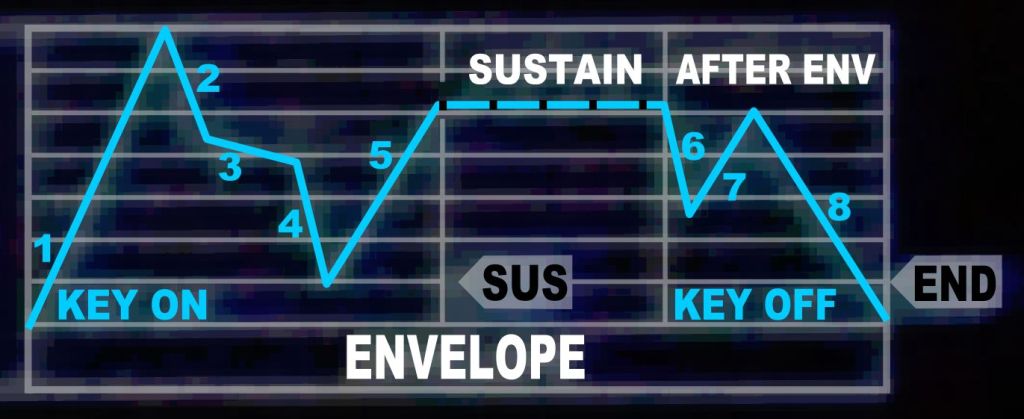
The Casio CZ-1 has a particularly unique envelope design.

Transient Shaper

SPL Transient Designer

With the development of the Envelope Follower, which tracks changes in an audio signal, it became possible to apply ADSR-like changes to real audio signals. The pioneer of this concept is the SPL Transient Designer, part of a category called Transient Shapers.

There are tons of these plugins out there. The link above takes you to Plugin Boutique’s dedicated Transient Shaper category, where my blog is affiliated.

I own several myself, like Native Instruments’ Transient Master, SPL Transient Designer Plus, Waves Smack Attack, and Oxford TransMod. Personally, I find Oxford TransMod to be the best of the bunch.

Modern music production uses these tools to meticulously sculpt and refine sounds, almost like crafting a fine piece of art.

That wraps up my explanation of ADSR. See you in the next post! 😊
Brainworx May Sale (2) – Ampeg SVT-VR Classic, SVT-3Pro, V-4B, B-15N, Gallien-Krueger 800RB (Until May 31)

Hello! I’m Jooyoung Kim, a mixing engineer and music producer.

Yesterday was the announcement day for artist grants in Korea, and as expected, getting selected is getting tougher… I was hoping to buy some cables for research purposes with the grant, but those plans went up in smoke. Times are tough these days… 😢

Anyway, today I’m continuing with the Brainworx May sale. This time, I noticed a lot of bass amp plugins are included in the sale, so I’m introducing five Brainworx bass amps commonly used in mixing and composing.

I own the Ampeg SVT-VR Classic and B-15N, having purchased them myself. The other plugins were provided as NFR (Not for Resale) copies through Plugin Boutique. Also, if you purchase through the links in this blog, I earn a small commission, which helps me keep creating content and survive. Thank you for your support!

Let’s dive in!

Ampeg SVT-VR Classic

The Ampeg SVT (Super Valve Technology) is a tube-based bass amp head from the late 1960s, developed to meet the demand for powerful bass amps during large concerts. While most amps at the time were under 100W, the SVT delivered a whopping 300W.

The SVT-VR is a vintage reissue (VR) model based on the 1969 SVT. The Classic plugin is a simplified version of the SVT-VR plugin, designed for straightforward operation.

I use this one a lot when writing songs or when a mix source comes in as a DI signal. It has minimal controls, which makes it super easy to dial in the tone I want.

Some bassists I know prefer a brighter, more attack-heavy sound, but I lean toward a darker tone with subdued highs. Setting it to Normal for the input signal and enabling Ultra-Lo gives me exactly the deep, grounded sound I love. With a little EQ tweaking, it sits perfectly in the mix.

You can choose from three cabinet options, but I find the default 8×10 cabinet sounds the best. This plugin sometimes pops up for free or during events, so keep an eye out for it!

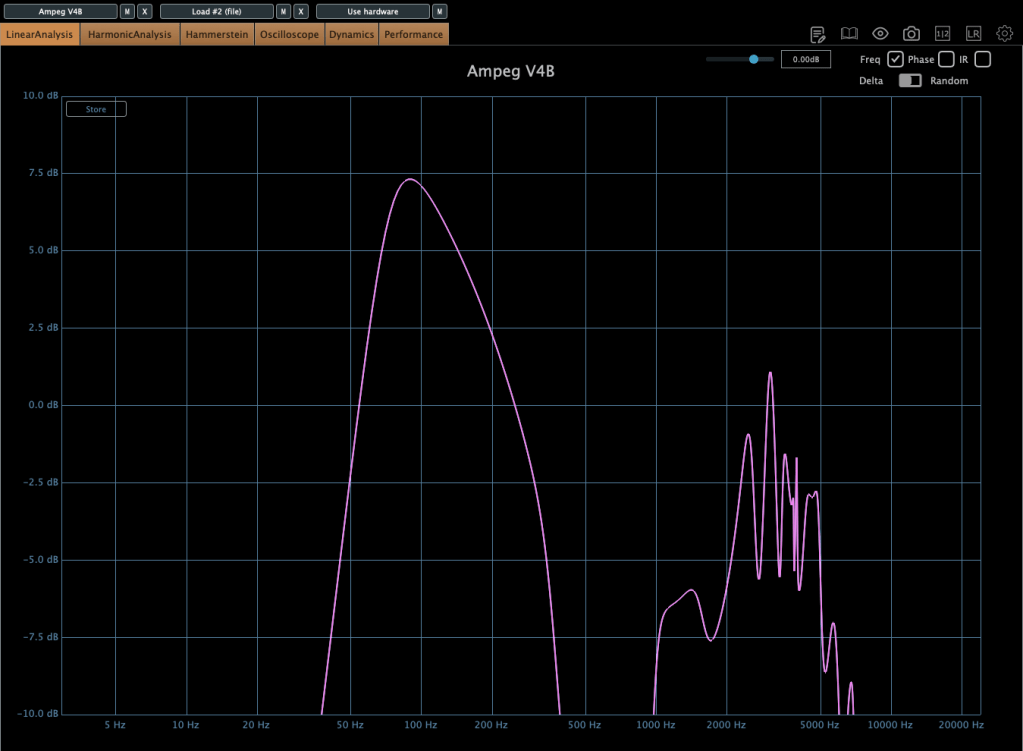
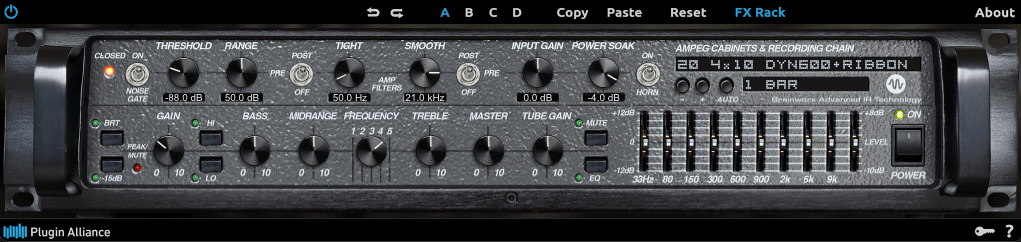
Ampeg V-4B

The Ampeg V-4B is a tube-based bass head from the early 1970s, designed for smaller venues. Think of it as a compact version of the SVT with 100W output.

Its tone isn’t drastically different from the SVT-VR, but it has slightly more high-end presence and sits a bit higher in the stereo image. It’s great when you want a tone that’s just a touch lighter than the SVT-VR’s Ultra-Lo setting. Of course, switching cabinets changes the sound quite a bit! 😄

Unlike the SVT-VR Classic, this model includes a noise gate, filter, and EQ, which are handy for tone shaping.

Ampeg SVT-3Pro

The SVT-3Pro is a modernized version of Ampeg’s SVT series from the 1990s, combining tubes and transistors to create a lighter hybrid head amp.

With 450W of output, it has less frequency loss compared to other heads in the series, so it can feel higher in resolution when you first hear it.

You can also adjust the harmonic structure using the Tube Gain control. (Cranking it up increases odd harmonics over even ones.)

This makes it especially useful for tracks with fewer instruments, where its clarity shines.

Ampeg B-15N

The B-15N is a reissue of the first model in Ampeg’s Portaflex series, where the amp head can be tucked into or removed from the cabinet.

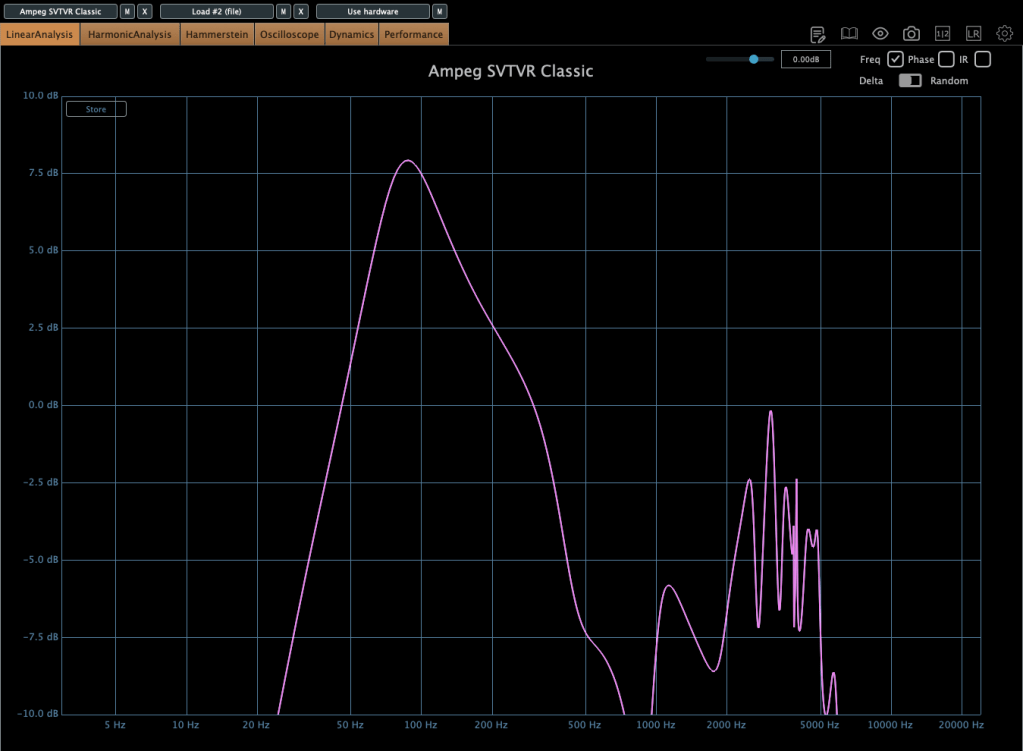
It includes 1964 and 1966 input and bias settings, which significantly affect the sound. The 1966 bias emphasizes highs more, and the 1966 input adds a bit more high-end, lifting the sound slightly in the stereo image. These differences are hard to show on a frequency response graph in Plugin Doctor, unfortunately.

Compared to the SVT-VR or V-4B, the default sound is noticeably lighter with more prominent highs, making it a great starting point for tracks featuring solo bass performances. As always, swapping cabinets changes the sound dramatically.

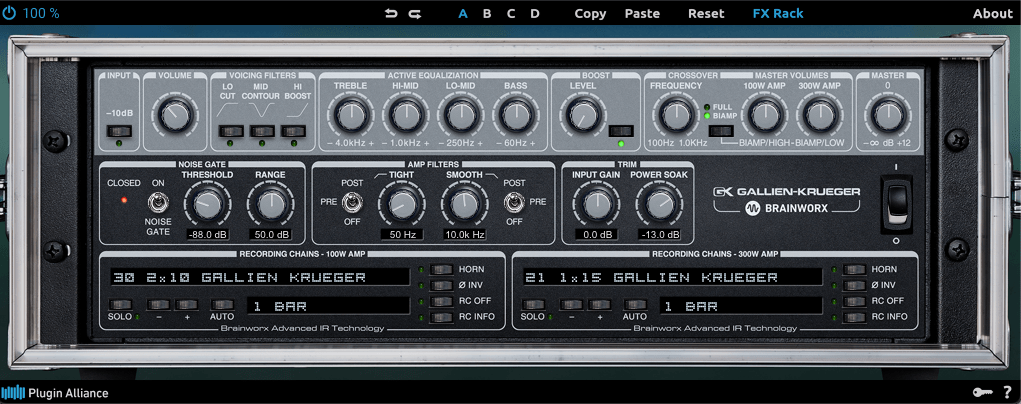
Gallien-Krueger 800RB

The Gallien-Krueger 800RB is a solid-state amp from the 1980s, designed with bi-amping (separating high and low frequencies) used in hi-fi systems, allowing connection to two cabinets.

In the plugin, you’ll see it split into 300W (lows) and 100W (highs). You can choose the Crossover Frequency to determine how frequencies are divided or use it in Full Range mode without bi-amping.

In its default state, this amp has the lightest sound of all the amps covered here, sitting higher in the stereo image. As with the others, EQ and cabinet tweaks can drastically alter the tone.

Today, we explored these five bass amp plugins. Bass amp plugins aren’t just for electric bass—they can also enhance synth bass or acoustic bass for great results.

All of these are solid amp plugins, so grabbing a few during this sale would be a smart move.

See you in the next post! 😊