Hello! This is Jooyoung Kim, an audio engineer and music producer.
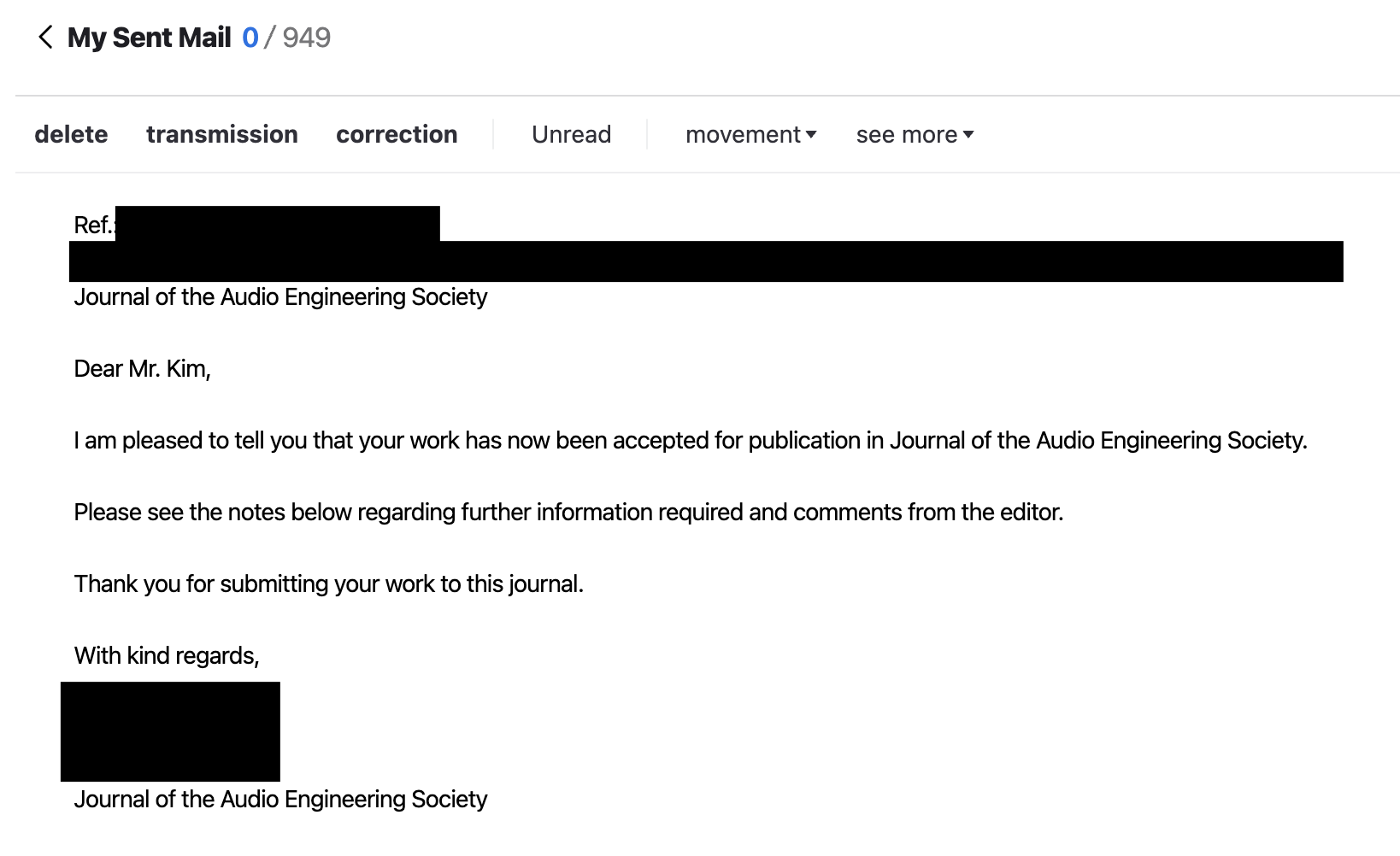
Last week, thankfully I got an acceptance from the Journal of the Audio Engineering Society (JAES).
I’ve moved it to My Sent Mail folder so it doesn’t get mixed up with other emails.
Previously, I submitted my work to other journals like IEEE Transactions on Consumer Electronics, the Journal of the Acoustical Society of America, Applied Acoustics, and Signal Processing. Having gone through the process of rejection, I really appreciate this positive decision from the JAES. In fact, JAES has always been the journal I dreamed of publishing in the most, which makes this acceptance even more meaningful to me.
Initially, I was concerned that my idea was perhaps too simple, so I conducted an extensive review of existing research to see if it had already been addressed. To my surprise, I discovered that there was a lack of research specifically covering this simple approach.
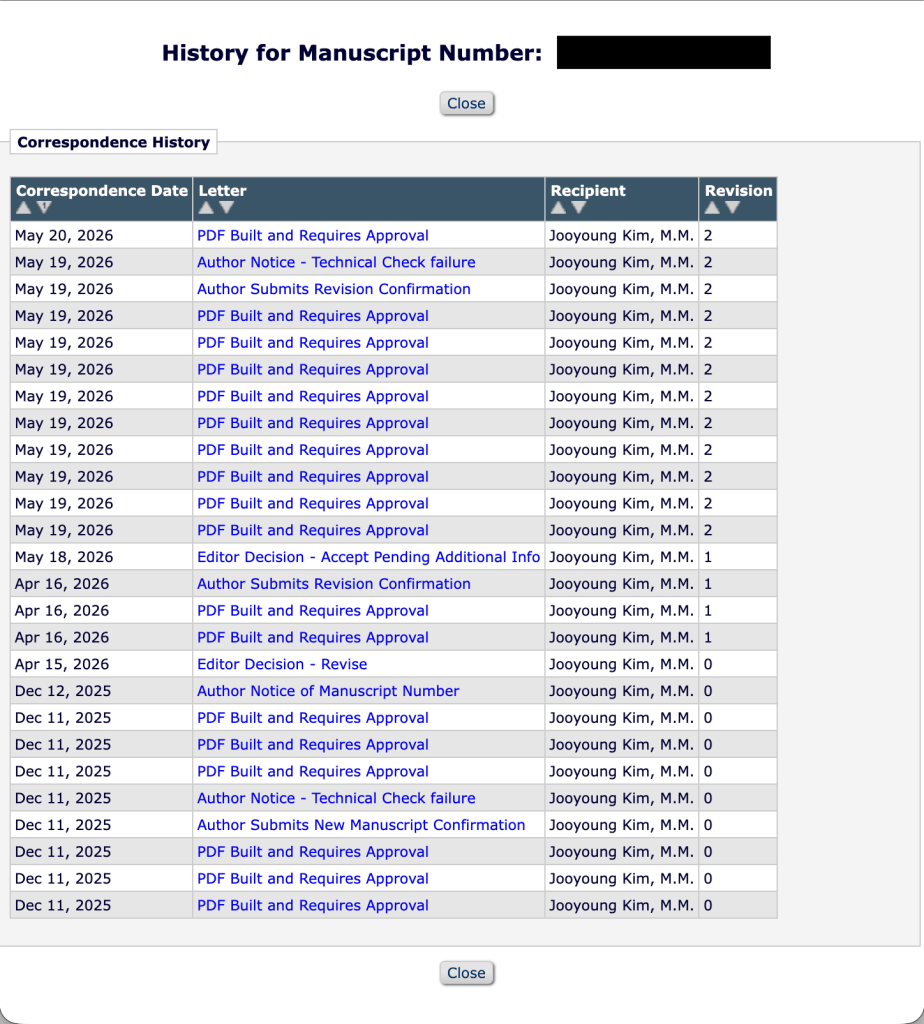
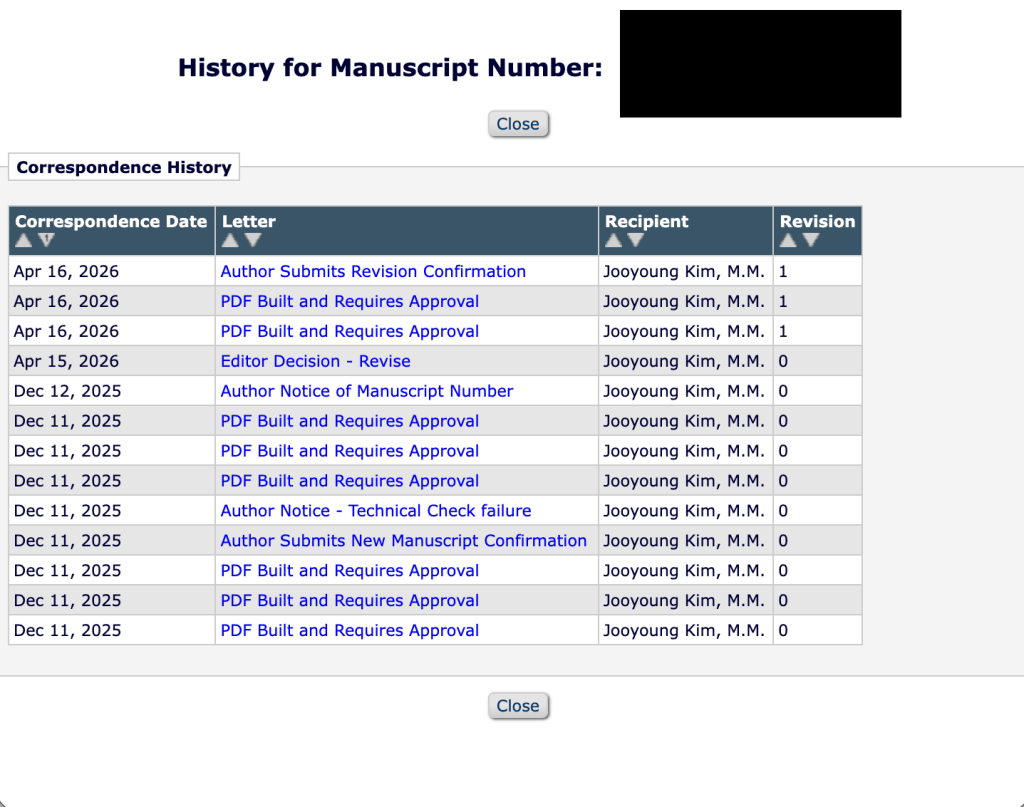
Since the template was updated, I had to go through the process of rebuilding my PDF files in the editorial manager multiple times. The long list of submission records reflects the effort and patience required to get everything formatted just right.
The review process took quite a bit of time. I submitted my initial draft on December 11, received the revision decision on April 15, and finally, the acceptance on May 18. If the result had been a rejection, I would have been devastated, but given the significant workload of reviewers who dedicate their valuable time to evaluate others’ work, I was quite satisfied with this timeline.
However, as an independent researcher, I am entirely self-funded. I worked hard to condense my manuscript to stay within the 10-page limit for free publication, but I unfortunately exceeded it. Now, I have to cover the page charges myself. With the recent sharp rise in the exchange rate between the Korean won and the U.S. dollar, these additional costs have become quite a financial burden.
Despite the financial challenge, I am more than happy to pay this fee because JAES is the journal I have always aspired to publish in. Seeing my work accepted there is truly one of the most rewarding moments of my research journey.
Once my paper is officially published, I will write a follow-up post to explain the research in more detail. Stay tuned for the next update!
Hello! This is Jooyoung Kim, an audio engineer and music producer. Today, I’ll begin a new article series, Advanced Synthesizers & Gear.
In this series, we’ll talk about the history of modular synthesizers and the equipment. Also, we’ll figure out why famous synthesizers became so popular and how they work.
Before we focus on these topics, we need to know about the history of synths and how electricity can be turned into sound.
Let’s dive in!
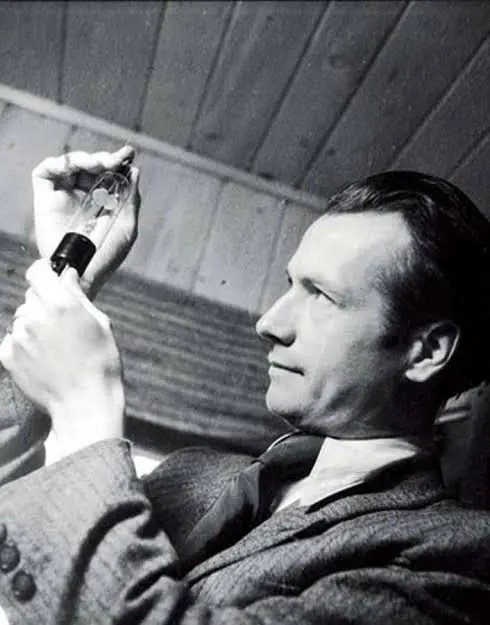
Harald Bode
Harald bode, a German engineer and physicist(as a physics major myself, I feel a deep sense of kinship with Harald Bode), was a pioneer of the synthesizer.
He started a recording business, but soon ran into a major obstacle: the grand piano. At the time, recording technology was in its infancy compared to today, making it incredibly difficult to capture the true depth of the instrument.
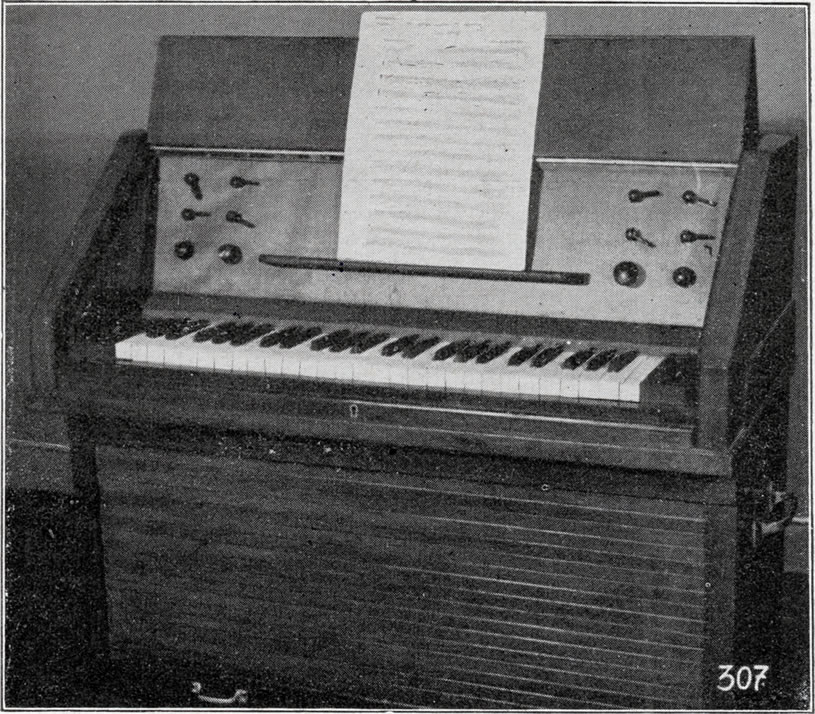
Driven by this limitation, his inner physicist took over. Instead of trying to perfect the replication of acoustic instruments, he envisioned a completely new path—creating musical sounds 100% out of electronics using vacuum tubes. Guided by the physical principle that human voice timbres (Klangfarben) change based on the intensity of overtones, he laid the very foundation of modern synthesis by designing a system where parameters could be shaped with half-rotary knobs.
His groundbreaking concept of using voltage control to adjust parameters quickly spread through the pioneer community, deeply inspiring the figures who would go on to invent the world’s most iconic synthesizers: Robert Moog and Don Buchla.
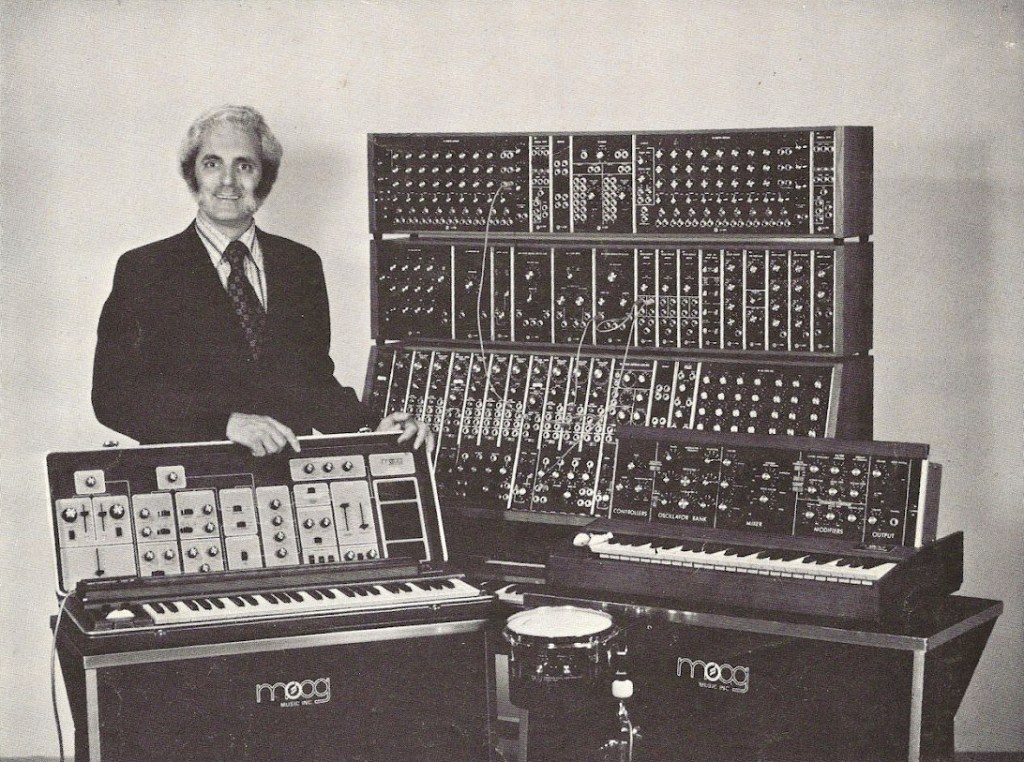
Robert Moog
Robert Moog also majored in Physics during his undergraduate years, earning his Bachelor of Science from Queens College in 1955 before completing a PhD in Engineering Physics at Cornell University. With this background, Moog approached electronic music through a technological lens very similar to Harald Bode’s.
In the fall of 1960, at the Audio Engineering Society (AES) convention in New York, Moog attended Harald Bode’s presentation of his modular ‘Audio System Synthesizer’. At this convention, Bode demonstrated the concept of using voltage control to manipulate audio parameters within a modular architecture.
Following this exposure to Bode’s design, Moog set out to develop a compact, practical synthesizer for musicians, contrasting with the room-sized systems of the era like the RCA Mark II. While previous instruments relied on hundreds of vacuum tubes, Moog utilized newly available silicon transistors, leveraging the exponential relationship between input voltage and output current.
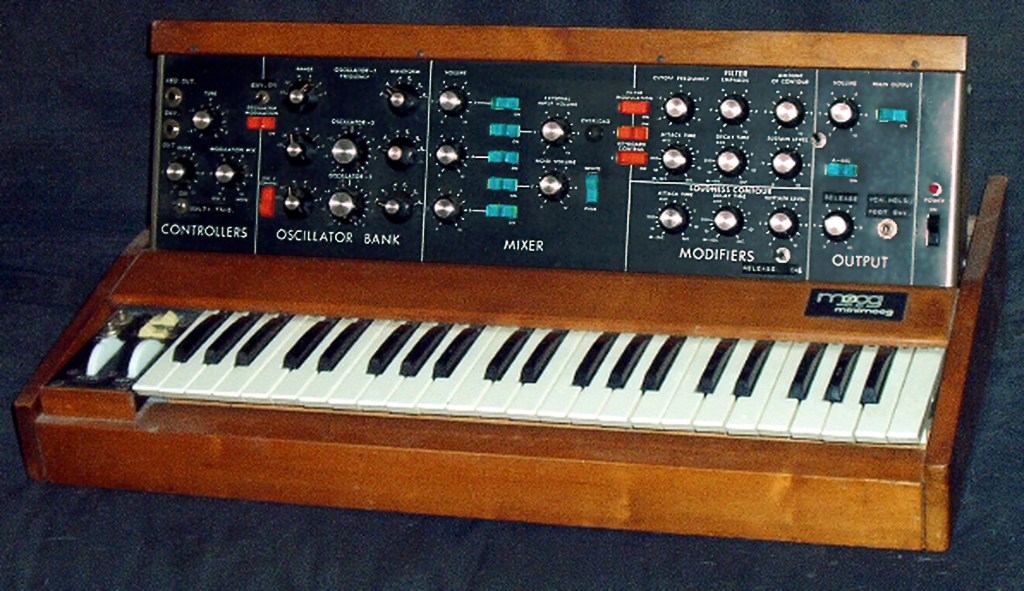
Moog Minimoog
This application of transistor physics led to his principal innovation in 1964: the Voltage-Controlled Oscillator (VCO). While Bode established the foundational concept of altering parameters via voltage, Moog engineered the precise circuitry that mapped input voltage to specific musical intervals. Through this hardware, Moog standardized fundamental synthesizer concepts, including modularity, envelope generation, and the pitch wheel.
Moog viewed his role primarily as a toolmaker for artists rather than a corporate businessman, choosing not to patent core innovations like modularity or voltage control.
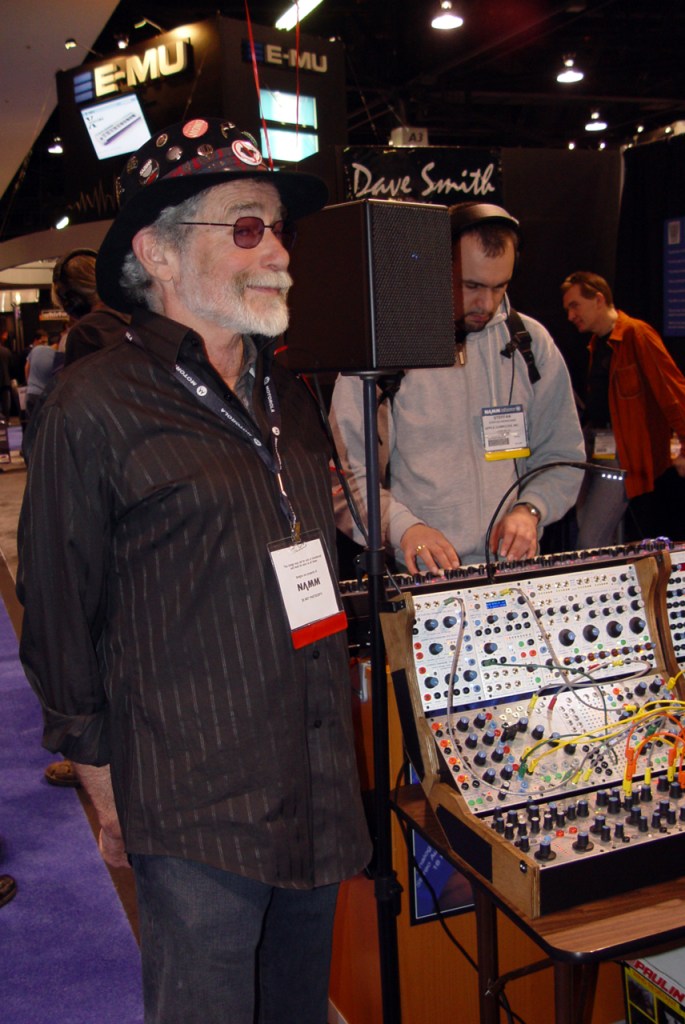
Don Buchla
Interestingly, the application of physics to modular synthesis was not confined to Harald Bode and Robert Moog. Donald Buchla, another pioneer who co-invented the voltage-controlled modular synthesizer independently during the early 1960s, also graduated as a physics major from the University of California, Berkeley, in 1959.
In 1962, Buchla formed his company, Buchla and Associates, in Berkeley. He was commissioned by composers Morton Subotnick and Ramon Sender of the San Francisco Tape Music Center to create an electronic instrument tailored for live performance. Guided by this request, Buchla began designing his first modules in 1963.
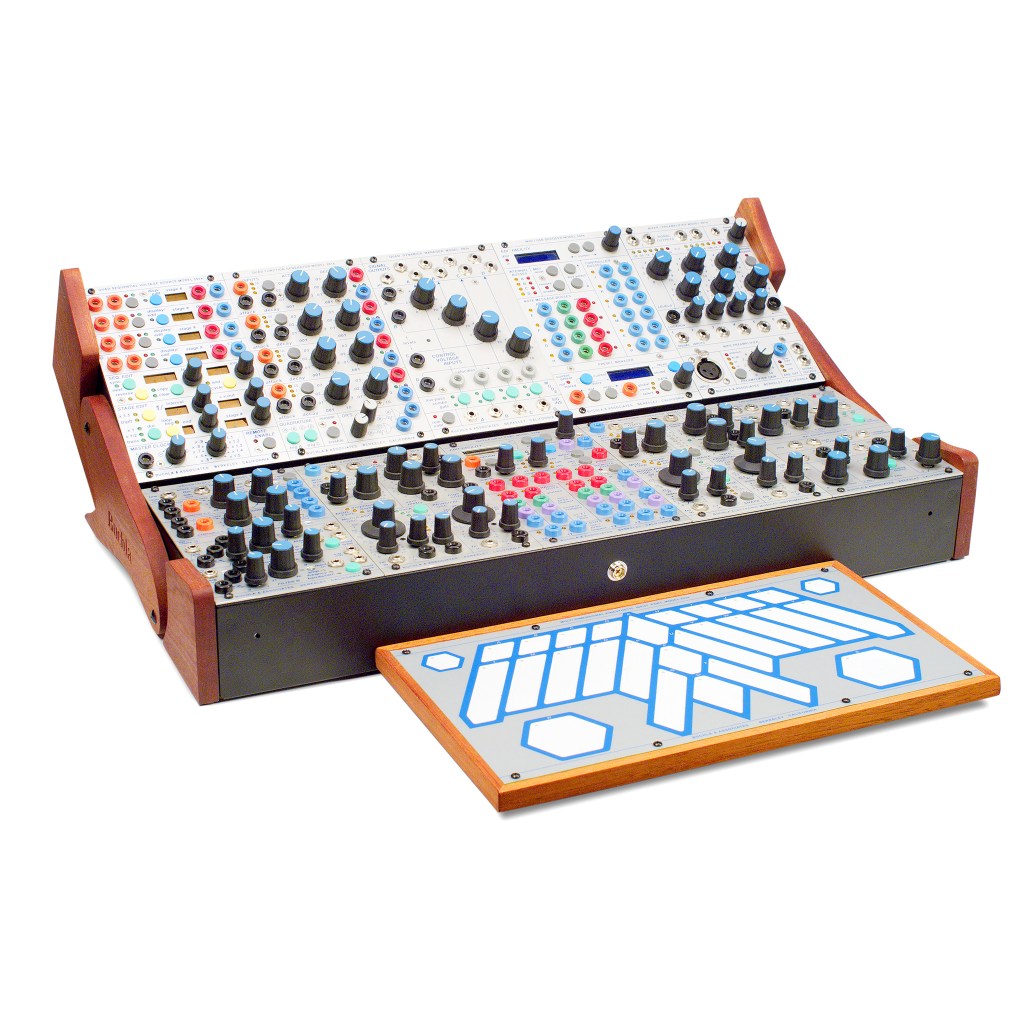
Buchla Skylab
While Robert Moog was developing his system on the East Coast, Buchla was working independently on the West Coast. In 1965, utilizing a grant from the Rockefeller Foundation, he assembled these modules into the Buchla Modular Electronic Music System (later known as the Series 100), which entered commercial production in 1966.
Like Moog, Buchla utilized voltage control as the core mechanism to alter audio parameters. However, his approach to user interfaces and musical philosophy differed significantly. While Moog standardized the traditional piano-style keyboard to make the instrument accessible to conventional musicians, Buchla deliberately rejected the keyboard, viewing it as a limitation carried over from acoustic history. Instead, he pioneered alternative control interfaces, such as touch-sensitive plates that allowed for non-traditional, expressive manipulation of voltage.
Because these two distinct styles of synthesizers were developed independently based on the geographical regions where their creators worked, Moog’s system became known as the East Coast style, while Buchla’s was termed the West Coast style.
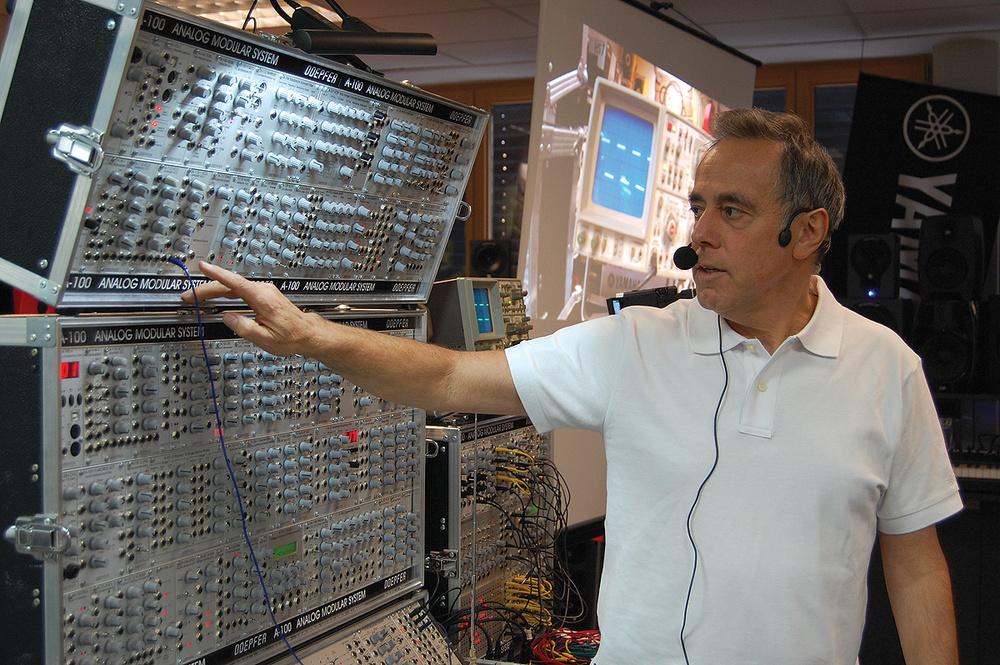
Doepfer
The historical lineage of physics-driven modular synthesis culminated in the late 20th century with the establishment of the Eurorack standard. Developed in 1995 by Dieter Doepfer, the founder of Doepfer Musikelektronik, Eurorack solved a critical fragmentation problem in the modular synthesizer market. Like Bode, Moog, and Buchla before him, Doepfer formally studied physics, beginning his academic training at Munich in 1972.
Doepfer’s entry into hardware development was directly influenced by his background in physics. While completing his mandatory community service in the ophthalmology department of a Munich hospital, Doepfer utilized the department’s dedicated electronics laboratory—originally built for laser eye surgery research—to quietly develop his earliest synthesizer circuits. This research resulted in his first complete system, the Polyphonic Module System (PMS), released as a DIY kit.
Throughout the 1980s, Doepfer continued to expand his technical expertise. He integrated specialized integrated circuits (ICs) from Curtis Electronic Music Specialties (CEM) to build highly efficient analog systems, and later adapted to the digital transition by developing 8-bit sampler cards and MIDI master keyboards. However, the commercial market shifted during the 1990s; a resurgence of interest in analog synthesis led to the unexpected success of his MS-404 monophonic synthesizer in 1994, which prompted high demand for expanded modular options.
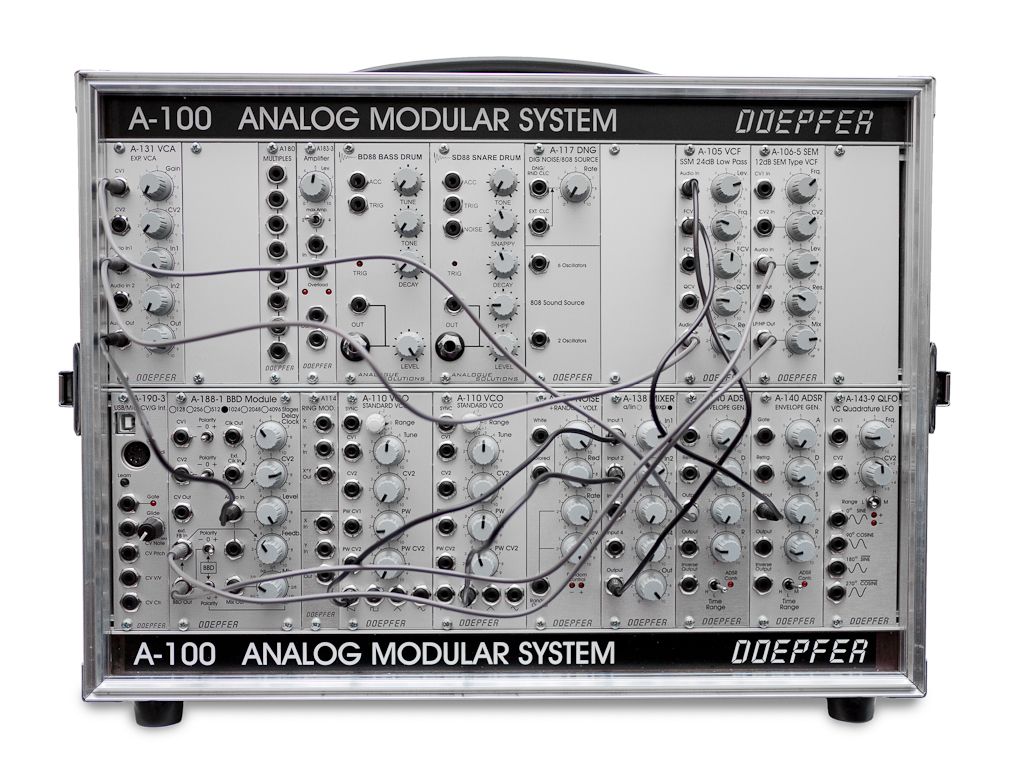
To address this demand systematically, Doepfer introduced the A-100 system in 1995, establishing the Eurorack format. Prior to this, systems by Moog or Buchla used incompatible dimensions and electrical standards. Doepfer unified the ecosystem by introducing open, standardized physical and electrical specifications:
Physical Dimensions: Height was set using the sub-rack unit standard at 3U (approx. 128.5 mm), and width was measured in HP (Horizontal Pitch), where 1 HP equals 0.2 inches (5.08 mm).
Electrical Connectivity: Power was distributed via standardized ribbon cables supplying ±12V DC.
Signal Interface: Control Voltages (CV) were routed using compact 3.5mm mini-jacks rather than the bulky 1/4-inch or banana jacks of earlier decades.
By keeping this format open, Doepfer created a universal framework that allowed third-party manufacturers and boutique designers to build compatible components. His designs even attracted pioneers of the genre; Florian Schneider of Kraftwerk collaborated with Doepfer to modify hardware for speech synthesis triggering, a relationship that later influenced the development of the MAQ 16/3 MIDI analog sequencer.
Through these modular standards, Eurorack transformed synthesis from a market of isolated, proprietary hardware into a decentralized, global ecosystem.
Furthermore, because this standard has become so widespread, even non-Eurorack standalone hardware instruments often feature compatible 3.5mm patching connectors. Thanks to this universal connectivity, users can cross-connect entirely different, independent synthesizers to act as interlinked sub-components—such as routing one synthesizer’s output to serve purely as an oscillator, bypassing into another instrument’s filter, or patching through separate external units for saturation and effects.
I will explain the technical details and creative mechanics of these Eurorack modular synthesizers in a later post.
Hello! This is Jooyoung Kim, an audio engineer and music producer.
I’ve been working on so many projects lately that I haven’t been able to post any articles to this blog. Some of them are currently in progress, so I’m just writing a simple life update today.
Let’s start!
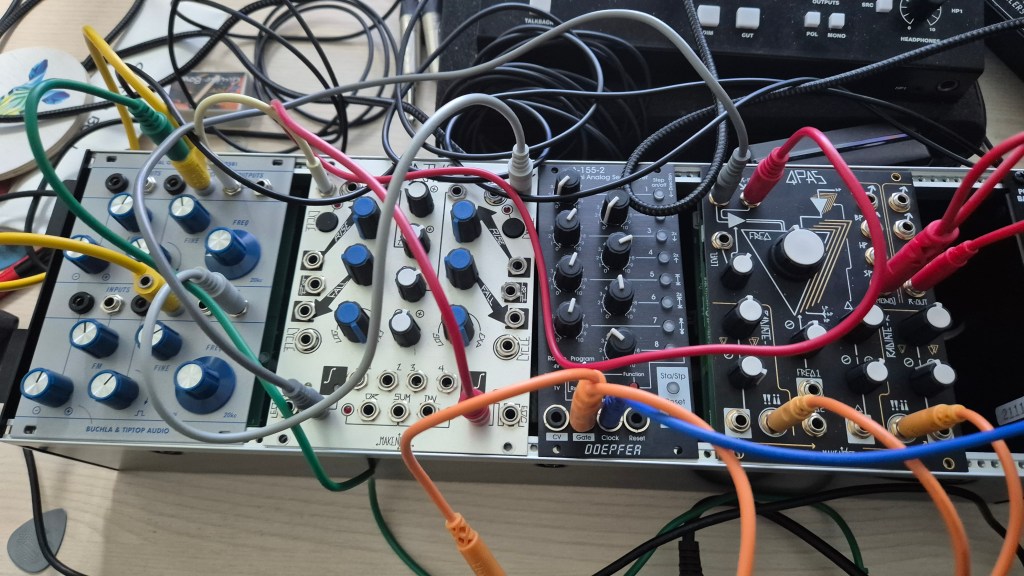
Two weeks ago, I participated in a modular synthesizer seminar as a lecturer. I was already familiar with the principles of sound synthesis, and I own a semi-modular synth and a vocoder. However, it was my first time dealing with a full modular synthesizer (Eurorack standard). So, when I was preparing the seminar materials, I studied quite hard. Of course, it takes long time.
The organizer said they would send me some photos from the event, but I haven’t received them yet. Once they arrive, I’ll share the full story in more detail.
At the same time, I received a minor revision decision on my paper from the Audio Engineering Society. I was very grateful for the decision, but unfortunately, I also caught a bad cold. Because the reviewers suggested adding some simple measurements, I pushed myself to complete them, which made my cold even worse. I ended up having to lead the modular synth seminar while feeling quite ill.
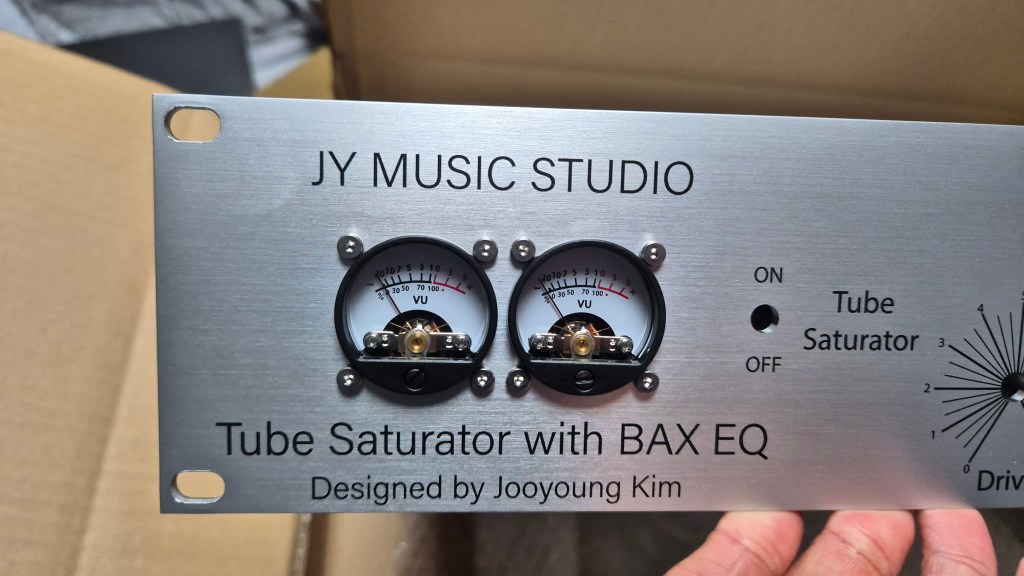
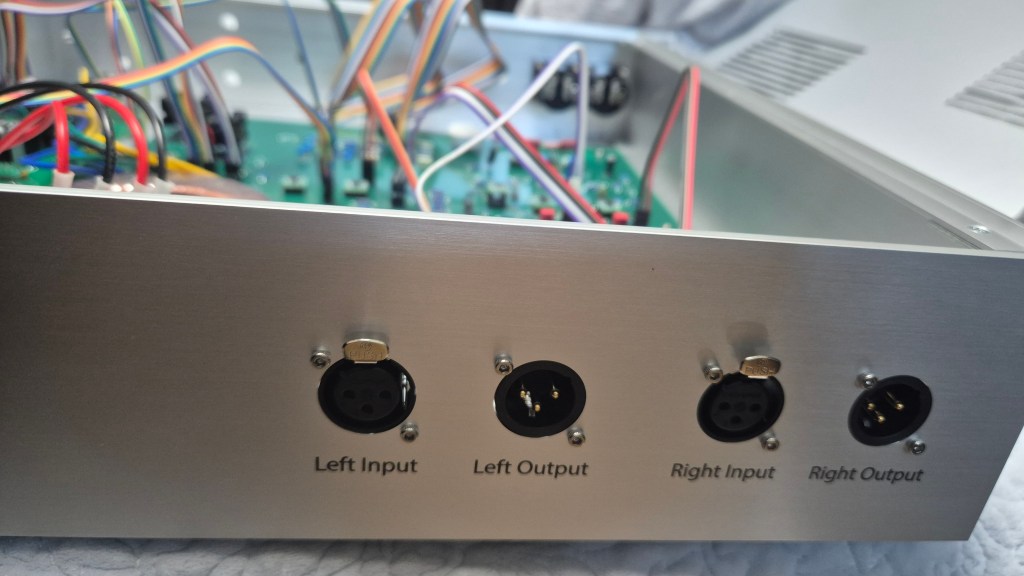
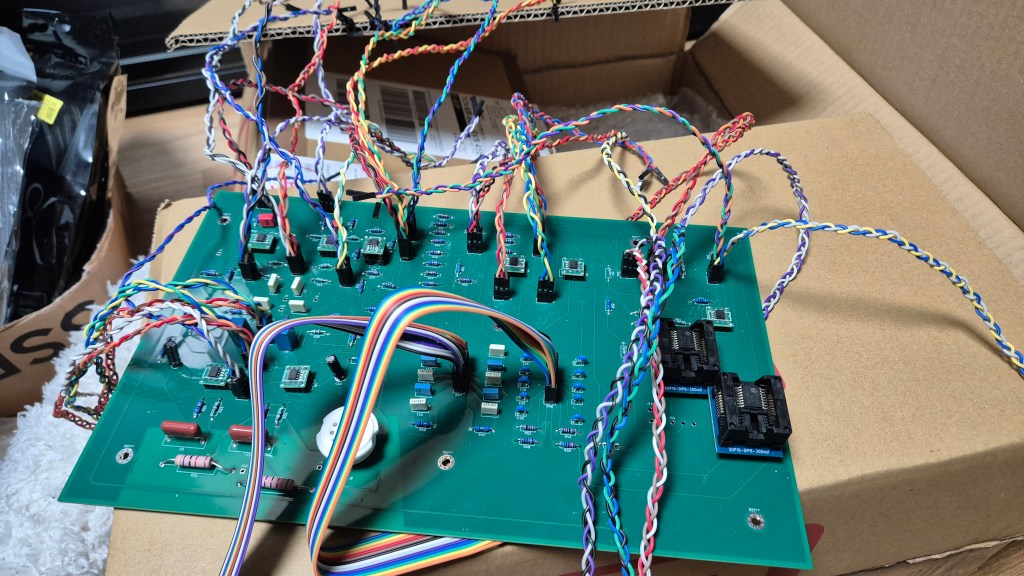
Building the audio hardware—which I designed entirely from scratch—is now almost finished. Twisting all those wires and soldering the power lines was exhausting, but it has been quite rewarding. Now, I just need to solder the switches and potentiometers, and I’ll be all done. I’m really looking forward to it.
I also submitted my new research on deep learning related to audio hardware. I’ve been preparing this paper since last May, so it has been a year-long process. Personally, I don’t feel the experimental results were groundbreaking, but I submitted it anyway in hopes that it might be helpful to other researchers. I really hope it gets accepted!
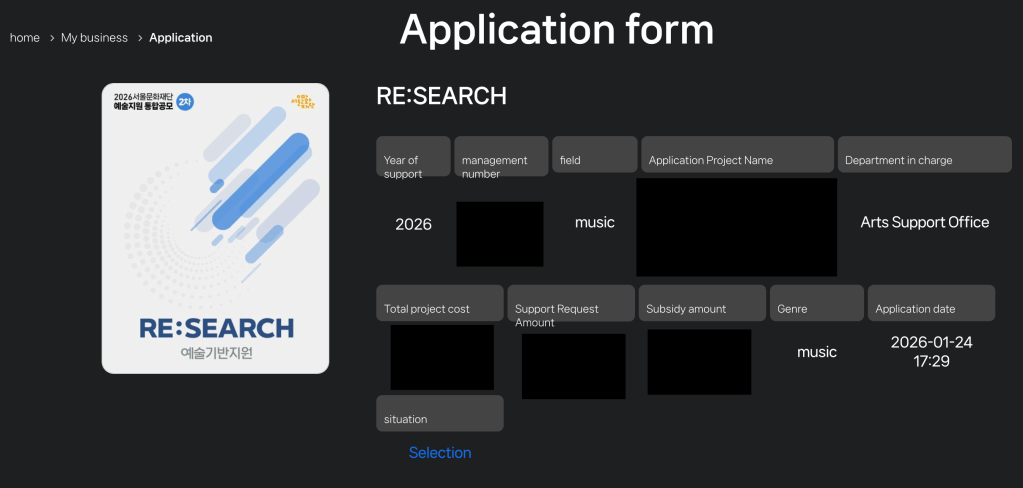
I was selected for the ‘RE:SEARCH’ grant program by the Seoul Foundation for Arts and Culture, so I’ll be receiving some research funding. Since my proposed study includes listening tests, I’ve been busy designing the experiments, preparing documents for IRB approval, and conducting a literature review for the paper. These tasks are quite time-consuming, so I’ve been spending most of my time lately wrestling with all this writing.
The research funding will be released in May, which is also when the budget execution begins. Since the actual IRB review takes place in June, I have to submit all my documents by the end of May. The final approval usually doesn’t come out until early July, so I need to finalize the experiment design and paperwork very quickly. I think I’m going to have quite a headache dealing with all of this over the coming week.
With all these tasks piling up, I haven’t had a spare moment to focus on this blog. Once things start to wrap up—whether it’s finishing the hardware, getting my paper published, or receiving the photos from the modular synth seminar—I’ll make sure to post about them one by one.
Hello! This is Jooyoung Kim an audio engineer and music producer.
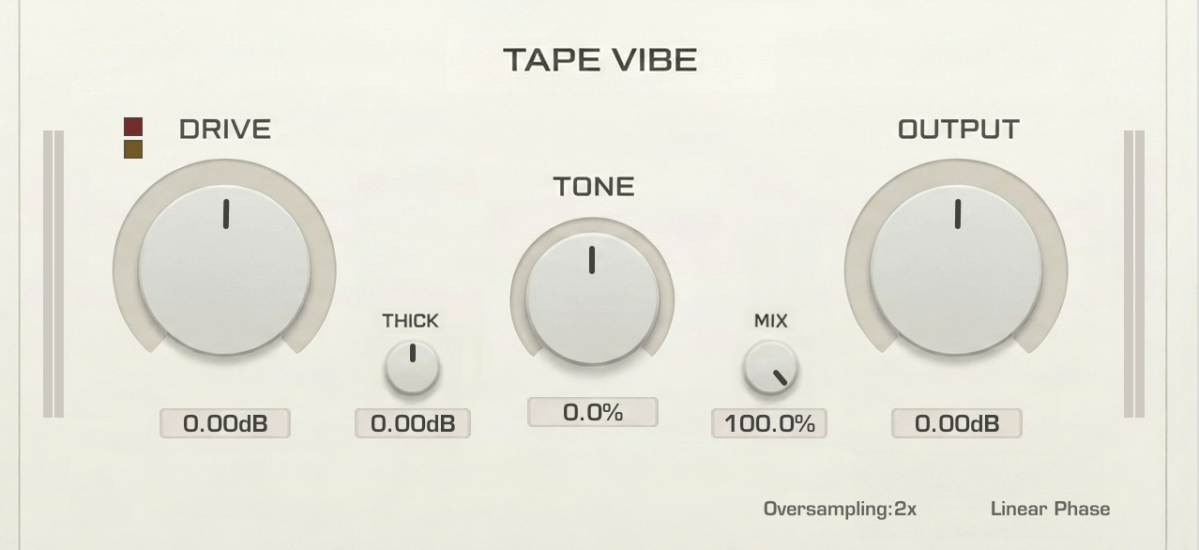
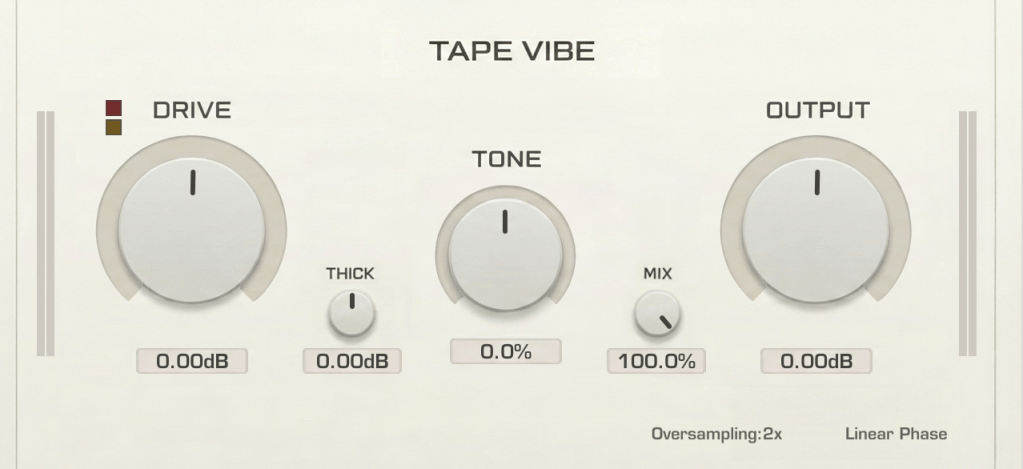
Today, I’m introducing a new plugin called Tape Vibe by Three-Body Technology.
This plugin was provided as an NFR (Not For Resale) copy by Plugin Boutique. If you purchase it through the links below, I’ll receive a small commission which helps support my blog.
As you may know, Three-Body Technology is the renowned developer behind the Kirchhoff-EQ. That plugin was a total sensation when it was released, and I believe its success became the driving force behind the company’s growth.
Now, they offer quite a wide variety of plugins, such as the Future MB. Tape Vibe is another great addition to their growing lineup.
The concept of this plugin is simple.
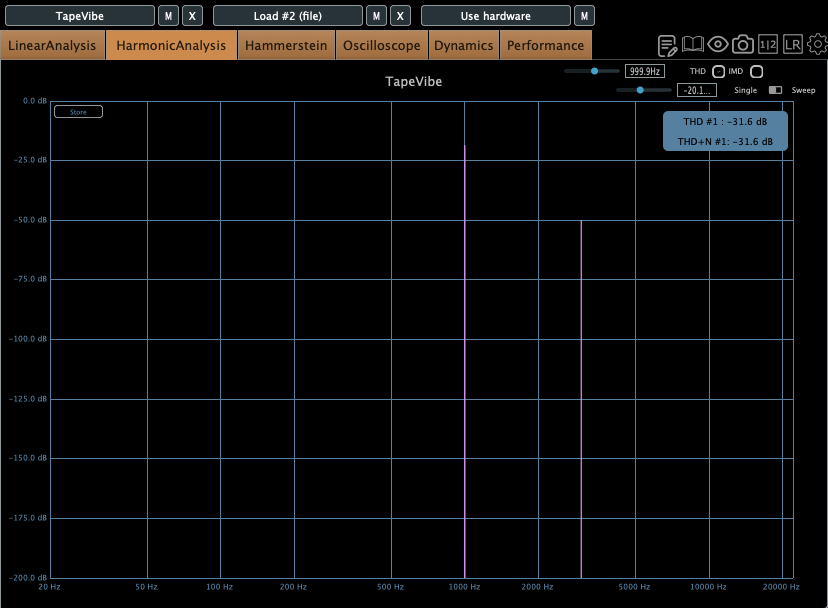
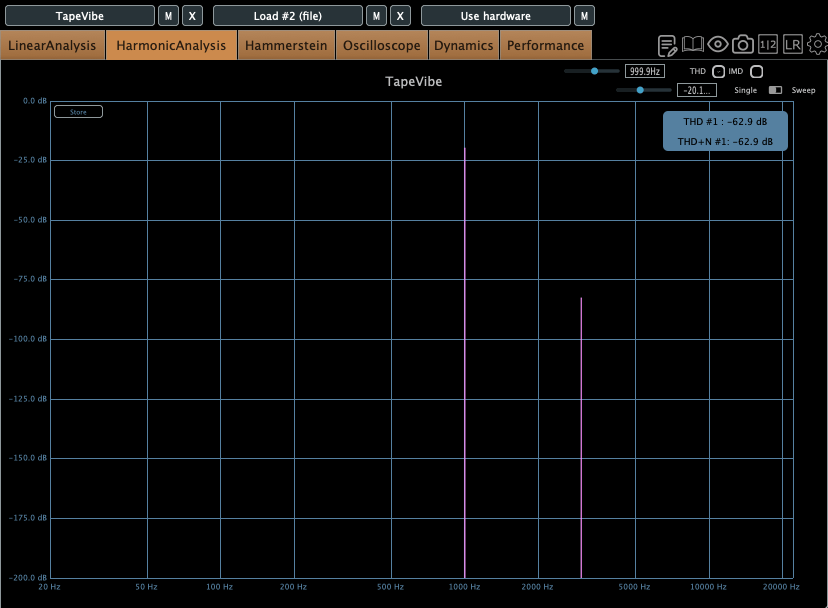
First, I noticed only third harmonics appearing in the analyzer. I suspect it takes inspiration from the SPL Machine Head. I actually wrote a review for that a few months ago, so if you’re interested, please check the link below.
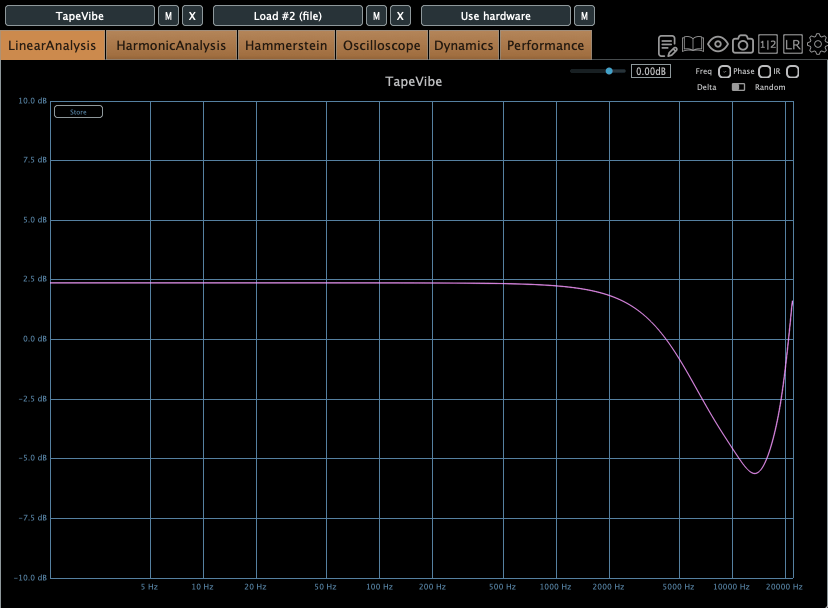
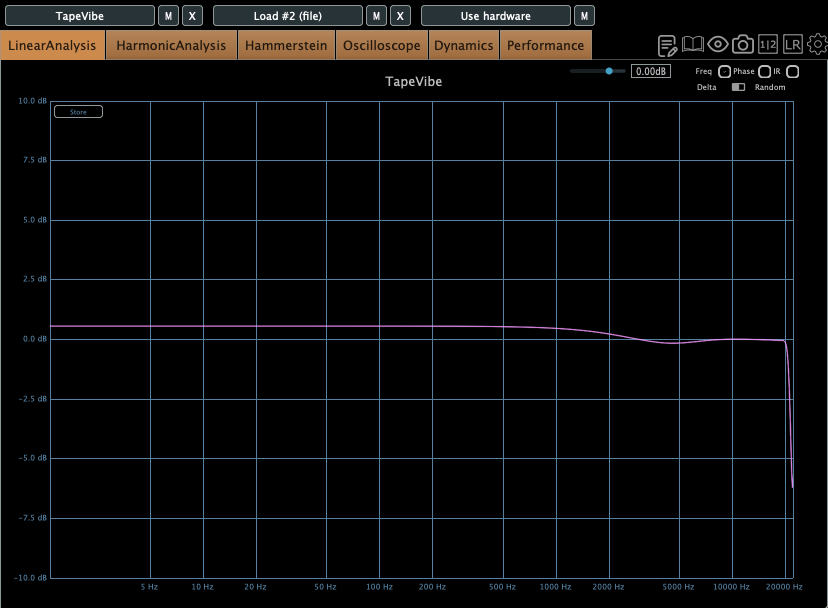
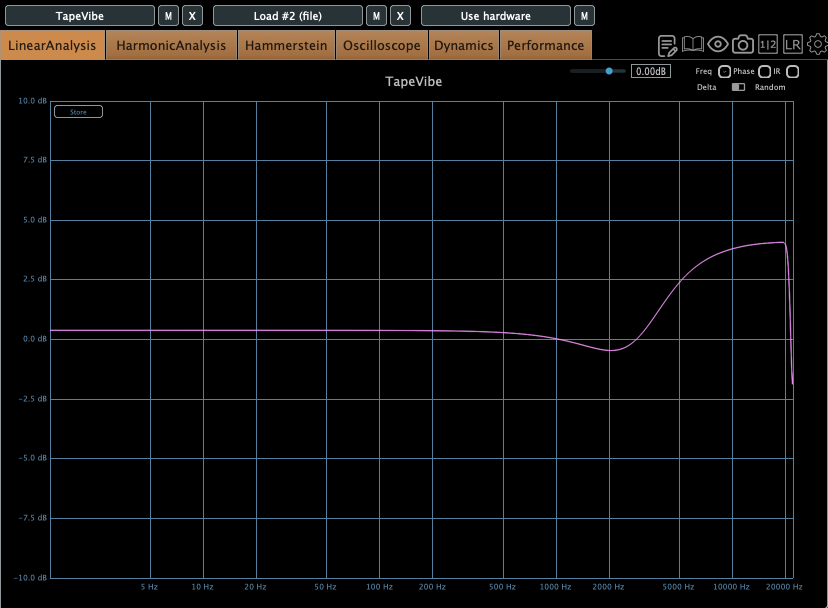
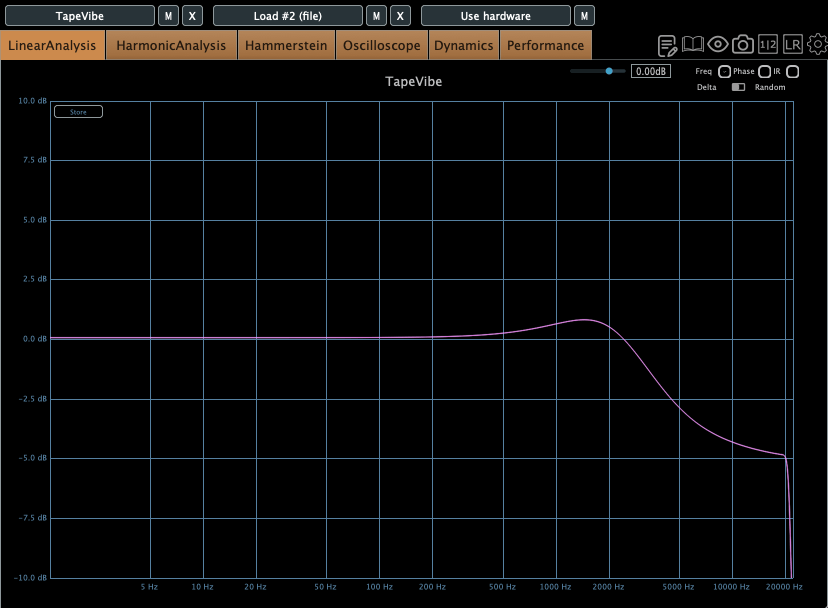
However, the way it works is fundamentally different. First, in the frequency domain, increasing the drive results in a noticeable high-frequency roll-off. Additionally, the Thick knob boosts the low frequencies, as shown in the image below.
It features an internal Auto Gain, so you don’t have to compensate for the volume much as you crank the drive.
We can use Tone knob to adjust the high frequencies.
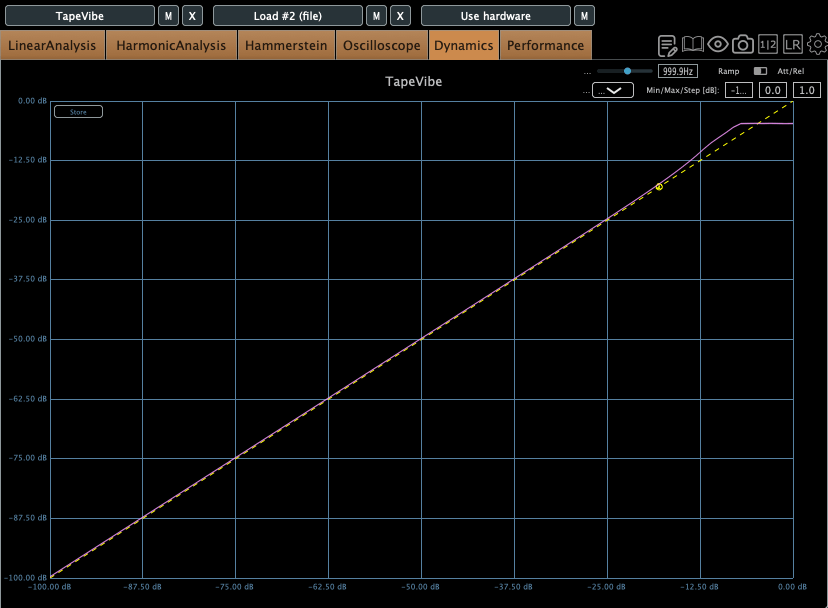
However, it doesn’t exhibit typical tape compression characteristics. Instead, we can observe brick-wall limiting when pushed with high drive values. An interesting quirk of this plugin is that the output level seems to rise once the signal amplitude exceeds -20dBFS.
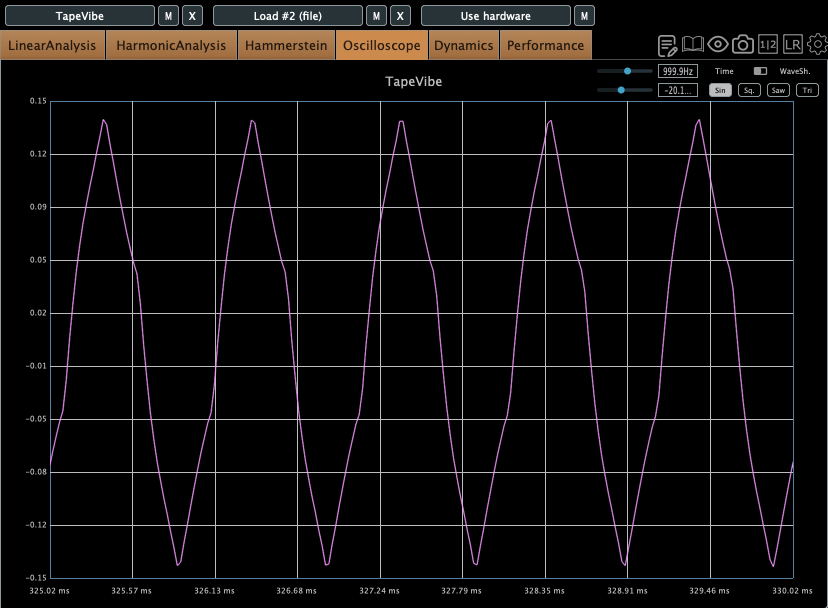
On an oscilloscope, you can see how the heavy saturation completely reshapes the waveform, resulting in a highly distorted signal.
While the saturation adds great body, higher drive settings tend to dull the top end quite a bit. The key is to dial in a moderate drive and then use the Tone control to restore clarity. This creates a really pleasing harmonic saturation that sits perfectly in the mix.
In conclusion, Tape Vibe is a straightforward and easy-to-use saturation tool. It may not be a perfect tape emulation, but it’s great for adding analog weight with minimal effort. If you need a simple way to add some vibe to your tracks, it’s worth a look.