Hello,
I’m Jooyoung Kim, a mixing engineer and music producer.
Another year has already come to an end.
As the year draws to a close, I always find myself looking back—wondering how I’ve lived up to this point, and whether I’ve really been living well.
These days, I’ve been stuck in an endless cycle of thinking, and daily migraines have become a familiar companion… 🙂
Still, I thought it would be good to sit down and organize what I actually did this year.
1) Finishing my “Basics of Mixing” blog series
The book itself was published last September, but I continued writing blog posts on the same topic, just like before. I finally wrapped that series up this March.
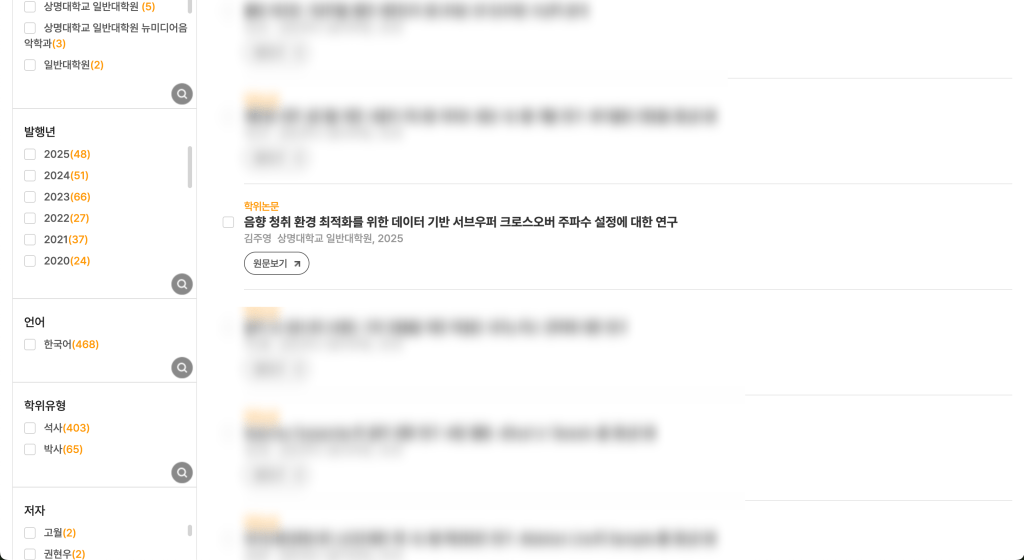
2) Focusing more on papers and research this year
One year ago, a KCI (Korea Citation Index) paper of mine was published, and this August I published an SCIE-indexed paper with a journal affiliated with the European Acoustics Association.
Thanks to those two papers, I was able to reduce my tuition a bit, and perhaps because my advisor viewed my work positively, I was appointed as a graduate-level lecturer in the second half of the year.
I also developed a Python-based audio measurement tool for my research, implementing THD+N and crosstalk measurements in accordance with the AES17-2020 standard. A paper related to this tool is currently under review, following IRB approval from my university.
As for my deep-learning research, about half of the data was lost, so I’m retraining everything—but surprisingly, the results are turning out quite well. I think I’ll be able to carry out the experiments properly. I’d like to wrap it up by February, though that might be a bit ambitious… haha.
If I had one small wish… it would be nice if lecturers were also eligible for research funding. 🙂
3) Graduating from graduate school
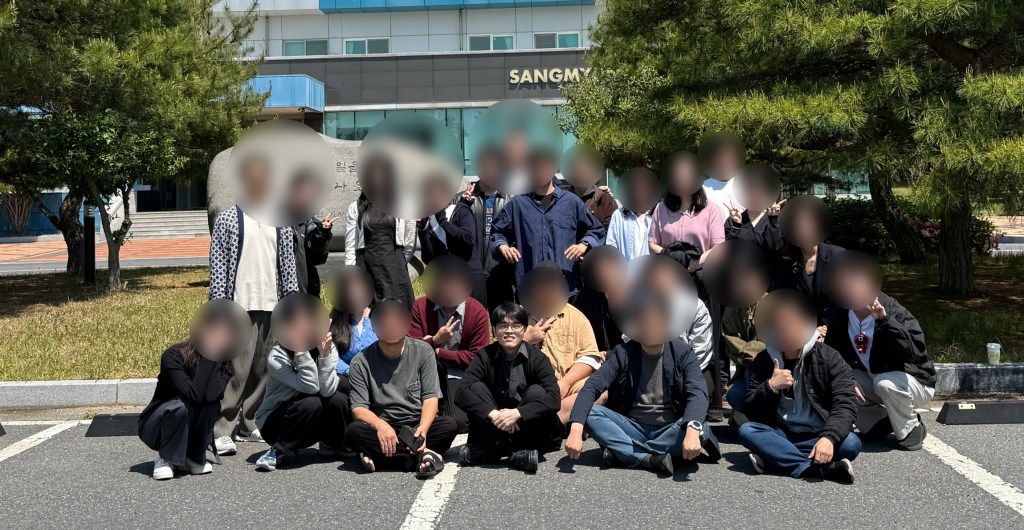
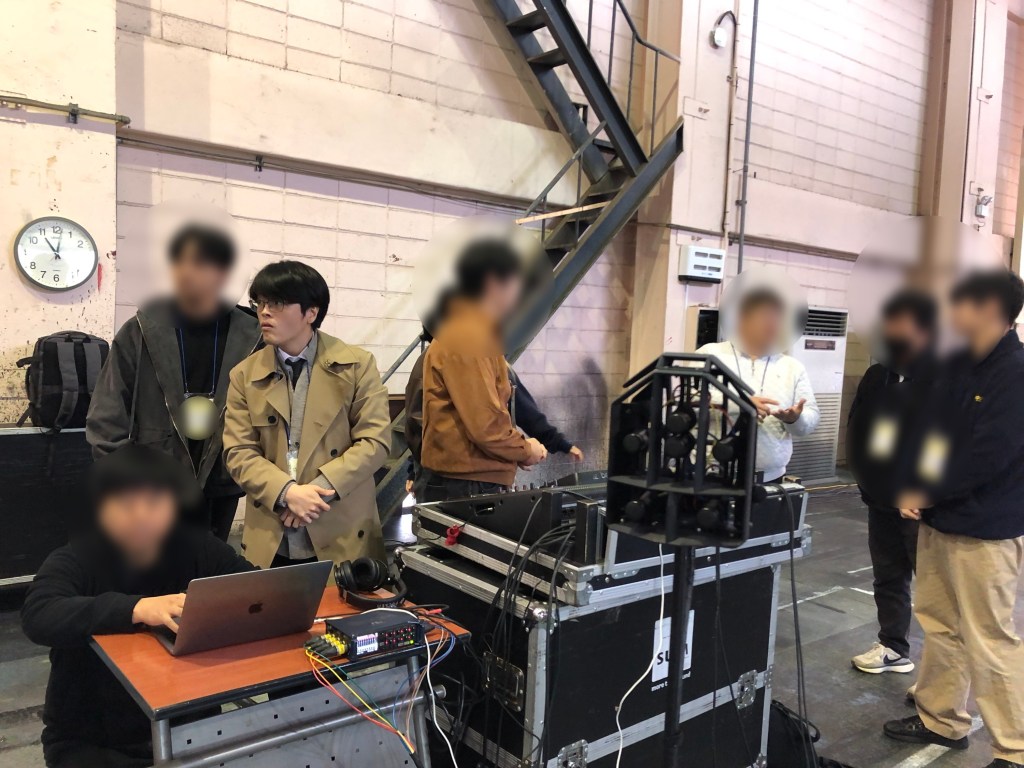
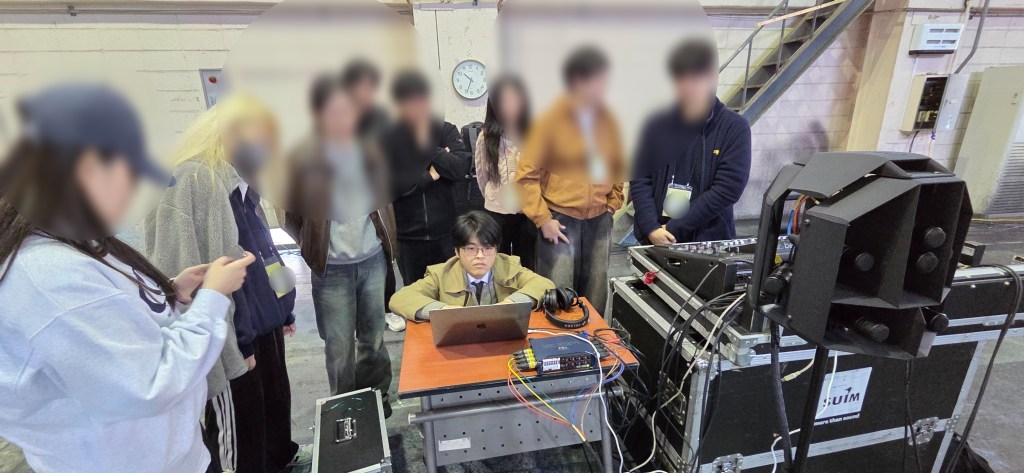
I don’t remember why I ended up sitting in the center, but my graduate school at Sangmyung University held thesis defenses at a retreat facility. It feels like a long time ago, but that photo was taken in May—so only about seven or eight months have passed.
4) Teaching, both regularly and irregularly
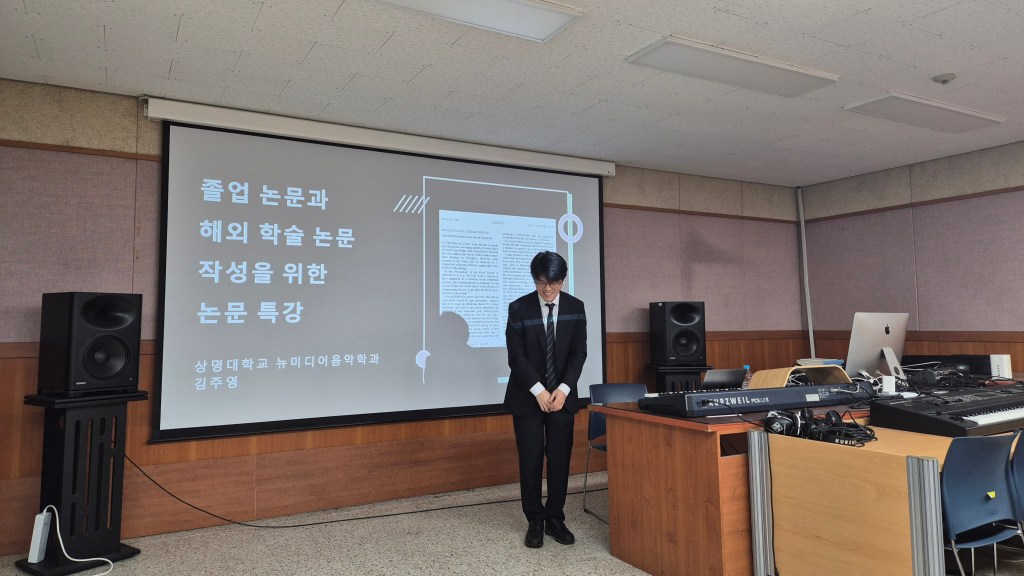
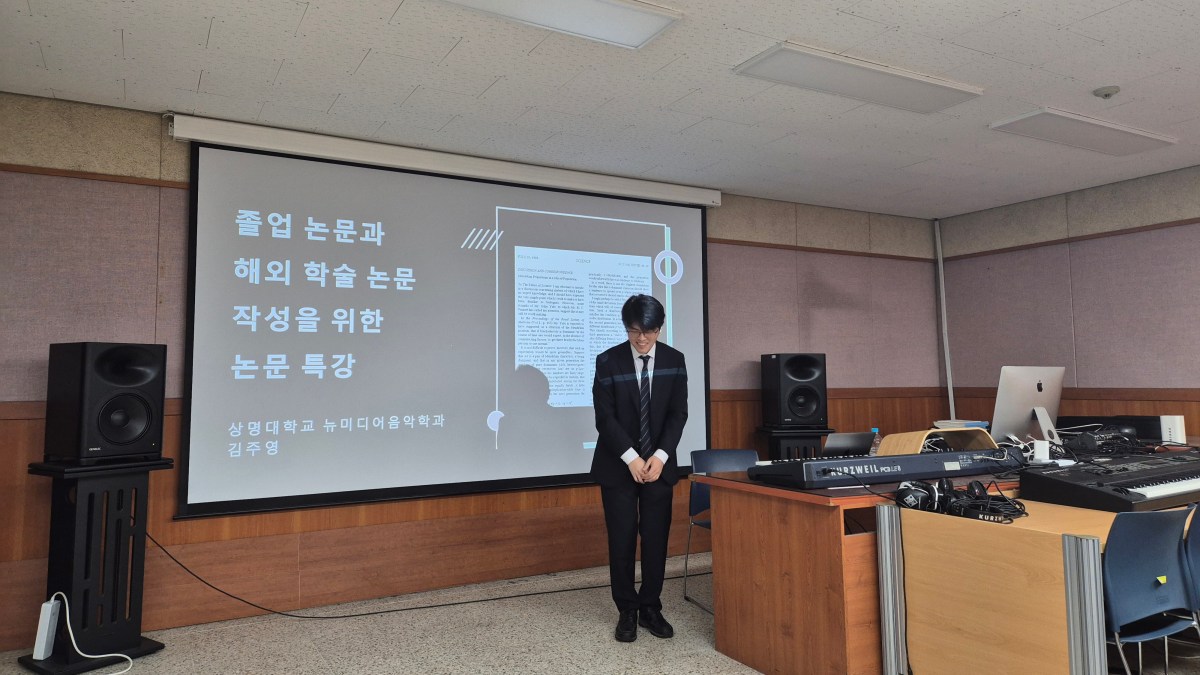
In addition to the practical courses I’m responsible for, I also gave thesis-related lectures at graduate school and a few external lectures. It definitely felt very different from the private lessons I used to give upon request to people I knew personally.
5) Starting a sole proprietorship and doing live sound work
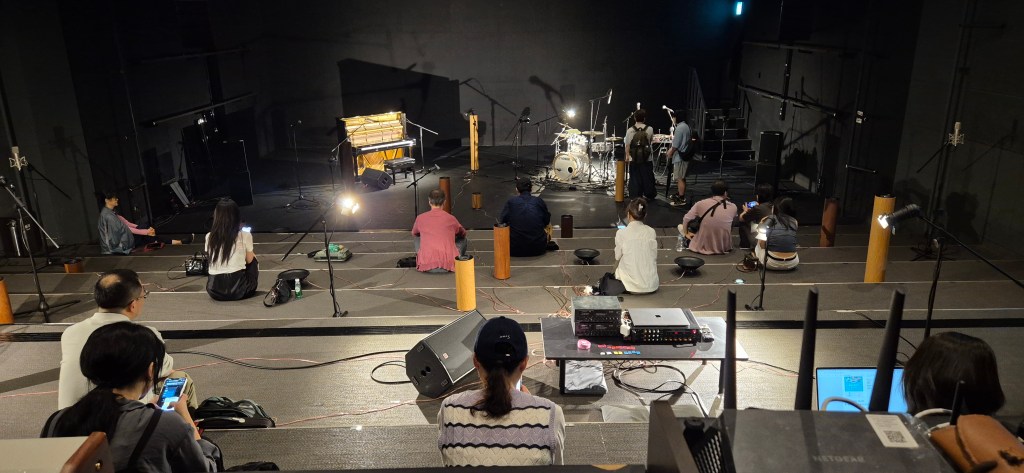
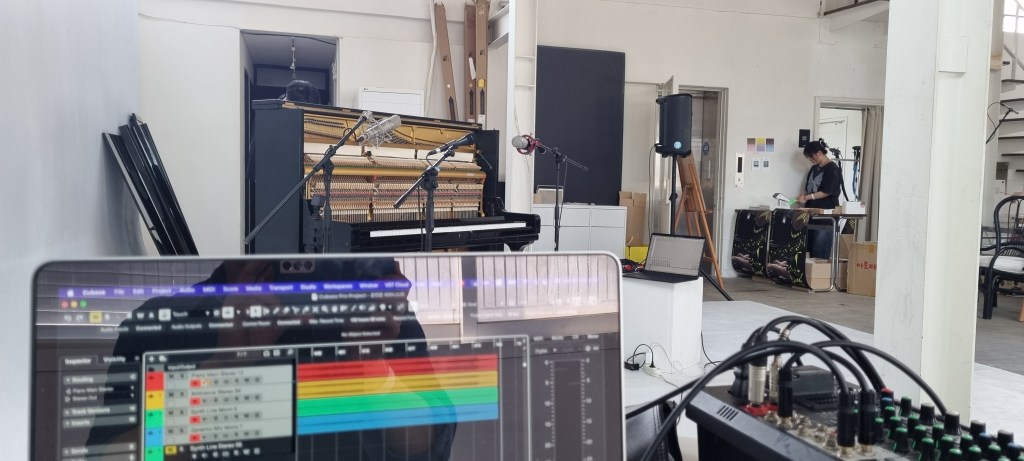
Registering the business itself wasn’t anything grand or impressive, so I deliberately didn’t talk about it much on the blog until now. I simply rented a virtual office and registered the business… haha.
I wanted to wait until I had a proper studio before mentioning it, but since I did register it this year, it felt worth noting. At the moment, I’m looking for a small place to set up shop—but finding a location that meets my expectations hasn’t been easy.
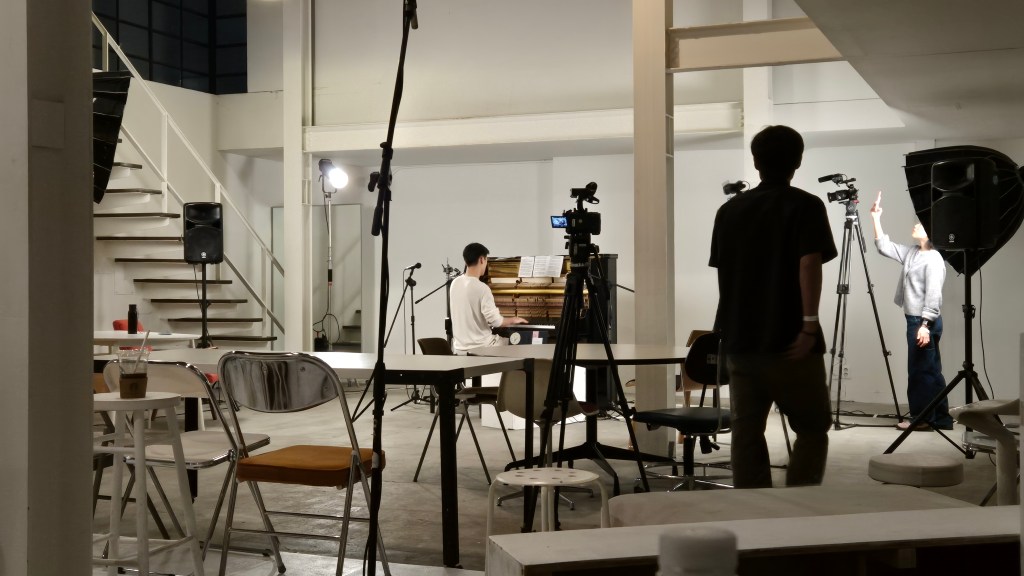
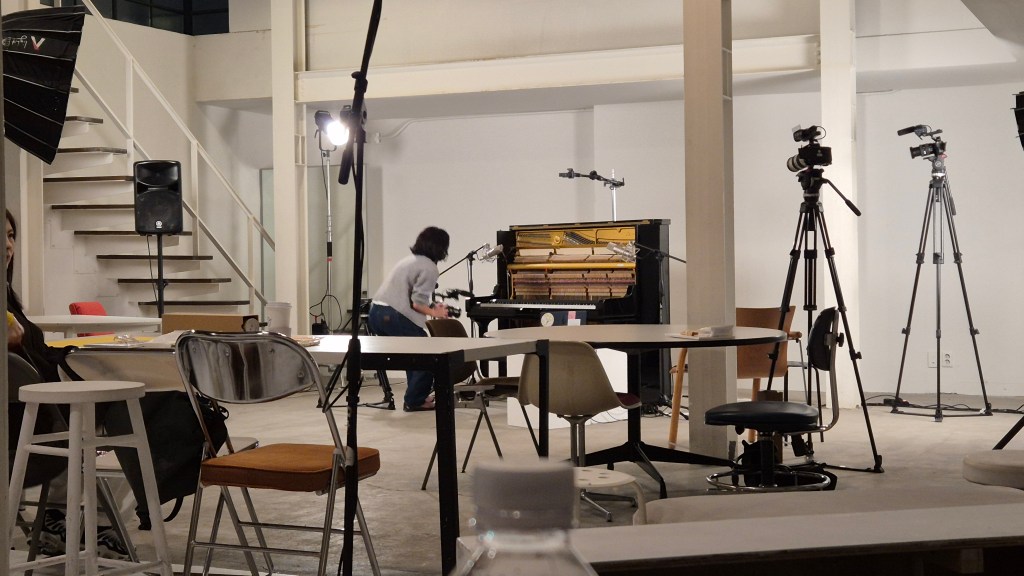
As for live sound, there isn’t much that’s been officially released as videos or albums yet, but a performance I supervised as sound director this past summer was recently uploaded to YouTube.
I’ve been doing things like this.
6) Obtaining a stage sound certification (in Korea)
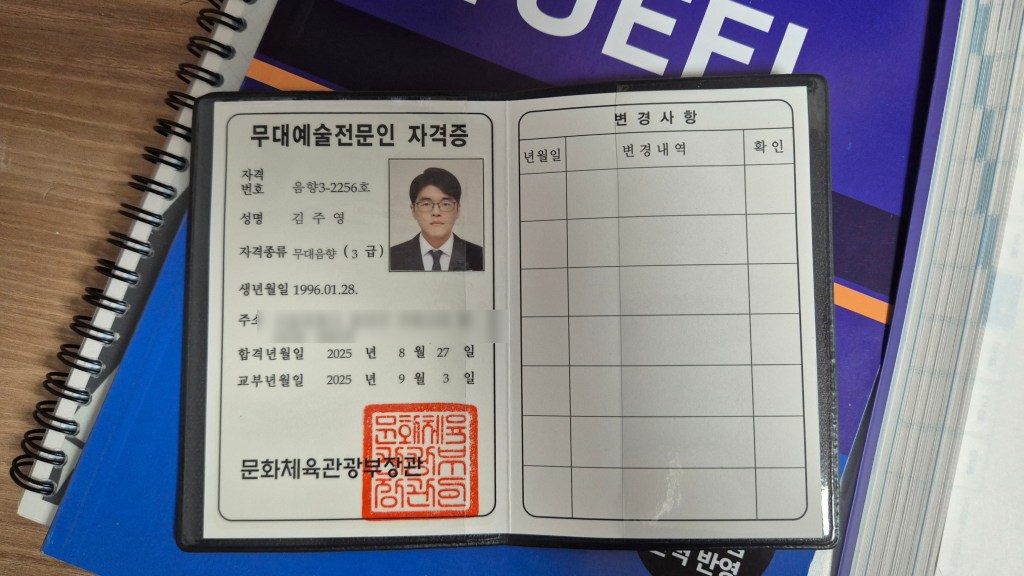
At first, when I learned about this certification, I wondered if it was really necessary. But it turns out it actually helps in real life—so I crammed and got it done this year. Haha.
The audio-related knowledge wasn’t too difficult, but the legal terminology and stage equipment terms were tough to deal with.
7) Attending conferences from time to time
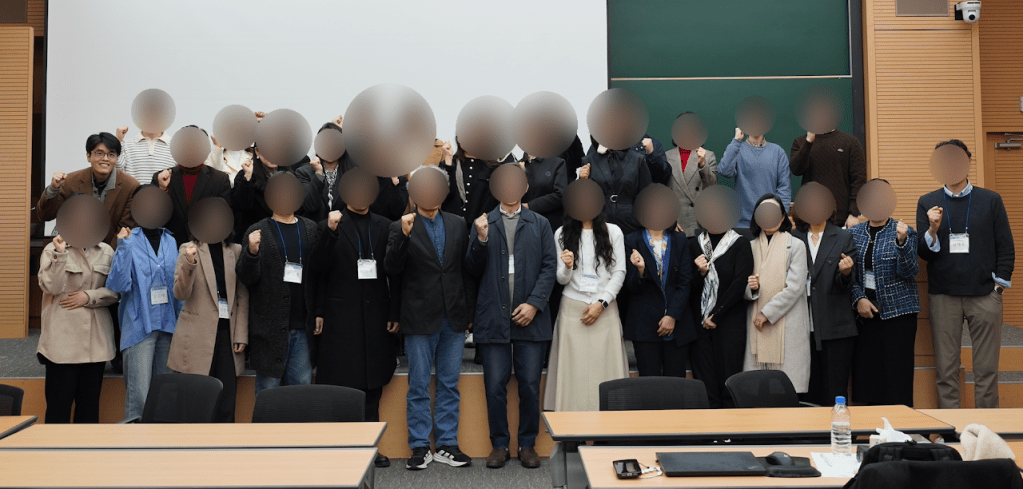
At the moment, I conduct all my research alone, and I do trust my own judgment—but I genuinely want to collaborate and work in teams as well.
Especially when I think about how much faster my current training runs would be with an expensive GPU—what takes weeks now could be done in days.
Beyond that, I really want to explore more interdisciplinary research.
8) Winning an award at a Japanese composition contest
It wasn’t anything huge—just an encouragement-level award—but it still gave me a meaningful boost.
After the contest, three Japanese composer agencies invited me to submit another piece for internal review and potential artist selection. Unfortunately, that didn’t work out in the end.
That meeting was later turned into YouTube content. The submitted tracks themselves weren’t publicly released, but there were critiques for each piece.
If you watch the video, it starts from the part discussing my song.
There was advice that touched exactly on the things I had vaguely sensed myself—especially regarding drums, percussion, and compositional detail. It felt like it was time to think more deeply about those again.
Akira Sunset mentioned that he liked my voice and singing, which was a small comfort. Another reassuring thing was hearing that my pronunciation didn’t sound awkward for a Korean—it felt like the effort had paid off.
9) Studying English seriously
I still feel that my English is far from good enough, but this is probably the hardest I’ve ever studied English in my life.
Back when I took the Korean CSAT, English was my weakest subject, so my strategy was basically “do well on everything except English.” If I remember correctly, I got eight questions wrong—five of them in English. Everything else was a top grade, but English alone landed me in the third tier… haha.
That said, I’m still far from my target TOEFL score. The program I want requires an 86 overall, but with minimum scores for each section, and if I want to apply elsewhere, I really need to break 100.
My best score so far is 85, so there’s still a long way to go. I suspect English will continue to torment me next year too—but there’s no choice but to keep going. Hahaha.
10) Designing my own hardware (still in progress)
It’s not finished yet, but I’ve been designing my own hardware.
If I call myself an audio engineer at all, shouldn’t I design and build at least one piece of hardware before I die?
Back in the day, EMI (now Abbey Road Studios) had a dedicated hardware department called REDD. As a one-person engineer, I figured I shouldn’t fall behind… haha. (Though honestly, the insane price of hardware is a big motivation too.)
Of course, not everything comes purely from my own head. Thanks to AI, I’ve been able to quickly simulate ideas I used to only imagine and lay down the groundwork.

The image above is the schematic of the hardware I’m currently working on.
It’s a tube saturator combined with a Baxandall EQ.
If it sounds good, now that I have a business registered, I’ve even thought about selling it as a DIY kit.
A fully assembled product would obviously be more convenient for users, but in Korea, all assembled electronic devices must pass KC certification.
That process is expensive, and for small-batch production, the cost inevitably gets passed on to the consumer.
All solder would also need to be lead-free.
Well… just indulging in a bit of imagination.
The schematic is mostly done, but I still need to run simulations—so I’ll just have to try it. If it doesn’t sound good… endless revisions await..T.T
11) New gear purchases
- 2 × RODE NT55
- 1 × Peluso P87
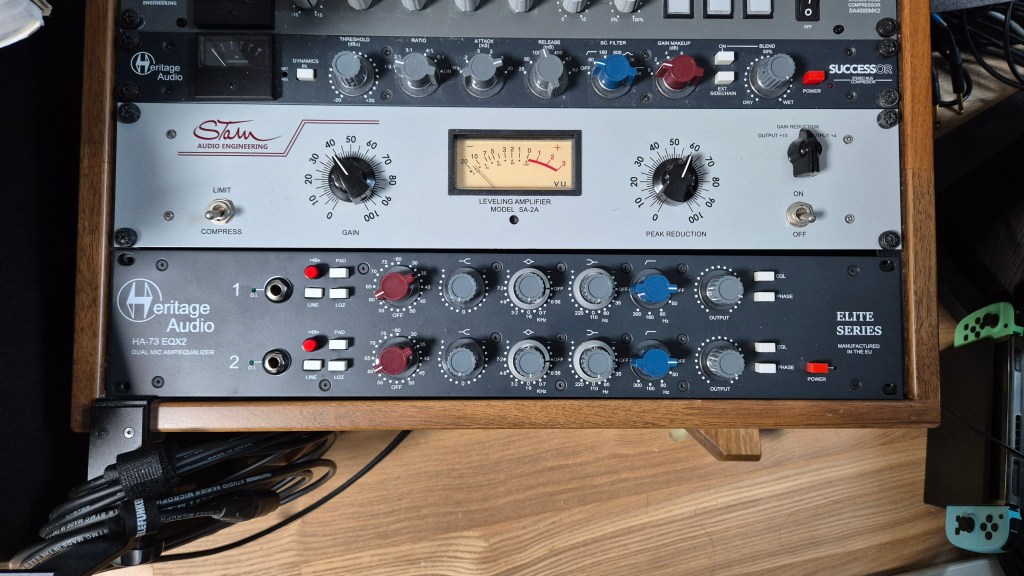
- 1 × HA73EQX2
- 2 × mic stands
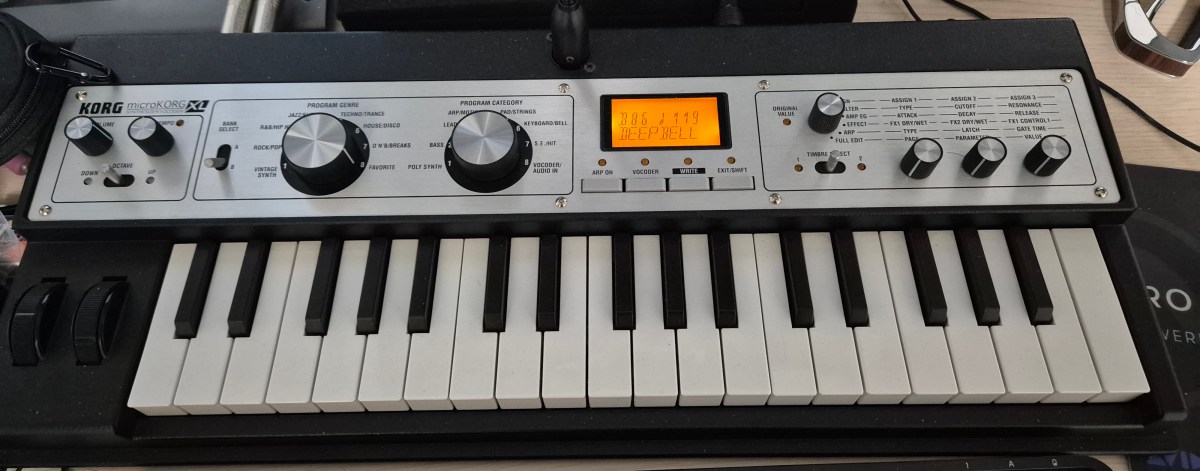
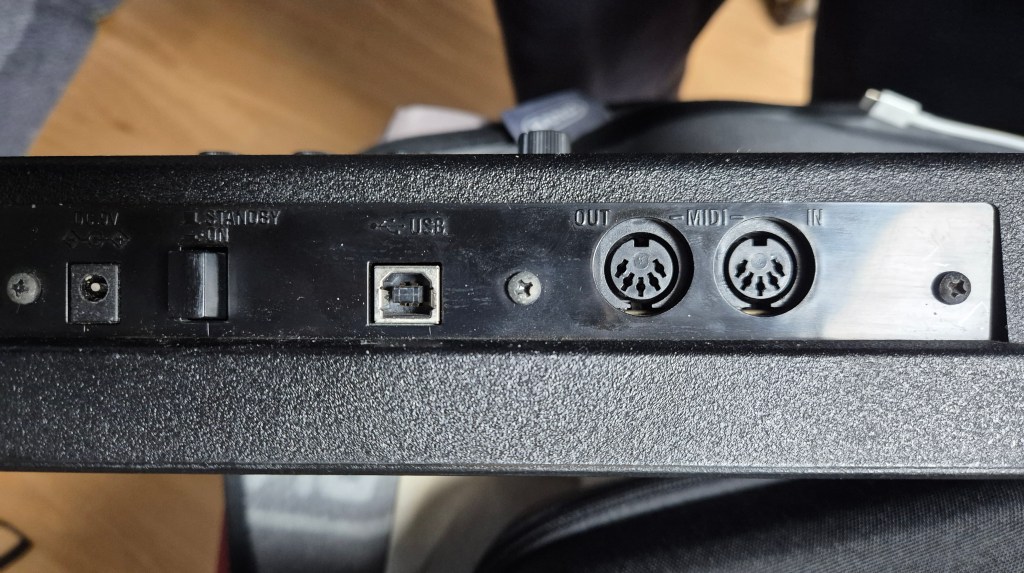
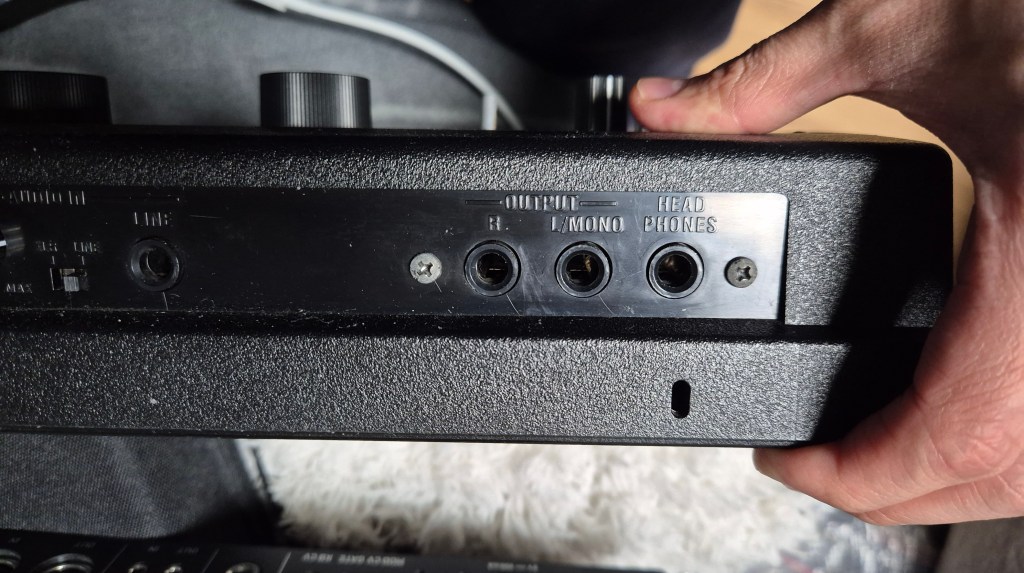
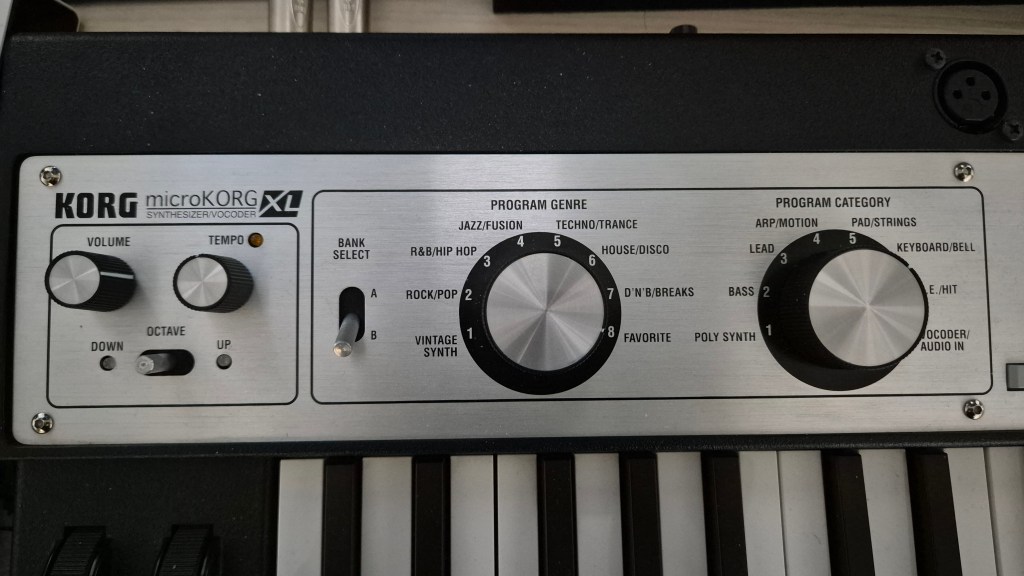
- 1 × Korg MicroKorg XL
That’s about it.
I definitely spent less than last year.
Except for the MicroKorg, everything was bought out of necessity… haha.
Closing Thoughts
I kept saying I’d release music, but in the end, I didn’t release anything this year. I do have some material prepared, but maybe it’s just inertia—or maybe I’ve been too good at making excuses about being busy.
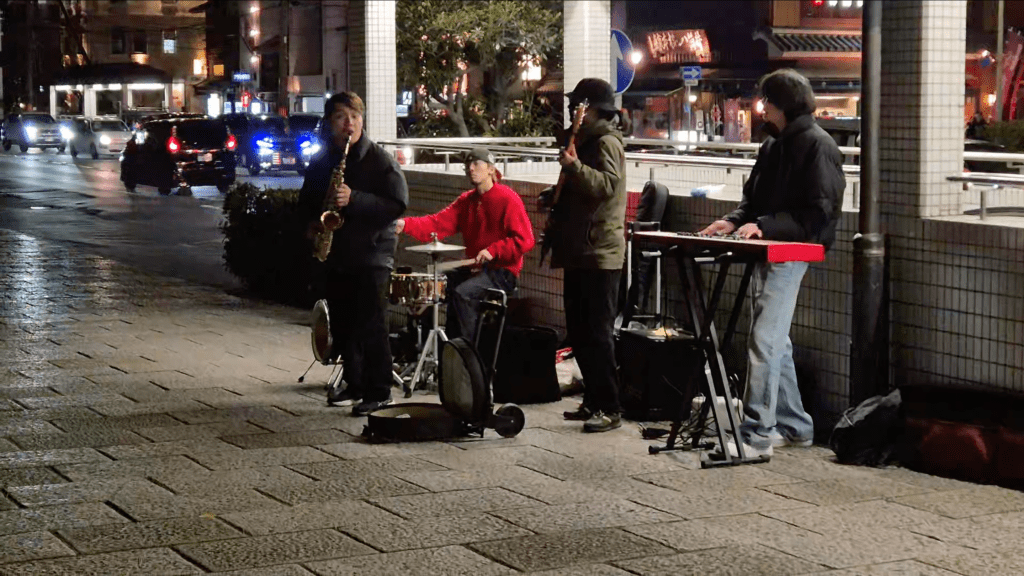
I think personal performance activities would help create some synergy too, but it’s been so long since I last performed or played live that I sometimes wonder if I’ve lost my drive. I think, “Maybe next year?”—but moving forward alone is always harder than it seems.
Still, I really do need to release some music.
I’m 30 now—not exactly young anymore.
That makes me think even more seriously about how I should live. Sometimes I wonder if these are the same kinds of worries Kwang-seok Kim (Korean folk musician) had around this age.
I hope that next year, I’ll be able to wrap things up with a brighter and more hopeful mindset.
Thank you, always, to everyone who visits and reads my blog. I hope the new year brings both you and me many moments where we can smile naturally, without having to force it.
That’s all for this year. I’ll see you again in the next post!