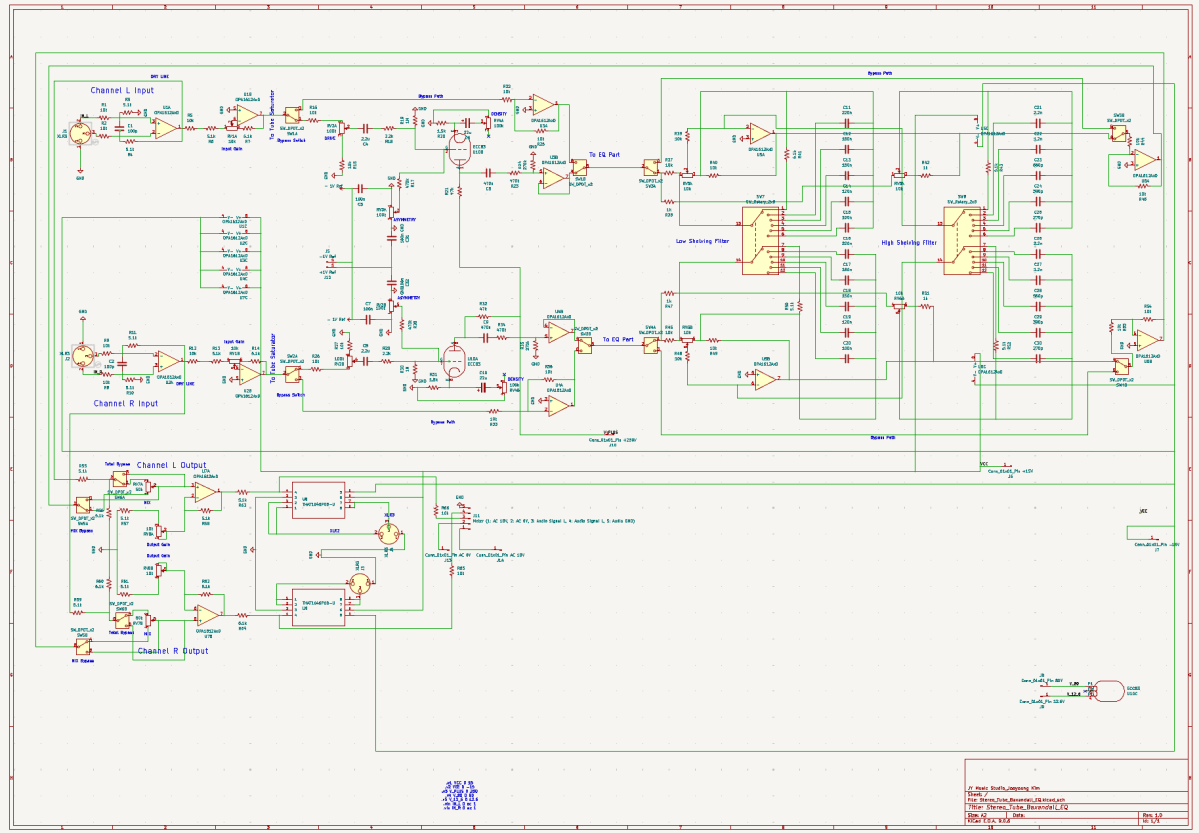
DIY Audio Project #1 | Tube Saturator with Baxandall EQ (Part 1): Concept and Implementation in Digital

Hi! This is Jooyoung Kim, a mixing engineer and music producer. In the previous post, ‘Wrapping Up 2025‘, I mentioned that I was developing circuits for my personal audio hardware.

Now that the circuit design and simulation are finished and the components and PCBs have been ordered, I am writing this post to record the process—including the failures and successes along the way. To be honest, since the build isn’t finished yet, I can’t guarantee it will be a 100% success.

However, I thought it would be a great opportunity to share what is actually needed for the design process, starting from scratch. I want to explain things in a way that anyone, even those with zero prior knowledge, can easily follow along.

Let’s start!


Concepts

I really love the analog “tube” sounds. However, I don’t have any stereo tube saturator hardware. Also, I don’t have an EQ that can be used for mastering either.

Therefore, I decided to make a stereo tube saturator with Baxandall EQ!
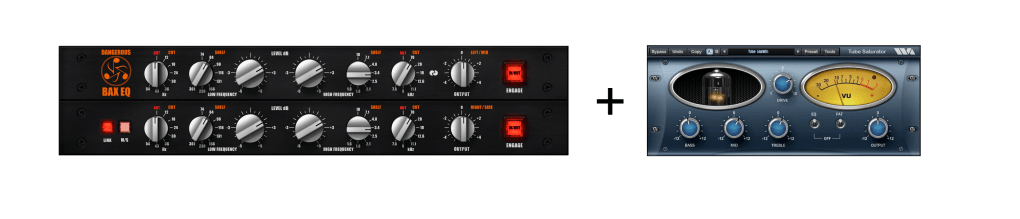
I used KiCad for this project. I highly recommend it because it allows you to seamlessly transition from circuit design to simulation, and finally to PCB layout. But that also means… once you’re done with the circuit, you still have two massive tasks waiting for you (hahaha…). I honestly had no idea what I was getting into until I finished the initial design!


Tube Parts
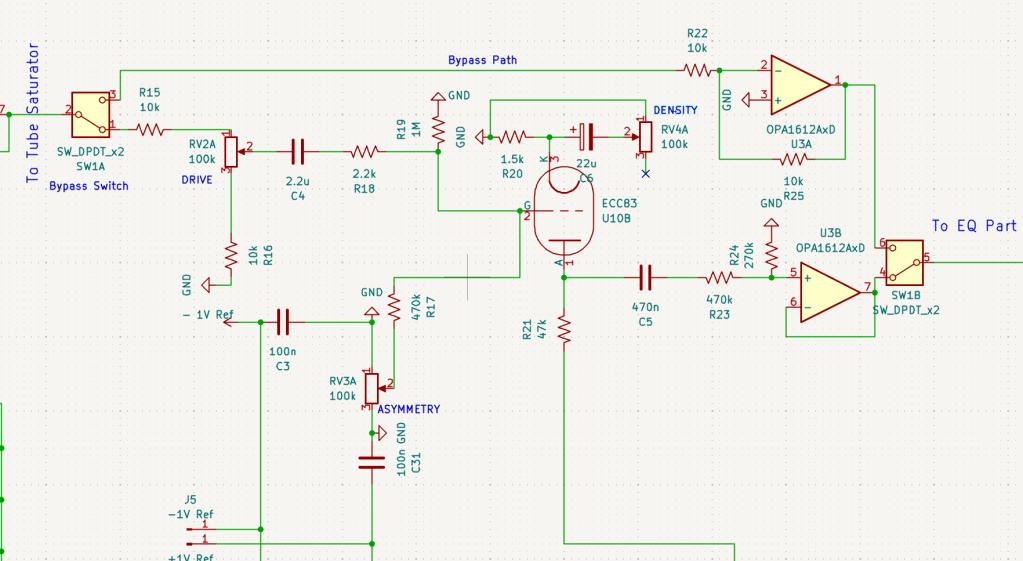
I already have two tubes (JJ Electronics’ ECC83) that were replaced from my Stam Audio SA-2A, so I wanted to use them for this project. Since I intend to use this gear in the mastering process, I decided to use just a single tube to drive the gain after the input stage.

I also designed the tube stage with adjustable ‘ASYMMETRY’ and ‘DENSITY’ parameters.

ASYMMETRY (Bias Adjustment) parameter controls the grid bias (+/-1V spans in my circuit)) of the vacuum tube. By shifting the bias point, it allows the waveform to clip asymmetrically, which generates even-order harmonics.

DENSITY (Saturation & Body) parameter adjusts the amount of feedback at the cathode stage. By controlling the effectiveness of the bypass capacitor, it pushes the tube to hit its saturation point harder or softer.

To develop this parts, I utilized Gemini (the free version) and referenced the manual of the Wave Arts Tube Saturator Vintage plugin for inspiration. Even though I majored in physics, it’s a field of pure science focused on fundamental principles, so I didn’t really cover practical applications like circuit design. As I mentioned, I actually had very little in-depth knowledge of electronic circuits starting out. But those tools were a huge help! Seriously, use AI tools—they can bridge the gap!


Baxandall EQ Parts
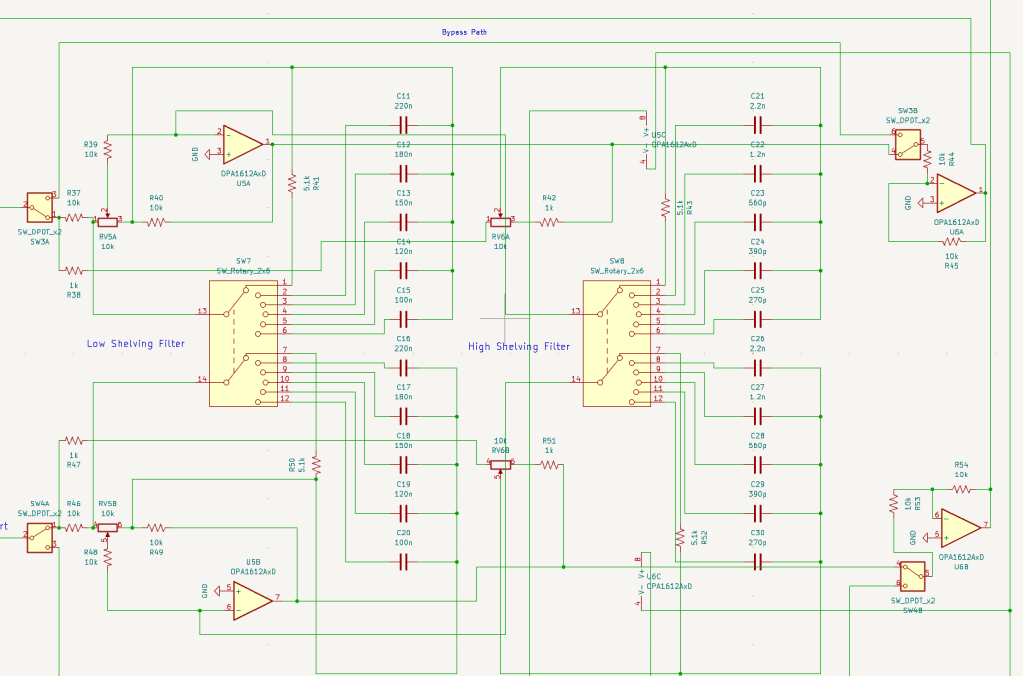
The EQ design is straightforward, consisting of two sections: Low and High. While the gain is continuously adjustable, I made the frequency switchable using rotary switches, allowing for precise and repeatable settings.

Baxandall EQ circuits are quite simple and well-documented, so you can easily find various schematics online to use as a reference.


Input & Output Parts
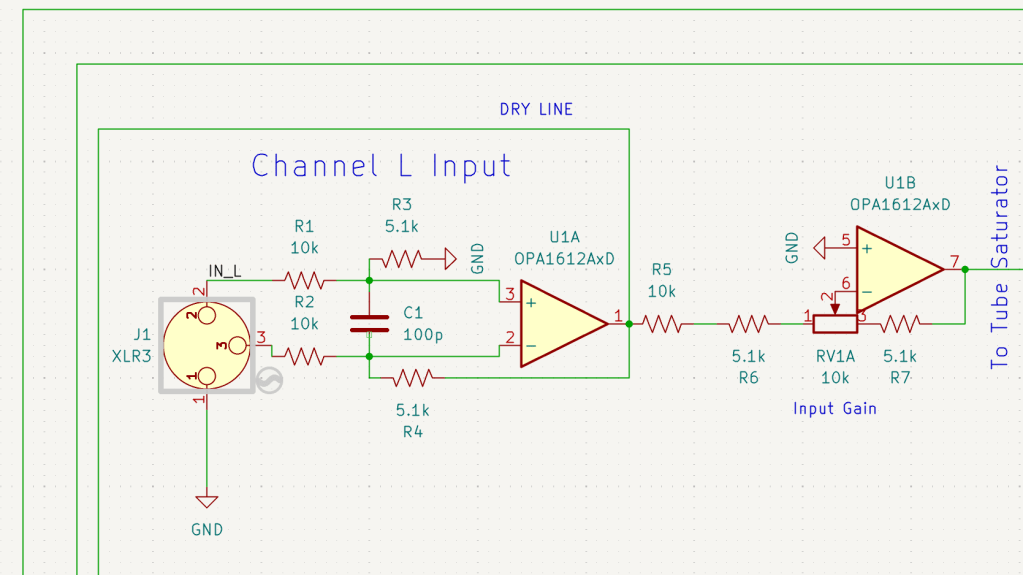
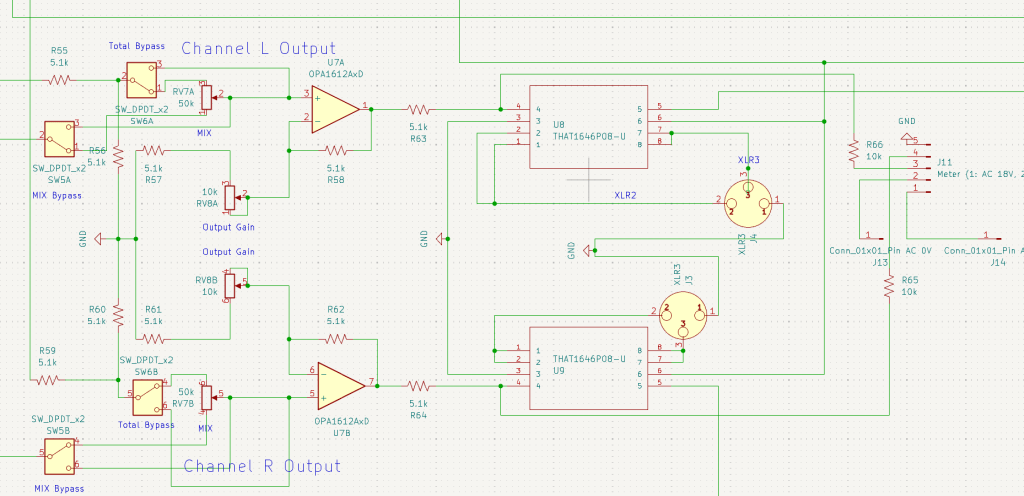
The input stage was simple enough, but the output stage was a total ambush. I wanted to include a Mix knob, a Mix Bypass switch, a Total Bypass switch, and an Output Gain knob. Trying to integrate all these features into the signal path turned into a bit of a mess!

After completing the overall design, I realized a crucial detail: every single stage had to be in the same phase! If the phases didn’t match, the Mix knob would be useless. So, I had to go back and triple-check the phase of every section after all the work was seemingly ‘done.’ I’ll talk more about this in my next post about the simulation process.


Power Parts
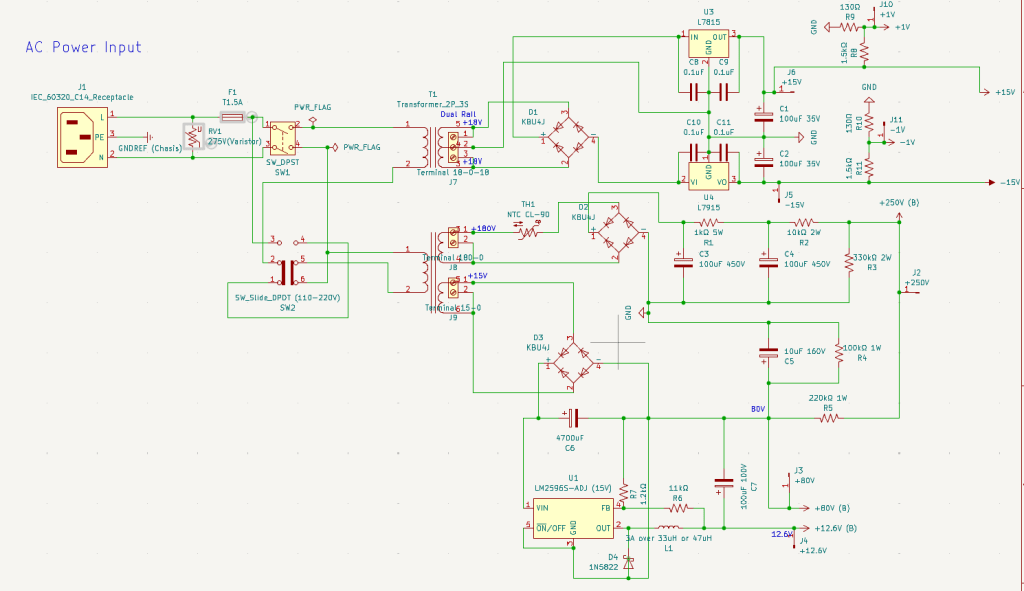
To ensure this hardware works in various environments, I included an adjustable voltage switch(220V-110V) in the power circuit. Since the design requires multiple voltage rails—250V, ±15V, +80V, +12.6V, and ±1V—I had to use a complex, custom-spec toroidal transformer. Managing all these different power requirements in one unit was quite a challenge!

Heat dissipation was a major concern for this build. I basically tortured Gemini with endless questions, forcing it to crunch the numbers until I was sure every component could handle the thermal load.

I’d like to dive deeper into the phase issues and buffers that need to be considered in the simulation, but it would make this post way too long. So, I’ll cover those in the next one.

See you then!
Korg Filter Ark Plugin Intro Sale (Until Jan 29)

Hello! This is Jooyoung Kim, an audio mixing engineer and music producer.

Recently, I found a very interesting filter effect plugin called the Filter Ark, made by Korg. Therefore, I requested an NFR (Not for Resale) code from Plugin Boutique for this review.

It was a really fancy and neat plugin. I think it is great to introduce this to music producers, electronic music makers, and electric guitar players.

If you purchase the plugin through the link included in this post, I’ll receive a small commission that helps support my work.

Ok.. Let’s start!


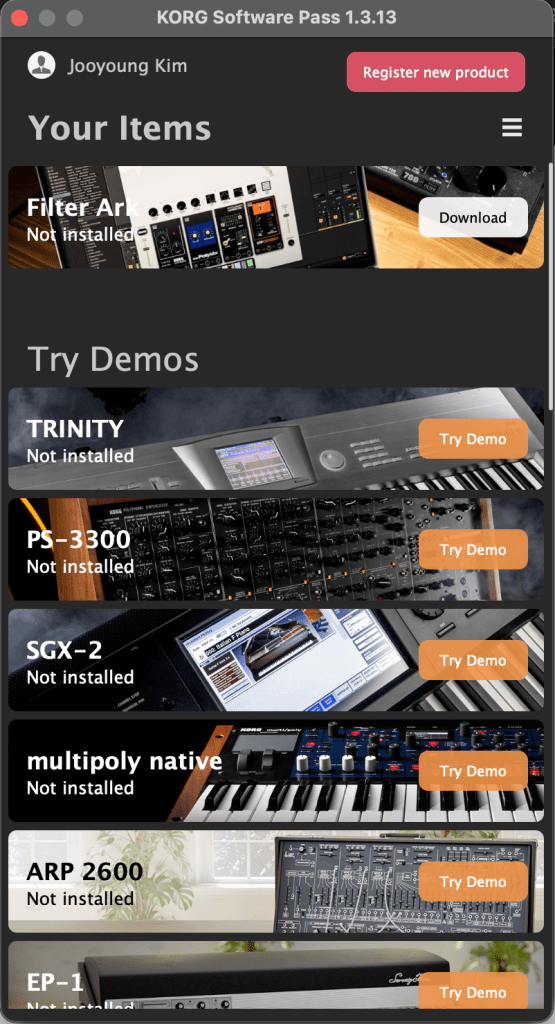
It’s quite difficult to download and register the product. You need to download the KORG Software Pass first, and then register the code you have.

After registering, you can download your plugin. They don’t use iLok, the common passkey used by many plugin companies. Therefore, you should not delete the KORG Software Pass program.


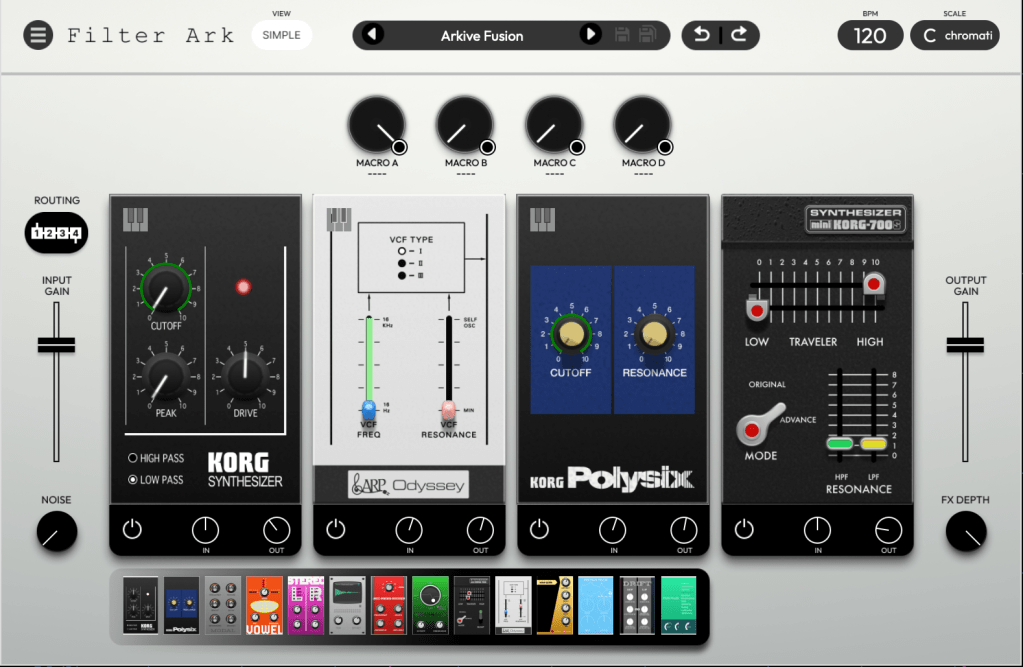
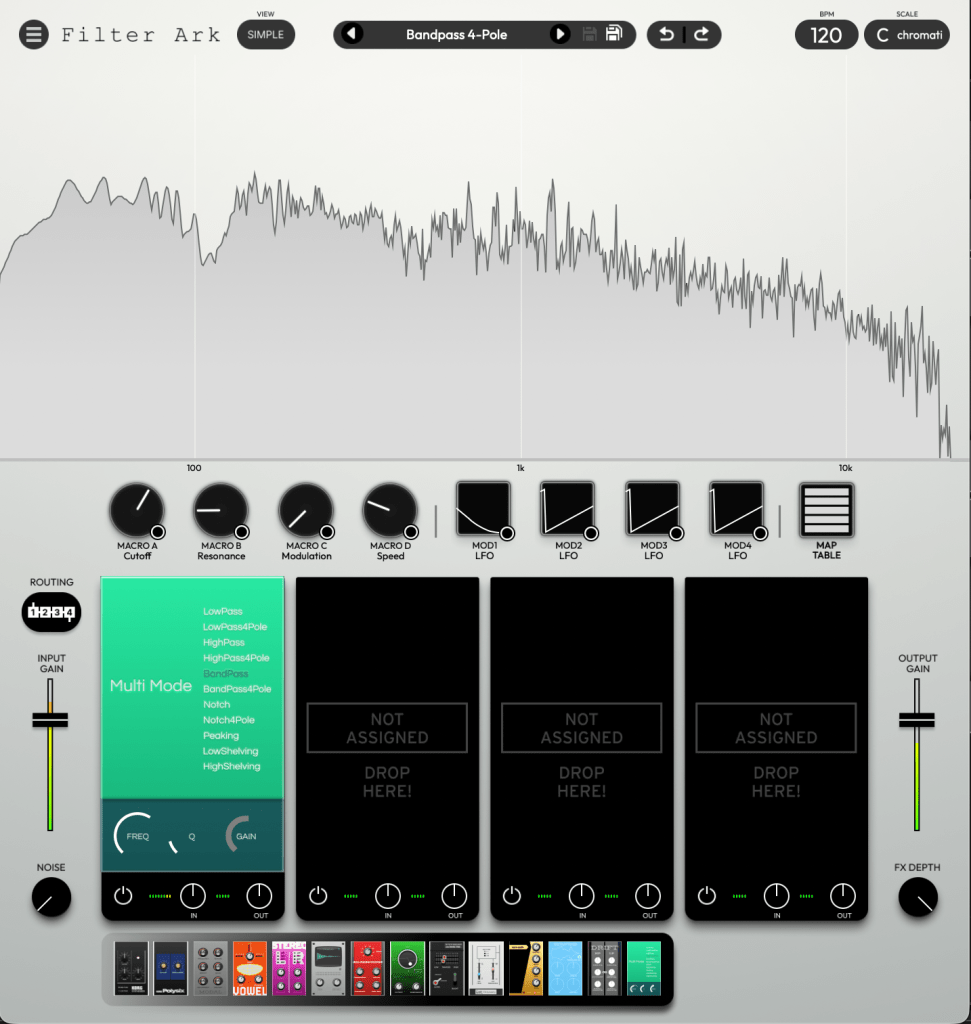
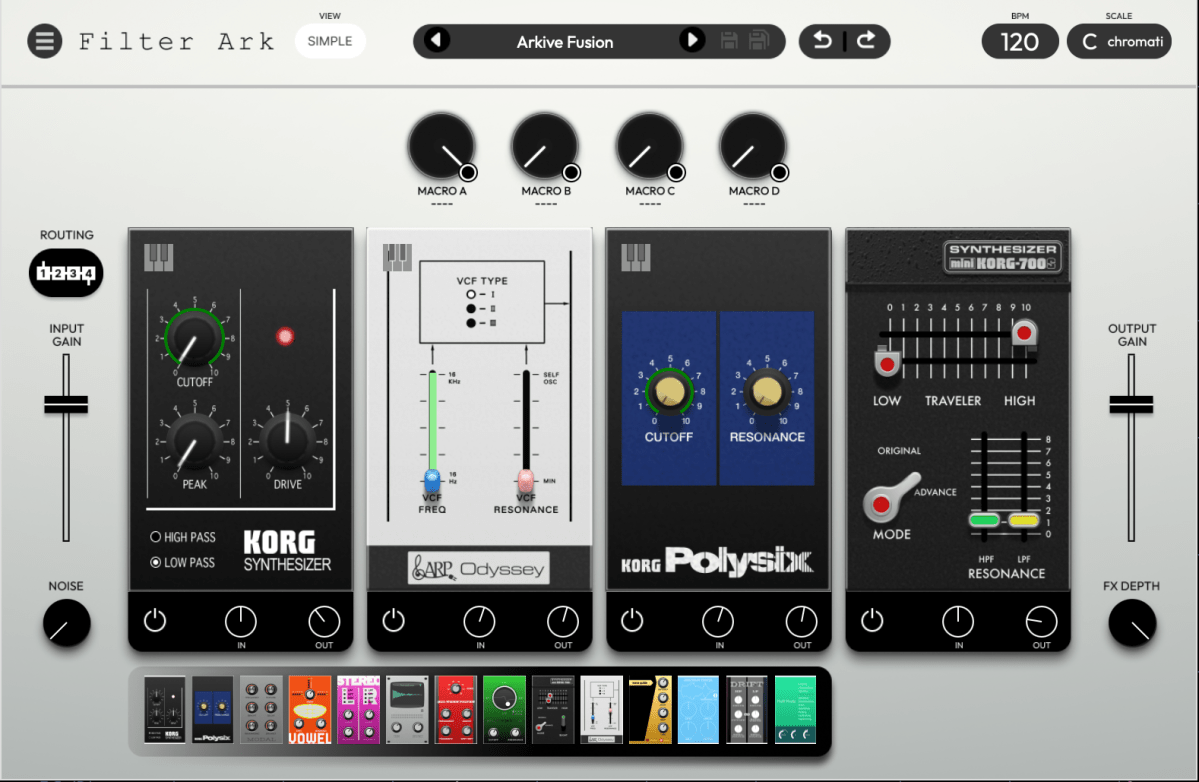
Looking over the plugin, you can see its clean, modern design. There are several modules at the bottom of the interface that resemble guitar pedals. Interestingly, these are all different types of filters!

Simple descriptions of these pedals are shown in the table below.

Filter NameCategoryKey Characteristics
MS-20Legendary AnalogRecreates the iconic 12dB/oct filter with distinctive distortion and powerful resonance.
PolysixLegendary AnalogA warm and smooth 24dB/oct Low Pass Filter known for its musicality.
miniKORG 700SLegendary AnalogFeatures the unique “Traveler” sliders (HPF/LPF) for thick, vowel-like textures.
ARP OdysseyLegendary AnalogIncludes all three revisions (Rev 1/2/3) with sharp, aggressive resonance characteristics.
ModalModern / PhysicalA physical modeling resonator that simulates the vibration of strings or metal plates.
VowelModern / FormantA formant filter that morphs between three vowels to create human-like vocal sounds.
Wave GuideModern / PhysicalBased on volca drum algorithms, ideal for creating metallic tubes or string-like plucks.
Spectrum TracerModern / ExperimentalCaptures frequency characteristics from audio files and applies them to the input signal.
MorphingModern / VariableAllows seamless morphing between Low Pass, Band Pass, High Pass, and Band Reject modes.
StereoUtility / StereoIndependent filter settings for Left and Right channels to create wide stereo imaging.
DriftUtility / StereoFeatures dual LPF/HPF with a ‘Delta’ parameter to add organic, drifting movement.
IR (Impulse Response)Modern / ConvolutionLoads IR files to simulate realistic spaces, speaker cabinets, or Lo-Fi equipment.
All PassModern / PhaseShifts the phase of the signal to create Phaser-like notches and unique tonal shifts.
Multi ModeVersatile / UtilityA flexible filter capable of everything from precise EQ-ing to aggressive sound shaping.

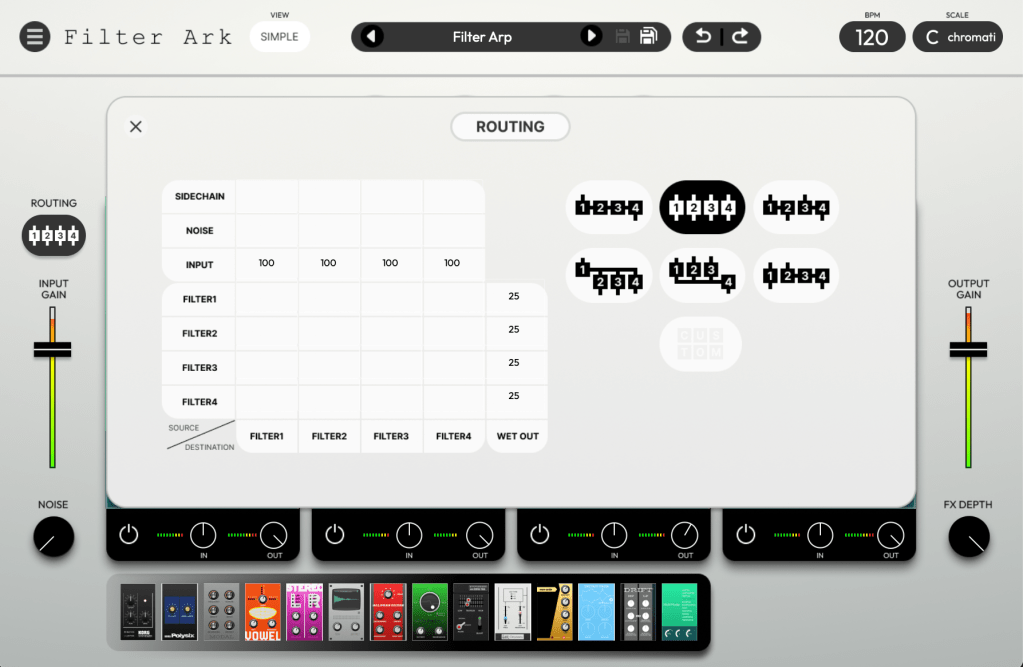
Four slots are available, and their routing can be adjusted.

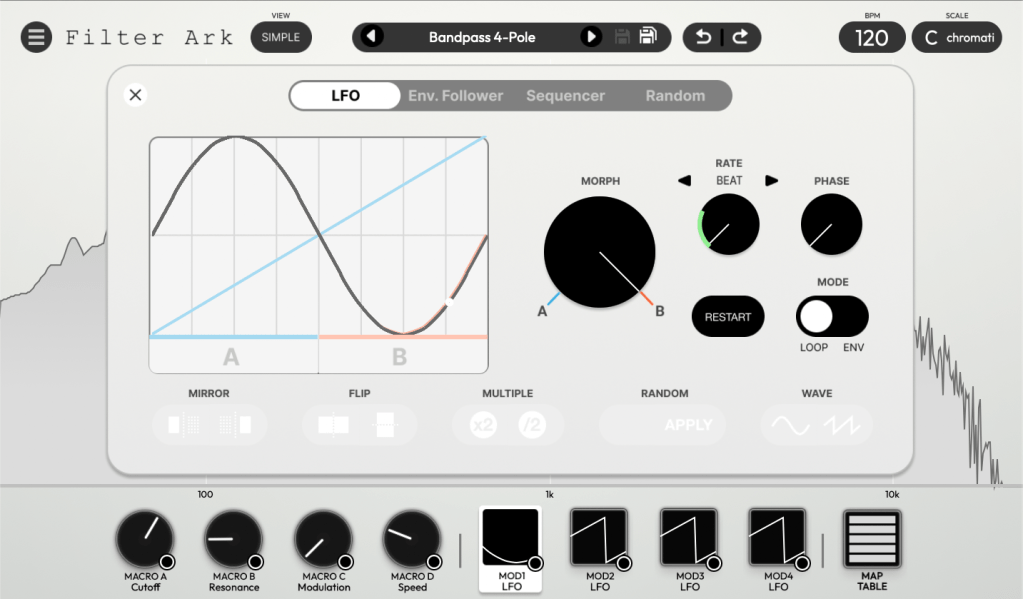
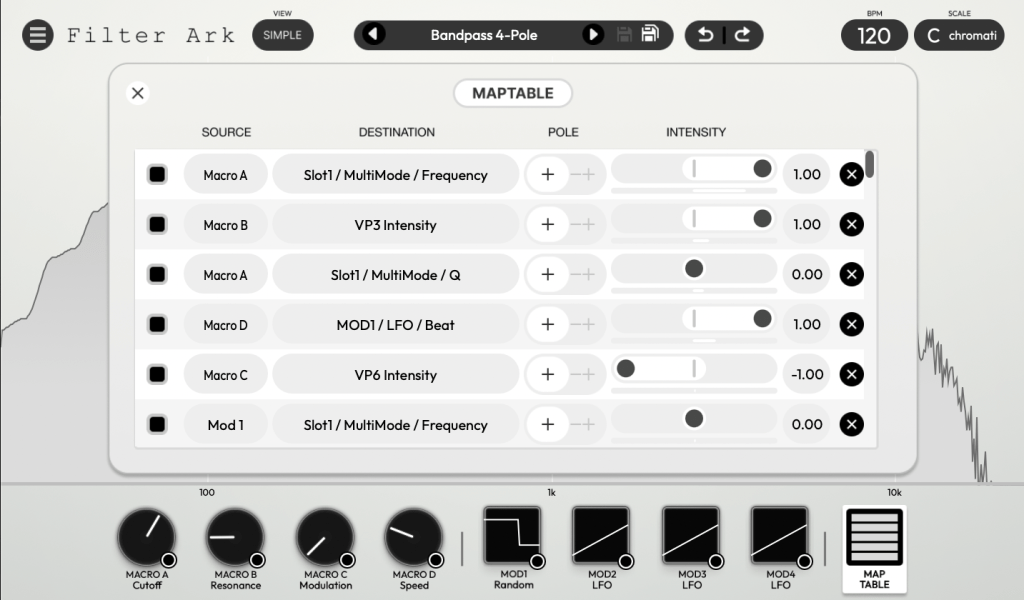
Clicking the VIEW (SIMPLE) button displays the frequency response graph. This interface allows you to intuitively adjust macro controls and modulation assignments.

These functions help composers shape their sounds with greater precision and nuance. Modern composers often utilize multiple filters to create dynamic movement in their music. From this perspective, the wide array of filters and features in Filter Ark streamlines the sound design process, saving composers the time and effort typically required to craft complex textures.

It is hard to analyze all the filters, but you can listen to the sounds via the link above.

At just $53.9 (tax included), it’s quite affordable. I highly recommend this plugin to composers and music producers who work with heavy synthesizers or complex sound design.

That’s all for today! See you in the next post.

Lewitt Space Replicator Year End Sale (~50% off, until 4 Jan)

Hi! This is Jooyoung Kim, a mixing engineer and music producer. Today, I’ll introduce a room/headphone simulator, Space Replicator made by Lewitt.

I received the NFR code for this product from Plugin Boutique for this review, and if you purchase the plugin using the links included in this article, I’ll earn a small commission that helps me keep going…!

Let’s start!

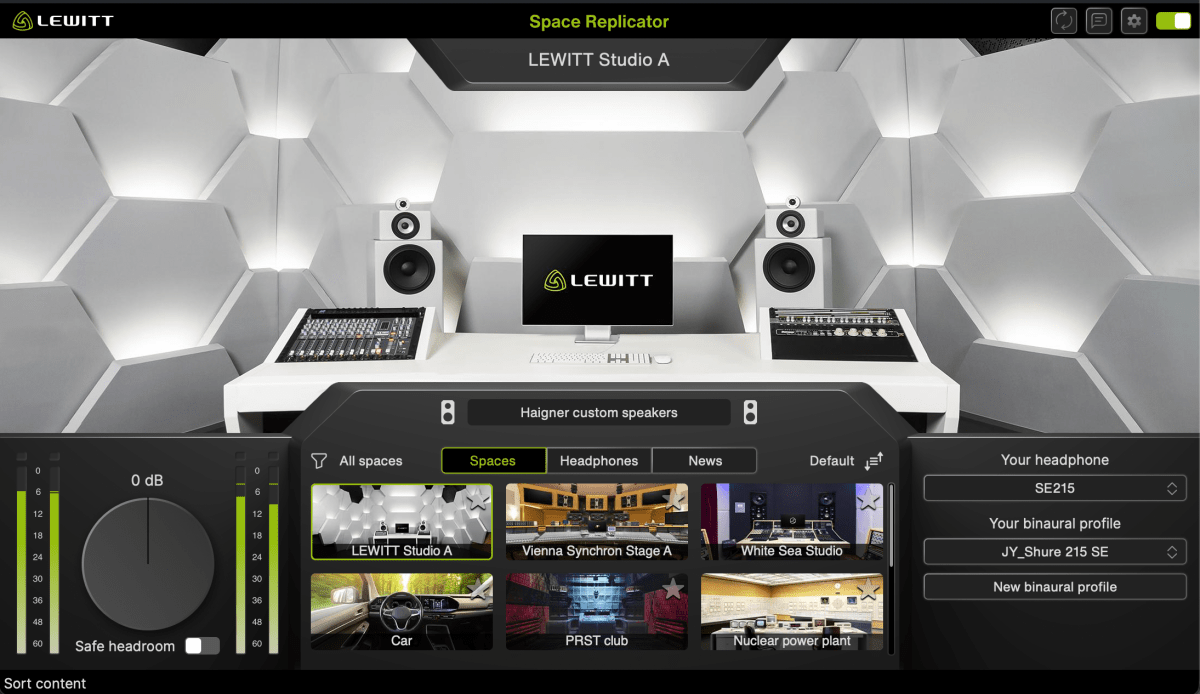
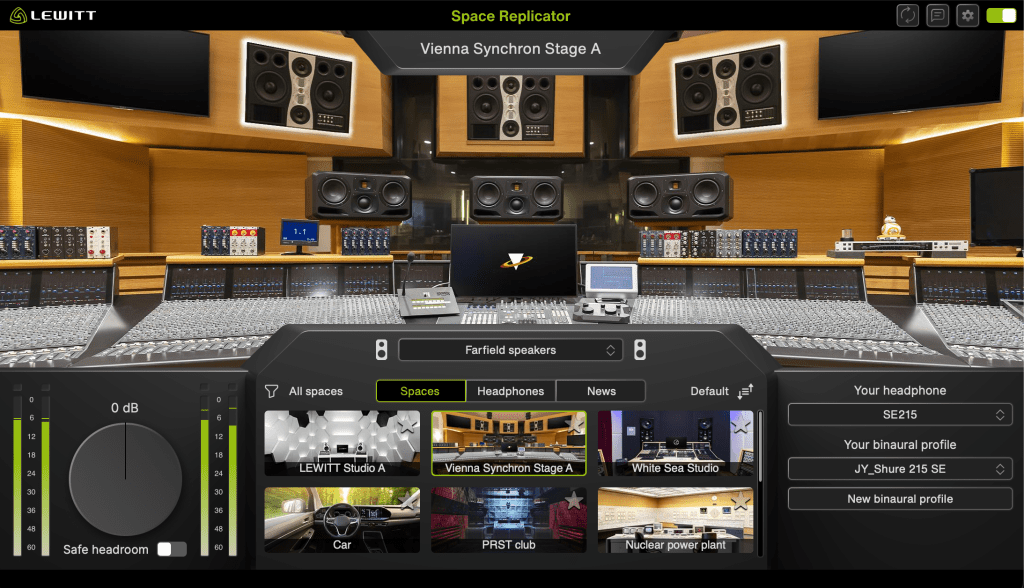
Space Replicator is a plugin that uses HRTF (Head-Related Transfer Function) modeling to allow you to experience sound with a sense of spatial depth, making it sound like real acoustic space when listening through headphones or earphones.

While there are indeed several plugins offering similar virtual monitoring functions, and some competitors boast larger headphone/earphone catalogs, Space Replicator’s distinct advantage lies in its specialized focus on HRTF and the process of creating personalized binaural profiles.

If you select a headphone or earphone model that you own and that is supported by LEWITT, you can generate a personalized binaural profile through a few simple steps. Although the results may not be perfectly precise, the effect was noticeably effective when I tested it.

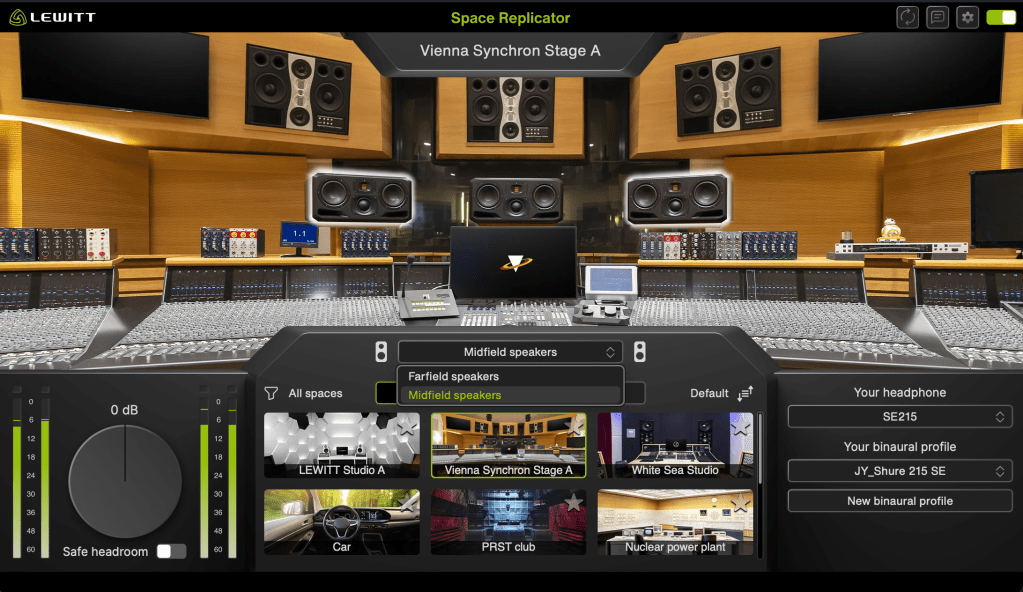
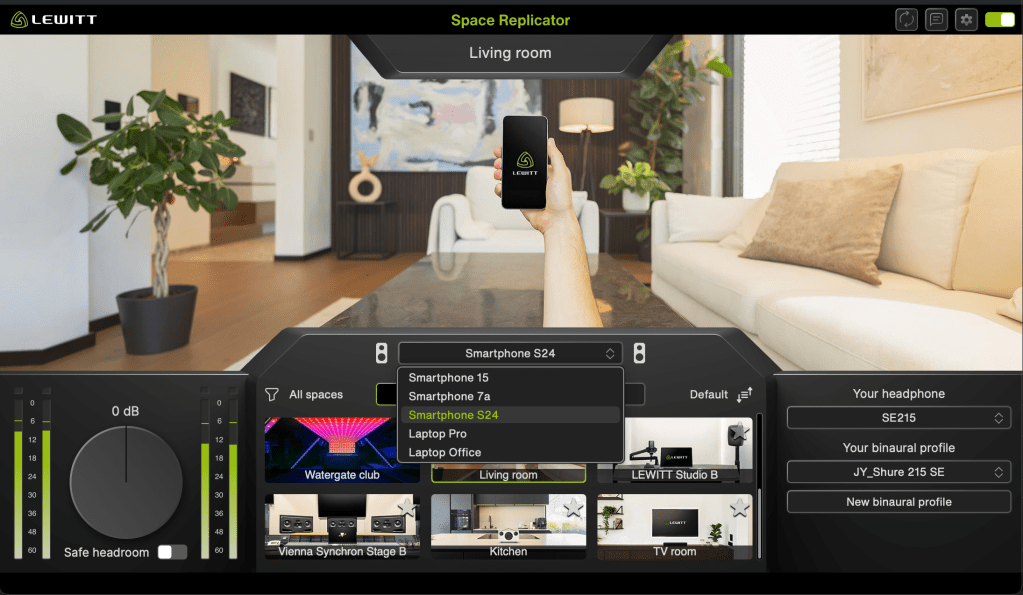
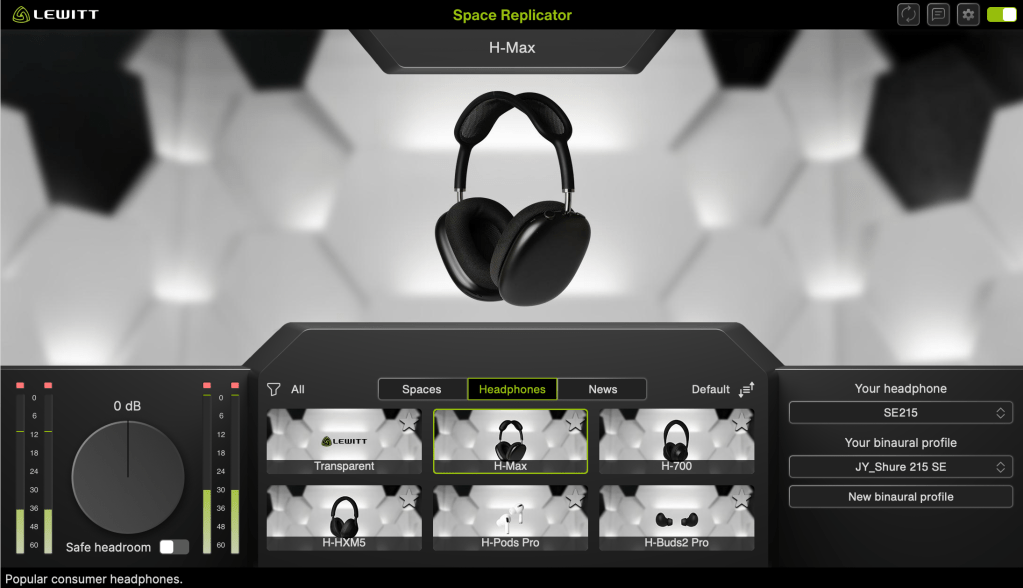
Furthermore, the plugin features 12 different virtual spaces, each offering various listening perspectives or speaker options, and it also provides 6 different headphone simulations.

My favorite virtual space is the Vienna Synchron Stage A, which accurately provides the acoustics of far-field speakers. Since small studio producers and engineers usually can’t access such a setup—and neither can I—this particular feature offers me a tremendous amount of practical things.

It is currently 50% off until January 4, 2026. Therefore, if you work in a space with acoustic limitations, I highly recommend this plugin.

That’s all for today. See you in the next post!

Black Friday Sale Summary: 2025 Virtual Instruments & Mixing Plugins

Hi! This is Jooyoung Kim, a mixing engineer and music producer. Black Friday is right around the corner, so, as I did last year, I’ll summarize all the plugin sales that I want to recommend for composing, mixing, and mastering music.

This post is not sponsored by any of the plugin companies listed. However, I have an affiliate partnership with Plugin Boutique, so, I’ll provide their purchase links alongside my explanations for any plugins they offer. Furthermore, purchasing through the provided link earns me a small commission that helps support this content..^^ (It’s really hard to make a living these days…haha..)

Then… Let’s start!


1) WAVES

I always recommend plugins made by waves to people around me. While their update plan policy is incredibly frustrating, it certainly doesn’t detract from the quality of their plugins. Additionally, they usually offer significant discounts during the Black Friday season.

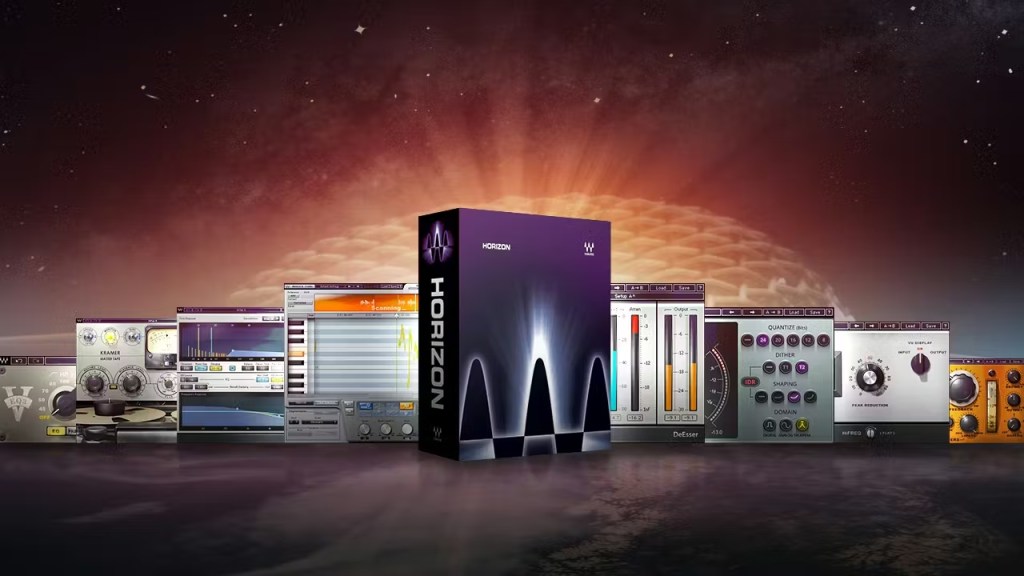
I highly recommend the Horizon Bundle. This bundle features 93 plugins, all of which are highly versatile. The price is only $219(Tax Included), leaving no reason not to recommend it.

Specifically, the CLA series, the Renaissance Compressor, and the H-Delay are my favorites.

2) UAD (Universal Audio Digital)

Universal Audio has lots of useful plugins too. The LA-2A series, the 1176 series and the chamber reverbs are definitely my go-to plugins from UAD.

I own quite a few UAD plugins, and they were really expensive before Universal Audio launched the native versions. Additionally, the 10-plugin bundle was also very pricey, if I recall correctly. However, for this Black Friday sale, you can get 10 plugins for only $108.90 (Tax Included). I must admit, I find that a little unfair….^^. It’s a really great deal, so I highly recommend grabbing this opportunity.

If you haven’t had any experience with UAD plugins, I will select my top 10 recommended plugins for you.

  1. Teletronix LA-2A Leveler Collection
  2. 1176 Classic Limiter Collection
  3. API 2500 Bus Compressor
  4. Teletronix LA-3A Classic Audio Leveler
  5. EMT 250 Classic Electronic Reverb
  6. Fairchild Tube Limiter Collection
  7. Pultec Passive EQ Collection
  8. UAD Sound City Studios
  9. Hitsville Reverb Chambers
  10. Lexicon 224 Digital Reverb

3) IK Multimedia

Unfortunately, IK Multimedia already concluded its “Group Buy” event last month, so it is unlikely there will be any additional sales during Black Friday. However, I have written about IK Multimedia’s virtual instruments and mixing plugins previously, so, if you have an interest in this company, please read this article.

4) Arturia

Arturia offers a wide range of virtual instruments and mixing plugins. They boast significantly high quality, tthe only drawback is their high CPU usage. However, as CPU processing speeds have grown rapidly, I believe this is no longer a critical issue.

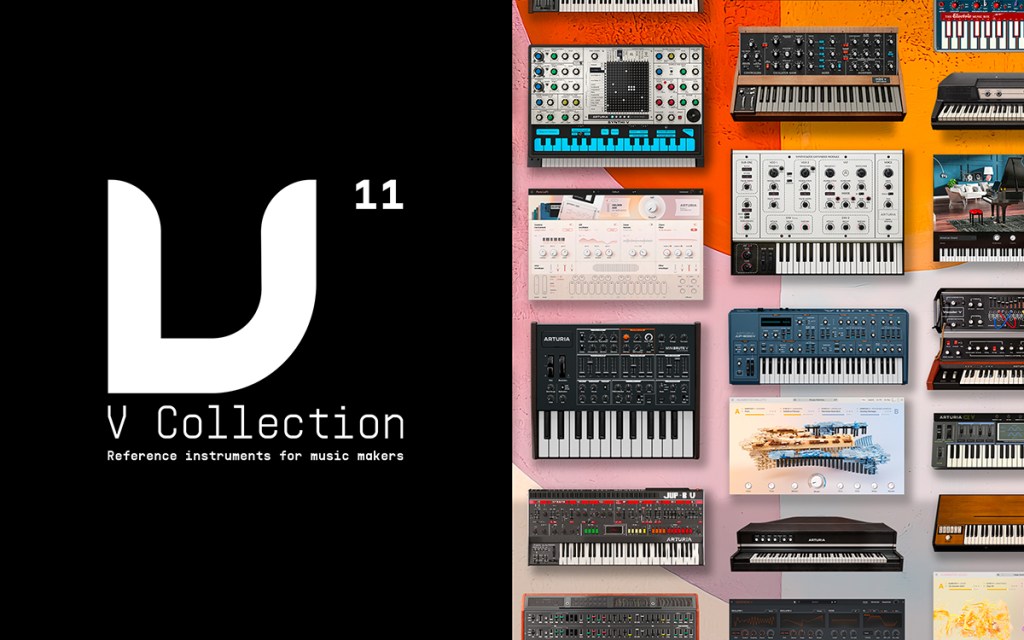
The price of the V collection 11 is $383.90 (Tax Included), and the FX Collection 5 is $273.90 (Tax Included).

I have written reviews before, if you have an interest, please read these articles.

5) Brainworx

Brainworx was founded by Dirk Ulrich, the same individual who established Plugin Alliance. They offer superb mixing plugins with remarkably good quality. They are also remarkably affordable, so you should definitely consider purchasing their plugins if you have a limited budget.

Specifically, I recommend the digital EQ, the bx_digital V3, from Brainworx. At just $11 (including tax), it is incredibly useful for identifying the frequencies where resonances occur.

6) Celemony -Melodyne

I currently use three main pitch correction plugins: Auto-Tune, Melodyne, and Revoice Pro. However, I find Melodyne to be the most intuitive plugin. I use it on almost every project.

The Studio version is now $301.40 (Tax Included).

7) Native Instruments

Native Instruments sells a lot of virtual instruments. Their Komplete bundle is their most famous, and it features a 50% upgrade discount during Black Friday.

8) Cableguys

I think you need Cableguys’ plugins if you want to create a modern-sounding track. Recently, many producers and composers are making the source audio groovy, and these grooves are created through artificial manipulation.

Cableguys’ plugins are made for these purposes.

I recommend Shaper Box 3 (at $97.90 including tax). Also if your budget is larger, the Cableguys bundle (at $163.90 including tax) is a great choice.

9) Eventide

Eventide’s reverb plugins are truly irreplaceable. The Blackhole reverb and the ShimmerVerb reverb are strongly recommended.

10) BFD Drums

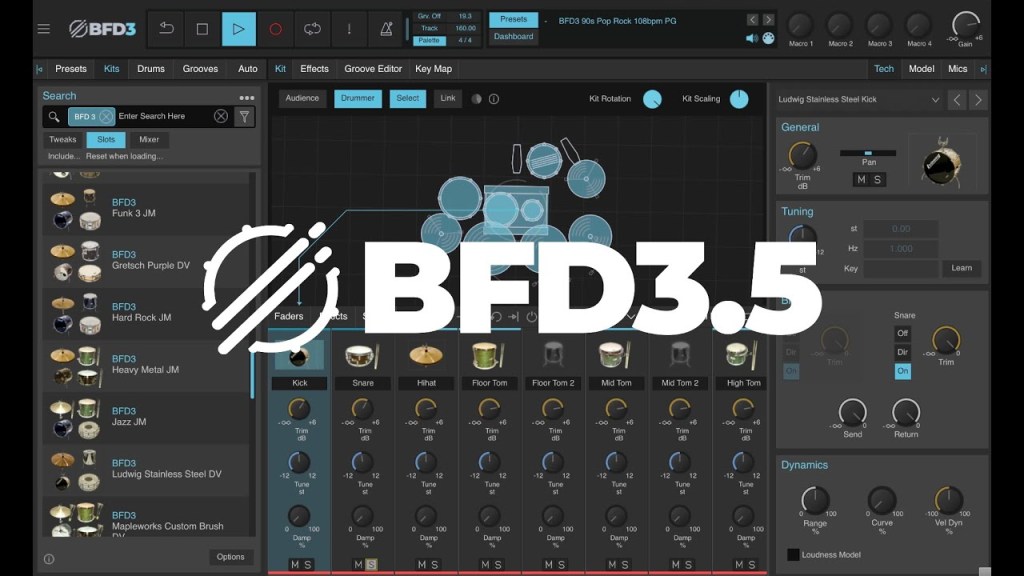
I love the BFD drum plugin. My main drum VST is BFD, and their sounds are exceptional. While it has a steep learning curve, once you understand its complexities, it will provide truly realistic drum sounds.

The drum sounds on this song were created using BFD drums.

The basic components are quite good, but I highly recommend buying the London Sessions expansion pack.

BFD 3.5 is currently only $42.90 (tax included), and the expansion pack is only $20.90 (tax included). I strongly recommend these two products.

11) iZotope

iZotope offers famous plugins like the RX and Ozone series. They also have excellent reverb plugins. Currently, they are offering a 40% discount on their bundle upgrades.

12) Plugin Alliance

Since a certain point, Plugin Alliance began including tax when they sell their products to international customers on their website. Therefore, there is no compelling reason to buy their plugins directly from their website. You can earn points and free plugins when you purchase plugins through Plugin Boutique. Thus, I highly recommend purchasing them there instead.

My favorites include the Maag EQ4, the SPL series, and the Bettermaker C502V plugins.


I believe that covers all the main recommendations. There are still a few plugins I would like to recommend, but they are either not currently on sale or have fully transitioned to subscription models (like Musio 1).

Honestly, these days, I feel that plugins are not the most crucial factor in music production. The ideas and concepts are the most important aspects. Sound design and engineering are just the finishing touches to the music.

So, if you want to make meaningful music, I would advise against spending a lot of money on plugins you might use in the future. Just buy what you need now.

Then.. have a nice Black Friday season!